5559 risultati
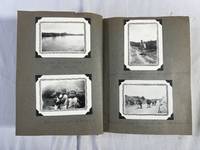
1910rif. 235641910. Cuba photograph album depicting encounters between Western visitors and Cuban communities during the early republican period circa 1910s to 1920s when the island occupied an unusual position between formal independence and continuing American political and economic influence. The photographs move between Havana's monumental architecture hotels and waterfront districts and the rural landscapes villages rivers and agricultural communities that remained largely outside the tourist image promoted to foreign visitors. Repeated appearances of the same Western man often accompanied by a woman who appears to be his wife suggest an extended journey through both urban and remote regions of the island during a period when American travelers businessmen and government personnel moved through Cuba in growing numbers following the Spanish American War and the establishment of the Cuban Republic. Photo album of 26 silver gelatin photographs mounted on unbound album boards with blue covers boards measuring approximately 9 x 15 inches Cuba circa 1910s to 1920s. The photographs range from 6 x 6.5 to 8 x 9.5 inches. Images show waterfront houses built directly along riverbanks; tropical waterfalls and dense forest landscapes; interior courtyards and hotel spaces with colonnades and tiled floors; Morro Castle and lighthouse overlooking Havana Harbor; panoramic views of Cuban towns set among surrounding mountains; market scenes crowded with vendors women and children; cattle standing in shallow waterways; village gatherings outside rural buildings; and groups of local residents posed alongside visiting Westerners. Several photographs depict women standing in rivers holding broad metal pans possibly associated with washing river labor or mineral collection activities. Other images show children families agricultural workers and river communities while a series of portraits records the principal traveler and his companion at various points throughout the journey. One image depicts a group of local residents and Western visitors posed together in a forested region; another shows villagers gathered near a rural homestead while several photographs focus on transportation livestock and daily work in the countryside. The album belongs to the decades following Cuba's transition from Spanish colony to nominally independent republic a period shaped by the Platt Amendment American investment expanding tourism and intensive foreign interest in the island's economic resources and landscapes. Rather than concentrating exclusively on Havana's civic monuments and colonial architecture the photographer devoted substantial attention to rural communities Afro Cuban and mixed-race populations river labor village life and frontier environments seldom emphasized in commercial tourist imagery of the period. The contrast between hotels government-era landmarks village settlements cattle crossings market scenes and encounters with local residents documents the unequal worlds that coexisted within early twentieth century Cuba as foreign visitors moved between urban centers and agricultural regions. Light surface wear occasional toning minor album mounting wear and scattered edge wear to several boards; overall very good condition. A concentrated visual record of how Westerners experienced and represented Cuba's rural communities laboring populations landscapes and colonial-era urban centers during the first decades of the Cuban Republic. unknown
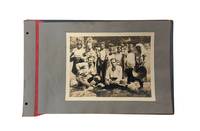
1910rif. 235641910. Cuba photograph album depicting encounters between Western visitors and Cuban communities during the early republican period circa 1910s to 1920s when the island occupied an unusual position between formal independence and continuing American political and economic influence. The photographs move between Havana's monumental architecture hotels and waterfront districts and the rural landscapes villages rivers and agricultural communities that remained largely outside the tourist image promoted to foreign visitors. Repeated appearances of the same Western man often accompanied by a woman who appears to be his wife suggest an extended journey through both urban and remote regions of the island during a period when American travelers businessmen and government personnel moved through Cuba in growing numbers following the Spanish American War and the establishment of the Cuban Republic. Photo album of 26 silver gelatin photographs mounted on unbound album boards with blue covers boards measuring approximately 9 x 15 inches Cuba circa 1910s to 1920s. The photographs range from 6 x 6.5 to 8 x 9.5 inches. Images show waterfront houses built directly along riverbanks; tropical waterfalls and dense forest landscapes; interior courtyards and hotel spaces with colonnades and tiled floors; Morro Castle and lighthouse overlooking Havana Harbor; panoramic views of Cuban towns set among surrounding mountains; market scenes crowded with vendors women and children; cattle standing in shallow waterways; village gatherings outside rural buildings; and groups of local residents posed alongside visiting Westerners. Several photographs depict women standing in rivers holding broad metal pans possibly associated with washing river labor or mineral collection activities. Other images show children families agricultural workers and river communities while a series of portraits records the principal traveler and his companion at various points throughout the journey. One image depicts a group of local residents and Western visitors posed together in a forested region; another shows villagers gathered near a rural homestead while several photographs focus on transportation livestock and daily work in the countryside. The album belongs to the decades following Cuba's transition from Spanish colony to nominally independent republic a period shaped by the Platt Amendment American investment expanding tourism and intensive foreign interest in the island's economic resources and landscapes. Rather than concentrating exclusively on Havana's civic monuments and colonial architecture the photographer devoted substantial attention to rural communities Afro Cuban and mixed-race populations river labor village life and frontier environments seldom emphasized in commercial tourist imagery of the period. The contrast between hotels government-era landmarks village settlements cattle crossings market scenes and encounters with local residents documents the unequal worlds that coexisted within early twentieth century Cuba as foreign visitors moved between urban centers and agricultural regions. Light surface wear occasional toning minor album mounting wear and scattered edge wear to several boards; overall very good condition. A concentrated visual record of how Westerners experienced and represented Cuba's rural communities laboring populations landscapes and colonial-era urban centers during the first decades of the Cuban Republic. unknown books
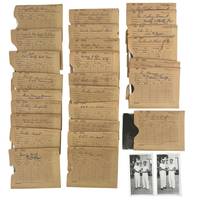
1951rif. 238661951. Large photo archive documenting recreational and civic life in Pinellas County Florida during the 1950s when rapid postwar migration was transforming communities along Florida's Gulf Coast. The photographs record the substantial postwar expansion of organized competitive sport in the United States particularly at the youth school amateur and spectator levels alongside the growth of commercial leisure and civic recreation. Through photographs of the Pinellas County Fair Clearwater Marina fishing and golf tournaments Clearwater High School athletics clubs theatrical productions dances and youth competitions the archive shows how Sunbelt population growth coincided with the proliferation of organized recreation spectator events and community institutions in Clearwater and the surrounding county. Fulmer's photographs document the social infrastructure of a rapidly expanding postwar population from school gymnasiums and golf courses to fairgrounds marinas clubs and tournament venues. Photo archive of approximately 193 items comprising 103 gelatin silver photographs and 91 corresponding large format negatives contained in 27 captioned envelopes Pinellas County Florida primarily 1951 to 1952. Photographs and negatives range from approximately 2½ x 4½ to 4 x 5 inches. Pinellas County Fair photographs show harness racing and horse competition crowded grandstands officials addressing spectators a woman riding before the crowd and aerial performers suspended above the fairgrounds. Golf appears repeatedly in a February 29 1952 Berg Golf Clinic at Pelican Golf Course; a "P.G.A. Boys & Girls Golf Tourn." with young competitors receiving trophies and certificates; junior champions; and adult tournament winners. Clearwater Marina provides another recurring center of organized leisure with charter fishermen displaying large catches beneath the "Clearwater Florida Marina" sign and Clearwater Fishing Tournament winners posing with certificates prizes and a results board sponsored by the Exchange Club of Clearwater. School athletics include basketball action inside a crowded Clearwater gymnasium Clearwater High School baseball a girls volleyball team and football players and coaches discussing plays on a chalkboard. Other assignments show boys competing with numbered model sailboats young archers practicing in formation boys and girls receiving tennis awards Scouts at ceremonies golfers at clinics and presentations a theatrical cast outside Phillips Park and civic groups at dinners and dances. Pinellas County's recreational culture expanded during the same postwar decades in which Florida became a principal destination of Sunbelt migration and Fulmer's assignments register that convergence. Between rapid population growth along the Gulf Coast and a national transformation in popular culture toward organized sport spectator entertainment commercial leisure and legalized wagering this photo archive documents the institutions which provided new residents and Pinellas County tourists with access to a modern sense of culture and American identity principally based on this kind of community organization. In Clearwater these developments coincided with the arrival of new residents drawn by Florida's climate automobile mobility expanding housing stock and promise of leisure producing a concentrated local version of the midcentury American "dream" in which prosperity was increasingly measured not only through homeownership and consumption but through access to recreation tourism sport and entertainment a population of with disposable income spiking an increase in wagering based activities. Fulmer's surviving job envelopes retain client or subject identifications job numbers and occasional dates preserving the working organization of a commercial photographer repeatedly hired to record the county's institutions and public occasions. Light surface wear and occasional handling marks to envelopes; photographs show minor curling few negatives in poor condition showing degradation. Archive in overall good condition. unknown
1951rif. 238661951. Large photo archive documenting recreational and civic life in Pinellas County Florida during the 1950s when rapid postwar migration was transforming communities along Florida's Gulf Coast. The photographs record the substantial postwar expansion of organized competitive sport in the United States particularly at the youth school amateur and spectator levels alongside the growth of commercial leisure and civic recreation. Through photographs of the Pinellas County Fair Clearwater Marina fishing and golf tournaments Clearwater High School athletics clubs theatrical productions dances and youth competitions the archive shows how Sunbelt population growth coincided with the proliferation of organized recreation spectator events and community institutions in Clearwater and the surrounding county. Fulmer's photographs document the social infrastructure of a rapidly expanding postwar population from school gymnasiums and golf courses to fairgrounds marinas clubs and tournament venues. Photo archive of approximately 193 items comprising 103 gelatin silver photographs and 91 corresponding large format negatives contained in 27 captioned envelopes Pinellas County Florida primarily 1951 to 1952. Photographs and negatives range from approximately 2½ x 4½ to 4 x 5 inches. Pinellas County Fair photographs show harness racing and horse competition crowded grandstands officials addressing spectators a woman riding before the crowd and aerial performers suspended above the fairgrounds. Golf appears repeatedly in a February 29 1952 Berg Golf Clinic at Pelican Golf Course; a "P.G.A. Boys & Girls Golf Tourn." with young competitors receiving trophies and certificates; junior champions; and adult tournament winners. Clearwater Marina provides another recurring center of organized leisure with charter fishermen displaying large catches beneath the "Clearwater Florida Marina" sign and Clearwater Fishing Tournament winners posing with certificates prizes and a results board sponsored by the Exchange Club of Clearwater. School athletics include basketball action inside a crowded Clearwater gymnasium Clearwater High School baseball a girls volleyball team and football players and coaches discussing plays on a chalkboard. Other assignments show boys competing with numbered model sailboats young archers practicing in formation boys and girls receiving tennis awards Scouts at ceremonies golfers at clinics and presentations a theatrical cast outside Phillips Park and civic groups at dinners and dances. Pinellas County's recreational culture expanded during the same postwar decades in which Florida became a principal destination of Sunbelt migration and Fulmer's assignments register that convergence. Between rapid population growth along the Gulf Coast and a national transformation in popular culture toward organized sport spectator entertainment commercial leisure and legalized wagering this photo archive documents the institutions which provided new residents and Pinellas County tourists with access to a modern sense of culture and American identity principally based on this kind of community organization. In Clearwater these developments coincided with the arrival of new residents drawn by Florida's climate automobile mobility expanding housing stock and promise of leisure producing a concentrated local version of the midcentury American "dream" in which prosperity was increasingly measured not only through homeownership and consumption but through access to recreation tourism sport and entertainment a population of with disposable income spiking an increase in wagering based activities. Fulmer's surviving job envelopes retain client or subject identifications job numbers and occasional dates preserving the working organization of a commercial photographer repeatedly hired to record the county's institutions and public occasions. Light surface wear and occasional handling marks to envelopes; photographs show minor curling few negatives in poor condition showing degradation. Archive in overall good condition. unknown books
rif. 18363Société de la gravure sur bois originale, 1932. 2 vol in-folio, en feuilles, couvertures originales conservées (3 chansons dont les partitions n'ont pas été imprimées pour des raisons légales, quelques déchirures des couvertures, insolation des couvertures, quelques rousseurs).
rif. 3785Sans lieu ni date (milieu XIXème). Douze cartons 12 x 20 cm lithographiées en couleurs (petit manque à un carton).
rif. 20805Paris, Chromolith. Clamaron, [seconde moitié du XIXe siècle]. IX pl., portefeuille de l'éditeur de demi-chagrin rouge, dos à faux-nerfs orné de fleurons dorés, plats de percaline chagrinée rouge, filets à froid en encadrement sur les plats, rabats de toile noire, liens (quelques petites taches, trois minuscules épidermures, pâles décharges).
1755rif. 000755Paris Desaint & Saillant, Vincent 1755
rif. 21910Paris, Rousseau-Girard, 1959-1961. 3 vol. in-4, 201 pp. LXXXVIII pl. + 259 pp. LXXI pl. + 288 pp. XCII pl., oasis vert sapin, dos à nerfs, tête dorée, couverture conservée (minuscules épidermures).
rif. 22044Paris, Jean Rousseau-Girard, 1959-1961. 3 vol. in-4, 201 pp. LXXXVIII pl. + 259 pp. LXXI pl. + 288 pp. XCII pl., demi-maroquin rouge à la bradel, plats de toile écrue, dos long, couverture conservée, étui cartonné écru (petits frottements aux étuis et 1 mors fendu à l'étui du 1er vol.).
1880rif. 14523Paris Choudens père et fils sans date (vers 1880) In-4 plein maroquin rouge cardinal Paris, Choudens père et fils, sans date (vers 1880). In-4, (4)-267 pp., plein maroquin rouge cardinal, double filet en encadrement estampé à froid, chiffre "M.D" à l'or sur le plat supérieur, dos à nerfs, entre-nerfs avec encadrement estampés à froid, ornés de lyres, double filet à l'or sur les bords, toutes tranches dorées, dentelles sur les chasses, signée Lortic. (Très petits frottements aux bords des coiffes et aux coins, discrète tache au dos.)
rif. 19380Paris, Octave Doin, 1892-1899. 5 vol. in-4, VI-756 pp. + 767 pp. + 744 pp. + 755 pp. + 802 pp., demi-basane brune, dos à nerfs orné de filets dorés et du nom G. Sourdille doré (reliures légèrement défraîchies mais solide, légère insolation, quelques rousseurs).
rif. 17581Paris, Madame Vve Le Petit, 1811. In-12, 408 pp., basane racinée fauve de l'époque, frises dorées en encadrement sur les plats, dos lisse orné de caissons et fleurons dorés, pièce de titre rouge (épidermures, rousseurs, gravures parfois rognées un peu court).
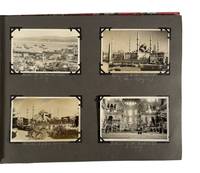
1927rif. 208311927. Photo album documenting a multi country group यातà¥à¤°à¤¾ in 1927 records interwar travel across southern Europe and the eastern Mediterranean including regions under colonial administration and recent political transition. The album follows a group of travelers moving from France through Italy Greece Turkey British administered Palestine and Egypt capturing urban landmarks archaeological sites and local populations encountered along the route. The sequence provides visual evidence of tourism infrastructure mobility and cross cultural observation during a period when former imperial territories such as Constantinople were undergoing redefinition following the dissolution of the Ottoman Empire and the establishment of modern nation states. Album contains 93 black and white silver gelatin photographs and four real photo postcards with images ranging approximately from 2.5 x 4 inches to 3.5 x 5.5 inches and one larger group photograph measuring about 9 x 7 inches. Photographs are mounted on black paper boards with handwritten captions in white pencil and interleaved tissue guards; string bound in patterned cloth boards. The album opens in Avignon with views of St. Pierre's Church and the Palais des Papes then continues through Italy with scenes of Naples and Pompeii as well as shipboard images captioned S.S. Adriatic. Subsequent sections include Athens with views of the Parthenon followed by Constantinople where four postcards depict the harbor the Sultan Ahmed Mosque and the Hagia Sophia shortly after the end of the Ottoman Empire. In British Mandate Palestine images show street scenes in Nazareth and Jerusalem including sites along the River Jordan the Western Wall and the Garden of Gethsemane alongside a captioned portrait labeled "A Jewish Maiden." The album concludes in Egypt with extensive views of archaeological and urban sites at Thebes Memphis Cairo and Luxor including the Obelisk of Hatshepsut Edfu Temple the tomb of Amenhotep II the Colossi of Memnon and the pyramids and Great Sphinx at Giza where the final group portrait shows the travelers posed on camels. Produced during the interwar period the album reflects expanding international tourism networks alongside ongoing European influence in the eastern Mediterranean and Middle East. The juxtaposition of ancient sites modern transport and local populations situates the material within broader histories of archaeology empire and travel culture in the early twentieth century. Light general wear to album and mounts; images well preserved with clear captions; overall very good condition. unknown
1927rif. 208311927. Photo album documenting a multi country group यातà¥à¤°à¤¾ in 1927 records interwar travel across southern Europe and the eastern Mediterranean including regions under colonial administration and recent political transition. The album follows a group of travelers moving from France through Italy Greece Turkey British administered Palestine and Egypt capturing urban landmarks archaeological sites and local populations encountered along the route. The sequence provides visual evidence of tourism infrastructure mobility and cross cultural observation during a period when former imperial territories such as Constantinople were undergoing redefinition following the dissolution of the Ottoman Empire and the establishment of modern nation states. Album contains 93 black and white silver gelatin photographs and four real photo postcards with images ranging approximately from 2.5 x 4 inches to 3.5 x 5.5 inches and one larger group photograph measuring about 9 x 7 inches. Photographs are mounted on black paper boards with handwritten captions in white pencil and interleaved tissue guards; string bound in patterned cloth boards. The album opens in Avignon with views of St. Pierre's Church and the Palais des Papes then continues through Italy with scenes of Naples and Pompeii as well as shipboard images captioned S.S. Adriatic. Subsequent sections include Athens with views of the Parthenon followed by Constantinople where four postcards depict the harbor the Sultan Ahmed Mosque and the Hagia Sophia shortly after the end of the Ottoman Empire. In British Mandate Palestine images show street scenes in Nazareth and Jerusalem including sites along the River Jordan the Western Wall and the Garden of Gethsemane alongside a captioned portrait labeled "A Jewish Maiden." The album concludes in Egypt with extensive views of archaeological and urban sites at Thebes Memphis Cairo and Luxor including the Obelisk of Hatshepsut Edfu Temple the tomb of Amenhotep II the Colossi of Memnon and the pyramids and Great Sphinx at Giza where the final group portrait shows the travelers posed on camels. Produced during the interwar period the album reflects expanding international tourism networks alongside ongoing European influence in the eastern Mediterranean and Middle East. The juxtaposition of ancient sites modern transport and local populations situates the material within broader histories of archaeology empire and travel culture in the early twentieth century. Light general wear to album and mounts; images well preserved with clear captions; overall very good condition. unknown books
1900rif. 2853Paris, Maison Gosteau, sans date (circa 1900). Format oblong : 19,3 x 12,3 cm. Cartonnage en pleine toile noire de la papeterie "L. Merville Fils", dos lisse muet, plats ornés d'un encadrement en doubles filets à froid, "Album" estampé à froid et doré au centre du premier plat, toutes tranches dorées. 50 feuillets (dont 35 pages manuscrites au recto suivies de 25 feuillets blancs). Bel album de 35 pages (recto uniquement) ornées de 44 dessins originaux réalisés au crayon, à la main. Pièce unique de toute rareté d'un petit artisan parisien dont nous n'avons pas trouvé trace, son atelier étant sans doute de toute petite taille. Très intéressant témoignage sur les cercles de jeux à la fin du XIXe et au début du XXe siècle.
1938rif. 190871938. Photograph album documenting a multi-location journey through Mexico City and surrounding regions in the late 1930s presenting a sustained visual record of urban life Indigenous communities and regional landscapes during a period of post-revolutionary modernization. Comprising 52 original black-and-white photographs the album captures both monumental architecture and everyday social environments offering a layered view of Mexico as experienced by foreign travelers. Album with 52 original black-and-white photographs approximately 3.5" x 2.5" mounted on black paper across 10 photographic leaves 21 leaves total. Album measures approximately 10" x 7". Brown faux-leather binding with blind-stamped design and gilt lettering to front cover; bound with brown tie. Handwritten captions in white ink beneath several images. Includes maps of Mexico City on final leaf and rear pastedown. The photographs emphasize the coexistence of historic colonial structures and emerging modern infrastructure. Prominent architectural views include Chapultepec Castle major ecclesiastical buildings in Puebla and formal civic spaces alongside street scenes featuring automobiles commercial signage and pedestrian activity. These images situate Mexico City within a rapidly modernizing urban framework while retaining strong visual continuity with its colonial past. Equally significant are the album's documentary images of Indigenous and rural life. Several photographs depict Indigenous individuals and families in roadside and village settings including a family group with a child and laborers transporting agricultural materials. These images foreground systems of manual labor and traditional dress contrasting sharply with the urban environments elsewhere in the album. Additional scenes of burro transport rural roads and subsistence activity reinforce this juxtaposition between modernization and longstanding economic practices. Market scenes form another core component of the album's documentary value. Photographs labeled as flower and farmer's markets show dense arrangements of goods vendors and informal commercial structures illustrating local economies and patterns of exchange. These are complemented by images of Xochimilco waterways paddle boats and cultivated landscapes extending the album's coverage to agricultural and peri-urban environments. The album also reflects the perspective of its creators. Handwritten captions in white ink identify locations such as Puebla "pottery tiles" "Indian family" "Indian boys" and "Burros" revealing a period-specific outsider vocabulary and framing of Indigenous subjects. The presence of the traveling party-largely older individuals-along with images of hotels and an English school in Mexico City situates the album within the context of organized or leisure travel likely by English-speaking visitors. Final leaves include printed maps of Mexico City and surrounding areas reinforcing the album's function as both a visual and geographic record of the यातà¥à¤°à¤¾. The structure and sequencing of the photographs suggest a deliberate effort to document both major cultural landmarks and vernacular life across multiple environments. This album holds strong research value for Latin American urban history Indigenous studies visual anthropology tourism history and the study of foreign representations of Mexico in the early 20th century. It provides primary visual evidence of how Mexico City and its environs were experienced interpreted and recorded during a formative period of national development. Condition: Very good; photographs clean and well-preserved. unknown
1938rif. 190871938. Photograph album documenting a multi-location journey through Mexico City and surrounding regions in the late 1930s presenting a sustained visual record of urban life Indigenous communities and regional landscapes during a period of post-revolutionary modernization. Comprising 52 original black-and-white photographs the album captures both monumental architecture and everyday social environments offering a layered view of Mexico as experienced by foreign travelers. Album with 52 original black-and-white photographs approximately 3.5" x 2.5" mounted on black paper across 10 photographic leaves 21 leaves total. Album measures approximately 10" x 7". Brown faux-leather binding with blind-stamped design and gilt lettering to front cover; bound with brown tie. Handwritten captions in white ink beneath several images. Includes maps of Mexico City on final leaf and rear pastedown. The photographs emphasize the coexistence of historic colonial structures and emerging modern infrastructure. Prominent architectural views include Chapultepec Castle major ecclesiastical buildings in Puebla and formal civic spaces alongside street scenes featuring automobiles commercial signage and pedestrian activity. These images situate Mexico City within a rapidly modernizing urban framework while retaining strong visual continuity with its colonial past. Equally significant are the album's documentary images of Indigenous and rural life. Several photographs depict Indigenous individuals and families in roadside and village settings including a family group with a child and laborers transporting agricultural materials. These images foreground systems of manual labor and traditional dress contrasting sharply with the urban environments elsewhere in the album. Additional scenes of burro transport rural roads and subsistence activity reinforce this juxtaposition between modernization and longstanding economic practices. Market scenes form another core component of the album's documentary value. Photographs labeled as flower and farmer's markets show dense arrangements of goods vendors and informal commercial structures illustrating local economies and patterns of exchange. These are complemented by images of Xochimilco waterways paddle boats and cultivated landscapes extending the album's coverage to agricultural and peri-urban environments. The album also reflects the perspective of its creators. Handwritten captions in white ink identify locations such as Puebla "pottery tiles" "Indian family" "Indian boys" and "Burros" revealing a period-specific outsider vocabulary and framing of Indigenous subjects. The presence of the traveling party-largely older individuals-along with images of hotels and an English school in Mexico City situates the album within the context of organized or leisure travel likely by English-speaking visitors. Final leaves include printed maps of Mexico City and surrounding areas reinforcing the album's function as both a visual and geographic record of the यातà¥à¤°à¤¾. The structure and sequencing of the photographs suggest a deliberate effort to document both major cultural landmarks and vernacular life across multiple environments. This album holds strong research value for Latin American urban history Indigenous studies visual anthropology tourism history and the study of foreign representations of Mexico in the early 20th century. It provides primary visual evidence of how Mexico City and its environs were experienced interpreted and recorded during a formative period of national development. Condition: Very good; photographs clean and well-preserved. unknown books
rif. 9134Augsburg, T.V. Poll, (début du XIXème). Deux cartes de 7 x 10,5. Très bon état.
rif. 8967Paris, E. Loyson, 1668. In 12 frontispice, 5 ff. non ch. Et 300 pp. reliure ancienne usagée, trace de mouillures.
1900rif. 2408Sans lieu [Paris], sans nom d'éditeur, sans date [circa 1900]. In-folio, 34,5 x 47 cm. Ensemble de 30 lithographies (dont trois en double page), en feuilles sous portefeuille de l'éditeur illustré en couleurs, fermé par trois épais rubans. (2 f.), 30 planches. Rarissime exemplaire, bien complet de ses 30 lithographies (dont trois en double page et la plupart en couleurs), et enrichi d’un dessin original à l’encre, à l'aquarelle et à la gouache, ainsi que d’un envoi autographe signé de l’auteur. Typographie des deux sous-titres "ceux qui patinent" et "ceux qui badinent" de style Art Nouveau. Sorte de galerie humoristique, voire légèrement caricaturale, de portraits des personnages plus ou moins célèbres qui fréquentent le très mondain Palais de Glace, patinoire édifiée en 1893, au rond-point des Champs Elysées, à Paris. Proche du style de Sem. Né en 1880, Daniel de Losques (de son vrai nom Henri-Daniel-Casimir-Paul Thouroude), oeuvra comme dessinateur et caricaturiste dans la presse (Le Figaro, Le Rire, L’Aurore, Fantasio, Je sais tout, Excelsior, Le Matin, Le Monde illustré, Le Théâtre, Paris-Illustré), ouvrit sa propre imprimerie spécialisée dans l’affiche, et mourut pour la France en combat aérien en 1915. Chers clients Abebooks, le poids et le volume important de cet ouvrage entraîneront des frais postaux additionnels, merci de le prendre en considération avant votre achat. Dear Abebooks customers, the weight and volume of this book will entail additionnal shipping fees, thank you for taking it into consideration before ordering.
rif. 4090"P., Gauthier-Villars et fils, 1891-1894. Quatre volumes in 8 brochés (auréoles sur le premier plat du premier volume, manque angulaire au premier plat du second volume, mouillures aux derniers feuillets du quatrième volume), VIII-254 pp. ; 242 pp. ; 200 p"
rif. 5685P., Masson, sans date. In 4 cartonnage illustré de l'éditeur, 48 pp. illustrées en couleurs.
1940rif. 229521940. Photographic album of an American family's travels in 1940 and 1941 documents cross regional movement through Mexico Nova Scotia and the United States with a sustained visual record of Mexican landscapes labor and public life at the beginning of the 1940s. The album titled in manuscript "MEXICO 1941" includes detailed captions identifying locations agricultural practices and infrastructure situating the images within a period of expanding road networks and tourism in North America. The photographs support research into travel history visual documentation of rural and urban environments and cross cultural observation during the early twentieth century. Oblong photograph album containing approximately 180 original black and white silver gelatin photographs each measuring about 3 x 4 inches mounted on grey cardstock pages within a black pebbled faux leather album measuring approximately 9 x 7 inches. Over 80 photographs document travel in Mexico in 1941 with images of central Mexican landscapes including agave fields identified as sources of pulque and mezcal rural roads near Montemorelos the Tampoan River near Valles village scenes and market activity with vendors and goods displayed in open air settings. Urban views show streets with carts wagons and commercial signage. A recurring identified figure "Mary Kay" appears throughout including a photograph with a Spanish interpreter and references to a guide named Miquel "Mike" Soto. Additional photographs depict local residents including agricultural workers and market vendors. The remaining images include approximately 90 photographs from a 1940 trip to Nova Scotia and other North American locations including waterfront and forest scenes Washington D.C. civic architecture and monuments Texas small town environments and Gettysburg battlefield landscapes. The album was produced during a period when automobile travel and tourism expanded access to regional and international destinations allowing American travelers to document landscapes and communities through personal photography. The juxtaposition of Mexican rural and urban scenes with locations in Canada and the United States reflects differing regional environments while also demonstrating the continuity of travel practices and visual documentation. The inclusion of detailed captions indicates an effort to record geographic and cultural information alongside personal experience. Photographs remain clean and well preserved with secure corner mounts and a tight binding; overall very good condition. This album provides an extensive visual record of early 1940s travel across North America with particular emphasis on Mexico and Canada. unknown
1940rif. 229521940. Photographic album of an American family's travels in 1940 and 1941 documents cross regional movement through Mexico Nova Scotia and the United States with a sustained visual record of Mexican landscapes labor and public life at the beginning of the 1940s. The album titled in manuscript "MEXICO 1941" includes detailed captions identifying locations agricultural practices and infrastructure situating the images within a period of expanding road networks and tourism in North America. The photographs support research into travel history visual documentation of rural and urban environments and cross cultural observation during the early twentieth century. Oblong photograph album containing approximately 180 original black and white silver gelatin photographs each measuring about 3 x 4 inches mounted on grey cardstock pages within a black pebbled faux leather album measuring approximately 9 x 7 inches. Over 80 photographs document travel in Mexico in 1941 with images of central Mexican landscapes including agave fields identified as sources of pulque and mezcal rural roads near Montemorelos the Tampoan River near Valles village scenes and market activity with vendors and goods displayed in open air settings. Urban views show streets with carts wagons and commercial signage. A recurring identified figure "Mary Kay" appears throughout including a photograph with a Spanish interpreter and references to a guide named Miquel "Mike" Soto. Additional photographs depict local residents including agricultural workers and market vendors. The remaining images include approximately 90 photographs from a 1940 trip to Nova Scotia and other North American locations including waterfront and forest scenes Washington D.C. civic architecture and monuments Texas small town environments and Gettysburg battlefield landscapes. The album was produced during a period when automobile travel and tourism expanded access to regional and international destinations allowing American travelers to document landscapes and communities through personal photography. The juxtaposition of Mexican rural and urban scenes with locations in Canada and the United States reflects differing regional environments while also demonstrating the continuity of travel practices and visual documentation. The inclusion of detailed captions indicates an effort to record geographic and cultural information alongside personal experience. Photographs remain clean and well preserved with secure corner mounts and a tight binding; overall very good condition. This album provides an extensive visual record of early 1940s travel across North America with particular emphasis on Mexico and Canada. unknown books