6 366 résultats
1931réf. 013261Paris Collection « Mes Photos » [n° 1], Editions H. Jonquières 1931 In-8 carré relié par quatre rivets métalliques, couverture illustrée vernie Edition originale
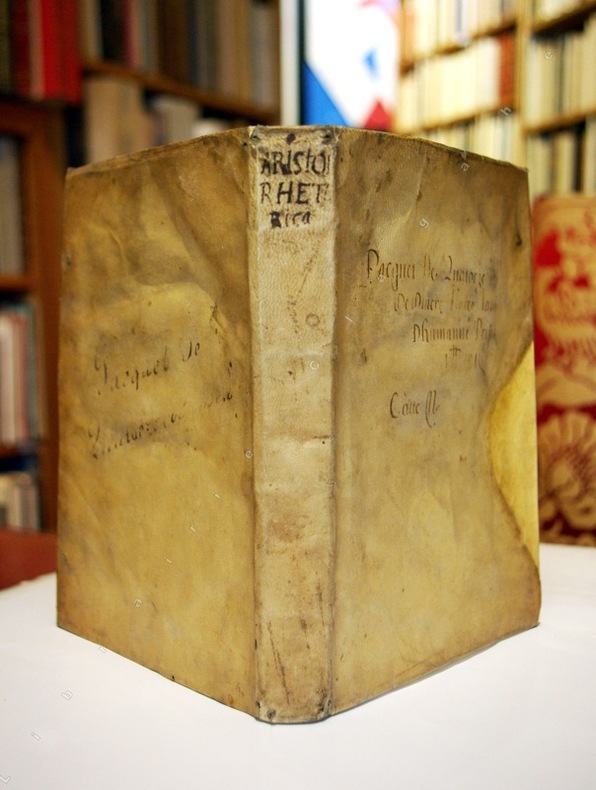
1600réf. 15280Douai, Jean Bogart, 1600. In-8 de (8)-201-(7) ff., vélin rigide à recouvrements, titre manuscrit sur le dos, traces de lacets (reliure de l'époque).
1612réf. 42773Béziers, Jean Pech, 1612. Béziers, Jean Pech, 1612. In-12 sur deux colonnes de (18)-268-(1) pp. 1 f.bl. (12) pp. de table, caractères romains et italiques, basane marbrée, dos orné à nerfs, pièce de titre en maroquin rouge, tranches jaspées (reliure du XVIIIe siècle).
réf. 112320aaf1943, gr. in-8vo, 65 Bl. (davon 10 leer) Büttenpapier (Wasserzeichen „INGRES“ und „PMF(Italia)“), maschinengeschrieben in Schwarz mit roten Initialen, in passendem Fach am Schluss hs. Brief (4 S.) und 3 Postkarten (2 davon zeigen Ambrosi vor seinem Atelier, bzw. seine Bronzeskulptur „Eli Lama Sabathani“), ms. signiert „Falkenstein“, Maroquineinband (signiert BAER) mit Goldfileten auf Deckeln und Rücken mit Titel in Goldprägung, mit passendem Schuber mit Original-Aquarellbemalung.
1962réf. 36801BB(Paris), Atelier Frutiger, 6 Juni, 1962. 37,5x35,5 cm. 20 Blatt mit 15 Originalholzschnitten. Als Leporello in losen Bogen in Originalmappe und -Schuber und -Chemise.
Crown 8vo (246 x 150 mm), ff. 63, tipped-in is a small folio sheet (280 x 213 mm) printed of one side only "Prices of Type and Materials Manufactured and Sold by Stephen Sutton & Co. at the Caxton Letter Foundry...", later quarter red morocco, green boards. A very rare specimen of printing types from this little known foundry. The specimen begins with 34 samples of different size font from "the most modern faces, cut by artists of first-rate skill and acknowledged talent." Then follows 27 priced specimens of "a beautiful and extensive assortment of Stereotype Ornaments." The tipped-in price list is printed in double-column and gives prices for type, wood type, leads' and metal furniture, galleys, brass rule, cases, frames, and furniture. At the foot is a list of "Agents for the Country": Mr. Joseph Graham, 2 Jewry Street, Aldgate; Mr Simmons, Artillery Lane, Bishopsgate Street; Messrs. Renshaw and Kirkman, Budge Row; Messrs. Shepherd and Sutton, Foster Lane. Provenance: From the typographical library of John Lewis (his bookplate) and John Brinkley (his signature). The only other copy recorded is that of The British Library.
1826réf. 0005340Chiswick: Charles Whittingham 1826. First edition. Hardcover. Near Fine. 60 wood engravings by John Thompson from drawings by Stothard Corbould Harvey and others. 16mos full dark cherry calf raised bands extra glt spines inner dentelles a.e.g. bound by Zaehnsdorf Bindery for Lauriat's of Boston some rubbed spots at tips of some spines. Singer was a member of the Society of Antiquaries and a former bookseller when he and Charles Whittingham printed this handsome popular illustrated edition of the Bard of Avon. "Singer was responsible for a careful collation of the text and many useful notes. . He unostentatiously did much to advance the study of Elizabethan literature - DNB." John Thompson trained by Robert Branston and Thomas Bewick was considered unexcelled as a wood engraver in the two decades surrounding this set. 60 wood engravings by John Thompson from drawings by Stothard Corbould Harvey and others. This was the first edition to possess Singer's Notes - Jaggard SHAKESPEARE BIBLIOGRAPHY p. 517 . Charles Whittingham hardcover
1984réf. 0009327Statesboro GA : The Boxwood Press 1984 . First Limited edition. Hardcover. Fine/issued without dj. wood engravings. Folio unpaginated marbled endpapers; issued without the slipcase mentioned in the colophon. Copy 10 of only 50 plus 5 proofs signed by Solomon. Handset in 30 pt. Broadway. Twelve full-page blocks by Solomon. These poems were inspired by the legend of St. Julian "The Hospitaller". Ratner's poems were worked out in concert with these woodblock illustrations each influencing the other. "The results are a work of visual literature which exists apart from the poems and which we hope will make its own statement - Introduction by Ratner." Julian's life-journey invlves an encountter with a stag. The stag is invoked in relief on the top cover and in intaglio on the rear and covered fully in split-grain leather. The Boxwood Press hardcover
réf. 4449A Paris, Chez Ganeau, Bauche, les Frères Estienne, d'Houry, 1767. With numerous (over 200) illustrations in the text and 2 folding engraved plates. 3 volumes. (4), xvi, 959, (1, blank) pp.; (4), 919, (1, blank) pp.; (4), 909, (1, approbation, privilège du roi) pp. Folio. Contemporary marbled calf, spines with raised bands, labels with gilt lettering, bindings expertly repaired. Kress 6417; Goldsmiths 10261; Higgs 3976; Musset-Pathay 437; this edition not in Einaudi; Vicaire, Gastronomie, 173, Thiebaud, Chasse, 202-204. The best and entirely revised edition by De la Marre, incorporting the new discoveries by Duhamel and others. This was by far the most popular and important work on domestic economy in the 18th century, dealing with domestic chemistry, the keeping and caring of domestic animals, recipes for food and home-made medicine, beauty and health suggestions. It is of course also an attractive and illustrated dictionary on agriculture, gardening, botany, huntig, breading of animals, bee-keeping, vineyards, gastronomy, hunting, and so forth and alphabetically arranged. The work enables a person to be completely self-supporting and to produce for a market.'Le Dictionnaire oeconomique a joui d'une grande réputation. Il est même encore estimé aujourd'hui. Mais il faut considérer cet ouvrage dans deux états differens, tel qu'il était en 1709, lorsqu'il sortit des mains de l'auteur, agé alors de 76 ans, et tel qu'il parut en 1767 par les soins de M. de la Marre. Cette édition est préférable à la première et à celles qui ont paru entre ces deux époques, parceque l'éditeur a eu soin de la corriger et de l'enrichir des découvertes de Duhamel, etc.' (Musset-Pathay, who has a large article on Chomel and his work on page 300-301).
réf. bf3674Houpied E. Relié Volumineux in-8 (22 x 28 cm), relié, RARISSIME CATALOGUE de la grande maison de typographie qu'était l'établissement HOUPIED. Montés entièrement sur onglet, les 406 feuillets proposent de très nombreux jeux de caractère. Ainsi, 238 pages comportent des ensembles de caractères (216 en recto simple, et 22 sur une face d'une impression recto/verso), dont certaines grandes familles comme les polices de caractères : Anglaise 16, Bâtarde 9, Égyptienne 23, Fantaisie 52, Gothique 16, Italienne 12, Latine 12, etc. Les autres feuillets proposent des Initiales, des Ornements, des Filets ou des Vignettes (111 feuillets en recto simple, 31 sur une face d'un recto/verso, et surtout 46 en double pages dépliantes et 6 en feuillets dépliants plus grands encore). Notons également que sur l'ensemble des feuillets, 23 sont en plus d'une couleur. Nous sommes probablement ici en présence de l'exemplaire personnel de monsieur Houpied. Bords des plats et mors frottés, une jonction interne défaite, papier très frais, ce rarissime catalogue, réel MOMENT D'HISTOIRE DU LIVRE reste en assez bel état général. Livraison a domicile (La Poste) ou en Mondial Relay sur simple demande.
1551[Torrentino] (cm.33,2) bella mz. pergamena ben restaurata. Piatti e sguardie antiche.-- pp. 425 + 1 p. nn. + cc. 13 nn. + 1 c. bianca. Grande stemma mediceo al frontis. Dedica a Cosimo dei Medici. Seconda edizione (La prima 1549) di grande bellezza tipografica. A pag. 108 si trova uno dei capolettera più belli del '500 italiano. L' opera contiene molte notizie biografiche su vari celebri illustri personaggi storici. Esemplare straordinariamente bello, nitido e marginoso. Solo al frontis qualche lievissima fioritura. * Moreni " Torrentino" 181; * Graesse III 490; * Brunet III 584; Bm. Stc. 304; * Adams G 664. [F80] Libro
1869réf. 46402270Lyon, N. Scheuring [Imprimerie Louis Perrin], 1869-70 ; 2 volumes in-8, plein maroquin citron, plats et dos ornés d’un décor mosaïqué d’entrelacs géométriques rouges et bleus sertis de filets dorés, pièces de titre en maroquin rouge et bleu, dentelle intérieures dorées, tranches dorées. (Smeers) XVI pp., 1 f blanc, VI pp., 551 pp., (1 p.) - 3 ff. n. ch., 442 pp., portrait en frontispice.Somptueuse édition typographique, le chef-d’oeuvre de l’imprimeur lyonnais Louis Perrin.Titres dans des encadrements architecturaux Renaissance, beaux encadrements pour les titres de chaque partie, toutes les pages sont réglées d’un filet rouge. Préface de Philibert Soupé.TIRAGE LIMITÉ À 260 EXEMPLAIRES. CELUI-CI EST UNE DES 150 SUR VERGÉ TEINTÉ (n°121).Il est luxueusement relié à l’époque par Smeers. Qq. ff. intervertis à la fin du 2e tome. En tête du 1er volume on a relié en plus du portrait de l’édition un second portrait de Marot gravé par Duflos le jeune. Dos légèrement brunis.
1883Complete series of 9 volumes + 1 supplement ; v,320 + 320 + 371 + xii,331 + viii,331 + xi,334 + xi,363 + ix,637 pp. + Supplement: 408pp. (Antwerp, 1955), original softcovers, vols. 1-9 are printed by J.E. Buschmann in Antwerp, published in the series "Uitgaven der Antwerpsche Bibliophilen" nos.12-15-26-29-30-31-32-33-34, Vols.1-7-8-9 are still uncut, Vol.8-9 in one physical volume, printed on handmade paper (except for vol.1), vols.3-6 with wide margins ; 26x18cm., weight: 7kg., [Rare complete set of the first and only edition of correspondence by Chr. Plantijn, 1555-1589], B102944
1883réf. B102944Antwerpen, Antwerpsche Bibliophilen 1883-1918 & 1955 Complete series of 9 volumes + 1 supplement ; v,320 + 320 + 371 + xii,331 + viii,331 + xi,334 + xi,363 + ix,637 pp. + Supplement: 408pp. (Antwerp, 1955), original softcovers, vols. 1-9 are printed by J.E. Buschmann in Antwerp, published in the series "Uitgaven der Antwerpsche Bibliophilen" nos.12-15-26-29-30-31-32-33-34, Vols.1-7-8-9 are still uncut, Vol.8-9 in one physical volume, printed on handmade paper (except for vol.1), vols.3-6 with wide margins ; 26x18cm., weight: 7kg., [Rare complete set of the first and only edition of correspondence by Chr. Plantijn, 1555-1589], B102944
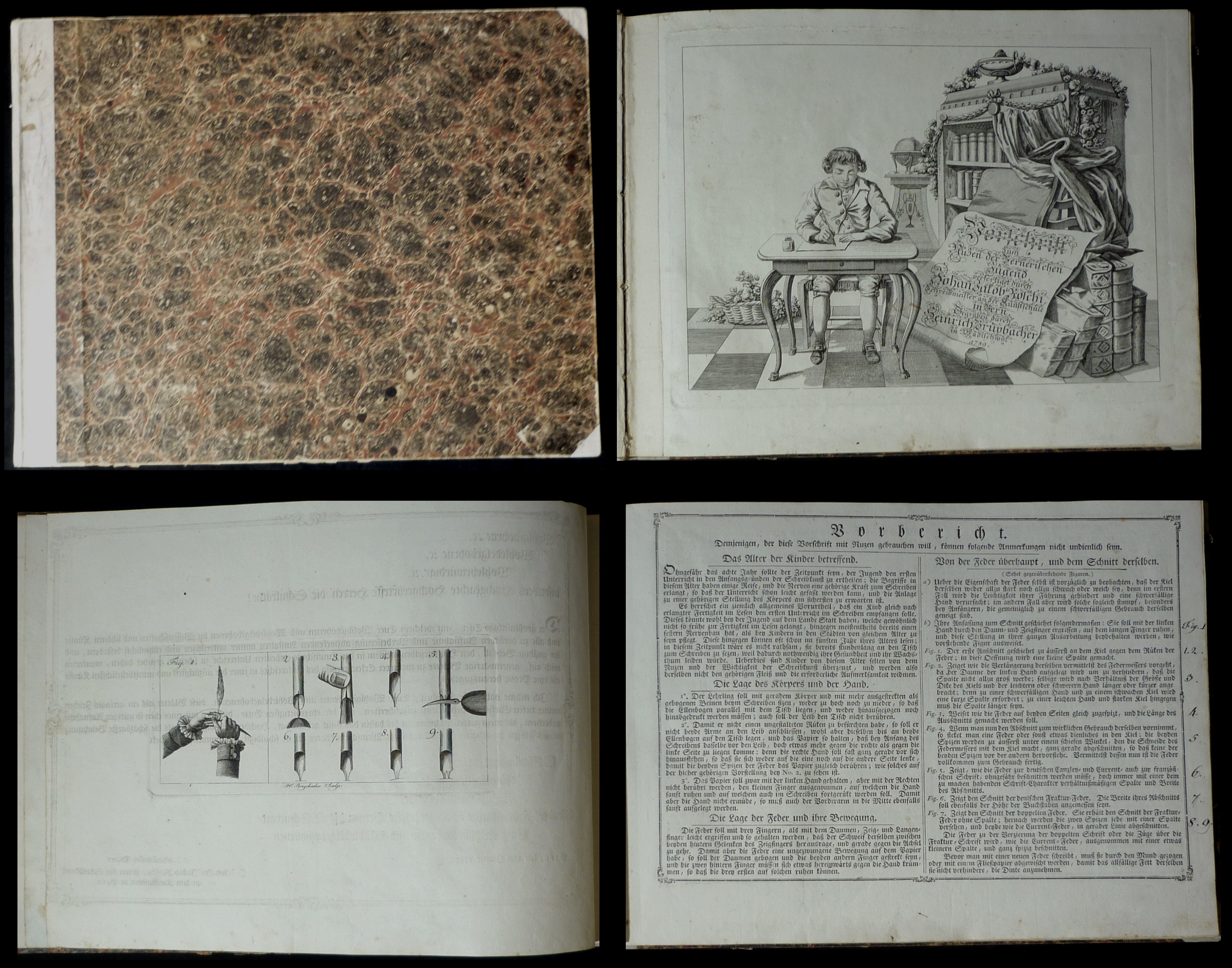
1795réf. 85230ABBern, 189-(1795). Quer-Folio (27,8x34 cm). Gestoch. Titel (Tafel 1), 4 S. mit 1 ganzseit. Kupfer, Tafel 2-40. Halbpergamentband der Zeit.
2004EIGHTEEN VOLUME SET. Contains color and b&w plates. 310x240mm. Gilt hardcover. All volumes are in good condition. PLEASE NOTE: This item is overweight. We may ask for extra shipping costs.
1963réf. 25014Buffalo New York: The Gallery Upstairs Press 1963 - 1967. First Edition. Printed glazed white card-stock boards with successive plastic ring binding coil - as issued. Very good / fine; publisher's blind stamp on the title page. . Oblong 4to 2 193 3 pp. Printed on glazed paper; sheet size appx. 173 x 280 mm. Cornelius Cardews Treatise was proffered as an overwhelming visual musical score and remarkable example of graphic notation; being a definitive break with traditional musical notation. Written between 1963 and 1967 Treatise comprises 193 pages of lines symbols and various geometric or abstract shapes that exclude accepted conventions of musical notation. The score is not accompanied by any explicit instructions to the performers in how to perform the work or what sound-producing means were to be used. Although the bottom of each page has two five-line musical staves this is apparently not meant to suggest piano or other keyboard instruments only to indicate that the graphic elements are musical and not purely artistic in character. He had been an assistat to Karlheinz Stockhausen for three years in the late '50s. Stockhausen commented: "As a musician he Cardew was outstanding because he was not only a good pianist but also a good improviser and I hired him to become my assistant in the late 50s and he worked with me for over three years. I gave him work to do which I have never given to any other musician which means to work with me on the score I was composing. He was one of the best examples that you can find among musicians because he was well informed about the latest theories of composition as well as being a performer." He trained as a typographer in London College of Printing and then worked as an assistant art editor at Aldus Books. Many important creative individuals worked there including Germano Facetti who would direct the celebrated redesign of Penguin books during the decade. This is where during lunch breaks in the drawing office he began Treatise. He spent the next four years between 1963 to 1967 working on the score recognizing that he could use abstract shapes as a basis for musical notation. He became occupied more and more with abstract visual work and the transformations of the graphic elements that permit the "reading of the score" as an abstract visual work. An important milestone. New Grove III 773-774; see also the important work by Karkoschka Das Schriftbild der Neuen Musik 1966 - published while Treatise was in press and noting Cardew's work. The Gallery Upstairs Press hardcover books
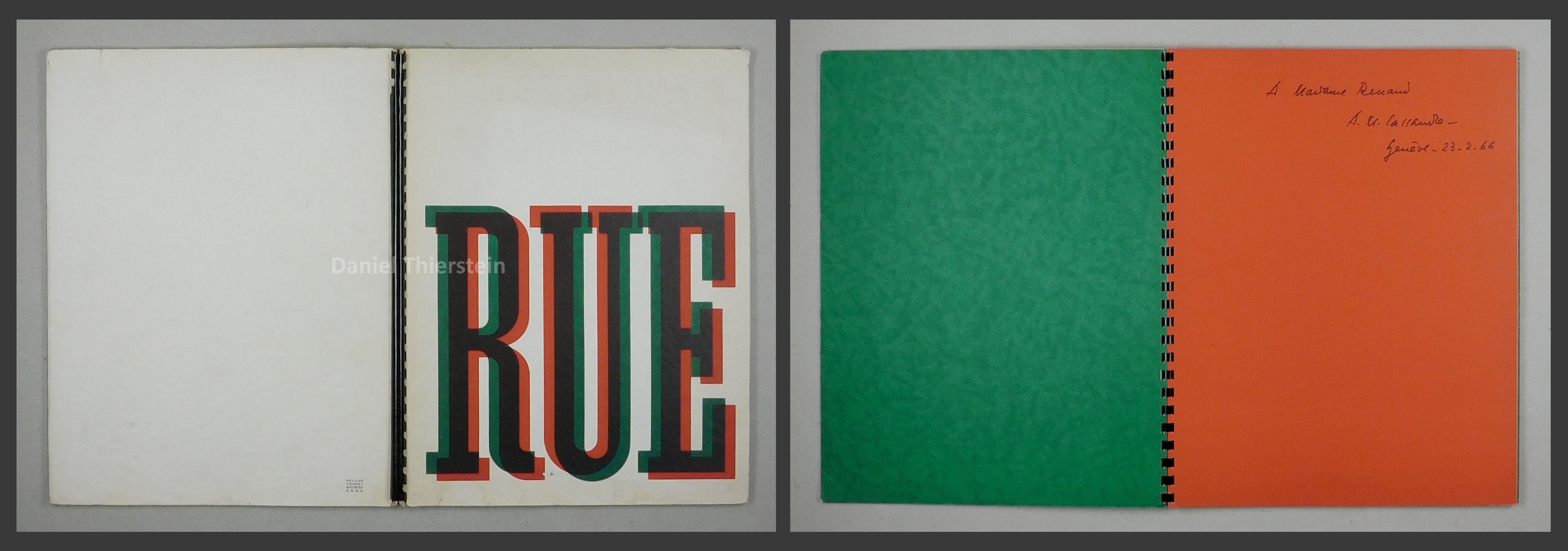
1935réf. 57544ABMontrouge, Draeger frères., (1935). In-4°. 20 feuilles n.ch. Reliure à spirale noire, titre en relief et imprimé en superposition de rouge et de vert sur le premier plat de couverture. [2 Warenabbildungen]
1935réf. 57544ABMontrouge, Draeger frères. (1935). In-4°. 20 feuilles n.ch. Reliure à spirale noire, titre en relief et imprimé en superposition de rouge et de vert sur le premier plat de couverture.
First edition, 3 vols., bound in 4, 4to (279 x 185 mm), ONE OF 100 COPIES PRINTED ON THICK AND LARGE PAPER WITH EXTRA PLATES, [4], xxv, [7], 462,lxxix, [1]; [2], 555, [1]; [2], 298; [2], 299-622, lxiipp., with the author's wood-engraved device on each title-page, a wood engraving of the elaborately-quartered coat of arms of the Roxburghe Club on the dedication page, 85 engraved plates ((including the private plate of 'Diana de Poictiers' in vol. 2, which was apparently destroyed after only 50 copies had been printed, and a proof of the 'Prater' plate in vol. 3), 62 illustrations printed on fine and thin "India" paper and mounted on the text leaves, 55 other illustrations in the text, with the additional sixty engraved plates on 52 leaves from Lewis' Series of Groups bound in at the appropriate places as designated by Lewis in his 'Directions to the binder', contemporary notes in pencil to several endpapers and a few within the text, text and plates have staining of varying degrees, pale stain to many lower margins, a little damage to endpapers where bookplates have been removed, full red hard grain red morocco,,covers waterstained, spines lettered in gilt, all edges gilt. Unfortunately this handsome large paper copy has suffered from water damage sometime in the past, additional photographs are available upon request. This set with the additional set of etchings on india paper by George Lewis, of a classic work of the utmost importance for its wealth of eye-witness information and anecdotes about printed books, manuscripts, buildings, other artefacts and people, both from past centuries and from the author's own day, for the extraordinary collection of illustrations, mostly drawn during the tour itself, and finally as a sumptuous piece of book production. As soon as the book appeared, leading scholars derided Dibdin for his lack of scholarship, especially concerning early manuscripts and printed books. But one must distinguish between the extensive and extremely useful information about things and people Dibdin saw during his 1818 tour, and his own interpretations and conclusions, which now serve only as a window to the attitudes of the time. Dibdin's enthusiasm, readable style and entertaining anecdotes, moreover, caught the mood of his age, making the book extremely popular and influential. Lewis' A Series of Groups... was intended to accompany Dibdin's Tour but was rejected by Dibdin as unworthy of his book. Lewis, most perturbed, issued them at his own expense and presented his case in the eight-page Advertisement which was separately printed. Jackson 48; 56; 56n: Windle & Pippin A38a; A44; D13.
1692réf. 42505Paris, André Pralard, 1692. 4 vol. in-8 de (48)-638-(58) pp. ; (8)-470-(8) pp. ; p. 471-892-(19) ; (40)-676 ; (20)-664 (i.e. 660) pp., maroquin rouge janséniste, dos à nerfs, tranches dorées (reliure de l'époque).
1653réf. 42295Leyde, Jean et Daniel Elzevier, 1653. In-16 de 381 pp., 1 f.bl., titre-frontispice gravé, maroquin fauve doublé de maroquin rouge orné d'une frise dorée d'encadrement, dos à nerfs, pièce de titre en maroquin rouge, filet à froid d'encadrement sur les plats, tranches dorées sur marbrure (reliure de l'époque).
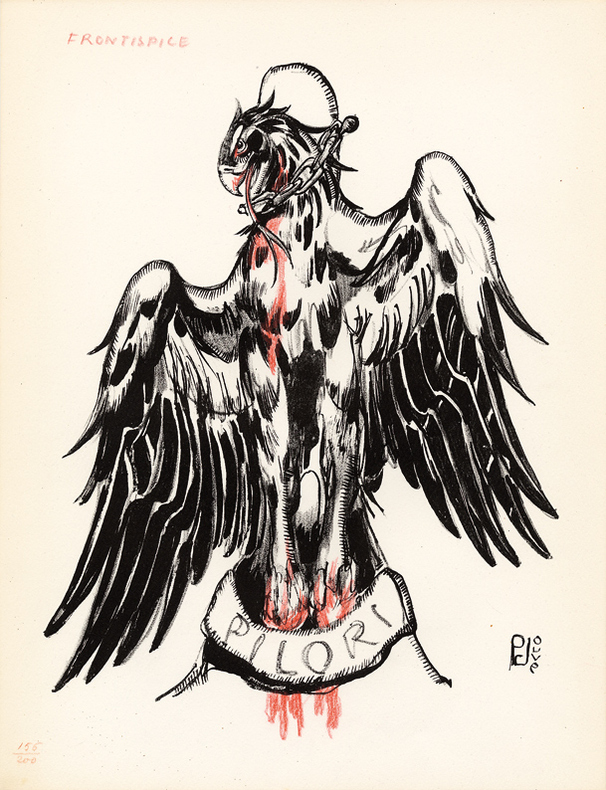
1945réf. 14742Paris, La Lithographie, 1945 ; in-folio en ff., chemise caramel à rabats illustrée_; (4) pp. (texte de Jacques-Noir, poésie de René Fauchois et table) ; frontispice, couverture et 41 planches lithographiées sur vélin fort, numérotées à la main, la plupart avec titre manuscrit et signature autographe.
1941Collezione completa. Insieme in ottime condizioni di conservazione (da segnalare solo tracce di ruggine alla pinzatura di alcuni fascicoli), completo di un rarissimo messaggio dattiloscritto circolare su carta intestata della rivista, che annuncia l’uscita dei due fascicoli complementari a chiusura dell’annata. L’ultima annata della rivista «Note fotografiche», l’“house organ” di AGFA Foto diretto da Alfredo Ornano e stampato a Milano presso la tipografia Lucini anziché Rizzoli dall’8 luglio 1941 al febbraio 1943, è probabilmente la prima esperienza di Albe Steiner come art director. Steiner illustra regolarmente con fotomontaggi pubblicitari la seconda e la quarta di copertina. Sospesa con il numero 10 dell'aprile 1942 «per disposizioni ministeriali», pubblicò nel febbraio 1943 due fascicoli monografici fuori numerazione per completare l’annata: «Fotografare» e «Pose istantanee», al fine di rispettare l’impegno preso con gli abbonati. Copertine fotografiche di W. Benser, Franco Grignani, Giovanni Scheiwiller e altri, stampa a cura del tipografo Lucini. Tra i collaboratori troviamo Guido Piovene, Luigi Veronesi, Giulio Galimberti, R. Muratore, Ermanno F. Scopinich, Pierluigi Erizzo, Federico Vender, Giorgio Mazzonis, Bruno Munari, G. Muggiani, G. Mondaini, A. Bragaglia, G. Pagano, Marcello Nizzoli, S. Pedrotti, Eriberto Carboni. Particolarmente rari i due fascicoli «Fotografare» e «Pose e istantanee», registrati in ICCU in sole tre biblioteche (solo IUAV Venezia e ICCD Roma li possiedono entrambi). 12 volumi
1584réf. 14506Francfort, Héritiers de André Wechel, 1584 ; in-4 ; plein vélin ivoire de l'époque, titre manuscrit au dos ; 341 pp., (1) p. corrigenda, (1) f. blanc. Texte grec jusqu'à la page 258 puis Annotations en latin sur deux colonnes et Index.