6,361 results
First edition, 3 vols., 4to (270 x 185 mm), [6], vi, [2], ccxxv, [1], 410, [2]; [4], 535, [3]; [4], 544, [4]pp., with half-titles, ONE OF 50 LARGE PAPER COPIES, 37 engraved plates (without the 'Presentation in the Temple' plate which was not ready at publication and occurs in only a very few copies and the 'Portrait of Los Rios' which Windle & Pippin suggest is an extra-illustration), also without the engraved portrait of Dibdin by Henry Mayer, numerous woodcuts engraved vignettes, several printed in red or blue, some mounted, some light spotting and offsetting as usual, marbled endpapers, contemporary full blue-green morocco, decorated in gilt with interlacing geometrical design on the covers, richly tooled gilt morocco doublures, flat spines lettered in gilt direct, all edges gilt, spine slightly faded, corner of lower board of vol. II bumped, some slight edge-wear to bindings otherwise a handsome set. A fine copy of the rare large paper issue of the author's most lavish publication and the high water of Dibdinian Bibliomania. Jackson 40; Windle & Pippin A28.
1925ref. 15487ABBerlin, -, 1925. Kalligrafisch gestaltetes Doppelblatt in Ledermappe und Schuber., Abbildung 1|Abbildung 2|Abbildung 3
1931ref. 25353TOLMER 1931 1 Paris, Tolmer, 1931, petit in-4, broché, cartonnage éditeur noir et jaune sous étui, couverture en couleurs illustrée.
1654ref. 42819Imprimés au Chasteau de Richelieu, A Paris, Pierre Le Petit, Henry Le Gras,, 1654. Petit in-8 (139 x 85 mm) de (8)-211-(5) pp. (sig. ã4, A-O8, feuillet blanc L8).[DESMARETS DE SAINT-SORLIN (Jean)]. Le Combat spirituel ou de la perfection de la vie chrétienne, traduction faite en vers par J. Desmarets. Imprimés au Chasteau de Richelieu, A Paris, Pierre Le Petit, Henry Le Gras, 1654. Petit in-8 de (8)-57 pp. (A-C8, D5).Les deux pièces reliées en 1 vol. petit in-8, maroquin rouge, dos lisse orné, encadrement de roulettes dorées sur les plats, filet doré sur les coupes, dentelle intérieure, tranches dorées (relié vers 1810).
1605ref. 40266Limoges, Jacques Barbou, 1605. In-16 de 130 pp. chiffrées 30 par erreur (sign A-H8, I1), trigramme IHS sur le titre, vélin souple (reliure de l'époque).
1558ref. 40083Toulouse, [Guyon Boudeville, pour] Antoine André, 1558. Petit in-4 (18 x 14 cm) de (12)-321-(1) pp. (sign. aa6, A-Z4, AA-QQ4, RR5), demi-chagrin rouge, dos à nerfs, non rogné (reliure du XIXe siècle).
1654ref. 42470Imprimé au Chasteau de Richelieu, Paris, Pierre Le Petit et Henry Le Gras, 1654. In-16 (140 x 90 mm) de (8)-57 pp. vélin souple, titre manuscrit sur le dos et le premier plat (reliure de l'époque).
1911LIMITED EDITION OF 306 COPIES. RARE large, ornate edition of Dante Alighieri's 'Divine Comedy', published on the alleged 700th anniversary of the Comedia. The text is heavily annotated, and is prefaced by the Italian poet Gabriele D'Annunzio. The edition features numerous woodcuts and text decorations reproduced from the 15th-century Venice edition of the Comedia. This exemplar is not numbered, meaning it is probably one of the first 6 copies. 415x310mm. XI+524 pages. Brown cloth Hardcover, masterfully restored from a damaged and partially missing cover. Cover corners bumped. Pages wavy with somewhat rough edges. Pages slightly yellowing. [SUMMARY]: In spite of the damage to cover it has previously sustained, this rare and impressive edition of a great literary masterpiece has been restored and is in good condition. PLEASE NOTE: This item is overweight. We may ask for extra shipping costs.
1645in-12, (130x75 mm), pp. 413, (15), legatura coeva in piena pergamena floscia. Con due frontespizi figurati e 147 vignette (di mm 35x50 ca.) silografiche n.t., alcune più volte ripetute, iniziali ornate e finalini. Pregevole edizione della Vita e delle Favole di Esopo nella traduzione italiana a cura del piacentino Giulio Landi, apparse rispettivamente per la prima volta presso i Giolito nel 1545, e a Venezia, Bariletto, 1569 (DBIt 63, pp. 385-389). Edizione figurata di eccezionale rarità - come tutte quelle di Esopo, di estrema deperibilità in quanto date in lettura ai bambini; nessun esemplare di questa edizione torinese è censito in biblioteche pubbliche italiane. Inoltre appare straordinario sottolineare che i legni sono gli stessi utilizzati nell'edizione latina apparsa a Biella presso Mondella nel 1549 e 1550 (Bersano Begey, II, 913-14). Queste deliziose matrici xilografiche, dall'indubbio sapore popolare, sopravvissero per oltre cento anni e vennero riutilizzate in questa edizione in volgare. Buon esemplare (antiche note di possesso ms. al titolo e in fine ''Gioanni Pietro Reynaudo'').. Manca a Michel-Michel, a B.M.STC Italian XVII secolo, al Canavesio, Tipografia del 600 in Piemonte..
ref. 26159Paris, Jorry, Lambert et Duchesne, 1758. Text printed within woodcut border. [ii] (series title dated 1763), xxii, [ii], 244, 88; 48 (the pagination of the six supplements is continuous) pp. 8vo in 4s. Finely bound in late nineteenth century crushed blue morocco, spine in compartments, gilt-lettering directly to spine, tooled with theatrical mask to spine and to all four corners of upper and lower board, upper edge gilt, gilt dentelles, partly uncut, a fine copy. Grand-Carteret (Almanachs Français) 192; Dufour, Bibliographie de Paris, p. 395; Soleinne, IV, 283; OCLC locates a number of copies of the main work, but only Dutch Royal Library, Lyon and Bibliotheque Nationale for the full complement of supplements. First edition, very rare with all six supplements present, of this detailed account of French theatre up to the middle of the eighteenth century. The supplements, which were published separately over the course of six years, are very rarely present. Here they are collected with a general title page, dated 1763, published 'at the expense of the author', and bound in a fine 'theatrical' binding. The Tablettes dramatiques are a most valuable source for the history of French theatre, covering first the history of the theatre, the history of the foundation of specific theatres, an inventory of plays performed or printed for the period 1552 to 1752, with critical commentary, and finally a biographical dictionary of authors and actors. The supplements generally follow the same format and give information on new plays, a performance calendar for the period in question, details of ballets, and biographical information on new emerging actors. A fascinating overview of French or more specifically Parisian theatre history, documenting the transition from medieval theatre to the highly organised and politicised drama up the middle of the eighteenth century.The chevalier de Mouhy (1701-84), was a playwright and prolific author on the theatre, he also published an Histoire du theatre français depuis son origine jusqu'en 1780.
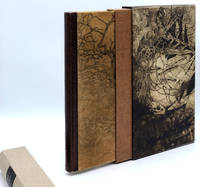
ref. 015681Kalamazoo Michigan: Rarach Press 1989. Hardcover. Fine. No. 30 of 38 copies signed by the artist/publisher Ladislav Hanka. In a multi-textured binding by Jan Sobota stamp-signed on rear doublure covers of sueded calfskin printed with original etchings flat spine of brown catfish leather turn-ins and headbands covered in eel skin beige pigskin doublures covered with original etchings leather hinges. In an encapsulated pigskin slipcase covered with etchings beige linen pull-off spine with brown morocco label. With 16 etchings of flora and fauna by Ladislav Hanka. 333 x 248 mm. 13 1/8 x 9 3/4''. A fine copy. This is a handsomely-produced book arts collaboration celebrating the natural beauty of Kalamazoo County Michigan featuring a memorable binding by Czech master binder Jan Sobota. After studying with Karel Silinger in Pilsen and at the School for Applied Arts in Prague and then working in Switzerland Sobota came to the United States where hespend 15 years mostly working at Southern Methodist University. He returned to Loket Czech Republic in 1997 where he founded the Sobota family bookbinding studio and helped to organize the Society of Czech Bookbinders becoming its first president. He has won numerous awareds for his innovative and often whimsical work which has been exhibited worldwide. The present volume is equal parts inventiveness and elegance. Book artist and publisher Ladislav Hanka b. 1952 earned degrees in biology and zoology before receiving his MFA in printmaking and his background in the natural sciences obviously infuses his art which focuses on the flora and fauna of forest and lakes. This volume's collection of prose and poetry inspired by the natural landscape is enhanced by Hanka's dramatic etchings of twisted bare-limbed trees fossils and insects. The letterpress work was done by Amy Bollinger on heavy handmade paper. Rarach Press hardcover
1793small 8vo, pp. XXIII, (1), original orange boards. It contains a letter to collectors "io ho pensato di non poter meglio soddisfare alla erudita di lei inchiesta, che trasmettendole non solo l'elenco di tutto ciò che entro il corrente anno verrà da me riprodotto, ma altresì di quanto, ajutatemi Dio, ho divisato d'intraprendere nell'anno vegnente". Then 46 titles, plus the different issues, published between 1791 and 1794. And a note "a' bibliofili" dated 15 October 1793, in which he announces that he will publish in 1794 ad personam the four classics Dante, Petrarca, Ariosto and Tasso, that "will end his career": luckily, he went on printing his masterpieces till his death, 20 years later. A fine uncut copy of an extremely rare item.. Brooks 517..
1556ref. 44944Sens, Gilles Richeboys, 1556. 3 parties en 1 vol. petit in-4 (15 x 22,5 cm) de (12)-95-(1) pp. 174 pp., 1 f. blanc, 70 pp. (1) f. (sign. A6, a-m4, A-Y4, Aa-Ii4), veau fauve, dos orné à nerfs, encadrement et motif cental dorés sur les plats, tranches dorées (reliure de l’époque).
1772ref. 15319, , 1772-1777. 4 pièces en 2 volumes in-8, texte encadré, veau marbré, dos lisse orné à la grotesque, pièces de titre en maroquin rouge et de tomaison en maroquin noir, tranches rouges (reliure de l'époque).
1928Stampa fotografica vintage. CON DEDICA Didascalia, firma e luogo autografe dell’artista verso. Interventi manuali recto. Ottime condizioni. Proveniente dall’archivio del futurista B.G. Sanzin. Bello scatto in prospettiva, molto contrastato, su fondo nero, del modellino di una vetrina di negozio di «F o T o». Rarissima: probabilmente esemplare unico. Esposta alla mostra «Ugo Carà: Arte architettura design 1926-1963», Trieste: Museo Revoltella, 26 novembre 2003 - 29 febbraio 2004, curata da Maria Masau Dan e Lorenzo Michelli, con didascalia: «Plastico per negozio di fotografia, 1928». Masau Dan & Michelli, Ugo Carà: Arte architettura design 1926-1963, p. 75
1782ref. 12394Aux Deux-Ponts, [Parme, Stamperia Reale, Giambattista Bodoni], 1775 [1782]. 13 vol. grand in-8, veau marbré, dos lisses ornés, pièces de titre en maroquin rouge, et de tomaison en maroquin rouge sur pièce de maroquin vert, tranches dorées (reliure de l'époque).
1504ref. 41988Lyon, Claude Davost, Étienne Gueynard, 1504. In-4 gothique à deux colonnes de (12)-217 ff. mal chiffré 215 (sign. aa bb a-z π-ƒ A9), index, veau marbré, dos orné à nerfs, pièce de titre en maroquin rouge, tranches rouges (reliure XVIIIe).
1538ref. 16626Paris, Yolande Bonhomme pour Jean Petit, 1538-1539. In-8 gothique (16 x 10 cm) de (8)-CLXX-(1) ff., (sign. A8, A-X8, Y3), maroquin brun, dos à nerfs, dentelle intérieure, tranches dorées (Petit).
1613in-16 (mm.100 x 72), pp. 608, ff. (16) in fine, contenenti una tavola dei Capitoli e una tavola degli Argomenti. Carattere corsivo. Titolo entro bordura silografica ornata. Legatura coeva in pergamena rigida, titolo ms. al dorso. Dedicato dallo stampatore "al molt' illustre et Eccellentiss. sig. mio osservandissimo sign. Gio. Batt. Minardi". Rarissima edizione, assai ricercata, essendo la prima delle sole tre edizioni della Commedia pubblicate nel Seicento (le altre uscirono a Venezia ed a Padova nel 1629). Questo incredibile oblio del sommo poeta è chiaro testimone del decadimento culturale dell'Italia secentesca. In questa edizione compare per la prima volta il titolo di ''Visione'' in luogo di ''Divina Commedia'', che vuole significare ''il complesso delle cose da lui vedute nel mistico suo viaggio'' (Scartazini, Enciclopedia Dantesca, II, 2154). Esempl. con gli usuali margini ridotti in testa e restauro all'angolo superiore esterno del titolo, che tocca la bordura; antica nota di possesso al verso dell'ultimo foglio.. G. Mambelli, p. 55. De Batines, I, 102: ''Questo titolo Visione, dal Volpi giudicato fantastico, si addice al Poema di Dante forse meglio che quel di Commedia''. Cornell, I, p. 10: ''For the title Visione one may appeal to the poem itself in which it is twice expressely indicated as a vision, and indeed according to the poetic disposition of the matter, it is a vision. The vision of a pilgrimage through the three realms of the next world''..
1527ref. 42528Basileae (Bâle), Johann Froben, 1527. Petit in-4 (154 x 204 mm) de (8)-434-(2) pp. (sign. a-z4 A-Z4 Aa-Hh4 Ii6), titre avec encadrement gravé, demi-basane blonde à petits coins, dos lisse orné de roulettes et palettes dorées, pièce de titre verte, tranches mouchetées (reliure du XIXe siècle).
2 Vols., in one, small 4to (260 x 160 mm), 103 leaves including title and two advertisement leaves; 22 leaves including title and advert leaf (ornaments numbered 1-103), all printed on rectos only, printed on thick paper stock, 'Lepard' watermark, orig. boards with marbled covers, printed paper title label to spine (rubbed), inner hinges expertly repaired, a very good uncut copy with wide margins. The Fry's were a Bristol family, and Joseph Fry (1728-87) established the foundry at Bristol in 1764, in partnership with William Pine and Isaac Moore as manager and type-designer. By 1766 the foundry had moved to London, with Moore retiring in 1776 and Pine shortly after. In 1782 Fry took his sons Edmund (especially interested in exotic founts) and Henry into partnership, and made considerable purchases of Greeks and Orientals at the sale of James' foundry. Joseph retired in 1787 and in 1794 Isaac Steele joined as partner until 1808, when Edmund Fry was left in sole control until he admitted his son to partnership. In 1829 the foundry was acquired by William Thorowgood. A very good copy of this extremely rare and substantial specimen book. Berry & Johnson, p. 45; Mosley, 118 & 119.
Small 4to (250 x 155 mm), title with vignette, 2 ff. adverts, 126 ff. (i.e., 100ff. type specimens, 26 ff. ornaments, numbered 1-130) all printed on rectos only, printed on thick paper stock, 'Lepard' watermark, occasional spotting and turned corners, cont. calf, rubbed, joints cracked, black morocco spine label. The Fry's were a Bristol family, and Joseph Fry (1728-87) established the foundry at Bristol in 1764, in partnership with William Pine and Isaac Moore as manager and type-designer. By 1766 the foundry had moved to London, with Moore retiring in 1776 and Pine shortly after. In 1782 Fry took his sons Edmund (especially interested in exotic founts) and Henry into partnership, and made considerable purchases of Greeks and Orientals at the sale of James' foundry. Joseph retired in 1787 and in 1794 Isaac Steele joined as partner until 1808, when Edmund Fry was left in sloe control until he admitted his son to partnership. In 1829 the foundry was acquired by William Thorowgood. A very good copy of this extremely rare and substantial specimen book. Following an introduction, the specimens proceed from Ten line Pica to Diamond: 'the smallest Letter in the World. It gets in considerably more than the famous Dutch Diamond.' There are type in Hebrew and Greek, ornamental, Blacks, Exotics, Ships, Bands, frames, & decorative pieces composed of flowers continuing to a priced section of cast ornaments. This edition not listed by ESTC, Berry & Johnson and Mosley both cite the St. Bride copy only. Berry & Johnson, p. 46; Mosley, 122.
1558ref. 8703Paris, Galliot du Pré, 1558. In-12 de (8)-152 ff., maroquin rouge, dos orné à nerfs, triple filet doré sur les plats, tranches dorées (reliure du XIXe siècle).
1932Edizione originale. Esemplare viaggiato annullo postale e francobollo conservato; lievissime tracce della piegatura in quattro, per il in eccellenti condizioni di conservazione. Rarissimo numero unico pubblicato dalle Edizioni d’Italia, ultima e definitiva forma assunta dal gruppo romano che ha attraversato gli anni ’20 sotto varie forme — dalla «Bilancia» a «2000»/«Atlas» passando per «La Ruota dentata» — per confluire in questa impresa editoriale ad altissimo gradiente di qualità e innovazione. Un solo esemplare è registrato nel censimento ICCU, quello della Biblioteca Estense di Modena; manca completamente a OCLC. Non abbiamo notizia di copie apparse in asta o in cataloghi di vendita (mancava al catalogo monografico dell’Arengario S.B. dedicato a Paladini), e indice sicuro dell’estrema rarità ne sia il fatto che manca del tutto ai repertori specialistici dedicati all’argomento: nemmeno un accenno, una riga, una sparuta menzione nelle note a piè pagina. -- Fondata nel 1931 dal ventiquattrenne Armando Ghelardini, l’editrice si distinse subito per un programma ben definito e modernissimo, che si affidava sul versante grafico alla spiazzante inventiva di Vinicio Paladini: collana ammiraglia era «Gli scrittori moderni», dove uscirono i racconti di Barbaro (L’essenza del can Barbone), lo «Spettacolo con farsa finale» di Ghelardini, il «Tatuaggio» di Talarico, l’«Orologio innamorato» di Diotima (il nome d’arte scelto da Meletta Bontempelli, moglie di Massimo). Ma «l’intero catalogo delle Edizioni d’Italia è degno di nota» — come segnalava recentemente Giampiero Mughini (Una casa romana, p. 211): la collana «Documenti», sorta di docu-fiction ante litteram dove uscirono Alvaro, Bontempelli, Pudovchin, Bardi (studiata in un recente convegno su «Literature as Document: Generic Boundaries in 1930s Western Literature», Leiden 2019); la rivista «Occidente», pubblicata in dodici quaderni zeppi di letteratura e segnalazioni culturali che non passavano sugli altri periodici italiani dell’epoca, e tanti altri progetti minori rimasti allo stadio iniziale (una collana artistica; una collana dedicata al cinema). -- «La Freccia d’argento», il cui nome fa riferimento proprio all’organizzazione editoriale sintetizzata nelle frecce disegnate da Paladini, offre anzitutto uno spaccato imprescindibile sulla progettualità in corso nell’officina editoriale di Ghelardini: nomi come A. Gide, R. Neumann, E. Settanni, S. Norman, W. Bonsels, R. Bonanni, un libro sulla «Volgarità nell’architettura» di Vinicio Paladini, e molto altro che non vide mai la luce, mentre le Edizioni d’Italia chiudevano i battenti nel 1935, un po’ per i fastidi che recavano al regime, molto per ragioni squisitamente economiche. Ma il foglio è prima di tutto un capolavoro artistico di Paladini, che non a caso apre — come già era accaduto nella «Ruota dentata» — con una prima pagina tutta affidata al maestro italo-russo, dominata da un grande ‘fotomontage’ («L’arte neoclassica, sotto il severo sguardo della critica, lotta contro le scuole di avanguardia») e corredata da un manifesto eccezionale, come già rimarcato assolutamente ignoti agli studiosi: «Teoria e pratica del fotomontage», composto nello stile futurista e visionario dell’ex-immaginista. Nel resto del fascicolo fotoritratti di tutti gli autori, alcuni assai scherzosi; anticipazioni dai romanzi; «La crisi del libro non esiste» di Lucio Ridenti; un altro fotomonage di Paladini a p. 3 (Molly e Betty ridono pensando al 1900); ampia rassegna stampa e presentazioni dei titoli imminenti.
1649ref. 42429Langres, Jean Boudrot, 1649. In-4 (19,7 x 14,7) de 1 feuillet gravé (armes de Sébastien Zamet, évêque de Langres), (16) pp. 8-561-(1) pp. (16) pp. (table, index), 1 feuillet non chiffré (deux errata), nombreuses erreurs de pagination (saut de chiffrage de 549 à 559), veau porphyre, triple filet doré sur les plats, dos orné à nerfs, pièce de titre en maroquin rouge (reliure du XVIIIe siècle).