LOCKE, John - SIMM, AlexanderBiblio.com
3 868 résultats
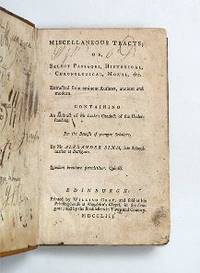
1753réf. 149022Edinburgh: Printed by William Gray 1753. Locke abridged for the younger reader First edition of this rare miscellany including an abridgement of John Locke's Of the Conduct of the Understanding 1706 a significant instance of the popularisation of Locke's philosophy in Scotland. Compiled by the retired schoolmaster Alexander Simm of the Scottish town of Bathgate the miscellany presents to "younger scholars" the "actions and sayings of the great good and wise men of antiquity as well as of the modern; which might instead of useless Trish Trash afford them an agreeable and profitable entertainment when otherwise unemployed" preface. Also included are remarks on the Copernican system Confucius the delusions of witchcraft and the raising of new islands by volcanos. A section on the Union of 1707 is present strongly in favour of the advantages which have accrued from it. Printed on poor-quality paper copies have not survived and the work is consequently rare - ESTC records only 3 copies British Library National Library of Scotland Bodleian. Octavo 170 x 102 mm. Contemporary unlettered sheep blind border to covers. Contemporary pen-trials and ownership signatures to endpapers. Light rubbing to sheep joints intact front free endpaper neatly excised a few minor nicks and peripheral chips to contents not affecting text. A very good copy. ESTC T119426; Yolton 311. unknown
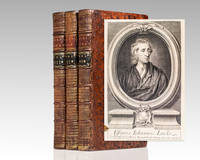
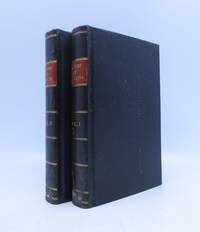
1727réf. PCKeLOCK34London: Printed For Arthur Bettesworth. 1727. 1727. 3 Volumes. folio. pp. 2 p.l. xxviii 2 575 16index; 1 p.l. 671 13index; 3 p.l. 668 15. 2 engraved plates incl. frontis. portrait by Vertue after Kneller & memorial plate. woodcut ornaments & initials. contemporary mottled calf neatly rebacked preserving endpapers some scarring to covers but an attractive set. Third Edition including An Essay concerning Human Understanding Some Considerations of the Consequences of lowering the Interest and raising the Value of Money Two Treatises of Government Letter concerning Toleration Some Thoughts concerning Education Some Familiar Letters &c. but not the Remains or Le Clerc's account of Locke's life which was first added in the 1751 fifth edition. Christophersen 88. Rand I 341. NCBEL II 1836. cfPrinting and the Mind of Man 164. Palgrave p. 633. London: Printed For Arthur Bettesworth., 1727. unknown
réf. 24256In Firenze, Appresso Andrea Bonducci, 1751. Titles printed in red and black, large folding table, engraved vignette on title of first volume. Two volumes in one. xxxiii, (1, blank), 191 (misnumbered 189), (1, blank) pp.; xxiii, (1, blank), 316, (2), 116 pp. 4to. Contemporary Italian vellum boards, label with gilt lettering to spine, a very nice copy. Einaudi 3476; Goldsmiths 8635; Higgs 115; Yolton 164 (only four copies); Attig 507; Kress, Italian Economic Literature, i, 275. First Italian edition, rare. A very good copy of this handsomely printed book translating John Locke's Some Considerations of the Consequences of the Lowering of Interest and Raising the Value of Money (1692) and Further Considerations concerning Raising the Value of Money (1695), the only early translation of Locke's papers on money, based on the folio Works of 1740, and is furnished with extensive footnotes by the translators Giovanni Pagnini and Angelo Tavanti. At the end of the second volume is a 116 pages essay by Pagnini on the correct price and value of money entitled Essay on the just price of things, the correct value of money and on the trade of the Romans. Pagnini was destined to become one of the major economic historians in the eighteenth century with the publication of his History of the tithe in 1765-66.The year of publication of this translation, and the translation itself, represent an interesting moment in time: 1751 is also the year Galiani's famous and important Della Moneta was published. Galiani's roots were firmly planted in the southern culture which had been rekindled by the work of Locke and Newton. One of Galiani's first intellectual undertakings had been the translation of Locke's essay on financial problems, which he dropped when he heard that in Florence another version was being produced, edited by Pagnini and Tavanti (the present work) (Carpanetto and Ricuperati, Italy in the Age of Reason 1685-1789, p. 250). - Front paste-down with a few wormtracks, an old bookplate verso of the front blank, a very fine large paper copy, printed on heavy paper.
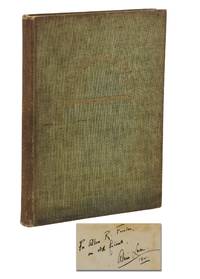
1940réf. 140946343Washington D.C.: Associates in Negro Folk Education 1940. First Edition. Very Good. First edition first printing. Signed by Alain Locke and inscribed to "an old friend" Allan R. Freelon on the front free endpaper. Freelon 1895-1960 was a prominent Harlem Renaissance artist pioneering educator and civil rights activist. 224 pp. with color frontispiece "Mother and Child" by Sargeant Johnson and 4 pp. color insert "The Amistad Murals" tipped in facing p 124. Bound in publisher's green cloth lettered in gilt. Very Good with darkened spine and edges with light soiling overall. Extremities lightly worn with minor foxing to endsheets. Faint toning to edges of textblock. No jacket likely as issued. An important association between Locke "Dean" of the Harlem Renaissance and popularizer of African American art and Freelon on the first serious book-length study of Black artists. Two of Freelon's Impressionist-style paintings are featured in this work alongside work by Edmonia Lewis Henry Ossawa Tanner Hughie Lee-Smith and Jacob Lawrence. Associates in Negro Folk Education unknown
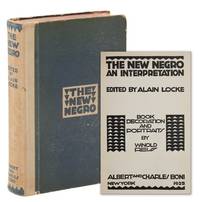
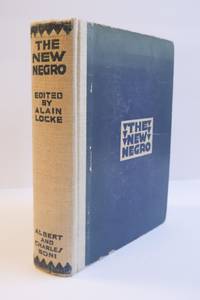
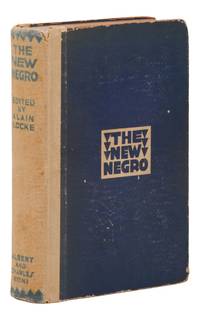
1925réf. 140949243New York: Albert and Charles Boni 1925. First Edition. Very Good. First edition first printing. xviii 446 pp. Bound in publisher's blue paper-covered boards over buckram spine cloth lettered in blue; lacking the dust jacket. Very Good with moderate rubbing and toning to covers boards exposed at edges. Dust-soiling and light staining to upper edge of textblock contemporary bookplate and several small abrasions to front endsheet. Contents slightly overopened at several places. A landmark African American anthology featuring stories essays and poetry by the leaders of the Harlem Renaissance movement: Langston Hughes Zora Neale Hurston James Weldon Johnson Countee Cullen Claude McKay Jean Toomer and more. Albert and Charles Boni unknown
1940réf. 140946343Washington D.C.: Associates in Negro Folk Education 1940. First Edition. Very Good. First edition first printing. Signed by Alain Locke and inscribed to "an old friend" Allan R. Freelon on the front free endpaper. Freelon 1895-1960 was a prominent Harlem Renaissance artist pioneering educator and civil rights activist. 224 pp. with color frontispiece "Mother and Child" by Sargeant Johnson and 4 pp. color insert "The Amistad Murals" tipped in facing p 124. Bound in publisher's green cloth lettered in gilt. Very Good with darkened spine and edges with light soiling overall. Extremities lightly worn with minor foxing to endsheets. Faint toning to edges of textblock. No jacket likely as issued. An important association between Locke "Dean" of the Harlem Renaissance and popularizer of African American art and Freelon on the first serious book-length study of Black artists. Two of Freelon's Impressionist-style paintings are featured in this work alongside work by Edmonia Lewis Henry Ossawa Tanner Hughie Lee-Smith and Jacob Lawrence. Associates in Negro Folk Education unknown books
1925réf. 140949243New York: Albert and Charles Boni 1925. First Edition. Very Good. First edition first printing. xviii 446 pp. Bound in publisher's blue paper-covered boards over buckram spine cloth lettered in blue; lacking the dust jacket. Very Good with moderate rubbing and toning to covers boards exposed at edges. Dust-soiling and light staining to upper edge of textblock contemporary bookplate and several small abrasions to front endsheet. Contents slightly overopened at several places. A landmark African American anthology featuring stories essays and poetry by the leaders of the Harlem Renaissance movement: Langston Hughes Zora Neale Hurston James Weldon Johnson Countee Cullen Claude McKay Jean Toomer and more. Albert and Charles Boni unknown books
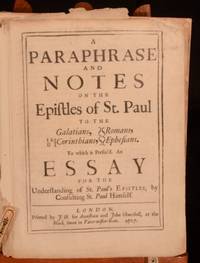
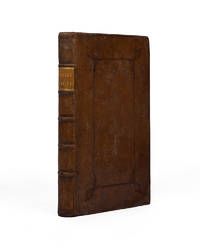
1707réf. EXP2-E-7London: J H Awnsham and John Churchill 1707. First edition. Leather. Fair. 9.5" by 7.5". None. A scarce collection of works by John Locke. The first collected edition compiled of various editions of earlier shorter works. Each work with a separate title page and pagination. Collated: Complete. With publisher's advertisements bound out of order to BL copy. Contains: An Essay for the Understanding of St Paul's Epistles by Consulting St. Paul himself 1707 First Edition A Paraphrase and Notes on the Episdtle of St. Paul to the Galatians 1706 Second Edition A Paraphrase and Notes on the First Epistle of St Paul to the Corinthians 1706 First Edition A Paraphrase and Notes on the Second Epistle of St Paul to the Corinthians 1706 First Edition A Paraphrase and Notes on the Epistle of St Paul to the Romans 1707 First Edition A Paraphrase and Notes on the Epistle of St Paul to the Ephesians 1707 First Edition John Locke was an influential English philosopher and physician of the Enlightenment. His work greatly influenced the development of political philosophy and the works of figures such as Voltaire and Rousseau. His religious beliefs varied over his lifetime and were rarely displayed in his writings. These works published posthumously provide important insight into his theology and the final years of his life. In a calf binding. Externally worn both boards detached but present. Loss to head at tail of spine and to leather at extremities. Light rubbing and worming to boards. Lacking front free-endpaper. Internally generally firmly bound although binding strained to Romans about half way through the volume. Title page and front blank detached but present. Title page with slight loss not affecting text. Pages bright with handling marks and dusting throughout occasional spotting. Marginal age toning and offsetting to first and last few pages. Pink ink annotations roman numerals indicating chapter numbers throughout. Light marginal worming to final work Ephesians not affecting text. Closed tear to page 29 of Ephesians. Overall: FAIR binding GOOD internally Fair J H Awnsham and John Churchill hardcover
réf. 121874London Printed for Awnsham and John Churchil at the Black Swan in Pater-Noster-Row and Samuel Manship at the Ship in Cornhill near the Royal Exchange 1695. . Third edition; folio 33 x 21 cm; engraved portrait frontispiece of Locke after Sylvester Brounower ads to verso of final f. of text ownership inscription in pen to title upper margin obscured inscription in pen to front pastedown contemporary corrections annotations and notes in pen to pp17 18 33 93 131 and 190 slight dampstaining to title and prelims and occasionally thereafter; blind-panelled calf later contrasting brown morocco lettering-piece to spine spine head cap and bottom corner of upper cover expertly repaired a little rubbed very good; 40 407 13pp. The third edition of John Locke's 1632-1704 major philosophical work an excellent lifetime example with contemporary annotations and notes in pen for the fourth edition published in 1700. The Essay Concerning Human Understanding seeks to explain how it is that we as humans acquire our ideas and knowledge. In it Locke refutes the suggestion of rationalist philosophers like Descartes that man is born with some form of innate understanding instead famously describing the mind as a 'white paper' i.e. blank slate 'void of all Characters without any Ideas' which is then filled through sensory experience p.41. As such the text is considered one of the primary sources of empiricism in early modern philosophy. With contemporary manuscript annotations to the margins inserting the additions which were incorporated into the fourth edition of the text published in 1700 and correcting errors. These include in italics: p.17 Book I Chap. III 5 '.the highest perfection of humane Nature to do otherwise'; p.18 Book I Chap. III 8 '.nothing else but our own Opinion or judgement of the moral rectitude or pravity of our own actions'; p.33 Book I Chap. IV 16 'angles' for 'Angels'; p.93 Book II Chap. XIV 5 'Durtaion' for 'Duration'; and p.190 Book II Chap. XXVII 29 inserting the extensive anecdote of Prince Maurice and his Brazilian parrot. ESTC R20221; Yolton 63. London, Printed for Awnsham and John Churchil, at the Black Swan in Pater-Noster-Row, and Samuel Manship, at the Ship in Cornhil unknown
1722réf. 149219London: Printed for A. Churchill and A. Manship 1722. Rare second edition of the collected works of John Locke “the most worthy… of the indisputably great philosophers.” Folio three volumes bound in full speckled brown calf with gilt titles and tooling to the spine with morocco spine labels in seven compartments within raised gilt bands gilt turn-ins all edges stained red. Frontispiece of John Locke to volume one. In very good condition bookplate to the front pastedown and ownership signature to the front free endpaper of volume one. An exceptional example. John Locke is regarded as one of the most influential of Enlightenment thinkers and the Father of Classical Liberalism. "Locke was the first to take up the challenge of Bacon and to attempt to estimate critically the certainty and the adequacy of human knowledge when confronted with God and the universe" PMM 164. This is the first edition of the first collected edition of his work and the earliest to put his name to "Two Treatises on Government" as well as the letters on "Toleration"and "The Reasonableness of Christianity". Contents include: Volume 1: An Essay concerning Human Understanding. In Four Books; A Letter to the Right Reverend Edward Lord Bishop of Worcester concerning some Passages relating to Mr. Locke's Essay of Human Understanding in a late Discourse of his Lordship's in Vindication of the Trinity; Mr. Locke's Reply to the Right Reverend the Bishop of Worcester's Answer to the Letter; Mr. Locke's Reply to the Bishop of Worcester's Answer to his Second Letter. Volume 2: Some Considerations of the Consequences of the lowering of Interest and raising the Value of Money. In a Letter send to a Member of Parliament. 1691; Short Observations on a printed Paper entitled For encouraging the coining SilverMoney in England and after for keeping it here; Further Observations concerning raising the Value of Money. Wherein Mr. Lowndes's Arguments for it in his late Report concerning An Essay for the Amendment of the Silver Coin are particularly examind'd; Two Treatises of Government. In the Former the false Principles and Foundation of Sir Robert Filmer and his Followers are detected and overthrown. The Latter is an Essay concerning the true Original Extent and End of Civil Government; A Letter concerning Toleration; A Second Letter concerning Toleration; A Third Letter for Toleration: To the Author of the Third Letter concerning Toleration; The Reasonableness of Christianity as deliver'd in the Scriptures; A Vindication of The Reasonableness of Christianity From Mr. Edwards's Reflections; A Second Vindication of the Reasonableness of Christianity. Volume 3: Some Thoughts concerning Education; A Paraphrase and Notes on the Epistles of St. Paul to the Galatians I and II. Corinthians Romans and Ephesians. To which is prefix'd An Essay for the Understanding of St. Paul's Epistles by consulting St. Paul himself; Posthumous Works viz. I. Of the Conduct of the Understanding. II. An Examination of P. Malebranche's Opinion of Seeing all things in God. III. A Discourse of Miracles. IV. Par of a Fourth Letter for Toleration. V. Memoirs relating to the Life of Anthony first Earl of Shaftesbury. VI. A new Method of the Common-Place-Book written originally in French and translated into English; Some familiar Letters between Mr. Locke and Several of his Friends.The work was published ten years after his death and is the first time his works were published as a collection. Printed for A. Churchill and A. Manship unknown
1925réf. 1405855New York: Albert and Charles Boni 1925. First Edition. Hardcover. Octavo xviii 446 pages. In Very Good condition. Bound in publisher's quarter tan cloth and navy blue paper boards with blue lettering to spine. General shelf wear with moderate to heavy rubbing along extremities. Some sunning and scratching to boards. Fading to red dye on top edge of textblock. With pink pictorial endpapers. Previous bookseller's sticker adhered to rear pastedown. Mild tearing to fore edges of pages xv-xviii. Light age toning with minor penciling scattered throughout. Shelved in Case 1. "The New Negro: An Interpretation" is an anthology of fiction poetry and essays on African-American and African art and literature. The title lent itself to The New Negro Movement a contemporary name for what is now commonly known as the Harlem Renaissance. Editor Alain LeRoy Locke was a leading figure in the Harlem Renaissance and a professor at HBCU Howard University in Washington DC. 1405855. Shelved Dupont Bookstore. Albert and Charles Boni hardcover
1925réf. 1405855New York: Albert and Charles Boni 1925. First Edition. Hardcover. Octavo xviii 446 pages. In Very Good condition. Bound in publisher's quarter tan cloth and navy blue paper boards with blue lettering to spine. General shelf wear with moderate to heavy rubbing along extremities. Some sunning and scratching to boards. Fading to red dye on top edge of textblock. With pink pictorial endpapers. Previous bookseller's sticker adhered to rear pastedown. Mild tearing to fore edges of pages xv-xviii. Light age toning with minor penciling scattered throughout. Shelved in Case 1. "The New Negro: An Interpretation" is an anthology of fiction poetry and essays on African-American and African art and literature. The title lent itself to The New Negro Movement a contemporary name for what is now commonly known as the Harlem Renaissance. Editor Alain LeRoy Locke was a leading figure in the Harlem Renaissance and a professor at HBCU Howard University in Washington DC. 1405855. Shelved Dupont Bookstore. Albert and Charles Boni hardcover books
1707réf. 007735London: Printed by J.H. for Awnsham and John Churchill at the Black Swan in Pater-noster-Row 1707. This volume is compose of five parts each with its own title page and pagination the whole is proceeded by two volume title pages both dated 1707 and a preface. i-ii iii-xviv Galatians 1706 second edition title page2 publisher's message to the reader and publisher's adverts2pages 43 pages. I Corinthians 1706 advertisment2 title page1-2107 pages 208blank. II Corinthians 1706 : title page123-58 2adverts. Romans 1707 : title page1-23-142 pages. 2adverts. Ephesians 1707 : title page1-23-60 pages. 8 X 9.7 inches. Bound in contemporary full calf with tooled ruled borders and decorations title label to spine with only fragments remaining. externally very rubbed with wear to corners spine ends and edges cracking along outer and inner hinges both boards attached. Inside all complete as described here Initial "P" in ink on corner of front free endpaper and a name and date 1734 at the top of the title page. Browning and offsetting to endpapers Some browning and foxing to the pages of the preface and a water stain on the margin of several pages of the preface. Therafter all quite clean throughout with no further foxing or marking. No annotations. First Edition. Hard Cover. Good/No Jacket. Printed by J.H. for Awnsham and John Churchill, at the Black Swan in Pater-noster-Row Hardcover
1925réf. 140947068New York: Albert and Charles Boni 1925. First Edition. Very Good. First edition first printing of this Harlem Renaissance cornerstone. Bound in publisher's original blue paper-covered boards over buckram spine cloth lettered in blue. Very Good with rubbing through to edges with heavier wear to corners and spine ends covers worn. Contents tanned with several leaves roughly opened. The leading African American poets and writers of the early 20th century are featured in this important anthology which came to define the Harlem Renaissance movement: Langston Hughes Zora Neale Hurston James Weldon Johnson Countee Cullen Claude McKay Jean Toomer Georgia Douglas Johnson Jessie Fauset and more. Albert and Charles Boni unknown
1925réf. 140947068New York: Albert and Charles Boni 1925. First Edition. Very Good. First edition first printing of this Harlem Renaissance cornerstone. Bound in publisher's original blue paper-covered boards over buckram spine cloth lettered in blue. Very Good with rubbing through to edges with heavier wear to corners and spine ends covers worn. Contents tanned with several leaves roughly opened. The leading African American poets and writers of the early 20th century are featured in this important anthology which came to define the Harlem Renaissance movement: Langston Hughes Zora Neale Hurston James Weldon Johnson Countee Cullen Claude McKay Jean Toomer Georgia Douglas Johnson Jessie Fauset and more. Albert and Charles Boni unknown books
1691réf. 66937Amsterdam: Chez Abraham Wolfgang 1691. A Founding Document of Democracy The First of John Locke's Works to be Translated from His Native English LOCKE John. Du gouvernement civil ou l'on traitte de l'origine des fondemens de la nature du pouvoir et des fins des societe politiques. Traduit de l'Anglois. Amsterdam: Chez Abraham Wolfgang 1691. First edition in French of Locke's groundbeaking work and the first of his works to be translated from his native English. Twelvemo 5 7/16 x 3 inches; 138 x 75 mm. 12 321 1 blank pp. Title page with printer's woodcut device. Short marginal tears to M7 & 8 repaired and with no loss. Contemporary light salmon paper over boards rebacked at a very early date in similar paper manuscript spine lettering red speckled edges. Small number of upper blank of title and front endpaper. Housed in a quarter morocco clamshell case. Overall an excellent copy; very clean and in a contemporary binding. Originally published in 1690 as 'Two Treatises of Government'. "Locke's anonymous text is here an anonymous translation traditionally attributed to David Mazel. 'One of the Huguenot pastors living in Holland' of the second treatise in its 1R version with the first chapter omitted" Yolton. "The second treatise contains a plain statement of the principles of democracy. In an age and country in which the practice of democracy had just been triumphantly vindicated Locke's theories although anticipated to some degree by the 'Whig' tradition of political thought-Aristotle Aquinas Hooker Grotius-had all the freshness of novelty. Like Hooker Locke presupposes an original and necessary law of reason and bases the constitution of society on it rather than on the de facto existence of a government based on the actual submission of the governed to the rulers. This consent is thus a prior condition of the 'social contract' not a result of it so that the civil rulers hold their power not absolutely but conditionally; government being essentially a moral trust which lapses if the trustees fail to maintain their side of the contract. Locke was to reinforce these liberal opinions by his Letters on Tolerance and they combine with the Treatises on Government to provide a classic example of the empirical approach to the social and political economy which has remained ever since the basis of the principles of democracy" PMM. Its influence on the development of French and American political though cannot be overstated. Graesse IV 243. Printing and the Mind of Man 163. Yolton Locke 46. No copies of this edition have come up at auction in the last thirty years and OCLC only located twelve copies. HBS 66937. $6000. Chez Abraham Wolfgang unknown
1691réf. 66937Amsterdam: Chez Abraham Wolfgang 1691. A Founding Document of Democracy The First of John Locke's Works to be Translated from His Native English LOCKE John. Du gouvernement civil ou l'on traitte de l'origine des fondemens de la nature du pouvoir et des fins des societe politiques. Traduit de l'Anglois. Amsterdam: Chez Abraham Wolfgang 1691. First edition in French of Locke's groundbeaking work and the first of his works to be translated from his native English. Twelvemo 5 7/16 x 3 inches; 138 x 75 mm. 12 321 1 blank pp. Title page with printer's woodcut device. Short marginal tears to M7 & 8 repaired and with no loss. Contemporary light salmon paper over boards rebacked at a very early date in similar paper manuscript spine lettering red speckled edges. Small number of upper blank of title and front endpaper. Housed in a quarter morocco clamshell case. Overall an excellent copy; very clean and in a contemporary binding. Originally published in 1690 as 'Two Treatises of Government'. "Locke's anonymous text is here an anonymous translation traditionally attributed to David Mazel. 'One of the Huguenot pastors living in Holland' of the second treatise in its 1R version with the first chapter omitted" Yolton. "The second treatise contains a plain statement of the principles of democracy. In an age and country in which the practice of democracy had just been triumphantly vindicated Locke's theories although anticipated to some degree by the 'Whig' tradition of political thought-Aristotle Aquinas Hooker Grotius-had all the freshness of novelty. Like Hooker Locke presupposes an original and necessary law of reason and bases the constitution of society on it rather than on the de facto existence of a government based on the actual submission of the governed to the rulers. This consent is thus a prior condition of the 'social contract' not a result of it so that the civil rulers hold their power not absolutely but conditionally; government being essentially a moral trust which lapses if the trustees fail to maintain their side of the contract. Locke was to reinforce these liberal opinions by his Letters on Tolerance and they combine with the Treatises on Government to provide a classic example of the empirical approach to the social and political economy which has remained ever since the basis of the principles of democracy" PMM. Its influence on the development of French and American political though cannot be overstated. Graesse IV 243. Printing and the Mind of Man 163. Yolton Locke 46. No copies of this edition have come up at auction in the last thirty years and OCLC only located twelve copies. HBS 66937. $6000. Chez Abraham Wolfgang unknown books
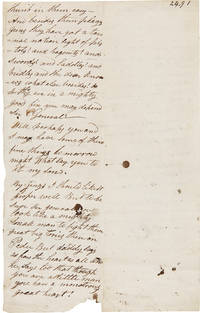
1808réf. 56263Woodbridge VA ca. 1808-1809. Manuscript Portion of Weems's Biography of Francis Marion A working manuscript draft in the hand of Mason Locke Weems of a section from Chapter XIV of The Life of Gen. Francis Marion. pp.120-22 in the accompanying copy. The section is titled "A Conversation Between General Marion & a Whig Boy" and describes a scene just after Marion and his men have taken a brief rest in Waccamaw. A boy has been sent by his father to warn Marion that Tory forces are gathering up the Little Pedee Pee Dee River. Marion is calm and sanguine in his reply to the news "Very well my son I thank you and your daddy too for letting me know it. I believe I must try to meet the tories there." The boy is almost incredulous at Marion's cool demeanor: "O la sir general try to meet em indeed! yes to be sure! dear me sirs hearts alive that you must sir general! for daddy says as how he is quite sartin if you'll be there tomorrow night you may make a proper smash amoung the tories." The boy goes on to explain that the Tories have heard of Marion and that they're coming after him with "a tarnal nation sight of pistols! and bagonets! and swords! and saddles! and bridles and the dear knows what else besides!" As he goes on the boy grows a bit unsure of Marion: "But to be sure sir general you look like a mighty small man to fight them great big tories there on Pedee. But daddy says as how the heart is all and he says too that though you are a little man you have a monstrous great heart!" The manuscript text is almost identical to the final printed version except for a few minor word changes and some additional punctuation. The manuscript is accompanied by a 1841 copy of the biography published in Philadelphia by Joseph Allen. General Francis Marion nicknamed "The Swamp Fox" was one of the leading American commanders in the Revolution in the South. His brilliant operations in the Carolinas kept thousands of British troops tied down and contributed immensely to ultimate American victory. Plain and unassuming he was widely beloved by his contemporaries and after his death this book began the process of his ascent to legend. Peter Horry his second-in-command for part of the war supplied many of the facts although he was allegedly disgusted by Weems' flowery passages and disclaimed any connection with the book. What he disliked others embraced and the book went through many editions. Surviving manuscripts - even a portion thereof - of American books from the early nineteenth century are quite uncommon. This manuscript is especially notable for being in the hand of Mason Locke Weems examples of whose letters and writings are exceedingly uncommon in the market. Weems not only enhanced the reputation of Francis Marion but famously did the same for the legend of George Washington through his popularization of the "Cherry Tree" story and its central role in shaping Washington's character at a young age. Manuscript: Old folds. Right edge of recto unevenly torn affecting a few letters of text. A few spots of spilled ink some damage to lower margin due to ink burn affecting two letters of text. Book: Contemporary calf spine ruled in gilt brown morocco gilt label. Boards lightly rubbed corners bumped joints starting to split textblock split but holding. Light tanning and foxing throughout. About very good overall. hardcover
1808réf. 56263Woodbridge VA ca. 1808-1809. Manuscript Portion of Weems's Biography of Francis Marion A working manuscript draft in the hand of Mason Locke Weems of a section from Chapter XIV of The Life of Gen. Francis Marion. pp.120-22 in the accompanying copy. The section is titled "A Conversation Between General Marion & a Whig Boy" and describes a scene just after Marion and his men have taken a brief rest in Waccamaw. A boy has been sent by his father to warn Marion that Tory forces are gathering up the Little Pedee Pee Dee River. Marion is calm and sanguine in his reply to the news "Very well my son I thank you and your daddy too for letting me know it. I believe I must try to meet the tories there." The boy is almost incredulous at Marion's cool demeanor: "O la sir general try to meet em indeed! yes to be sure! dear me sirs hearts alive that you must sir general! for daddy says as how he is quite sartin if you'll be there tomorrow night you may make a proper smash amoung the tories." The boy goes on to explain that the Tories have heard of Marion and that they're coming after him with "a tarnal nation sight of pistols! and bagonets! and swords! and saddles! and bridles and the dear knows what else besides!" As he goes on the boy grows a bit unsure of Marion: "But to be sure sir general you look like a mighty small man to fight them great big tories there on Pedee. But daddy says as how the heart is all and he says too that though you are a little man you have a monstrous great heart!" The manuscript text is almost identical to the final printed version except for a few minor word changes and some additional punctuation. The manuscript is accompanied by a 1841 copy of the biography published in Philadelphia by Joseph Allen. General Francis Marion nicknamed "The Swamp Fox" was one of the leading American commanders in the Revolution in the South. His brilliant operations in the Carolinas kept thousands of British troops tied down and contributed immensely to ultimate American victory. Plain and unassuming he was widely beloved by his contemporaries and after his death this book began the process of his ascent to legend. Peter Horry his second-in-command for part of the war supplied many of the facts although he was allegedly disgusted by Weems' flowery passages and disclaimed any connection with the book. What he disliked others embraced and the book went through many editions. Surviving manuscripts - even a portion thereof - of American books from the early nineteenth century are quite uncommon. This manuscript is especially notable for being in the hand of Mason Locke Weems examples of whose letters and writings are exceedingly uncommon in the market. Weems not only enhanced the reputation of Francis Marion but famously did the same for the legend of George Washington through his popularization of the "Cherry Tree" story and its central role in shaping Washington's character at a young age. Manuscript: Old folds. Right edge of recto unevenly torn affecting a few letters of text. A few spots of spilled ink some damage to lower margin due to ink burn affecting two letters of text. Book: Contemporary calf spine ruled in gilt brown morocco gilt label. Boards lightly rubbed corners bumped joints starting to split textblock split but holding. Light tanning and foxing throughout. About very good overall. hardcover books
1799réf. 068560London: Printed for Alexander Donaldson 1799. First Edition. Hardcover. Very Good. 8vo. respectively. FIRST EDITION 1779. TWO VOLUME COMPLETE SET. The First History of South Carolina. Howes H452. Printed for Alexander Donaldson London 1779. Matching hardcover set. Rebound in black cloth covers are plain. Spines bear orange leather labels stamped in gilt along with the volume numbers. Top edges gilt. Endpapers are gray. Leaves are printed on laid paper. Includes "The first set of the fundamental constitutions of South Carolina / as compiled by Mr. John Locke"/ pages 321-347. Vol. I: xiv 347 pp; Vol II: ix 309 pp. On a shelf this set spans 2.5 inches. ABOUT THIS SET: The "earliest history of the region" Howes H452. "Justin Winsor calls this work the 'earliest account of South Carolina cast in a sustained retrospective spirit'. Hewatt an Englishman who at one time lived at Charleston was a keen collector of historical documents". Streeter II 1133. "In Volume I Hewatt gives a sympathetic and balanced account of Indian life and customs based in part on his own observations. He describes the climate soil natural resources fauna snakes and insects; how to make turpentine tar and pitch; and how to cultivate silk cotton and especially rice. In Volume II he describes and criticizes slavery in the colonies and the treatment of slaves; he maintains that slaves should be given some instruction in morals and religion. He discusses diseases in Carolina and describes the cultivation of indigo in some detail. His factual account of the 'present state and condition of the colony' probably refers to the latter 1760s or early 1770s; he quotes some statistics of 1776." Clark I 225. De Renne 217. Turnbull I 223. ABOUT THE AUTHOR: Alexander Hewatt came to Charleston in 1763 as minister of the Scots First Presbyterian Church there. Fascinated with the history of South Carolina he soon became a keen collector of historical documents. When the British fleet arrived at Charleston in 1776 Hewatt and other ministers were required to renounce their loyalty to the king. When he refused Hewatt was given sixty days to leave the colony. He sailed for Great Britain where he devoted the next two years to completing his history. In 1780 he was awarded the Doctor of Divinity form the University of Edinburgh an indication of the esteem in which he and his work were held. "Hewatt's account reflects the influence of William Robertson and the Scottish school of historiography. less concerned with a strict chronology of events Hewatt instead focused on the interrelatedness of those events and their various causes and effects. His goal in doing so was to provide moral political and practical instruction to the colonists and to those in England" both of whom he hoped would see the importance of continuing South Carolina's close ties to the Crown" ANB. The work includes detailed descriptions of the climate topography and fauna of South Carolina as well as discussions of slavery there. He warned that the mistreatment of slaves was likely to "fire them with desires of liberty and vengeance." Chapter 5 in the first volume includes a full account of the Yamasee War while chapter 10 is devoted to the war with the Cherokee. CONDITION: This set is overall VG with general shelf wear. Removal of bookplate on the front pastedown on both volumes and clipped rectangular front endpaper removed in both volumes. Leaves are in remarkable condition with extremely minimal foxing. Completely free from marginalia or annotation. Bindings are tight. An incredible set. Additional photographs available upon request. This set will be delivered with "adult signature required". Full refund if not satisfied. Printed for Alexander Donaldson hardcover
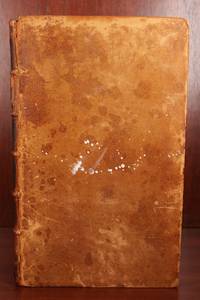
1728réf. 7141London: A. Bettesworth; J. Pemberton; E. Symon 1728. Fifth Edition. Fifth Edition - as stated on the title page. Rare 1700s imprint of Locke's landmark work on government. Originally published in 1689. Measuring approximately 8" x 5" with 308 numbered pages. The book is in good condition. Moderate to heavy wear and staining to the original full leather boards. Spine leather has partially perished. Hinges are cracked but the binding is holding strong. Small half-inch chip missing from the bottom of the front endpaper. Top corner of title page has been clipped. Minor scattered soiling and some dog-eared corners found within the textblock Please view the many other rare titles available for purchase at our store. We are always interested in purchasing individual or collections of fine books. Inventory # P7-2. A. Bettesworth; J. Pemberton; E. Symon unknown
1925réf. 140945556New York: Albert and Charles Boni 1925. First Edition. Very Good. First edition. Bound in publisher's original blue paper-covered boards over buckram spine cloth lettered in blue. Very Good with with rubbing to boards especially at edges two indentations to rear cover at spine and a light crease the rear board at the top corner. Former owner bookplate to front free endpaper. Pages tanned with occasional soiling several preliminary hinges slightly over-opened. The leading African American poets and writers of the early 20th century are featured in this important anthology which came to define the Harlem Renaissance movement: Langston Hughes Zora Neale Hurston James Weldon Johnson Countee Cullen Claude McKay Jean Toomer Georgia Douglas Johnson Jessie Fauset and more. Albert and Charles Boni unknown books
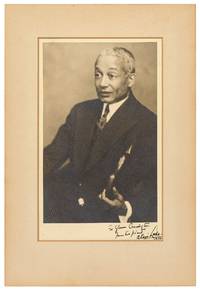
1935réf. 607237New York: Allen 1935. Unbound. Fine. Gelatin silver portrait photograph. Measures approximately 5" x 8" mounted in a contemporary mat. Photographer's name embossed in blind in lower margin. Unexamined out of the mat faint toning on mat the photograph appears fine. The seated Locke pictured in a suit holding a book or portfolio. Neatly Inscribed by Locke in the bottom margin to a noted collector and denizen of the Harlem Renaissance: "For Glenn Carrington from his friend Alain Locke. 1935." Locke was the college mentor of the Virginia-born Carrington a gay African-American man who was a noted collector of books particularly by African-Americans and a valued associate of the Harlem Renaissance group that included Langston Hughes Countee Cullen Bruce Nugent Claude McKay and the other gay and bi-sexual black authors who revolved around Locke. Allen unknown
1935réf. 607237New York: Allen 1935. Unbound. Fine. Gelatin silver portrait photograph. Measures approximately 5" x 8" mounted in a contemporary mat. Photographer's name embossed in blind in lower margin. Unexamined out of the mat faint toning on mat the photograph appears fine. The seated Locke pictured in a suit holding a book or portfolio. Neatly Inscribed by Locke in the bottom margin to a noted collector and denizen of the Harlem Renaissance: "For Glenn Carrington from his friend Alain Locke. 1935." Locke was the college mentor of the Virginia-born Carrington a gay African-American man who was a noted collector of books particularly by African-Americans and a valued associate of the Harlem Renaissance group that included Langston Hughes Countee Cullen Bruce Nugent Claude McKay and the other gay and bi-sexual black authors who revolved around Locke. Allen unknown books
1696réf. 66981London: Printed for A. and J. Churchill 1696. Several Papers Relating to Money Interest and Trade &c. Writ upon several Occasions and Published at different Times. London: Printed for A. and J. Churchill 1696. First collected edition of Locke's important writings on the fundamentals of economics. Small octavo 6 5/16 x 3 3/4 inches; 159 x 95 mm. 4 4 192; 24; 16 111 1 advertisement 1 eratta 1 blank pp. With general title-page and separate title-pages for Some Considerations and Further Considerations. Contemporary full speckled calf rebacked to style. Boards stamped in blind. Red morocco spine label lettered in gilt. Boards a bit chipped and bumped. Overall a very good copy. Comprised of: The Second edition Corrected of: Some Considerations of the Consequences of the Lowering of Interest and Raising the Value of Money. In a Letter to a Member of Parliament 1691. London: for Awnsham and John Churchill 1696. and Short Observations on a Printed Paper Intituled For encouraging the Coining Silver Money in England and after for keeping it here. 1695 and Further Considerations Concerning Raising the Value of Money. Wherein Mr. Lowndes's Arguments for it in his late Report concerning An Essay for the Amendment of the Silver Coins are particularly Examined. London: Printed for A. and J. Churchil 1695. ESTC lists two variants: one has "By John Locke Esq;" on the title-page 'Further Considerations' dated 1695 and 111 pages. The other issue has "By Mr. John Locke" on the title-page "Further Considerations" dated 1696 and 112 pages. This copy is a combination of the two with 'Further Considerations' dated 1695 and "By Mr. John Locke" on the title-page. "'The Great Recoinage' controversy of the 1690s was the impetus for Locke's writings on mercantile and monetary theory. In the 1660s Sir Josiah Child had argued that the legal rate of interest should be lowered. It was still a topic for political discussion in the early 1690s: Child was still pressing the argument and was supported by London merchants. Locke however defended a legal rate of interest but refused to fix it below the current rates. This was the occasion for his publishing Some Considerations of the Consequences of the Lowering of Interest and Raising the Value of Money in 1692. When William Lowndes Secretary of the Treasury proposed in 1695 to raise the nominal value of coins Locke slightly revised Some Considerations and also published two further pamphlets Short Considerations and Further Considerations. At that time gold and silver coins had a value equivalent to their metal content representing nothing but their silver or gold quantity. Locke rejected devaluation basing his argument on this 'commodity theory' of money. He considered 'raising of the denomination or the increase of alloy' to be debasement and fraud" Yolton. "Locke's second major essay Further Considerations Concerning Raising the Value of Money 1695 while it reiterated many of his earlier arguments was mostly concerned with the issue of recoinage. Locke took issue with a proposal to devalue the official coinage by 20 per cent and argued strongly for recoining at the old standard the currently circulating coins debased by clipping and normal wear and tear. Money Locke argued was equivalent to gold and silver. People contracted for gold and silver and a government stamp was simply an assurance of the specie content of official coins. Hence a devaluation would only confuse trade and cause an increase in prices denominated in terms of pounds and shillings" The New Palgrave. Einaudi. Goldsmiths'. Kress. HBS 66981. $9500. Printed for A. and J. Churchill unknown