452 Ergebnisse
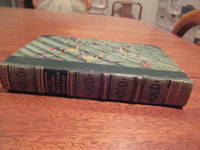
1793Best.-Nr. 017391Paris: De l'Imprimerie Nationale 1793. Book measures 26x20.5.cm. 25810917pp. Bound in period hardcover with marble boards. Binding rubbed worn lacking spine boards holding Institution library label on top cover. Internally very occasional stamp or mark pages clean. A nice copy in a worn binding. This first plan for a constitution presented to the Convention Nationale was largely written by Condorcet. The second part is 'Projet de déclaration des droits naturels civils et politiques des hommes'. First Edition. Hardcover. Good Plus. Quarto. De l'Imprimerie Nationale Hardcover
1955Best.-Nr. 024126New York: The Noonday Press 1955. First Thus . Hardcover. Very Good/Very Good-. 12mo - over 6¾" - 7¾" tall. Translated by June Barrclough. Introduction by Stuart Hampshire. Library of Ideas. First published and translated 1795. Edge wear to dust jacket. The Noonday Press hardcover
2009Best.-Nr. 141405Paris: Le Monde Flammarion 2009. Broché. Bon état. in-12. 248 pp. Collection "Les livres qui ont changé le monde". Le Monde, Flammarion unknown
1787Best.-Nr. 1418415Berne: Kirchberger & Hatter 1787. Softcover. Octavo 2 258 2 pages. In Fair condition. Bound in contemporary marbled paper wraps with 20th century paper outer wrap numbered "46". Covers have chipping to edges age-toning and light foxing; front cover nearly detached from text block; front cover has light penciling to inside corner. Text block has deckled edges; has light foxing and light age-toning throughout. Shelved in room F box 1. . This is a Swiss reprint of the 1786 original edition which was illicitly printed in Paris with the imprint A Londres London to bypass strict French censorship laws. 1418415. Special Collections - Upstairs. Kirchberger & Hatter unknown
Best.-Nr. 6021672-nnew. unknown
Best.-Nr. 51734382like new. unknown
1823Best.-Nr. 060320Paris: Librairie De Brissot-Thivars 1823. 3rd Edition . Hardcover. Near Fine. 466 Ii Pp. Half Green Morocco Spine Gilt Four Bands Gilt Green Marbled Boards Blue Marbled Endpapers And Edges Of Page Block. Third Edition. A Small But Very Attractively Bound Volume. Near Fine Although Small Frays At Tips. Librairie De Brissot-Thivars, hardcover
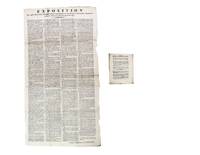
1792Best.-Nr. 1418507Limoges: Gueret; A.; François Dalesme 1792. Other. Broadside and Side-sewn pamphlet 14 pages. In Very Good condition. Broadside consists of three three sheets of paper pasted together vertically. Broadside has adhesive toning to boundary between sheets scattered light foxing a small closed tear to top titling legibility unaffected and light scuffing to edges. Pamphlet has light scuffing to margins of first page and rear page 1 has a black mark that penetrates to page 4 text legibility unimpacted and leaves are age-toned and have light foxing and light creasing throughout. Text in French. Shelved in room F. . One of the most pivotal documents of the French Revolution this broadside document explains the National Assembly's reasoning behind bringing an end to the constitutional monarchy suspending King Louis XVI and calling for the creation of the National Convention which declared France a Republic the following month. Both items here represent regional printings from the city of Limoges where a courier arrived three days after the suspension of Louis XVI in August 1792 to inform the city government of the news. Printers quickly got to work producing broadsides and pamphlets such as these so the public could read the text of the order. 1418507. Special Collections - Upstairs. Gueret; A.; François Dalesme unknown
2010Best.-Nr. DADAX1166620530Kessinger Publishing 2010-09-10. paperback. New. 6.00x0.93x9.00. Buy with confidence. Excellent Customer Service & Return policy. Kessinger Publishing paperback
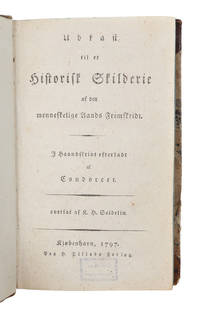
1797Best.-Nr. 61971København Tikiøbs Forlag 1797. 8vo. Bound in a contemporary half calf binding with gilt spine and gilt title label. Minor cracks to spine. Insignificant wear to capitals. Edges of boards worn. Corners bumped. Bibliographical notes to front free endpaper. Small ownership stamp to verso of title page. Evenly browned. XII23681: errata pp. The extremely rare first Danish edition of Condorcet's main work "Esquisse d'un tableau historique des progrès de l'esprit humain.1795" "the most fully developed exposition of the progress of man" Printing and the Mind of Man p. 149 and a main work of the Enlightenment as well as of historical thought in general. The author was the creator of what came to found the basis for the modern French system. The great French philosopher political thinker and mathematician M.J.A. Condorcet 1743 - 1794 played a seminal role in 18th century France. He was friends with the likes of d'Alembert Voltaire Turgot etc. and he greatly contributed to the social and political debates of politically turbulent France. As one of the few he advocated a liberal economy equality in public education as well as in gender and race etc. He preached constitutionalism and his thoughts that are still influential today embody those of the Enlightenment and rationalism."A belief in the ultimate perfectibility of man lies at the root of all progressive thinking about the human condition. The "philosophes" and Godwin had familiarized the reading public with this notion; it was left to Condorcet to give it its finest and most durable expression. It was the gospel of nineteenth century that mankind is destined for indefinite future progress. Condorcet looking back and then forward saw proof of this in the growing equality between classes and nations the intellectual physical and moral improvement of man; and he prophesied that popular education on correct principles would strengthen and assure this progress." PMM 246.During the French Revolution Condorcet came to play a dominating role advocating a rationalist reconstruction of society and he championed many liberal causes. In 1791 he became secretary of the Legislation Assembly and the institution adopted his scheme for comprehensive state education which later became the basis of the modern French system. In the struggle between the two political parties the Girondists and the Montagnards Condorcet occupied an independent role but when he opposed the death penalty under the trial of King Louis XVI still supporting the actual trial and the radical Montagnards gained more power Condorcet was branded a traitor and in October 1793 a warrant was issued for his arrest. He now went into hiding for several months almost a year and it is during these months that he writes the work that was to become his most important the main work "Esquisse." "Sketch for a Historical Picture of the Progress of the Human Mind" which was published posthumously the year after his death. In 1794 Condorcet was arrested and two days later he was found dead in his cell -it is unknown whether he committed suicide or was murdered because of fear of fierce reactions that would definitely have occurred had the beloved man been officially sentenced to the death penalty."In the Esquisse" published after his death Condorcet traces the history of man through epochs the first three covering his progress from savagery to pastoral community and thence to the agricultural state. The next five span the growth of civilizations and knowledge down to Descartes and the ninth describes the revolution of Condorcet's own lifetime from Newton to Rousseau. The prophetic view of the tenth epoch shows Condorcet at his most original. He forecasts the destruction of inequality between nation and classes and the improvement intellectual moral and physical of human nature. it exercised considerable influence on Comte. But it is as the most fully developed exposition of the progress of man that Condorcet's work is now remembered and it is this which has given it its lasting appeal." PMM 246. hardcover
1802Best.-Nr. 56417Kiøbenhavn: A. Soldin 1802. 8vo. Indbundet i et samtidigt hldrbd. med rygforgyldning. Titeletiket i skind med forgyldt titel. Kantslid. Øvre kapitæl slidt. Hjørner stødte. Et brændemærke på forpermermen har afgivet en brunplet på de første 6 blade. Enkelte brunpletter ellers ren og pæn. Trykt på godt papir. Ex libris Nicolai Bøgh. Titeloplag idet indholdet er identisk med førstetrykket fra 1798. unknown
1795Best.-Nr. 42119Paris Agasse l'an III de la République une et indivisible 1795. 8vo. Bound in a very nice newer pastiche-binding in full mottled calf. Five raised bands and gilt title-label to spine. A very nice clean fresh and attractive copy. VIII 389 pp. The rare first edition of Condorcet's main work "the most fully developed exposition of the progress of man" Printing and the Mind of Man p. 149 and a main work of the Enlightenment as well as of historical thought in general. The author was the creator of what came to found the basis for the modern French system. The great French philosopher political thinker and mathematician M.J.A. Condorcet 1743 - 1794 played a seminal role in 18th century France. He was friends with the likes of d'Alembert Voltaire Turgot etc. and he greatly contributed to the social and political debates of politically turbulent France. As one of the few he advocated a liberal economy equality in public education as well as in gender and race etc. He preached constitutionalism and his thoughts that are still influential today embody those of the Enlightenment and rationalism."A belief in the ultimate perfectibility of man lies at the root of all progressive thinking about the human condition. The "philosophes" and Godwin had familiarized the reading public with this notion; it was left to Condorcet to give it its finest and most durable expression. It was the gospel of nineteenth century that mankind is destined for indefinite future progress. Condorcet looking back and then forward saw proof of this in the growing equality between classes and nations the intellectual physical and moral improvement of man; and he prophesied that popular education on correct principles would strengthen and assure this progress." PMM 246.During the French Revolution Condorcet came to play a dominating role advocating a rationalist reconstruction of society and he championed many liberal causes. In 1791 he became secretary of the Legislation Assembly and the institution adopted his scheme for comprehensive state education which later became the basis of the modern French system. In the struggle between the two political parties the Girondists and the Montagnards Condorcet occupied an independent role but when he opposed the death penalty under the trial of King Louis XVI still supporting the actual trial and the radical Montagnards gained more power Condorcet was branded a traitor and in October 1793 a warrant was issued for his arrest. He now went into hiding for several months almost a year and it is during these months that he writes the work that was to become his most important the main work "Esquisse." "Sketch for a Historical Picture of the Progress of the Human Mind" which was published posthumously the year after his death. In 1794 Condorcet was arrested and two days later he was found dead in his cell -it is unknown whether he committed suicide or was murdered because of fear of fierce reactions that would definitely have occurred had the beloved man been officially sentenced to the death penalty."In the Esquisse" published after his death Condorcet traces the history of man through epochs the first three covering his progress from savagery to pastoral community and thence to the agricultural state. The next five span the growth of civilizations and knowledge down to Descartes and the ninth describes the revolution of Condorcet's own lifetime from Newton to Rousseau. The prophetic view of the tenth epoch shows Condorcet at his most original. He forecasts the destruction of inequality between nation and classes and the improvement intellectual moral and physical of human nature. it exercised considerable influence on Comte. But it is as the most fully developed exposition of the progress of man that Condorcet's work is now remembered and it is this which has given it its lasting appeal." PMM 246. hardcover
2010Best.-Nr. DADAX1165437015Kessinger Publishing 2010-09-10. paperback. New. 8.25x1.01x11.00. Buy with confidence. Excellent Customer Service & Return policy. Kessinger Publishing paperback
2010Best.-Nr. DADAX116076610XKessinger Publishing 2010-03-19. paperback. New. 6.00x1.34x9.00. Buy with confidence. Excellent Customer Service & Return policy. Kessinger Publishing paperback
2010Best.-Nr. DADAX1160746036Kessinger Publishing 2010-03-19. paperback. New. 6.00x0.76x9.00. Buy with confidence. Excellent Customer Service & Return policy. Kessinger Publishing paperback
1795Best.-Nr. 65358Paris: Chez Agasse 1795. Can Man Become Perfect" CONDORCET Marie Jean Antoine Nicolas Caritat Marquis de. Esquisse d'un tableau historique des progrès de l'esprit humain. Ouvrage posthume de Condorcet. Paris: Chez Agasse L'an III. de la République 1795. First edition of Condorcet's philosophical masterpiece. Octavo 7 7/8 x 4 13/16 inches; 201 x 123 mm. viii 389 1 blank pp. Contemporary quarter calf over dark blue paste-paper boards spine gilt with dotted bands and ornaments gilt red morocco lettering piece. Old owner's signature on half-title. A quarter-inch marginal tear at the bottom of leaf M42 that does not affect the text. Light foxing throughout. A blue ink stain on top edge from signature Z to the end. Overall a clean and attractive copy. "It was the gospel of the nineteenth century that mankind is destined for indefinite future progress. Condorcet 1743-1794 looking back and then forward saw proof of this in the growing equality between classes and nations the intellectual physical and moral improvement of man; and he prophesied that popular education on correct principles would strengthen and assure this progress.In the Esquisse 'An Historical Outline of the Progress of the Human Mind' published after his death Condorcet traces the history of man through epochs the first three covering his progress from savagery to pastoral community and thence to the agricultural state. The next five span the growth of civilizations and knowledge down to Descartes and the ninth describes the revolution of Condorcet's own lifetime from Newton to Rousseau. The prophetic view of the tenth epoch shows Condorcet at his most original. He forecasts the destruction of inequality between nations and classes and the improvement intellectual moral and physical of human nature.it is as the most fully developed exposition of the progress of man that Condorcet's work is now remembered and it is this which has given its lasting appeal" Printing and the Mind of Man. Printing and the Mind of Man 246. HBS 65358. $2000. Chez Agasse unknown
1785Best.-Nr. 66958Paris: De k'Imprimerie Royale 1785. The First Large-Scale Attempt to Apply Mathematics to Knowledge of Human Phenomena" CONDORCET Marie Jean Antoine Nicolas Caritat Marquis de. Essai sur l'application de l'analyse à la probabilité des décisions rendues à la pluralité des voix. Paris: De l'Imprimerie Royale 1785. First edition. Quarto. 2 cxci 1 blank 304 pp. Decorative woodcut head- and tail-pieces. Contemporary French mottled calf spine decorated in gilt with five raised bands. Marbled endpapers all edges red. First and last few pages browned at edges . gathering K is browned a Q and 2G is toned. Otherwise very good and very scarce. "Condorcet's most significant and fruitful endeavor was in a field entirely new at the time. The subject was one that departed from the natural sciences and mathematics but nevertheless showed the way toward a scientific comprehension of human phenomena taking the empirical approach of natural science as its inspiration and employing mathematics as its tool. Condorcet called this new science 'social mathematics.' It was apparently intended to comprise.a statistical description of society a theory of political economy inspired by the Physiocrats and a combinatorial theory of intellectual processes. The great work on the voting process published in 1785 is related to the latter. Condorcet there sought to construct a scheme for an electoral body the purpose of which would be to determine the truth about a given subject by the process of voting and in which each elector would have the same chance of voicing the truth.No doubt the results obtained in the Essai d'application de l'analyse were modest ones. 'In almost all cases' Condorcet said 'the results are in conformity with what simple reason would have dictated; but it is so easy to obscure reason by sophistry and vain subtleties that I should feel rewarded if I had only founded a single useful truth on a mathematical demonstration' Essai p. ii. One must nevertheless recognize in this work.the first large-scale attempt to apply mathematics to knowledge of human phenomena" D.S.B. Brunet VI col. 472. HBS 66958. $7500. De k'Imprimerie Royale unknown
Best.-Nr. DADAX0274467038Wentworth Press 2018-08-01. hardcover. New. 6.14x1.25x9.21. Buy with confidence. Excellent Customer Service & Return policy. Wentworth Press hardcover
Best.-Nr. DADAX0274483637Wentworth Press 2018-08-01. hardcover. New. 6.14x1.44x9.21. Buy with confidence. Excellent Customer Service & Return policy. Wentworth Press hardcover
Best.-Nr. DADAX0274483564Wentworth Press 2018-08-01. paperback. New. 6.14x1.68x9.21. Buy with confidence. Excellent Customer Service & Return policy. Wentworth Press paperback
Best.-Nr. 2406135713.Gpaperback. Good. Access codes and supplements are not guaranteed with used items. May be an ex-library book. paperback
2009Best.-Nr. DADAX1104076365Kessinger Publishing 2009-02-16. paperback. New. 6.00x1.12x9.00. Buy with confidence. Excellent Customer Service & Return policy. Kessinger Publishing paperback
2009Best.-Nr. DADAX1104076357Kessinger Publishing 2009-02-16. paperback. New. 6.00x1.07x9.00. Buy with confidence. Excellent Customer Service & Return policy. Kessinger Publishing paperback
1955Best.-Nr. C67623London: Weidenfeld & Nicolson 1955. First Edition Of This Translation. Hardback. Dust Jacket. Hardcover Hardcover. Fair. First Edition Of This Translation. Hardback. Dust Jacket. 8vo. pp 202. Original publisher's red cloth lettered gilt at the spine. The publisher's own retained copy with their stamp on the half title reading 'file copy'. Introduction by Stuart Hampshire. Very slight lean otherwise very good indeed in slight used very good minus dust jacket with abrasion from label removal. Weidenfeld & Nicolson, hardcover
Best.-Nr. 42721S.l.n.d. 1789. 8 pages. 195x125 Cm. Dérelié. Position politique de Condorcet sur le problème des biens ecclésiastiques. Ce sont les réflexions "d'un homme qui n'a jamais passé pour aimer le Clergé mais qui a toujours aimé la justice et la paix qui lorsqu'un Corps est détruit ne voit plus dans ceux qui le composaient que des individus. ayant les mêmes droits que les autres hommes.". Mouillure angulaire avec petits manques sans atteinte au texte. Traces de plis. S.l.n.d. (1789). unknown