Viani, Lorenzo [Xilografia]MareMagnum

32 804 résultats
1925Prima edizione. Copertina brunita e con sfrangiature perimetrali e piccole perdite che non interessano la parte a stampa; punto metallico originale arrugginito; per il resto ottimo esemplare. Il celebre fascicolo di «Xilografia» dedicato a Lorenzo Viani, ristampa dagli originali i seguenti legni, secondo Rodolfo Fini (Lorenzo Viani xilografo) tutti del «primo periodo 1910-1915»: «Filosofo greco»; « Boscaiole»; La Cortaccia»; «Vedova»; «Ritratto di un filosofo»; «Contadina»; «Vagabondo»; «Il cieco»; «L’elemosina»; «Nonna e nepote». -- Xilografia fu una straordinaria esperienza durata tre anni, dal 1924 al 1926: pubblicava con cadenza bi- o trime - strale quaderni composti interamente ed esclusivamente di xilografie. Non stupisce questo fascicolo interamente consacrato al maestro di Viareggio: Viani fu il primo a portare la tecnica dell’incisione su legno a valori d’arte assoluti, liberandola dal ruolo subordinato di illustrazione manieristica. La sua tecnica straordinaria ha reso in qualche modo alla xilografia la sua stessa natura, quel primitivismo e quella cupa durezza che si erano perse durante le ricerche estetizzanti condotte da Adolfo De Carolis e dalla sua cerchia. Sostituendo al raffinato legno di filo le sue «assi da taglier» e ai bulini le più elementari sgorbie, Viani fu in grado di elaborare una poetica veramente moderna che sostituiva il superato simbolismo tardottocentesco.
réf. 390313 volumes in-8 (240 x 145 mm), demi-veau à coins, dos lisses ornés de fleurs de lys, pièces de titre et de tomaison en vélin rubriqué, tranches rouges et marbrés, (4) (faux-titre et titre), xix, (2), 1-84, xxii, 85-336, xxi-xxiv, 337-432, (1) (errata), (1 bl.) p. avec 4 planches H.T. ; (8) (faux-titre, titre et contenu des chapitres) avec un frontispice, 420, lix, 1 bl., v de table, (1) (errata) avec 3 planches H.T. ; (4) (faux-titre et titre), (26) (liste de souscripteurs), 400, cvi pp., v (table), (1) (errata) avec 4 planches H.T. et deux lettres signées. Londres, de l'imprimerie de Daponte et Vogel, se trouve chez l'auteur [...], 1804 - 1807
1888réf. 52911888 Paris 1888 et 1889, 31,5 x41cm, relié dans un album: demi percaline verte , plats avec papiers bradel. Edition originale, collection complète de ce rare journal littéraire satirique dirigé et illustré par Adolphe Willette. 51 numéros du 6 juillet 1888 au 20 septembre 1889 ) avec les numeros speciaux en fin d'album , autographiés parus deux apres la faillite du "Pierrot" et qui sont de veritables chefs d'oeuvre de la lithographie . Chacun composé de deux feuilles au format in-folio, illustré sur la première page d'une lithographie d'A. Willette et pour certains numéros, de caricatures en troisième page.Ayant pour rédacteur en chef Emile Goudeau, ce journal à la parution annoncée le vendredi comprend des poèmes, des publications,. Adolphe Willette est indissociable du quartier Montmartre dont il décora de nombreux cabarets, bistrots et le fameux Moulin Rouge. Peintre tout d'abord, il exposa au Chat Noir après avoir participé à sa création. Par la suite il collabore à de nombreux journeaux comme le Rire ou l'Assiette au beurre avant de fonder le Pierrot. Personnage controversé, il se présenta comme candidat antisémite aux élections législatives de 1889 à Paris. Il fut le premier président de la République de Montmartre, association philanthropique destinée à aider les enfants du quartier.
1907588 + 375 pages. Index. Colour fold-out map at back of volume I. All plates present. Text in German. Contents unmarked and moderately age-toned. Foxing to plates and some pages. Average overall wear. Narrow openings along both hinges of volume I. Documents von Richthofen's important travel and research in China. Book
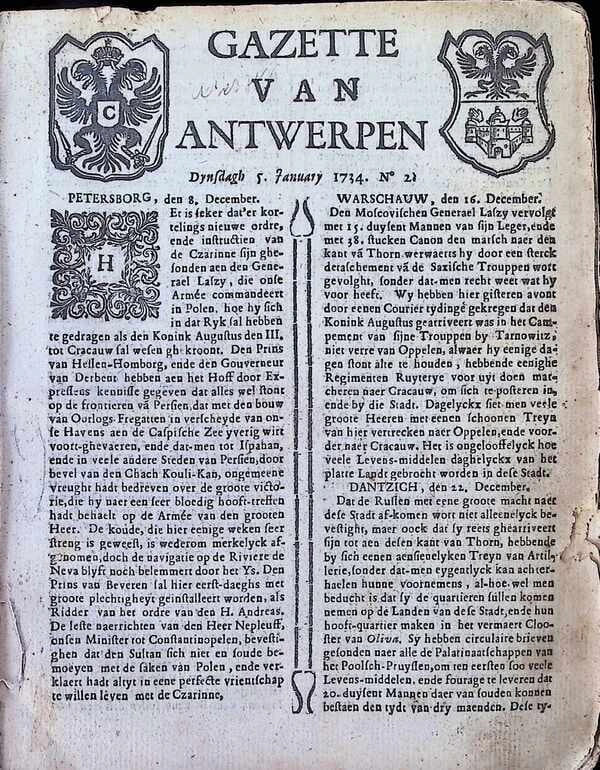
1734réf. 031125Antwerpen 1734 Van Soest (Joannes Franciscus van Soest) Vellum 1st Edition
1818réf. AMO-4242François-René de Chateaubriand, Fiévée, Marie-Barthélémy de Castelbajac, le comte O'Mahony, le vicomte de Bonald, l'abbé de Lamennais, Villèle, Charles-Marie d'Irumberry de Salaberry, et Joseph Fiévée, etc. Le Conservateur. Paris, Au bureau du Conservateur, chez Le Normant Fils, 1818-1820. De l'imprimerie de Le Normant (Rue de Seine). 6 volumes in-8 (21,6 x 13,8 cm environ) de 632, 656 (erreur de pagination entre 93 et 113 - sans manque - conforme aux autres exemplaires), 624+8 pages, 640, 632 et 640+16 pages. Cartonnage strictement de l'époque plein papier bleu nuit, dos lisses ornés de filets dorés, titres et tomaisons dorés. Reliures en très bon état, légers frottements aux plats, dos et coiffes. Intérieur frais malgré quelques rousseurs habituelles. Quelques pâles mouillures sans gravité. Bon papier chiffon (assez fin). Tirage unique et complet de ce périodique "ultra-royaliste". Ensemble bien complet de tout ce qui a paru de ce périodique ultra-royaliste dirigé par Chateaubriand et quelques amis liés à la cause monarchique. Soit au total 78 livraisons imprimées d'octobre 1818 à mars 1820. La devise de ce journal est imprimée en exergue de chaque page de titre : "Le Roi, la Charte et les Honnêtes Gens." Les auteurs dénonçaient principalement la politique du gouvernement d'Armand Emmanuel du Plessis de Richelieu puis celle d'Élie Decazes, accusés de défendre des intérêts révolutionnaires mettant en péril la Charte de 1814. Dans ses Mémoires d'Outre-tombe, Chateaubriand estime que la "révolution opérée par ce journal fut inouïe : en France, il changea la majorité dans les Chambres ; à l'étranger il transforma l'esprit des cabinets". Le Conservateur a cessé de paraître en 1820, afin de protester contre le projet de loi sur le rétablissement de la censure. Il a été relié en outre dans cet exemplaire deux plaquettes intitulées : Pourquoi les ministres ont-ils retiré la loi qu'ils avaient proposée sur leur responsabilité ? (8 pages - signé Grignon D'Auzouer - imprimerie Le Normant) et De l'Espagne et de la France par M. A. de F*** () (16 pages - auteur resté inconnu - imprimerie de Le Normant). "En résumé, c'est dans ce recueil justement célèbre, foyer ouvert à tous les regrets, à tous les ressentiments à toutes les exagérations des ultra, qu'il faut surtout chercher la politique royaliste pendant les dix-huit mois qu'il vécut. A sa dissolution, quelques-uns île ses rédacteurs, en tête desquels était Lamennais, fondèrent Le Défenseur, journal religieux, politique et littéraire. 1er mars 1820-11 oct. 1821. 6 vol. in-8°. Cette nouvelle feuille devint le champion ardent, passionné et pour ainsi dire officiel de la philosophie de Lamennais. Il y eut pour collaborateurs MM. de Bonald, Saint-Victor, Genoude, le cardinal de la Luzerne, Lamartine, etc." (Hatin, p. 340). "Quant à nous, nous ne craignons rien. Nos principes sont ceux de la religion, de l'ordre et de la justice : tôt ou tard nous triompherons avec ces principes. La vérité renversera toujours l'édifice de l'erreur et du mensonge. Partout où le paganisme avait placé ses faux dieux, le ciel envoya un destructeur; chaque temple païen vit un Barbare armé à ses portes. La Providence n'arrêta la torche et le levier que quand la race infidèle fut changée : alors une croix s'éleva sur les monuments, et tout fut dit." (Chateaubriand, extrait du Conservateur). Références : Hatin, Bibliographie historique et critique de la presse périodique française etc., pp. 338-340. Provenance : Notre exemplaire faisait partie de la bibliothèque du Comte de Salaberry, avec son ex libris présent dans chacun des volumes. Charles-Marie d'Irrumberry, comte de Salaberry, né à Paris le 6 septembre 1766 et mort à Fossé (Loir-et-Cher) le 7 janvier 1847. Il était militaire, homme de lettres et homme politique. Petit-neveu de l'amiral Vincent de Salaberry de Benneville, Charles-Marie d'Irumberry de Salaberry est le fils Charles Victoire François d'Irumberry de Salaberry, président à la chambre des comptes de Blois et propriétaire du château de Pezay, influencé par Paul Boësnier de l'Orme 1 et qui sera guillotiné en 1794, et d'Anne-Marie Le Gendre de Lormoy (belle-sœur d'Antoine-Jean Amelot de Chaillou et de Jean-Nicolas Dufort de Cheverny). Il prit part à l'Armée des émigrés, puis participa à la guerre de Vendée au côté des royalistes. En 1801, il se trouve mêlé à l'Affaire Clément de Ris ; il fait partie de l'équipée destinée à la libération du sénateur. En 1810, il accueille Madame de Staël dans son château de Fossé. En août 1815, il devient un député ultra-royaliste de la Restauration pour le département de Loir-et-Cher ; il le restera jusqu'à mai 1830. Il collabore alors au Correspondant et au Conservateur (fondé par Chateaubriand). Provenance des plus intéressantes donc pour cette feuille ultra-monarchiste. Très intéressant exemplaire conservé dans son cartonnage d'époque et provenant de la bibliothèque de l'un des collaborateurs et auteurs de ce célèbre journal ultra-royaliste. Très bon exemplaire plus que complet (2 plaquettes ajoutées).
1956Edizione originale. Tutto il pubblicato degli anni 1956 - 1957 - 1970 - 1971 - 1972 - 1976 - 1977 e 1979. Esemplari in ottime condizioni (da segnalare solo nel numero doppio 3 - 4 del del 1971 il parziale distacco del piatto anteriore della brossura), con occasionali e rare abrasioni al dorso dei fascicoli. Rivista bimestrale fondata nel 1953 dal poeta Leonardo Sinisgalli – che l’avrebbe diretta nei suoi primi cinque anni di vita - per conto di Finmeccanica. Ispirata al «Politecnico – Repertorio di studi applicati alla prosperità e coltura sociale» di Cattaneo, esattamente come il periodico milanese nato nel 1839 «Civiltà delle macchine» si proponeva di riunire cultura scientifica e tecnologica e cultura umanistica, così da favorire uno sviluppo pieno – e armoniosamente organizzato – dei lettori. Numerosi furono gli esponenti di rilievo del mondo letterario, artistico, filosofico e, ovviamente, scientifico ed economico che collaborarono alla rivista nei suoi 26 anni di vita: basterebbe qui ricordare Ungaretti (presente nel numero inaugurale), Moravia, Gadda, Dorfles, Paci, Levi-Montalcini, e poi ancora l’economista Oskar Morgenstern che, da Princeton, scriveva nel 1964 al nuovo direttore Francesco Flores d’Arcais: «Da un po’ di tempo a questa parte ricevo “Civiltà delle macchine” […]. Non conosco nessun’altra rivista che unisca così bene arte e scienza. Continui l’ottimo lavoro». E in effetti comune e importante fu lo sforzo dei suoi ideatori e dei contributori affinché si riunissero ambiti del pensiero e della conoscenza umane ormai fatalmente separati in un tempo che guardava – e che ancora guarda – con sospetto non sempre ragionevole al progresso tecnico-scientifico. Da segnalare infine le bellissime copertine – spesso realizzate con disegni originali da artisti diversi (tra i tanti: Severini, Vedova, Tamburi, Zadkine) – e la grafica curatissima che caratterizzarono l’intera storia di «Civiltà delle macchine». Cfr. D. Germanese, «Civiltà delle macchine (1953 - 1979)» in Parolechiave 1/2014, Carocci, pp. 145 - 152.
1954Edizione originale. Tutto il pubblicato (196 fascicoli) della prima e della seconda serie (marzo 1954 - febbraio 1958) del settimanale «Il Contemporaneo». Fascicoli sciolti in ottime condizioni conservati in eleganti astucci con titoli al dorso raccolti in 6 cofanetti in tela. Rivista di letteratura, politica e cultura d’ispirazione marxista fondata a Roma nel 1954 sotto la direzione di Romano Bilenchi, Carlo Salinari e Antonello Trombadori. Settimanale fino al febbraio 1958 (quando terminano le pubblicazioni della “seconda serie” caratterizzata dal grande formato 42 x 58 cm), il periodico - che vantava nel proprio comitato direttivo, oltre ai già ricordati Salinari e Trombadori, Abe Steiner, Glauco Viazzi, Carlo Melograni e Renato Guttuso - comincerà a uscire dal marzo di quell’anno con cadenza mensile. Con articoli, interviste e approfondimenti di altissimo livello dedicati alla letteratura, all’arte e alla politica e con le sue pregevoli illustrazioni in bianco e nero, «Il Contemporaneo» si propose, fin dal numero inaugurale, di favorire la «conquista di un modo nuovo di guardare il mondo, senza evasioni e senza pessimismo [...] ma con ferma fiducia nelle possibilità umane di progresso; la conquista di una nuova vita morale è un fatto essenziale per una nuova cultura del nostro tempo».
1951Brossura originale di color verde, in 4°, pagine 20/24 ogni fascicolo. La collezione che offriamo é mancante dei numeri 5 e 7 dei nove fascicoli pubblicati. Segnaliamo: n. 8 Dodici poesie di Luigi Bartolini, edizione originale, 7 litografie dello stesso a p.p., 1 su doppia pagina 3 n.t., tutte su fondo colorato; n. 4 dedicato a Lorenzo Viani con 7 xilografie a p.p., 2 n.t. e uno scritto di Bartolini; n. 9 Presenza di Domenico Giuliotti con scritti di Bartolini, Betocchi, Fallacara, Lisi, Rosai ed altri.
1919Edizione originale. Tutto il pubblicato, compreso il numero straordinario uscito nel dicembre 1923 in sostituzione del numero del dicembre 1922 mai pubblicato. Fascicoli in ottimo stato rilegati in otto volumi in tela rossa con titoli oro al dorso e acetato. Conserva la prima brossura originale per ogni volume. La rivista «La Ronda», tra le più importanti riviste letterarie del Novecento, cominciò le proprie pubblicazioni a Roma nell’aprile del 1919. Inizialmente diretta da un comitato redazionale composto da Vincenzo Cardarelli, Emilio Cecchi, Lorenzo Montano, Riccardo Bacchelli, Antonio Baldini, Bruno Barilli e Aurelio Emilio Saffi – ovvero “i sette savi” come amavano definirsi-, a partire dal quarto numero del 1920 la direzione passò formalmente in mano ai soli Cardarelli e Saffi allargando tuttavia il gruppo dei collaboratori esterni che includeva, tra gli altri, Carlo Carrà, Ardengo Soffici, Guglielmo Ferrero e Vilfredo Pareto. Nata con lo scopo di restituire vigore alla tradizione letteraria italiana minacciata – secondo i rondisti – dalle spinte sperimentali e avanguardiste (con i futuristi, ma anche Pascoli, riconosciuti come principali responsabili dell’impoverimento della letteratura contemporanea), «La Ronda» vedeva in Manzoni e, ancor di più, in Leopardi i modelli a cui guardare. Non a caso, proprio a Leopardi sarà dedicato il corposo numero triplo del marzo/aprile/maggio 1921 «Il Testamento letterario di Giacomo Leopardi» con la curatela di Vincenzo Cardarelli. Nonostante la condivisione di questa causa comune e il forte legame di amicizia tra i membri fondatori, la rivista cessò le pubblicazioni dopo neppure 4 anni di vita a causa di forte divisioni interne: il penultimo numero uscì infatti nel novembre del 1922 prima che nel dicembre 1923 venisse pubblicato, con la dicitura “numero straordinario”, l’atto finale di questa fondamentale avventura culturale ed editoriale tesa a ridare vita e nuove identità al classicismo e alla sua eleganza.
1701Sm. 8vo., First Edition, eighteenth century inscription on title, title and several following leaves age-stained, title neatly mounted without loss of text, final leaf of Appendix mounted with loss of half text; strongly and attractively bound in half calf, marbled boards, back with five flat gilt bands, second compartment with red leather label lettered and ruled in gilt, a most attractive copy. This copy was formerly in the McIntosh Library, Dunkeld, and carries the MS press-mark A8.51 and bookplate (numbered 493) on front paste-down. A sound and complete (save last leaf) copy of the first dedicated published account of Orkney and Zetland. RARE. Anderson, p.402.
réf. 101121aafSamedi 28 juin 1884, 64 x 87 cm, double page originale du supplément de ‘Le Figaro’ reproduisant deux grandes gravures chinoises coloriées à la main, texte en français et chinois, 2 feuilles montées sur toile,
réf. 129322aafBern 1840-43 - 1846, in-4to, 70 (statt 77) ganzs. Lithogr. Mit zahlr. Lithogr. im Text u. auf Tafeln, / + 6. Jahrgang 1846, 104 n.numm. S. mit ganzs. Abbildungen Hldrbde. d. Zt. mit goldgepr. Dsch. (Best., tls. beschabt).
réf. 21044aafBerlin-Zürich, Ernst Wasmuth / Atlantis, 1929-1947, in-4°, ca. 600 S. pro Band reich s./w. und farbig illustriert, gebunden in blauen Leinen Verlagseinbände. Rücken etwas verblasst.
1820réf. 38311Valencia: Imprenta y Librería de Manuel López Calle de Bordadores nº 1 e Imprenta de Brusola Plaza del Patriarca 1820.- 21 fascículos de unas 4 páginas cada uno alguno de 8 páginas; 4º 22 cm.- Noticiario diario de la ciudad de Valencia de corte general satírico burlesco militar de orden público de sociedad de política religión etc etc. Variado y singular se ofrece este diario con números no seguidos que cubren buena parte de 1820 destacando que el suplemento del martes 22 de Septiembre de 1820 es una importante noticia político-militar circular titulada asi: "El Sr. Gefe Político superior de esta Provincia recibió anoche por extraordinario lo siguiente: REPRESENTACION PUESTA EN LAS REALES MANOS DE S. M. POR LOS GEFES MILITARES DE LOS CUERPOS QUE EXISTEN EN MADRID Ã NOMBRE DE TODOS SUS INDIVIDUOS"; en este aviso los Gefes político-militares constitucionalistas se reafirman en su defensa de la Constitución nuevamente jurada por el rey Fernando VII el día 7 de Marzo de 1820 pues parece ser que hubo nuevas vacilaciones y revueltas cuando comenzaba lo que se dará a conocer como el Trienio Liberal 1820-1823 firmando el manifiesto un buen grupo de liberales que vienen expresados en este suplemento que referimos. Importante resaltar que aunque los números van correlativos y el nombre del diario es el mismo parece ser que las fechas no siguen un orden cronológico con la numeración que llevan los fascículos por lo que pensamos que son tiradas diferentes. Se ofrecen todos los números incluído el suplemento del que hemos tratado especialmente de forma conjunta y como unidad documental. GUERRA DE LA INDEPENDENCIA-FERNANDO VII Libro en español Imprenta y Librería de Manuel López (Calle de Bordadores nº 1) paperback
réf. M14249aRare set of 215 issues bound in 55 volumes. Göttingen 1972-2015. First edition reprint for the first issues. Contemporary half-leather for 90% of the set original softcover for the rest see photos. From the library of Egyptologist Charles Cornell Van Siclen III VSX. Language: German/Deutsch - English - French/Français. This set ships from the USA shipping costs will be updated accordingly TXR. Relevant subjects: Egypt: Journals Egypt. unknown
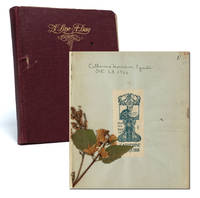
1911réf. 6011US Germany 1911. Red cloth over card with gilt to front board. All edges stained read. Measuring 200 x 170mm and containing 186 handwritten pages across five years. Dried flowers and theatre program loosely inserted at front. Ownership signature and bookplate of Catherine Harrison Squibb to front pastedown and endpaper with signature of the same to rear endpaper. A research rich and densely written diary the present would be useful in fields including but not limited to intergenerational wealth and its relationship to emotional abuse women's education and educational travel early 20th century reading habits modern friendship courtship and romance and women's increased mobility and travel. The second daughter of Charles Fellow Squibb himself the second son of pharmaceutical boss Dr. E. R. Squibb Catherine Harrison Squibb was raised in economic privilege. Her earliest years were spent in the Brooklyn townhouse built for her parents by her grandfather while her teen years were split between her father's historic estate of Welwood and her boarding school in Dresden. At Welwood Charles always considered as "the lesser son" according to his E.R.'s journals followed in his father's controlling footsteps by "purchasing polo ponies setting about learning to jump" and "insisting his children do the same.to maintain the lifestyle of the landed gentry" Belcher. This is confirmed in the opening entry of the diary October 25 1906 near Catherine's 16th birthday where she reports "I rode side-saddle with Rosalie in the morning.rode again in the afternoon ist richerverlobt! er est 62 --- alt!!" The numerous rides do not seem to entirely please Catherine as she hides her frustration in the German parenthetical roughly "he is engaged to be a judge! he is 62 years old!!". Three days later on her birthday she spends her time significantly differently clowning with her brother and aunt and "playing tennis in the afternoon." This becomes something of a tradition as her birthday entries report several times "played tennis all afternoon" She also notes her time in French and German lessons -- with German becoming more frequent during and after her time at school in Dresden especially when she wants to obfuscate her thoughts from unwanted readers. If this diary is any indication music and reading travel and school became refuges for Catherine. And she claimed as much time as she could to find independence and develop herself outside of Charles' strict rules. Her reading preferences reflect this desire to immerse herself in Jane Austen's world of social visits and balls where family conflict is eventually smoothed by a woman's exit to a loving partner and home of her own. "Good day!" she writes on April 29 1908 "Stayed in bed all day. I finished Pride & Prejudice and began Emma." This is contrast against her reaction to Charlotte Bronte's work on May 1 of the same year: "Cold & windy. We came in on the 9.30. Aunts at Welwood.had music lesson.I began Jane Eyre. Dismal book!" Her tone and word choice reflect the most happiness in these circumstances whereas riding is reported like a duty -- she may report what time of day and what horse but no expressions of joy accompany them. While the diary concludes in 1911 when Catherine is 21 we know that she would return to Europe from 1917-1919 as a nurse in WWI watching her own country battle her beloved Germany. Within the time her father had sold his birthright in Squibb and with "his extravagant lifestyle eating through his money quickly.he was forced to sell Welwood.not long thereafter he went to France" and never returned to the US Belcher. In 1920 she would marry veteran and shoe manufacturing foreman Raymond Pratt moving with him to Pasadena California and becoming a civic leader. Much deeper work can be done on Catherine's lives and relationships especially considering the current cultural trends of novels films and series depicting both the glamour and the emotional squalor of the 1%. unknown
1911réf. 6011US Germany 1911. Red cloth over card with gilt to front board. All edges stained read. Measuring 200 x 170mm and containing 186 handwritten pages across five years. Dried flowers and theatre program loosely inserted at front. Ownership signature and bookplate of Catherine Harrison Squibb to front pastedown and endpaper with signature of the same to rear endpaper. A research rich and densely written diary the present would be useful in fields including but not limited to intergenerational wealth and its relationship to emotional abuse women's education and educational travel early 20th century reading habits modern friendship courtship and romance and women's increased mobility and travel. The second daughter of Charles Fellow Squibb himself the second son of pharmaceutical boss Dr. E. R. Squibb Catherine Harrison Squibb was raised in economic privilege. Her earliest years were spent in the Brooklyn townhouse built for her parents by her grandfather while her teen years were split between her father's historic estate of Welwood and her boarding school in Dresden. At Welwood Charles always considered as "the lesser son" according to his E.R.'s journals followed in his father's controlling footsteps by "purchasing polo ponies setting about learning to jump" and "insisting his children do the same.to maintain the lifestyle of the landed gentry" Belcher. This is confirmed in the opening entry of the diary October 25 1906 near Catherine's 16th birthday where she reports "I rode side-saddle with Rosalie in the morning.rode again in the afternoon ist richerverlobt! er est 62 --- alt!!" The numerous rides do not seem to entirely please Catherine as she hides her frustration in the German parenthetical roughly "he is engaged to be a judge! he is 62 years old!!". Three days later on her birthday she spends her time significantly differently clowning with her brother and aunt and "playing tennis in the afternoon." This becomes something of a tradition as her birthday entries report several times "played tennis all afternoon" She also notes her time in French and German lessons -- with German becoming more frequent during and after her time at school in Dresden especially when she wants to obfuscate her thoughts from unwanted readers. If this diary is any indication music and reading travel and school became refuges for Catherine. And she claimed as much time as she could to find independence and develop herself outside of Charles' strict rules. Her reading preferences reflect this desire to immerse herself in Jane Austen's world of social visits and balls where family conflict is eventually smoothed by a woman's exit to a loving partner and home of her own. "Good day!" she writes on April 29 1908 "Stayed in bed all day. I finished Pride & Prejudice and began Emma." This is contrast against her reaction to Charlotte Bronte's work on May 1 of the same year: "Cold & windy. We came in on the 9.30. Aunts at Welwood.had music lesson.I began Jane Eyre. Dismal book!" Her tone and word choice reflect the most happiness in these circumstances whereas riding is reported like a duty -- she may report what time of day and what horse but no expressions of joy accompany them. While the diary concludes in 1911 when Catherine is 21 we know that she would return to Europe from 1917-1919 as a nurse in WWI watching her own country battle her beloved Germany. Within the time her father had sold his birthright in Squibb and with "his extravagant lifestyle eating through his money quickly.he was forced to sell Welwood.not long thereafter he went to France" and never returned to the US Belcher. In 1920 she would marry veteran and shoe manufacturing foreman Raymond Pratt moving with him to Pasadena California and becoming a civic leader. Much deeper work can be done on Catherine's lives and relationships especially considering the current cultural trends of novels films and series depicting both the glamour and the emotional squalor of the 1%. unknown books
1822réf. 68178Washington 1822. Single sheet 56 x 40 cm. 2 pp. printed in 5 columns. Some overall toning to text a few spots else very good. Printing a message from Pres. James Monroe transmitting "sundry papers relative to the Recognition of the Independence of the South American Colonies" and including messages from Secretary of State John Quincy Adams and the objections of Don Joaquin de Anduaga Minister from Spain. Also printed in this issue is a report on repairs to the Cumberland Road; several columns devoted to the printing of the American Colonization Society's Fifth Annual Report; an advertisement by Don Francisco Arango for the sale of his estates on the Island of Cuba; two notices for rewards offered for run away enslaved people; etc. unknown books
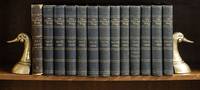
1889réf. 846751889. The Boston Book Company. Volume I-XIII 1889-1901. The Boston Book Company. Volume I-XIII 1889-1901. A Handsome Lavishly Illustrated Chronicle of American Law 1889-1901 Journal. Fuller Horace W. Editor Volumes I-XI. Baldwin Thomas. Tileston Editor Volume XIII. The Green Bag: A Useless but Entertaining Magazine for Lawyers. Boston: The Boston Book Company. Volume I-XIII 1889-1901. 13 volumes. Indexed Volume X has a cumulative index. Illustrated throughout with plates photographs and engravings. Quarto 10-1/2" x 8"; 26.7 x 20.3 cm. Volume I: Contemporary three-quarter calf over marbled boards raised bands and gilt title to spine. Others: contemporary three-quarter pebbled cloth over marbled boards gilt fillets and titles to spines. All volumes have similar appearance. Some rubbing with minor wear chip to head of Volume I minor scuff to spine of Volume X some hinges starting one cracked but secure internally clean. A handsome set. $1500. These are the first thirteen volumes of an important legal periodical that was published in 26 volumes from 1889 and 1914. As its subtitle suggests The Green Bag is full of colorful anecdotes humorous verse curious cases and other diversions. It is also a useful resource for the legal historian one that offers book notices and reviews biographies of contemporary legal figures based on first-hand accounts obituaries studies of current events professional notices profiles of law schools throughout the United States and other important source materials. F.W. Maitland Louis Brandeis and Theodore Dwight are among the many important jurists who contributed to this journal. Well designed and handsomely produced it is a pleasure to read and handle these volumes. Marke A Catalogue of the Law Collection at New York University 1953 1160. unknown
1889réf. 846751889. The Boston Book Company. Volume I-XIII 1889-1901. The Boston Book Company. Volume I-XIII 1889-1901. A Handsome Lavishly Illustrated Chronicle of American Law 1889-1901 Journal. Fuller Horace W. Editor Volumes I-XI. Baldwin Thomas. Tileston Editor Volume XIII. The Green Bag: A Useless but Entertaining Magazine for Lawyers. Boston: The Boston Book Company. Volume I-XIII 1889-1901. 13 volumes. Indexed Volume X has a cumulative index. Illustrated throughout with plates photographs and engravings. Quarto 10-1/2" x 8"; 26.7 x 20.3 cm. Volume I: Contemporary three-quarter calf over marbled boards raised bands and gilt title to spine. Others: contemporary three-quarter pebbled cloth over marbled boards gilt fillets and titles to spines. All volumes have similar appearance. Some rubbing with minor wear chip to head of Volume I minor scuff to spine of Volume X some hinges starting one cracked but secure internally clean. A handsome set. $1500. These are the first thirteen volumes of an important legal periodical that was published in 26 volumes from 1889 and 1914. As its subtitle suggests The Green Bag is full of colorful anecdotes humorous verse curious cases and other diversions. It is also a useful resource for the legal historian one that offers book notices and reviews biographies of contemporary legal figures based on first-hand accounts obituaries studies of current events professional notices profiles of law schools throughout the United States and other important source materials. F.W. Maitland Louis Brandeis and Theodore Dwight are among the many important jurists who contributed to this journal. Well designed and handsomely produced it is a pleasure to read and handle these volumes. Marke A Catalogue of the Law Collection at New York University 1953 1160. unknown books
1908réf. 785271908. Ten 10 linear feet shelf space. Ten 10 linear feet shelf space. Complete Run of a Notable Nineteenth-Century Journal with Several Articles of Enduring Value Journal. Thompson Isaac Brent Editor. Brown Irving Editor. The Albany Law Journal: A Weekly Record of the Law and the Lawyers. Albany: Weed Parsons & Co. January 1870-January 1909 Imprint date December 1908. 70 volumes each with index text printed in double columns. All issued. Octavo 11" x 7-1/2"; 27.9 x 19 cm. Later library buckram lettering pieces and black-stamped volume numbers dates and library name Rochester Appellate Division to spine endpapers renewed. Light shelfwear library markings to endleaves. Moderate toning some leaves have minor stains and marks to leaves some volumes have cracks to text blocks. $1500. As Surrency notes many articles in this journal "have an enduring quality which makes them enjoyable reading even today. Several historical articles are invaluable as a source of legal history of New York. Generally each issue began with a page or two of current topics reporting on amusing and human tragedies as revealed in the court room. It is only in the pages of such journals that bizarre behaviors are found. For example the defendant who invited the jury over for a meal after being acquitted in Des Moines Iowa would never be recorded in any other legal literature. Full texts of decisions as well as digest are printed from many of the state courts. The book review shows a perception of legal literature that subsequent reviewers have not shown. One can only admire the work of the editor who kept this publication going for those years. Certainly the two editors should receive greater recognition in legal literature for their contributions. Issac B. Thompson and Irving Browne were authors with literary flair rarely found in the legal profession. Their articles were vigorous graceful and often elegant." One of the most important periodical legal publications of the post-Civil War period the Albany Law Journal was an outspoken supporter of David Dudley Field's efforts at codification and law reform. Surrency A History of American Law Publishing 192-193. Catalogue of the Library of the Harvard Law School 1909 I:26. unknown
1908réf. 785271908. Ten 10 linear feet shelf space. Ten 10 linear feet shelf space. Complete Run of a Notable Nineteenth-Century Journal with Several Articles of Enduring Value Journal. Thompson Isaac Brent Editor. Brown Irving Editor. The Albany Law Journal: A Weekly Record of the Law and the Lawyers. Albany: Weed Parsons & Co. January 1870-January 1909 Imprint date December 1908. 70 volumes each with index text printed in double columns. All issued. Octavo 11" x 7-1/2"; 27.9 x 19 cm. Later library buckram lettering pieces and black-stamped volume numbers dates and library name Rochester Appellate Division to spine endpapers renewed. Light shelfwear library markings to endleaves. Moderate toning some leaves have minor stains and marks to leaves some volumes have cracks to text blocks. $1500. As Surrency notes many articles in this journal "have an enduring quality which makes them enjoyable reading even today. Several historical articles are invaluable as a source of legal history of New York. Generally each issue began with a page or two of current topics reporting on amusing and human tragedies as revealed in the court room. It is only in the pages of such journals that bizarre behaviors are found. For example the defendant who invited the jury over for a meal after being acquitted in Des Moines Iowa would never be recorded in any other legal literature. Full texts of decisions as well as digest are printed from many of the state courts. The book review shows a perception of legal literature that subsequent reviewers have not shown. One can only admire the work of the editor who kept this publication going for those years. Certainly the two editors should receive greater recognition in legal literature for their contributions. Issac B. Thompson and Irving Browne were authors with literary flair rarely found in the legal profession. Their articles were vigorous graceful and often elegant." One of the most important periodical legal publications of the post-Civil War period the Albany Law Journal was an outspoken supporter of David Dudley Field's efforts at codification and law reform. Surrency A History of American Law Publishing 192-193. Catalogue of the Library of the Harvard Law School 1909 I:26. unknown books
réf. 836472025. Journal of Comparative Law. JCL Studies in Comparative Law Second Series. 10 titles in 11 books. Complete set of all titles published to date. $1495. - Butler W.E.; Kresin O.V. Editors. Discovering the Unexpected: Comparative Legal Studies in Eastern and Central Europe. 2021. - Butler W.E.; Kresin O.V. Editors. The World Picture of Comparative Law. 2024. - Dippel Horst. Modern Constitutionalism: Origin and Manifestations. 2 vols. 2022. - Hammond A.F.; Adegbite F.R.; Mensa-Bonsu Y.A.; Batariwah P. Family Law in Africa: Perspectives on Selected Systems of Marriage. 2023. - Kresin O.V.; Butler W.E. Comparative Law in Warsaw 1800-1835. 2021. - Leibniz G.W.; De Iuliis C. Model of Certainty Or Demonstrations in Law Expounded in the Doctrine. 2025. - Meder S.; Beck V. Translator. Legal Machines Of Subsumption Automata Artificial Intelligence And Search for the "Correct" Judgment. 2023. - Palmer S.; Xiaobo Z. Editors. Bentham Around the World. 2021. - Rebet L.; ButlerW.E Editor and translator. The Comparative Method in the Science of Law. 2022. - Palmer Michael; Ling Zhou; Yang Lin Editors. Administrative Justice in China: Institutional Conflicts and Governance Transformation. 2026. Together 10 titles in 11 books. unknown
réf. 836472025. Journal of Comparative Law. JCL Studies in Comparative Law Second Series. 10 titles in 11 books. Complete set of all titles published to date. $1495. - Butler W.E.; Kresin O.V. Editors. Discovering the Unexpected: Comparative Legal Studies in Eastern and Central Europe. 2021. - Butler W.E.; Kresin O.V. Editors. The World Picture of Comparative Law. 2024. - Dippel Horst. Modern Constitutionalism: Origin and Manifestations. 2 vols. 2022. - Hammond A.F.; Adegbite F.R.; Mensa-Bonsu Y.A.; Batariwah P. Family Law in Africa: Perspectives on Selected Systems of Marriage. 2023. - Kresin O.V.; Butler W.E. Comparative Law in Warsaw 1800-1835. 2021. - Leibniz G.W.; De Iuliis C. Model of Certainty Or Demonstrations in Law Expounded in the Doctrine. 2025. - Meder S.; Beck V. Translator. Legal Machines Of Subsumption Automata Artificial Intelligence And Search for the "Correct" Judgment. 2023. - Palmer S.; Xiaobo Z. Editors. Bentham Around the World. 2021. - Rebet L.; ButlerW.E Editor and translator. The Comparative Method in the Science of Law. 2022. - Palmer Michael; Ling Zhou; Yang Lin Editors. Administrative Justice in China: Institutional Conflicts and Governance Transformation. 2026. Together 10 titles in 11 books. unknown books