5 112 résultats
réf. FO062Αθήνα, Ελλ. φωτογρ. εταιρεία, 1954-7. Τα 4 πρώτα χρόνια της έκδοσης, σχ. 4ο, με εκατοντάδες φωτογρ. και διαφημίσεις (Στουρνάρας, Χαρισιάδης, Β. Παπαιωάννου.. κ.ά.) Πάνινη βιβλιοδ. με το σήμα της Ε.Φ.Ε. Σπάνια συλλογή.
réf. 70564aafGenève, Maurice Collet, 1965, gr. in-4°, XX + 236 p., richement ill. avec photos, dessins et affiches publicitaires, brochure originale illustrée en couleurs.
réf. 70565aafGenève, Maurice Collet, 1966, gr. in-4°, XX + 240 p., richement ill. avec photos, dessins et affiches publicitaires, brochure originale illustrée en couleurs.
réf. 70566aafGenève, Maurice Collet, non daté, gr. in-4°, XXIV + 186 p., richement ill. avec photos, dessins et affiches publicitaires, brochure originale illustrée en couleurs.
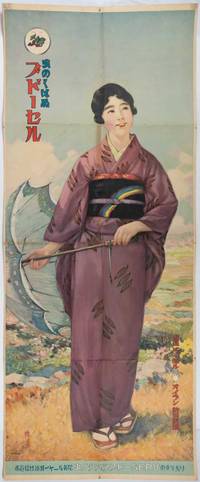
réf. 215601Japan. Large striking colour poster 120 x 49.6cm. This poster has been folded causing three horizontal creases and another vertical running the full length of the long sheet. Repairs to folds including some colouring along paper abrasion on folds on image itself. Still a lovely poster. This beautiful colour advertisement poster promotes the moth-proof serge kimono fabric from Budōseru Grape Brand Serge. Serge kimonos became highly fashionable in Japan around the turn of the 20th century. The merino wool was imported from Australia being regarded as the most suitable fibre for single-layer kimonos. However woollen fabrics were susceptible to insect damage. To combat this issue the Grape Brand Serge manufacturer developed a moth-proofing treatment utilising chemicals from the German company Bayer. According to the poster Bayer's compounds were used and their treated serge was marked on the selvedge as "moth-proof Budo serge". This processing took place at their factory in Aichi Prefecture. In the foreground a classical Japanese beauty graces a hillside elegantly attired in a purple kimono with a parasol in her hand. Her black obi bears an unusual rainbow design. The artist's signature appears in the lower left corner. . unknown
1939réf. 219988Japan.: 奈良橋茂一. Narahashi Shigeichi. No date. Circa1939. Small full colour poster 25.5 x 37.8cm. A little staining near the left margin tiny chip upper margin browned on the reverse Very good. This colourful hikifuda 引き札 issued as an advertisement by a soy sauce brewer in Hirabayashi Village present-day Murakami City Niigata Prefecture depicts a young family celebrating a Japanese victory in China. The father dressed in military uniform proudly holds his daughter while his son waves the national flag. Behind them a map of East Asia highlights Japanese-controlled areas in red with China marked in hatching. In the sky a fighter aircraft most likely modelled off a Mitsubishi A5M or Nakajima Ki-27 and pilot is prominently shown. This striking image blends commercial promotion with nationalist sentiment. . 奈良橋茂一. [Narahashi Shigeichi]. unknown
réf. 215188Japan. Early Meiji. Black and white woodblock print 33 x 45.8cm few small stains a few small holes neatly repaired. A lively and attractive image. This fun-filled woodblock print is an advertisement for a visiting American circus to Japan in the early Meiji period most likely around the 1870s. The main attraction is the equestrian feats but other acrobatic entertainments including trapeze and clown acts are also featured. Seventeen American names with six others are listed in the left bottom corner. Western circuses such as Risley Circus and Chiarini Circus were very popular in Japan during the Meiji period. . unknown
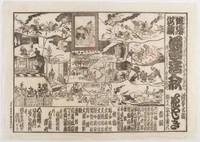
1895réf. 215186Japan.: 浅草蔵前通好文堂. Asakusa Kuramaedōri Kōbundō. Circa1895. Black and white woodblock advertisement 25 x 35cm a paper tape repair on reverse. Pink watercolour in three small areas few tiny holes but otherwise clean. This richly illustrated advertisement flyer for the chrysanthemum doll displays at the Hanayashiki Amusement Park in Asakusa features various scenes from famous kabuki plays First Sino-Japanese War battles and a fairy tale Momotaro Peach Boy. Human figures made out of chrysanthemum flowers were placed in various dioramas. In addition various animal and bird figures including lions peacocks and pelicans are created using the flowers. These chrysanthemum doll displays an enduring autumn tradition continue to attract numerous visitors each year with their remarkable artistry and seasonal charm. . 浅草蔵前通好文堂. [Asakusa Kuramaedōri Kōbundō]. unknown
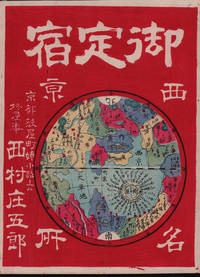
1878réf. 214047京都. Kyoto.: 西村庄五郎. Nishimura Shōgorou. 1878. Stunning colour map woodblock advertisement 25 x 19cm very good condition. This unusual and advertising woodblock map/print promotes Hiiragiya a renowned Japanese inn located in Kyoto. The print depicts the inn as the focal point of a Kyoto map humorously mimicking a world map. Established in 1861 by Nishimura Shogoro Hiiragiya continues to operate as a prestigious five-star inn in the heart of Kyoto. In the map distances to various landmarks and sites are indicated around the inn showcasing its central location within Kyoto. Additionally illustrations of major attractions such as the Royal Palace and the Kyoto Prefectural Office are depicted alongside the inn highlighting its proximity to key destinations. This eye-catching print serves as both an advertisement for Hiiragiya and a whimsical representation of Kyoto's attractions emphasizing the inn's prime location and prestigious reputation in the city. . 西村庄五郎. [Nishimura, Shōgorou]. unknown
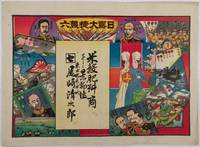
1904réf. 219714東京. Tokyo.: 尾﨑清次郎. Ozaki Seijirō. Circa1904. Colour woodblock folding sugoroku game sheet 38.3 x 52cm a little light soiling minor wear at margins but overall very good. This finely printed woodblock sugoroku game sheet was distributed as an advertisement by Ozaki Seijirō a rice and fertiliser merchant based in Toyama City a small rural centre on the Japan Sea coast. The game depicts major Japanese military commanders and the siege of Port Arthur highlighting both the difficulties of overcoming the Russians and the eventual retreat of their soldiers. Among the generals shown are Kodama Ōyama and Kuroki. Strikingly the goal of the game is marked not by triumphant soldiers but by two military nurses in uniform with rolls of bandages symbolising the soldiers’ return home in spite of wounds or illness. The sheet demonstrates how news of the war circulated widely reaching even provincial towns such as Toyama. . 尾﨑清次郎. [Ozaki Seijirō]. unknown
réf. 219425中央電影侷北京電影製片厰. Flyer advertising the film "Joyful Xinjiang" 19.3 x 13.3cm with Communist Party information about multicultural Xinjiang and the actors' names on reverse. Upper margin on reverse browned light horizontal crease very good condition. Rare. This Chinese film showcased the vibrant culture ethnic unity and prosperous life in Xinjiang during the early years of the PRC reflecting a harmonious society under the leadership of the Communist Party of China. The dates in the text on reverse mention 1950 and the text is in traditional Chinese characters in use before the 1956 language reforms. The huge size of Xinjiang its many raw materials agriculture irrigation thirteen different ethnic groups including some who were nomadic are mentioned as are many initiatives such as land reclamation by the PLA official delegations from Beijing increased production and the transformation of an 'old poor and backward country into a prosperous progressive and joyful new Xinjiang'. There is no description of the plot of the film. According to the flyer at the screening of this film which was the main feature other films would also be shown. The supporting films are 'News from the front line in Korea - the Fourth Briefing' and also 'The Conference of Heroes' further supporting the film dating from the early 1950s. . 中央電影侷北京電影製片厰 unknown
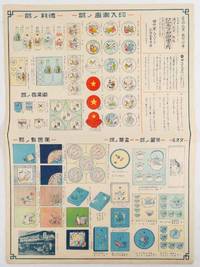
1930réf. 215725田中軍人デパート記念品専門部. Tanaka Gunjin Depāto Kinenhin Senmonbu. 1930s. Colourful small poster size advertisment featuring a large selection of gift ideas black and white photograph in the lower corner shows the business premises. 52.5 x 38cm. Few small closed tears at margins neatly mended on the reverse a bright interesting item. Scarce. This intriguing advertisement showcases a variety of gifts traditionally given by Japanese families to celebrate the safe return of loved ones from military service. Up until 1945 all Japanese males were required to serve three years in the military at the age of 20 before returning to civilian life. Issued by the Tanaka Military Servicemen Department Store in Kurume Kyushu—a town known for its Army base—the advertisement highlights items such as sake drinking sets tea cups and wrapping cloths all personalised with designs logos soldiers' names and unit numbers. When a young man was conscripted he and his family often received farewell gifts including monetary gifts and goods. Upon his safe return families reciprocated with these commemorative items. Although military service in China became increasingly perilous during the 1930s the advertisement advises customers not to delay their orders as creating personalised items requires time. . 田中軍人デパート記念品専門部. [Tanaka Gunjin hardcover