1.532 Ergebnisse
1907243 pages. Tissue-protected frontis photo portrait of author. Attractively decorated maroon cloth-covered front board. All seventeen black and white plates present. "An autobiographical account of the author's first twelve years (from 1862 to September 1873) as a Methodist missionary among the Cowichan and Nanaimo Indians." - Lowther. Average wear. Prior owner's name in light pencil upon front free endpaper. Faint moisture marks to fore-edge of first twenty-five pages. Hinges starting. Issued without dust jacket. LOWTHER 1556, RICKS p.75, AMTMANN 3499, SMITH 2134, WALLACE p.52, MATTHEWS 295, TOD & CORDINGLEY p.85. Book
1797Best.-Nr. 12434Paris, Du Pont, 1797. In-8 de XXIV-237 pp., 1 planche dépliante, veau raciné, dos lisse orné, pièce de titre en mariquin rouge, tranches mouchetées (reliure de l'époque).
Best.-Nr. 3042Vers la fin du XVIIIe siècle Cahier In 4 en couverture souple, « J.J Proa _ Mes mémoires » écrit à l’encre brune sur le plat supérieur. Manuscrit rédigé au net, certainement par un membre de la famille de J.J. Proa vers la fin du XVIIIe siècle. Manuscrit rédigé à l’encre violette très joliment calligraphiée. 1bl, 113ff, 2bl
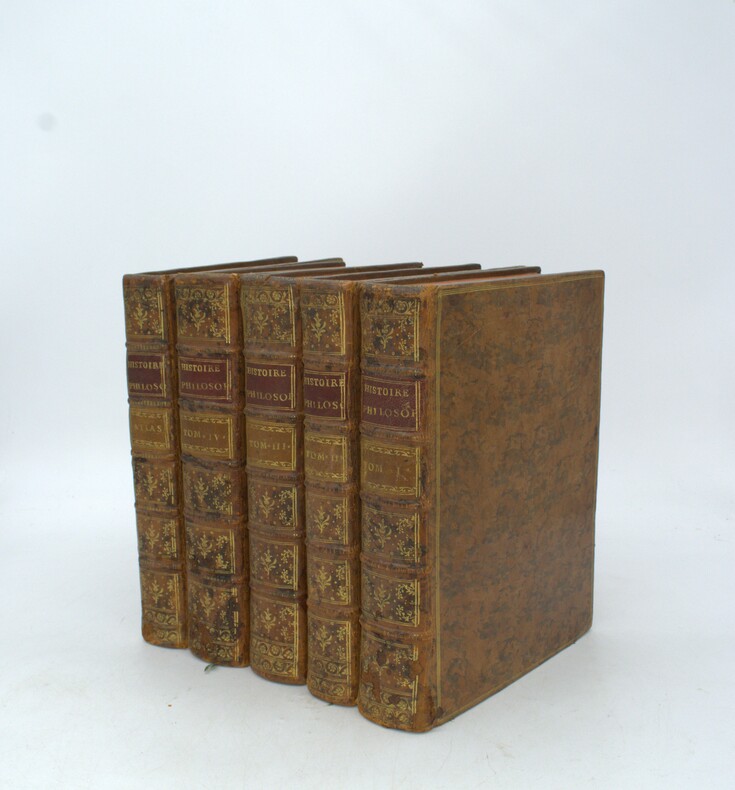
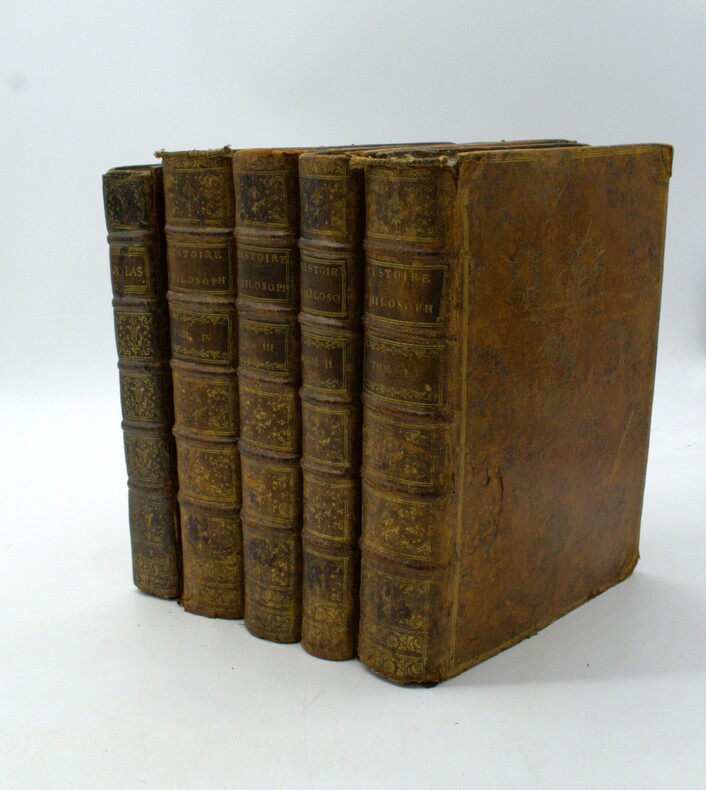
1780Best.-Nr. PHO-2003Genève, Jean-Léonard Pellet, 1780. 5 volumes in-4, 4 volumes de texte (25,5x20cm) et 1 Atlas (25,5x22cm), portrait, XVI, front.,741 pp., front., (2 ff.), VIII, 485 pp.; front., XV, 629 pp.; front., (2 ff.), VIII, 770 pp., (1 f.); 22 pp., (1 f. bl.), 50 cartes (49+17bis) et 23 tableaux. Relié plein veau marbré époque, dos à nerfs orné avec tomaison et pièce de titre grenat, filets aux plats, tranches rouges, frottements aux charnières, petites épidermures au dos, qlqs feuillets légèrement brunis. Bel exemplaire en reliure uniforme
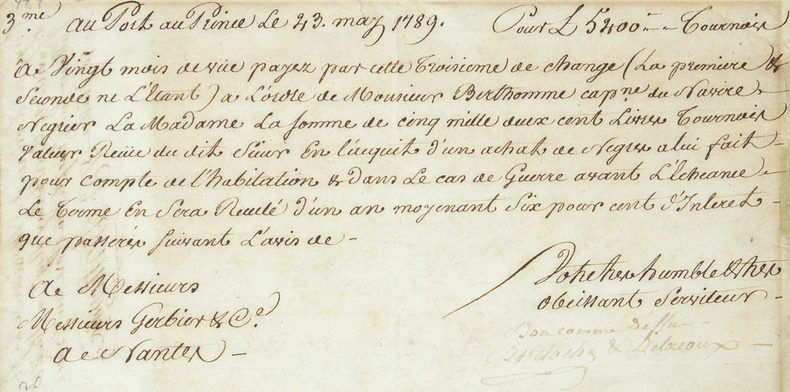
1789Best.-Nr. YQV-13Port-au-Prince, 23 mars 1789 Un billet in-8 oblong (128 × 243 mm), manuscrit à la plume au recto (11 lignes) et au verso (4 lignes), encre noire.
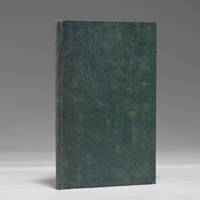
1816Best.-Nr. 1138361816. First Edition. SLAVERY. The Interference of the British Legislature in the Internal Concerns of the West India Islands Respecting Their Slaves Deprecated. London: J. Mawman 1816. Slim octavo modern blue-gray paper wrappers; pp. 58. $1800.First edition of this defense of the West Indian slave trade arguing against emancipation.Cloaked in pro-abolition language and anonymously written by a person claiming to be an abolitionist this work is actually a zealous condemnation of British interference in the slave trade of the West Indies. After briefly discussing the abolition movement the 1807 act abolishing slavery in britain and prominent anti-slavery organization the author sets out to make his main argument: that a bill requiring registry of slaves in the West Indies would infringe on the rights of those colonies. The author swiftly aligns himself with the interests of the West Indian Planters arguing that abolishing slavery is a different cause from emancipating people of African descent. He points out that this bill is merely the first in a projected series of measures meant to emancipate the Black population of the West Indies. Set in the awkward period between 1807 and 1833 when slavery in Britain was illegal but the slave trade still thrived abroad this work makes sense of obvious hypocrisy by arguing that slavery was permitted by God and that Blacks of African descent were better off as slaves than in Africa. The will of those against slavery proved stronger and complete abolition eventually became the law of the land. Sabin 34904. Kress 21649. This work last appeared at auction over 25 years ago; prior to that it had not been seen since the 1940s.Interior quite clean with only slight pressure offsetting toning to spine of modern wrappers. A beautiful copy in fine condition. unknown
1816Best.-Nr. 1138361816. First Edition. SLAVERY. The Interference of the British Legislature in the Internal Concerns of the West India Islands Respecting Their Slaves Deprecated. London: J. Mawman 1816. Slim octavo modern blue-gray paper wrappers; pp. 58. $1800.First edition of this defense of the West Indian slave trade arguing against emancipation.Cloaked in pro-abolition language and anonymously written by a person claiming to be an abolitionist this work is actually a zealous condemnation of British interference in the slave trade of the West Indies. After briefly discussing the abolition movement the 1807 act abolishing slavery in britain and prominent anti-slavery organization the author sets out to make his main argument: that a bill requiring registry of slaves in the West Indies would infringe on the rights of those colonies. The author swiftly aligns himself with the interests of the West Indian Planters arguing that abolishing slavery is a different cause from emancipating people of African descent. He points out that this bill is merely the first in a projected series of measures meant to emancipate the Black population of the West Indies. Set in the awkward period between 1807 and 1833 when slavery in Britain was illegal but the slave trade still thrived abroad this work makes sense of obvious hypocrisy by arguing that slavery was permitted by God and that Blacks of African descent were better off as slaves than in Africa. The will of those against slavery proved stronger and complete abolition eventually became the law of the land. Sabin 34904. Kress 21649. This work last appeared at auction over 25 years ago; prior to that it had not been seen since the 1940s.Interior quite clean with only slight pressure offsetting toning to spine of modern wrappers. A beautiful copy in fine condition. unknown books
1792Best.-Nr. 1262151792. HAITI SLAVERY. A Particular Account of the Insurrection of the Negroes of St. Domingo Begun in August 1791: Translated from the French caption title as issued. London: 1792. Slim octavo modern green cloth; pp. 32. $1800.Fourth edition published one year after the very rare first of this sensationalistic account of the early months of the Slave Rebellion in Haiti the beginnings of the Haitian Revolution which ultimately led to the establishment of the first independent black state in the New World. The publishers of this polemic hoped to frighten the British public and turn them away from the abolitionists Wilberforce and Clarkson who were trying to put and end to slavery in the British colonies in the West Indies.Translated into English this is a speech to France's National Assembly ""by the Deputies from the General Assembly of the French part of St. Domingo."" The tract provides a frightening and grisly account of the August 1791 Slave Rebellion the result of ""a plot to set fire to the plantations and to murder all the whites."" The start of the insurrection by its ""perfidious"" leaders resulted in a catalogue of horrors and atrocities as the rebels ""spread over the plain with dreadful shouts set fires to houses and canes and massacred the inhabitants."" The ""fury of the cannibals"" is recounted in gory detail. The Speech is signed at the bottom of page 19 by six Deputies who call the insurrection ""the greatest calamity that has visited the human race in the course of the eighteenth century."" An Appendix records Letters and Speeches concerning the Rebellion. ESTC T110428. Goldsmiths' 15167. See Sabin 58932 1791 first edition; LCP 7460 2nd edition 1792; Work 349 1832 printing. First and last leaf slightly darkened text quite clean. Trimmed irregularly along upper margin affecting page numbers on two leaves but not any text. A very good copy of this scarce item. hardcover
1792Best.-Nr. 1262151792. HAITI SLAVERY. A Particular Account of the Insurrection of the Negroes of St. Domingo Begun in August 1791: Translated from the French caption title as issued. London: 1792. Slim octavo modern green cloth; pp. 32. $1800.Fourth edition published one year after the very rare first of this sensationalistic account of the early months of the Slave Rebellion in Haiti the beginnings of the Haitian Revolution which ultimately led to the establishment of the first independent black state in the New World. The publishers of this polemic hoped to frighten the British public and turn them away from the abolitionists Wilberforce and Clarkson who were trying to put and end to slavery in the British colonies in the West Indies.Translated into English this is a speech to France's National Assembly ""by the Deputies from the General Assembly of the French part of St. Domingo."" The tract provides a frightening and grisly account of the August 1791 Slave Rebellion the result of ""a plot to set fire to the plantations and to murder all the whites."" The start of the insurrection by its ""perfidious"" leaders resulted in a catalogue of horrors and atrocities as the rebels ""spread over the plain with dreadful shouts set fires to houses and canes and massacred the inhabitants."" The ""fury of the cannibals"" is recounted in gory detail. The Speech is signed at the bottom of page 19 by six Deputies who call the insurrection ""the greatest calamity that has visited the human race in the course of the eighteenth century."" An Appendix records Letters and Speeches concerning the Rebellion. ESTC T110428. Goldsmiths' 15167. See Sabin 58932 1791 first edition; LCP 7460 2nd edition 1792; Work 349 1832 printing. First and last leaf slightly darkened text quite clean. Trimmed irregularly along upper margin affecting page numbers on two leaves but not any text. A very good copy of this scarce item. hardcover books
1863Best.-Nr. 101890Letterpress broadside 18 7/8" x 11 3/4" bold black type for highlighted words. Paper evenly toned some wrinkling considerable archival conservation and restoration with archival paper repair; despite the imperfections it is still a decent copy with a nice impression. This appears to fall into the political dirty tricks department in an election between John Brodhead and Henry Bumm for city treasurer in Philadelphia. The broadside is supposed to highlight a letter from John Brodhead to Jefferson Davis in 1860. It has strong racist overtones as Brodhead supposedly requests a position in Nicaragua so he can "help open it up to civilization and Niggers." He goes on to state he is "tired of being a white slave at the North and long for a home in the sunny South." These kinds of political tricks were not uncommon during the Civil War period perhaps that's still true today and the racist overtones would certainly not help one's chances in a Northern election.
1863Best.-Nr. 101890Letterpress broadside 18 7/8" x 11 3/4" bold black type for highlighted words. Paper evenly toned some wrinkling considerable archival conservation and restoration with archival paper repair; despite the imperfections it is still a decent copy with a nice impression. This appears to fall into the political dirty tricks department in an election between John Brodhead and Henry Bumm for city treasurer in Philadelphia. The broadside is supposed to highlight a letter from John Brodhead to Jefferson Davis in 1860. It has strong racist overtones as Brodhead supposedly requests a position in Nicaragua so he can "help open it up to civilization and Niggers." He goes on to state he is "tired of being a white slave at the North and long for a home in the sunny South." These kinds of political tricks were not uncommon during the Civil War period perhaps that's still true today and the racist overtones would certainly not help one's chances in a Northern election. books
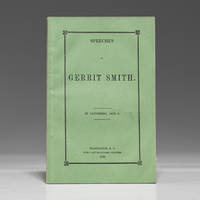
1854Best.-Nr. 1266881854. First Edition. SMITH Gerrit. Speeches of Gerrit Smith. In Congress 1853-'4. Washington D.C.: Buell and Blanchard 1854. Octavo original printed green self-wrappers original stitching. $1850.First edition of nine major 1854 speeches by radical abolitionist Smith together in print for the first time featuring elemental works such as ""No Slavery in Nebraska"" defying Stephen Douglas' Kansas-Nebraska bill and denouncing ""the federal government as a 'bastard democracy'"" very elusive in fragile original wrappers.In the early 1850s Gerrit Smith ""a man of enormous emotional complexity religious fervor antislavery commitment and wealthÉ embraced political abolitionism."" By then Frederick Douglass had become ""an outspoken supporterÉ and rejoiced in Smith's election to Congress as a radical abolitionist in 1852"" Blight Frederick Douglass 207 252. Once linked to Garrison's view of the Constitution as a ""covenant with death"" Smith split from him to become a founder of both the Liberty Party and the Radical Abolitionist Party. As documented in this collection of nine key speeches Smith in his ""congressional career of 1853 and 1854É evolved into one of America's renowned militant antislavery activists"" Gordon-Omelka Militant Abolitionist 2. Key works here such as his June 14 1854 speech ""Abolition of the Postal System"" reflected his conviction that ""the right to free discussion"" was fundamental and that ""Southerners were threatening the very openness and integrity of American democracyÉ Smith would not stand for itÉ he presaged a new generation of American abolitionists: those whose membership was inspired not by evangelical Christianity like the earlier Garrisons and Tappans but by secular liberal political ideals."" His attention to issues such asÑ""freedom of speech civil liberties social order the proper role of federal and state governments with respect to slaveryÑmotivated a new kind of political abolitionism which attracted new groups into the movement and gave them new tools for action"" Lonky Revolutionizing the Public Sentiment 56.Also notably featured here is Smith's ""No Slavery in Nebraska."" It stands as his defining response to Senator Stephen Douglas' December 1853 version of the Kansas-Nebraska bill which ""ultimately repealed the Missouri Compromise of 1820 and allowed the territories' citizens to decide the slavery questionÉ Smith signed Chase's abolitionist appeal against the bill"" and in his April 6 1854 ""No Slavery"" speech ""asserted a fresh reason to oppose the bill based on the Constitution's limits on state sovereignty.'"" Denouncing ""the federal government as a 'bastard democracy'"" he predicted ""a violent end to slaveryÉ a reckoning for deep and damning wrongs"" Gordon-Omelka 12. Soon afterward following his resignation from Congress Smith helped establish a Black settlement at North Elba N.Y. which was ""John Brown's permanent residence from 1854 until his death"" Stauffer Black Hearts 3. In June 1855 Smith Frederick Douglass and John Brown were together at the first convention in Syracuse of the Radical Abolition party. Four years later Brown was executed following the Harpers Ferry Raid that Smith helped fund causing Smith to suffer a mental breakdown. The decade after the Civil War he died in 1874. First edition:containing nine separately paginated speeches: Speech of Gerrit Smith On War. In Congress January 18 1854. Washington D.C.: Buell & Blanchard 1854; Homes for All. Speech of Gerrit Smith On the Homestead Bill. In Congress February 21 1854. Washington D.C.: Buell & Blanchard 1854; No Slavery in Nebraska: No Slavery in the Nation: Slavery an Outlaw. Speech of Gerrit Smith on the Nebraska Bill. In Congress April 6 1854. Washington D.C.: Buell & Blanchard 1854; Keep Government within its Limits. Speech of Gerrit Smith on the Pacific Railroad In the House of Representatives May 30 1854. Washington D.C.: Buell and Blanchard 1854; Abolition of the Postal System. Speech of Gerrit Smith In the House of Representatives June 14 1854. Washington D.C.: Buell & Blanchard 1854; Speech of Gerrit Smith On Mexican Treaty and ""Monroe Doctrine."" In Congress June 27 1854. Buell and Blanchard: Washington D.C. 1854; Letter of Gerrit Smith On the Reciprocity Treaty. No place: no publisher: 1854; Government Bound to Protect from the Dramshop. Speech of Gerrit Smith On Sale of Intoxicating Drinks in the City of Washington. In Congress July 22 1854. Washington D.C.: Buell & Blanchard 1843; Gerrit Smith to his Constituents. Washington D.C.: Buell & Blanchard 1854. With Nebraska Bill partially unopened. Sabin 92595; 82634; 82635; 82639; 82642; 82649; 82658; 82659; 82660. See LCP. Afro-Americana 9513 1855 ed. Fine condition. unknown
1854Best.-Nr. 1266881854. First Edition. SMITH Gerrit. Speeches of Gerrit Smith. In Congress 1853-'4. Washington D.C.: Buell and Blanchard 1854. Octavo original printed green self-wrappers original stitching. $1850.First edition of nine major 1854 speeches by radical abolitionist Smith together in print for the first time featuring elemental works such as ""No Slavery in Nebraska"" defying Stephen Douglas' Kansas-Nebraska bill and denouncing ""the federal government as a 'bastard democracy'"" very elusive in fragile original wrappers.In the early 1850s Gerrit Smith ""a man of enormous emotional complexity religious fervor antislavery commitment and wealthÉ embraced political abolitionism."" By then Frederick Douglass had become ""an outspoken supporterÉ and rejoiced in Smith's election to Congress as a radical abolitionist in 1852"" Blight Frederick Douglass 207 252. Once linked to Garrison's view of the Constitution as a ""covenant with death"" Smith split from him to become a founder of both the Liberty Party and the Radical Abolitionist Party. As documented in this collection of nine key speeches Smith in his ""congressional career of 1853 and 1854É evolved into one of America's renowned militant antislavery activists"" Gordon-Omelka Militant Abolitionist 2. Key works here such as his June 14 1854 speech ""Abolition of the Postal System"" reflected his conviction that ""the right to free discussion"" was fundamental and that ""Southerners were threatening the very openness and integrity of American democracyÉ Smith would not stand for itÉ he presaged a new generation of American abolitionists: those whose membership was inspired not by evangelical Christianity like the earlier Garrisons and Tappans but by secular liberal political ideals."" His attention to issues such asÑ""freedom of speech civil liberties social order the proper role of federal and state governments with respect to slaveryÑmotivated a new kind of political abolitionism which attracted new groups into the movement and gave them new tools for action"" Lonky Revolutionizing the Public Sentiment 56.Also notably featured here is Smith's ""No Slavery in Nebraska."" It stands as his defining response to Senator Stephen Douglas' December 1853 version of the Kansas-Nebraska bill which ""ultimately repealed the Missouri Compromise of 1820 and allowed the territories' citizens to decide the slavery questionÉ Smith signed Chase's abolitionist appeal against the bill"" and in his April 6 1854 ""No Slavery"" speech ""asserted a fresh reason to oppose the bill based on the Constitution's limits on state sovereignty.'"" Denouncing ""the federal government as a 'bastard democracy'"" he predicted ""a violent end to slaveryÉ a reckoning for deep and damning wrongs"" Gordon-Omelka 12. Soon afterward following his resignation from Congress Smith helped establish a Black settlement at North Elba N.Y. which was ""John Brown's permanent residence from 1854 until his death"" Stauffer Black Hearts 3. In June 1855 Smith Frederick Douglass and John Brown were together at the first convention in Syracuse of the Radical Abolition party. Four years later Brown was executed following the Harpers Ferry Raid that Smith helped fund causing Smith to suffer a mental breakdown. The decade after the Civil War he died in 1874. First edition:containing nine separately paginated speeches: Speech of Gerrit Smith On War. In Congress January 18 1854. Washington D.C.: Buell & Blanchard 1854; Homes for All. Speech of Gerrit Smith On the Homestead Bill. In Congress February 21 1854. Washington D.C.: Buell & Blanchard 1854; No Slavery in Nebraska: No Slavery in the Nation: Slavery an Outlaw. Speech of Gerrit Smith on the Nebraska Bill. In Congress April 6 1854. Washington D.C.: Buell & Blanchard 1854; Keep Government within its Limits. Speech of Gerrit Smith on the Pacific Railroad In the House of Representatives May 30 1854. Washington D.C.: Buell and Blanchard 1854; Abolition of the Postal System. Speech of Gerrit Smith In the House of Representatives June 14 1854. Washington D.C.: Buell & Blanchard 1854; Speech of Gerrit Smith On Mexican Treaty and ""Monroe Doctrine."" In Congress June 27 1854. Buell and Blanchard: Washington D.C. 1854; Letter of Gerrit Smith On the Reciprocity Treaty. No place: no publisher: 1854; Government Bound to Protect from the Dramshop. Speech of Gerrit Smith On Sale of Intoxicating Drinks in the City of Washington. In Congress July 22 1854. Washington D.C.: Buell & Blanchard 1843; Gerrit Smith to his Constituents. Washington D.C.: Buell & Blanchard 1854. With Nebraska Bill partially unopened. Sabin 92595; 82634; 82635; 82639; 82642; 82649; 82658; 82659; 82660. See LCP. Afro-Americana 9513 1855 ed. Fine condition. unknown books
1728Best.-Nr. 100536Pamphlet 8vo modern full calf in the style of an 18th century Cambridge binding 32 pp.Very slight aging; in excellent condition. This is a rare first edition of a work that presents a complaint by British planters in the West Indies concerning the Assiento or agreement with Spain that gave Britain a virtual monopoly on the African slave trade. This agreement came out of the Treaty of Utrecht which ended the War of the Spanish Succession. This pamphlet indicates that the planters feared as a result of this agreement British slavers might be required to provide African slaves to the Spanish colonies which could result in insufficient numbers available for the West India plantations. The Assiento with Spain would mark the beginning of the Atlantic slave trade as a very powerful economic growth engine. Unfortunately this would translate into millions of Africans being taken from their homes. H. Whitridge
1728Best.-Nr. 100536Pamphlet 8vo modern full calf in the style of an 18th century Cambridge binding 32 pp.Very slight aging; in excellent condition. This is a rare first edition of a work that presents a complaint by British planters in the West Indies concerning the Assiento or agreement with Spain that gave Britain a virtual monopoly on the African slave trade. This agreement came out of the Treaty of Utrecht which ended the War of the Spanish Succession. This pamphlet indicates that the planters feared as a result of this agreement British slavers might be required to provide African slaves to the Spanish colonies which could result in insufficient numbers available for the West India plantations. The Assiento with Spain would mark the beginning of the Atlantic slave trade as a very powerful economic growth engine. Unfortunately this would translate into millions of Africans being taken from their homes. H. Whitridge books
1809Best.-Nr. 1187761809. First Edition. SLAVERYÑABOLITION MONTGOMERY James GRAHAME James and BENGER Elizabeth. Poems on the Abolition of the Slave Trade. London: Printed for R. Bowyer 1809 i.e. 1810. Tall quarto contemporary brown calf gilt rebacked with original spine laid down raised bands marbled endpapers and edges. $2000.First edition of famed publisher and artist BowyerÕs richly illustrated volume featuring eloquent anti-slavery poems by Montgomery Grahame and Benger a major antislavery work issued shortly after BritainÕs abolition of the slave trade with engraved portraits of abolitionists Sharpe Clarkson and Wilberforce engraved allegorical title page and nine full-page engravings after paintings by artist Sir Robert Smirke a handsome wide-margined copy in contemporary boards.This handsomely illustrated volume features three epic poemsÑMontgomery's The West Indies Grahame's Africa Delivered and Elizabeth Benger's A Poem Occasioned by the Abolition of the Slave Trade in 1806. All were ""commissioned by the London publisher Robert Bowyer for inclusion in a lavish volume of antislavery poetryÉ timed to celebrate the abolition of the slave trade"" Basker Amazing Grace 612. With biographies and engraved full-page medallion portraits of leading British abolitionists Sharpe Clarkson and Wilberforce Poems on the Abolition of the Slave Trade is especially noted for its nine full-page engravings and the allegorical title page vignette engraved by Scriven and Worthington after paintings by renowned artist Sir Robert Smirke whose works were considered ""gems in the art of history painting"" American Daily Advertiser. On presenting a copy to George III Bowyer described this as a ""most beautifully embellished volume of Poems which have been written expressly for the occasion on the Abolition of the Slave Trade"" Baptist Quarterly 35. Poems won early critical praise as an ""elegant publication on the Abolition of this traffic and we congratulate the poets the artist and the editor"" Monthly Review. First edition: plates dated ""Dec. 1 1809""; portraits dated ""Jan 1 1810."" With engraved and letterpress title pages. With directions to the binder leaf bound in at rear. Lowndes 1591. Goldsmiths 19923. Kress B5549. Sabin 50145. Benezit IX:656. Occasional faint foxing chiefly marginal. A near-fine copy scarce and desirable in contemporary binding. hardcover
1809Best.-Nr. 1187761809. First Edition. SLAVERYÑABOLITION MONTGOMERY James GRAHAME James and BENGER Elizabeth. Poems on the Abolition of the Slave Trade. London: Printed for R. Bowyer 1809 i.e. 1810. Tall quarto contemporary brown calf gilt rebacked with original spine laid down raised bands marbled endpapers and edges. $2000.First edition of famed publisher and artist BowyerÕs richly illustrated volume featuring eloquent anti-slavery poems by Montgomery Grahame and Benger a major antislavery work issued shortly after BritainÕs abolition of the slave trade with engraved portraits of abolitionists Sharpe Clarkson and Wilberforce engraved allegorical title page and nine full-page engravings after paintings by artist Sir Robert Smirke a handsome wide-margined copy in contemporary boards.This handsomely illustrated volume features three epic poemsÑMontgomery's The West Indies Grahame's Africa Delivered and Elizabeth Benger's A Poem Occasioned by the Abolition of the Slave Trade in 1806. All were ""commissioned by the London publisher Robert Bowyer for inclusion in a lavish volume of antislavery poetryÉ timed to celebrate the abolition of the slave trade"" Basker Amazing Grace 612. With biographies and engraved full-page medallion portraits of leading British abolitionists Sharpe Clarkson and Wilberforce Poems on the Abolition of the Slave Trade is especially noted for its nine full-page engravings and the allegorical title page vignette engraved by Scriven and Worthington after paintings by renowned artist Sir Robert Smirke whose works were considered ""gems in the art of history painting"" American Daily Advertiser. On presenting a copy to George III Bowyer described this as a ""most beautifully embellished volume of Poems which have been written expressly for the occasion on the Abolition of the Slave Trade"" Baptist Quarterly 35. Poems won early critical praise as an ""elegant publication on the Abolition of this traffic and we congratulate the poets the artist and the editor"" Monthly Review. First edition: plates dated ""Dec. 1 1809""; portraits dated ""Jan 1 1810."" With engraved and letterpress title pages. With directions to the binder leaf bound in at rear. Lowndes 1591. Goldsmiths 19923. Kress B5549. Sabin 50145. Benezit IX:656. Occasional faint foxing chiefly marginal. A near-fine copy scarce and desirable in contemporary binding. hardcover books
1730Best.-Nr. PHO-2325Paris, Guérin, 1730-1731. 2 volumes in-4 (25,5 × 20 cm). XXVIII, 482 p., 29 ff. ; XIV, 506 p., 30 ff., reliures postérieures en demi-veau, pièces de titre et tomaison, coins et coupes légèrement frottés et émoussés, petits manques aux coiffes. Légèrement bruni, légères galeries de vers et traces d’humidité dans la marge intérieure au début du tome I ; les pages 17-20, 221/222, *19/*20 du tome I ainsi que les plans « Plan de la ville de San-Domingo » (tome I) et « Plan du Cap François » (tome II) sont déreliés ; petit déchirement restauré au pli de la garde de la « Carte de l’Isle de Saint-Domingue » (tome II). Ex-libris Jack Grout.
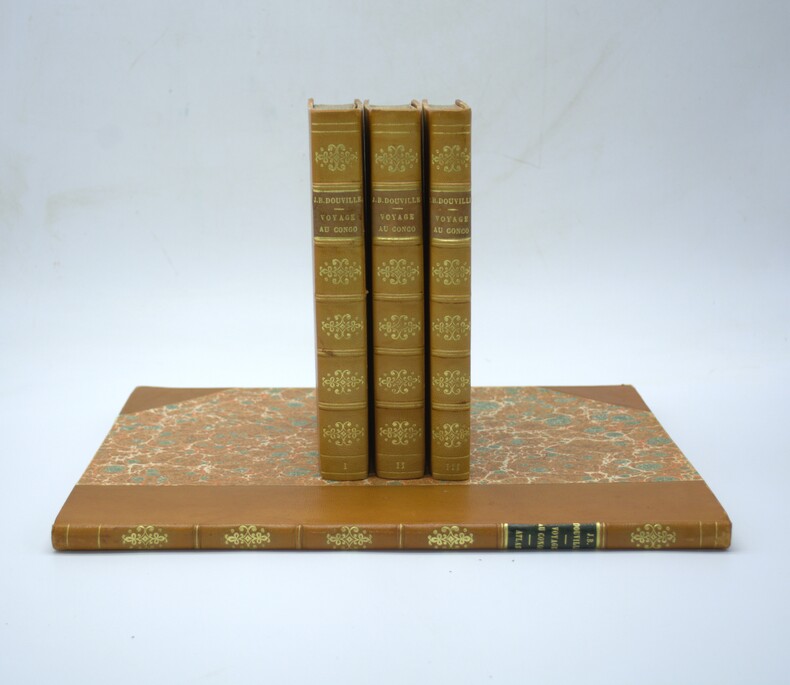
1832Best.-Nr. PHO-2260Paris, Jules Renouard, 1832. 3 vol. in-8° (21,5x14cm) de xxxj, 1 bl., 328 pp. ; 380 pp. ; 272 pp. et son Atlas in-folio (37x29cm) de titre, [1] p., 1 grande carte dépliante et 21 planches lithographiées (la n° 6 en double). Demi-chagrin miel à coins, dos à 5 faux-nerfs orné, p. de t. en maroquin fauve, tomaison dorée en pied, tête dorée, couverture et dos conservé (Reliure moderne). Des rousseurs, quelques pl. de l'Atlas légèrement brunies, coiffe sup. de l’atlas légèrement frottée. Étiquette de librairie, le frontispice figurant la médaille reçue par l’auteur est en déficit. Bel ensemble.
1786Best.-Nr. 40654Philadelphia: London printed: Philadelphia: re-printed by Joseph Crukshank 1786. 8vo. 8 1/2 x 5 inches. xix 2 22-155 pp. Publisher's advertisement at rear. Original blue paper wrappers Exceedingly rare first American edition of Clarkson's first work. A landmark work by the writer who helped abolish slavery in the British Empire. First American edition of Clarkson's rare first published work preceded by the same years first English edition his famous prize essay on the abolition of slavery igniting the campaign for one of the fundamental rights of man PMM 232. In 1770s England as "rebellious Americans were severing ties with their former British motherland a strenuous battle occurred that spawned the noble civil- and human-rights fight that eventually ended Britain's participation in the African slave trade." With this Essay on the Slavery and Commerce of the Human Species Thomas Clarkson "became the official whistle-blower of the horrors of transatlantic slavery the driving force behind the abolition of African slavery and the slave trade" Smith Thomas Clarkson 17. Clarkson's "famous prize essay was the prelude to parliamentary action" on the abolition of slavery. Clarkson together with William Wilberforce led the "campaign carried on by word of mouth and by means of the printing press for one of the fundamental rights of man" PMM 232. Clarkson had been completing his studies at Cambridge when he entered an essay competition and came across an "advertisement for Benezet's Historical Account of Guinea. He was profoundly struck by the title and 'hastened to London to buy it'. Overwhelmed by the horror and brutality of transatlantic slavery his goal of merely winning the prize for its own sake" shifted to creating a work of wider impact. On winning the 1785 Cambridge prize Clarkson translated the essay his Latin dissertation into English for publication. He documents the long history of slavery the devastating Middle Passage and the inhumanity of slavery in the colonies. Clarkson is renowned as "the man who spawned the British Abolitionist Movement and the first Briton to devote his entire adult life to ending African slavery… the moral conscience of American slavery proponents well into the 19th century" Smith 9-30 43. "He never ceased to work for anti-slavery lending his pen and his prestige particularly to the cause of abolition in the United States" DNB. Evans 19561; Library Company of Philadelphia. Afro-Americana 1553-1906 2nd ed. 2384; Kress B1028; ESTC W32021; PMM 232a; Sabin 13484. London, printed: Philadelphia: re-printed by Joseph Crukshank unknown books
1789Best.-Nr. R240004234IMP D'AIME DE LA ROCHE. 1789. In-4. Relié demi-cuir. Etat d'usage, Plats abîmés, Dos abîmé, Mouillures. 367 pages. Dos cuir marron avec filets et pièce de titre (manquante) doré. Manque coiffe en tête et en pied, revêtement sur le 1er platde couverture.. . . . Classification Dewey : 326-Esclavage
1780Best.-Nr. PHO-1926Genève, Pellet, 1780, 5 volumes in-4, 4 de texte et un atlas in-4, Texte ; portrait, XVI, 741 pp., 1 pl.; front., (2 ff.), VIII, 485 pp.; front., XV, 629 pp.; front., (2 ff.), VIII, 770 pp., (1 f.), Atlas ; 2f., 28pp. ; illustré complet des 50 cartes (chiffrées 1-49 et 17 bis) ; quelques cartes mal chiffrées et 23 tableaux de statistiques in fine, la plupart dépliants. Rousseurs éparses, feuillets légèrement brunis par places. Tampons humides "Bibliothèque populaire de Bordeaux". Reliure Texte ; Basane fauve marbrée de l'époque, dos à nerfs ornés, triple filet doré encadrant les plats, Atlas ; veau brun marbré de l'époque, dos à nerfs orné, fleurons tulipes entre caissons, tranches marbrées, filet à froid encadrant les plats, double filet doré sur coupes 2 coiffes arasées, une arrachée, petits chocs à 2 autres, frottements et épidermures, coins très émoussés, mors fendillés aux entrées, coins émoussés, tranches marbrées (atlas).
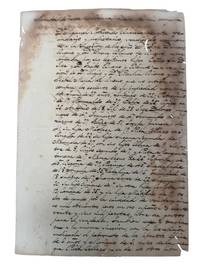
1875Best.-Nr. 231241875. Slavery Cuba Spanish colonial slave sale manuscript recording the transfer of thirty-eight enslaved individuals in Cuba in 1875 materializing the sheer scale and organization of enslaved labor within the island's plantation economy during the final decade before abolition. The document enumerates a large group of enslaved people including multiple family units with young children demonstrating how slavery functioned as both an economic system and a hereditary condition sustained through the sale and reproduction of enslaved populations. Created eleven years prior to the abolition of slavery in Cuba in 1886 the manuscript documents the continued legality and normalization of large-scale slave transactions despite decades of international pressure and earlier prohibitions on the transatlantic trade offering concrete evidence of how internal markets sustained the institution in its final phase. Official Cuban slave contract documenting the sale of thirty-eight enslaved individuals for the sum of 126000 pesetas formalized before a public notary or legal authority. Single manuscript leaf written in Spanish cursive in black ink on both recto and verso densely filled with names ages and relational identifiers. Measures 8.5" x 12.25". The text lists individuals sequentially including men women and children with repeated references to kinship structures such as mothers with multiple children indicating the sale of family groupings rather than isolated individuals. The script reflects extended passages detailing ownership exclusions and conditions of transfer. A partial watermark of the official coat of arms of Cuba is visible. By 1875 Cuba remained one of the last major slave societies in the Atlantic world with sugar production driving demand for large controlled labor forces. Even after Spain curtailed the official slave trade earlier in the century illegal importation persisted into the 1860s and alternative systems of coerced labor including Chinese indenture supplemented plantation workforces. The scale of this transaction demonstrates the consolidation and redistribution of enslaved labor within domestic markets while the inclusion of children underscores the long-term economic logic of slavery as a self-reproducing system. Moderate toning and foxing concentrated along the edges with numerous small closed wormholes a few affecting portions of the text. Light edge wear present. Overall in good condition. This document provides unusually extensive nominal data on a large enslaved population encompassing the roles of kinship valuation and labor organization in late Spanish colonial Cuba. unknown
1875Best.-Nr. 231241875. Slavery Cuba Spanish colonial slave sale manuscript recording the transfer of thirty-eight enslaved individuals in Cuba in 1875 materializing the sheer scale and organization of enslaved labor within the island's plantation economy during the final decade before abolition. The document enumerates a large group of enslaved people including multiple family units with young children demonstrating how slavery functioned as both an economic system and a hereditary condition sustained through the sale and reproduction of enslaved populations. Created eleven years prior to the abolition of slavery in Cuba in 1886 the manuscript documents the continued legality and normalization of large-scale slave transactions despite decades of international pressure and earlier prohibitions on the transatlantic trade offering concrete evidence of how internal markets sustained the institution in its final phase. Official Cuban slave contract documenting the sale of thirty-eight enslaved individuals for the sum of 126000 pesetas formalized before a public notary or legal authority. Single manuscript leaf written in Spanish cursive in black ink on both recto and verso densely filled with names ages and relational identifiers. Measures 8.5" x 12.25". The text lists individuals sequentially including men women and children with repeated references to kinship structures such as mothers with multiple children indicating the sale of family groupings rather than isolated individuals. The script reflects extended passages detailing ownership exclusions and conditions of transfer. A partial watermark of the official coat of arms of Cuba is visible. By 1875 Cuba remained one of the last major slave societies in the Atlantic world with sugar production driving demand for large controlled labor forces. Even after Spain curtailed the official slave trade earlier in the century illegal importation persisted into the 1860s and alternative systems of coerced labor including Chinese indenture supplemented plantation workforces. The scale of this transaction demonstrates the consolidation and redistribution of enslaved labor within domestic markets while the inclusion of children underscores the long-term economic logic of slavery as a self-reproducing system. Moderate toning and foxing concentrated along the edges with numerous small closed wormholes a few affecting portions of the text. Light edge wear present. Overall in good condition. This document provides unusually extensive nominal data on a large enslaved population encompassing the roles of kinship valuation and labor organization in late Spanish colonial Cuba. unknown books
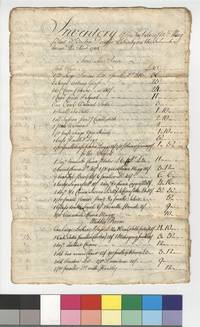
1738Best.-Nr. 60003Mary Grosse Phillips Blair 1681-1738. Manuscript Document Estate Inventory Boston Mass. November 3 1738. 8 pp. folio. Mary Blair was widow of Capt. John Phillips and Capt. William Blair merchant. This inventory depicts a lavishly furnished mansion vast real estate holdings and a rich array of items in the shop -- suggesting that Mary Blair continued the mercantile trade after her husband's death in 1736. Also of note are enslaved persons Cato and Monday. Thomas Hancock was one of the administrators of the estate which was valued at over £28232. Another copy of the inventory exists in state records Suffolk County probate case 7223. Fine condition.