Werkstoffkunde Stahl: Grundlagen: Vol 1
2011ref. x-3642820921Springer 2011. Paperback. New. 4th reprint edition. 766 pages. German language. 9.61x6.69x1.73 inches. Springer paperback

Revaluation Books · United Kingdom£180.47≈ €214.77
150 results
ref. 24185No date or place. Royal Military College Sandhurst; late 1880s. The present item is excessively scarce: there is no record of it on either OCLC WorldCat or JISC. The Staff College Drag Hunt at the Royal Military College Sandhurst was established in 1869 as a private pack which drag-hunted twice a week in the area surrounding Camberley and after more than a hundred and fifty years the hunt still rides. 1p 12mo. Text enclosed in rules with decorative corners. In fair condition lightly worn and spotted with traces of stub and mounting on blank reverse. Titled: ‘The Staff College Drag Hunt Song. / By Major M. Churchill 2/Northampton Regiment / Master S.C.D.H. 1885-86 / Music from Mr. F. Cotton’s “Forty Minutes.” ’ Seven numbered four-line stanzas and the following chorus: ‘Then let us drink drag-hunting boys and pass the bottle round / Drink to the horse the fox of course a bumper to the hound; / And let us toast our farmers as a right good jolly sort / When you haven’t time for hunting then the Drag is rattling sport.’ First stanza: ‘The gallant steed by nature made companion for the hound / Will give us great enjoyment as o’er the fields we bound; / There’s nothing like fox-hunting and some might say the stag / But when you can’t get either then there’s nothing like the Drag.’ The fourth stanza notes that ‘many a Staff aspirant has saluted mother earth’. There are also references to the Staff College Tangley Park and Easthampstead Park. The final stanza gives a toast to ‘our Secretary’s health’ as ‘He’s the proper sort of fellow to instruct the R. M. C.’ See image No date or place. [Royal Military College, Sandhurst; late 1880s.] unknown
2011ref. x-3642820921Springer 2011. Paperback. New. 4th reprint edition. 766 pages. German language. 9.61x6.69x1.73 inches. Springer paperback
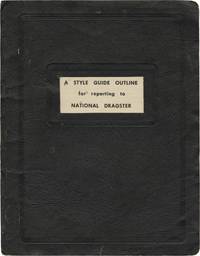
1960ref. 152883Los Angeles: National Hot Rod Association 1960. Original style guide for freelance reporters and photographers covering competition drag racing created by the National Hot Rod Association NHRA circa 1960s. The NHRA was founded by Wally Parks editor of Hot Rod magazine in 1951 in order to promote "safety sportsmanship and fellowship" among racer and more broadly to convince the general public and especially police that there was a difference between reckless street racers and hot rod drivers. In 1960 the association began publishing "National Dragster" a biweekly news magazine featuring racing stats and interviews which continues to be published today. Housed in black wrappers with a die-cut title window in the British style. Mimeograph duplication rectos only. Ten leaves not numbered. Wrapper Very Good plus leaves Very Good plus lightly age-toned bound internally with three silver brads. National Hot Rod Association unknown
1960ref. 152883Los Angeles: National Hot Rod Association 1960. Original style guide for freelance reporters and photographers covering competition drag racing created by the National Hot Rod Association NHRA circa 1960s. The NHRA was founded by Wally Parks editor of Hot Rod magazine in 1951 in order to promote "safety sportsmanship and fellowship" among racer and more broadly to convince the general public and especially police that there was a difference between reckless street racers and hot rod drivers. In 1960 the association began publishing "National Dragster" a biweekly news magazine featuring racing stats and interviews which continues to be published today. Housed in black wrappers with a die-cut title window in the British style. Mimeograph duplication rectos only. Ten leaves not numbered. Wrapper Very Good plus leaves Very Good plus lightly age-toned bound internally with three silver brads. National Hot Rod Association unknown books
ref. 46793974like new. unknown
1991ref. x-0792310209Kluwer Academic Pub 1991. Hardcover. New. 173 pages. 9.13x6.57x1.11 inches. Kluwer Academic Pub hardcover
ref. 37734776like new. unknown
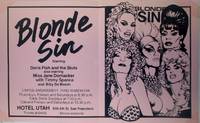
ref. 022741San Francisco: No Publisher. Unbound. Good. no date circa 1981. Single sheet pink paper stock 8 ½ by 14 inches. Printed in landscape format. Really awesome illustration of the Sluts a Go-Go present. A flyer promoting The Blonde Sin show held at Hotel Utah from November 1980 through 1981. Blonde Sin was the third iteration of Doris Fish and the Sluts a Go Go's debut performance. The debut began in 1979 was rewritten in early 1980 and rewritten again for a debut in November of 1980. As the Doris Fish Forever website notes this show "established the Sluts a Go-Go as San Franciso drag stars" See the Doris Fish Forever website for previous and following information. Doris Fish was a noted drag performer both in her original home country of Australia and in San Francisco. She performed in some drag shows in Australia as part of Sylvia and the Synthetics in the early 1970s but gained fame for her work with the Sluts a Go-Go in the 1980s. GOOD condition. Horizontal and vertical fold creases present. Remnants of cellophane tape at the corners. Minor soiling. No Publisher unknown
ref. 46793974-nnew. unknown
ref. 37734776-nnew. unknown
192732 pages. Where the Thrill Comes In - Charles J. Finger; Hiking in the Mountains - Dorothy E. Pilley; Old-Age Competency - C.P. Vary; The Voyage of the Victoria - Charles J. Finger; Henry Ford on 'Choosing One's Career'; Ourselves Across the Pacific; Wall Street's National Daily - The Wall Street Journal; Uncle Horace Mann As I Remember Him - Julian Hawthorne; For Bigger and Better County Fairs; The People of the Great Marsh; - John Sloan; English-Americans in Revolution - Lewis Worthington Smith; A Tragedy in the Tar Pits - Frances Holbrook Pfeiffer; The National Grange and the Awakening of the Farmer; Chats with Office Callers; Average soiling and wear. Address stamped atop back cover else unmarked. Some pages holding by only one of the two staples, otherwise a sound vintage copy. Book
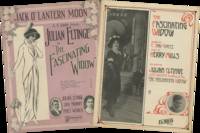
1917ref. List3648New York City: Leo. Feist Inc. and others 1917. Five pieces of sheet music see full inventory below. Overall very good plus. Julian Eltinge 1881–1941 was the most commercially successful and popular female impersonator of his time. Beginning with drag performances in his adolescence he developed a convincing portrayal of female characters—shocking audiences at the end of shows by revealing that he was in costume—and had a successful career on the vaudeville circuit and on Broadway followed by appearances in several silent films and as mores around crossdressing changed in nightclubs. Offered here are five pieces of sheet music written for Eltinge three of which are from the 1910 musical comedy The Fascinating Widow. A New York Times review of the Widow remarks that “once over the initial unpleasantness of the idea of female impersonation which is not easy for people of delicate sensibilities there is nothing especially displeasing about Mr. Eltinge’s efforts at femininity” and notes Eltinge’s popularity and ability to draw crowds.1 Titles Included: “In the Land of Wedding Bells.” Howard Johnson and Geo. W. Meyer. New York: Leo. Feist Inc. 1917. 4 pp. Very good plus. “The Crinoline Girl”. Julian Eltinge and Percy Wenrich. New York: Leo. Feist 1914. 6 pp. Very good. “The Fascinating Widow”. E. Ray Goetz and Kerry Mills. New York: F.A. Mills Inc. 1911. 8 pp. Near Fine. The Fascinating Widow “Jack-O-Lantern Moon”. Julian Eltinge Jack Mahoney and Percy Wenrich. New York: The Wenrich-Howard Co. 1913. 6 pp. Very good. The Fascinating Widow “With Down-Cast Eye”. Otto Hauerbach and Karl Hoschna. New York Chicago San Francisco London and Paris: M. Witmark & Sons 1910. 6 pp. Excellent. 1 “Eltinge in Musical Play. Female Impersonator Seen at the Liberty in ‘The Fascinating Widow.’” The New York Times September 12 1911. Leo. Feist Inc. and others unknown
1917ref. List3648New York City: Leo. Feist Inc. and others 1917. Five pieces of sheet music see full inventory below. Overall very good plus. Julian Eltinge 1881–1941 was the most commercially successful and popular female impersonator of his time. Beginning with drag performances in his adolescence he developed a convincing portrayal of female characters—shocking audiences at the end of shows by revealing that he was in costume—and had a successful career on the vaudeville circuit and on Broadway followed by appearances in several silent films and as mores around crossdressing changed in nightclubs. Offered here are five pieces of sheet music written for Eltinge three of which are from the 1910 musical comedy The Fascinating Widow. A New York Times review of the Widow remarks that “once over the initial unpleasantness of the idea of female impersonation which is not easy for people of delicate sensibilities there is nothing especially displeasing about Mr. Eltinge’s efforts at femininity” and notes Eltinge’s popularity and ability to draw crowds.1 Titles Included: “In the Land of Wedding Bells.” Howard Johnson and Geo. W. Meyer. New York: Leo. Feist Inc. 1917. 4 pp. Very good plus. “The Crinoline Girl”. Julian Eltinge and Percy Wenrich. New York: Leo. Feist 1914. 6 pp. Very good. “The Fascinating Widow”. E. Ray Goetz and Kerry Mills. New York: F.A. Mills Inc. 1911. 8 pp. Near Fine. The Fascinating Widow “Jack-O-Lantern Moon”. Julian Eltinge Jack Mahoney and Percy Wenrich. New York: The Wenrich-Howard Co. 1913. 6 pp. Very good. The Fascinating Widow “With Down-Cast Eye”. Otto Hauerbach and Karl Hoschna. New York Chicago San Francisco London and Paris: M. Witmark & Sons 1910. 6 pp. Excellent. 1 “Eltinge in Musical Play. Female Impersonator Seen at the Liberty in ‘The Fascinating Widow.’” The New York Times September 12 1911. Leo. Feist Inc. and others unknown books
196732 pages. Features: Religion and Rebellion in the Roman Catholic Church - speaking with five priests; Nice large colour ad for Neilson's chocolate bars; Time Machine vs. Jet - Drag Racer Scott Wilson hits 215 mph - article with great colour photos; World's Sexiest Barber Shop in Beverly Hills - article and photos; The Trans Canada Centennial square-dance train; Half-page ad for the Plymouth Barracuda features three models; Nice colour photo ad for Honda generators; and more. Moderate wear. Unmarked. A quality vintage copy. Book
1990ref. 239441990. West Hollywood Halloween and drag photo archive showing gay nightlife costume performance and gender play at the city's Halloween celebration circa 1990s when the annual event was developing into one of the country's largest public Halloween gatherings. West Hollywood occupied an exceptional position in American gay civic life by this period.Incorporated in 1984 through a coalition that included LGBT activists its first City Council became the first municipal governing body in the United States with an openly gay majority and the new city quickly enacted protections against discrimination based on sexual orientation and against people with HIV and AIDS.The Halloween Carnaval formally launched in 1987 from earlier gay Halloween gatherings along Santa Monica Boulevard gave that political and social visibility a mass public expression through drag costume performance and occupation of the street. WeHo By 1995 contemporary reporting described nearly 100000 people converging on West Hollywood for Halloween and traced the celebration to gay men who had begun gathering there more than two decades earlier. Photo archive of 41 chromogenic color photographs each approximately 4 x 6 inches West Hollywood California circa 1990s. The photographs record drag queens gay men and other costumed participants moving through a crowded nighttime celebration frequently stopping to pose embrace dance and perform for the camera. Costumes range from Snow White and other fairy tale figures to nurses brides cowboys showgirls geisha inspired characters with parasols Egyptian royalty devils flight attendants and performers in elaborate gowns lingerie wigs feathers sequins jewelry and theatrical makeup. Several photographs concentrate on coordinated groups: three figures appear in matching blue dresses and white caps; blond performers carry circular signs reading "Air Head Airlines"; a nurse wears white with prominent red crosses; and bridal and princess costumes recur in exaggerated forms. Other images capture pairs embracing friends laughing for the camera performers dancing among spectators and men adopting deliberately heightened feminine personae through padded bodies evening dresses high heels wigs cosmetics and jewelry. The recurring participants and crowded surroundings preserve the Carnaval as a social event rather than simply a costume display recording interaction between drag performers friends spectators couples and other revelers within West Hollywood's nightlife environment. The photographs belong to a specific history of West Hollywood as both a center of gay life in Southern California and a municipality in which LGBTQ political power became part of civic identity. The city's connection to gay activism preceded incorporation: Los Angeles Pride moved to West Hollywood in the 1980s while local organizing around gay rights HIV and AIDS domestic partnership and discrimination shaped the government established in 1984. Halloween developed within that environment as a particularly visible form of queer public culture. A 1995 Los Angeles Times account described gender bending costume as a defining feature of the West Hollywood celebration even as its popularity brought an increasingly broad public audience. As the scale continued to grow the City later described the Carnaval as the country's largest outdoor Halloween celebration and has recorded attendance estimates reaching hundreds of thousands while identifying costumes exhibition performance and self expression as defining elements of the event. These photographs capture that culture during the 1990s when an event rooted in gay community life was becoming a mass regional spectacle without losing drag and gender transformation as central forms of participation. Light surface wear and occasional handling marks; images remain strong and legible. Overall in very good condition. A substantial photographic record of West Hollywood Halloween at the intersection of gay civic identity drag culture gender performance and one of the nation's largest public Halloween celebrations. unknown
1990ref. 239441990. West Hollywood Halloween and drag photo archive showing gay nightlife costume performance and gender play at the city's Halloween celebration circa 1990s when the annual event was developing into one of the country's largest public Halloween gatherings. West Hollywood occupied an exceptional position in American gay civic life by this period.Incorporated in 1984 through a coalition that included LGBT activists its first City Council became the first municipal governing body in the United States with an openly gay majority and the new city quickly enacted protections against discrimination based on sexual orientation and against people with HIV and AIDS.The Halloween Carnaval formally launched in 1987 from earlier gay Halloween gatherings along Santa Monica Boulevard gave that political and social visibility a mass public expression through drag costume performance and occupation of the street. WeHo By 1995 contemporary reporting described nearly 100000 people converging on West Hollywood for Halloween and traced the celebration to gay men who had begun gathering there more than two decades earlier. Photo archive of 41 chromogenic color photographs each approximately 4 x 6 inches West Hollywood California circa 1990s. The photographs record drag queens gay men and other costumed participants moving through a crowded nighttime celebration frequently stopping to pose embrace dance and perform for the camera. Costumes range from Snow White and other fairy tale figures to nurses brides cowboys showgirls geisha inspired characters with parasols Egyptian royalty devils flight attendants and performers in elaborate gowns lingerie wigs feathers sequins jewelry and theatrical makeup. Several photographs concentrate on coordinated groups: three figures appear in matching blue dresses and white caps; blond performers carry circular signs reading "Air Head Airlines"; a nurse wears white with prominent red crosses; and bridal and princess costumes recur in exaggerated forms. Other images capture pairs embracing friends laughing for the camera performers dancing among spectators and men adopting deliberately heightened feminine personae through padded bodies evening dresses high heels wigs cosmetics and jewelry. The recurring participants and crowded surroundings preserve the Carnaval as a social event rather than simply a costume display recording interaction between drag performers friends spectators couples and other revelers within West Hollywood's nightlife environment. The photographs belong to a specific history of West Hollywood as both a center of gay life in Southern California and a municipality in which LGBTQ political power became part of civic identity. The city's connection to gay activism preceded incorporation: Los Angeles Pride moved to West Hollywood in the 1980s while local organizing around gay rights HIV and AIDS domestic partnership and discrimination shaped the government established in 1984. Halloween developed within that environment as a particularly visible form of queer public culture. A 1995 Los Angeles Times account described gender bending costume as a defining feature of the West Hollywood celebration even as its popularity brought an increasingly broad public audience. As the scale continued to grow the City later described the Carnaval as the country's largest outdoor Halloween celebration and has recorded attendance estimates reaching hundreds of thousands while identifying costumes exhibition performance and self expression as defining elements of the event. These photographs capture that culture during the 1990s when an event rooted in gay community life was becoming a mass regional spectacle without losing drag and gender transformation as central forms of participation. Light surface wear and occasional handling marks; images remain strong and legible. Overall in very good condition. A substantial photographic record of West Hollywood Halloween at the intersection of gay civic identity drag culture gender performance and one of the nation's largest public Halloween celebrations. unknown books
2019ref. x-0367437422Taylor & Francis 2019. Hardcover. New. 248 pages. 9.25x6.25x0.75 inches. Taylor & Francis hardcover
2024ref. x-1032662360Routledge 2024. Hardcover. New. 200 pages. 9.00x6.00x0.68 inches. Routledge hardcover
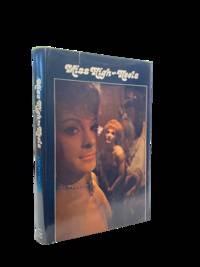
1969ref. 229941969. LGBTQTransgenderCross-Dressing Anonymous. Miss High-heels. New York: Grove Press Inc. 1969. First U.S. edition. Octavo. Lime green cloth boards in original photo-illustrated dust jacket. First published anonymously in Paris in 1931 Miss High-heels is an infamous work of fetishistic and feminization-themed erotica presented here in its first U.S. printing by Grove Press known for its defiance of censorship and promotion of transgressive literature. The novel tells the story of Dennis Evelyn Beryl a young effeminate English aristocrat who under the coercive influence of his domineering step-sister Helen is gradually transformed into "Denise" the titular Miss High-heels. Framed as a fictional memoir penned at Helen's command the narrative follows Dennis's journey from privileged heir to submissive cross-dresser. He is forced into girls' school stripped of masculine identifiers and eventually returned to the family estate clothed in "diamond-buckled satin slippers" and "the finest silks and satins" fully assuming the role of a "fetichiste-du-pied." Themes of humiliation and gender inversion mark the main character's transition as a fetish story but the book also allows for them to feel comfortable in their new identity: "Eventually Dennis is brought to realize how much more pleasurable is his life as a young girl and he willingly abandons his name fortune and life to the whims of Helen." Notable both for its elaborate prose and for its early depiction of forced feminization fantasy Miss High-heels occupies a space between pornography and proto-trans literature which would later flourish in small press chapbook format in the 80s and 90s. While drenched in the misogynistic and sadomasochistic tropes of its genre the text is nevertheless of interest among scholars of queer publishing history. Binding tight and square; boards clean; jacket bright with light shelfwear and a single 1/2 in closed tear at the top margin of front panel. Overall near fine in very good dust jacket. A historically resonant text in trans and fetish literature. unknown
1969ref. 229941969. LGBTQTransgenderCross-Dressing Anonymous. Miss High-heels. New York: Grove Press Inc. 1969. First U.S. edition. Octavo. Lime green cloth boards in original photo-illustrated dust jacket. First published anonymously in Paris in 1931 Miss High-heels is an infamous work of fetishistic and feminization-themed erotica presented here in its first U.S. printing by Grove Press known for its defiance of censorship and promotion of transgressive literature. The novel tells the story of Dennis Evelyn Beryl a young effeminate English aristocrat who under the coercive influence of his domineering step-sister Helen is gradually transformed into "Denise" the titular Miss High-heels. Framed as a fictional memoir penned at Helen's command the narrative follows Dennis's journey from privileged heir to submissive cross-dresser. He is forced into girls' school stripped of masculine identifiers and eventually returned to the family estate clothed in "diamond-buckled satin slippers" and "the finest silks and satins" fully assuming the role of a "fetichiste-du-pied." Themes of humiliation and gender inversion mark the main character's transition as a fetish story but the book also allows for them to feel comfortable in their new identity: "Eventually Dennis is brought to realize how much more pleasurable is his life as a young girl and he willingly abandons his name fortune and life to the whims of Helen." Notable both for its elaborate prose and for its early depiction of forced feminization fantasy Miss High-heels occupies a space between pornography and proto-trans literature which would later flourish in small press chapbook format in the 80s and 90s. While drenched in the misogynistic and sadomasochistic tropes of its genre the text is nevertheless of interest among scholars of queer publishing history. Binding tight and square; boards clean; jacket bright with light shelfwear and a single 1/2 in closed tear at the top margin of front panel. Overall near fine in very good dust jacket. A historically resonant text in trans and fetish literature. unknown books
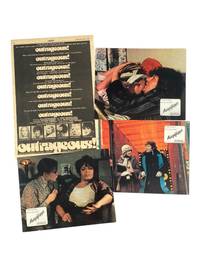
1977ref. 214451977. LGBTQCross-Dressing Archive of four items relating to the 1977 film "Outrageous!". Includes three original German lobby cards bearing the film's German title "Ausgeflippt!" and a 1977 Variety trade advertisement for this groundbreaking Canadian LGBTQ film starring Craig Russell and Hollis McLaren. The film directed by Richard Benner was one of the first North American movies to portray a drag performer as a fully realized protagonist with Russell playing Robin Turner a struggling female impersonator who supports his schizophrenic best friend. The film's bold depiction of queer identity mental health struggles and chosen family relationships resonated deeply with LGBTQ audiences and remains a cult classic. The Variety advertisement dated May 11 1977 features the film's title in a bold stylized font interspersed with key quotes from the movie. Beneath the text are photographic stills of Craig Russell in various drag personas showcasing his celebrated impersonations of Judy Garland Bette Davis and Mae West. The three lobby cards released for the German market under the title Ausgeflippt include vibrant full-color stills: one of Turner and his friend Liza sharing an intimate moment another capturing a tense domestic exchange and a third depicting Turner in flamboyant costume outside a theater emphasizing the film's themes of performance and identity. Overall very good condition. An uncommon survival of original promotional material from a pivotal LGBTQ film reflecting the 1970s era of independent queer cinema and the growing visibility of crossdressing and drag culture in mainstream media. unknown
1977ref. 214451977. LGBTQCross-Dressing Archive of four items relating to the 1977 film "Outrageous!". Includes three original German lobby cards bearing the film's German title "Ausgeflippt!" and a 1977 Variety trade advertisement for this groundbreaking Canadian LGBTQ film starring Craig Russell and Hollis McLaren. The film directed by Richard Benner was one of the first North American movies to portray a drag performer as a fully realized protagonist with Russell playing Robin Turner a struggling female impersonator who supports his schizophrenic best friend. The film's bold depiction of queer identity mental health struggles and chosen family relationships resonated deeply with LGBTQ audiences and remains a cult classic. The Variety advertisement dated May 11 1977 features the film's title in a bold stylized font interspersed with key quotes from the movie. Beneath the text are photographic stills of Craig Russell in various drag personas showcasing his celebrated impersonations of Judy Garland Bette Davis and Mae West. The three lobby cards released for the German market under the title Ausgeflippt include vibrant full-color stills: one of Turner and his friend Liza sharing an intimate moment another capturing a tense domestic exchange and a third depicting Turner in flamboyant costume outside a theater emphasizing the film's themes of performance and identity. Overall very good condition. An uncommon survival of original promotional material from a pivotal LGBTQ film reflecting the 1970s era of independent queer cinema and the growing visibility of crossdressing and drag culture in mainstream media. unknown books
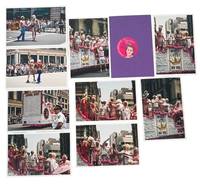
2000ref. 235592000. Imperial Court of New York Pride parade photo archive showing drag royalty queer pageantry and public LGBTQ Pride in Manhattan circa 2000 when court organizations used coronation ritual and performance spectacle to make gay community work visible in the street. The Imperial Court System was founded in 1965 by José Sarria the San Francisco performer and activist who became the first openly gay candidate for public office in the United States in 1961 and the Imperial Court of New York was founded in 1986 under Emperor I George and Empress I Sybil Bruncheon. The New York court describes itself as a social and fundraising organization that has raised money for social service and health support organizations placing these photographs within a culture of drag performance tied to HIV/AIDS support social visibility and charitable work in the tri state area. Photo archive of 9 chromogenic color photographs each 6 x 4 inches New York City circa 2000. The photographs show an Imperial Court of New York float in a Pride parade with participants in crowns tiaras formal wear pink sequined costumes curled wigs red lipstick and court regalia performing camp monarchy before spectators behind barricades. Float signage reads "Imperial Court New York" and "Imperial Court" while another photograph shows the rear of the float framed by rainbow bunting a painted crown and a papered platform carrying costumed titleholders and attendants. Other images show parade marchers and street performers in drag leather rainbow wings and bright costume elements including a performer in a horned headpiece and black corset another in blue hair and a short white dress and a figure wearing rainbow colored wing panels before a dense sidewalk crowd. NYPD presence is also documented in the photographs. The group records a local chapter of a national queer court culture using royal titles camp hierarchy and public spectacle to convert drag performance into civic and charitable presence. The International Court System identifies its chapters as courts with elected leaders bearing titles such as emperor empress prince and princess and describes their work through coronation events drag performances and community activities supporting LGBTQ rights social services and charitable causes. In these photographs that structure appears not as an indoor gala or bar revue but as a public Pride procession where formal gowns crowns float signage and playful monarchy announce the court to spectators in the city that had become central to national gay liberation memory after Stonewall. Clean versos; images bright with good color and sharpness. Overall in very good condition. The photo archive documents the Imperial Court of New York drag pageantry carrying fundraising culture camp royalty and LGBTQ community visibility into the public space of Manhattan Pride. unknown
2000ref. 235592000. Imperial Court of New York Pride parade photo archive showing drag royalty queer pageantry and public LGBTQ Pride in Manhattan circa 2000 when court organizations used coronation ritual and performance spectacle to make gay community work visible in the street. The Imperial Court System was founded in 1965 by José Sarria the San Francisco performer and activist who became the first openly gay candidate for public office in the United States in 1961 and the Imperial Court of New York was founded in 1986 under Emperor I George and Empress I Sybil Bruncheon. The New York court describes itself as a social and fundraising organization that has raised money for social service and health support organizations placing these photographs within a culture of drag performance tied to HIV/AIDS support social visibility and charitable work in the tri state area. Photo archive of 9 chromogenic color photographs each 6 x 4 inches New York City circa 2000. The photographs show an Imperial Court of New York float in a Pride parade with participants in crowns tiaras formal wear pink sequined costumes curled wigs red lipstick and court regalia performing camp monarchy before spectators behind barricades. Float signage reads "Imperial Court New York" and "Imperial Court" while another photograph shows the rear of the float framed by rainbow bunting a painted crown and a papered platform carrying costumed titleholders and attendants. Other images show parade marchers and street performers in drag leather rainbow wings and bright costume elements including a performer in a horned headpiece and black corset another in blue hair and a short white dress and a figure wearing rainbow colored wing panels before a dense sidewalk crowd. NYPD presence is also documented in the photographs. The group records a local chapter of a national queer court culture using royal titles camp hierarchy and public spectacle to convert drag performance into civic and charitable presence. The International Court System identifies its chapters as courts with elected leaders bearing titles such as emperor empress prince and princess and describes their work through coronation events drag performances and community activities supporting LGBTQ rights social services and charitable causes. In these photographs that structure appears not as an indoor gala or bar revue but as a public Pride procession where formal gowns crowns float signage and playful monarchy announce the court to spectators in the city that had become central to national gay liberation memory after Stonewall. Clean versos; images bright with good color and sharpness. Overall in very good condition. The photo archive documents the Imperial Court of New York drag pageantry carrying fundraising culture camp royalty and LGBTQ community visibility into the public space of Manhattan Pride. unknown books