2 107 résultats
2014New English Paperback. Pbo. Roy. 8vo. (24 x 16 cm). In Turkish. 312 p., ills. A study on Ottoman Galata and Pera, 1453-1600. Osmanli Galatasi, 1453-1600.
2001Fine English Paperback. Pbo. Roy. 8vo. (23 x 16 cm). In Turkish. [xiii], 354 p. With Ottoman documents. Osmanli döneminde Istanbul deniz ulasimi ve kayikçilar.
2010New Turkish Paperback. Roy. 8vo. (24 x 17 cm). In Turkish. [viii], 272 p., color and b/w ills. Osmanli döneminde basininin içerigi.
2010New Turkish Paperback. Roy. 8vo. (24 x 17 cm). In Turkish. [vii], 214 p. Osmanli döneminde basin teknikleri ve araçlari.
2017Fine English Paperback. 4to. (26 x 20 cm). In Turkish. 520 p., color and b/w ills. Osmanli dönemi Istanbul su tarihi.
1996New English Paperback. Pbo. Roy. 8vo. (24 x 17 cm). In Turkish. 134 p. Osmanli Beyliginin kurulusu.
2007New English Original bdg. HC. 4to. (34 x 24 cm). In Turkish. 659 p. B/w ills. Original Ottoman documents and their transcription in Modern Turkish. Kagithane Province of Istanbul (Constantinople) City based on Ottoman archival documents. "Kagithane (Turkish pronunciation: [ka??t'ha?ne]) is a working class district of the city of Istanbul, Turkey, in a valley inland from the upmarket Etiler. Built along a stream that runs into the Golden Horn. In the time of Suleiman the Magnificent the valley was known as 'Sadabad' and used by the Ottoman court for hunting, riding and equestrian sports. The valley was full of wonderful tulip fields and in spring people would come along the stream for picnics and days out of the city. There are records of gatherings such as wedding parties being held here. By the late Ottoman period the valley floor had been drained, weekend homes had been built in the valley with lovely gardens, and the area led into the richly forested parks of Kagithane and Alibeyköy ideal for parties and picnics. The Ottoman gunpowder factory was the first industrial activity in the valley and dated back to the early Ottoman sultan Bayezid II. Kagithane then became home to numerous factories including flour mills and the paper factories that give the area its name. The area was still far from the city and not heavily populated until the late 20th century. Until then there were gypsy camps in the valley (and there is still a large gypsy community in Gültepe today). Real growth came to Kagithane from the 1950s onwards, as the area was settled by migrants from Anatolia, who came to work in the factories, workshops or building sites. They built small cottages on the valley sides, then brought family, friends and neighbours from the village to live in one of the rooms while they built their own cottages nearby. As many Turkish rural areas have been impoverished for decades there has been no shortage of people prepared to opt for this lifestyle in Istanbul. None of this building was regulated or controlled in any meaningful way and whenever there is a big rain people in Kagithane are flooded out of their homes. And the houses were scattered all over the sides of the valley with no thought for where they could put roads, drains or any other infrastructure. And Istanbul is vulnerable to earthquakes. This working class district was a centre of left-wing support during the years of political violence in the 1970s. From the 1970s onwards as the second generation grew up the cottages have been pulled down and replaced with grubby, bare-walled six-storey apartment buildings to house the offspring of these families. Kagithane develops".
2007New English Original bdg. HC. 4to. (34 x 24 cm). In Turkish. 659 p. B/w ills. Original Ottoman documents and their transcription in Modern Turkish. Kagithane Province of Istanbul (Constantinople) City based on Ottoman archival documents. "Kagithane (Turkish pronunciation: [ka??t'ha?ne]) is a working class district of the city of Istanbul, Turkey, in a valley inland from the upmarket Etiler. Built along a stream that runs into the Golden Horn. In the time of Suleiman the Magnificent the valley was known as 'Sadabad' and used by the Ottoman court for hunting, riding and equestrian sports. The valley was full of wonderful tulip fields and in spring people would come along the stream for picnics and days out of the city. There are records of gatherings such as wedding parties being held here. By the late Ottoman period the valley floor had been drained, weekend homes had been built in the valley with lovely gardens, and the area led into the richly forested parks of Kagithane and Alibeyköy ideal for parties and picnics. The Ottoman gunpowder factory was the first industrial activity in the valley and dated back to the early Ottoman sultan Bayezid II. Kagithane then became home to numerous factories including flour mills and the paper factories that give the area its name. The area was still far from the city and not heavily populated until the late 20th century. Until then there were gypsy camps in the valley (and there is still a large gypsy community in Gültepe today). Real growth came to Kagithane from the 1950s onwards, as the area was settled by migrants from Anatolia, who came to work in the factories, workshops or building sites. They built small cottages on the valley sides, then brought family, friends and neighbours from the village to live in one of the rooms while they built their own cottages nearby. As many Turkish rural areas have been impoverished for decades there has been no shortage of people prepared to opt for this lifestyle in Istanbul. None of this building was regulated or controlled in any meaningful way and whenever there is a big rain people in Kagithane are flooded out of their homes. And the houses were scattered all over the sides of the valley with no thought for where they could put roads, drains or any other infrastructure. And Istanbul is vulnerable to earthquakes. This working class district was a centre of left-wing support during the years of political violence in the 1970s. From the 1970s onwards as the second generation grew up the cottages have been pulled down and replaced with grubby, bare-walled six-storey apartment buildings to house the offspring of these families. Kagithane develops". A very heavy volume. Extra shipping fee will be requested. CONSTANTINOPLE Ottoman culture State archives Ottoman history Istanbul Byzantium Urban history.
2013New New English Original bdg. Dust wrapper. 4to. (30 x 25 cm). In Turkish. 528 p., b/w ills. Osmanli belgelerinde Beykoz. Beykoz (Beicos) based on the Ottoman archival documents. A very heavy volume.
2006New New English Paperback. Pbo. 4to. (26 x 18 cm). In Turkish. 2 volumes set: (463 p.; 508, [5] p). The protection and maintenance of historical waterways of Istanbul (Constantinople) based on the Ottoman archival documents. Osmanli arsiv belgelerinde Istanbul'un tarihî su yollari muhafazasi ve bakimi. 2 volumes set.
Fine English Paperback., Fine., 22 x 11 cm., 21 p., color ills., "Osman Nuri Ergin hayati ve eserleri.", Emin Nedret Isli, Istanbul Büyüksehir Belediyesi, Istanbul.
2012New English Paperback. Pbo. Demy 8vo. 216 p., 1 folding map. Turkish Edition. Medieval Constantinople: Studies on the history and topography of Byzantine Constantinople. Ortaçagda Istanbul. Altinci ve On Üçüncü yüzyillar arasinda Konstantinpolis'in kentsel degisimi. Translation by: Baris Cezar.
1991Fine Turkish Paperback. Oblong large 8vo. (14 x 20 cm). In Turkish. 31 p., b/w ills. Ortaköy. Tarih - sosyal ve mimari doku.
1998Fine English Paperback. Pbo. In Turkish. Small 4to. (26 x 18.5 cm). B/w ills. 275 p. Ortak bellek: 1948 yili Galatasaray Lisesi mezunlarina 50. yil hatirasi.
1930Very Good English Paperback. Pbo. Roy. 8vo. (24 x 17 cm). In Turkish. 85 p. Orta Asyada Arap fütuhati. Translated from English M. Hakki. First Edition of "The Arab conquests in Central Asia".
1970The beginnings of modern Greek history from the Frankish conquest of Constantinople in the Fourth Crusade of 1204 to the final Turkish conquest. Comprehensive, well documented account by a distinguished Greek historian. 414p.plates. maps. bibliography. index. maps on end papers Book
1910Very Good French Original sepia-toned photograph printed in a period photograph paper. 19x25 cm. Descriptive text in French. Chipped and tear on margins. Iranian was born in 1890 in Constantinople, Istanbul. It is known that he established his studio in 1891 in Pera district of Constantinople - the center of Armenian cultural and political life. In 1895 he enters into partnership with another photographer by the name of Gugasyan. By 1900s the business seems to have wound down as the images marked with his studio signature don't exhibit any over elements of the new century. Of all the major Armenian studios from Istanbul, Iranian's photographs are the rarest, and less than 300 are known to have survived. Iranian's primary subject was the city of Constantinople, its picturesque landscape, architectural heritage, and the many types of artisans and workers that populated its streets. Using the latest photography techniques, which allowed for very rapid exposures, Iranian captured the bustle of the city streets with remarkable clarity. Teeming with life and movement these images have a remarkable immediacy and documentary veracity quite unlike similar views produced by other photographers of the period. The typical approach for many of Iranian's contemporaries such as Sebah & Joalier or Guillame Berggren was to achieve as clear a picture as possible with perfectly balanced compositions and highly visible details - the hallmark of a 'good' commercial photographer. In contrast, Iranian's street views are full of photographic 'ruptures' - blurred figures in movement, surprised glances of people caught unawares - which give his works the viscerality of snapshots. But above all, Iranian was a master at capturing the mood of a place. Catching the Ottoman capital on the brink of rapid transformation, the photographer aimed to record many of its ancient streets and quarters disappear or change the appearance. Thus, like the Parisian street photography of Atget, Iranian's images are 'nostalgic for the present' that is irrevocably slipping into the past. In his studio, the clientele had the choice of a large range of costumes and props through which the modern urbanite could slip into the role of some long-gone ethnic or street type and become a part of history. It is this sense of melancholy that gives Iranian's photographs their subtle emotional power. This is also perhaps the reason why he was ultimately not as successful as a commercial photographer. Modernity had captured the imagination of the people and the wistful romanticism of Iranian's markedly less spectacular images was fast going out of fashion. The small legacy he has left behind is nevertheless of significance in the history of Near-Easter photography. He was one of the rare Ottoman photographers with an individual and subjective approach, which deserves a proper evaluation.
1910réf. 053167Istanbul: Mihran Iranian. c. 1910 1910. No Binding. Very Good. 8vo - over 7¾ - 9¾" tall. Original sepia-toned photograph printed in a period photograph paper. 19x25 cm. Descriptive text in French. Chipped and tear on margins. Iranian was born in 1890 in Constantinople Istanbul. It is known that he established his studio in 1891 in Pera district of Constantinople - the center of Armenian cultural and political life. In 1895 he enters into partnership with another photographer by the name of Gugasyan. By 1900s the business seems to have wound down as the images marked with his studio signature don't exhibit any over elements of the new century. Of all the major Armenian studios from Istanbul Iranian's photographs are the rarest and less than 300 are known to have survived. Iranian's primary subject was the city of Constantinople its picturesque landscape architectural heritage and the many types of artisans and workers that populated its streets. Using the latest photography techniques which allowed for very rapid exposures Iranian captured the bustle of the city streets with remarkable clarity. Teeming with life and movement these images have a remarkable immediacy and documentary veracity quite unlike similar views produced by other photographers of the period. The typical approach for many of Iranian's contemporaries such as Sebah & Joalier or Guillame Berggren was to achieve as clear a picture as possible with perfectly balanced compositions and highly visible details - the hallmark of a 'good' commercial photographer. In contrast Iranian's street views are full of photographic 'ruptures' - blurred figures in movement surprised glances of people caught unawares - which give his works the viscerality of snapshots. But above all Iranian was a master at capturing the mood of a place. Catching the Ottoman capital on the brink of rapid transformation the photographer aimed to record many of its ancient streets and quarters disappear or change the appearance. Thus like the Parisian street photography of Atget Iranian's images are 'nostalgic for the present' that is irrevocably slipping into the past. In his studio the clientele had the choice of a large range of costumes and props through which the modern urbanite could slip into the role of some long-gone ethnic or street type and become a part of history. It is this sense of melancholy that gives Iranian's photographs their subtle emotional power. This is also perhaps the reason why he was ultimately not as successful as a commercial photographer. Modernity had captured the imagination of the people and the wistful romanticism of Iranian's markedly less spectacular images was fast going out of fashion. The small legacy he has left behind is nevertheless of significance in the history of Near-Easter photography. He was one of the rare Ottoman photographers with an individual and subjective approach which deserves a proper evaluation. Mihran Iranian., [c. 1910] unknown
réf. 6076Recherches sur les influences byzantines et orientales en France avant les croisades. Bruxelles, Van Oest. 1928-1929. Deux volumes in-4 (30x22). 118-112 pages. Brochés, premières couvertures grises imprimées.
réf. 84736Paris, Edition du Seuil, 1988. 25 x 31, 232 pp., très nombreuses illustrations en couleurs et plans, reliure d'édition pleine toile + jaquette légèrement défraîchie, bon état (1 cachet et 1 signature d'ex-particulier sur la page de faux-titre).
1988Fine English Paperback. Pbo. Oblong roy. 8vo. (17 x 24 cm). In English and Turkish. 109, [2] p., b/w photos. Only yesterday at Yildiz Sarayi.= Geçmiste Yildiz Sarayi.
2004New English Paperback. Pbo. 4to. (30 x 21 cm). In English and Turkish. [136] p. B/w and color ills. Once upon a time Beykoz.= Bir zamanlar Beykoz.
1983réf. 260207014Studion Publishers 1983. hardcover. Good. 9x6x1. Cover has light wear. Text unmarked small smudge on a few pages. Good solid binding. Ships Next Business Day. Studion Publishers hardcover
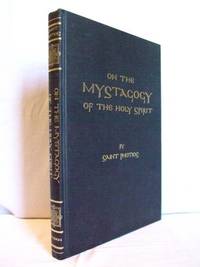
1984réf. 40340Crestwood: St. Vladimir's Seminary Press 1984. Paperback. Very good. Paperback. 107pp. Spine sunned else very good in publisher's wraps. Ink name on front free endpaper else internally fine. St. Vladimir's Seminary Press paperback books