73 256 résultats
1612réf. 4992Rome: Nicoli van Aelst Roma formis "1560" but ca. 1585- 1612. THIRD STATE of FOUR. The first state had no explanatory text. The second with the text and "Formis Antoni Lafrerij Sequani MDLX". In this third state the Lafréry address has been erased though the date "MDLX" has been preserved and Nicolas van Aeslt's publishing information has been engraved at the lower left. A fourth state described by Rubach n. 376 has Gio. Battista de Rossi's address in place of van Aelst's. Hardcover. Fine. A fine example of a late impression the sheet untrimmed. Light marginal soiling. Early fold visible on verso but no crease visible on the recto. Watermark "fleur-de-lis in a circle" A view of the cortile of Palazzo Farnese. Construction of the palazzo designed by Antonio da Sangallo the Younger 1484-1536 with modifications and additions by Michelangelo began in 1517. By the time of its completion in 1589 Jacopo Vignola and Giacomo Della Porta had also worked on the project. The courtyard is partly the work of Sangallo who designed the ground floor and first floor while the second floor was built according to the designs of Michelangelo who took over the project upon Sangallo's death in 1546. Of the two ancient statues of Hercules shown in the cortile the one on the right is the famed Farnese Hercules now in Naples which caused a sensation upon its discover in 1546. The inscription reads: "Palatij Farnesij Romae non procul a reliquiis Theatri Pompei olim e solidissimo Tiburtino lapide non minore architecturae commendatione ab Antonio Sangallo inchoati quam stupendo artificio per Michaelem Angelum omnibus numeris consumati quantum artificio diligentia assequi potuit interioris partis expressio atque in intimo eius ambulacro duarum Herculis statuarum icones." Translation: "An image of the interior part with two statues of Hercules in its lower portico of Palazzo Farnese in Rome located not far from the remains of what was in the past the theater of Pompey; begun -in very solid travertine stone- by Antonio Sangallo with no less architectural art than when finished with astonishing craft and all possible diligence by Michelangelo." The publisher Nicolas van Aelst emigrated to Rome from his native Brussels in the mid 1580s. He "established his home and workshop in a house situated between the now vanished church of San Biagio della Fossa and the church of Santa Maria della Pace near Piazza Navona. The building was the property of the church of Santa Maria dell'Anima to whom the printed paid an annual rent of 30 scudi." Van Aelst died at Rome on 19 July 1613. For more see Lorizzo "Nicolas van Aelst's Will and a List of his Plates" Print Quarterly March 2014 Vol. 31 No. 1 March 2014 pp. 3-20. In 1585 Claudio Duchetti produced a copy of this plate. That version was subsequently printed by Orlandi 1602 and Van Schoel. Nicoli van Aelst, Roma formis, "1560", but ca. 1585- hardcover
1612réf. 4992Rome: Nicoli van Aelst Roma formis "1560" but ca. 1585- 1612. THIRD STATE of FOUR. The first state had no explanatory text. The second with the text and "Formis Antoni Lafrerij Sequani MDLX". In this third state the Lafréry address has been erased though the date "MDLX" has been preserved and Nicolas van Aeslt's publishing information has been engraved at the lower left. A fourth state described by Rubach n. 376 has Gio. Battista de Rossi's address in place of van Aelst's. Hardcover. Fine. A fine example of a late impression the sheet untrimmed. Light marginal soiling. Early fold visible on verso but no crease visible on the recto. Watermark "fleur-de-lis in a circle" A view of the cortile of Palazzo Farnese. Construction of the palazzo designed by Antonio da Sangallo the Younger 1484-1536 with modifications and additions by Michelangelo began in 1517. By the time of its completion in 1589 Jacopo Vignola and Giacomo Della Porta had also worked on the project. The courtyard is partly the work of Sangallo who designed the ground floor and first floor while the second floor was built according to the designs of Michelangelo who took over the project upon Sangallo's death in 1546. Of the two ancient statues of Hercules shown in the cortile the one on the right is the famed Farnese Hercules now in Naples which caused a sensation upon its discover in 1546. The inscription reads: "Palatij Farnesij Romae non procul a reliquiis Theatri Pompei olim e solidissimo Tiburtino lapide non minore architecturae commendatione ab Antonio Sangallo inchoati quam stupendo artificio per Michaelem Angelum omnibus numeris consumati quantum artificio diligentia assequi potuit interioris partis expressio atque in intimo eius ambulacro duarum Herculis statuarum icones." Translation: "An image of the interior part with two statues of Hercules in its lower portico of Palazzo Farnese in Rome located not far from the remains of what was in the past the theater of Pompey; begun -in very solid travertine stone- by Antonio Sangallo with no less architectural art than when finished with astonishing craft and all possible diligence by Michelangelo." The publisher Nicolas van Aelst emigrated to Rome from his native Brussels in the mid 1580s. He "established his home and workshop in a house situated between the now vanished church of San Biagio della Fossa and the church of Santa Maria della Pace near Piazza Navona. The building was the property of the church of Santa Maria dell'Anima to whom the printed paid an annual rent of 30 scudi." Van Aelst died at Rome on 19 July 1613. For more see Lorizzo "Nicolas van Aelst's Will and a List of his Plates" Print Quarterly March 2014 Vol. 31 No. 1 March 2014 pp. 3-20. In 1585 Claudio Duchetti produced a copy of this plate. That version was subsequently printed by Orlandi 1602 and Van Schoel. Nicoli van Aelst, Roma formis, "1560", but ca. 1585- hardcover books
1943réf. 11714NY: Duell Sloan & Pearce 1943. Hardcover. Very Good/Near Fine. Frank Lloyd Wright. 2nd printing thus sm. sq. 4to maroon cloth vg shelfrub bottom edge light bump at bottom of spine sm. spot on top edge in an exceptional near fine dj with the $6.00 price. This light gray dj is lightly sunned on the spine; it has been archivally restored that is professionally de-acidified so that it will never darken again. Exceptionally bright and clean text pages. SIGNED in full on the title page in the red square by Frank Lloyd Wright and dated Nov. 9 1948. 561 pp. This is the first complete edition of this book with an entire section 'Form' not in the 1932 Longman's edition. Duell, Sloan & Pearce hardcover
1877réf. 60883Paris, J. Baudry, 1868 - 1877. Large 4to. In contemporary full blue cloth with two red title-labels to spines. Wear to extremities, corner's bumped, scratches to boards and parts of the title-label missing. Underlinings and marginal annotations in pencil. Plates brownspotted, primarily in margin, and dampstain to inner margin of plate 16-38. (8), 164 pp. + 38 plates.
1919réf. 603353Berlin, Verlag Wilhelm Ernst & Sohn, 1865-1919. 4° u. Fol. M. zahlr. (teils gest./chromolith.) Taf., Textholzschn. u. Abb. Hldr., Hlwd., Pp. u. Kart. Einbde. teilw. fleckig od. bestoßen, Rücken leicht od. stärker beschäd. Meist St. u. Sign. a. Tit. Stellenw. braunfl. u. angeschmutzt. In Jg. 15 sind 2 S. m. größerem Ausschnitt u. Textverlust. Jg. 20 Text Rücken fehlt; 30/31 Atlasbd. Rücken fehlt; 35 Atlasbdbd. Rücken beschäd.; 38/39 Atlasbde. Rücken fehlt; 57/58 Tafelbd. 58 am ob. Rand wasserfleckig. Bei einigen Atlasbdn. sind d. Taf. braunrandig od. teilw. ganzseitig braunfl. Fehlen: Jg. 26 Taf. 1, 64, 65; 37 Taf. 8.
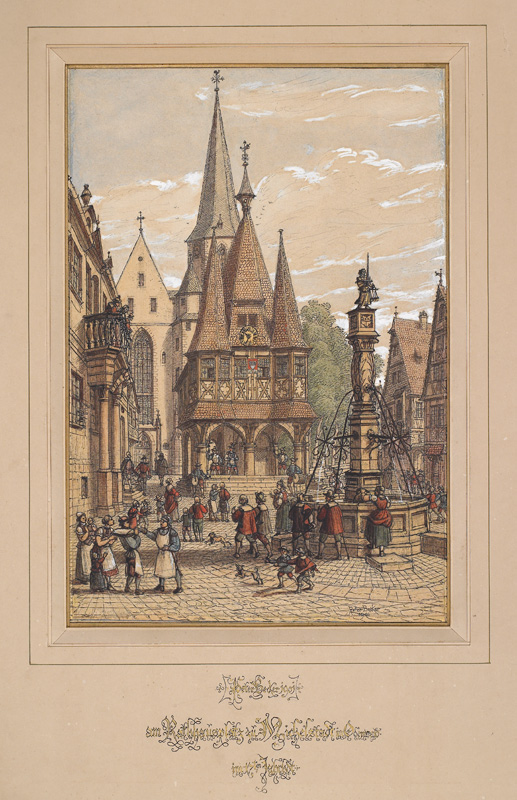
réf. 143-Eo.J. Aquarell, Tuschfeder in Schwarz, stellenweise mit Weiß und Goldbronze gehöht, über Bleistift, oben und unten mit schwarzer Tuschlinie umrandet, auf chamoisfarbenem festem Zeichenpapier, rechts unten signiert und datiert ?Peter Becker 1901 ?. 28,5:19,3 cm. In Originalpassepartout fest montiert und dort vom Künstler bezeichnet ?[Peter Becker 1901]? sowie betitelt.
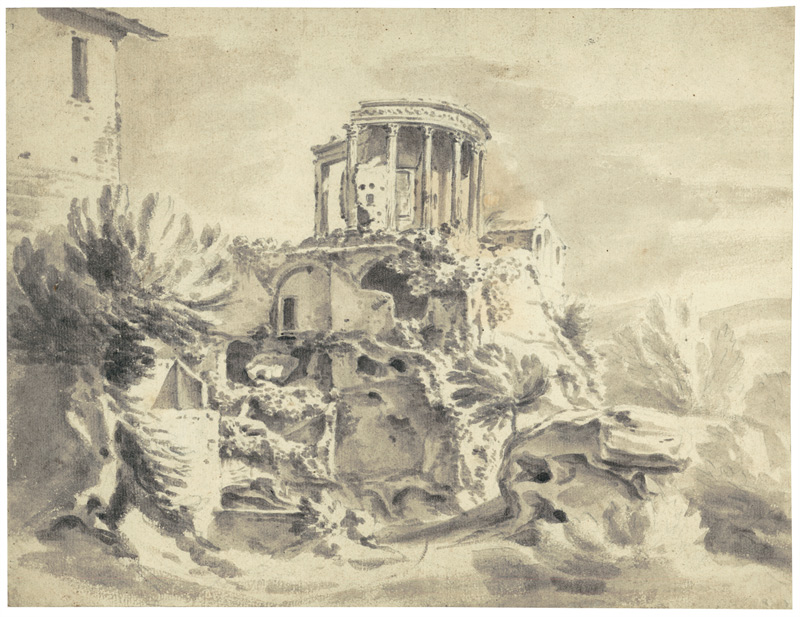
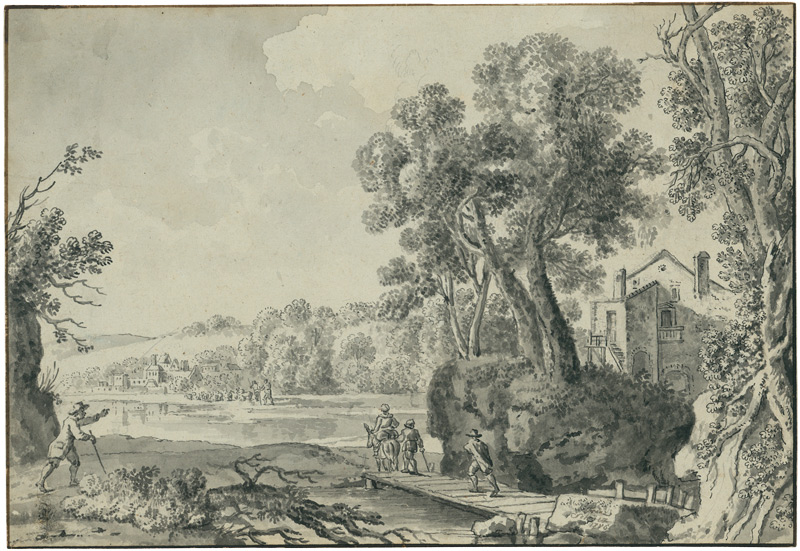
réf. 022-Do.J. Pinsel in Graubraun, über wenig Skizze in schwarzer Kreide, auf festem strukturiertem Bütten. 28:37 cm.Verso: Kleine Skizze von zwei Ziegen. Bleistift. - Mit Braunfleck in der oberen Bildhälfte sowie Löchlein restauriert. Provenienz: Sammlung T. Cottrell-Dormer, Rousham House, versteigert in London, Sothebys 1979. Vergleichsliteratur: W. Bernt, Die niederländischen Zeichner des 17. Jahrhunderts. München, Bruckmann 1957, Bd. I, Nr. 79 mit Abb.).; A. Zwollo, Hollandse en Vlaamse veduteschilders te Rome 1675-1725. Assen, 1973, Abb. 34, 43 a und 43 b.
réf. 161in folio reliure à coins moderne, titres et filets dorés, plats marbrés. Pas de page de titre, mais page de dédicace à Monsieur de Prony
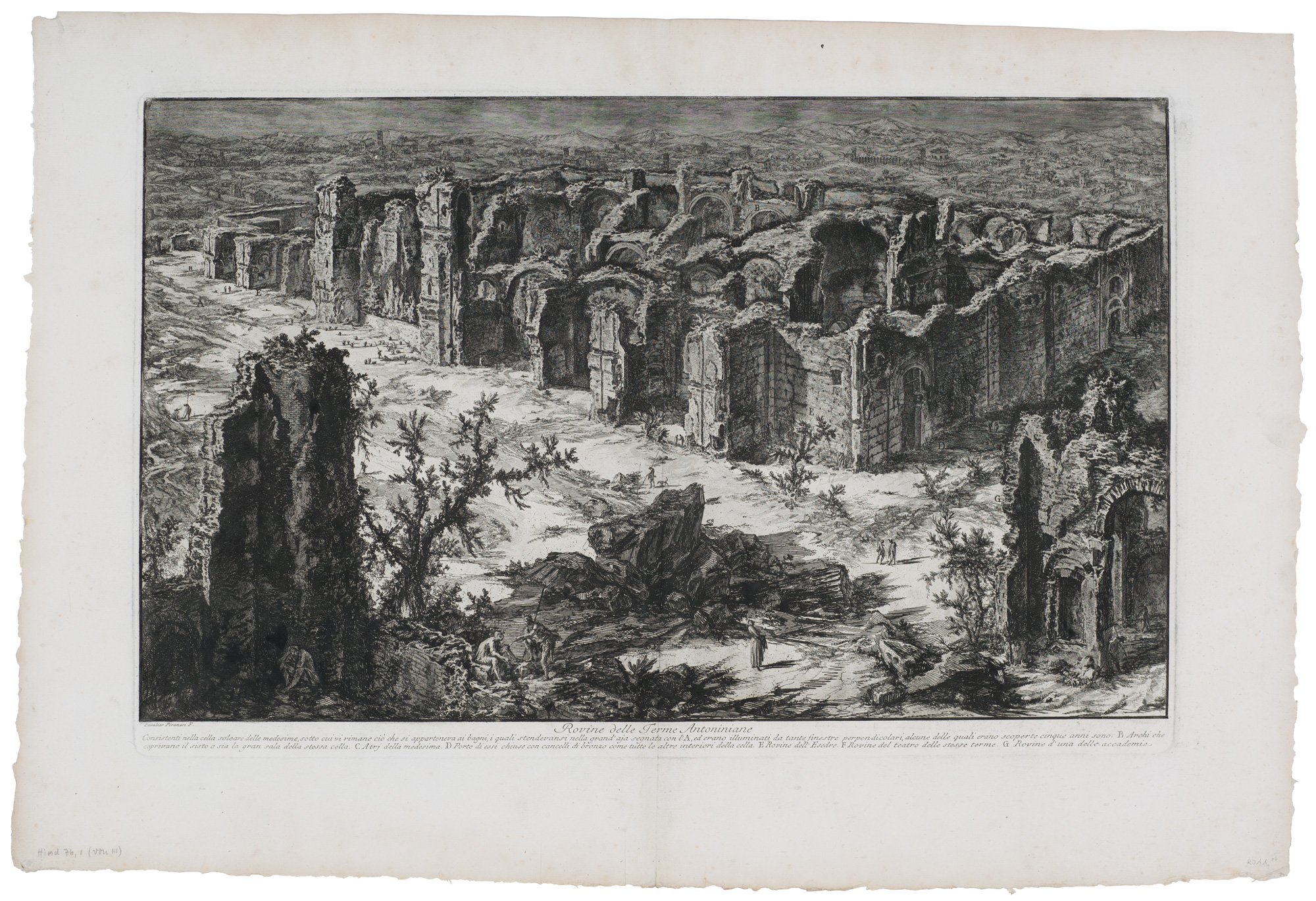
réf. 0826-Bo.J. Radierung, 1765, auf Bütten. 44,5:69,5 cm, Blattgröße 58:86 cm. Im Unterrand bezeichnet, links unten signiert ?Cavalier Piranesi F.?. Literatur: Hind 76, I (von III); Focillon 852; Ficacci 947; Wilton-Ely 202. Kräftiger Abdruck mit dem vollen Rand, die Ränder nach außen leicht gebräunt.
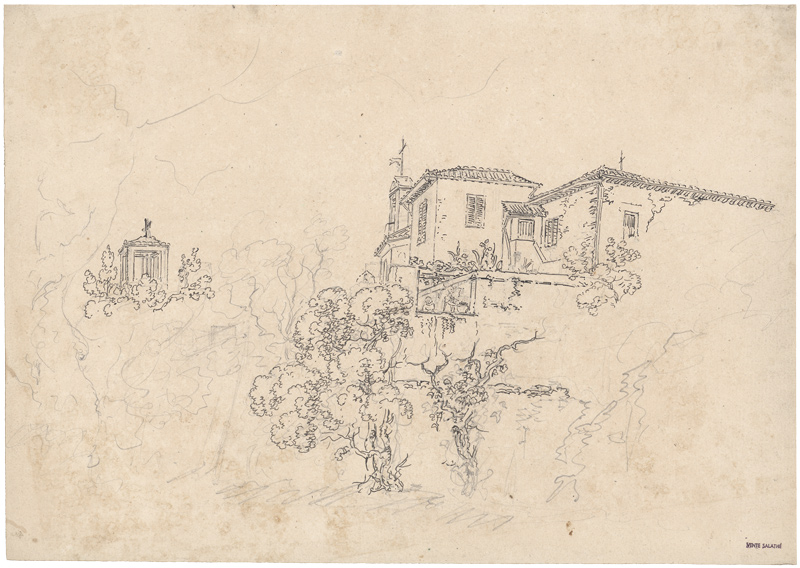
réf. 109-Io.J. Bleistift und Feder in Schwarzbraun, auf Velin mit Wasserzeichen: I. C de R Im-Hof. 23,6:33,7 cm. Provenienz: Vente Salathé, Paris, Stempel nicht bei Lugt.
réf. 109-Do.J. Feder und Pinsel in Grau, mit einzelner schwarzer Tuschlinie umrandet, auf festem Bütten, rechts von der Mitte signiert und datiert ?Franz Schütz 1780?, verso bezeichnet ?F Schütz fec?. 19,2:28 cm. Provenienz: Sammlung H. Stiebel, Frankfurt am Main, Lugt 1367. Literatur: Nach Gwinner, Kunst und Künstler in Frankfurt am Main... Frankfurt a.M., 1862, S. 315, sind ausgeführte Zeichnungen von Franz Schütz, einem ausgesprochenen ?Originalgenie? der Sturm- und Drangzeit, selten.
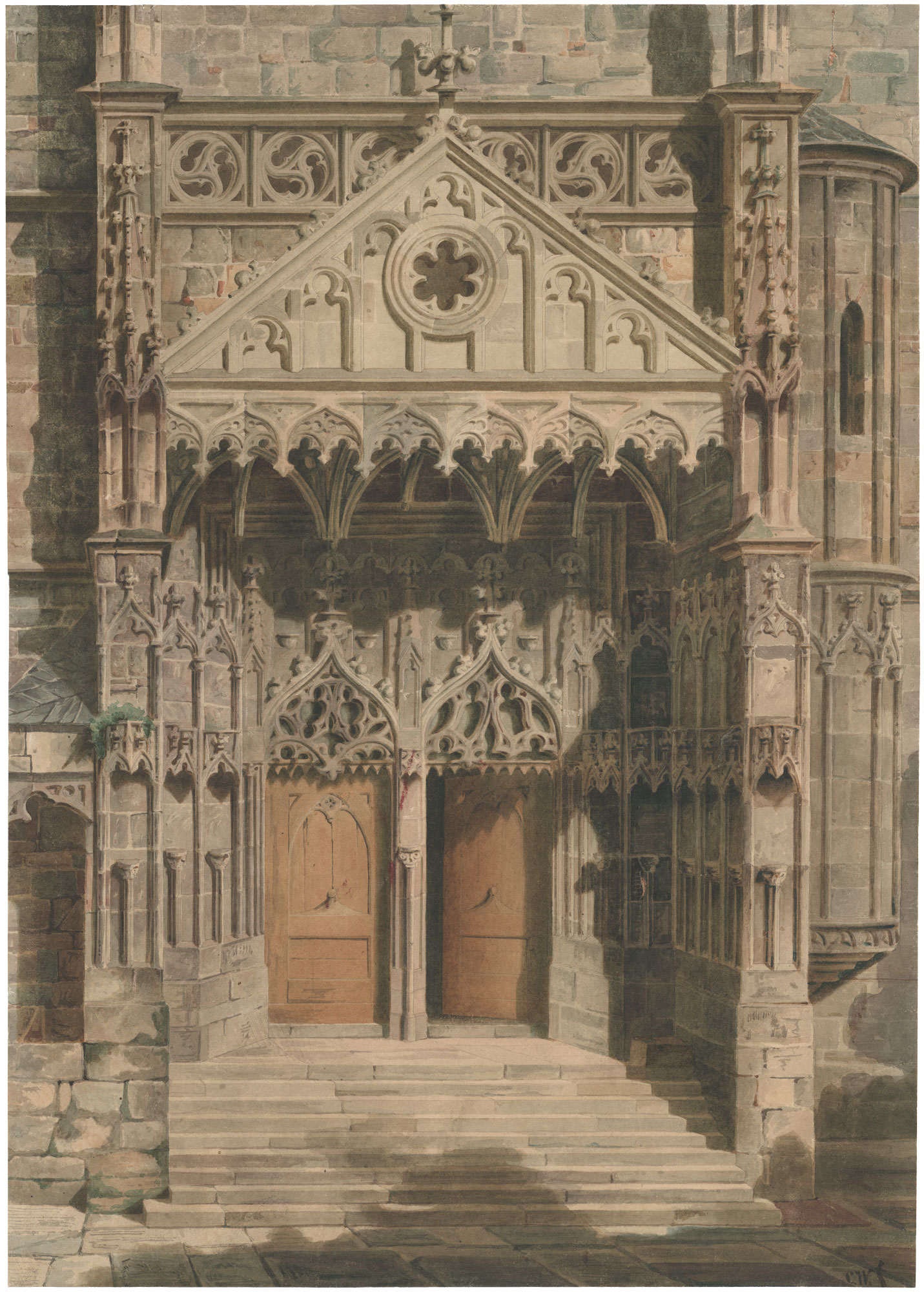
réf. 753-Eo.J. Aquarell über Bleistift, auf festem strukturiertem Ve-lin, rechts unten monogrammiert ?C. W. f?. 51,5:36,8 cm.
1756réf. 129305Guillaume Desprez 1756 In-folio 40 cm x 27 cm, veau porphyre, triple filet dore et grandes fleurs de lis aux angles, dos orne de meme, tranches marbrees Reliure de l'époque,, XII- 104 pp. Titre imprimé en rouge et en noir. Frontispice gravé par Cochin d’après Cazes, 2 vignettes par Dulin gravées par le même, deux lettrines et 107 planches dont 31 à double page, gravees par Cochin, Lucas et Herisset d'après les dessins de Mansart, Cotte, Maler, Coypel, de la Fosse et Jouvenet.
1947Ex-library set with usual stamps, call numbers and pockets. Text is clean of marks. Volume I is in good condition with half inch tear to cloth at top of spine and moderate edgewear to back board top edge. Bumping to corners. Volume II is in VG- or G+ condition with stamps on textblock deleted with black marker. Minor (1cm) cut to cloth along edge of spine. Minor edgewear. Scuffing to boards. Text is clean of marks. Volume III: is in VG condition with stamps on textblock deleted with black marker. Scratches and scuffing to boards. ; Volume 1: The District of Chiu-Chên during the Han Dynasty: General Considerations and Plates (1947). Vol. 2: The District of Chiu-Chên during the Han Dynasty: Description and Comparative Study of the Finds (1951). Vol. 3: The Ancient Dwelling Site of Dông-So'n (Thanh-Hoá, Annam) : General Description and Plates (1957) (vol. 3 Published at St-Catherine Press at Bruges). ; 3 Volume Set; The expedition was conducted between the years 1934 and 1939 under the Auspices of the École Française D'Extrême-Orient, the Museums of Paris & the Harvard Yenching Institute. The main historical significance of Dr. Janse's archaeological documents is to be found in the fact that they not only introduce to us the Chinese conquerors of what was to become Vietnam, at the very moment when they were laying its foundations as a civilized nation, buy they also reflect on Chinese culture and conditions even at home and may help to give us a clearer idea of what the Chinese were, about the beginning of our era, and what their quest was, so far south of the Honanese cradle of their civilization.
1781réf. 24012Rome: Casaletti . imprint varies somewhat for vols. 3 & 4 in 1790 1781-1790. First Edition. Early nineteenth century parchment with mounted labels. Very good; some spotty foxing at the margins and on the backs of some sheets - in a few instances the foxing is heavier; mounted leather labels on the binding are chipped or abraded; joints and hinges are solid. Small folio; I - vi pp. frontispiece & 50 leaves of engraved plates; II - vi pp. 50 leaves of engraved plates; III - x pp. frontispiece & 65 leaves of plates; IV - viii pp. frontispiece & 30 leaves of engraved plates 2 - divisional title pp. 18 leaves of engraved plates of architectural sun-dials. There are 216 plates in all. Good deep impressions of the illustrations. Printed on thick paper. Antonini's catalog of design motifs. The first two volumes contain illustrations of vault bosses rosettes. Volume 3 has torchiers; volume 4 candelabras with printed mottos and a supplement on architectural sun-dial designs. See Millard Italian . for references to Antonini as an engraver; Berlin I #594; see Heilbron The Sun in the Church . Casaletti .... [imprint varies somewhat for vols. 3 & 4 in 1790] hardcover books
1650réf. GF358211650 Paris - Edme Martin - 1650 - un volume in-folio de 4 - 329 et 8 pages - Reliure pleine basane brune postérieure - Quelques rousseurs - Quelques traces de peintures p 109, sans gravité - petits accrocs -
16033 volumi: ([6], [112], 58 c., 59-897, [i.e. 889, 1] p. : [1] c. di tab. ripieg. ; 84, [16]) p. + [4], 1012 p.+ ([4], 228, [248] p., [3] c. di tav. : tab ; [8], 230, [2] p.) ; in-4º; Piena pergamena. Frontespizio generale in rosso e nero. Il primo volume contiene “Constitutiones, et decreta sex prouincialium Synodorum Mediolanensium. Quas ... Carolus Borrhomaeus ... habuit. Ab anno domini 1565. vsque ad annum 1572. Pio 4. Pio 5. & Gregorio 13.” Il secondo volume include l’importantissima opera di Carlo Borromeo “Instructionum fabricae et supellectilis ecclesiasticae libri II” sulla costruzione e l’arredamento degli edifici religiosi.
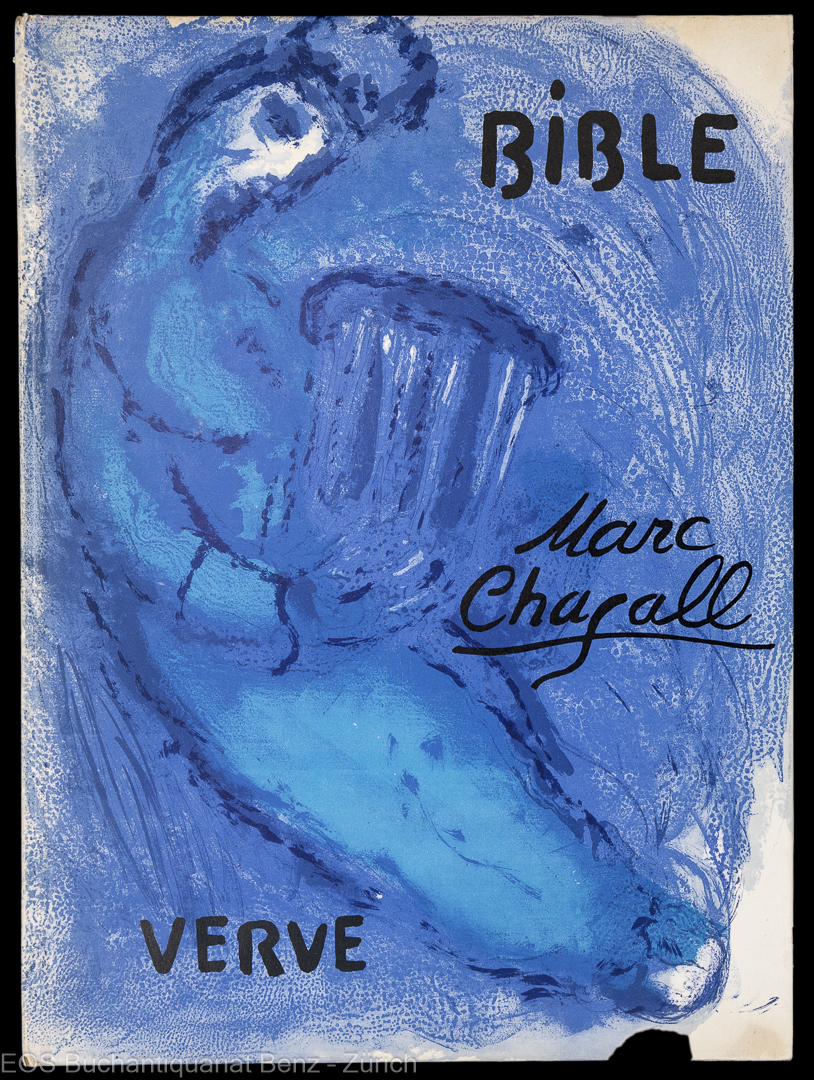
1956réf. 6647CBParis, éditions de la Revue Verve, 1956. 4°. (20) S. Mit 1 lithogr. Titelblatt, lithogr. Buchdeckel, 16 (eins.) farb. Lithogr., 12 schw.-weisse Lithogr. und 105 schw.-weisse Reproduktionen. Illustrierter Orig.-Pappband. + Wichtig: Für unsere Kunden in der EU erfolgt der Versand alle 14 Tage verzollt ab Deutschland / Postbank-Konto in Deutschland vorhanden +, 6647CB|6647CB_2 [2 Warenabbildungen]
1831réf. 19751831 Edité par Johannes Nomann et fils, Zalt-Bommel, sans date (1831). In-4, demi-veau. (iv), 100 pages. Vignette gravée en page de titre, 190 planches gravées, joliment aquarellées d'époque. Texte Néerlandais. Le texte se compose de notices sur les 190 planches
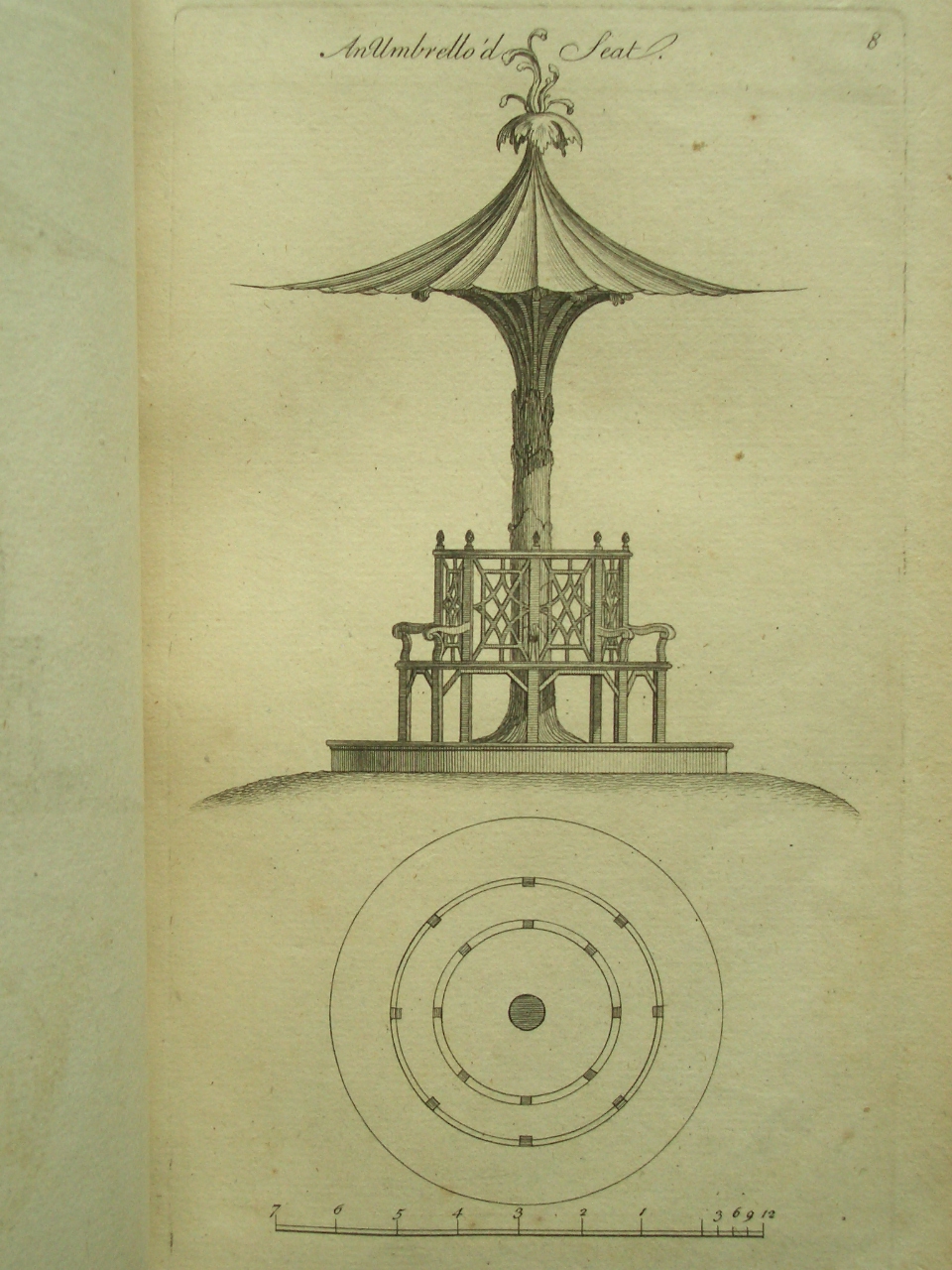
1758réf. 5186(Many of which may be executed with Roots of Trees) for Gardens, Parks, Forests, Woods, Canals, etc. Mit 54 gest. Tafeln (7 signiert von J. Couse). London, Printed for Robert Sayer, 1758. 8vo. (20,6 x 12,7 cm). 8 S. Halbledereinband d. Zt. mit Rückenvergoldung u. Rückenschild.
1808réf. 46402200Paris, Nicolle, Le Normant, 1808-1809 ; 3 vol. in-4, cartonnage bradel papier rose, fil. dor., pièces de titre en maroquin vert, entièrement non rogné. (Reliure de l’époque) 2 ff., 2 ff. de dédicace au roi, 34 pp. de table, 1 f. errata, 532 pp. - 768 pp. - 872 pp. - 33 cartes et plans, 147 planches à l’aquateinte.ÉDITION ORIGINALE de cette remarquable publication. Seul 1 plan manque à cet exemplaire (2e partie du quartier Montmartre) sinon l’exemplaire est conforme à la description détaillée de toutes les illustrations que donne Monglond VII pp. 926-934. “Des dessinateurs archéologues, dans la prévision d’une transformation prochaine et inévitable de la capitale, rassemblaient des esquisses et des croquis qui devaient servir un jour à reconstituer le panorama du vieux Paris, tel que la Révolution et l’Empire l’avait laissé ; ce sont ces dessins qui ont servi à composer l’album si précieux de l’ouvrage de Saint-Victor.” Dufour. Bibl. de Paris.Outre les cartes et vues hors-texte, l’ouvrage renferme près de 100 illustrations gravées dans le texte.Exemplaire dans un modeste cartonnage de l’époque, mais complet, grâce à cela, de toutes ses marges, ce qui est un état idéal pour un livre à planches.
1683réf. 41683À Paris, chez Jean-Baptiste Coignard, 1683. In-folio de (8)-xxvii-(1)-124 pp., veau brun granité, dos à nerfs orné (reliure de l'époque).
1957réf. 3549BBLausanne, André et Pierre Gonin, (1957). 4°. 23 Bl. Mit 1 Farbstiftzeichnung u. zahlr. farb., z.T. ganzs. Textillust. von Hans Fischer. Lose in Orig.-Pergament und Schuber. + Wichtig: Für unsere Kunden in der EU erfolgt der Versand alle 14 Tage verzollt ab Deutschland / Postbank-Konto in Deutschland vorhanden +
1955réf. 1015731955 Tokyo, 1955, 243x258mm, 20pp., broché sous couverture illustrée + une feuille de 590x240mm avec la liste des pièces exposées. Catalogue de l’Exposition sise aux Grands Magasins Takashimaya à Tokyo du 1 au 17 avril 1955 largement illustré par un cahier central de 12 pages en noir et blanc et en couleurs. L’exposition, entièrement conçue par Charlotte Perriand, et réalisée avec le concours de Junzo Sakakura et Martha Villiger, avait pour but de montrer les préoccupations de la France en ce qui concernait les Arts Plastiques et l’Habitat ; elle était basée sur deux thèmes principaux :-Exprimer la collaboration entre les artistes et les producteurs industriels.-Réaffirmer le rapport d’Unité entre l’Architecture, la Peinture, la Sculpture.Elle était divisée en quatre sections : Arts Plastiques (Le Corbusier et Léger), Equipements Mobiliers (Charlotte Perriand), Objets Usuels (sélection Jean Luce) et Arts Graphiques (sélection Bernard Gheerbrant). Elle était la suite logique de l’exposition de 1941 dans les mêmes Grands Magasins Takashimaya « Choix, Tradition, Création, au contact avec l’art japonais », également réalisée avec Junzo Sakakura. Le mélange contradictoire entre l’artisanat et la production industrielle, l’inadaptation de la taille des meubles et des objets aux appartements japonais et l’élitisme des choix suscita une critique plutôt acerbe et l’esprit de l’exposition fut plus approuvé que sa forme.Perriand, Centre Pompidou, 2005, p.82-83 ; Barsac, 2008 p.232 à 248 ; Sakakura, 2009, n°179 à 184. Barsac 2005, p.392 à 407; Kamakura Museum 2011, p.173.(101573)