[African Americana]: [Fashion]Biblio.com
811 résultats
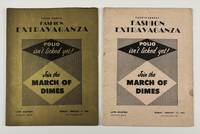
1957réf. 4585Detroit: Bolar Printing & Publishing 1957. Good plus. 20; 36pp. Original printed wrappers stapled. Moderate soiling and wear. A pair of rare programs issued for the 1956 and 1957 benefits for the March of Dimes Fashion Extravaganza at the Latin Quarters in Detroit. The programs include information on the organization's committee hostesses sponsors and more. The event itself is titled "Fashion in Colorama" in the earlier program and "Spring Fashions in Symphony" in the latter with a schedule of events listed in both cases. Each program is profusely illustrated with photographs pertaining to the event itself but also in the numerous advertisements which populate both throughout. The ads feature a wide variety of local Detroit businesses providing critical information on commercial entities both owned by African Americans in and around Detroit and also those friendly to the local African American community. The only institutional holdings for these programs in OCLC reside at the Detroit Public Library. Bolar Printing & Publishing unknown
1950réf. 61496Chicago IL: Hart Schaffner & Marx ca. 1950. Two large colour lithograph advertising posters sized 38.25 x 51 in. and 28.75 x 38.5 in. respectively both bearing the Golden Trumpeter logo as rendered by noted artist Robert Reinhardt von Liski minor dustsoiling creasing faint dampstain to very lower right fore-edge of larger poster minor closed tears neatly repaired light age toning still both bright VG- copies now mounted and shrink wrapped on archival foam core. The Hart Schaffner & Marx logo for men’s fashion was first created by Edward Penfield in 1914 with the trumpeter bearing an upright lance but the next year had turned into a trumpet and would continue on HSM suits until the late 1980’s. Hart Schaffner & Marx was founded in 1887 by Harry and Max Hart Marcus Marx and Joseph Schaffner. By the early 20th century they owned dozens of small garment factories around Chicago and was one of the first tailoring/garment manufacturing firms to become unionized. They continued to grow through the 20th century and by the end of the 1960s had 38 factories and 250 retail stores around the country. The Company continues to operate under the Hartmarx label and is one of the leading men’s clothing wholesalers to this day. Von Liski 1908-1991 was a noted self-taught artist and commercial artist who worked for various studios and was a partner in a Chicago advertising agency. No copies located in Worldcat; See: Leif Peng & Nan Hall Tom Hall Today’s Inspiration Celebrating Illustrations Design Cartoon and Comic Art of the Mid-20th century 2016; Hart Schaffner & Marx Encyclopedia of Chicago 2005. Hart Schaffner & Marx, hardcover
1953réf. 52352Boston: Houghton Mifflin Co. 1953. 8vo. 86 2 pp. Illustrated half-title illustrated title page numerous text illustrations & plates 3 colour plates colour-illustrated endpapers. Blue-green coloured cloth illust. of doll in yellow holding parasol on front cover yellow lettering on spine very minor shelfwear minor rubbing & very slight bumping to lower corners w/ d.j. cover art of fashion doll by Bannon minor chipping head & foot of spine wear to corners minor rubbing upper corner clipped $ 2.25 price written in lower corner in pencil VG/VG copy. First edition of this remarkably rare and beloved children’s book surrounding the mystery and treasurer hunt for a 19th-century fashion doll in Peterborough NH by a young girl hidden by her ancestor in a secret room. Fashion dolls also called Queen Anne Dolls were often made of wood plaster or bisque with a fashionable hairstyle in flax or wool and dressed in miniature clothes showcasing the latest couture of the day. The most desirable dolls in the 19th-century were the French bisque dolls distributed all over Europe and were originally modeled on teen girls or adult women although these eventually changed over into child like bisque doll babies which would dominate the market from the 1860s onward. Bannon 1895-1963 was inspired to write this work while staying at the famed MacDowell Art Colony in Peterborough NH which carried a legend of a secret room in the MacDowell farmhouse. Original copies of this work have become quite scarce especially first editions. Houghton Mifflin Co., hardcover
1968réf. 61495Portland OR: Jantzen Knitting Mills 1968. One giant colour lithograph advertising poster sized 40.5 x 46.5 in. on thick paper stock minor creasing edgewear agewear and couple closed tears w/ repairs still a bright copy now mounted on archival foam core and shrunk-wrapped from the library of Keith Albert Zilk 1927-2020 Korean War Vet Company D 40th Infantry and photographer with Condit Photo Studio and later with Jantzen Swimwear. First edition of this exceedingly scarce promotional swimwear poster for Jantzen produced under the direction of Roger Yost former Jantzen Art Director & Advertising & Marketing Manager designer Byron Ferris and copywriter Homer Groening 1919-1996 for the 1968 season the year after Jantzen had become the NFL’s first apparel licensee. Replacing the iconic “Just wear a smile and a Jantzen” with “Jantzen Speaks Your Language” this poster also sports the revised Jantzen Logo created by Thomas Lincoln who created a sort of condensed Bodoni which did not previously exist and worked with John Pistilli a New York type designer to create the entire alphabet. The swimwear advertising campaign featured such athletes as Frank Gifford Jerry West and Paul Hornung wearing wearing the striped trunks and were also used in 30-minute television biopics created by Portland filmmaker Homer Groening for 120 TV stations. We could find no similar surviving example; See: Trudy Chin Jantzen Collaboration Between Design & Advertising in the Jantzen Bullpen Portland Design History 2020; Ash Horn Homer Groening The Vanguard Cartoonist Filmmaker and Ad Man Who Did it All Portland Design History 2020. Jantzen Knitting Mills, unknown
1994réf. 58623Milan et al: Valentino Atelier by Carnet Elegance Exclusive Distributor for North America 1994. Thick 4to. 12.75 x 12.25 in. 106 pp assorted pagination. With 51 colour fashion designs 136 tipped-in cotton silk wool acrylic and blend fabric sample swatches several printed fabric samples. Black silk cloth gilt lettering stamped on front cover numbered on colophon at rear very minor rubbing edgewear still VG bright copy. First edition No. 970 of this sumptuously illustrated sample fashion catalogue from one of the greatest Italian Couturiers Valentino Clemente Ludovico Garavani the incomparable fashion designer. This collection was representative of many of Valentino’s collections of the 1990’s integrating themes of revival and self-reference-flounces embroidery and dots partly as a way of highlighting his 30 years of fashion designs. In addition these designs and their fabrics reflect a foreshadowing of the later mid-1990’s shift towards a more bohemian style drawing upon 1970’s fashions mixing fabrics embroidery and Eastern influences in their designs. No copies located in Worldcat; See: Pelle & Mauries Valentino. Thirty years of magic 1990; Pelle Valentino’s Magic 1998. Valentino Atelier by Carnet, Elegance, Exclusive Distributor for North America, hardcover
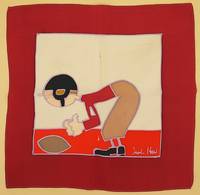
réf. 66249Very Good. Silk scarf measuring 12" x 12". Two fold lines one horizontal one vertical through the center. 1" split in the cloth to the surface. A sporty design by John Held Jr. Utah Artist John Held Jr. 1889-1958 was a prominent illustrator of the 1920s and 1930s. He began by drawing sports and political drawings for The Salt Lake Tribune when he was just 16 years old. Held moved to New York City in 1910 where he went on to gain notoriety for his drawings in the popular magazines "Life" "The New Yorker" "Vanity Fair" "Judge" and "College Humor." His work epitomized the Jazz Age. He is most recognized for creating the short-haired "flapper. unknown
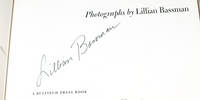
1997réf. 12906Boston: Bulfinch Press/Little Brown and Co. 1997. Hardcover. SIGNED. First edition first printing. Near Fine with a light bump to two tips a small bump to the edge of one board and a remainder mark to the top edge of the text block in a Fine dust jacket with a hint of shelf wear. All dust jackets are protected by a clear mylar cover. BOOKS SHIP THE NEXT BUSINESS DAY WRAPPED IN PADDING IN A BOX. Photographs by Lillian Bassman; essay by Martin Harrison; edited by Catherine Chermayeff Kathy McCarver Mnuchin and Nan Richardson. Unpaginated approx. 160 pages; 75 duo-toned b&w plates; 10 x 13.25 inches. Chronology list of plates bibliography. SIGNED BY BASSMAN on the title page; no inscription. Bassman 1917-2012 was an experimental avant-garde fashion photographer whose work appeared in Harper's Bazaar in the 1940s through '60s. After discarding most of her work in 1971 she was rediscovered in the 1990s. This is her first monograph. She was married to the fashion photographer Paul Himmel for over seventy years. Overseas sales and expedited shipping will require extra postage for this volume. Bulfinch Press/Little, Brown and Co. hardcover
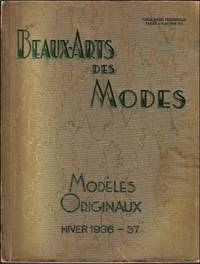
réf. 57964Paris - 1937. Original cover 38x29cm 100 pages with 48 pages with lithographs. Mode publication periodique. All model prints show front and back of fashion dresses with description in French / German and English. Paris - 1937 unknown
2003réf. __9058095665Aa Balkema 2003. Hardcover. New. 1st edition. 460 pages. 9.75x7.25x1.25 inches. Aa Balkema hardcover
1978réf. 2092902138901163Not Available 1978. Soft Cover. Fine. The book is in fine condition. Not Available paperback
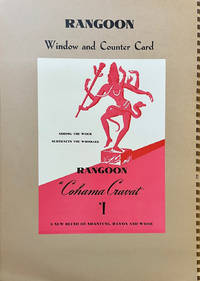
1940réf. 61451New York: Cohama Cravats United Merchants & Manufacturers 1412 Broadway 1940. Atlas folio. 13 x 18 in. 34 pp unpaginated. printed on thick tan paper stock with 21 different tipped-in advertising promotional samples including camera-ready newspaper ads sample window & counter display cards and folded promotional brochures for mailing each to be imprinted with the retailer’s name order book tucked into rear pocket mounted on last leaf. Tan boards plastic-comb binding to spine minor bumping to couple corners some dustsoiling minor chipping to foot of spine still a VG bright exemplar. First edition of this exceedingly scarce sales and advertising catalogue designed to present the 1940 plan by the company for their $ 1.00 men’s cravat ties. Featured are the proposed newspaper ad lines for the six different Cohama Cravats in the Spring & Summer including the Briar Bahama Camelot Rangoon Gamester and Seminole. American tie manufacturing emerged as a significant force at the end of the Jazz Age and through the 1930’s as their popularity grew world wide for their heavy use of colours vivid patterns and breaking away from the more sedate colour palate of the British tie industry. Contributing to the explosion of tie manufacturing in the 1930s and 1940s were the need by many men during the Great Depression and then the War years to change their fashion look by adding a decorative tie rather than buying a new suit or set of clothes. The Duke of Windsor heavily influenced ties styles and wearers by not only developing the Windsor knot but also wearing them with many different types of clothing. Cohama was a trademark of United Merchants which was a textile firm originally founded in 1912 as the Cohn-Hall-Marx Co. merging with United Merchants in 1928 and later clothing chains across the East and South through World War II. No copies located in Worldcat; See: Gibbings The tie trends and traditions 1990. Cohama Cravats, United Merchants & Manufacturers, 1412 Broadway, hardcover
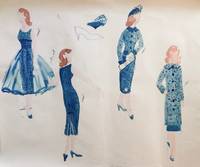
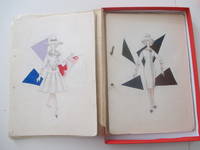
1953réf. 58213Seattle WA: Nancy Paine ca. 1953-54. Twenty-one original fashion design watercolour paintings all oblong folio 9 sized 15 x 12 in.; 12 sized 18 x 15 in. 1 is painted title only many of them signed by Nancy down in lower corner 1 graded and reviewed by teacher several with neat cursive annotations some curling minor edgewear to corners some toning still VG set with the 2nd set retaining the original portfolio cover sheet. These original watercolour fashion designs reflect the 1950’s emphasis on full circle skirts swing skirts pencil skirts tea length dresses and fitted tight waist blouses reflecting the influence of Christian Dior towards increased femininity in the post-World War II era. For the College Coed portfolio our young artist has included designs for Capri pants lingerie fitted wool dresses flowing “poodle” skirts bathing suits tennis outfit ice skating clothing riding outfits and evening wear. The second portfolio incorporates diamond pattern one-piece bathing suits terrycloth robes different evening weather and nighttime negligee. Although young Miss Paine would not go onto becoming a commercial artist she did work as office manager for many years for the Simpson Lumber Company. Nancy Paine, hardcover
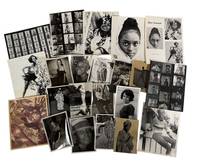
1950réf. 211751950. Archive of fashion photography documenting African American women's participation in commercial and editorial modeling from the 1950s through the 1980s a period in which the American fashion and advertising industries remained overwhelmingly centered on white beauty standards and limited Black representation in print media. Working in Cultural / Representational Mode the material illustrates changing presentations of Black femininity glamour and natural beauty across several decades of American fashion culture. The photographs provide visual evidence of evolving aesthetic conventions surrounding race cosmetics hairstyles leisure and commercial image-making during the postwar and Civil Rights eras. Particularly notable are several 1970s images depicting Black models with natural hairstyles and minimal cosmetic styling reflecting broader cultural shifts associated with Black pride movements and changing representations of African American identity in fashion and advertising imagery. Collection comprises 23 silver gelatin photographs and one color photograph produced by several professional photographers between the 1950s and 1980s. Images include editorial fashion shoots casting and publicity photographs scanned negatives and studio portraiture featuring predominantly Black women alongside several white models photographed by the same studios. Two 1970s editorial images depict a lean Black model with closely cropped natural hair posed in a leopard-print wrap. Four photographs focus specifically on Black women including close-up portraits emphasizing natural presentation and informal styling. One younger woman appears without visible makeup wearing a bandana and t-shirt while another is photographed in a straw hat with hoop earrings and patterned sash. Additional photographs include a Black model posed in a bikini atop the rim of a classical fountain featuring Aphrodite imagery. Four professional photographs and one casting card depict singer and actress Sylvia Vanderbeilt in commercial studio poses. Several scanned negatives portray a Black female model in multiple outfits and poses characteristic of 1970s fashion photography including one sequence featuring both the model and a young Black girl during apparent test shoots. The latest material consists of scanned negative strips from an apparent 1980s fashion session featuring a Black model with a sleek bob hairstyle modeling padded blazers and contemporary commercial attire. Other photographs depict white women in evening gowns fur wraps and casual mid-century fashions including two images by photographer Lee Brian showing the same model posed in mid-length evening gowns amid neoclassical architectural settings one with an elaborate mink shawl. Several photographs bear photographer or studio stamps on the verso including L.W. Ward of Cedar Rapids Iowa and Lee Brian of Palm Beach Florida. The archive traces substantial shifts in fashion photography and racial representation across three decades of American commercial imagery from heavily stylized mid-century glamour photography to the more natural aesthetics associated with 1970s fashion editorials and Black cultural self-presentation. The inclusion of both editorial and test photography offers insight into the production practices of commercial modeling studios as well as the visual conventions used in presenting Black women to advertising and fashion audiences during a period of gradual but uneven industry integration. Minor wear and light handling marks throughout; photographs otherwise remain in very good condition overall. A visually strong grouping documenting African American representation within postwar American fashion photography and commercial image culture. unknown
1924réf. 62500Tacoma WA: A.V. Love Dry Goods Co. 2102-2106 Pacific Ave. 1924. 4to. 4 286 i.e. 338 10 pp. Including 52 pp. of colour lithograph sample pages many w/raised colour-embossed plates of bolts of cloth or fabric samples ribbon samples colour swatches 100’s of text illustrations photo illustrations. Brown-cloth backed colour-illustrated flexible covers cover art of 1920’s bobbed-hair woman measuring bolts of cloth Love Co. advertisement on back cover minor chipping & creasing to corners edgewear minor scuffing couple minor closed tears still VG- copy. First edition of this very scarce and lavishly illustrated wholesaler’s dry-goods catalogue issued by A.V. Love Dry Goods Co. during the Roaring 20’s. As a wholesale catalogue goods and counter displays are depicted and priced such as those for cuff buttons combs hair pins perfumes pipes sewing goods textiles and yarns. Of particular interest are the beautifully colour-printed & embossed inserted sample pages for trimmings silks silk threads yarns underwear towels blankets and more. Sections specifically devoted to work clothes including overalls work gloves boots logger’s plaid work shirts wool flannels and even bathing suits are also featured. Love Sr. 1868-1942 a Virginia grocer first moved to Washington State before 1900 and by 1902 had established his own firm in Tacoma for the A.V. Love Dry Goods Co. eventually with sample showrooms in Seattle Portland Bellingham Bremerton Everett Yakima Walla Walla Aberdeen Eugene Lewiston Wenatchee and Juneau & Fairbanks Alaska Territory. The company erected the Love Dry Goods and Loft Building in 1925 built by Heath Gove and Bell located in the Denny Triangle neighborhood and was an excellent example of Seattle’s early Art Deco Architecture. The company moved their base of operations to Seattle from Tacoma on Pacific Ave. after completion. No copies in Worldcat; See: A.V. Love Dry Goods and Loft Building Photograph Collection Boyle Wagoner Architects Univ. of Washington Lib. Spec. Collects. PH0639. A.V. Love Dry Goods Co., 2102-2106 Pacific Ave., hardcover
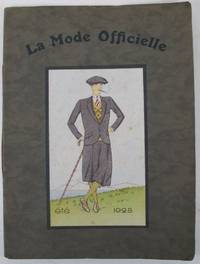
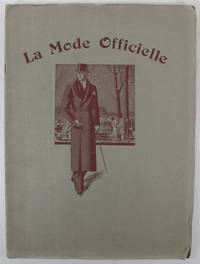
réf. 48676Paris: Publication de Luxe de l'Union des Journaux de Modes. 1928. Folio.37.5 x 28 cm. Title pp.162. Original grey thick paper wrappers with colour pictorial insert onto upper cover. The 16 pp. comprise full page colour illustrations of men's fashion 15 single figures back to back and the last with various waistcoats. The last text leaf describes the images. Quite rare. We can locate no other copies in commerce or past auction and just one record on Worldcat at the Bibliotheque Nationale. Paris: Publication de Luxe de l'Union des Journaux de Modes. 1928 unknown
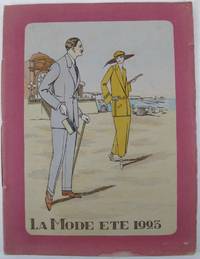
réf. 48678Paris: Publication de Luxe de l'Union des Journaux de Modes. 1923. Folio.37.5 x 28 cm. Title pp.162. Original pink thick paper wrappers with colour pictorial panel onto upper cover. The 16 pp. comprise full page colour illustrations of men's fashion 15 single figures back to back and the last with various waistcoats. The last text leaf describes the images. Quite rare. We can locate no other copies in commerce or past auction and just one record on Worldcat at the Bibliotheque Nationale. Paris: Publication de Luxe de l'Union des Journaux de Modes. 1923 unknown
réf. 48679Paris: Publication de Luxe de l'Union des Journaux de Modes. 1936. Folio.37.5 x 28 cm. Title pp.162. Original grey thick paper pictorial wrappers. The 16 pp. comprise full page colour illustrations of men's fashion single or double figures. The last text leaf describes the images. Quite rare. We can locate no other copies in commerce or past auction and just one record on Worldcat at the Bibliotheque Nationale. Paris: Publication de Luxe de l'Union des Journaux de Modes. 1936 unknown
2005réf. BN512646Paris / Editions de la Martiniere 2005. 2005. Jacques Helleu & Chanel. Jacques Helleu & Chanel. Mode - Laurence Benaim Paris / Editions de la Martiniere unknown
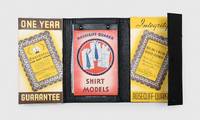
1938réf. 162513New York: Rosecliff-Quaker Corp. 1938. First in the field with the newest styles An ephemeral window onto menswear retailing in FDR's America offering the dream of personalized tailoring at an affordable cost. The Rosecliff-Quaker Corporation boasted that it employed 10000 people coast to coast used only unionized labour and guaranteed its shirts for a year. Octavo 214 x 120 mm. Original leatherette wallet binder unfolding to 214 x 460 mm two folding printed card advertising panels with mounted fabric samples 20 tie and 27 hosiery 50 shirt fabric samples each 170 x 120 mm in post-binder with four interleaved printed advertisements central panel lettered in silver. Occasional old pencil annotations. Binder sturdy and still fresh all samples present occasional offsetting and soiling to card panels majority of shirt samples with original paper information slips crudely removed with resulting paper residue. A very good example. hardcover
1924réf. 53221New York: The Charles William Stores Inc. 1924-1925. Two vols. 4to. 548 8; 518 8 pp. With numerous colour plates colour-tinted text illustrations over 1000 black & white text illustrations diagrams. Colour-illustrated softcovers minor soiling wear slight sunning front cover of vol. 1 creasing to spine; minor creasing shelfwear vol. 2 light uniform interior toning as usual still VG- set. First edition of the complete year of Jazz Age catalogues from the Charles William Stores which offered a treasure trove of everyday fashions work clothes and household and consumer goods during the Roaring 20s offering the glamour and style of New York to the rest of the country. Their fashions were intended for the average American with emphasis on the more “endowed” woman and “stout” man during the Jazz Age emphasizing chic styles and well-woven fabrics. These catalogues detail the high grade work pants riding breeches denim jeans corduroy work pants along with triple-sewed work denim overalls and coats which could be purchased as well as those made out of Wabash Stripe Stifel denim cloth noted for its durability. No copies located in Worldcat of Spring & Summer 1925; 3 copies located of Fall & Winter 1925 Henry Ford Harvard American Textile History Museum. The Charles William Stores, Inc., paperback
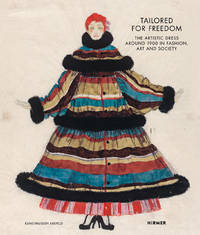
2019réf. BN512523München / Hirmer und Kunstmuseum Krefeld 2019. 2019. Taylored for Freedom. The Artistic Dress around 1900 in Fashion Art and Society. Taylored for Freedom. The Artistic Dress around 1900 in Fashion Art and Society. Mode - Ina Ewers-Schultz and Magdalena Holzhey München / Hirmer und Kunstmuseum Krefeld unknown
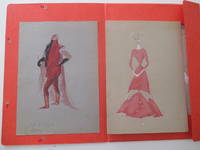
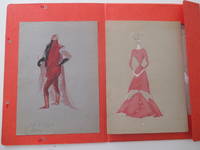
1920réf. 14632AB1920. Vienna n.d. ca.1920 36 : 30 cm - 15 : 12 cm 21 water-colours partly heightened in white on grey cardboard. Beautiful very detailled elaborated custome designs in different colours white black blue red green yellow pink. The designs show mainly woman maybe designs for Bizet's 'Carmen' Two plates show actors and actress dancing with masks. unknown
1920réf. 18450AB1920. Vienna ca.1920 36 : 30 cm - 15 : 12 cm 21 acuarelas en parte elevados en blanco sobre cartón gris. Preciosos y muy detalladas diseños de trajes para el teatro y la opera en differentes colores blanco negro rojo verde amarillo lila. Los diseños muestran sobre todo mujeres tal vez para la opera de Bizet 'Carmen'. Dos láminas muestran actor y actriz bailando con mascaras. paperback
1950réf. 18447AB1950. Vienna ca. 1950. 31 : 23 cm. Muchos diseños en 97 paginas con muestras de textil montados. Diseños para vestidos de mujeres abridos pantalones etc. 1 página con diseños para ropa de niños 8 páginas con muestras de textil in color montados. Algunos señalados con 'Dior falte' algunos con 'Dior Rock' Dior falda algunos señalados modela verano modelo Margit etc. Una página con aplicaciónes en diferentes colores. unknown
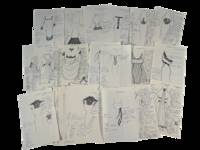
1950réf. 218271950. Fashion illustration archive circa 1950s-1960s documenting women's garment design and construction practices in the mid-twentieth century. The archive reflects shifting silhouettes and decorative approaches associated with mid-century fashion including structured postwar forms and emerging streamlined influences. Archive comprises over 100 original fashion illustrations each executed in ink on sheets measuring approximately 6.5 x 9 inches. The drawings depict a range of garments including cocktail dresses coats suits blouses and eveningwear with attention to silhouette drapery and surface embellishment. Many sheets include handwritten annotations in cursive along margins and versos detailing construction elements such as measurements fabric choices and stylistic variations. Examples include labeled designs such as "cocktail dress" "coat" and "suit" with notes specifying features like "turtle neck - bare cut out - colors - gold" and "square low neckline with studded pearls. colors - purple - gold." The annotations suggest iterative design thinking with references to materials color palettes and structural adjustments indicating use as a working portfolio rather than presentation-only sketches. This archive provides detailed evidence of mid-century fashion design practices at the level of individual garment planning bridging artistic representation and technical instruction. The combination of visual sketches and written notes demonstrates how designers translated aesthetic concepts into wearable forms contributing to the study of dressmaking textile use and women's fashion history during a period of stylistic transition. The volume and consistency of the material suggest sustained use potentially within a professional or training context. Light wear and minor handling marks; overall very good condition. A substantial working archive illustrating mid-twentieth-century women's fashion design and construction methods. unknown