18 845 résultats
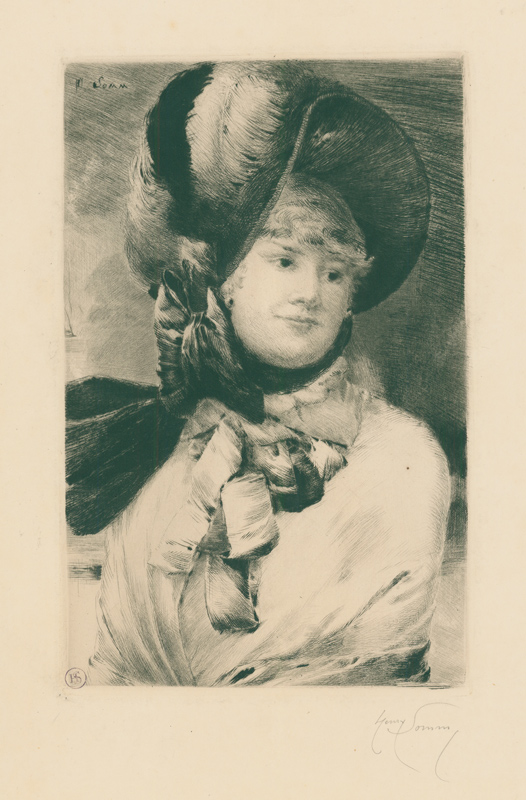
réf. 0151-Co.J. Radierung und Kaltnadel, 1881, auf cremefarbenem Japan, signiert und mit Atelierstempel. 21,2:13,2 cm. Literatur: Beraldi 35, Zustand von der links und rechts verkürzten Platte und mit Signatur in der Platte links oben. Vorzüglicher, vollrandiger Abdruck.
1912réf. 193451912 29 planches, encre de Chine et mine de plomb, 22 x 11 cm, 1912, sous chemise cartonnée.
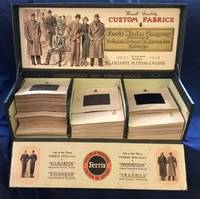
1937réf. 54988Chicago: Ferris Woolen Co. Successor to Detmer Brewer & Mason Wawak Co. Inc. 1937. Sample case. 27.75 x 11 x 7.5 in. Containing 172 thick cards w/ black & red advertising lettering stock & style Nos. with 172 woolens worsted wool imported wool samples some preshrunk all mounted on the cards. Original sample display case w/ green textured cloth over boards divided into 3 compartments nickel plate slider hinges printed advertising on inner lid and drop front reinforced corners some minor wear insect predation around fore-edges of a few samples still a remarkable display case from the John the Tailor Shop Suits and Overcoats made to order Wausau WI w/ stamp on top Wawak sample card. First edition of this spectacular tailoring sample counter display for men’s suits and overcoats in the Fall & Winter of 1937-1938. Ferris Woolen Company a subsidiary of Wawak Woolens was originally founded in 1922 in Chicago along with Detmer Woolen Co. Bruner Woolen Co. Mason & Hanson Inc. and Salter & Wolf to supply woolens & trimmings to tailors and department stores across the United States. The companies were known for their high-quality wools at a reasonable price and often incorporated imported wool wool silk blends gabardines and tweeds especially from Scotland Wales France and Great Britain. In 1933 the Wawak Co./Ferris Woolen Co. purchased the exclusive right to all the Detmer Bruner Co. customers West of the Mississippi. They quickly began commissioning and producing display cases reflecting the change and proved very successful with the Ferris Woolen Co. catering to the trade into the 1960s. These sample cases were very expensive to produce and so were most often found in department stores mercantiles and men’s stores which would have these display on the sales floor for two seasons or more often adding or subtracting fabrics as they became available. The samples included with this case offer invaluable textile reference for the colours and fabrics during the era of fashion influenced by the elegance and glamor of Hollywood films and film noir at the time. The styles depicted on the inside of the lid and the drop-down front are reminiscent of the very popular Thin Man fashions worn by William Powell and Myrna Loy at the time. No copies located in Worldcat. Ferris Woolen Co., Successor to Detmer, Brewer & Mason, Wawak Co., Inc., hardcover
1911réf. 48842Cincinnati OH: Goldman Beckman & Co. 1911. Elephant folio. 21 x 18 x 1.75 in. 50 pp unpaginated printed on thick card stock each mounted on linen hinge. 17 colour plates 1 page w/ colour-illustrated borders 8 black & white plates with 150 mounted textile samples in wool wool worsted blends some felt backed moleskin cashmere and more -- all samples clearly marked with prices and availability many with damage from insecty predation occasional soot soiling soiling to fore-edges many of the images with illustrations of models in period dress in backgrounds and around borders. Half-black cloth over green gilt lettering and embossing of Company logo on front cover illustrated endpapers with the different suit models on pastedowns occasional soot soiling foxing minor dustsoiling from fabric dust cloth covers renewed w/ original company logo & title mounted front cover still a G copy entirely complete with all samples present. First edition of this scarce salesman sample fashion catalogue for men’s suits in the Edwardian era prior to World War I. Goldman Beckman & Co. was owned by Louis Goldman 1850-1921 who had founded the firm in 1894 after decades in the wholesale suit tailoring business marketing to men & young men. The catalogues were very expensive to produce and so were most often found in department stores mercantiles men’s clubs and men’s stores which would have these catalogues on the sales floor in the Cincinnati area. This catalogue offers invaluable illustrated historical reference for the colours styles and fabrics during the Progressive Era. Many of the plates show elegantly dressed men and women in the park the flower show at the museum playing sports and even preparing to go on a canal boat. In addition there are a number of plates showing properly cut trousers and the available cuts special sections devoted to fancy cuffs and pockets fitted backs men’s hats formal wear and much more. No copies located in Worldcat. Goldman, Beckman & Co., hardcover
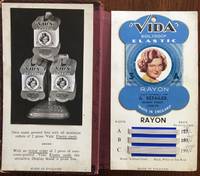
1930réf. 57289Nottingham UK: Vida Mills Jones Stroud & Co. Ltd. ca. 1930. Thick 8vo. 26 pp unpaginated. on thick card stock w/ burgundy linen hinges at gutter margin w/ 113 rayon elastic nylon elastic rubber and silk rayon blend trims 1 silver gelatin frontisp. photo mounted on front pastedown sized 3.5 x 5.5 in. w/ 10 colour-printed & illustrated labels and elastic holders tipped-in numerous printed photographic plates. Quarter-burgundy coloured cloth over simulated alligator boards screw posts at gutter margin minor rubbing slight bumping to corners 1 sample removed still a VG copy. First edition thus of this extraordinary and inventive salesman sample catalogue for elastic trims between the Wars. Horace Jones had invented a specialized braiding machine in 1927 for creating elastics by braiding rubber filaments together with rayon nylon cotton or silk-rayon blends to create a number of different “Elastic” Boil Proof Vida trims. Prior to the widespread introduction of many stretchable and elastic fabrics following World War II Vida Mills products were used shoulder straps for lingerie suspenders both for men and women’s fashions swim trunk and briefs trunk top elastic bands. In addition these were used for car covers bags accessories creating pleats sleeve hems and much more. In addition there are a number of samples included here for durable boot and shoe laces. The coloured and metallic Ric Rac trims were used in costumes uniforms decorative elements on clothing and many other applications. By 1930 the company had deployed 3000 braiding machines generating over 52 million yards of elastic braid annually and in 1940 expanded into manufacturing glass tapes and woven fabrics for electrical installations and industrial Wartime applications. The company still operates today as the Jones Stroud Insulations Ltd. subsidiary of the Krempel Group since 2000. No copies in Worldcat; See: History of Jones Stroud Insulations -- Timeline Krempel 2015; Trade Marks Ordinance Official Gazette Kenya Dec. 4 1956 p. 1315. Vida Mills, Jones Stroud & Co., Ltd., hardcover
1835Cm. 24,5, frontespizio inciso, pp. (2) d'indice + 23 (di 24!) tavole incise all'acquaforte. Leg. in cart. muto. Leggere arrossature marginali, ma bell'esemplare, genuino ed a pieni margini. Rara e ricercata raccolta di soggetti veneziani. Esemplare che, come molto spesso accade, si presenta censurato, ovvero privo (dall'origine?) della tavola n. 10 la quale è intitolata "passeggiata sentimentale" e la cui visione non deve essere stata gradita per la morale del tempo.
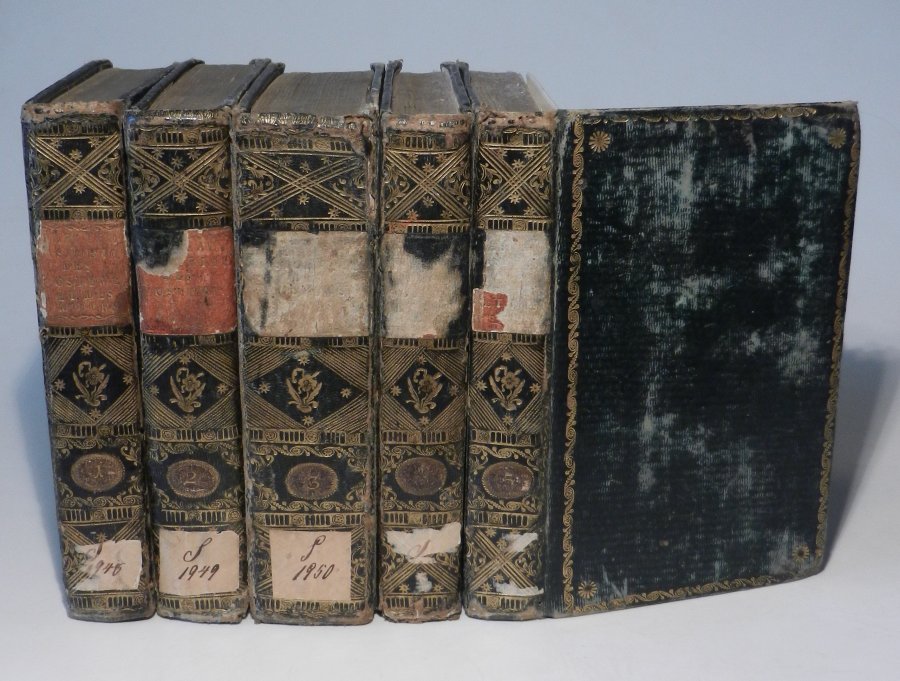
1806réf. 29596-zn4Metz: Collignon 1804-1806. 4 Blatt, 299 Seiten, 18 Tafeln; 2 Blatt, 318 Seiten, 30 Tafeln; 390 Seiten, 42 Tafeln; 216 Seiten und 31 Tafeln, sowie 166 Seiten und 35 Tafeln. Dunkelgrünes Leder der Zeit mit Rücken- und Deckelvergoldung sowie allseitigem Goldschnitt (jeweils ein Signaturschildchen auf dem Rücken, berieben und bestoßen, teils beschabt, bei drei Bänden fehlt das Titel-Rückenschild, bei drei Bänden sind die Innengelenke gelockert, bei Band vier ist das hintere Innengelenk durchgebrochen, der Buchblock von Band 3 lose und das vordere Gelenk dieses Bandes auf einer Länge von ca. 5 cm gerissen, teils etwas fleckig, sonst gute und saubere, restaurierungswürdige Exemplare). 8°. fest gebunden
1885Cm. 35. Raccolta di 133 belle tavole incise in rame ed in fine coloritura coeva. Legatura del tempo in mezza pelle con titoli in oro al dorso. Qualche segno d'uso esterno e rade fioriture marginali, esemplare peraltro genuino ed in buono stato di conservazione. Poderosa raccolta iconografica che raccoglie le tavole a colori pubblicate tra il 1885 ed il 1888.
1883Cm. 35. Raccolta di 135 belle tavole incise in rame ed in fine coloritura coeva. Legatura del tempo in mezza pelle con titoli in oro al dorso. Qualche segno d'uso esterno e rade fioriture marginali, esemplare peraltro genuino ed in buono stato di conservazione. Poderosa raccolta iconografica che raccoglie le tavole a colori pubblicate tra il 1883 ed il 1885.
1845réf. 53501Goupil et Vibert, éditeurs 1845 2 tomes. Grands in-4, reliures de l’époque demi-chagrin noir , dos à nerfs ornés de filets à froid, caissons ornés de fleurons dorés, têtes dorées. T. I : 207 pp., 100 pl. en couleurs sous serpentes manque les pl. 21 ; 46 ; 53 ; 59 - T : II : 213 pp., 100 pl. en couleurs sous serpentes manque les pl. 22 ; 27 ; 35 ; 36 ; 38 ; 45 ; 48. Coins émoussés et frottés, petites déchirures en tête de dos du T. I, premier mors du T. I fendillé sur 5 cm., marge du premier plat du T. II décolorée, rousseurs éparses, planches fraîches. En l’état.
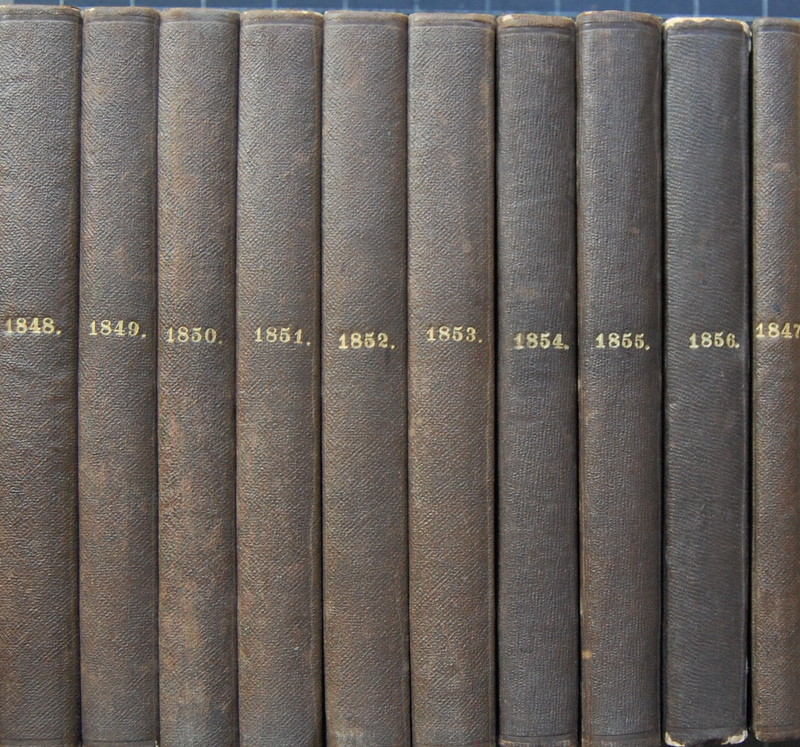
réf. 89406Stuttgart, Engelhorn. Bände 1853, 1854, 1855, 1856 ohne Musterbogen und Extra-Beilagen. Band 1847: nur 2. Jahreshälfte. Pappbände mit Jahrgangsnr. auf dem Rücken, pro Jahrgang jeweils 12 kolorierte Stiche (Januar - December) und 24 Hefte, VIII,384 Seiten, zweispaltig, 21,8 x 15,5 cm. In Frakturschrift. Einbandecken stark bestoßen, Einbände berieben sowie gelegentlich mit kleinen Fehlstellen, Seiten mit Gebrauchsspuren und Stockflecken, die kolorierten Stiche sind teilweise fingerfleckig oder stockfleckig. Bd. 1848: 1 Stich lose, 1 Stich teilweise lose. Die Musterbogen und Extrablätter sind bestoßen und an den Rändern oder am Falz eingerissen sowie mit Gebrauchsspuren. [8 Warenabbildungen]
1884Edizione: Première édition . Pagine: 344+61 FOGLI . Illustrazioni: 61 Magnifiche grandi litografie colorate (cm.36,50 per 25,50) con modelli di abiti femminili e qulcuno anche per bambini. Centinaia di immagini di moda nel testo in bianco e nero. Due grosse immagini a doppia pagina in bianco e nero con modFormato: 4° . Rilegatura: Cartonato marmorizzato rosso con dorso in tela rossa un poò consumata e con piccola sbrecciatura nella parte bassa del dorso. . Stato: Buono . Caratteristiche: Quindicinale di moda femminile. Sono presenti 43 numeri. Da notare che fino al 24° numero la rivista prendeva nome di La Mode Universelle, poi si fuse con La Saison, per trasformarsi in Mode Parisienne e ritornare La Saison.Foto disponibili . Note epoca: 1886
1982réf. 247441982 Estampe affiche impression offset en couleurs signée en bas dans la planche, 1982, 44 x 54 cm., encadrée.
1946réf. 24980Paris IMPRIMERIE SEIDO 1946 1 Croquis de René Gruau. Paris, Été 1946, in-4, broché, Imprimerie Seido, couverture rempliée, titre bordeaux, 28 pages dont huit planches.
1930réf. 192271930 Gouache et encre de Chine, rehauts d'or, (1930), sur papier collé sur calque, 31.5 x 16.7 cm., encadrée.
1930réf. 192421930 Encre de Chine et gouache verte, mine de plomb, annotations marginales, (1930), sur papier cartonné, 28 x 12.4 cm., encadrée.
1930réf. 22324LANVIN 1930 1 Gouache sur papier crème, titrée et datée dans la partie inférieure droite, Hiver 1930, 42 x 29 cm.
réf. 19232Deux maquettes préparatoires et un tirage ; maquette gouachée, en couleurs, 41 x 30.5 cm ; maquette gouachée, en noir et blanc, encadrement en roses et fleurs photographiées et découpées, 33 x 24.2 cm ; un tirage en couleurs 33.3 x 25.4 cm ; studio photographique Nadal.
1886réf. 77114A. Quantin | Paris 1886 | 17.50 x 25.80 cm | relié
1910réf. 228731910 Aquarelle et encre de Chine signée en bas à droite, Draeger, (1910), 35.5 x 25 cm.
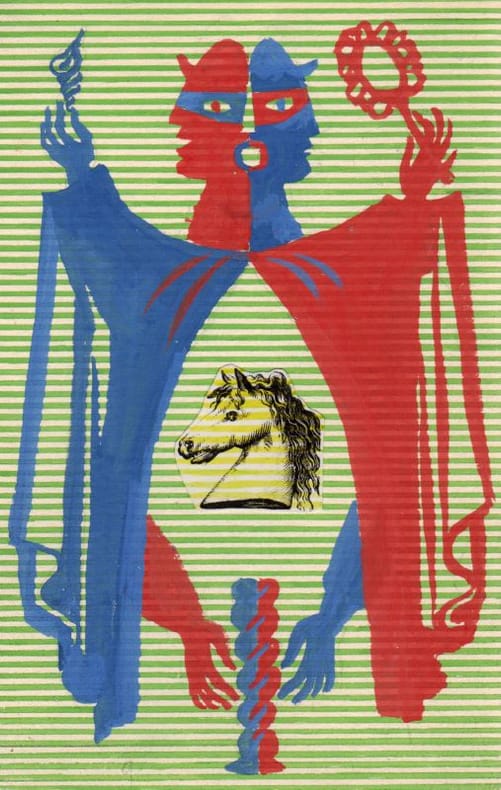
1945réf. 247881945 Gouache et collage, 21 x 13.5 cm, (1945).
1945réf. 19238(1945) Une maquette préparatoires à la gouache, 21 x 13.5 cm, en couleurs. (1945).
1950réf. 7426ABPadova, o.J. (ca. 1950). 33 : 30 cm. 280 Gürtelschnallen montiert auf 15 Tafeln in Klarsichthüllen. Original-Leinenordner.
1920réf. 199741920. Vernacular fashion illustration archive circa 1920s-1950s documents the evolution of women's dress and stylistic ideals across early and mid-twentieth-century design with emphasis on silhouette material and aspirational presentation. The drawings capture shifts from the elongated androgynous forms associated with 1920s and 1930s fashion to the structured tailoring and fitted garments of the postwar period. Elements such as exaggerated shoulders cinched waists and coordinated ensembles situate the works within broader developments in women's fashion including the influence of tailored suits and formal eveningwear. The illustrations also record accessory culture including gloves hats and jewelry positioning dress within a larger system of social signaling and presentation tied to class gender norms and modern consumer identity. United States and possibly Europe circa 1920s-1950s. Archive of six original gouache and pencil fashion illustrations on hard mat boards and one on thick watercolor paper each measuring approximately 10 x 7 to 10 x 15 inches. Several works bear artist signatures or initials including examples signed "Virginia" and "G. Wichner." Two dated compositions from April 11 1954 depict coordinated ensembles including a rose-toned set with a pencil skirt and structured blazer rendered with detailed attention to tailoring and fabric accents. Other illustrations include multi-figure studies of women in draped garments with belted waists a single-figure composition in a long gown with fur coat and elongated cigarette holder and portrait studies featuring headpieces veils and bold cosmetic styling. Use of shading color variation and line work emphasizes fabric texture garment movement and body form. Produced during a period of significant transformation in women's fashion these illustrations align with the development of modern fashion media including editorial illustration design sketching and commercial garment production. The visual emphasis on proportion tailoring and accessorization reflects the increasing codification of fashion as both industry and cultural expression in the twentieth century. As original works the drawings provide insight into the processes of design visualization and stylistic interpretation supporting research into fashion history gender presentation and visual culture. Light handling wear to mounts and sheets; overall very good condition. unknown