163 522 résultats
1962réf. 2409180259xbvkJamaica, Island Worcester [and Things] - Ceramics, 1962. Material: Ceramic / Total height (Pot with lid): ca. 39 cm; diameter at foot: ca. 15 cm, largest diameter (open top of 'pot'): ca. 24 cm. / Colour: lightbrown-rosé with white partly gilt-lined embossments and partly gilt inscriptions; foot and pineapple-top: white. / Weight: ca. 3 kg.
1930xx,853,viii,899 pages. Index in each volume. First printing. Reflections and recollections of Paul Warburg [1868 - 1932], considered by many to have been the main driver behind the establishment of the Federal Reserve System in 1913. Warburg was reluctant to publish this work until, in the autumn of 1928, "I became convinced that the Federal Reserve System had entered upon a gravely critical period in its career, and that for the discussion about to ensue it was highly important that certain vital facts in the origin and growth of the System be adequately understood." - viii [v1]. Gilt lettering upon spines. Average wear to publisher's navy cloth. Bookplate of prior owner, a Dutch doctor, inside each front board. Laid in is the original handwritten purchase receipt, dated 1931, issued by an Amsterdam book dealer. Front free endpaper of volume 2 neatly removed. Bindings and hinges intact. Dust jackets not included. A sound copy of this essential chronicle of early twentieth century American central bank history. Masui p.1431, Rist p.321. Book
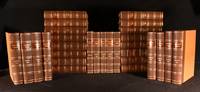
1839réf. 965Z28DLondon: The Railway Times Office 1839-63. First edition. Leather. Very Good Indeed. 11" by 9". None stated. An impressive run of early issues of the 'Railway Times' periodical an important railway periodical which documented developments and current news in the railway industry during the 1800s. A beautifully bound set of a very scarce periodical. An extensive twenty-nine volume set featuring a collection of the 'Railway Times' periodical from 1839-1863. All being the first edition. The periodical provides an impressive historical account of the current news and developments in the railway industry during the early to mid nineteenth century. The articles range from finances stock information new patents and inventions accidents and updates on railways from across the globe. Notable articles include; an article on Mr Robert Stephenson's new 1842 locomotive which proposed to use less fuel and a Testimonial to Isambard Kingdom Brunel the legendary engineer. This set includes; '1839' Vol II No. 71-72 85-94 and '1840' Vol III No. 27-41 and Vol II No. 52 of the 'Railways Magazine & Commercial Journal' bound into one volume. The rest of the years are bound over two volumes and feature complete runs of the magazine for that year with these being; '1841' Vol I- No.157 Vol III No. 1 - No.182 Vol Iv-No. 26. Vol II- No.183 Vol IV No.27 - No. 208 Vol IV No.52. '1842' Vol I- No. 209 Vol IV No.1 - No.234 Vol V-No.26. Vol II- No.235 Vol V No.27 - No.261 Vol V No.53. '1846' Vol I- No.418 Vol IX No.1 - No.443 Vol IX No.26. Vol II- nO.44 Vol IX No.27 - No.469 Vol IX No. 52. '1847' Vol I- No.470 Vol X No.1 - No.495 Vol X No.26. Vol II- No.496. Vol X No.27 - No.521 Vol X No.52. '1854' Vol I - No.836 Vol XVII No.1 - No.860 Vol XVII No.25.Vol II - No.861 Vol XXII No.26 - No.887 Vol XVII No. 52. '1855' Vol I - No.888 Vol xviii No.1 - No.913 Vol xviii No.26. Vol II - No. 914 Vol XVII No.27-No.939 Vol XVIII No. 52. '1856' Vol I - No. 940 Vol XIX No.1 - No.965 Vol XIX No.26.Vol II - No. 966 Vol XIX No.27 - No.991 Vol XIX No.52. '1857' Vol I- No.992 Vol XX No.1 - No.1017 Vol XX No.26. Vol II - No.1018 Vol XX No.27 - No.1043 Vol XX No.52. No. 18-22 have been misnumbered with No.18 numbered twice and missing No.21 however the work is complete with the pagination continuous as is expected. '1858' Vol I-No.1044 Vol XXI No.1 - No.1069 Vol XXI No.26. Two of the issues are numbered '23' but nothing is lacking. Vol II- No.1070 Vol XXI No.27-No.1094 Vol XXI No.52. '1859' Vol I- No.1095 Vol XXII No.1 - No.1120 Vol XXII No.26. Vol II - No.1121 Vol XXII No.27 - No.1147 Vol XXII No.53. '1860' Vol I- No.1148 Vol XXIII No.1 - No.1173 XXIII No.26. Vol II- No.1174 XXIII No.27 - No.1199 Vol XXIII No.52. '1861' Vol I- No.1200 Vol XXIV No.1 - No.1225 Vol XXIV No.26.Vol II - No.1251 Vol XXIV No.27 - No.1251 XXIV No.52.'1862' Vol I - No.1252 Vol XXV No.1 - No.1277 Vol XXV No.26. Vol II - No.1278 Vol XXV No.27 - No.1303 Vol XXV No.52. '1863' Vol I - No.1305 Vol XXVI No.1 - No.1329 Vol XXVI No.26.Vol II - No.1330 Vol XXVI No.27 - No.1355 Vol XXVI No.52. Illustrated heavily with numerous monochrome vignettes and the occasional full page illustration. Volume '1854' contains a folding map to pp. 356. A very scarce and important periodical with this being some of the earliest examples of the magazine currently on the market. A beautifully bound and uniform set. Bound in modern crushed quarter morocco with cloth to the boards. Endpapers renewed.All pages and issues present after the 1839-40 volumes. The occasional article clipped. Bound in modern crushed quarter morocco with cloth to the boards. Endpapers renewed. Externally lovely with only very minimal edge wear and slight leans to the odd volume. Internally generally firmly bound with the title page to pp.22 to '1854' tender and minimal strain in places otherwise firmly bound. Pages generally bright with only light age toning to the odd volume. Pages generally clean with only the odd spot slightly heavier to '1855' the occasional ink mark to '1841' and a more significant tidemark to '1856' pp. 569. Very minimal handling marks and occasional 'Railway Times' stamps to all the volumes. The odd page closely cropped to '1839-40' and the odd small closed tear and chip to the extremities. Several articles have been clipped from the pages heavier to the earlier volumes. Minor ink notations to '1847'. Hand written notes written on separate papers inserted into the odd volume. All in all a beautifully bound set with generally clean and bright pages with only the odd clipped article and mark. Very Good Indeed The Railway Times Office hardcover
réf. 172349Katoomba NSW: The Wayzgoose Press 1996. Long single sheet printed and decorated in various colours on one side only and folded concertina-style to form 24 pages last colophon; within a printed paper wrap-around inner sleeve which is contained in a red yellow & black cloth and paper portfolio with shoelace side-tie and printed paper title label; accompanied by two separate essays: Jas H. Duke the Dadaist by fellow poet Pi O; and A Concise Gloss on Dadaism by Mike Hudson both printed in red & black in a smaller concertina format and housed together in a compartmented printed paper pocket on verso of upper board; within solander box which is a trifle marked; a little light foxing; The Wayzgoose Press Katoomba NSW 1996. Edition limited to 34 numbered copies signed by Mike Hudson and Jadwiga Jarvis; this being one of 24 copies thus bound. With the original prospectus slightly foxed loosely inserted. A typographic rendering designed by Mike Hudson of a work by the Melbourne performance poet Jas H. Duke who died in 1992. The title translates as Dada fight for life and death. 'The text in all its graphic arrangements ran from top to bottom for an uninterrupted eight metres . . . A verbal description of Dada Carpenas impossible'. Jadwiga Jarvis The Wayzgoose Affair. The Wayzgoose Press unknown
1688réf. 31913London: by Miles Flesher for Richard Tonson 1688. First Edition in English. This copy has two title pages one with the Tonson imprint rubricated black and red the other with the Heyrick imprint in black only. Sabin states: “As some copies have only the black titles and some only the rubricated ones while others have both it seems possible that all the issues were originally published with two titles.” Engraved portrait frontispiece of translator Paul Rycaut the rubricated title page in red and black and 10 copperplate engravings. Folio an especially handsome copy bound in its original contemporary speckled English calf the spine with raised bands the compartments with floriated panels decorated in gilt red morocco lettering piece gilt the covers with a border decorations rolled in blind and double-filleted rules at the borders. 1019. A superb copy of this rare and early work. The book remains in its original binding. The text-block is crisp clean and unpressed The engraved illustrations are all in excellent condition. A truly wonderful copy and especially fine survival of a book rarely if ever found in such condition. RARE FIRST EDITION OF THIS HIGHLY IMPORTANT EARLY HISTORY OF THE INCAN CIVILIZATION AND OF THE CONQUEST OF PERU BY THE SPANISH. De la Vega was a prince of Incan royalty by virtue of his mother who was descended from the last Incan King of Peru. He took great pride in his Incan ancestry styling himself “Garcilasso Inca” and becoming a dedicated student of the Peruvian language and traditions. However the translator also tells us that “the Spanish humour was most prevalent in him so that he delighted much to tell us as in diverse places that he was also the son of Garcilasso de la Vega one of the first Conquerours of the new World.” Such an illustrious ancestry provides for a rendering of the history of the Incan civilization from a unique point of view. The first section of the text details the early history of the Incas before the Spanish conquest including their laws and government and other “particulars relating to their Empire and Policies.” The second part details the Spanish conquest and the various civil wars and rebellions that came along with them and after them. The first part was published in Lisbon in 1609 and the second part in 1617. This edition is the first English translation by Sir Paul Rycaut. This is a classic work comprehensive and painstakingly researched and remains today one of the chief authorities on the subject of ancient Peru. by Miles Flesher for Richard Tonson hardcover
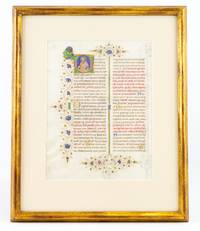
1441réf. ST19880Italy Ferrara 1441-48. Visible leaf: 245 x 187 mm. 9 5/8 x 7 3/8"; Frame: 380 x 315 mm. 15 x 12 1/4". Double column 30 lines in a very fine rounded gothic hand a few lines of text in the same hand but smaller. Mounted and in a simple but pleasing gold frame. Visible side with rubrics in red one-line initials in burnished gold or painted blue one two-line initial in burnished gold on a pale pink ground with white tracery a lovely illuminated bar between the columns with a central plant knot AND SPROUTING IN UPPER AND LOWER MARGINS CLUSTERS OF FLOWERS AND LEAVES IN VARIOUS COLORS AS WELL AS GOLD BEZANTS outer margin with swirling penwork studded with gilt bezants running the length of the column each penwork swirl enclosing a painted and gilt flower with ONE FIVE-LINE HISTORIATED INITIAL DEPICTING ST. PAUL HOLDING A SWORD AND BOOK the initial painted pink with green leaves and a blue and green acanthus extension on a gilt ground. ◆Not examined outside of frame but in very fine condition: vellum slightly wavy text in the bottom margin just a bit faded but by all appearances A VERY CLEAN BRIGHT LEAF SPARKLING WITH GILT. Executed with great skill and delicacy and in sensitive Italianate colors highlighted especially by spring green and pink the present leaf is from a manuscript intended for a powerful aristocrat. It comes from the celebrated Breviary illuminated for the chapel of the Marquises of Este rulers of Ferrara and Mantua a manuscript commissioned by Leonello d'Este duke of Ferrara from 1441-50. Because the d'Este family kept excellent records we have confidence that this manuscript was done for Leonello by Giorgio d'Alemagna Bartolomeo de Benincà Guglielmo Giraldi and Matteo de' Pasti see Toniolo "La Miniatura a Ferrara dal Tempo di Cosmè Tura all'eredità di Ercole de' Roberti" 1998 pp. 19-20 and 76-77. The leaves show subtle variations in the style of the illuminations a result of work done by a team of artists doing variations on a theme. At one time in a Spanish library the manuscript was brought to Britain during the Peninsular War and came to be owned by the Rolls family later Lords Llangattock of Monmouth in Wales from whom it takes its name. By the time the work reached Britain most of the miniatures had already been cut out. The Breviary sold at Christie's on 8 December 1958 lot #190 to Goodspeed's of Boston who broke it up. The intact first quire of 10 leaves was purchased by Philip Hofer and given to Harvard cf. Wieck "Late Medieval and Renaissance Illuminated Manuscripts" p. 130 and fig. 74 and individual leaves appeared in 1967 in the catalogues of Folio Fine Art "the quality of the leaves is extremely high" Maggs Brothers "of a very high quality" and Alan Thomas "of exquisite quality". The present example is especially desirable for the portrait of St. Paul who is depicted holding a sword and book and whose carefully molded features reflect the growing interest in realistic portraiture in Renaissance Italy. unknown
1441réf. ST19880Italy Ferrara 1441-48. Visible leaf: 245 x 187 mm. 9 5/8 x 7 3/8"; Frame: 380 x 315 mm. 15 x 12 1/4". Double column 30 lines in a very fine rounded gothic hand a few lines of text in the same hand but smaller. Mounted and in a simple but pleasing gold frame. Visible side with rubrics in red one-line initials in burnished gold or painted blue one two-line initial in burnished gold on a pale pink ground with white tracery a lovely illuminated bar between the columns with a central plant knot AND SPROUTING IN UPPER AND LOWER MARGINS CLUSTERS OF FLOWERS AND LEAVES IN VARIOUS COLORS AS WELL AS GOLD BEZANTS outer margin with swirling penwork studded with gilt bezants running the length of the column each penwork swirl enclosing a painted and gilt flower with ONE FIVE-LINE HISTORIATED INITIAL DEPICTING ST. PAUL HOLDING A SWORD AND BOOK the initial painted pink with green leaves and a blue and green acanthus extension on a gilt ground. ◆Not examined outside of frame but in very fine condition: vellum slightly wavy text in the bottom margin just a bit faded but by all appearances A VERY CLEAN BRIGHT LEAF SPARKLING WITH GILT. Executed with great skill and delicacy and in sensitive Italianate colors highlighted especially by spring green and pink the present leaf is from a manuscript intended for a powerful aristocrat. It comes from the celebrated Breviary illuminated for the chapel of the Marquises of Este rulers of Ferrara and Mantua a manuscript commissioned by Leonello d'Este duke of Ferrara from 1441-50. Because the d'Este family kept excellent records we have confidence that this manuscript was done for Leonello by Giorgio d'Alemagna Bartolomeo de Benincà Guglielmo Giraldi and Matteo de' Pasti see Toniolo "La Miniatura a Ferrara dal Tempo di Cosmè Tura all'eredità di Ercole de' Roberti" 1998 pp. 19-20 and 76-77. The leaves show subtle variations in the style of the illuminations a result of work done by a team of artists doing variations on a theme. At one time in a Spanish library the manuscript was brought to Britain during the Peninsular War and came to be owned by the Rolls family later Lords Llangattock of Monmouth in Wales from whom it takes its name. By the time the work reached Britain most of the miniatures had already been cut out. The Breviary sold at Christie's on 8 December 1958 lot #190 to Goodspeed's of Boston who broke it up. The intact first quire of 10 leaves was purchased by Philip Hofer and given to Harvard cf. Wieck "Late Medieval and Renaissance Illuminated Manuscripts" p. 130 and fig. 74 and individual leaves appeared in 1967 in the catalogues of Folio Fine Art "the quality of the leaves is extremely high" Maggs Brothers "of a very high quality" and Alan Thomas "of exquisite quality". The present example is especially desirable for the portrait of St. Paul who is depicted holding a sword and book and whose carefully molded features reflect the growing interest in realistic portraiture in Renaissance Italy. unknown books
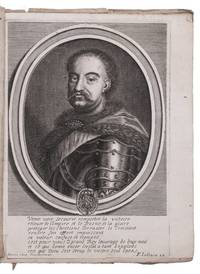
1687réf. 22346Bordeaux: Pierre Abegou 1687. Marbled wrappers. 4to. With an inserted latter engraved frontispiece portrait of the Polish King Jan III Sobieski engraved by F. Jollain. Very rare pamphlet published during the European wars against Turkey with a frontispiece portrait of the Holy Roman Emperor Léopold I 1640-1705 Archduke of Austria and King of Bohemia and Hungary. He succeeded his father Ferdinand III in 1657 and immediately had to fight against the Turks in the Great Turkish War also known as the War of the Holy League 1683-1699. This war finally led to the Peace of Karlowitz in 1699.This work gives directions and arrangements for ritual processions that the Turkish Sultan Suleiman III ordered after his victories during the so-called Holy Wars against the Christians. It is of great importance for our understanding of the problematic Turkish-European relations during the 17th century especially as an interesting example of counter-propaganda. One of Suleiman IIIs directions presented in the book for example ordered that one Christian slave or one Jew was to be killed every fifteen minutes as part of the procession. One can imagine the reaction of a Christian reading this text: although the crusades were over this could provoke war and violence between the parties.Wrappers worn and somewhat frayed a few worm holes but still in good condition.l Bibliotheca bibliographica Aureliana CX XVIIe siècle XIV Bordeaux 2176 not mentioning the portrait; cf. Desgraves Bordeaux 1580. Pierre Abegou, unknown
1561In 4° (234 x 163 mm), 3 parti in 1 volume.; [8], 358, [2] pagine; [28] carte; 47, [49] pagine, 64 carte geografiche a doppia pagina delle quali 27 raffiguranti il mondo antico e 37 raffiguranti il mondo moderno con la descrizione al retro, 12 xilografie e diagrammi nel testo, marche tipografiche (alcuni difetti.). Solida legatura coeva in pergamena con unghie (sguardie nuove).
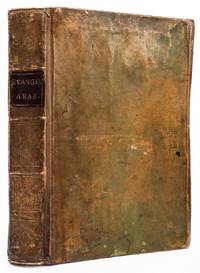
réf. 63499Romae Rome: Ex Typographia Medicea 1619. Folio 33.5x21 cm. pp. 4 9-462 2 with at recto the printer's letter repeated with the date of the 1591 original edition blank at verso. Contemporary green vellum spine with raised bands and gilt-decorated compartments red Morocco label marbled endpapers edges dyed red. Title printed in red and black with Medici's woodcut coat-of-arms printer's advice "Typographus lectori". With 149 text woodcuts by Leonardo Parassole c.1570-c.1630 after Antonio Tempesta 1555-1630 their monograms appearing on a number of the illustrations. The woodcuts are remarkable examples of Tempesta's work notable for their clarity of composition and their didactic narrative of the episodes depicted. Ex libris Luigi Bossi Milan 1758-1835 with his engraved heraldic bookplate to front pastedown along with T. Fenteman & Sons Leeds booksellers label to upper corner. Title-page lightly browned boards faded and discoloured some occasional light toning generally a very good copy printed on thick paper the woodcuts in strong impressions throughout. Rare 1619 reissue or of the original 1591 stock of the Arabic Medicean Gospels. The text lines are almost identical with those of the Arabic issue but now have an interlinear Latin version added which was prepared by Antonius Sionita. In 1584 the last year of the papacy of Gregory XIII who had constantly endeavoured to effect a union between the Church of Rome and the eastern Christians Cardinal Ferdinando de' Medici the brother and later the successor of the Grand Duke of Tuscany founded a printing press in Rome with a vast selection of oriental types cut by the French typographer Robert Granjon. Run by a versatile orientalist Giovan Battista Raimondi the press had various aims. One was to produce propaganda which would attract the eastern Christians to Roman Catholicism. Another was to corner the publishing market in an area where typography was prohibited and to make a financial profit from the sale in the east of books printed in Arabic. The third aim was to further European knowledge and to provide good editions of Arabic versions of certain standard non-religious texts. These included the writings of Avicenna al-Idrisi's geographical compendium al-Tusi's adaptation of Euclid's text on geometry and various works on Arabic grammar and syntax. The first major publication was the 1591 edition of the Gospels. This copy has an interlinear Latin translation but the work was also issued solely in Arabic. It contains 149 fine woodcut illustrations made by Leonardo Parasole mainly after designs by one of the best known Florentine artists of his day Antonio Tempesta who owed much of his fame to the frescoes he painted in the Vatican and in a number of Roman palaces. The woodcut in the Gospel of St Mark of the presentation of the head of John the Baptist to Salome Mark 6:28 by a man in Turkish dress reminds us of the common association between the great enemy of Christendom in the sixteenth century and the ancient heathens. The Arabic text is printed in Robert Granjon's famous large fount generally considered the first satisfactory Arabic printing type; as all early printed editions of the Arabic Gospels it is based on the Alexandrian Vulgate cf. Darlow/M. 1636. The Latin version is by Leonardo Sionita. The work begins with page 9 without a title-page or any preliminary matter at all: "the intended prefatory matter was apparently never published" Darlow/M. Darlow & Moule 1637 & 1643; Schnurrer Bibliotheca arabica 318; Brunet II 1122-23; Graesse II 531 Romae [Rome]: Ex Typographia Medicea, 1619. hardcover
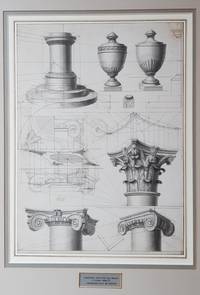
1775réf. 3622n.p. n.p. n.d. pre-1775 1775. Original drawing of classical capitals and urns with lines of perspective. Pen and brown and black ink pencil and grey wash on laid paper without visible watermark ruled border in brown ink. Sheet 302x218mm window mount 350x275mm. Very slight soiling and foxing but overall in excellent condition. A very good and rare example of a study for an important book on perspective. � In 1775 Thomas Malton the Elder 1726-1801 published A Compleat Treatise On Perspective In Theory and Practice; on the True Principles Of Dr. Brook Taylor. This drawing is a preliminary study for plate XXII from this book. Such drawings are rare; the last to appear before this one was sold at Christie's in 2011. Malton's book was important: the Royal Academy had been founded only seven years before and in its Instrument of Foundation there was a specific requirement that the art and science of perspective be taught. A Compleat Treatise was the first book to be published on the subject following the founding of the RA. Malton was perhaps making a bid for his book to be adopted as a sort of "set text" and many Royal Academicians were among the initial subscribers. It was from the outset regarded as one of the best modern books on the subject based as it was on the newest contemporary mathematical studies of perspective. The combination of science and art is captured beautifully in this drawing. Bad luck in business forced Malton to leave England to start afresh as an artist in Dublin where he died in 1801 but his influence extended well into the nineteenth century thanks to his son also called Thomas and to Turner's use of A Compleat Treatise in his own lectures at the Royal Academy where he was Professor of Perspective. Malton's book and drawings would almost certainly have been introduced to Turner by Malton's son in whose studio Turner worked as an apprentice in the 1780s and whom Turner regarded as his "my real master". Some of Turner's own drawings and sketches used in these lectures are held at the Tate and among them are two of the capitals from plate XXII of A Compleat Treatise whose origins can be traced back to this drawing by Thomas Malton the Elder. n.p. n.p. n.d. [pre-1775]
1801réf. 001380London: For the Author By J. Debrett 1801. 2 i-ii v-vi 1-134 plates 135-136 charts 137-144pp 6. Original boards later cloth reback with modern paper title label to spine later endpapers. Boards worn to edges and especially corners scrape to centre of lower board. Internally the front endpaper is creased light spotting to text but plates generally clean a few pages with marginal repairs one plate with marginal repairs with the repairs slightly offsetting on to the margin of another plate but generally quite bright and clean. With twenty coloured aquatint plates showing one hundred and thirty-seven coastal profiles and twenty-four tinted engraved charts on twelve pages by J. Stadler and J. Luffman after J.T. Serres. Housed in a calf backed slipcase with raised bands spine in six panels a leather title label to second panel with the remaining panels with repeated gilt tooling. J.ohn T.homas Serres was the elder son of the marine painter Dominic Serres and was "appointed draughtsman to the Admiralty being employed in making sketches of the harbours on the enemy's coast for which he had a vessel placed at his service and £100 a month. His two books are the outcome of work undertaken in this capacity: the 'Little Sea Torch' being a guide for coasting ships" Prideaux page 275. For Luffman see Worms and Baynton-Williams pages 417-419. NMM III:218; Goldsmiths 18296.1 and Abbey England 344. First Edition. Hardback. Good. Illus. by Stadler J. And Luffman J. After Serres J.T. Elephant Folio. For the Author By J. Debrett Hardcover
1842réf. 001525London: Longman Brown Green and Longmans 1842. 7 viii-xlviii 5 6-320pp. Later full morocco by Thomas or John Fazakerley of Liverpool with their name stamped to foot of front turn in raised bands spine in six panels title lettered directly to second panel and author to third remaining panels with double fillet border in gilt red morocco frame single fillet inner border with central heart tool and four dots upper cover with double fillet border in gilt red morocco frame with single fillet inner border hearts and dots surrounding another red morocco inner frame with central oval red morocco frame encompassing the title and author surrounded by fauna and flora in gilt lower cover with similar frames and heart and dot border single line to edges inner edges again with red morocco border and watered silk doublures and endpapers top and bottom edges gilt with gauffering fore edge gilt and gauffered with a triptych of small fore edge paintings visible of country scenes. Small repair to head of upper joint very slightly rubbed to extremities. Internally the text is lightly browned but clean. Illustrated throughout by several artists including John Bell C. W. Cope J. P. Knight Frank Stone C. Stonhouse and Thomas Webster. Book plate of Randall Moskovitz loosely laid in Weber notes that Randall Moskovitz owned other Fazakerley bindings. Thomas Fazakerley and his son John bookbinders in Liverpool were well known for their 'reliure de luxe' bindings. Weber notes that "a lot of fore-edge paintings came out of Fazakerley's bindery . Many of the Fazakerley bindings with fore-edge paintings are done on the flat or closed surface as here especially those bindings that feature a triptych . It might be added that the style of paintings does not clearly appear to differ. Carl J. Weber surmised there may have been several artists working for Fazakerley and this may be true though unproven" Weber 'Annotated Dictionary of Fore-Edge Painting Artists and Binders' page 141. First Edition. Hardback. Very Good. 8vo. Longman, Brown, Green, and Longmans hardcover
1937réf. 308243Corvinus Press 1937. No. 20 of 30 copies on J.B. Green unsized paper edition of 32. 1 vols. 4to. White linen t.e.g. others untrimmed. Fine. No. 20 of 30 copies on J.B. Green unsized paper edition of 32. 1 vols. 4to. Poet and diplomat James Elroy Flecker 1884-1915 burned bright and briefly. He joined the diplomatic service in 1908 trained for two years and was posted to Constantinople in 1910 "but in September a slight fever was diagnosed as tuberculosis and he returned to England to a sanatorium. He pronounced himself cured and . went back to Constantinople in March 1911 to be transferred in April to Beirut. Flecker was not a very efficient vice-consul" ODNB. His first formal collection of verse The Bridge of Fire was published in 1907 and The Golden Journey to Samarkand was published in 1913. He died in Switzerland aged thirty-one. Lawrence knew Flecker in Beirut before the war. "Flecker probably introduced Lawrence to contemporary poetry" wrote Wilson in his introduction to Minorities 1971. According to O'Brien An Essay on Flecker was "written in 1925 with the intention of publication in a periodical and did not appear in print until 1937". O'Brien A198; Ridler p. 58 #41 [Corvinus Press unknown
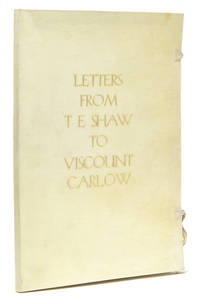
1936réf. 308242Corvinus Press 1936. No. 11 of 17 copies this copy on Milbourn hand made paper. 15 unnumbered leaves. 1 vols. 8vo. Full white vellum with yapp edges upper cover titled in gilt by Sangorski & Sutcliffe. Liddell Hart bookplate. No. 11 of 17 copies this copy on Milbourn hand made paper. 15 unnumbered leaves. 1 vols. 8vo. Inscribed to artist Eric Kennington: "EK from Carlow" Only 17 copies were printed on a variety of paper stocks for private distribution only. RARE. O'Brien A193 [Corvinus Press unknown
1937réf. 308243Corvinus Press 1937. No. 20 of 30 copies on J.B. Green unsized paper edition of 32. 1 vols. 4to. White linen t.e.g. others untrimmed. Fine. No. 20 of 30 copies on J.B. Green unsized paper edition of 32. 1 vols. 4to. Poet and diplomat James Elroy Flecker 1884-1915 burned bright and briefly. He joined the diplomatic service in 1908 trained for two years and was posted to Constantinople in 1910 "but in September a slight fever was diagnosed as tuberculosis and he returned to England to a sanatorium. He pronounced himself cured and . went back to Constantinople in March 1911 to be transferred in April to Beirut. Flecker was not a very efficient vice-consul" ODNB. His first formal collection of verse The Bridge of Fire was published in 1907 and The Golden Journey to Samarkand was published in 1913. He died in Switzerland aged thirty-one. Lawrence knew Flecker in Beirut before the war. "Flecker probably introduced Lawrence to contemporary poetry" wrote Wilson in his introduction to Minorities 1971. According to O'Brien An Essay on Flecker was "written in 1925 with the intention of publication in a periodical and did not appear in print until 1937". O'Brien A198; Ridler p. 58 #41 [Corvinus Press unknown books
1936réf. 308242Corvinus Press 1936. No. 11 of 17 copies this copy on Milbourn hand made paper. 15 unnumbered leaves. 1 vols. 8vo. Full white vellum with yapp edges upper cover titled in gilt by Sangorski & Sutcliffe. Liddell Hart bookplate. No. 11 of 17 copies this copy on Milbourn hand made paper. 15 unnumbered leaves. 1 vols. 8vo. Inscribed to artist Eric Kennington: "EK from Carlow" Only 17 copies were printed on a variety of paper stocks for private distribution only. RARE. O'Brien A193 [Corvinus Press unknown books
1682réf. 261Gibson1THE ANATOMY OF HUMANE BODIES EPITOMIZED. First Edition. Printed in 1682. Complete with all 13 plates. The Anatomy Of Humane Bodies Epitomized. Wherein All The Parts Of Man's Body With Their Actions And Uses Are Succinctly Described. Printed in 1682. This is the rare First Edition. This book is extremely difficult to find. First published anonymously in 1682 The Anatomy of Human Bodies Epitomiz'd was probably the most successful English anatomical textbook published to date – it was ultimately issued in eight editions. Illustrated with plates. ALL 13 PLATES ARE PRESENT. This book is complete. Title page imprimatur leaf containing all of the correct number of 13 engraved plates. The covers are original. The spine was rebacked in the mid 1800's. Original title page is exceptionally well preserved. Imprimatur leaf opposite the title page is still present. The first edition was printed in 1682 and is unobtainable. In very good condition. Binding with a lot of general wear. Heavy generalized abrasion wear to the original binding. Spine rebacked in the 1800's. Title page has the date handwritten. Internally exceptionally well preserved. Minor signs of use stains an underlining. In exceptional condition despite the age. Printed on quality rag paper. Paper is supple and well preserved despite the age. Printed on quality rag paper that can still be read without damaging the paper. This was one of the most important anatomical works of this era. Anatomy of Humane Bodies Printed in 1682 The Anatomy Of Humane Bodies Epitomized : Wherein All The Parts Of Man's Body With Their Actions And Uses Are Succinctly Described By Gibson Thomas London: Thomas Fletcher. Good. Full-Leather. Small 8vo First published anonymously in 1682 The Anatomy of Human Bodies Epitomiz'd was probably the most successful English anatomical textbook published to date – it was ultimately issued in eight editions. Gibson the Physician-General to the English army based his comprehensive text on Alexander Read's Manual of Anatomy. However the content was so extensively revised and supplemented Gibson claimed authorship. Gibson listed his principal sources some 33 titles by 27 authors which was an uncommon practice at the time. The Anatomy Of Humane Bodies Epitomized Original leather boards; nineteenth century re backed leather spine - Printed in 1682 by Gibson Thomas By a Fellow of the College of Physicians London Small octavo 7 3/4 by 4 3/4 inches 8 510 pages containing all of the correct number of 13 engraved plates; hardcover leather binding in original boards neatly re-backed in mid 19th century with raised bands title in gilt on spine inked name cleanly written on first fly leaf very good condition minor scuffing to base of spine minor wear to hinges hinges very strong. ESTC Nos. R 8370 & R188113 Wing 5672. Divided into six separate sections each with their own chapters: Complete in 6 books bound as one: I. "On the lowest Cavity called Abdomen" II. "Of the Breast" III. "Of the Head" IV. "Containing a description of the Veins Arteries and Nerves of the Limbs" V. "Containing a Treatise of all the Musceles of the Body" VI. "Of the Bones." This book measures 7 3/4 inches tall. This book will be well protected for shipping. Your signature will be required for delivery. 26.1 Thomas Fletcher
1968réf. 69275London: BOAC 1968. BEATLES The. O.A.C. In-Flight Menu. London: BOAC n.d.c.a 1968. An autographed in-flight menu from the British Overseas Airways Corporation BOAC. The front cover is signed in black ink by John Lennon and George Harrison. The Paul McCartney autograph is actually in John Lennon's hand and Ringo Starr's is in the hand of Neil Aspinall the Beatles' long time road manager and assistant. Octavo 11 1/4 x 7 1/2 inches; 286 x 190 mm. 8 pp. Full color wrappers. Some black ink transfer on the back cover probably from another signed copy being placed underneath it. A very good example of these autographs. The menu for the B.O.A.C. route from Hong Kong-London via Rangoon Delhi Beirut and Rome. This menu is possibly from April of 1968 when John Lennon and George Harrison left India after a two month stint studying Transcendental Meditation with Maharishi Mahesh Yogi at his ashram in Rishikesh where they stayed until 12 April. Ringo Starr and Paul McCartney left before George and John in March which would explain why their signatures are produced by other people's hands. This item was sold at Bonhams Auctions in 2022. According to Bonhams "this was a gift from a First Class B.O.A.C. stewardess." HBS 69275. $10000. BOAC unknown
1968réf. 69275London: BOAC 1968. BEATLES The. O.A.C. In-Flight Menu. London: BOAC n.d.c.a 1968. An autographed in-flight menu from the British Overseas Airways Corporation BOAC. The front cover is signed in black ink by John Lennon and George Harrison. The Paul McCartney autograph is actually in John Lennon's hand and Ringo Starr's is in the hand of Neil Aspinall the Beatles' long time road manager and assistant. Octavo 11 1/4 x 7 1/2 inches; 286 x 190 mm. 8 pp. Full color wrappers. Some black ink transfer on the back cover probably from another signed copy being placed underneath it. A very good example of these autographs. The menu for the B.O.A.C. route from Hong Kong-London via Rangoon Delhi Beirut and Rome. This menu is possibly from April of 1968 when John Lennon and George Harrison left India after a two month stint studying Transcendental Meditation with Maharishi Mahesh Yogi at his ashram in Rishikesh where they stayed until 12 April. Ringo Starr and Paul McCartney left before George and John in March which would explain why their signatures are produced by other people's hands. This item was sold at Bonhams Auctions in 2022. According to Bonhams "this was a gift from a First Class B.O.A.C. stewardess." HBS 69275. $10000. BOAC unknown books
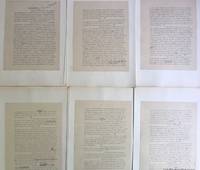
1907réf. 63141Princeton NJ 1907. 4to 28 cm. 10 pages typed rectos only approximately 2850 words each leaf mounted along the left edge to a larger heavier sheet each page double-spaced with 29 separate ink corrections deletions and additions by Cleveland in his characteristic hand 44 words added 19 deleted 20 typos of poor strikes corrected; in addition there are numerous editorial marking on each page "by Grover Cleveland" is written in pencil in another hand underneath the title on the first page and "corrected by Cleveland" is written in pencil in yet another hand at the upper corner of the first page. The longest correction or addition occurs in the final paragraph where Cleveland strikes through four words replacing them with twelve. Following publication the "Youth's Companion" the essay appeared in newspapers e.g. "The Daily Republican" Monongahela Pennsylvania 25 February 1908 under the title "Our People and Our Ex-Presidents." We found one other unsigned essay by Cleveland at auction also a 10-page typescript with holograph corrections "Woman's Mission and Woman's Clubs" sold at Christie's in 2002 $8000. Very good condition throughout. 9870. An essay on the relationship between the American people and their ex-presidents by the only man who was ex-president twice. It addresses the expectations and demands the people place on their former presidents the personal financial effects these may have and the failure of the country to provide any support for them. Noting thankfully his own personally secure estate he based this one and cites specific examples of financial distress among earlier presidents. That combined with his own observations gave him concern for future ex-presidents. "If in concluding this discussion a personal word is necessary or permissible in view of the fact that I am the only man now living who could at this time profit by the ideas I have advocated I hope my sincerity will not be questioned when I say that I have dealt with the subject without the least thought of personal interest or desire for personal advantage. I am not in need of aid from the public treasury. I hope and believe that I have provided for myself and those dependent upon me a comfortable maintenance within the limits of accustomed prudence and economy and that those to whom I owe the highest earthly duty will not want when I am gone. unknown
1907réf. 63141Princeton NJ 1907. 4to 28 cm. 10 pages typed rectos only approximately 2850 words each leaf mounted along the left edge to a larger heavier sheet each page double-spaced with 29 separate ink corrections deletions and additions by Cleveland in his characteristic hand 44 words added 19 deleted 20 typos of poor strikes corrected; in addition there are numerous editorial marking on each page "by Grover Cleveland" is written in pencil in another hand underneath the title on the first page and "corrected by Cleveland" is written in pencil in yet another hand at the upper corner of the first page. The longest correction or addition occurs in the final paragraph where Cleveland strikes through four words replacing them with twelve. Following publication the "Youth's Companion" the essay appeared in newspapers e.g. "The Daily Republican" Monongahela Pennsylvania 25 February 1908 under the title "Our People and Our Ex-Presidents." We found one other unsigned essay by Cleveland at auction also a 10-page typescript with holograph corrections "Woman's Mission and Woman's Clubs" sold at Christie's in 2002 $8000. Very good condition throughout. 9870. An essay on the relationship between the American people and their ex-presidents by the only man who was ex-president twice. It addresses the expectations and demands the people place on their former presidents the personal financial effects these may have and the failure of the country to provide any support for them. Noting thankfully his own personally secure estate he based this one and cites specific examples of financial distress among earlier presidents. That combined with his own observations gave him concern for future ex-presidents. "If in concluding this discussion a personal word is necessary or permissible in view of the fact that I am the only man now living who could at this time profit by the ideas I have advocated I hope my sincerity will not be questioned when I say that I have dealt with the subject without the least thought of personal interest or desire for personal advantage. I am not in need of aid from the public treasury. I hope and believe that I have provided for myself and those dependent upon me a comfortable maintenance within the limits of accustomed prudence and economy and that those to whom I owe the highest earthly duty will not want when I am gone. unknown books
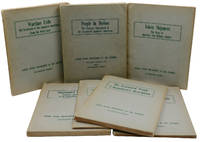
1946réf. 140941373Washington D.C.: U.S. Government Printing Office 1946. First Edition. Very Good. First edition first printings. Seven titles: Wartime Exile 167pp.; Impounded People 239pp.; The Relocation Program 105pp; Administrative Highlights of the WRA Program 82pp.; Token Shipment 104pp.; The Evacuated People 200pp.; People in Motion 270pp. Good. Wraps worn some soiled foxed chipped or stained; People in Motion has a long tear to the rear cover. Handwritten titles on spines which are also creased and chipped with loss to spine ends. Pages toned sometimes creased. Rare documents of the American government's official record of its WWII internment of people of Japanese descent one of the most controversial official programs in American history as reported by the War Relocation Authority. The WRA managed the forced confinement of people of Japanese ancestry in America during World War II as well as their return to civilian life with the commencement of the war. U.S. Government Printing Office unknown
1946réf. 140941373Washington D.C.: U.S. Government Printing Office 1946. First Edition. Very Good. First edition first printings. Seven titles: Wartime Exile 167pp.; Impounded People 239pp.; The Relocation Program 105pp; Administrative Highlights of the WRA Program 82pp.; Token Shipment 104pp.; The Evacuated People 200pp.; People in Motion 270pp. Good. Wraps worn some soiled foxed chipped or stained; People in Motion has a long tear to the rear cover. Handwritten titles on spines which are also creased and chipped with loss to spine ends. Pages toned sometimes creased. Rare documents of the American government's official record of its WWII internment of people of Japanese descent one of the most controversial official programs in American history as reported by the War Relocation Authority. The WRA managed the forced confinement of people of Japanese ancestry in America during World War II as well as their return to civilian life with the commencement of the war. U.S. Government Printing Office unknown books
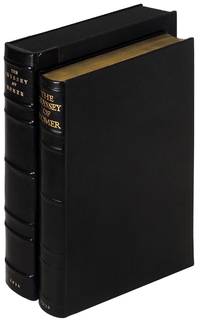
1932réf. 37494London England: Sir Emery Walker Wilfred Merton and Bruce Rogers 1932. Hardcover. Fine. Hardcover. One of 500 copies offered for sale of 530 copies of this monumental edition of Homer's Odyssey. The book was printed at the works of Emery Walker Ltd. under the supervision of Bruce Rogers. Walker and Rogers were two of the most influential figures in the world of books design and printing in the late 19th and early 20th century. Emery Walker 1851-1933 was an English engraver photographer and printer. Walker took an active role in many organizations that were at the heart of the Arts and Crafts movement including the Art Workers Guild the Society for the Protection of Ancient Buildings and the Arts and Crafts Exhibition Society. He also was a key figure in the world of design typography and printing in the teaching and dissemination of those crafts and in the cultural landscape of late nineteenth and early twentieth century Britain. Bruce Rogers 1870 - 1957 was an American typographer and type designer acclaimed by some as among the greatest book designers of the twentieth century. Rogers was known for his "allusive" typography rejecting modernism seldom using asymmetrical arrangements rarely using sans serif type faces often favoring faces such as Bell at the time known only as Brimmer Caslon his own Montaigne a Jensonian precursor to his masterpiece of type design Centaur. His books can fetch high sums at auction. Wikipedia In his book "Paragraphs on Printing" on pages 148-160 Rogers recounted the four year creation of the Odyssey from his asking Lawrence to translate the work to creating the perfect paper and making ink and the special gold and seven-step printing operation of the rondels. It was widely recognized that Rogers had created a masterpiece see Blumenthal Art of the Printed Book. Rogers had been inspired by his reading of "Seven Pillars of Wisdom" to persuade Lawrence to undertake this new translation. Lawrence began his work in 1928 and after some years produced a translation of the classic using his personal experience in the fog of war as well as faithfulness to the text as his guidelines. Bound in full black Niger morocco with gilt toes and lettering on the spine in gold. Printed on special paper made by J. Barcham Greem & Son in 16-point Monotype Centaur. There are 26 decorations of Homeric figures from Greek vase-paintings that are printed in black on roundels of gold leaf that at the head of each Book and on the title page. There is a two inch long ink line on the front free endpaper and the usual discoloration from the leather turns. Otherwise a fine copy. Accompanied by the prospectus. Not in original slipcase. Now housed in a very good fleece lined black clamshell box with a leather spine and black cloth covers. With a bit of scuffing and signs of handling. With an unusual Velcro closure. Measures 8.25 - 11.5 inches. Unpaginated 358 pages. PRI/092724. Sir Emery Walker, Wilfred Merton, and Bruce Rogers hardcover