Wassily KandinskyBiblio.com

1.065 resultados
ref. BN640587Lars Müller Publishers Lars Müller Publishers Gmbh. Hardcover. Point and Line to Plane Point and Line to Plane Wassily Kandinsky Lars Müller Publishers, Lars Müller Publishers Gmbh hardcover
ref. BN640333Wassily Kandinsky Wassily Kandinsky Wassily Kandinsky unknown
1967ref. BN658892Akademie der Künste 1967. 1967. Softcover. Will Grohmann. Wassily Kandinsky zum 100. Geburtstag. Will Grohmann. Wassily Kandinsky zum 100. Geburtstag. Will Grohmann: Wassily Kandinsky zum 100. Geburtstag Akademie der Künste paperback
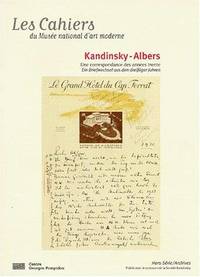
1998ref. BN656829Éditions du Centre Pompidou. 1998. 1998. Softcover. Kandinsky - Albers. Une correspondance des années trente / Ein Briefwechsel aus den dreißiger Jahren. Kandinsky - Albers. Une correspondance des années trente / Ein Briefwechsel aus den dreißiger Jahren. Wassily Kandinsky Éditions du Centre Pompidou. paperback
1998ref. BN660037DuMont. 1998. 1998. Hardcover. Über das Theater/Du théâtre/O teatre. Herausgegeben von Jessica Boissel unter Mitarbeit von Jean-Claude Marcadé. Über das Theater/Du théâtre/O teatre. Herausgegeben von Jessica Boissel unter Mitarbeit von Jean-Claude Marcadé. Wassily Kandinsky DuMont. hardcover
2008ref. BN655825Wienand Verlag. 2008. 2008. Hardcover. Kandinsky. Das druckgrafische Werk / Complete Prints. Herausgegeben von / edited by Helmut Friedel und Annegret Hoberg. Bearbeitet von Melanie Horst. Beiträge von / texts by Volker Adolphs Melanie Horst Christoph Schreier. Kandinsky. Das druckgrafische Werk / Complete Prints. Herausgegeben von / edited by Helmut Friedel und Annegret Hoberg. Bearbeitet von Melanie Horst. Beiträge von / texts by Volker Adolphs Melanie Horst Christoph Schreier. Kandinsky Wassily - Helmut Friedel und Annegret Hoberg Herausgeber Wienand Verlag. hardcover
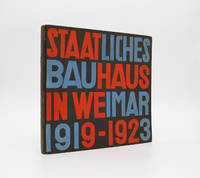
ref. 30686Weimar-München: Bauhausverlag. 1923. First edition first printing. First edition first printing. Publishers original black paper covered boards with titles in red and blue to the upper board. 24.8 x 25.4cm. 225pp. Text in German. Typographic cover design by Herbert Bayer. Page typography by László Moholy-Nagy. Illustrated profusely throughout with nine original full page colour lithographs by Herbert Bayer Marcel Breuer Ludwig Hirschfeld-Mack Peter Keler Wolfgang Molnar Kurt Schmidt Fritz Schleifer Rudolph Paris and László Moholy-Nagy with a further 11 full page colour plates and 147 black and white plates. Colour lithographs and cover printed by Dietsch & Bruckner Weimar. A genuinely very good copy the binding square and firm with mild rubbing to the extremities a few light marks to the boards the corners bumped. The contents with mild toning to the text pages not affecting the plates and few roughly cut edges to a couple of plates are otherwise clean throughout and free from inscriptions or stamps. All original lithographs are clean bright and free from tears. An attractive example of this notoriously fragile production which is very uncommon in this entirely original condition. The first book published by the legendary Bauhaus issued on the occasion of the landmark 1923 exhibition in Weimar. Following its reopening in 1919 the former state art school embarked on a radical new approach to art and education under the direction of Walter Gropius. The 1923 exhibition 'Art and Technology: A New Unity' offered the public its first comprehensive glimpse of the Bauhaus programme and its revolutionary synthesis of art craft architecture and design. The exhibition catalogue produced in a total edition of 2600 copies comprising 2000 in German 300 in English and 300 in Russian includes contributions by Gertrud Grunow Paul Klee Wassily Kandinsky László Moholy-Nagy and Oskar Schlemmer which offer rare insight into the Bauhaus's experimental teaching methods artistic philosophy and emerging theoretical principles. A landmark publication and an important primary document of the early Bauhaus that stands as a testament to the founding of one of the most influential institutions in twentieth-century art architecture and design. Further details and images for any of the items listed are available on request. All items are catalogued by humans. Lucius Books welcomes direct contact with our customers. Weimar-München: Bauhausverlag. 1923 hardcover
1976ref. 140655Wiesbaden: Hasso Ebeling Verlag 1976. Mit 4 Holzschnitten. Großformatige Hardcoverausgabe mit Schutzumschlag Leineneinband mit goldgeprägtem Rücken- und Deckeltitel 136 Seiten mit zahlreichen Abbildungen. Gutes Exemplar. Wiesbaden: Hasso Ebeling Verlag hardcover
ref. BN723477München Hirmer. Kandinsky - Aquarelle und andere Arbeiten auf Papier : anläßlich der Ausstellung Kandinsky - Watercolors and Other Works on Paper in der Royal Academy of Arts London 14. April - 4. Juli 1999. Frank Whitford. Catalogue ed.: Michael Foster. Aus dem Engl. übers. von Ingrid Hacker-Klier Kandinsky - Aquarelle und andere Arbeiten auf Papier : anläßlich der Ausstellung Kandinsky - Watercolors and Other Works on Paper in der Royal Academy of Arts London 14. April - 4. Juli 1999. Frank Whitford. Catalogue ed.: Michael Foster. Aus dem Engl. übers. von Ingrid Hacker-Klier Kandinsky Wassily Illustrator Frank Mitwirkender Whitford und Michael Herausgeber Foster München, Hirmer unknown
1998ref. BN751614Frankfurt am Main : Suhrkamp 1998. 1998. Gabriele Münter und Wassily Kandinsky : Biographie eines Paares. Suhrkamp Taschenbuch ; 2807 Gabriele Münter und Wassily Kandinsky : Biographie eines Paares. Suhrkamp Taschenbuch ; 2807 Kleine Gisela Gabriele Münter und Wassily Kandinsky Frankfurt am Main : Suhrkamp unknown
1994ref. BN51321München : Hirmer 1994. Erstauflage EA. Kunst München : Hirmer unknown
ref. BN86736München Berlin London New York: Prestel. Gesammelte Schriften 1889 - 1916 Farbensprache Kompositionslehre und andere unveröffentlichte Texte München, Berlin, London, New York: Prestel unknown
2008ref. BN100151State Institute of Art History Moscow - Libri di Arte 2008 2008. 2008. Kandinsky - Theories and Experiments from various years Kandinsky - Theories and Experiments from various years State Institute of Art History Moscow - Libri di Arte 2008 unknown
1979ref. 137841München: R. Piper & Co. Verlag 1979. 2. Auflage des Faksimile-Drucks der Luxus-Ausgabe München Piper 1912 erschienen 1979 in einer Auflage von 1000 Exemplaren zum 75jährigen Jubiläum des Piper Verlages. Großformatige Paperbackausgabe mit Originalschuber 140 Seiten mit zahlreichen Abbildungen und mehreren Bildtafeln nebst zwei Beilagen. Gutes Exemplar. München: R. Piper & Co. Verlag paperback
ref. 42431773-nnew. unknown
ref. DADAX3791382926New unknown
ref. DADAX0500092893New unknown
ref. DADAX050023891XNew unknown
ref. 32753109-nnew. unknown
ref. 43149494-nnew. unknown
2021ref. __0892075597Solomon R Guggenheim Museum 2021. Hardcover. New. 188 pages. 10.25x9.00x1.00 inches. Solomon R Guggenheim Museum hardcover
ref. 1406875767.Gpaperback. Good. Access codes and supplements are not guaranteed with used items. May be an ex-library book. paperback
1939ref. SPENDERS007080Atelier 17 Paris & New York. March 1939. First edition. Octavo. Spender's poem ''Fall of a City'' and Louis Aragon's translation ''Chute d'une Cit�'' together with nine engravings loose within wrappers. The engravings were printed by Atelier 17 and Henri Hecht and include one with aquatint and roulette one with soft ground etching one drypoint and one etching. All are on Montval handmade paper with deckle-edges. Held within the original plain board chemise but lacking the slipcase which had a Hayter titling-piece pasted onto the front. Stanley Hayter founded Atelier 17 in Paris in 1927 and it continues to this day in Rue Didot albeit with the name changed to Atelier Contrepoint. This production was his contribution to the raising of funds to help children orphaned by the Spanish Civil War.101 numbered copies were printed for sale and 12 for the contributors. This copy is unnumbered and hors commerce marked ''h.c'' on the limitation page. Each copy including this one was signed by Spender and Aragon at their respective contribution and by each artist in the lower margin of the etched sheet.Fine in custom burgundy morocco box with ''FRATERNITY'' in gilt on the lid. Very scarce with all nine loose etchings as most sets have been broken up for piecemeal sale. Atelier 17, Paris & New York. March, unknown
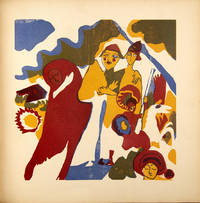
ref. 115567Munich R. Piper & Co. 1913. . First edition one of 300 copies signed by the artist and numbered in ink on the justification; square 4to 28.5 x 28 cm; illustrated with 56 woodcuts 12 in colour and 44 in black text and illustrations on Holland Van Gelder cream laid paper some scattered spotting; publisher's purple cloth linen over red paper covered boards top and bottom of spine repaired corners repaired gold design to upper cover later morocco backed chemise and slipcase a good copy. 'The range of Kandinsky's work is seen here from cuts in his early style reminiscent of folk art and Jugendstil to his non-objective designs which have been so important in 20th-century art. Arp has pointed out that the sonorous quality of Kandinsky's poetry in Klänge was likewise influential in modern literature and was recited by the Dadaists in the Cabaret Voltaire in Zurich' The Artist and The Book 1860-1960. 'Between the time he created extraordinary hand-coloured woodcuts of medieval ladies in 1903 and 1913 Kandinsky formed Der Blaue Reiter The Blue Rider group with Franz Marc and wrote Concerning the Spiritual in Art. The blue rider was Saint George a favourite of the Russians. In this pivotal book which includes some of Kandinsky's earliest abstract compositions Saint George and other knights on horseback are shown searching magic mountains for truth. Munich, R. Piper & Co., 1913. hardcover
1912ref. 62248München Piper & Co 1912. Small 4to. Original illustrated full cloth stating Dritte Auflage - i.e. third issue. Binding brownspotted and with tear to lower capital. Internally a bit of occasional brownspotting. Owner's signature to title-page Fjeltofte. 8 104 pp. 8 plates 3 unnumbered leaves of tables Tabelle I-III advertisement leaf. Illustrated with original woodcuts in the text 10 in all. The scarce first edition first printing of Kandinsky’s landmark theoretical work of art ”A seminal text in the history of modern art” Guggenheim curiously bound in the third issue binding. The first issue is easily distinguishable from the second and third that also appeared in 1912 as they are both expanded and have 124 pp. whereas the first has 104. The present copy has small remains of stitching towards the inner margins so perhaps someone had this first issue printing inserted into the third issue binding which is sturdy as opposed to the wrappers of the first issue. “In Concerning the Spiritual in Art Wassily Kandinsky one of the most famous abstract painters of all time urges the reader to free themselves from art's traditional bonds to material reality. In this radical theoretical work he calls for a spiritual revolution in painting arguing that artists much like musicians should be allowed to express their own inner lives in abstract non-material terms. Investigating form and colour spirituality and tradition Kandinsky explores art's resonance with the soul its purpose and nature and its power to inspire us to stir our emotions and to help us see beyond the limits of our world. A significant contribution to the understanding of non-objectivism in art this book serves as an important landmark in modern art history and is necessary reading for every artist and art-lover.” From the Penguin Classics edition. “In this remarkable book anticipating “the spiritual turning-point” Kandinsky reflects on his understanding of progress in this direction. This is not a process that would happen automatically. It requires a lot of work and implies a great responsibility of both artist and viewer. The task of the artist is to find “the principle of the innermost necessity” that he or she can use through expressive means to achieve the goal “vibration of the human soul.” Using captivating analogies Kandinsky dwells at length on the artistic means: the psychology of color the compositional interrelation of forms etc. However the main goal of an artist still remains to find that very innermost necessity” that is based on the spiritual foundations of the individual. In his or her turn the work of the viewer is to find within him- or herself the purity of perception which at this level does not relate to the beauty of nature. The ideal imitation of nature as the summit point of artistic mastery has remained in the past. The impressions of impressionists the emotions of expressionists the experiments of cubists - all these stages have long been passed and now the task of the viewer is to see the beauty of pure color and pure shape. Kandinsky anticipates the emergence of abstract art as the purest form of influence on the human soul and views the future optimistically foretelling the upcoming emergences of the epoch of great spirituality.” from Sadler’s English translation hardcover