Gessner. -Livre Rare Book

10 959 résultats
1967réf. 244DBZürich, Orell Füssli, (1967). 4°. 234 S. Mit zahlr. Illustr. nach alten Vorlagen. Illustr. Orig.-Pappband (bestossen, Rücken etwas angestaubt).
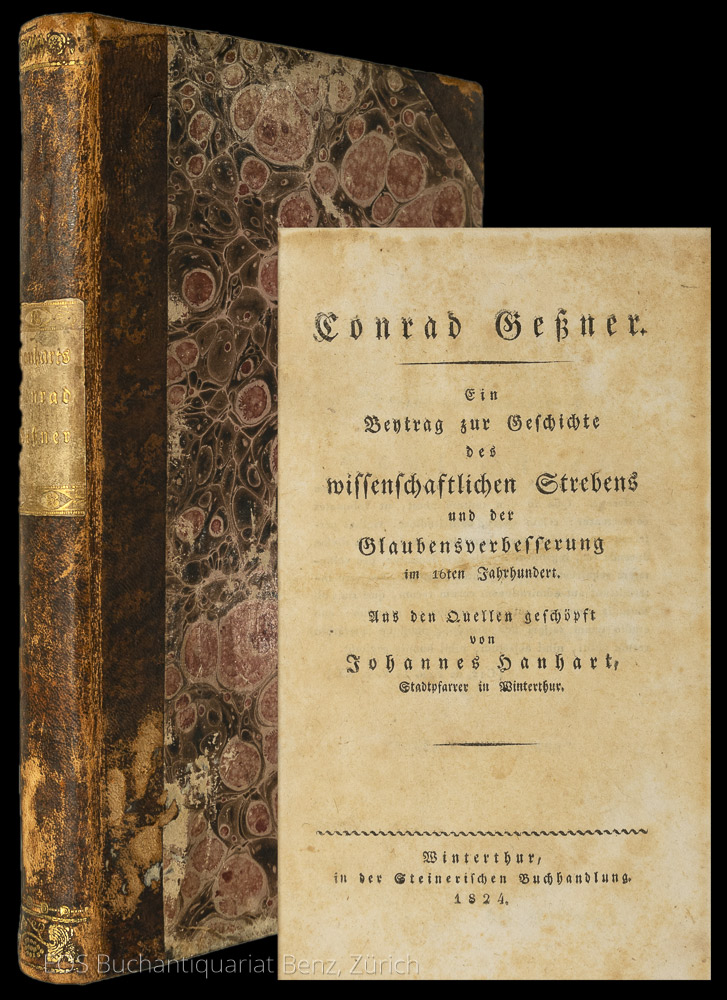
1824réf. 7606CBWinterthur, in der Steinerischen Buchhandlung, 1824. 8°. XX, 355 S., (1) Bl. (Faks.-Handschr.). Halblederband der Zeit mit Rückenschild und Rückenvergoldung. + Wichtig: Für unsere Kunden in der EU erfolgt der Versand alle 14 Tage verzollt ab Deutschland / Postbank-Konto in Deutschland vorhanden +, 7606CB
1824réf. 7606CBWinterthur, in der Steinerischen Buchhandlung, 1824. 8°. XX, 355 S., (1) Bl. (Faks.-Handschr.). Halblederband der Zeit mit Rückenschild und Rückenvergoldung.
1908réf. 5643Essex House Press Norman Chapel Gloucestershire 1908. HBNODJ October 1908 1st limited edition 250 copies #143/250 Thin Minor CoveR rub & wear primarily around edgesCover is 1/4 Linen Uncut VG- interior Book Blank Endpapers have BRown Stain Minor Fox interior VG NODJ. First Edition. Hard Cover. Essex House Press, Norman Chapel, Gloucestershire hardcover
réf. 57184 superbes planches imprimées par Aubert pour Pannier. Paris Milieu XIXè 31,5 x 23,5
réf. 20634476Ure Smith Sydney 1957 . 27.0 x 18.0cms 192pp 5 b/w & 1 spot coloured illusts very good hardback no dustwrapper; no 187 of 200 numbered copies; both author's and illustrator's signatures This is a lyric praise for the garden at Kepdowie which we understand was in Wahroonga on Sydney's North Shore. Ure Smith Sydney 1957 hardcover
1709réf. 703535Frankfurt, Johann David Zunner, 1709. 6 nnr. Blätter, 469, 216, 850 Seiten, 22 nnr. Blätter. Leder der Zeit auf 4 Bünden mit Rückenschild und Resten reicher Rückenvergoldung. Kapitale minimal beschädigt. Hinteres Außengelenk etwas beschädigt. Sauberes Exemplar.
réf. 25127Conspiracy called: the frying pan Charles Joseph Traviès de Villers, dit Traviès (1804-1859). Caricature de presse. "Conspiration dite : de la poële à frire". Planche parue dans "La Caricature" du 2 janvier 1834. Lithographie.
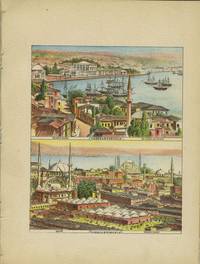
1886réf. 278361886. Print. Otherwise very good condition. Multiple views in Constantinople in chromolithographs entitled Bridge of Galata Cemetery Street in Pera Sultan's Palaces Turkish Scissors Grinder Howling Dervish. Color chromolithographs. 6 plates 8 x 10.5" some marks in margins. unknown
2013réf. 1670Istanbul: Demirören 2013. Hardover. New. 31x41 cm. In English. Cloth bdg. In publisher's special slip case. B/w and colour ills. Linen binding on cardboard with gold foil logo printing; color printing on fancy paper; magnetic fancy paper tassel box on cardboard; special plush ribbon and bag additions. Limited edition. Thomas Allom'un 1838'de Londra'da yayınlanan eşsiz eserinin tıpkıbasımı gerçekleştirildi. Kitap elle renklendirilmiş 97 adet Türkiye gravürü ve İstanbul'un çeşitli görünümlerini içeriyor. Ayrıca Bursa Manisa İzmir Efes Bergama ve Pamukkale gibi tarihi antik kentlerin gravürlerine de yer veriliyor. Kitabın sayfalarını çevirirken binalar manzaralar ve dönemin sosyal hayatına dair kesitler göreceksiniz. Bu kitap 19. yüzyıl seyahat edebiyatının temel örneklerinden biri olarak kabul edilirken Osmanlı tarihçileri toplum bilimcileri ve şarkiyatçılar için önemli bir kaynak ve çalışma alanı sunuyor. Demirören hardcover
161 x 218 mm. A street merchant with a lady client and a child, showing the Hagia Sophia in the background. Pinel de Grandchamp, a student of Dubois and Picot, is counted among the foremost oriental painters of the 19th century. - Mounted on backing cardboard (old edge flaws). Thieme/Becker XXVII, 56. Bénézit VIII, 344.
1924- Lucien Vogel éditeur, Paris 1924-1925, 18x24cm, une feuille. - Original color print, printed on vergé paper, signed in the plate. An original print used to illustrate the Gazette du bon ton, one of the most attractive and influential 20th century fashion magazines, featuring the talents of French artists and other contributors from the burgeoning Art Deco movement. A celebrated fashion magazine established in 1912 by Lucien Vogel, La Gazette du bon ton appeared until 1925, with a hiatus from 1915 to 1920 due to the war (the editor-in-chief having been called up for service). It consisted of 69 issues printed in only 2,000 copies each and notably illustrated with 573 color plates and 148 sketches of the models of the great designers. Right from the start, this sumptuous publication "was aimed at bibliophiles and fashionable society," (Françoise Tétart-Vittu, "La Gazette du bon ton", in Dictionnaire de la mode, 2016) and was printed on fine vergé paper using a type cut specially for the magazine by Georges Peignot, known as Cochin, later used (in 1946) by Christian Dior. The prints were made using stencils, heightened in colors, some highlighted in gold or palladium. The story began in 1912, when Lucien Vogel, a man of the world involved in fashion (he had already been part of the fashion magazine Femina) decided, with his wife Cosette de Brunhoff - the sister of Jean, creator of Babar - to set up the Gazette du bon ton, subtitled at the time: "Art, fashion, frivolities." Georges Charensol noted the reasoning of the editor-in-chief: "'In 1910,' he observed, 'there was no really artistic fashion magazine, nothing representative of the spirit of the time. My dream was therefore to make a luxury magazine with truly modern artists...I was assured of success, because when it comes to fashion, no country on earth can compete with France.'" ("Un grand éditeur d'art. Lucien Vogel" in Les Nouvelles littéraires, no. 133, May 1925). The magazine was immediately successful, not only in France but also in the United States and Latin America. At first, Vogel put together a team of seven artists: André-Édouard Marty and Pierre Brissaud, followed by Georges Lepape and Dammicourt, as well as eventually his friends from school and the School of Fine Arts, like George Barbier, Bernard Boutet de Monvel and Charles Martin. Other talented people soon came flocking to join the team: Guy Arnoux, Léon Bakst, Benito, Boutet de Monvel, Umberto Brunelleschi, Chas Laborde, Jean-Gabriel Domergue, Raoul Dufy, Édouard Halouze, Alexandre Iacovleff, Jean Émile Laboureur, Charles Loupot, Chalres Martin, Maggie Salcedo. These artist, mostly unknown when Lucien Vogel sought them out, later became emblematic and sought-after artistic figures. It was also they who worked on the advertising drawings for the Gazette. The plates put the spotlight on, and celebrate, dresses by seven designers of the age: Lanvin, Doeuillet, Paquin, Poiret, Worth, Vionnet and Doucet. The designers provided exclusive models for each issue. Nonetheless, some of the illustrations are not based on real models, but simply on the illustrator's conception of the fashion of the day. The Gazette du bon ton was an important step in the history of fashion. Combining aesthetic demands with the physical whole, it brought together - for the first time - the great talents of the artistic, literary, and fashion worlds; and imposed, through this alchemy, a completely new image of women: slender, independent and daring, which was shared by the new generation of designers, including Coco Chanel, Jean Patou, Marcel Rochas, and so on... Taken over in 1920 by Condé Montrose Nast, the Gazette du bon ton was an important influence on the new layout and aesthetics of that "little dying paper" that Nast had bought a few years earlier: Vogue. [FRENCH VERSION FOLLOWS] Estampe originale en couleur, tirée sur papier vergé, signée en bas à droite de la planche. Une petite déchirure sans manque en ma
1711réf. 703550Dresden und Leipzig, J.Ch. Zimmermann, 1711. Gr.-4°. 9 nnr. Bl., 1332 Spalten, 52 nnr. Blätter. Kupferfrontispiz. Pergament der Zeit auf 5 Bünden. Handschriftlicher Rückentitel. Einband gering fleckig. Rückentitel etwas verblaßt. Pergament am Vordergelenk beschädigt. Titelblatt rückseitig gestempelt und gebräunt und schwacher Abklatsch dieser Bräunung auch auf dem folgenden Blatt. Geringer Wasserschaden am unteren Rand der letzten Blätter. Sonst innen sauber und ohne nennenswerte Altersspuren.
1746réf. 703536Leipzig, John Grosse's Heir, 1746. 21 x 13,5 x 5 cm. 784, 239 Seiten, 1 (weißes) Blatt. Leder der Zeit auf 5 gehöhten Bünden mit Rückenschild und reicher Rückenvergoldung. Rotschnitt. Einband gering berieben.
1921- Lucien Vogel éditeur, Paris 1921, 18x24cm, une feuille. - Original color print, printed on vergé paper, signed in the plate. An original print used to illustrate the Gazette du bon ton, one of the most attractive and influential 20th century fashion magazines, featuring the talents of French artists and other contributors from the burgeoning Art Deco movement. A celebrated fashion magazine established in 1912 by Lucien Vogel, La Gazette du bon ton appeared until 1925, with a hiatus from 1915 to 1920 due to the war (the editor-in-chief having been called up for service). It consisted of 69 issues printed in only 2,000 copies each and notably illustrated with 573 color plates and 148 sketches of the models of the great designers. Right from the start, this sumptuous publication "was aimed at bibliophiles and fashionable society," (Françoise Tétart-Vittu, "La Gazette du bon ton", in Dictionnaire de la mode, 2016) and was printed on fine vergé paper using a type cut specially for the magazine by Georges Peignot, known as Cochin, later used (in 1946) by Christian Dior. The prints were made using stencils, heightened in colors, some highlighted in gold or palladium. The story began in 1912, when Lucien Vogel, a man of the world involved in fashion (he had already been part of the fashion magazine Femina) decided, with his wife Cosette de Brunhoff - the sister of Jean, creator of Babar - to set up the Gazette du bon ton, subtitled at the time: "Art, fashion, frivolities." Georges Charensol noted the reasoning of the editor-in-chief: "'In 1910,' he observed, 'there was no really artistic fashion magazine, nothing representative of the spirit of the time. My dream was therefore to make a luxury magazine with truly modern artists...I was assured of success, because when it comes to fashion, no country on earth can compete with France.'" ("Un grand éditeur d'art. Lucien Vogel" in Les Nouvelles littéraires, no. 133, May 1925). The magazine was immediately successful, not only in France but also in the United States and Latin America. At first, Vogel put together a team of seven artists: André-Édouard Marty and Pierre Brissaud, followed by Georges Lepape and Dammicourt, as well as eventually his friends from school and the School of Fine Arts, like George Barbier, Bernard Boutet de Monvel and Charles Martin. Other talented people soon came flocking to join the team: Guy Arnoux, Léon Bakst, Benito, Boutet de Monvel, Umberto Brunelleschi, Chas Laborde, Jean-Gabriel Domergue, Raoul Dufy, Édouard Halouze, Alexandre Iacovleff, Jean Émile Laboureur, Charles Loupot, Chalres Martin, Maggie Salcedo. These artist, mostly unknown when Lucien Vogel sought them out, later became emblematic and sought-after artistic figures. It was also they who worked on the advertising drawings for the Gazette. The plates put the spotlight on, and celebrate, dresses by seven designers of the age: Lanvin, Doeuillet, Paquin, Poiret, Worth, Vionnet and Doucet. The designers provided exclusive models for each issue. Nonetheless, some of the illustrations are not based on real models, but simply on the illustrator's conception of the fashion of the day. The Gazette du bon ton was an important step in the history of fashion. Combining aesthetic demands with the physical whole, it brought together - for the first time - the great talents of the artistic, literary, and fashion worlds; and imposed, through this alchemy, a completely new image of women: slender, independent and daring, which was shared by the new generation of designers, including Coco Chanel, Jean Patou, Marcel Rochas, and so on... Taken over in 1920 by Condé Montrose Nast, the Gazette du bon ton was an important influence on the new layout and aesthetics of that "little dying paper" that Nast had bought a few years earlier: Vogue. [FRENCH VERSION FOLLOWS] Estampe originale en couleur, tirée sur papier vergé, signée en bas à droite dans la planche. La Gazette du bon ton, l'une des plus bel
1921réf. 54944Lucien Vogel éditeur | Paris 1921 | 18 x 24 cm | une feuille
1976SIGNED BY EDITOR. Contains color and b&w plates. 315x265 mm. 100+32 pages. Hardcover with dust-jacket. Jacket yellowing. Cover slightly curved. Cover corners rubbed. Spine slightly worn. Text block edges slightly age-stained. Pages yellowing. Else in good condition.
1977Ex-library book with the usual stamps and markings. 108 pages. Re-bound by library in bright red buckram cloth. Oblong: 10 3/4"w x 8 1/2"h. Catalogue of 72 drawings, all full page in b&w by Pierre Alechinsky, James brooks, Jim Dine, Russell Drysdale, Helen Frankenthaler, Franco Gentilini, David Hockney, Patrick heron, Oskar Kokoschka, Willem de Kooning, Henri Michaux, Ben Nicholson, Victor Pasmore, Lloyd Rees, Bridget Riley, Jack Smith Antoni Tapies, and many others.
1883réf. 21564Paris, Lemonnyer, 1883; 2 tomes in-4° (320 mm), demi-maroquin à coins lavallière, dos à nerfs, titre doré, tête dorée, non rogné (Madelain); LXIII, [1bl.], 288 pp.; LXIV-LXIX, 418 pp. et en tout cent estampes hors-texte gravées à l’eau forte, les vignettes sont en deux états dont un en bistre.
réf. 1094Paris ; id. : Adolphe Delahays ; [s.n.], 1858 ; 1858. UN PROTOTYPE D'ÉDITION ILLUSTRÉE PAR LES SUITES GRAVÉES ANCIENNES
1765réf. 15391765 Couverture rigide. A Paris, chez J. Merlin, 1765. 3 volumes in-12 (17,5 x 10,5 cm), reliure plein veau marbré, dos lisse orné de fleurons dorés, triple filet doré d'encadrement sur les plats, filet doré sur les coupes, tranches marbrées, coins émoussés, coiffes arasées, manques au dos et aux charnières. Tome I : Feuillet de faux titre non chiffré, faux-titre, portrait frontispice, titre gravé, xvj pages, feuillet de table non chiffré, 345 pages, 9 figures ; Tome II : feuillet de faux-titre non chiffré, titre gravé, feuillet de table non chiffré, 376 pages, 9 figures ; Tome III : feuillet de titre non chiffré, titre gravé, feuillet de table non chiffré, 312 pages, 5 figures. Rousseurs éparses et quelques marques de brûlures à la cire, feuillets bruni. En tout, comme l'indique Cohen (686), un portrait par Cochin, gravé par Saint-Aubin, un titre par Gravelot, gravé par Duclos, répété dans chaque volume, 23 figures par Gravelot, gravées par Baquoy, Legrand, Le Mire, Le Veau, de Longueil, Pasquier, Rousseau et Voyez. Exemplaire du 2ème tirage sans les errata. Les "Contes moraux" de Marmontel sont une série de récits courts qui explorent les mœurs et les valeurs de la société du XVIIIe siècle. Chaque conte met en scène des personnages de différentes classes sociales confrontés à des dilemmes moraux ou à des situations révélatrices de leur caractère. L'auteur utilise l'ironie et l'humour pour critiquer les vices et les travers de son époque tout en proposant des leçons de vertu. À sa parution, les "Contes moraux" ont connu un grand succès et ont contribué à la renommée de Marmontel. Ils ont influencé de nombreux écrivains et penseurs de l'époque des Lumières en France et ailleurs. Les contes sont encore étudiés aujourd'hui pour leur valeur littéraire et leur pertinence morale. Malgré les défauts de la reliure, exemplaire intéressant avec un texte en assez bon état et un bon état général des planches.
1965réf. 9900038062Kansas City MO: Excalibur Press 1965. Hardcover. etchings. Unpaginated. Large 4to. Small rubber stamp of Carnegie Public Library to copyright page and evidence of pocket removal from rear free endpaper. Slight trace of accession number to base of spine. No other such markings. Contents clean and tight. Corners of boards bumped. Slight wear to edges of boards. Else in good plus to very good condition. Each plate numbered and signed by the artist with limitation of 50 noted in pencil. This book is one of only 50 copies produced. The text was set in Bulmer and printed on a Chandler and Price hand press on Rives lightweight; etchings are intaglio: inked wiped and printed by hand on a Charles Brand etcher's press using dampened Rives heavyweight. Binding is sewn on cords and covered with Fabriano and raw linen. Headbands hand-sewn. Printed and bound by Louise A. Moss Excalibur Press in 1965. Excalibur Press hardcover
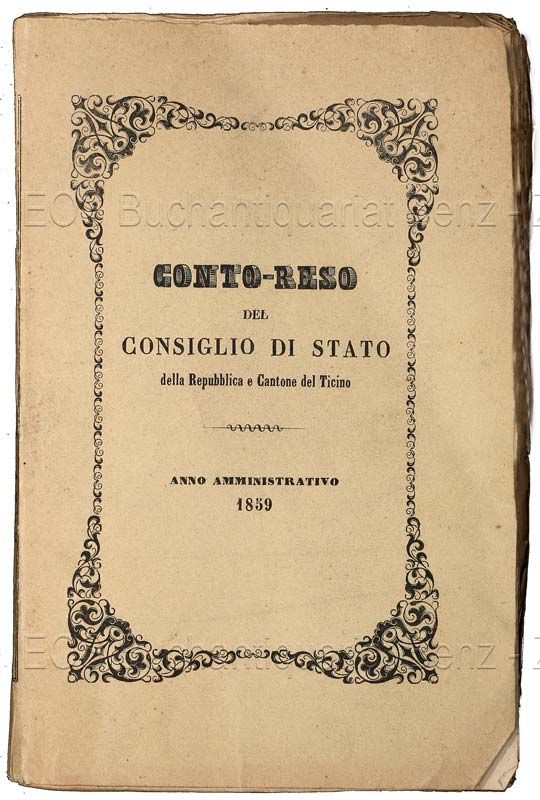
1860réf. 2590CBLocarno, Tip. e Lit. Cantonale, 1860. 8°. 276 S. Mit dazwischen gebundenen gef. Tabellen. Broschur der Zeit. + Wichtig: Für unsere Kunden in der EU erfolgt der Versand alle 14 Tage verzollt ab Deutschland / Postbank-Konto in Deutschland vorhanden +, Umschlag
1860réf. 2590CBLocarno, Tip. e Lit. Cantonale, 1860. 8°. 276 S. Mit dazwischen gebundenen gef. Tabellen. Broschur der Zeit.
1835réf. 41782Paris, Brioude et Lemercier, 1835. Grande lithographie en 8 planches repliées (dimensions dépliée : 17,5 x 348 cm), cartonnage de deuil avec titre en lettres argentées, conservé dans la boîte de l'éditeur.