10 975 résultats
1850réf. 4339BB(Zürich), um 1850. Quer-8°. Mit 48 (von 50) Aquatinta-Tafeln von J. R. Dikenmann. Gold- und blindgeprägter Leinenband der Zeit (neu aufgebunden).
1860réf. 4885DBDarmstadt, Gustave George Lange, (um 1860). Quer-4°. 76 Stahstichtafel nach Ludwig Rohbock gestochen von div. Stechern. Orig.-Leinenband. + Wichtig: Für unsere Kunden in der EU erfolgt der Versand alle 14 Tage verzollt ab Deutschland / Postbank-Konto in Deutschland vorhanden +, 4885DB|4885DB_2|4885DB_3|4885DB_4 [4 Warenabbildungen]
1860réf. 4885DBDarmstadt, Gustave George Lange, (um 1860). Quer-4°. 76 Stahstichtafel nach Ludwig Rohbock gestochen von div. Stechern. Orig.-Leinenband.
1920réf. 6622CBSamedan, Engadin Press, o. J. (um 1920). 8°. 48 S. Mit 1 gef. Karte und 1 gef. Plan. sowie 12 ganzs. Abb. nach Fotografien. Orig.-Heft mit farb. Umschlag mit Klammern-Heftung. + Wichtig: Für unsere Kunden in der EU erfolgt der Versand alle 14 Tage verzollt ab Deutschland / Postbank-Konto in Deutschland vorhanden +, Abb.
1920réf. 6622CBSamedan, Engadin Press, o. J. (um 1920). 8°. 48 S. Mit 1 gef. Karte und 1 gef. Plan. sowie 12 ganzs. Abb. nach Fotografien. Orig.-Heft mit farb. Umschlag mit Klammern-Heftung.
réf. 17771de la suite SIX MARINES, LITHOGRAPHIE Curtis 66 iii. Image: 305 x 345mmMargins: 405 x 317mm
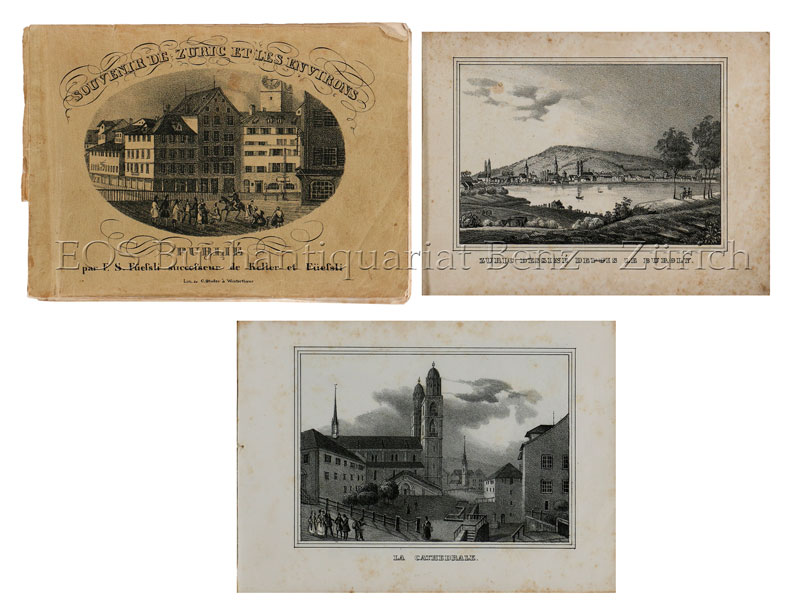
1835réf. 30326ABZurich, F.S. Füssli successeur de Keller et Füessli, (1835). Quer-8°. Mit 24 lithogr. Tafeln. Illustr. Orig.-Broschur. + Wichtig: Für unsere Kunden in der EU erfolgt der Versand alle 14 Tage verzollt ab Deutschland / Postbank-Konto in Deutschland vorhanden +, bild
1835réf. 30326ABZurich, F. S. Füssli successeur de Keller et Füessli, (1835). Quer-8°. Mit 24 lithogr. Tafeln. Illustr. Orig.-Broschur.
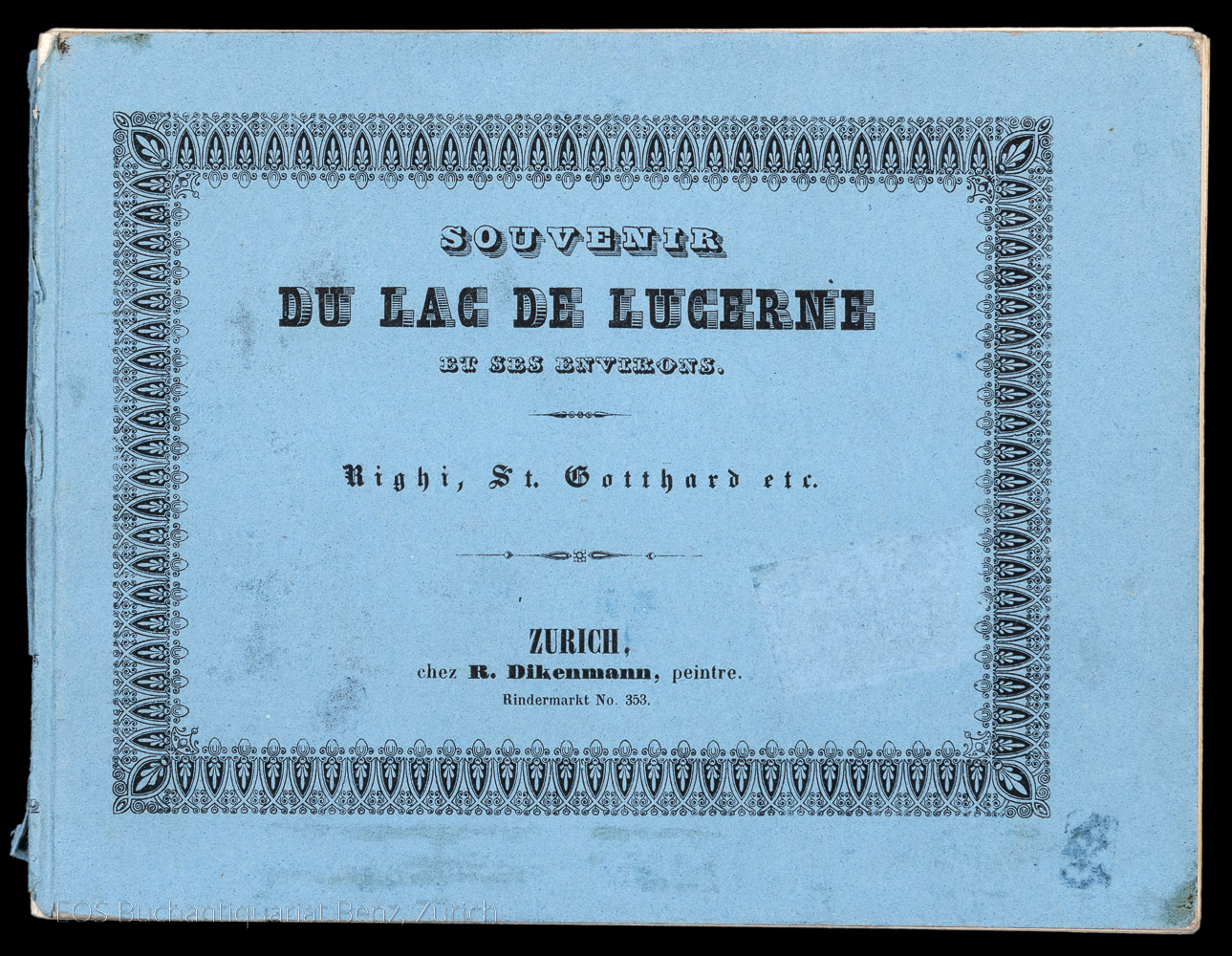
1850réf. 7544CBZürich, R. Dikenmann, um 1850. Quer-8°. Mit 16 Aquatinta-Tafeln von Rudolf Dikenmann. Orig.-Broschur. + Wichtig: Für unsere Kunden in der EU erfolgt der Versand alle 14 Tage verzollt ab Deutschland / Postbank-Konto in Deutschland vorhanden +, 7544CB|7544CB_2|7544CB_3 [3 Warenabbildungen]
1850réf. 7544CBZürich, R. Dikenmann, um 1850. Quer-8°. Mit 16 Aquatinta-Tafeln von Rudolf Dikenmann. Orig.-Broschur.
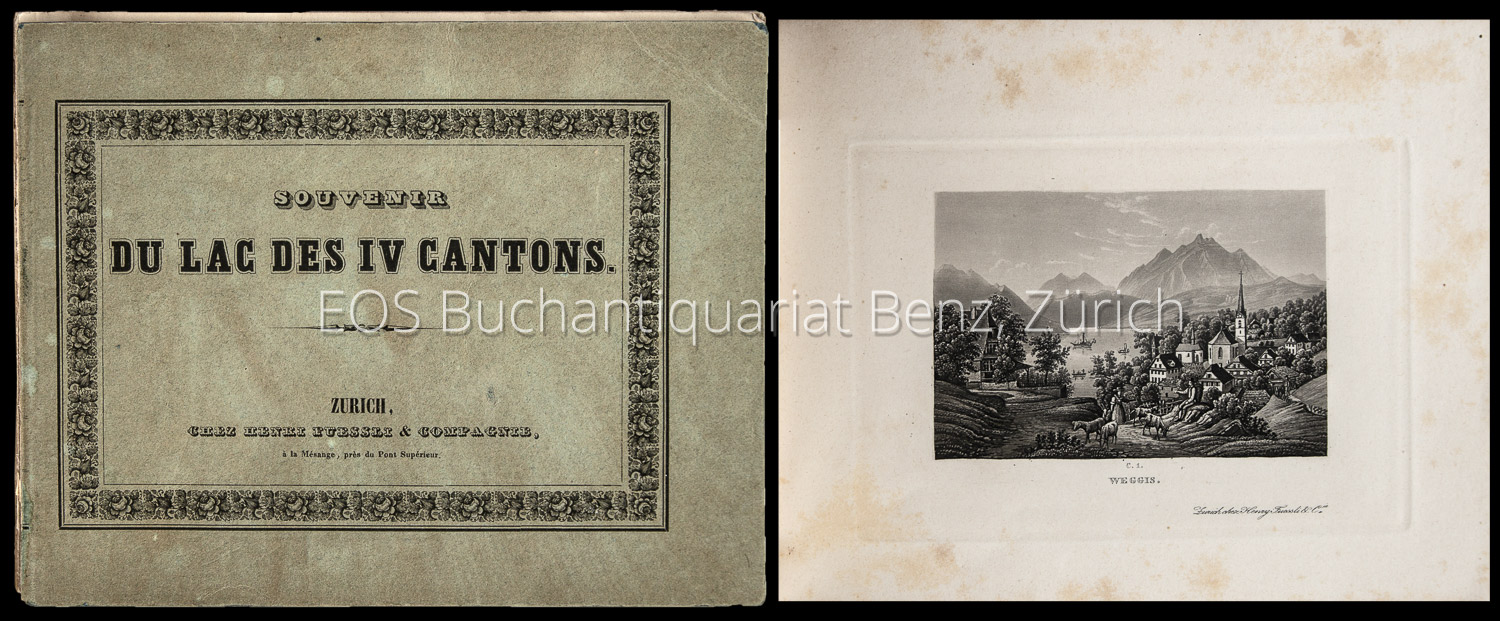
1860réf. 30600ABZürich, Henri Füessli & Compagnie, o. J. (um 1860). Quer-8°. 14 Aquatinta-Tafeln. Orig.-Broschur. + Wichtig: Für unsere Kunden in der EU erfolgt der Versand alle 14 Tage verzollt ab Deutschland / Postbank-Konto in Deutschland vorhanden +, A
1860réf. 30600ABZürich, Henri Füessli & Compagnie, o. J. (um 1860). Quer-8°. 14 Aquatinta-Tafeln. Orig.-Broschur.
1978Contains plates in b&w. 285x220 mm. 47+XIV pages. Hardcover. Cover slightly rubbed and bent. Spine edges slightly worn. Ex-library with the usual marks. Pages slightly yellowing. Else in good condition.
Large folio (ca. 64 x 49 cm). Title-page with etched, coloured and pasted vignette plan of the Church of the Holy Sepulchre, 4 pp., and 14 lithographs by Albert Adam, Charles Claude Bachelier, Hubert Clerget, Charles Fichot, and Jules Gaildrau after F.-E. Pâris (12 printed in colour). Stored loosely, as issued, in original paper wrapper with title and modern brown half cloth portfolio with white cloth ties and giltstamped title lable pasted to upper cover. Elaborate album of lithographs based on drawings by Vice Admiral François-Edmond Pâris from a visit to the holy city in 1861. The album follows his itinerary as described by Pâris in the introductory text. Leading his squadron from Jaffa to Jerusalem, Pâris drew a charming scene of pilgrims gathering at the fountain of Abu-Nabbut. Before entering the city, he captured an impressive view of Jerusalem from the Mount of Olives. 52 important sights are marked in the uncoloured lithograph and described in the text. The view of the city is followed by impressions of Christian places of worship such as the Holy Grave, the Prison of Christ, and the Chapel of Saint Helena in the Church of the Holy Sepulchre, the Tomb of the Virgin Mary, the Grotto of the Nativity in nearby Bethlehem, and an unusual, uncoloured view of the interior of the Golden Gate (Gate of Mercy). The final three lithographs present two beautiful interiors of the Mosque of Omar and one of the Al-Aqsa Mosque. All sights depicted are described in the text. - François-Edmond Pâris (1806-93) commanded the 2nd Division of the French fleet in the Mediterranean when he visited Jerusalem. Leading primarily scientific missions, Pâris was a talented draughtsman who took an interest in naval architecture, steam engineering, and geography. Today Pâris is considered the father of modern maritime ethnography; he played an important role in the modernisation of the National Maritime Museum in Paris. - Original paper wrapper rather wrinkled with some repaired tears and restored loss to corners. Title-page a little stained; several tears to margins professionally repaired. Lower right corner of the first text-sheet repaired without text loss. Lithographs generally well preserved, but some lightly affected by stains in the margins; occasional tears to the sheets and corners restored, not affecting the illustrations. Blackmer 1255. Röhricht 2762. Tobler 231.
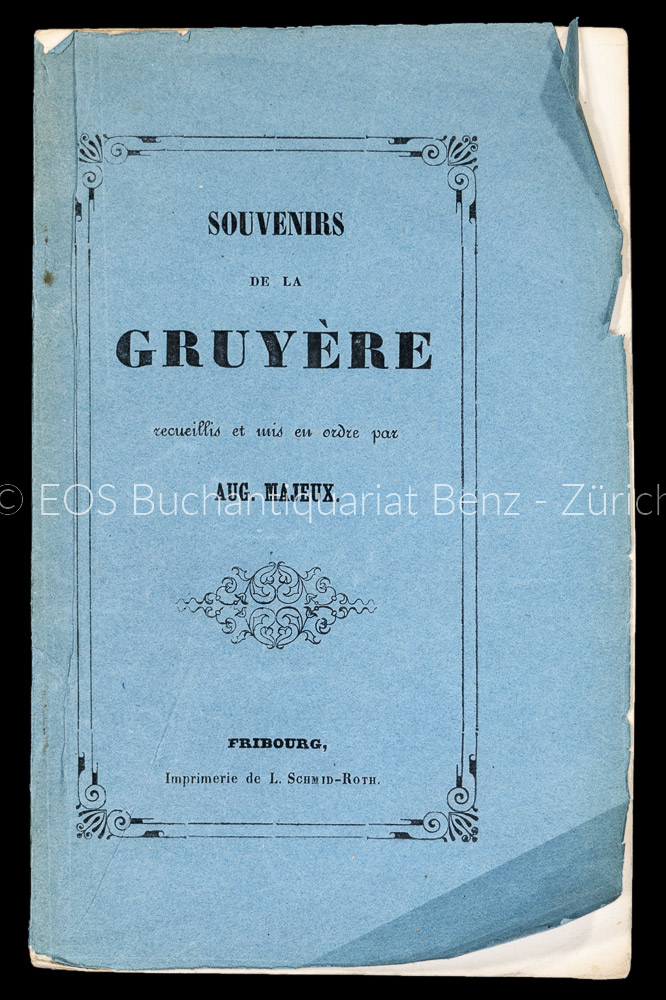
1860réf. 4932BBFribourg, Imprimerie L. Schmid-Roth, o. J. (ca. 1860). Klein-8°. 92 (4) S. Mit 1 lithogr. Titel u. 4 lithogr. Tafeln von J. Lang. Orig.-Broschur. + Wichtig: Für unsere Kunden in der EU erfolgt der Versand alle 14 Tage verzollt ab Deutschland / Postbank-Konto in Deutschland vorhanden +, A|B [2 Warenabbildungen] Umschlag mit Einrissen und Schadstellen
1860réf. 4932BBFribourg, Imprimerie L. Schmid-Roth, o. J. (ca. 1860). Klein-8°. 92 (4) S. Mit 1 lithogr. Titel u. 4 lithogr. Tafeln von J. Lang. Orig.-Broschur. Umschlag mit Einrissen und Schadstellen
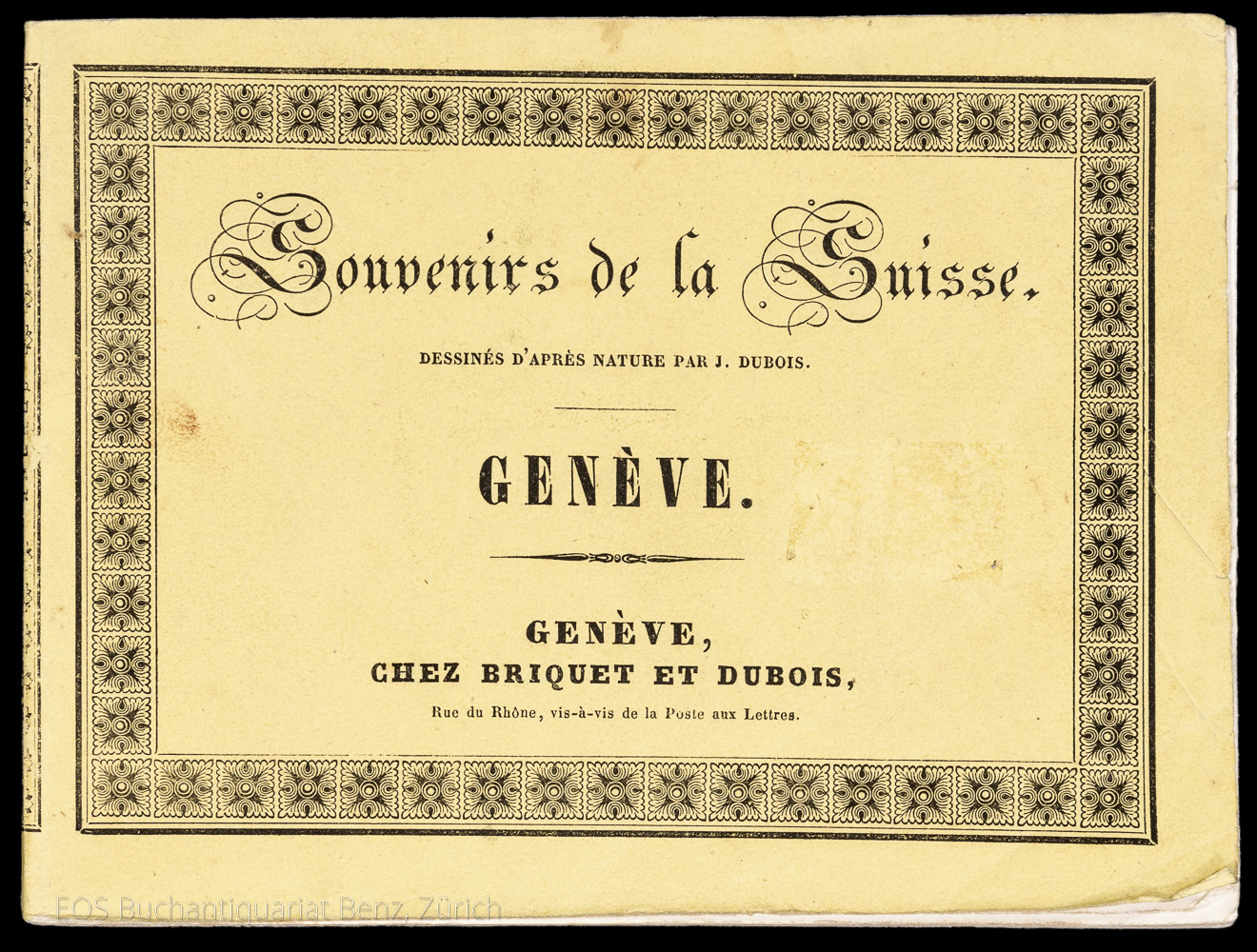
1846réf. 7543CBGenève, Briquet et Dubois, 1846. 12°. Mit 22 lithogr. Tafeln, davon 2 doppelblattgr. Orig.-Broschur. + Wichtig: Für unsere Kunden in der EU erfolgt der Versand alle 14 Tage verzollt ab Deutschland / Postbank-Konto in Deutschland vorhanden +, 7543CB|7543CB_2|7543CB_3 [3 Warenabbildungen]
1846réf. 7543CBGenève, Briquet et Dubois, 1846. 12°. Mit 22 lithogr. Tafeln, davon 2 doppelblattgr. Orig.-Broschur.
Oblong folio (400 x 320 mm). 93 pp. A privately compiled album comprising 138 engravings, either full-page or as four smaller engravings to one leaf, mostly hand-coloured. Includes one watercolour, signed "Fedor Comte Karaczay, Wien 1822". All mounted on brown paper with black borders, mostly with manuscript captions in French and watermarks to tissue guards. Contemporary red morocco, finely decorated with gilt borders; gilt title to upper cover, metal clasp fastening with key. Green silk guards. A charming album comprising numerous views of Vienna's grand buildings, palaces, and parks as well as landscapes of the surrounding areas. Notable sites of the Austrian capital are depicted in all their splendour, including Klosterneuburg monastery, the Kohlmarkt, St Stephen's Cathedral, and the Circus Gymnasticus in the Prater park. - Landscape views of Leopoldsberg, the route to Mariazell, and the nearby spa town of Baden are presented in all their idyllic majesty, as are lively social scenes of the Habsburg Empire's carnivals and café culture. The ensemble also includes 13 plates of professions and three military figures, one of which is a watercolour by Fedor Graf Karaczay (1787-1859), an Austrian colonel and dilettante artist, later in Persian services. The occupations include lantern lighter, laundry woman and hawkers selling brushes, apples and honey, straw hats, ribbons, carpets and laurel leaves. - Some minor staining. Tissue guards and covers somewhat worn, but otherwise a fine work.
1849réf. 255211849 LE CHARIVARI Aubert et Cie, imprimeur-lithographe. 1849- Lithographie - Hauteur: 35.9cmx Largeur: 27.6cm - Description:-1 feuillet (4 pages) numéro complet; illustration page 3.-- texte imprime au dos,bon etat,rousseurs.
1822réf. 7661BBZuric, chez H. Trachsler et chez J. C. Wirz-Widmer/Impr.: Ulrich, nach 1822. Quer-8°. (7) Bl. Mit 6 kol. Aquatinta, montiert. Pappband der Zeit.
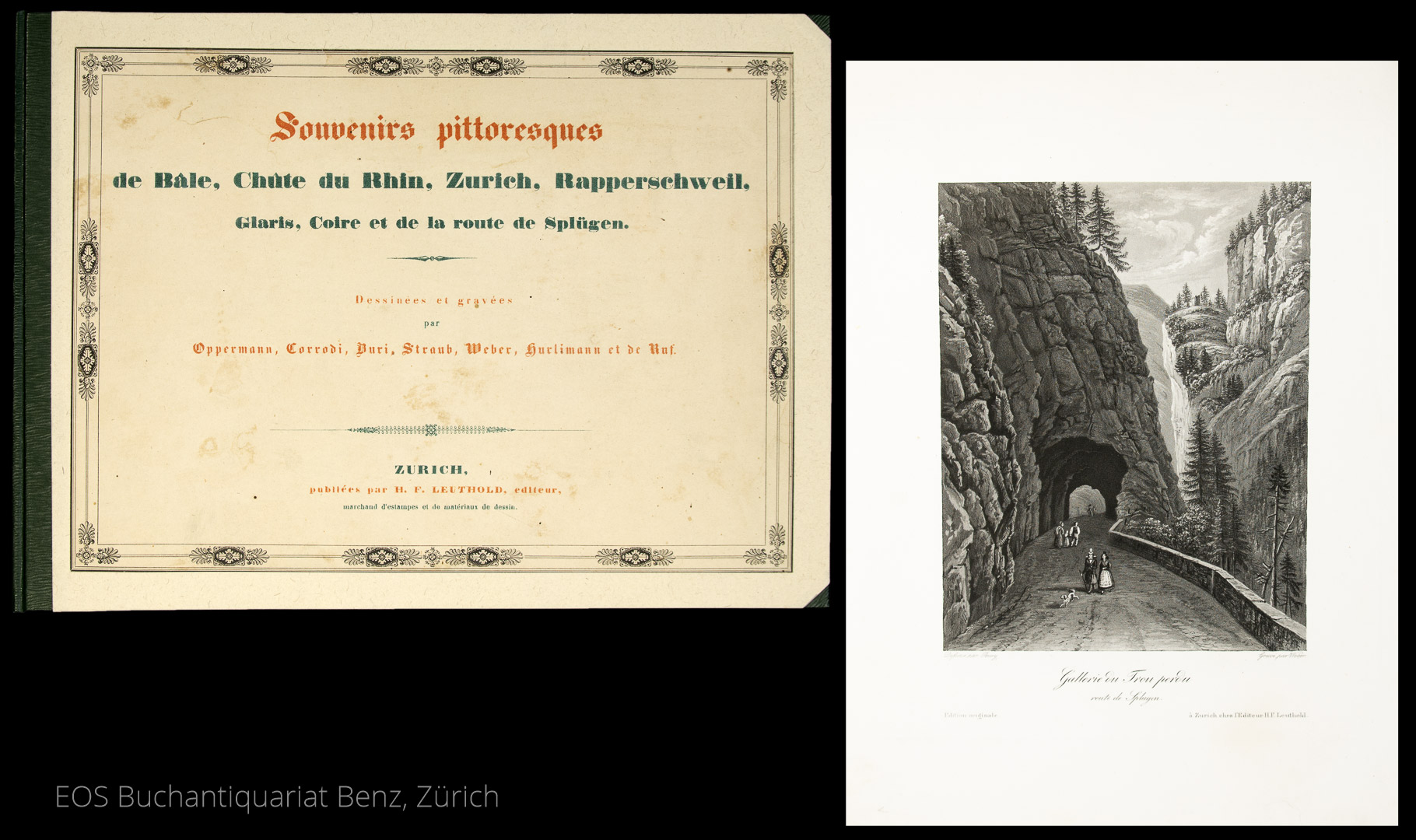
1830réf. 7645BBZürich, H. F. Leuthold, um 1830. Quer-4°. Titelblatt. Mit 18 Aquatinta-Tafeln. Moderner Halbleinenband mit montiertem alten Einbanddeckeln. + Wichtig: Für unsere Kunden in der EU erfolgt der Versand alle 14 Tage verzollt ab Deutschland / Postbank-Konto in Deutschland vorhanden +, 7645BB|7645BB_2|7645BB_3 [3 Warenabbildungen]
1830réf. 7645BBZürich, H. F. Leuthold, um 1830. Quer-4°. Titelblatt. Mit 18 Aquatinta-Tafeln. Moderner Halbleinenband mit montiertem alten Einbanddeckeln.
1912- Lucien Vogel éditeur, Paris 1912-1913, 19x24,5cm, une feuille. - Original color print, printed on vergé paper, signed in the plate. An original print used to illustrate the Gazette du bon ton, one of the most attractive and influential 20th century fashion magazines, featuring the talents of French artists and other contributors from the burgeoning Art Deco movement. A celebrated fashion magazine established in 1912 by Lucien Vogel, La Gazette du bon ton appeared until 1925, with a hiatus from 1915 to 1920 due to the war (the editor-in-chief having been called up for service). It consisted of 69 issues printed in only 2,000 copies each and notably illustrated with 573 color plates and 148 sketches of the models of the great designers. Right from the start, this sumptuous publication "was aimed at bibliophiles and fashionable society," (Françoise Tétart-Vittu, "La Gazette du bon ton", in Dictionnaire de la mode, 2016) and was printed on fine vergé paper using a type cut specially for the magazine by Georges Peignot, known as Cochin, later used (in 1946) by Christian Dior. The prints were made using stencils, heightened in colors, some highlighted in gold or palladium. The story began in 1912, when Lucien Vogel, a man of the world involved in fashion (he had already been part of the fashion magazine Femina) decided, with his wife Cosette de Brunhoff - the sister of Jean, creator of Babar - to set up the Gazette du bon ton, subtitled at the time: "Art, fashion, frivolities." Georges Charensol noted the reasoning of the editor-in-chief: "'In 1910,' he observed, 'there was no really artistic fashion magazine, nothing representative of the spirit of the time. My dream was therefore to make a luxury magazine with truly modern artists...I was assured of success, because when it comes to fashion, no country on earth can compete with France.'" ("Un grand éditeur d'art. Lucien Vogel" in Les Nouvelles littéraires, no. 133, May 1925). The magazine was immediately successful, not only in France but also in the United States and Latin America. At first, Vogel put together a team of seven artists: André-Édouard Marty and Pierre Brissaud, followed by Georges Lepape and Dammicourt, as well as eventually his friends from school and the School of Fine Arts, like George Barbier, Bernard Boutet de Monvel and Charles Martin. Other talented people soon came flocking to join the team: Guy Arnoux, Léon Bakst, Benito, Boutet de Monvel, Umberto Brunelleschi, Chas Laborde, Jean-Gabriel Domergue, Raoul Dufy, Édouard Halouze, Alexandre Iacovleff, Jean Émile Laboureur, Charles Loupot, Chalres Martin, Maggie Salcedo. These artist, mostly unknown when Lucien Vogel sought them out, later became emblematic and sought-after artistic figures. It was also they who worked on the advertising drawings for the Gazette. The plates put the spotlight on, and celebrate, dresses by seven designers of the age: Lanvin, Doeuillet, Paquin, Poiret, Worth, Vionnet and Doucet. The designers provided exclusive models for each issue. Nonetheless, some of the illustrations are not based on real models, but simply on the illustrator's conception of the fashion of the day. The Gazette du bon ton was an important step in the history of fashion. Combining aesthetic demands with the physical whole, it brought together - for the first time - the great talents of the artistic, literary, and fashion worlds; and imposed, through this alchemy, a completely new image of women: slender, independent and daring, which was shared by the new generation of designers, including Coco Chanel, Jean Patou, Marcel Rochas, and so on... Taken over in 1920 by Condé Montrose Nast, the Gazette du bon ton was an important influence on the new layout and aesthetics of that "little dying paper" that Nast had bought a few years earlier: Vogue. [FRENCH VERSION FOLLOWS] Estampe originale en couleur, tirée sur papier vergé et signée en bas à gauche dans la planche. Gravure originale réalisée pour
1912réf. 54495Lucien Vogel éditeur | Paris 1912-1913 | 19 x 24.50 cm | une feuille