DEBUCOURTLivre Rare Book
10 207 résultats
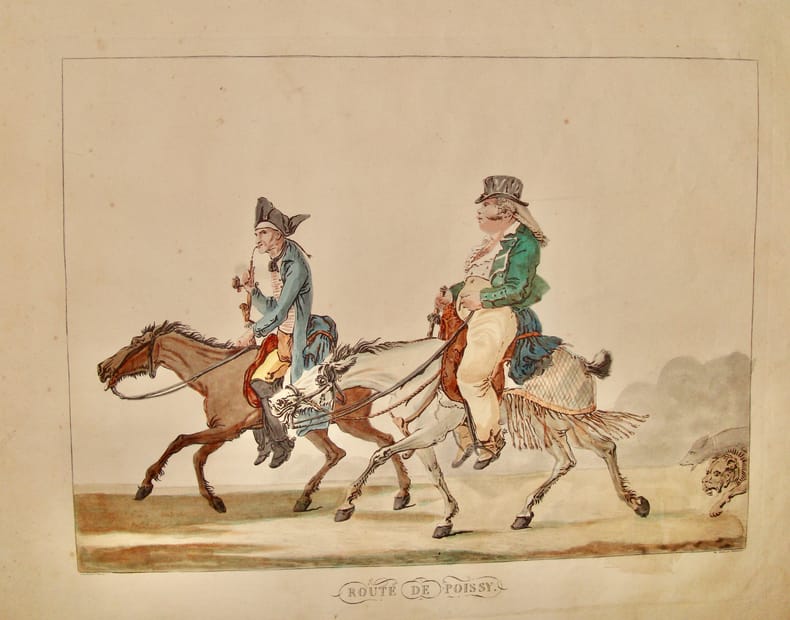
réf. 5450Célèbre gravure de la série de 12 des “Routes”.Retirage sur vergé d’Arches. En feuille très bon 340 x 415
réf. 41151Paris Editions du Regard 1982 in 4 (31x23) 1 volume reliure toilée rouge de l'éditeur sous jaquette illustrée en couleurs, 119 pages, avec 170 illustrations, dont 70 en couleurs. Très bel exemplaire ( Photographies sur demande / We can send pictures of this book on simple request )
1889réf. 0054051889. Very Good. 2 albumen prints. The first Rouen -- Fontaine de la Grosse Horloge is 255 x 199 mm. on a cardboard mount 297 x 239 mm. Caption printed in photograph in lower right: "54. Rouen_Fontaine de la Grosse horloge." Written in ink at lower edge of image: "Rouen August 25/89." Written in pencil next to photograph on mount: "Printed by the house of T. Herlyison." The fountain was designed by Jean-Pierre Defrance and built next to the famous Gros Horloge in 1743; the bas relief depicts the mythological scene of the river Alpheus and the nymph Arethusa and Cupid flying above them. This photograph includes a man waiting for a bucket to fill at the fountain and a woman carrying a bucket and moving off to the right. The window to the right of the fountain says "Debit de la Fontaine." The second photograph 209 x 270 mm on the other side of the card mount is an albumen print identified along the lower mount edge as only "Rouen." It shows the Fontaine Sainte-Marie built in 1879 with the original lights on either side. In Very Good Condition: lower right-hand corner of Fontaine de la Grosse Horloge slightly creased; both photographs are clean and bright. unknown
The first volume (of two) of the standard catalogue raisonne of the prints of Georges Rouault. 213 items described and illustrated, many in several states. ONE OF ONLY 220 COPIES OF THE DELUXE EDITION (there was no deluxe edition of volume 2) WITH AN ORIGINAL ETCHING BY ROUAULT ("Acrobate", 1919, R. 3 iii/III, printed on extremely fine wove paper), SIGNED AND AUTHENTICATED IN PENCIL BY ISABELLE ROUAULT. This is one of Rouault's very first prints. Folio. Publisher's cloth, dustjacket, and protective cover. FINE AND BRIGHT, WITH NO DEFECTS.
The first volume (of two) of the standard catalogue raisonne of the prints of Georges Rouault. 213 items described and illustrated, many in several states. Folio. Publisher's cloth, dustjacket, and protective cover. FINE AND BRIGHT, WITH NO DEFECTS.
1978réf. 66269CBMonte Carlo, Éditions André Sauret, 1978. 4°. 33 x 25 cm. 340 und 374 Seiten. Original-Leinenbände mit Original-Schutzumschlägen und Original-Klarsichtumschlägen.
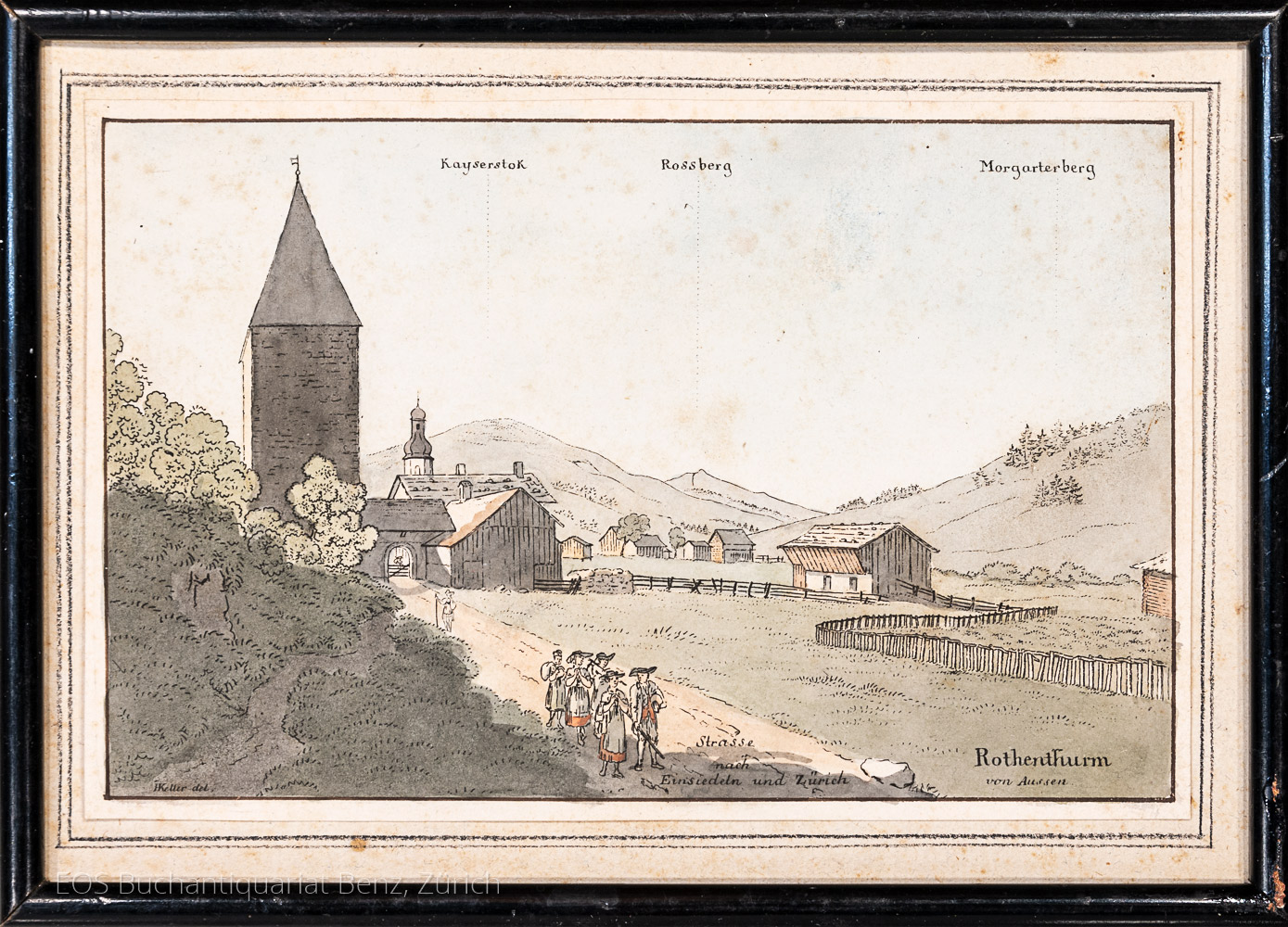
1800réf. 766DGUm 1800. Kolorierte Umrissradierung, montiert. 10,5 x 15,3 cm.
1800réf. 766DGUm 1800. Kolorierte Umrissradierung, montiert. 10,5 x 15,3 cm. + Wichtig: Für unsere Kunden in der EU erfolgt der Versand alle 14 Tage verzollt ab Deutschland / Postbank-Konto in Deutschland vorhanden +, A
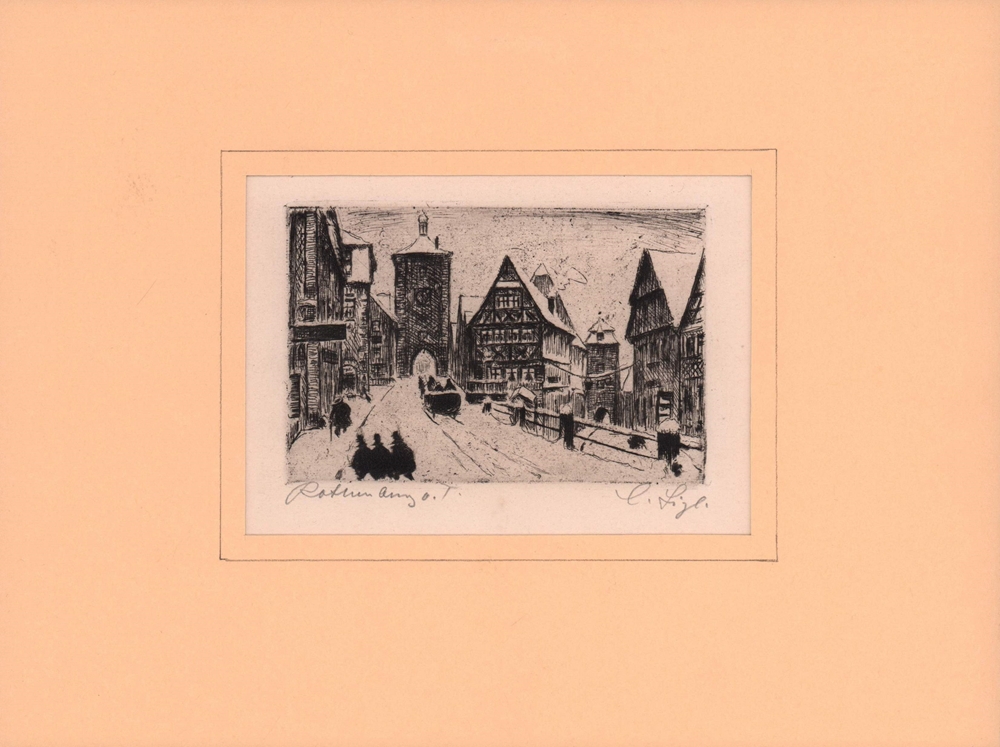
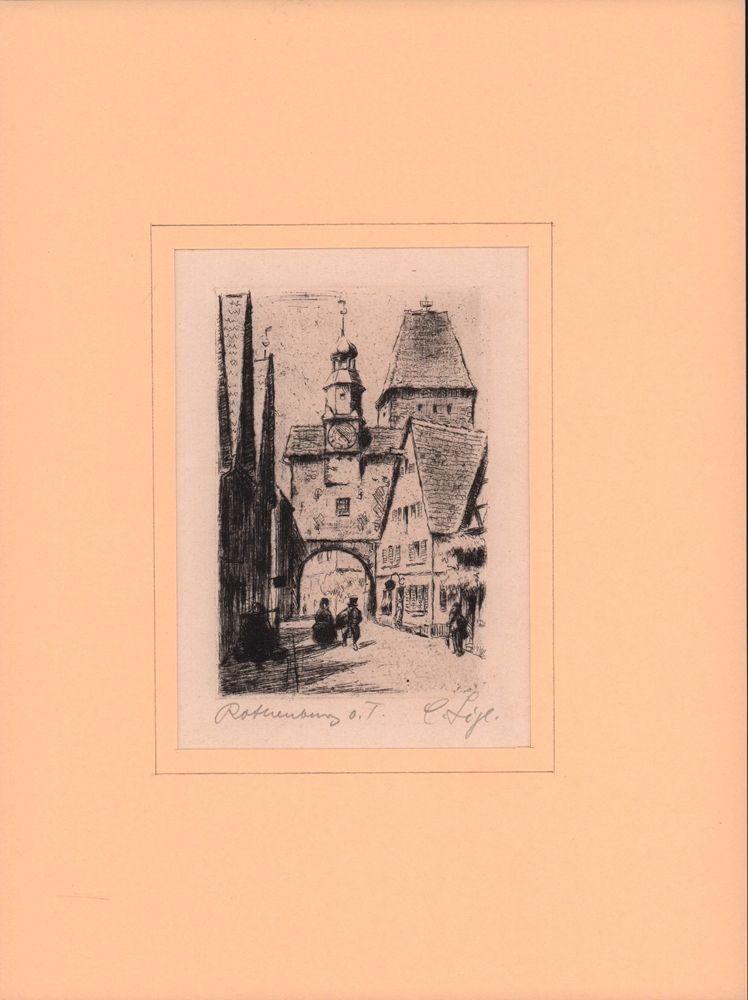
1924réf. 76415[ca. 1924]. Bildgröße 7,5 x 11,5 cm. Feinkartonpassepartout.
1924réf. 76416[ca. 1924]. Bildgröße 11,5 x 7,5 cm. Unter Feinkartonpassepartout.
1945Litografia originale in sanguigna, inserita nel n. 1 della rivista "Piccola Galleria. Pagine d'arte mooderna", pubblicata a Venezia nel maggio 1945, direttore Carlo Betocchi. Firma e sigla S. B. nella pietra Opera pubblicata con il n. 35 in apertura del catalogo "L'opera grafica di Filippo De Pisis", a cura di Manlio Malabotta, Edizioni di Comunità, 1969. Cm 16,8 x 12. . . Ottimo (Fine). . Tiratura non nota. .
1924- Lucien Vogel éditeur, Paris 1924-1925, 18x24cm, une feuille. - Original color print, printed on vergé paper, non signed. An original print used to illustrate the Gazette du bon ton, one of the most attractive and influential 20th century fashion magazines, featuring the talents of French artists and other contributors from the burgeoning Art Deco movement. A celebrated fashion magazine established in 1912 by Lucien Vogel, La Gazette du bon ton appeared until 1925, with a hiatus from 1915 to 1920 due to the war (the editor-in-chief having been called up for service). It consisted of 69 issues printed in only 2,000 copies each and notably illustrated with 573 color plates and 148 sketches of the models of the great designers. Right from the start, this sumptuous publication "was aimed at bibliophiles and fashionable society," (Françoise Tétart-Vittu, "La Gazette du bon ton", in Dictionnaire de la mode, 2016) and was printed on fine vergé paper using a type cut specially for the magazine by Georges Peignot, known as Cochin, later used (in 1946) by Christian Dior. The prints were made using stencils, heightened in colors, some highlighted in gold or palladium. The story began in 1912, when Lucien Vogel, a man of the world involved in fashion (he had already been part of the fashion magazine Femina) decided, with his wife Cosette de Brunhoff - the sister of Jean, creator of Babar - to set up the Gazette du bon ton, subtitled at the time: "Art, fashion, frivolities." Georges Charensol noted the reasoning of the editor-in-chief: "'In 1910,' he observed, 'there was no really artistic fashion magazine, nothing representative of the spirit of the time. My dream was therefore to make a luxury magazine with truly modern artists...I was assured of success, because when it comes to fashion, no country on earth can compete with France.'" ("Un grand éditeur d'art. Lucien Vogel" in Les Nouvelles littéraires, no. 133, May 1925). The magazine was immediately successful, not only in France but also in the United States and Latin America. At first, Vogel put together a team of seven artists: André-Édouard Marty and Pierre Brissaud, followed by Georges Lepape and Dammicourt, as well as eventually his friends from school and the School of Fine Arts, like George Barbier, Bernard Boutet de Monvel and Charles Martin. Other talented people soon came flocking to join the team: Guy Arnoux, Léon Bakst, Benito, Boutet de Monvel, Umberto Brunelleschi, Chas Laborde, Jean-Gabriel Domergue, Raoul Dufy, Édouard Halouze, Alexandre Iacovleff, Jean Émile Laboureur, Charles Loupot, Chalres Martin, Maggie Salcedo. These artist, mostly unknown when Lucien Vogel sought them out, later became emblematic and sought-after artistic figures. It was also they who worked on the advertising drawings for the Gazette. The plates put the spotlight on, and celebrate, dresses by seven designers of the age: Lanvin, Doeuillet, Paquin, Poiret, Worth, Vionnet and Doucet. The designers provided exclusive models for each issue. Nonetheless, some of the illustrations are not based on real models, but simply on the illustrator's conception of the fashion of the day. The Gazette du bon ton was an important step in the history of fashion. Combining aesthetic demands with the physical whole, it brought together - for the first time - the great talents of the artistic, literary, and fashion worlds; and imposed, through this alchemy, a completely new image of women: slender, independent and daring, which was shared by the new generation of designers, including Coco Chanel, Jean Patou, Marcel Rochas, and so on... Taken over in 1920 by Condé Montrose Nast, the Gazette du bon ton was an important influence on the new layout and aesthetics of that "little dying paper" that Nast had bought a few years earlier: Vogue. [FRENCH VERSION FOLLOWS] Estampe originale en couleur, tirée sur papier vergé, non-signée. Une petite déchirure sans manque en marge gauche de la planche. Gravure o
1924réf. 55175Lucien Vogel éditeur | Paris 1924-1925 | 18 x 24 cm | une feuille
Litografia originale Tiratura 15o esemplari. Firma a matita dell'Artsta. Timbro a secco dello stampatore Il Torcoliere, Roma. Cm 34,5x43,5 (Foglio 50x70). . . Ottimo (Fine). . Tiratura: 150. .
1972Litografia Firma a matita. Esemplare 38/90. cm 74x54. pp.. . Ottimo (Fine). . Tiratura 90. .
1847réf. 356ABParis, J.J. Dubochet, 1847. 12°. 3 Bl, LXIII S, 263 S, 1 Bl. Grüner Hldr. d.Zt. mit Rvg. + Wichtig: Für unsere Kunden in der EU erfolgt der Versand alle 14 Tage verzollt ab Deutschland / Postbank-Konto in Deutschland vorhanden +
1847réf. 356ABParis, J.J. Dubochet, 1847. 12°. 3 Bl, LXIII S, 263 S, 1 Bl. Grüner Hldr. d.Zt. mit Rvg.
1970réf. 000243Amsterdam / New York: Van Gendt / Abner Schram 1970. First Edition. . Hardcover. See Description. 4to. pp. 247 1. Contains many b&w illustrations. Green cloth with dust jacket. Near fine condition. Miniscule dusting/foxing to upper edge of text block. Dust jacket is vg/fine. "The present bibliography describes over 100 titles containing ca. 2800 etchings by De Hooghe." -d.j. Contains indexes. Van Gendt / Abner Schram hardcover
réf. 40219Leide Chez Jean Guignard 1695 in 12 (16,5x10) 2 volumes reliure plein veau fauve de l'époque, dos à nerfs ornés, pièces de titre de cuir beige. Tome 1: 5 feuillets non chiffrés, 282 pages et 3 feuillets de table non chiffrés, avec un portrait gravé de Jules César, ressauts de cahiers. Tome 2: 305 pages et 3 feuillets de table non chiffrés, avec un portrait gravé d'Auguste. Bon exemplaire ( Photographies sur demande / We can send pictures of this book on simple request )
1974This is a very good softcover copy with just light cover wear. Very clean inside and out. This catalog was prepared to accompany the exhibition at the Fogg Art Museum from May 5 to May 30, 1974. Catalog edited by Konrad Oberhuber. Not illustrated. Checklist of the exhibition with 56 works fully catalogued and annotated. 11" high X 8" wide, 99 pages. This book will be securely wrapped and packed in a sturdy box and shipped with tracking.
1840réf. lib55342BC5Charles Tilt 1840. Hardcover. Good. original orange binding with gold design 3o engraved views by Cooke Charles Tilt hardcover
1845réf. 3466Original publisher's binding of brown cloth with decorative gilt Romulus/Remus motif to front cover blindstamped to rear board Front cover detatched; Lacking spine covering. Complete with 30 plates 29th plate "Piazza Barberini" as frontispiece. Infrequent foxing throughout some markings to page edges. A nice copy without previous owners' names or other markings. ; 4to 11" - 13" tall; viii 216 pages; David Bogue hardcover
1946Cartella originale, in folio, contenente 12 fogli sciolti: il frontespizio, 10 litografie numerate e firmate a matita dall’autore, un testo in fac-simile con le note sulla stampa e sulla tiratura; la cartella fa parte della collana di cartelle litografiche diretta da Libero de Libero per lo studio di Villa Giulia; il litografo è Igino Alessandrini; esemplare 12 di 80. La copertina è di Mino Maccari. Le tavole del “Romanzo nero” riportano alla memoria l’episodio di cronaca della prostituta assassinata e fatta a pezzi nella pineta del Tombolo.
1950réf. 4342DBZürich, Fundgrube-Verlag, (um 1950). Quer-8°. (16) S. Mit schwarz-weiss Illustrationen. Illustr. Orig.-Umschlag mit Klammernheftung. + Wichtig: Für unsere Kunden in der EU erfolgt der Versand alle 14 Tage verzollt ab Deutschland / Postbank-Konto in Deutschland vorhanden +, A|B [2 Warenabbildungen]
1950réf. 4342DBZürich, Fundgrube-Verlag, (um 1950). Quer-8°. (16) S. Mit schwarz-weiss Illustrationen. Illustr. Orig.-Umschlag mit Klammernheftung.