Biblio.com
10 209 résultats
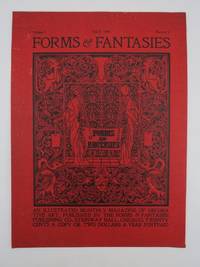
1898réf. 18483Good. This is the cover only from Forms & Fantasies which was illustrated by Henry Erkins. The red cover has water splatter stains in the upper left and bottom margins but good condition. 12" x 9.5".; Prints . 1898. unknown
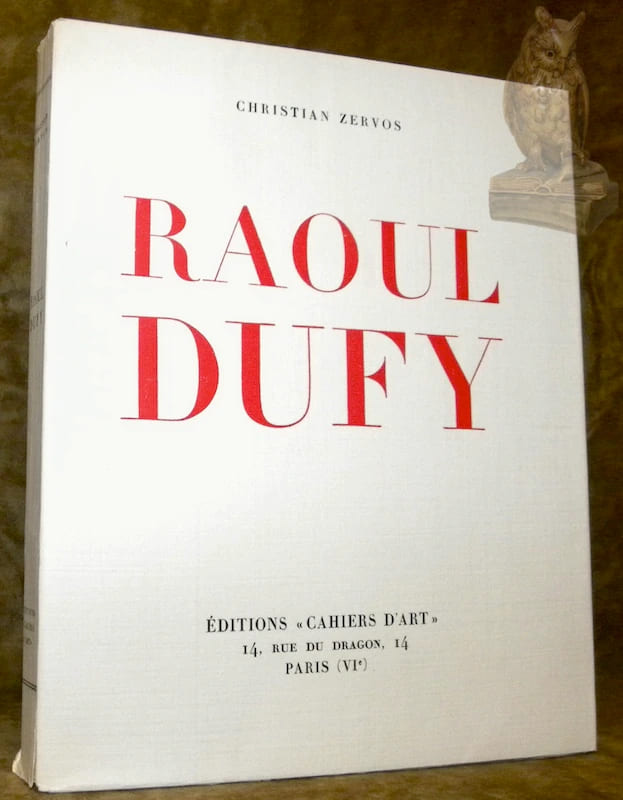
réf. 121454Paris, Editions Cahiers d’Art 1928, 285x230mm, XXII - broché. Un des 40 sur papier Hollande Van Gelder, numéroté n° 20 / 40 avec une gravure originale (pointe-sèche) sous serpentine signée et numéroté 20 / 52. Bel exemplaire.
Woodcut on paper. An evocative court scene in an ornamental woodcut border, title and impressum in Bengali within a cartouche situated at bottom centre. The only known copy of a Battala woodcut showing a lively scene at the court of an Indian Raja, with the Raja and eminent courtiers, European colonial officers, musicians, dancers, and even dogs present. This is a very rare example of a Battala woodcut print, which were produced in the early to mid 19th century in the Battala neighbourhood of Calcutta (Kolkota). These prints showed often somewhat crude but evocative religious or secular illustrations, produced for people of the lower economic classes who could not afford the watercolours that inspired these woodcuts. An estimated number of only 100 to 200 prints of these Battala woodcuts have survived, as they were printed on cheap, thin, low quality paper stock. - During the early 19th century, there existed in Kolkata a substantial industry of woodcut printing. The artists, publishers and printers were active in the Battala neighbourhood, in the northern part of the city, after which the surviving woodcut prints are named. Large, single-leaf woodcuts - like the present example - were produced as cheaper versions of the already inexpensive watercolours called patas, which were in turn inspired by illustrated Mughal manuscripts. The patas were sold from stalls in the southern part of Kolkata, near the Kalighat Kali Temple, a renowned Hindu temple that is also regarded as one of the 51 Shakti Peethas of India. It was then, and still remains, an important pilgrimage destination; the patas, and later also the woodcut prints, were sold to the pilgrims as souvenirs. As the Battala woodcuts were inspired by and based on these patas, it is little surprise that one of the most famous Battala woodcuts is that of the Hindu goddess Kali, of ultimate power, time, destruction and change. While most Battala prints feature religious illustrations, other specimens show past and contemporary celebrities, mansions of the rich, fairs and festivals, and other secular themes, including the Raja's court, as in the present example. - The existence of the Battala prints, alongside the pata watercolours, was short-lived: they emerged and became popular in the early 19th century and by the end of the century had almost completely disappeared due to the arrival of lithography, a simpler, less labour-intensive process that was capable of producing cheaper prints, even in colour. - Condition: paper somewhat worn, mainly along the lower margin, slightly affecting the border and lower right corner of the illustration. The top and lower margins have been slightly reinforced on the reverse. Overall in good condition. One of a very small number of surviving Battala woodcuts, the only known example to show the Raja's court. F. Hirsch, "A Rare Kali Woodcut From the Era of the Battala Printers", Art in Print 6.3 (Sept.-Oct. 2016), pp. 24-28.
réf. 1334187843.Gpaperback. Good. Access codes and supplements are not guaranteed with used items. May be an ex-library book. paperback
1909réf. 1138822Stuttgart, Fr. Lehmann, 1909. Gr.-8vo. 32 S. Textheft u. 1 Bl., 102 Taf. m. Buchrahmen (davon 7 doppelblattgroß). (Kunstgewerbe d. Renaissance 1). OLwd-Mappe (Mappe gering fleckig, Papier des Texthefts gebräunt).
1971Acquaforte originale di Arnoldo Ciarrocchi (cm 10,2x7,5) numerata e firmata a matita. Opera allegata al periodico "L'Incisione" n. 9 che contiene altre due acquaforti originali numerate e firmate di Roberto Moschini (Libellula notturna, cm 13,7x10,5), e Diego Donati (2 silografie originali, cm 13x9). Una poesia di Rabindranath Tagore . 4to. pp. 20. . Perfetto (Mint). . . .
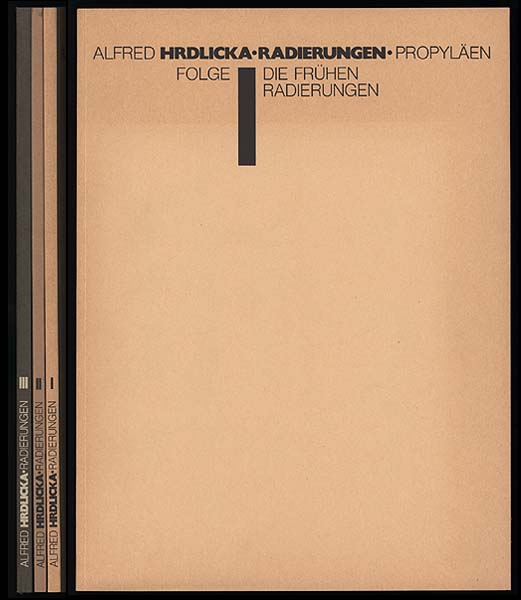
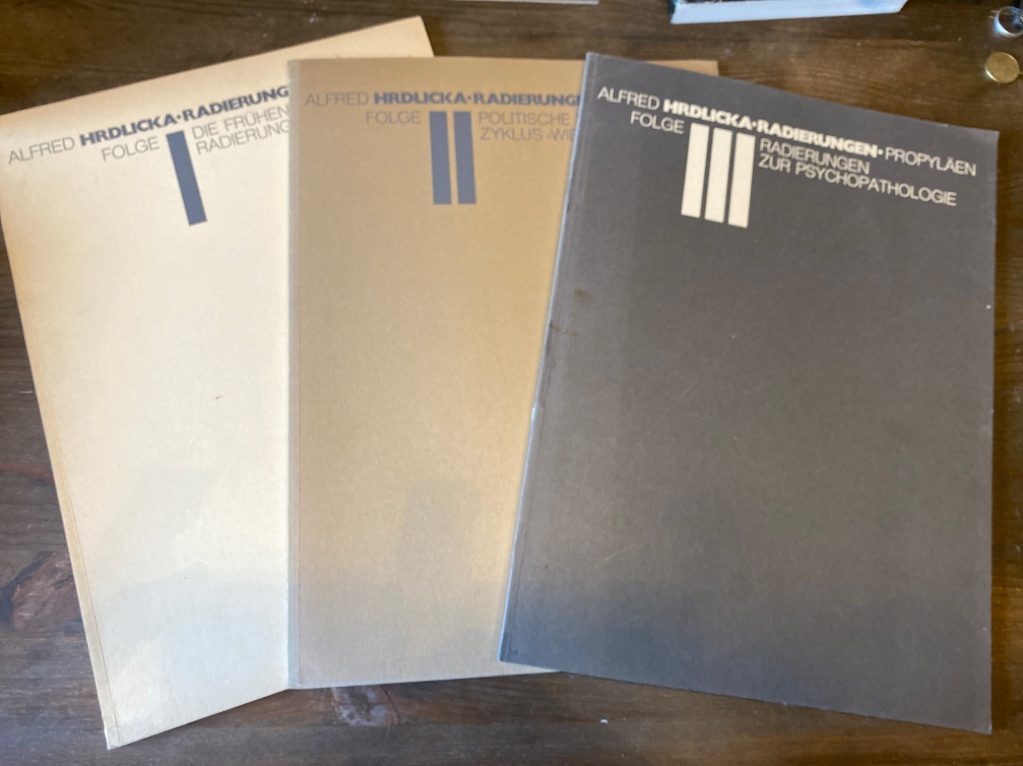
1975réf. 4113EBFrankfurt am Main, Propyläen Verlag, 1975. Groß-4°. 38 cm. XLII, XI, 214 Seiten. Original-Broschuren.
1975réf. 109698Frankfurt am Main: Propyläen Verlag, 1975. 86 S.; XLIV, S. 87-119; XI, S. 121-214 mit zahlreichen Abbildungen; groß-4°, 38 cm; Orig.-Broschur;
Ca. 135:145 mm. Strichätzung. Montiert in Passpartout-Sammelmappe (ca. 240:320 mm). Bukolische Szene mit zwei Schafen und einer Ziege neben einem Zaun sowie einem Hirten in Rückenansicht im Hintergrund. Signiert "K DU J f". - Leicht braunfleckig und knittrig. Mit Stempel der "Graphischen Sammlung" von Georg Denzel (1873-1959) unter Sammlungsnr. "2515 Nr. 9" aufgenommen.
Ca. 237:160 mm. Radierung mit gest. Nummer "3". Montiert auf Trägerpapier (480:320 mm). Ein altes Pferd und ein totes Pferd, im Hintergrund nähert sich eine Hyäne, signiert "Paulus Potter f". - Mit Stempel der "Graphischen Sammlung" von Georg Denzel (1873-1959), unter Sammlungsnr. "3078 Nr. G" aufgenommen. Zudem verso mit Sammlungsstempel "G + W D" des Prof. Wilhelm Denzel. - Leicht braunfleckig.
Ca. 107:80 mm. Radierung. Montiert auf Trägerpapier (480:320 mm). Bukolische Szene mit einem liegenden Esel, einem stehenden Esel und einem weiteren Esel, dessen Kopf seitlich in das Bild ragt; im Hintergrund ein lagernder Hirte. Die Platte gestochen von einem Mitglied der Künstlerfamilie Audran in Paris, signiert "Herman Swanevelt fecit". - Leicht braunfleckig, mit Lochspur alter Heftung. Mit Stempel der "Graphischen Sammlung" von Georg Denzel (1873-1959) unter Sammlungsnr. "2802 Nr. G" aufgenommen. Zudem verso mit Papiermarke und Sammlungsstempel "G + W D" des Prof. Wilhelm Denzel.
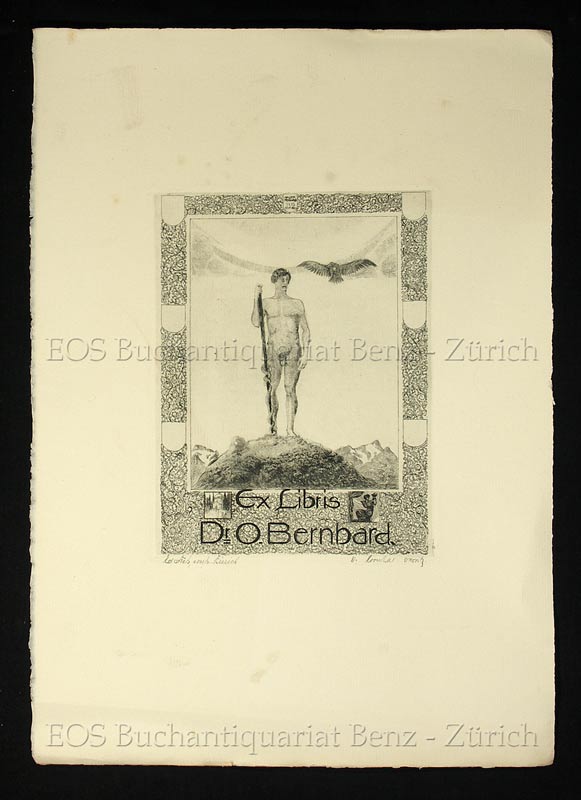
réf. 653CGo.J. Plattengrösse: 10,2 x 8,2 cm. Blattgrösse: 23 x 15,5 cm. + Wichtig: Für unsere Kunden in der EU erfolgt der Versand alle 14 Tage verzollt ab Deutschland / Postbank-Konto in Deutschland vorhanden +, 653CG
réf. 653CGPlattengrösse: 10,2 x 8,2 cm. Blattgrösse: 23 x 15,5 cm.
réf. 655CGo.J. Plattengrösse: 17,3 x 13,5 cm. Blattgrösse: 34 x 24 cm. + Wichtig: Für unsere Kunden in der EU erfolgt der Versand alle 14 Tage verzollt ab Deutschland / Postbank-Konto in Deutschland vorhanden +, 655CG
réf. 655CGPlattengrösse: 17,3 x 13,5 cm. Blattgrösse: 34 x 24 cm.
Ca. 167:128 mm. Kupferstich. Paginiert und mit gest. Numerierung "32". Montiert auf Trägerpapier (323:476 mm). Bukolische Szene mit einer kleinen Ziegenherde, im Hintergrund ein lagernder Hirte, im Vordergrund eine von einem Gebüsch zupfende Ziege, signiert "C. Saft Leven". - Mit Stempel der "Graphischen Sammlung" von Georg Denzel (1873-1959), unter Sammlungsnr. "3195 Nr. G" aufgenommen. Die Graphik zudem verso mit Sammlungsstempel des Prof. Wilhelm Denzel "G + W D". - Leicht braunfleckig.
Acquaforte Firma e titolo a matita. Esemplare16/40. Cm 15x25 (Foglio 35x50). . . Ottimo (Fine). . 40. .
1719réf. 702899Vetero-Pragae (Prag), Apud Joannem Wenceslaum Helm (Johann Wenzel Helm), ohne Jahr (um 1719). 3 nnr. Blätter, 84 Seiten, 2nnr. Blätter. Schlichter Lederband der Zeit auf 3 Bünden mit handschriftlichem Rückenschild. Oberes Kapital ca. 8 mm beschädigt. Name mit Kugelschreiber auf Vorsatz.
1808réf. 78941(Hamburg, 1808). Blattgröße ca. 19 x 13 cm. Unter handdekor. zweifachem Schrägschnittpassepartout im Mahagoni-Rahmen (37 x 28 cm).
Portfolio containing twenty loose black and white prints (on 9 1/2"w x 12 5/8"h paper) and four color prints (on 8 1/2"w x 12 1/2"h paper). One sheet of text in Spanish. White folder shows several tears. No date shown; circa 1960's.
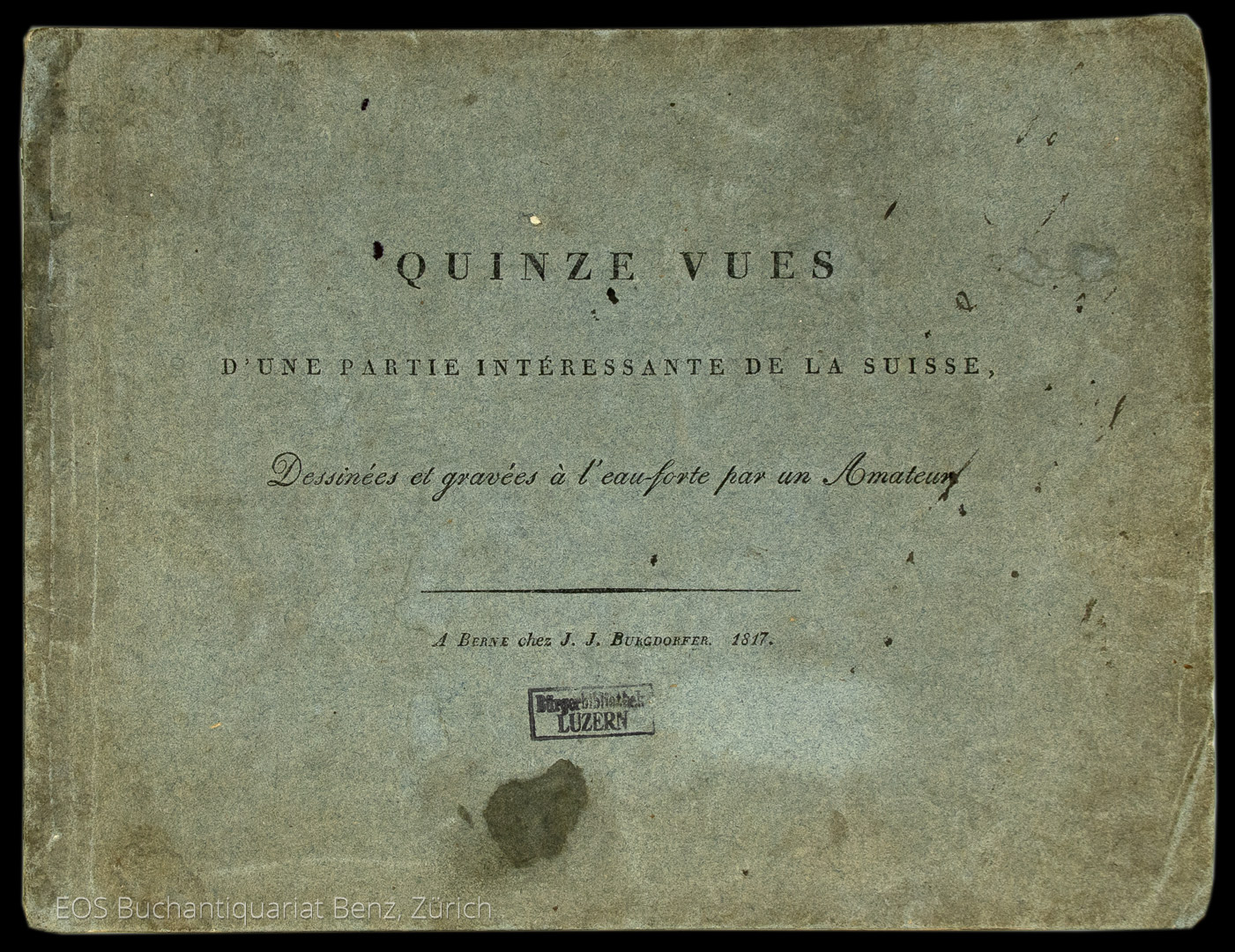
1817réf. 7702CBBern, J. J. Burgdorfer, 1817. Quer-kl.-4°. (8) S., (1) Bl. (Verlagsanzeigen). Mit 15 Kupfertafeln. Orig.-Umschlag. + Wichtig: Für unsere Kunden in der EU erfolgt der Versand alle 14 Tage verzollt ab Deutschland / Postbank-Konto in Deutschland vorhanden +, 7702CB|7702CB_2|7702CB_3 [3 Warenabbildungen]
1817réf. 7702CBBern, J. J. Burgdorfer, 1817. Quer-kl.-4°. (8) S., (1) Bl. (Verlagsanzeigen). Mit 15 Kupfertafeln. Orig.-Umschlag.
1733réf. 140941304London: Aeneis Tabulis Incidit Iohannes Pine 1733. First Edition. Near Fine. 1733 1737. Two volumes. First edition first issue with "post est" error in the Caesar medallion on page 108 of Volume II. In a lavish full brown morocco binding with five raised bands and ornate gilt stamping to spine borders on covers wide turn-ins and beautifully patterned endsheets; all edges gilt. Near Fine with a light amount of rubbing to joints spines lightly faded a scuff to the front cover of Volume II and small former owner bookplates of noted collector Abel E. Berland to the front pastedowns. Pine's Latin text was based on Talbot's 1699 edition and is remarkable for being entirely illustrated with engraved copper plates throughout the text. Aeneis Tabulis Incidit, Iohannes Pine unknown books
1733réf. 140941304London: Aeneis Tabulis Incidit Iohannes Pine 1733. First Edition. Near Fine. 1733 1737. Two volumes. First edition first issue with "post est" error in the Caesar medallion on page 108 of Volume II. In a lavish full brown morocco binding with five raised bands and ornate gilt stamping to spine borders on covers wide turn-ins and beautifully patterned endsheets; all edges gilt. Near Fine with a light amount of rubbing to joints spines lightly faded a scuff to the front cover of Volume II and small former owner bookplates of noted collector Abel E. Berland to the front pastedowns. Pine's Latin text was based on Talbot's 1699 edition and is remarkable for being entirely illustrated with engraved copper plates throughout the text. Aeneis Tabulis Incidit, Iohannes Pine unknown
1944réf. 100New York: Gemor Press 1944. First edition 1 of 300. Cloth covered boards. Good. Quarto 23 x 15.6 cm; 2 blank 8 58 6 6 blank pp. Inscribed by the author on the half-title page. Comes with a prospectus which is also inscribed by the author. Pages are crisp and clean with some spotting on the end papers. Boards are faded stained and spotted. Shows wear on the edges particularly on the spine corners. Prospectus has some bent corners plus a horizontal crease. C. L. "Lanny" Baldwin was having an affair with Anais Nin when she published this book of poetry through her own press which operated from 1942-1947. Baldwin was on the receiving end of a well known scathing breakup letter which shows why she is remembered in the literary world and he is not. The engravings were done by Nin's husband. Gemor Press unknown