Abraham LincolnABAA
943 résultats
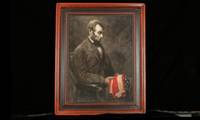
réf. 257151/1/88. Print of Abraham Lincoln well framed approximately 2 ft by 3 ft color commemorating the fallen president's work in saving the nation at the expense of his life. <img class=""alignnone wp-image-25018 size-post-window"" src=""https://cdn.raabcollection.com/wp-content/uploads/20231204144051/Folder-site-11-1600x1327.jpg"" alt="""" width=""1600"" height=""1327"" /> unknown books
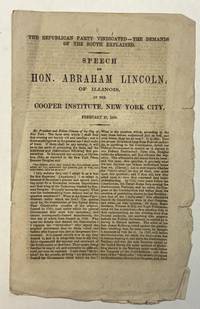
1860réf. 41018np 1860. 8pp caption title as issued. Untrimmed and uncut. A single folio leaf folded. Very Good plus. Lincoln's great Cooper Union Address argues that the Framers and early Congresses contemplated a narrow and ever-diminishing role for slavery. Examining Constitutional and early Congressional debates he demonstrates that contemporary statesmen viewed slavery "as an evil not to be extended but to be tolerated and protected only because of and so far as its actual presence among us makes that toleration and protection a necessity." Lincoln's argument fusing the interests of all anti-slavery men whether abolitionists or not ranks among his greatest contributions to American political thought. It received wide press coverage catapulting him into presidential contention for it transported the new Republican Party into the center of American constitutional and legal thinking. He thus made it easy for moderate Northern Democrats Whigs and Know-Nothings to vote Republican in 1860. Monaghan 55. LCP 5944. unknown books
1824réf. 295691824. SOLOMON Abraham. Laws of the New Synagogue Leadenhall Street London. A.M. 5584. London: E. Justins 1824. Octavo original brown paper-covered boards with printed paper label recently rebacked and cornered in black cloth recent endpapers. $1500.First edition of this collection of laws and codes for the New Synagogue of Leadenhall Street London founded in 1762.Sets out rules for membership and the election of honorary officers and the duties of these officers. With half-title. Small stain to fore-edge; interior generally clean. A very good copy. hardcover books
1827réf. 18472Stockholm: Johan Horberg 1827. First edition. leather_bound. Contemporary half polished russet calf and marbled boards. All edges yellow. Fine. 137 pages. 27 1/2 x 22 cm. Forty-seven hand-colored engraved plates with tissue guards plus hand-colored vignette title and two engraved plates of music. Grafstrom poet and historian wrote the text and Forssell made the engravings. Index. List of Plates and errata. Costumes from Dalarna Helsingland Lappland Sodermanland Westergothland Smaland Blekinge and Skane. Lovely copy plates and text clean fresh and bright; bookplate raised bands spine panels richly guilt in floral motifs marbled endpapers maroon morocco spine label printed in gilt. Johan Horberg unknown books
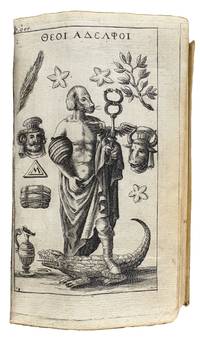
1778réf. 19980Paris: P-M. Lamy 1778. First edition. leather_bound. Contemporary mottled calf covers rehinged. Two Vols. in one. Very good. 8 & 10 pages in text. 22 x 17 cm. Engraved frontispieces 283 plates. An antiquary of Flemish descent his early interest in gem collecting as part of his cabinet of curiosities eventually spawned interest in Greco-Roman intaglio gems; his collection purchased in 1609 on behalf of Henry Prince of Wales -- with more than a representative sampling of specimens here. His first work "Dactiliotheca" published 1609. BRUNET Vol. II p.1671. Index of plates in each volume generally clean wide margined plate pages book label and small ownership inscription dated 1857 of same individual corner wear raised bands leather spine label spine compartments decorated in blind. P-M. Lamy unknown books
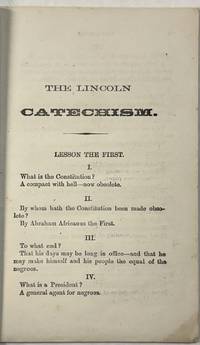
1864réf. 42194New York: J.F. Feeks Publisher 1864. Stitched. 46 2 publ. advts. Original printed wrappers the front wrapper and title page illustrated with a grotesque caricature of a Negro's face. Very Good plus. An unusually disgusting anti-Lincoln campaign document capitalizing on northern racist sentiments. Lincoln is called 'Abraham Africanus I'. His Emancipation Proclamation is ridiculed; the shifting focus of the War from a struggle to preserve the Union to a crusade against slavery is condemned; and the expansion of executive power to curtail civil liberties is denounced. The text includes "questions and sarcastic answers intended to defeat Lincoln" Monaghan. "What are the Ten Commandments Thou shalt have no other God but the negro. Thou shalt make an image of a negro and place it on the Capitol as the type of the new American man." "Strongly opposed to the election of Abraham Lincoln" Sabin Feeks the publisher was a Copperhead closely aligned with Chauncy Burr and other northern publishers of pro-slavey material. New York was "home to vigorous defenders of slavery who viewed African Americans as inferior and warned that abolition would hurt the nation's economy. Both sides took advantage of New York's role as center of publishing and the arts using the city's printing presses theaters and music halls to advocate for an end to slavery or for white supremacy" online Mus. of the City of New York ABOLISHING SLAVERY. FIRST EDITION. Monaghan 324. Bartlett 2734. Sabin 41204. J.F. Feeks, Publisher unknown books
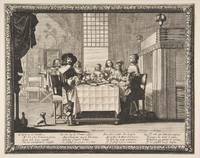
réf. 6726Engraved frontis.; eight engraved vignettes and head- & tailpieces 19 finely engraved plates most folding & some engravings in the text. 18 p.l. 254 36 pp. of index & errata. Thick 8vo 160 x 105 mm. late 18th-cent. marbled boards extremities a little rubbed & worn. Dresden: C. G. Nitzsche 1765. An important German edition of Bosse’s Traité des manières de graver en Taille douce 1st ed. in French: 1645 considerably augmented for the German audience. This work was translated and published by Carl Gottlieb Nitzsche from the 1745 Cochin edition. The Cochin edition was the first to promote etching with hard etching-ground vernis dur instead of the soft etching-ground vernis mol to imitate line engraving. It also featured long sections on Le Blon’s color printing and the refining of mezzotint illustration. In the present book we find four illustrations of the rolling press which Cochin had updated to account for several design upgrades. There are also several diagrams and cross-sections of printing presses. This book is richly illustrated with plates and vignettes executed by Carl Gottfried Nestler 1730-80 that depict various techniques equipment and the interiors of print shops. Nestler reworked the engraved title-page from the 1645 first edition for this book’s frontispiece. A very good copy internally fresh. Unidentified engraved bookplates with the initials “G. F.” on front and rear paste-downs. ⧠Benezit Dictionary of Artists Vol. 10 p. 258 Nestler. unknown books
1710réf. 25803Amsterdam 1710. Copper-engraved map period hand-colouring in outline. Tables upper left and along the right side. Attractive map of North America based upon De L'Isle's highly influential map of North America published in 1700. By combining a wealth of information and geographical observation with delicate engraving and an uncomplicated composition this elegant map is a superb example from the golden age of French mapmaking and was published in Chatelain's Atlas Historique an important encyclopaedic historical atlas. California is shown as a peninsula with a number of villages and mountains; the Mississippi River extends far north of its true source. The table along the right side details the various native tribes from each region with lettered references for locating on the map. Lowery 263; Phillips 579. unknown books
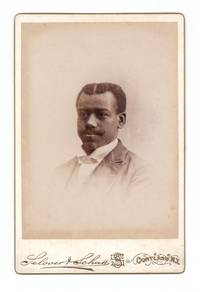
réf. 10055Cortland New York: Lelover & Schutt 1889. Albumen print 5.375" x 3.875" on larger gilt mount inscribed by DeMond on verso: "A. L. DeMond. Trumansburg. N.Y. '89." CONDITION: Very good. A scarce and early signed cabinet card portrait of a pioneering African American activist and minister who looked to the history of Black excellence as a map for America's future and preached at the Dexter Avenue Baptist Church fifty years before Martin Luther King Jr. Abraham Lincoln DeMond was born in Seneca New York in 1867 the youngest child of Quam DeMond and Phebe Cuffe Darrow grand-niece of the famous African American and Wampanoag sea captain Paul Cuffee. After becoming the first Black graduate of what is now SUNY Cortland DeMond studied theology at Howard University. His most famous speech-subsequently published in pamphlet form by the Emancipation Proclamation Association-was given on Jubilee Day of 1900 that is January 1st at the Dexter Avenue Baptist Church in Montgomery Alabama. Half a century later the church welcomed Martin Luther King Jr. as its pastor and became the launching point for the Montgomery bus boycott and the Civil Rights movement. DeMond's address "The Negro Element in American Life" lauds antislavery activists including Frederick Douglass and Henry Highland Garnet and examples of Black excellence among them Phillis Wheatley and Benjamin Banneker and situates African Americans at the heart of the nation's progress. He frames the Emancipation Proclamation as "essential to the fulfilling" of the Declaration of Independence: "Both were born in days of doubt and darkness. Both were the outcome of injustice overleaping the bounds of right and reason.Without the Declaration of Independence the nation could not have been born; without the Emancipation Proclamation it could not have lived." DeMond served as pastor of the First Congregational Church in Montgomery Alabama; the Plymouth Congregational Church in Charleston South Carolina; the First Congregational Church of New Orleans; and the First Congregational Church in the extraordinary town of Buxton the "Black man's utopia in Iowa." He and his wife Selma University graduate and music teacher Lula Watkins Patterson had five children. DeMond died in 1936. The cabinet card offered here shows a young mustachioed DeMond in crisp white collar and dark suit his hair parted at the center. Taken by Lelover & Schutt of Cortland New York this portrait may have been made upon DeMond's graduation from the Cortland Normal School in June of 1899. A month later his mother died in Trumansburg New York a town in which they had briefly stayed following the death of his father in 1877 and where Phebe had returned in 1886. After his mother's passing DeMond preached to a packed Methodist Church there and probably signed this card during the same stay. A wonderful early portrait of this soon-to-be influential Black minister signed by him the year he became the first Black graduate of what is now SUNY Cortland. REFERENCES: "Abraham Lincoln DeMond" and "Phebe Cuffe Darrow DeMond" at WikiTree online; "Abraham Lincoln DeMond Minister and Activist" at African American Registry online. Cortland, New York: Lelover & Schutt, (1889) unknown books
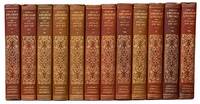
1894réf. 2311448Harrogate Tennessee: Lincoln Memorial University 1894. Limited Edition. Half-Leather. Near Fine/No Jacket. 0x0x0. Limited edition #399 of an unspecified limitation this set 'especially prepared for Harry J. Williams.' Signed by John Wesley Hill opposite limitation page. Copyright page states 1894 but this is clearly reproduced from the plates of the original - this set is circa 1905. Volume 1 has very minor discoloration to edges of cloth on rear board minor wear to corners spine a bit faded. Complete in twelve hardcover volumes. Red half-leather gilt titles and decorations top edges gilt decorative endpapers. A complete collection of Abraham Lincoln's works including speeches letters biographical writings etc. with an introduction by John Wesley Hill and special articles by various other contributors. The editors were Lincoln's private secretary and assistant secretary and also served in various other governmental roles Hay going on to become Secretary of State under McKinley and Roosevelt. Nicolay and Hay are perhaps best known for their ten-volume biographical history of Lincoln's administration originally published serially in The Century Magazine beginning in 1886 -- it remains one of the more exhaustive and personal accounts of the life of the 16th President of the United States and is notable for the inclusion of facsimiles of original drafts of important documents most importantly the Emancipation Proclamation. This set includes facsimiles of original correspondence and documents reproductions of contemporary photographs and engravings etc. Lincoln Memorial University hardcover books
1865réf. 22935ABRAHAM LINCOLN.Print. Abraham Lincoln. The Nations Martyr. Assassinated April 14th. 1865. Currier & Ives New York N.Y. 1865. 1 p. 13½ x 18 in. Light toning. By recycling stock images Currier & Ives could issue "rush" prints of important 19th century events thus providing Americans with graphic depictions of current events. Based on Anthony Berger's famed photograph taken in February 1864 this is a fine example of a "rush" print of Lincoln following his assassination to hang in the homes of Americans mourning the loss of their president. books
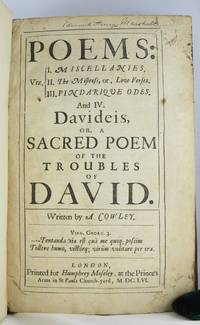
1656réf. 116311656. COWLEY ABRAHAM. Poems: viz. I. Miscellanies. II. The Mistress or Love Verses. III. Pindarique Odes. And IV. Davideis or a Sacred Poem of the Troubles of David. London: For Humphrey Moseley 1656. Fol. 22 41 1 80 4 70 i.e. 68 154 23 p. Contemporary paneled calf edges gilt; very skillfully rebacked to style later endpapers. Occasional minor spots and repaired marginal tears 3L2 soiled and with a paper defect costing several letters. A lovely copy. Early signature of Edmund Henry Marshall on title; "Ex Libris George Bernard Shaw" on front endpaper. First collected edition of Cowley's verse. "This folio collection passed through eight editions in a generation and represents the canon of Cowley's works upon which his contemporary fame was based. It was prepared for the press while the author was in prison." Pforzheimer 233; Perkin A19; Hayward 89; Grolier Wither to Prior 224; Wing C-6682. unknown books
1910réf. ST17022London: Privately printed by the Chiswick Press for Beatrice Lowry and Her Friends Minneapolis 1910. ONE OF 100 COPIES according to Howes. 215 x 147 mm. 8 1/2 x 5 7/8". 31 1 pp. 1 leaf colophon. With a foreword by Mrs. Lowry. PLEASING EMERALD GREEN CRUSHED MOROCCO GILT IN AN ARTS & CRAFTS STYLE BY SANGORSKI & SUTCLIFFE stamp-signed on rear turn-in upper cover framed by multiple rules entwined heart and trefoil tooling at corners gilt lettering accented with floral tool above and below the central panel which has three dots at each corner raised bands spine in gilt-ruled compartments gilt titling gilt-ruled turn-ins pale green endpapers top edge gilt. In contemporary green cloth drop-front box lined with felt. With a frontispiece portrait of Lowry. Howes L-541. Trivial offsetting to free endleaves from turn-ins a couple of tiny spots of foxing otherwise in nearly pristine condition with no signs of use inside or out. This is an exceptionally well-preserved copy of a work that was specially compiled printed and bound to honor the memory of both the author and the subject. Prominent Minneapolis attorney businessman and philanthropist Thomas Lowry 1843-1909 grew up in Illinois and Lincoln had assisted his father with several legal matters when he was practicing law. Young Lowry attended all of the Lincoln-Douglas debates and became a devoted admirer of the man who would go on to preserve the Union. After a successful career that included establishing the street car system in Minneapolis Lowry contracted tuberculosis and spent the last four years of his life as an invalid. With excess time on his hands he began writing down his memories of Lincoln in a "fragmentary manner" as Mrs. Lowry explains in the preface. After her husband's death Beatrice Goodrich Lowry 1854-1915 compiled these memories and some Lincoln letters in her husband's effects into the present volume which she had printed and bound to distribute to her husband's friends. Edmund Brooks a Minneapolis bookseller who specialized in fine bindings helped her to arrange for printing by the esteemed Chiswick Press and binding by the one of the most eminent English workshops of the day Sangorski & Sutcliffe. Francis Sangorski and George Sutcliffe met as boys attending Douglas Cockerell's bookbinding classes at the L. C. C. Central School. Cockerell was so impressed by their skill that he hired Sutcliffe as a finisher and Sangorski as a forwarder. In 1901 Francis and George went into business for themselves and before long they had become two of the most renowned English binders of the 20th century. Preserved over the years in its clamshell box our binding looks virtually the same as it did the day it left the bindery. Copies of this work do appear on the market but their condition is seldom as good as seen here. Privately printed [by the Chiswick Press] for Beatrice Lowry and Her Friends, Minneapolis unknown books
1865réf. 228501865. No binding. Fine. Broadside. The Nation's Loss. A Poem on the Life and Death of the Hon. Abraham Lincoln. 1865. 1 p. 9 3/4 x 15 1/4 in. 1/2 inch loss at top not affecting text. Headed by an engraving of Lincoln Reverend Peter W. Brister's mourning poem occupies the first two columns and Lincoln's Emancipation Proclamation is printed in full in the third column. Brister's poem addressed what Lincoln meant to the nation during the Civil War how he saved the Union and freed the slaves. Below the image of Lincoln it reads ""Late President of the United States Who departed this life in Washington D.C. April 15 1865."" unknown books
1758réf. 135914Paris: Charles-Antoine Jombert 1758. period marbled calf binding marbled endpapers and pastedowns five raised bands all edges stained red. 8vo. period marbled calf binding marbled endpapers and pastedowns five raised bands all edges stained red. xxxii 205 3 pages. The fourth and most extensive edition expanded from the original edition of 1645 by the noted engraved Cochin. Cicognara 255. Bigmore / W. 72. Cohen / R. 177. When issued in 1645 the work was "notable for its completeness for the time of its production and for its plates which have been reproduced by most subsequent writers on the art." This edition has additions by Jombert and Cochin of Bosse's classic work. With an engraved frontispiece and 21 foldout plates. The first page of the dedicatory Epistle entirely engraved in intaglio is taken from the original 1643 edition. Very light shelfwear to the edges and hinges. Spine rubbed lacking the leather spine label with title. Some very light dampstaining in the margins. Textblock split between pages 146 and 147. A good copy of this very scarce work. Charles-Antoine Jombert unknown books
1865réf. 25618Frank Leslie published this print as a premium for his new family magazine Frank Leslie's Chimney Corner and copyrighted it on April 8 1865 just a week before Lincoln's death. The image created by engraver Henry B. Major and lithographer Joseph Knapp portrays Lincoln flanked by the First Lady and Vice President Andrew Johnson greeting Julia Dent Grant wife of Lieutenant General Ulysses S. Grant who stands nearby. According to a notice printed at the bottom right corner "Every Person who pays Ten Cents each for numbers 1 and 2 of Frank Leslie's Chimney Corner The New Family Paper is entitled to a copy of this PLATE without extra charge" or individuals could purchase the print for $3. ABRAHAM LINCOLN.Lithograph. "Grand Reception of the Notabilities of the Nation at the White House 1865" New York: Frank Leslie April 1865. 1 p. 19 x 23¾ in. In the first issue of The Chimney Corner Leslie described the "Grand Reception" image as "the most costly gift plate ever presented by any publisher in the United States having been produced at an expense of $10000." "Every family should possess this truly national picture and carefully preserve it" Leslie continued "as it will transmit to future generations the men who have restored our great national unity. It is especially valuable as it contains an excellent likeness of our late lamented President introducing General Grant and his wife to Mrs. Lincoln." The picture contains "nearly 100 portraits of our most celebrated Generals Statesmen and Civilians also of many of our most distinguished American ladies. The likenesses are admirable having been taken from photographs by Brady." The key giving the names of each individual portrait was published in issue number 4 of the Chimney Corner on June 24. Included in the image are Generals Ulysses S. Grant John G. Foster William T. Sherman Hugh J. Kilpatrick Nathaniel P. Banks Philip H. Sheridan Winfield S. Hancock John A. Logan Joseph Hooker Benjamin F. Butler Oliver O. Howard John A. Dix and Henry W. Slocum. Admirals David Farragut and David Dixon Porter represent the Navy. Members of the cabinet include Secretary of War Edwin M. Stanton Secretary of State William H. Seward and Secretary of the Navy Gideon Welles. Members of Congress include Senator Henry B. Anthony of Rhode Island Senator William P. Fessenden of Maine Senator Charles Sumner of Massachusetts and Speaker of the House Schuyler Colfax of Indiana. Chief Justice Salmon P. Chase represents the U.S. Supreme Court. New York newspaper editors Horace Greeley Henry J. Raymond and James Gordon Bennett are also present. Prominent women include First Lady Mary Lincoln Ann S. Stephens dime novelist and magazine editor Miriam Folline Squier wife of Leslie's former editor-in-chief and Leslie's future wife Julia Dent Grant wife of Ulysses S. Grant Kate Chase Sprague daughter of Chief Justice and wife of Rhode Island Senator and Adele Cutts Douglas widow of Stephen A. Douglas. Others identified in the key include Ephraim G. Squier Leslie's former editor-in-chief archaeologist and U.S. commissioner to Peru Governor Andrew G. Curtin of Pennsylvania and Ambassador to Russia Cassius M. Clay of Kentucky. Despite Leslie's copyright Anton Hohenstein created a very similar image entitled "Lincoln's Last Reception" which also featured Lincoln's meeting General Ulysses S. Grant's wife Julia. Published by John Smith in Philadelphia in 1865 and hand-colored "Lincoln's Last Reception" also included more than thirty military and political leaders and a few prominent women among the onlookers in the ballroom. Frank Leslie's Chimney Corner 1865-1884 was a weekly family newspaper published "every Tuesday" in New York by Frank Leslie. Each illustrated issue of sixteen pages contained serial fiction short stories poetry biographies history travel sketches natural history anecdotes and other subjects. According to the prospectus the newspaper would be "a welcome messenger of instruction and amusement to the young and old in the family and by the fireside—that altar around which cluster our holiest and most cherished recollections." Leslie had copyrighted the title in 1861 but "the great Rebellion now happily closing intervened to put a stop to the enterprise." Frank Leslie 1821-1880 was born in England as Henry Carter but he adopted the pseudonym of Frank Leslie to keep his artistic activities a secret from his relatives who disapproved. He came to the United States in 1848 and settled in New York in 1853 to engrave woodcuts for P. T. Barnum's Illustrated News. When that publication failed Leslie began work on his own series of illustrated publications including Frank Leslie's Illustrated Newspaper The Budget of Fun Frank Leslie's Chimney Corner and others. At his death he was deeply in debt but his second wife Miriam Folline Squier 1836-1914 continued his publications and again made them profitable even legally changing her name to Frank Leslie in 1881. Condition Spot-mounted to modern board mat toning moderate foxing minor edge wear. Would benefit from conservation. Frank Leslie books
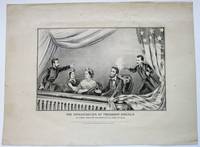
1865réf. 37441New York: Currier & Ives. 152 Nassau Street 1865. Lithograph print oblong 13-1/2" x 18." Uncolored depicting Booth shooting Lincoln in the back of the head Mrs. Lincoln Miss Harris and Major Rathbone sharing the theater box with him. Minor dusting in the margins. Very Good plus. A related print by Currier & Ives lists the names of the occupants in the theater box. See 165 Eberstadt 460. This variant does not list the occupants' names. "This lithograph records the shocking moment when Abraham Lincoln was shot by John Wilkes Booth. As a famous actor Booth had free access to Ford's Theatre and had gone there to collect his mail on April 14 when he learned of the president's intention to attend a play that evening. Booth was the leader of a group of pro-Confederate conspirators determined to prevent the South's defeat and when Robert E. Lee surrendered to Ulysses S. Grant on April 9 they decided to kill Lincoln and other key Union leaders hoping to destabilize the war effort and allow Confederate armies still in the field to rally. Major Henry Rathbone who rises at left to restrain Booth was subsequently stabbed but survived. Lincoln died the next morning" The MET online. Currier & Ives Gallery C0291. Not in Reilly. Currier & Ives. 152 Nassau Street unknown books
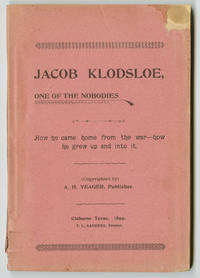
1899réf. 52883Cleburne TX: T.L. Sanders 1899. Autobiographical Account of a Confederate Soldier The autobiographical story of a Confederate soldier from an area described as having "Carolina's tallest peaks" on its southeastern horizon. Most names in the story appear to be fictional. Includes his capture at Kennesaw Mountain in June 1864; as a prisoner of war at Camp Douglas Illinois; his journey home; and how he came to join an infantry company. Yeager 1842-1940 served with the 29th Tennessee Infantry Confederate until his capture. After the war he was a lawyer in Tennessee then a newspaperman and farmer in Johnson County Texas. Rare. Not in any of the standard reference works on the Civil War or Tennessee. Original printed wrappers. Small chip to top corner of front wrapper and toe of spine. Small stain to top corner of first few leaves. Last few leaves and rear wrapper chipped at lower corner not affecting text. Contents tanned as usual. Good plus. unknown books
1636réf. 2226Le Blond 1636. Etching. A good impression on paper without a watermark. Trimmed just showing the platemark all around. 259mm x 324mm. G.D. 1080 Blum 154 only state Paris/Tours 2004 No. 128 Le Blond, books
1663réf. 41874Nuremburg: Heirs of J. & W. Endter 1663. 8vo. 6 3/16 x 3 3/4 inches. xiv 998 xl pp. Title in red and black engraved frontispiece and 42 plates 7 folding. Early ownership signature on front pastedown. Early 18th-century lengthy manuscript commentary referencing passages on Brahmins from a work by Johann Albrecht von Mandelslo 1616-1644. Contemporary vellum First German Edition of one of the earliest European accounts of Hinduism in Southern India by a missionary who worked in Palicatta Coromandel for ten years from 1630 enlarged by supplementary accounts of Asian African and American religions not included in the Dutch and French editions. Abraham Roger was a Dutch missionary and linguist who spent a significant portion of his career working in India under the Dutch East India Company VOC. He was stationed in Pulicat a trading hub on the Coromandel Coast of South India where he worked among the Tamil speaking population. His experiences as a missionary coupled with his interest in local culture prompted him to document Hindu religious practices and beliefs culminating in this notable work. First published in Dutch in 1651 and translated into German in 1663 it is one of the earliest and most significant works by a European exploring Hinduism in South India. Roger's approach was distinct in its attempt to understand and accurately portray Hinduism a religion he sought to comprehend despite his missionary objectives. His work stands out for its translations of Hindu hymns and descriptions of temple rituals and he drew much of his knowledge from his close collaboration with local Brahmins reflecting a relatively objective tone compared to other European writings of the period. Despite his Eurocentric and missionary perspective Roger was unique in that he did not entirely dismiss Hinduism but rather engaged with it to create one of the earliest detailed European accounts of the religion. Sabin 72603; JCB III p. 92; Ackermann V 1273; Landwehr VOC 65. Heirs of J. & W. Endter unknown books
1688réf. ST13039cLondon: J. M. for Henry Herringman; Mary Clark for Charles Harper 1688; 1689. FIRST EDITION of Part III. 304 x 202 mm. 12 x 8". 58 41 1 blank 80 4 70 i.e. 68 154 23 1 blank 148; 16 161 21 166 pp. 148-9 misnumbered 140-1 2 pp. Two works bound together in one volume. Very attractive contemporary black morocco handsomely gilt. Frontispiece portrait of the author. Separate title pages for each section those in the first work dated 1687. Front pastedown with armorial bookplate of Archibald Philip Earl of Rosebery and the book label of Lawrence Strangman front free endpaper with bookplate of Robert S. Pirie see below for these three. Perkin B1; Wing C-6658 C-6664B and C-6665. One open tear just touching printed marginal notation small hole affecting two words light and very sparse foxing a touch heavier on a few signatures and some negligible spotting here and there otherwise A VERY CLEAN AND ATTRACTIVE COPY with only the most trivial wear. From a distinguished collection in pleasing condition and in a contemporaneous binding this volume contains the works of Abraham Cowley one of the most precocious poets in the annals of English literature. Cowley 1616-67 was producing poetic works of inexplicable sophistication before he had settled into puberty; he published his first volume of verse at 15; and he went on to become one of the most popular poets of his day. Cowley was a staunch royalist who served in the exiled court of Charles I's queen Henrietta Maria where he helped to encode and decipher messages sent between the monarchy's supporters including the royal couple themselves. Despite having been arrested and imprisoned as a royalist agent at one point Cowley escaped the Cromwell years largely unscathed and retired to the countryside in 1663. Upon his death Cowley was not only given the extraordinary honor of burial in Westminster Abbey noted by the DNB as "the most lavish funeral which had ever been given to a mere man of letters in England" but was also afforded a privileged spot next to the graves of Spenser and Chaucer. Cowley's influence on contemporary poetry was demonstrably deep; his funerary monument refers to him as "the English Virgil" and Perkin asserts that his "fame as a poet exceeded even that of Milton" during the waning years of the Restoration. The first part here contains the poet's best-known mature works while the second is composed of his early efforts and the third his writings on plants. Our volume is from the collection of Robert S. Pirie 1934-2015 an extremely successful lawyer and investment banker who amassed the finest library of 16th and 17th century English literature in private hands during his lifetime. In 1984 he was elected one of the 40 members of the Roxburghe Club the world's oldest society of bibliophiles. Our volume has a thrice-distinguished provenance. The first recorded owner is Archibald Philip Primrose 5th Earl of Rosebery 1847-1929 Prime Minister of the United Kingdom during 1894-95. Earlier he had been Foreign Secretary twice as well as Leader of the Opposition. As stated in the British Armorial Bindings database Rosebery was an "ardent and discriminating book collector." Afterwards the present volume became the property of Bombay-born and Cambridge-educated Lawrence Strangman 1907-80 son of Sir Thomas Strangman Q.C. and Lady Winifred Strangman. Much of his celebrated collection went to his alma mater Trinity Hall in the University of Cambridge where it is maintained as the Strangman Collection in Jerwood Library while other portions were handled by Sotheby’s. A captain in WWII Strangman served as a distinguished Intelligence Officer. Our third recorded owner is Robert S. Pirie 1934-2015 an extremely successful lawyer and investment banker who amassed the finest library of 16th and 17th century English literature in private hands during his lifetime. In 1984 he was elected one of the 40 members of the Roxburghe Club the world’s oldest society of bibliophiles. J. M. for Henry Herringman; Mary Clark for Charles Harper unknown books
1578réf. 2206Antwerp: Plantin 1578. Hardcover. Very Good. 4to - over 9¾ - 12" tall. 4to. 23 x 16.5 cm 4 ff. 417 1 pp. 1 f. Bound in contemporary vellum over flexible boards head slightly chipped; early signature on t-p. Woodcut 'golden compass' device of the Plantin press on title. Generally good. First edition of this early modern geographical dictionary published alongside the first Plantin edition of Ortelius' successful Theatrum orbis terrarum Antwerp 1579 and listing thousands of names both ancient and modern for "peoples regions islands great and small towns mountains foothills forests seas bays lakes" etc. depicted in the atlas. Earlier versions of the Synonymia had previously appeared as indices to the atlas containing a little over 2000 entries; "in all this first version of Ortelius' geographical dictionary in the form of a separate book includes approximately 10000 entries" Meurer. Ortelius' methodology in the present volume differs from that of his earlier indices: a parallel glossary of non-Latin names has been turned into a bilingual appendix and Ortelius relies almost completely on classical authors quoting moderns only when he cannot go straight to the source. The significance of these alterations for the author's role not as mapmaker but as linguist and lexicographer is hard to overstate: his introduction declares that he undertook the new Synonymia largely out of frustration at the scholarly inadequacy of current Latin lexica including earlier editions of his own which frequently printed inexact or even nonexistent terms sometimes on dodgy authority. Voet 1835; Skelton Theatrum orbis terrarum facsimile 1964; Meurer in Abraham Ortelius and the First Atlas ed. Voet pp. 331-346. Plantin hardcover books
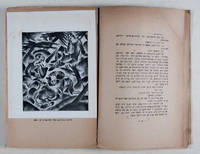
1923réf. 39395Warsaw: Di Zayt 1923. Second edition. Softcover. fair to vg. Large Octavo. 225pp. Original decorative wrappers with b/w. illustration pasted down on front cover in hardcover cassette with half cloth over decorative paper-covered boards and black lettering on spine. 12 b/w illustrations by Jakob Adler. Abraham Zak 1891-1980 describes the fate of galician population during World War I the sudden change in life the preparations life of and with soldiers and living with war and the Jewish holidays. Zak gives words to the differences and the major change in the way of life of the Jews in Galicia. With his style of essays with dialogues he creates a unique approach to the understanding of the meaning of war which is strongly impacted by the dramatic drawings by Jakob Adler. Text in Yiddish. Cassette with light wear along edges. Wrappers rubbed small piece of cover illustration is missing wear along edges and fraying at head and tail of spine. Foxing at verso of front wrapper and title page. Block tanned 60% of pages are loose but present. Block with some fraying at foredge. Binding in overall very good wrappers and interior in fair to good condition. Di Zayt unknown books
1689réf. ST13039gLondon: Printed for Charles Harper 1689. FIRST EDITION. 297 x 192 mm. 11 5/8 x 7 1/2". 20 166 148-9 misnumbered 140-1 2 pp. Very pleasing contemporary red morocco elaborately panelled in gilt covers with mitered frames composed of gilt rules decorative rolls pointillé tooling and floral sprays raised bands spine intricately gilt in compartments with central star-like design and scrolling cornerpieces marbled endpapers all edges gilt possible very expert repair to top spine compartment. Frontispiece engraving of Cowley's tomb. Front pastedown with the bookplate of Robert S. Pirie. Wing C-6665; ESTC R21164. ◆Spine and head of rear board sunned a bit of wear to joints and extremities boards tending to splay slightly faint scattered dark flecks to leather text with isolated spots and browning but an excellent copy the binding solid and only minimally worn and internally very fresh and clean. From a distinguished collection in extremely attractive condition and in a fine contemporaneous binding this is the first appearance of the botanical writings of one of the most precocious poets in the annals of English literature. Cowley 1616-67 was producing poetic works of inexplicable sophistication before he had settled into puberty; he published his first volume of verse at 15 and went on to become one of the most popular poets of his day. A staunch royalist who served in the exiled court of Charles I's queen Henrietta Maria he helped encode and decipher messages sent between the monarchy's supporters including the royal couple themselves. Despite having been arrested and imprisoned as a royalist agent at one point Cowley escaped the Cromwell years largely unscathed and retired to the countryside in 1663. Upon his death Cowley was not only given the extraordinary honor of burial in Westminster Abbey noted by the DNB as "the most lavish funeral which had ever been given to a mere man of letters in England" but was also afforded a privileged spot next to the graves of Spenser and Chaucer. Cowley's influence on contemporary poetry was demonstrably deep; his funerary monument pictured in our frontispiece refers to him as "the English Virgil" and Perkin asserts that his "fame as a poet exceeded even that of Milton" during the waning years of the Restoration. The present copy comes from the collection of Robert S. Pirie 1934-2015 an extremely successful lawyer and investment banker who amassed the finest library of 16th and 17th century English literature in private hands during his lifetime. In 1984 he was elected one of the 40 members of the Roxburghe Club the world's oldest society of bibliophiles. Printed for Charles Harper unknown books
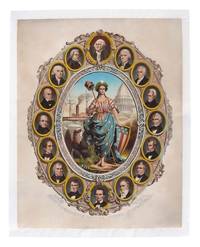
1861réf. 31279Philadelphia: F. Bouclet 1861. Very Good. Philadelphia: F. Bouclet 1861. Original color lithograph 68x54cm. Mounted to matte backing; marginal tears and soiling; rubbing and a few scrapes around title; colors remain bright; a Very Good copy. This large vibrant lithograph was issued to commemorate Lincoln's first inauguration depicting the first sixteen Presidents with George Washington at top a beardless Abraham Lincoln at the bottom. The female personification of Columbia stands in the center before the Capitol holding a shield and staff with a liberty cap. The Capitol Dome sits in the background and is depicted as the artist anticipated it would look--the structure was not completed until late 1863. A handsome and uncommon print scarce in retail and auction records with only two holdings found in OCLC at the Library of Congress and the Mankato Area Public School District in Minnesota. . F. Bouclet unknown books