1.781 Ergebnisse
1918Best.-Nr. RO50044877A. DURAND ET FILS. 1918. In-4. Broché. Etat d'usage, Tâchée, Dos fané, Intérieur frais. 68 pages de partitions. Premier plat illustré en couleur. Tampon sur le premier plat ainsi que sur la page de titre. Révision par Maurice Ravel.. . . . Classification Dewey : 780.26-Partitions
1918Best.-Nr. RO50044878A. DURAND ET CIE. 1918. In-4. Broché. Etat d'usage, Couv. défraîchie, Dos abîmé, Quelques rousseurs. 60 pages de partitions. Tampon sur le premier plat.. . . . Classification Dewey : 780.26-Partitions
Best.-Nr. RO50012446Maurice Schlesinger. XIXème. In-8. Relié demi-cuir. Bon état, Couv. légèrement passée, Dos frotté, Quelques rousseurs. 189 pages. Titre, auteur, filets et fleurons dorés sur le dos. Coiffes abîmées. Coins frottés.. . . . Classification Dewey : 780.26-Partitions
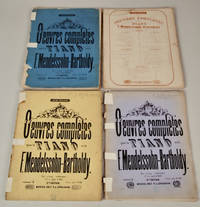
Best.-Nr. RO50045141AUGENER'S. NON DATE. In-4. Broché. Etat d'usage, Plats abîmés, Dos abîmé, Quelques rousseurs. 139 pages de partitions. Dos renforcé. Quelques déchirures aux extrémités des pages.. . . . Classification Dewey : 780.26-Partitions
Best.-Nr. RO50044589ENOCH ET CIE. NON DATE. In-4. Broché. Etat d'usage, Tâchée, Dos abîmé, Quelques rousseurs. 51 pages de partitions. Protection plastique transparente. Dos renforcé avec de l'adhésif. Plats absents.. . . . Classification Dewey : 780.26-Partitions
Best.-Nr. RO50044880UNIVERSAL EDITION. NON DATE. In-Folio. Broché. Etat d'usage, Tâchée, Dos fané, Intérieur acceptable. 65 pages de partitions. Premier plat illustré en couleur. Protection plastique transparente.Tampon et inscription sur le premier plat et tampon sur la page de titre.. . . . Classification Dewey : 780.26-Partitions
Best.-Nr. 1-3957820987Dogma 1776. Paperback. New. 4th edition. 372 pages. 8.27x5.83x0.84 inches. Dogma paperback
Best.-Nr. STAN0090Paris Europäischer Merkur 1934. 853 Seiten OBrosch. Umschlag randrissig Exlibrisstemp. u. Signatur auf hint. Spiegel. Erste Ausgabe. Sternfeld/Tied. 329f u. 429; Kosch XIII417 benennt irrig. den Verleger Paul Roubiczek als Verfasser. - Enthält von Heinrich Mann "Schule der Emigration" von Peter de Mendelssohn "Arbeit für übermorgen" Paris, Europäischer Merkur (1934). unknown
Best.-Nr. 57722Frankfurt S. Fischer 1980-1981. 8° jeweils 700 - 1200 S. OLwd. m. OU m. Lesebändchen in Schmuckschuber. OU beschienen u. etw. gebrauchsspurig Bd. I ohne Schuber Bücher tadell. Bd. I: 1933 - 1934. 21.-27. Tausend; Bd. II: 1935 - 1936. 2. Aufl. 16.-18. Tausend; Bd. III: 1937 - 1939. EA. 010 Frankfurt, S. Fischer, 1980-1981 unknown
Best.-Nr. 1j8866. Jahrgang. Hefte 1-52. 1842. 416 S. mit 8 gefalt. Kupferstichtafeln. original Halbleder mit in Gold graviertem Rückentitel. quart. gering berieben u. bst./StaT./etwas stockfl. - Die Tafeln zeigen: Die neuen Parlamentsgebäude in London/Siegelpresse/M. Lange de Beaujour´s Flinte zu vier Ladungen/Die neueste englische Handbohrmaschine/Kichners Dendrometer/Pflugsaemschine. - unknown
Best.-Nr. 1j8843. Jahrgang. Hefte 1-52. Schroeder Bln. 1839. 416 S. mit 2 mehrfach gefalt. Kupfertafeln. original Halbleder mit in Gold geprägtem Rückentitel. quart. etwas berieben u. bst./teils fleckig/StaT. - Enthält u.a.: Chaussee-Dampfwagen/Elfenbeinpapier/Feuerbrünste in London/Leuchtthürme auf Sandbänken/Klavierbau/Luftschiffahrt/Mühlenbaukunst/Percussions-Gewehre. - unknown
2010Best.-Nr. x-0415587980Routledge 2010. Hardcover. New. 186 pages. 9.57x6.42x0.71 inches. Routledge hardcover
1984Best.-Nr. I-204-267SALABERT 1984. Paperback. Very Good. Former library book. Different cover. Ammareal gives back up to 15% of this item's net price to charity organizations. SALABERT paperback
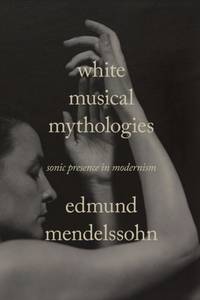
Best.-Nr. ria9781503636347_inpHardback. New. New Book; Fast Shipping from UK; Not signed; Not First Edition; Pairing Erik Satie with Bergson Edgard Varèse with Bataille Pierre Boulez with Artaud and John Cage with Derrida White Musical Mythologies offers an ambitious critical history of the ontology of sound suggesting that the avant-gard hardcover
Best.-Nr. 697333496Academic Studies Press . Hardback. New. pp. 300 Academic Studies Press hardcover
Best.-Nr. 1844171159.Gpaperback. Good. Access codes and supplements are not guaranteed with used items. May be an ex-library book. paperback
Best.-Nr. COD-05407Horton Printing. Hardcover. Very Good. Very good with light wear. Original version. Horton Printing hardcover
1996Best.-Nr. Q-0711902526Omnibus Pr & Schirmer Trade Books 1996-03-01. Paperback. New. New. In shrink wrap. Looks like an interesting title! Omnibus Pr & Schirmer Trade Books paperback
Best.-Nr. 450098Novello and Company Limited. Hardcover. Good. This rare antiquarian Novello's Original Octavo Edition music and tablature book entitled "Elijah: An Oratorio" is written by F. Mendelssohn Bartholdy. Published in c.1903 by Novello and Company Limited and is in good condition overall. Novello and Company Limited hardcover
1875Best.-Nr. 36204Moscou: P.J. Jürgenson 1875. Folio. Original publisher's mid-blue decorative printed wrappers. Vol. I: 125 pp. Contains opp. 5 6 7 nos. 1 and 2 14 15 16 nos. 1-3 19 and 29 Vol. II: 126-262 pp. Contains opp. 25 28 29 30 33 nos. 1-3 and 35 Book 1 Vol. IV: 263-399 pp. Contains opp. 62 Book 5 67 Book 6 72 82 83 85 Book 7 Vol. V: 536-608 pp. Contains opp. 102 Book 8 104 Books 1 and 2 105 and 106 Each volume with a collective title and index. Provenance American composer and pianist Edward Julius Biedermann 1849-1933 with his signature to upper wrappers of three volumes inscribed "To my old friend Chas. B. Hughes." Partially disbound; wrappers torn or lacking. Four of 5 volumes lacking Vol. III. Some minor wear browning and staining. "One of the most gifted and versatile prodigies Mendelssohn stood at the forefront of German music during the 1830s and 40s as conductor pianist organist and above all composer. His musical style fully developed before he was 20 drew upon a variety of influences including the complex chromatic counterpoint of Bach the formal clarity and gracefulness of Mozart and the dramatic power of Beethoven and Weber. Mendelssohn's emergence into the first rank of 19th-century German composers coincided with efforts by music historiographers to develop the concept of a Classic-Romantic dialectic in 18th and 19th-century music. To a large degree his music reflects a fundamental tension between Classicism and Romanticism in the generation of German composers after Beethoven." R. Larry Todd in Grove Music Online. P.J. Jürgenson unknown
1878Best.-Nr. 35280Leipzig: Breitkopf & Härtel PN M.B. 85 1878. Folio. Original publisher's gray wrappers with titling within decorative border. 1f. recto title verso blank 1f. contents 328 pp. Engraved. Text in German. In the series: "Felix Mendelssohn Bartholdy's Werke. Kritisch durchgesehene Ausgabe von Julius Reitz. Mit Genehmigung der Originalverleger. Serie 13. Oratorien. Partitur." From the Breitkopf edition of Mendelssohn's Complete Works No. 85. Provenance Composer Horace Middleton 1879-1961 with his small handstamp to upper wrapper and title. Small oval handstamp of Novello to upper wrapper and blank foot of title. Wrappers rather worn; corner of upper lacking; lower detached. Occasional light foxing heavier to some leaves; edges somewhat soiled; some signatures split. MWV A14 p. 19. Paulus an oratorio to a libretto by Julius Schubring after Acts was first performed as part of the Niederrheinische Musikfest in Düsseldorf on 22 May 1836. Simrock printed the first edition of the piano-vocal score in December 1836 and the full score the following spring. "Mendelssohn distinguished himself in many fields and his contributions to sacred choral music are no exception. He was the most prominent advocate for the music of J.S. Bach reviving the St. Matthew Passion in 1829 and helped to reestablish the oratorio by providing two superb examples: St. Paul 1836 and Elijah 1846. From Bach's Passions and Handel's oratorios Mendelssohn borrowed the use of the traditional narrator to relate in recitatives the dramatic action of the work. Conspicuously Bachian are the chorales interspersed throughout the oratorio to demarcate the principal structural divisions diffusing according to Carl Klingemann 'a calmness through the whole'. On the other hand a debt to Handel is revealed in the rich variety of the choruses which include several that directly engage in the dramatic action and several cast in a variety of fugal styles. Prefacing the oratorio is an overture that evokes Paul's struggle for spiritual awakening by means of the chorale Wachet auf and a dissonant fugue with its subject derived from the first strain of the chorale." R. Larry Todd in Grove Music Online Middleton a British-born composer served on the faculty of Bennett College from 1919 to the mid-1930s; he was best known for the music he composed for the Greek plays performed at there. See his obituary Millbrook Round Table November 23 1961. Breitkopf & Härtel [PN M.B. 85] unknown
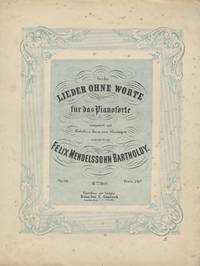
1851Best.-Nr. 40963Bonn . London: bei N. Simrock . bei J. A. Novello PN 3383 1851. Folio. Disbound. Contemporary dark blue paper wrappers with manuscript title label to upper. 1f. recto title verso blank 3-19 i blank pp. Wrappers worn and detached. Moderate foxing throughout heavier to margins. First German edition later issue. MWV SD 23 p. 478. Krause 227. Hoboken 10 222. "One of the most gifted and versatile prodigies Mendelssohn stood at the forefront of German music during the 1830s and 40s as conductor pianist organist and above all composer. His musical style fully developed before he was 20 drew upon a variety of influences including the complex chromatic counterpoint of Bach the formal clarity and gracefulness of Mozart and the dramatic power of Beethoven and Weber. Mendelssohn's emergence into the first rank of 19th-century German composers coincided with efforts by music historiographers to develop the concept of a Classic-Romantic dialectic in 18th and 19th-century music. To a large degree his music reflects a fundamental tension between Classicism and Romanticism in the generation of German composers after Beethoven . . The origins of the Lieder ohne Worte of which Mendelssohn published 36 pieces in six volumes between 1832 and 1845 two more volumes followed posthumously remain couched in mystery. Among his earliest piano lieder was one in E♭ written for Fanny's birthday in 1828 Fanny herself composed numerous examples of the genre; the idea of creating songlike piano pieces may have originated in a game Fanny and Felix played in which they apparently added texts to piano pieces. Then too the critical thought of A.B. Marx who explored in his writings of the 1820s the expressive potential and 'definiteness' of instrumental music was not without impact. Most of the lieder fall into three groups pianistic parallels to the vocal categories of solo songs duets and partsongs. The meaning of the new genre perplexed Mendelssohn's contemporaries. Schumann suggested that the composer had produced texted lieder but then suppressed the texts; when the composer's cousin Marc-André Souchay offered to give some of the lieder fanciful titles Mendelssohn replied that he had intended each lied 'just as it stands'. Only a small number of the lieder bear titles from Mendelssohn e.g. the three called Venetianisches Gondellied or his circle e.g. the 'Frühlingslied'; nevertheless later in the 19th century a host of insipid titles accrued to the lieder contributing to the view of Mendelssohn as a composer of overtly sentimental piano music for the parlour." R. Larry Todd in Grove Music Online. bei N. Simrock ... bei J. A. Novello [PN 3383] unknown
1875Best.-Nr. 36204Moscou: P.J. Jürgenson 1875. Folio. Original publisher's mid-blue decorative printed wrappers. Vol. I: 125 pp. Contains opp. 5 6 7 nos. 1 and 2 14 15 16 nos. 1-3 19 and 29 Vol. II: 126-262 pp. Contains opp. 25 28 29 30 33 nos. 1-3 and 35 Book 1 Vol. IV: 263-399 pp. Contains opp. 62 Book 5 67 Book 6 72 82 83 85 Book 7 Vol. V: 536-608 pp. Contains opp. 102 Book 8 104 Books 1 and 2 105 and 106 Each volume with a collective title and index. Provenance American composer and pianist Edward Julius Biedermann 1849-1933 with his signature to upper wrappers of three volumes inscribed "To my old friend Chas. B. Hughes." Partially disbound; wrappers torn or lacking. Four of 5 volumes lacking Vol. III. Some minor wear browning and staining. "One of the most gifted and versatile prodigies Mendelssohn stood at the forefront of German music during the 1830s and 40s as conductor pianist organist and above all composer. His musical style fully developed before he was 20 drew upon a variety of influences including the complex chromatic counterpoint of Bach the formal clarity and gracefulness of Mozart and the dramatic power of Beethoven and Weber. Mendelssohn's emergence into the first rank of 19th-century German composers coincided with efforts by music historiographers to develop the concept of a Classic-Romantic dialectic in 18th and 19th-century music. To a large degree his music reflects a fundamental tension between Classicism and Romanticism in the generation of German composers after Beethoven." R. Larry Todd in Grove Music Online. P.J. Jürgenson unknown books
1878Best.-Nr. 35280Leipzig: Breitkopf & Härtel PN M.B. 85 1878. Folio. Original publisher's gray wrappers with titling within decorative border. 1f. recto title verso blank 1f. contents 328 pp. Engraved. Text in German. In the series: "Felix Mendelssohn Bartholdy's Werke. Kritisch durchgesehene Ausgabe von Julius Reitz. Mit Genehmigung der Originalverleger. Serie 13. Oratorien. Partitur." From the Breitkopf edition of Mendelssohn's Complete Works No. 85. Provenance Composer Horace Middleton 1879-1961 with his small handstamp to upper wrapper and title. Small oval handstamp of Novello to upper wrapper and blank foot of title. Wrappers rather worn; corner of upper lacking; lower detached. Occasional light foxing heavier to some leaves; edges somewhat soiled; some signatures split. MWV A14 p. 19. Paulus an oratorio to a libretto by Julius Schubring after Acts was first performed as part of the Niederrheinische Musikfest in Düsseldorf on 22 May 1836. Simrock printed the first edition of the piano-vocal score in December 1836 and the full score the following spring. "Mendelssohn distinguished himself in many fields and his contributions to sacred choral music are no exception. He was the most prominent advocate for the music of J.S. Bach reviving the St. Matthew Passion in 1829 and helped to reestablish the oratorio by providing two superb examples: St. Paul 1836 and Elijah 1846. From Bach's Passions and Handel's oratorios Mendelssohn borrowed the use of the traditional narrator to relate in recitatives the dramatic action of the work. Conspicuously Bachian are the chorales interspersed throughout the oratorio to demarcate the principal structural divisions diffusing according to Carl Klingemann 'a calmness through the whole'. On the other hand a debt to Handel is revealed in the rich variety of the choruses which include several that directly engage in the dramatic action and several cast in a variety of fugal styles. Prefacing the oratorio is an overture that evokes Paul's struggle for spiritual awakening by means of the chorale Wachet auf and a dissonant fugue with its subject derived from the first strain of the chorale." R. Larry Todd in Grove Music Online Middleton a British-born composer served on the faculty of Bennett College from 1919 to the mid-1930s; he was best known for the music he composed for the Greek plays performed at there. See his obituary Millbrook Round Table November 23 1961. Breitkopf & Härtel [PN M.B. 85] unknown books
1851Best.-Nr. 40963Bonn . London: bei N. Simrock . bei J. A. Novello PN 3383 1851. Folio. Disbound. Contemporary dark blue paper wrappers with manuscript title label to upper. 1f. recto title verso blank 3-19 i blank pp. Wrappers worn and detached. Moderate foxing throughout heavier to margins. First German edition later issue. MWV SD 23 p. 478. Krause 227. Hoboken 10 222. "One of the most gifted and versatile prodigies Mendelssohn stood at the forefront of German music during the 1830s and 40s as conductor pianist organist and above all composer. His musical style fully developed before he was 20 drew upon a variety of influences including the complex chromatic counterpoint of Bach the formal clarity and gracefulness of Mozart and the dramatic power of Beethoven and Weber. Mendelssohn's emergence into the first rank of 19th-century German composers coincided with efforts by music historiographers to develop the concept of a Classic-Romantic dialectic in 18th and 19th-century music. To a large degree his music reflects a fundamental tension between Classicism and Romanticism in the generation of German composers after Beethoven . . The origins of the Lieder ohne Worte of which Mendelssohn published 36 pieces in six volumes between 1832 and 1845 two more volumes followed posthumously remain couched in mystery. Among his earliest piano lieder was one in E♭ written for Fanny's birthday in 1828 Fanny herself composed numerous examples of the genre; the idea of creating songlike piano pieces may have originated in a game Fanny and Felix played in which they apparently added texts to piano pieces. Then too the critical thought of A.B. Marx who explored in his writings of the 1820s the expressive potential and 'definiteness' of instrumental music was not without impact. Most of the lieder fall into three groups pianistic parallels to the vocal categories of solo songs duets and partsongs. The meaning of the new genre perplexed Mendelssohn's contemporaries. Schumann suggested that the composer had produced texted lieder but then suppressed the texts; when the composer's cousin Marc-André Souchay offered to give some of the lieder fanciful titles Mendelssohn replied that he had intended each lied 'just as it stands'. Only a small number of the lieder bear titles from Mendelssohn e.g. the three called Venetianisches Gondellied or his circle e.g. the 'Frühlingslied'; nevertheless later in the 19th century a host of insipid titles accrued to the lieder contributing to the view of Mendelssohn as a composer of overtly sentimental piano music for the parlour." R. Larry Todd in Grove Music Online. bei N. Simrock ... bei J. A. Novello [PN 3383] unknown books