GILBERT (Pierre-Julien).Livre Rare Book
9 195 résultats
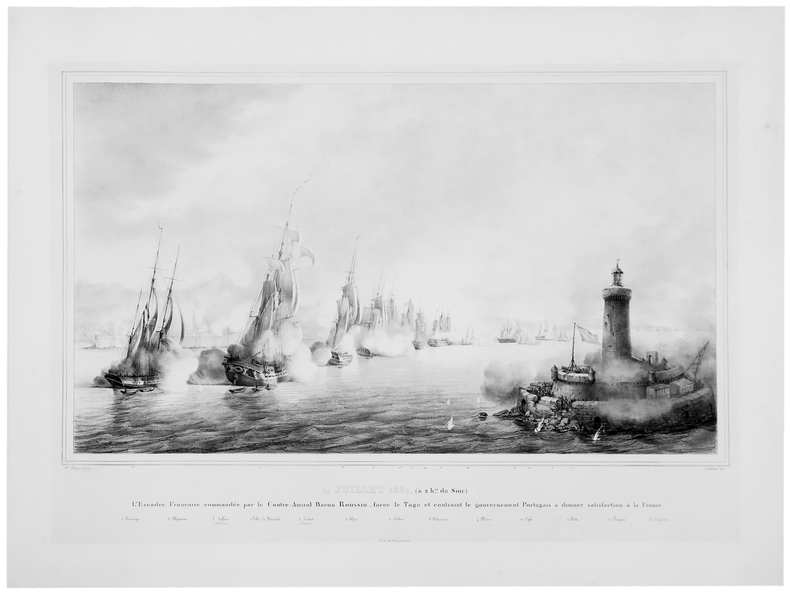
1837réf. LBW-51681837. 509 x 752 mm, sur Chine monté.
1578In-4°; cc.14 (di cui la seconda è bianca), 365 carte num. Capilettera incisa su legno. Marca tipografica al frontespizio (In cornice fig.: una stella cometa con sette stelle tra le punte. Intorno alla coda nastro con il motto: Inter omnes.) . Manca ultima carta con timbro tipografico. Note manoscritte di possesso, datate 1740 e 1926. piccoli segni di tarli nell’ultime carte e macchie di umidità. Legatura in pergamena.
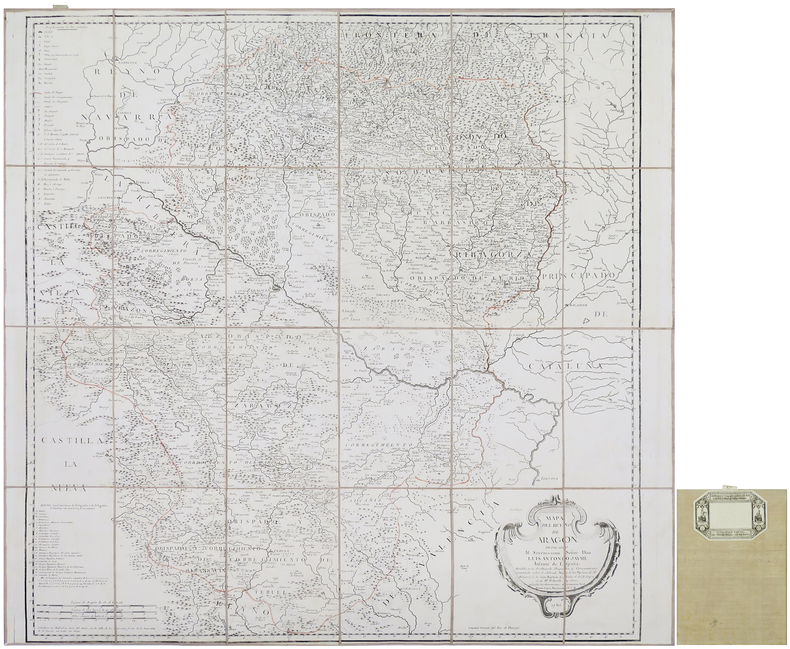
1765réf. LBW-8661Madrid, 1765. En 24 sections montées sur toile et repliées, formant une carte de 805 x 832 mm ; étiquette de l'éditeur parisien Charles Picquet au dos, onglet de vélin numéroté en manuscrit.
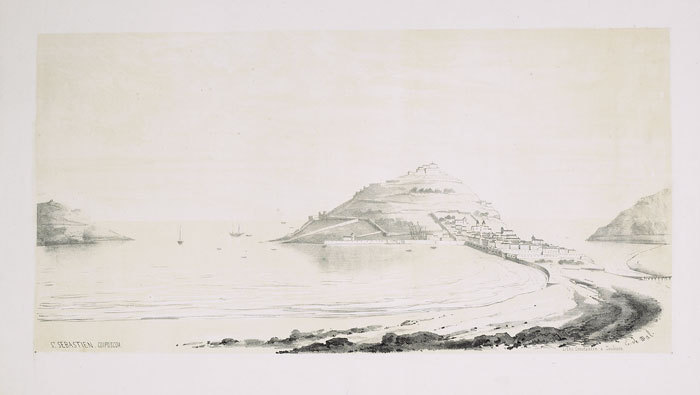
1843réf. LBW-653Toulouse 1843 230 x 455 mm.
1750réf. LBW-4129[circa 1750]. 362 x 506 mm.
1787XXX, (2) pp. ; in- 4° (36x23 cm), Graziose calcografie al frontespizio, all’incipit (firmata Angelo Campanella) e al colophon. Su carta forte, estremamente marginoso e ben conservato.
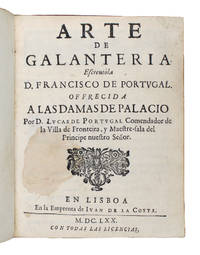
1670réf. 12054Lisboa: Juan de la Costa 1670. 178x139mm. 7x5½". Lisboa Juan de la Costa 1670. En 4º 178 x 139mm. 12 128 pp. Encuadernación del siglo dieciocho en holandesa pergamino tejuelo en piel en la lomera con letrería dorada. Primera edición de este apreciado libro de poesía portuguesa dedicado a la galantería el único tratado sobre este tema publicado en el siglo diecisiete. El libro se escribió en 1628 pero no se publicó hasta 1670. El autor escribió el libro basándose en sus vivencias en la corte madrileña de Felipe IV pero mirando con nostalgia el pasado de la antigua corte portuguesa. La obra ofrece todo el ceremonial de la galantería en un cancionero. Dice Palau: "cuentos alegorías dichos agudos sentencias chistesen prosa con intercalados en verso". Francisco de Portugal 1585-1632 era descendiente de Vasco de Gama y I Conde de Vimioso. Se publicó una segunda edición en 1682. Buen ejemplar. Juan de la Costa hardcover
réf. 94286aaf1756 / 1758 / 1802 / 1834, in-4to, brochures originales en bon état (n. 3 avec tache d’humidité).
1841réf. PHO-1220Lisboa. Na Typografia da Academia Real das Sciencias. 1841-1852 , grand et fort in-4 (31x22) ,de 859pp. (1841;3ff-1-166pp,1849;2ff-167-490pp,1850;1f-491-656,1852;657-859pp) et illustré de 8 cartes et planches dépliantes (certaines brunies),relié demi veau , dos orné avec auteur et titre , ex-dono manuscrit au titre à Vincendon-Desmoulin (cartographe de Dumont d’Urville sur l’Astrolabe), cachet .
1679réf. PHO-2525A Paris, Chez Louis Billaine, 1679. In-4° ; 5ff.-1 carte h.-t.-repl.-327 pp.-218 pp.-144 pp.-12ff., veau époque, dos à nerfs orné avec titre. Manque au dos et charnières, coins usé, travail de ver sur les 17 premiers et 30 derniers feuillets, petite mouillure angulaire, titre bruni, feuillet « Au lecteur » déchiré sans manque, brunissures. L’une des meilleures descriptions des Maldives et une importante description de Goa.
réf. 13981904London: Printed for the Oriental Translation Fund of Great Britain and Ireland, John Murray and Parbury, Allen & Co., 1833 in-8, xvi (la pagination commence à la page VI mais l'ouvrage est bien complet)-181 pages. Reliure percaline verte d'édition, pièce de titre imprimée au dos, bel exemplaire. Première traduction en anglais du Tohfut-ul-Mujahideen, écrit à la fin du 16e siècle, en réaction aux attaques des Portugais contre les musulmans de la côte de Malabar.
1862réf. R98154Paris, Louis Vivès 1862-1868 Ouvrage tout complet en 22 tomes, ensemble +/- 12.000 pp., 23cm., texte en Français, reliures cart. uniformes en très bon état (dos en velin blanc, pièces de tomaison rouges avec titre doré), texte frais avec très peu de rousseurs, cachet (surtout sur les fausses pages de titre et au verso des p.d.t.), volume 22 contient "Table générale des matières", bon ensemble, poids: 20kg., [Louis de Grenade O.P., 1505 Grenade (Espagne), +1588 Lisbonne, théologien et prédicateur], R98154
1862Ouvrage tout complet en 22 tomes, ensemble +/- 12.000 pp., 23cm., texte en Français, reliures cart. uniformes en très bon état (dos en velin blanc, pièces de tomaison rouges avec titre doré), texte frais avec très peu de rousseurs, cachet (surtout sur les fausses pages de titre et au verso des p.d.t.), volume 22 contient "Table générale des matières", bon ensemble, poids: 20kg., [Louis de Grenade O.P., 1505 Grenade (Espagne), +1588 Lisbonne, théologien et prédicateur], R98154
1858réf. 28337Lisbonne Imprimerie Nationale 1858 in-4 demi-chevrette marine, dos lisse orné de filets et fleurons dorés, tranches mouchetées [Rel. de l'époque], restaurée
réf. 37933Paris,chez Denné jeune en 1797. 2 vols.in-8 en reliure d'époque. Voyage à travers les Provinces d'Entre-Douro et Minho, de Beira, d'Estramadure et d'Alenteju, dans les années 1789 et 1790. Contenant des Observations sur les Moeurs, les Usages, le Commerce, les Edifices publics, les Arts, les Antiquités, ... de ce Royaume. Ouvrage en français traduit par Jacques Murphy. 23 planches dépliantes. 218 et 290 pages. Bon exemplaire avec qques rousseurs et mouillures.
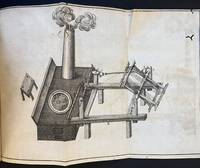
1787réf. 4368Lisbon: press of the Royal Academy of Sciences 1787. Narrow 4to 209 x 118 mm. 8 xiii 3 175 pages. Title-leaf fol. 2 present in duplicate. Folding engraved plate of a mechanical silk loom; titles with woodcut arms of the Portuguese Royal Academy of Sciences woodcut and typographic headpieces occasional slight discoloration small wormtrack in the folding plate. Contemporary cat’s-paw polished sheep covers with gilt border spine in six gold-tooled compartments the second gilt lettered edges gilt and gauffered recased endpapers renewed defect in top spine compartment a dozen small wormholes. Provenance: António Romão dos Passos 1866-1951 signature in ink Antonio Passos / agronomo or Anto R. Passos scrawled across both titles the first with price note and on six text leaves. Only edition of a comprehensive overview of the Portuguese silk industry by the judicial magistrate of the Moncorvo district and author of several works on political economy and history of law. José Antonio de Sá d. 1819 a native of Bragança was an important proponent of modernization of the industry and later served as director of the Royal Silk Factory Real Fábrica das Sedas founded in 1802 in Lisbon. He was one of the earliest members of the Academia Real das Sciencias of Lisbon. Silkworms were raised in Portugal as early as the 13th century. Sericulture and silk production were concentrated in the northeastern province of Trás-os-Montes its largest center being the city of Bragança which from the 15th to 17th century was known throughout Europe for its luxurious velvets. Because of the lack of government support for industry frequent wars and above all the persecutions of the Inquisition which decimated an industry in all sectors of which Jews or converted Jews cristãos-novos played a major role Portuguese silk production suffered from intermittent crises and was even periodically decimated. Starting in the 1770s efforts to revive the industry began to have an effect: “By the end of the 18th century the Trás-os-Montes silk industry had dragged itself out of the crisis that had begun in 1750-1755 coinciding with the last incursion of the Inquisition into Bragança and embarked upon a period of great development accompanying the industrial expansion that was then taking place not only in that particular region but throughout the Portuguese kingdom. After the Inquisition’s systematic persecution of businessmen weavers and throwers had finally come to an end the continuity and expansion of the silk industry seemed to be a viable prospect. In the last two decades of the 18th century a remarkable process of modernization took place thanks to the efforts of the businessmen involved in this economic activity such as António José Lopes Fernandes who installed 200 silk looms in Bragança magistrates such as José António de Sá and Pereira de Barros and politicians such as Martinho de Melo e Castro and Rodrigo de Sousa Coutinho the latter being the Portuguese ambassador to Piedmont Italy. These efforts included the adoption of Piedmontese methods and techniques namely the organzine mill and the spinning-jenny the most advanced ones at that time in Europe in an operation led by experts coming to Portugal from that Italian region.” Sousa p. 6 Sá’s work is in three parts. The first part comprises an overview of the history of silk production starting with Antiquity and summaries of the industry and government policies toward it in other countries followed by a detailed recommendation with responses to projected objections that the Portuguese government undertake a campaign to plant mulberry trees and promote the industry generally. Part two is a treatise on the silkworm and part three a technical survey of “the art of silk spinning.” Explained in the text pp. 142-148 is the letter- and number-keyed engraving of a rather fanciful machine showing a vat for softening the cocoons heating on the left from which a thread-unwinding mechanism feeds a loom on the right. The reason for the duplicated title-leaf in this copy is not clear. Perhaps one functioned as an upper wrapper — but as both titles are preceded by a half-title that appears unlikely. The book collector Antonio Romão dos Passos b. February 28 1866 was an engineer and agronomist. Other books from his library all on practical subjects are recorded; four are digitized by the Biblioteca Nacional Digital de Portugal. One a treatise on hemp has a similar indelicately scrawled signature across the title. OCLC gives six US locations. Innocencio Diccionario bibliographico portuguez IV: 246 no. 2658; Kress Luso-Brazilian Economic Literature Before 1850 p. 4. Cf. F. Sousa “The Silk Industry In Trás-Os-Montes During The Ancient Regime” E Journal of Portuguese History Vol. 3 no. 2 Winter 2005 digitized. press of the Royal Academy of Sciences unknown
1787réf. 4368Lisbon: press of the Royal Academy of Sciences 1787. Narrow 4to 209 x 118 mm. 8 xiii 3 175 pages. Title-leaf fol. 2 present in duplicate. Folding engraved plate of a mechanical silk loom; titles with woodcut arms of the Portuguese Royal Academy of Sciences woodcut and typographic headpieces occasional slight discoloration small wormtrack in the folding plate. Contemporary cat’s-paw polished sheep covers with gilt border spine in six gold-tooled compartments the second gilt lettered edges gilt and gauffered recased endpapers renewed defect in top spine compartment a dozen small wormholes. Provenance: António Romão dos Passos 1866-1951 signature in ink Antonio Passos / agronomo or Anto R. Passos scrawled across both titles the first with price note and on six text leaves. Only edition of a comprehensive overview of the Portuguese silk industry by the judicial magistrate of the Moncorvo district and author of several works on political economy and history of law. José Antonio de Sá d. 1819 a native of Bragança was an important proponent of modernization of the industry and later served as director of the Royal Silk Factory Real Fábrica das Sedas founded in 1802 in Lisbon. He was one of the earliest members of the Academia Real das Sciencias of Lisbon. Silkworms were raised in Portugal as early as the 13th century. Sericulture and silk production were concentrated in the northeastern province of Trás-os-Montes its largest center being the city of Bragança which from the 15th to 17th century was known throughout Europe for its luxurious velvets. Because of the lack of government support for industry frequent wars and above all the persecutions of the Inquisition which decimated an industry in all sectors of which Jews or converted Jews cristãos-novos played a major role Portuguese silk production suffered from intermittent crises and was even periodically decimated. Starting in the 1770s efforts to revive the industry began to have an effect: “By the end of the 18th century the Trás-os-Montes silk industry had dragged itself out of the crisis that had begun in 1750-1755 coinciding with the last incursion of the Inquisition into Bragança and embarked upon a period of great development accompanying the industrial expansion that was then taking place not only in that particular region but throughout the Portuguese kingdom. After the Inquisition’s systematic persecution of businessmen weavers and throwers had finally come to an end the continuity and expansion of the silk industry seemed to be a viable prospect. In the last two decades of the 18th century a remarkable process of modernization took place thanks to the efforts of the businessmen involved in this economic activity such as António José Lopes Fernandes who installed 200 silk looms in Bragança magistrates such as José António de Sá and Pereira de Barros and politicians such as Martinho de Melo e Castro and Rodrigo de Sousa Coutinho the latter being the Portuguese ambassador to Piedmont Italy. These efforts included the adoption of Piedmontese methods and techniques namely the organzine mill and the spinning-jenny the most advanced ones at that time in Europe in an operation led by experts coming to Portugal from that Italian region.” Sousa p. 6 Sá’s work is in three parts. The first part comprises an overview of the history of silk production starting with Antiquity and summaries of the industry and government policies toward it in other countries followed by a detailed recommendation with responses to projected objections that the Portuguese government undertake a campaign to plant mulberry trees and promote the industry generally. Part two is a treatise on the silkworm and part three a technical survey of “the art of silk spinning.” Explained in the text pp. 142-148 is the letter- and number-keyed engraving of a rather fanciful machine showing a vat for softening the cocoons heating on the left from which a thread-unwinding mechanism feeds a loom on the right. The reason for the duplicated title-leaf in this copy is not clear. Perhaps one functioned as an upper wrapper — but as both titles are preceded by a half-title that appears unlikely. The book collector Antonio Romão dos Passos b. February 28 1866 was an engineer and agronomist. Other books from his library all on practical subjects are recorded; four are digitized by the Biblioteca Nacional Digital de Portugal. One a treatise on hemp has a similar indelicately scrawled signature across the title. OCLC gives six US locations. Innocencio Diccionario bibliographico portuguez IV: 246 no. 2658; Kress Luso-Brazilian Economic Literature Before 1850 p. 4. Cf. F. Sousa “The Silk Industry In Trás-Os-Montes During The Ancient Regime” E Journal of Portuguese History Vol. 3 no. 2 Winter 2005 digitized. press of the Royal Academy of Sciences unknown books
1738réf. 8764Amsterdam, H. du Sauzet, 1738. 2 tomes en un volume in-12 de [8]-228; [4]-241-[3] pages, plein veau brun, dos à nerfs orné de filets et fleurons dorés, pièce de titre beige, roulette dorée sur les coupes, tranches rouges. Coins à peine frottés, tache d'encre p. 63 du tome 2.
1688réf. 80629London: for James Knapton 1688. First Edition in English. Small 4to 21cm. Later marbled paper-covered boards with gilt morocco spine label; vi70pp. Mild external aging and wear; text quite fresh a few leaves trimmed close at top edge but with no loss of printed area; easily Very Good. A most attractive copy. A celebrated account of suffering under the Portuguese Inquisition. Dellon a French medical doctor and naturalist settled at Daman on the western coast of India around 1673 where he began a private medical practice. Within a year he was taken prisoner by the Inquisition accused among other crimes of blaspheming against the adoration of the crucifix. He was transported to Goa where he was held for two years under harsh conditions before being shipped to Lisbon where he was finally released in 1675. This account of Dellon's sufferings first appeared in Leiden 1687; in Paris a year later then rapidly went into English German and Dutch translations. Howgego: "Although long regarded purelyi as a work of propaganda recent research has testified to its accuracy." HOWGEGO I:304. WING D941. for James Knapton unknown
1688réf. 80629London: for James Knapton 1688. First Edition in English. Small 4to 21cm. Later marbled paper-covered boards with gilt morocco spine label; vi70pp. Mild external aging and wear; text quite fresh a few leaves trimmed close at top edge but with no loss of printed area; easily Very Good. A most attractive copy. A celebrated account of suffering under the Portuguese Inquisition. Dellon a French medical doctor and naturalist settled at Daman on the western coast of India around 1673 where he began a private medical practice. Within a year he was taken prisoner by the Inquisition accused among other crimes of blaspheming against the adoration of the crucifix. He was transported to Goa where he was held for two years under harsh conditions before being shipped to Lisbon where he was finally released in 1675. This account of Dellon's sufferings first appeared in Leiden 1687; in Paris a year later then rapidly went into English German and Dutch translations. Howgego: "Although long regarded purelyi as a work of propaganda recent research has testified to its accuracy." HOWGEGO I:304. WING D941. for James Knapton unknown books
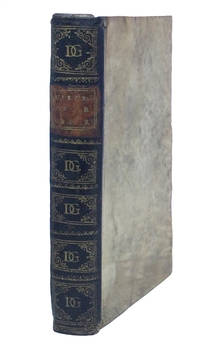
1629réf. 1276Christopher Prince of Portugal's biographical portrait of his father Antonio Prior de Crato 1531-1595 illegitimate son of Prince Louis Duke of Beja and claimant to the Portuguese throne. Antonio - who glories in such names as 'The Determined' 'The Fighter' 'The Independentist' and 'The Resistant' - was proclaimed King of Portugal on 19th July 1580 but was defeated on 25th August at the Battle of Ancântara by the armies of rival claimant Philip II of Spain led by Fernando Ãlvarez de Toldedo Duke of Alba. After his defeat Antonio fled to the Azores where he minted coin organised resistance to Philip's rule and established an opposition government that lasted until 1783. As a Knight of Malta Antonio never married but is thought to have fathered ten illegitimate children. One of these Christopher author of the present work was born in Tangier in April 1573. Always an ardent champion of his father's claims he continued to fight his father's cause long after his death in 1595. This biography of his father contains several interesting documents relating to Dom Antonio's applications for foreign help in fighting Philip II and regaining the throne most notably to the court of Elizabeth I. This work is very much part of a political campaign: it contains a lengthy dedication to the young Louis XIII of France discussing the role of his parents in Antonio's struggle and an Avertissement au lecteur in which Christopher makes a plea for French involvement pointing out that the royal line of Portugal is in direct descent from the French royal family. 8vo 170 x 110mm pp. xvi 302 2 engraved arms of the King of Portugal to title woodcut initial and headpiece slight yellowing upper edge a bit dusty in contemporary vellum spine painted in black with six compartments marked by gilt tooling where the raised bands would be five of the compartments with central gilt monogram DG within decorative gilt cornerpieces the sixth compartment with orange morocco label lettered in gilt blind filet along sides of spine gilt edges with the later bookplate of Annibal Fernandes Thomaz and an early manuscript number possibly shelfmark on the rear pastedown. OCLC lists BL Harvard Johns Hopkins Catholic University of America and Kansas. Gervais Alliot
réf. AQ11379s.i. Portugal: s.n. 1815 In two volumes. 47pp 3 the remainder blank; 12 blank leaves with alphabetized tabs 35ff 41ff the remainder blank with some newspaper clippings relating to WW1 tipped in at end. A printed broadside 'Instructions to Cashiers of Military Chests' is pasted to the FEP of each volume. Contemporary reverse calf with attractive black morocco gilt lettering-pieces to upper board of each volume marbled endpapers. Rubbed and marked with some loss to calf at edges and bumping to corners. A fascinating pair of early nineteenth-century manuscripts albeit sparsely filled consisting of the details of substantial payments made on behalf of the British Army in Portugal and corresponding transfers between military chests and pay offices in Almeida and Lisbon during the tumultuous months of 1815 which saw Napoleon's return from exile in Elba the Hundred days rule and the final defeat of his French army at the Battle of Waterloo. The day book records money received and paid out and in some cases the circumstances such as receipts and instructions from various pay offices and military figures including 'Mr Commissary General Murray' and 'Ac Comm'y Gn. St Remy' - with the vast majority of the payments made to Portuguese individuals - whilst the ledger the corresponding folios of which are referenced to each payment in the day book in red ink contains double-entry debit and credit accounts. As the printed instructions notes the day book therefore includes 'every Circumstance relating to the Military Chest which may be in the least Degree important at the Time or which the Day of its Occurrence' whilst the ledger 'consists of a General Cash Account and of as many other separate Accounts as there are Species of Coin Bullion or Paper Money to be accounted for'. . Folio. [s.n., 1815] unknown
1700réf. 42989Lisboa, Miguel Manescal, 1700. In-4 de (12)-458-(2) pp., veau granité, dos orné à nerfs, pièce de titre en maroquin rouge (reliure de l'époque).
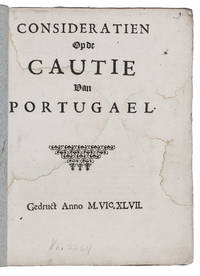
1647réf. B32D19U6QRO5Amsterdam 1647. Small 4to 20 x 15.5 cm. Johannes van Marel pseudonym Later blue paper wrappers. With cast fleurons assembled to form a decoration on the title-page and a headpiece. Set in roman for the main text and italic type. 15 1 blank pp. First and only edition of a rare pamphlet defending Portugal against the claims of the Dutch Government and the West India Company WIC in Brazil: one of the earliest and one of the three "most remarkable works" published by Portugal's supporters in the Netherlands Asher p. 194. In an effort to take back Brazil from the Dutch the Portuguese had supported a local revolt in 1645 and the hostilities on land and sea between the Portuguese and the WIC had escalated rapidly. Portugal was suing for peace and the present pamphlet presents their side. In a series of questions and answers it sets forth the Dutch reservations about the peace and distrust of Portugal and attempts point by point to refute all arguments against a settlement.The author and printer of the pamphlet have not been identified but the author himself refers to his own Vertooch aen de . Staten Generael published earlier in the same year.With some waterstains otherwise in good condition.l Alden & Landis 647/51 6 copies; Asher 225 & pp. 192-194; Borba de Moraes p. 200; Knuttel 5554; Sabin 15933; STCN 6 copies; not in Van Doorninck. unknown
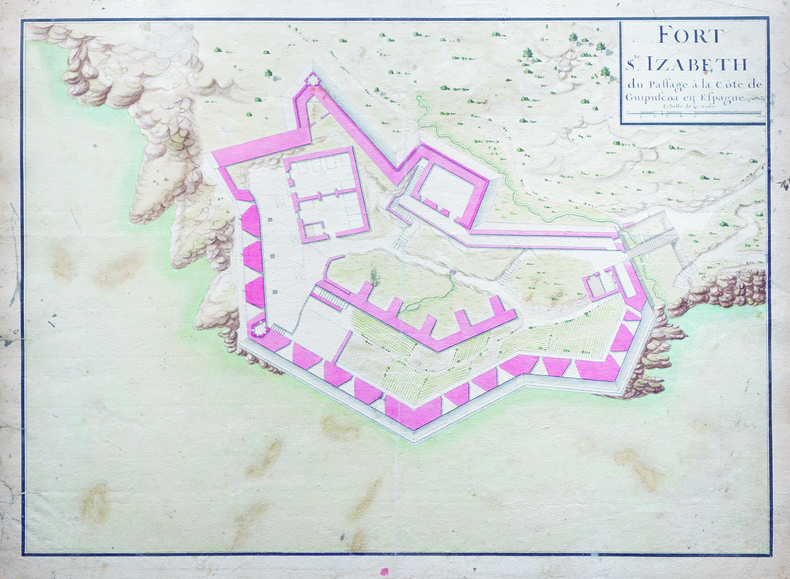
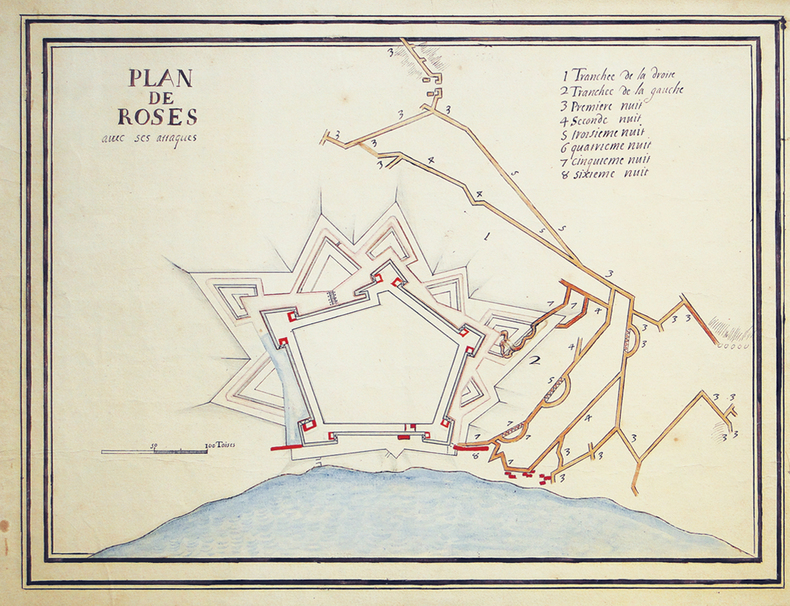
1700réf. LBW-3460[début du XVIIIe siècle]. 370 x 475 mm.