CHÉREAU (Jacques);Livre Rare Book
9 243 résultats
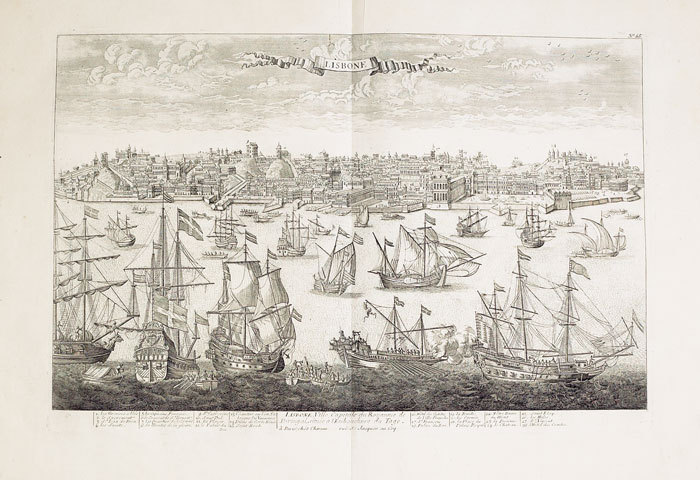
1760réf. LBW-517Paris Chéreau 1760 circa 346 x 515 mm.
1879réf. 001870Paris Maçia 1879
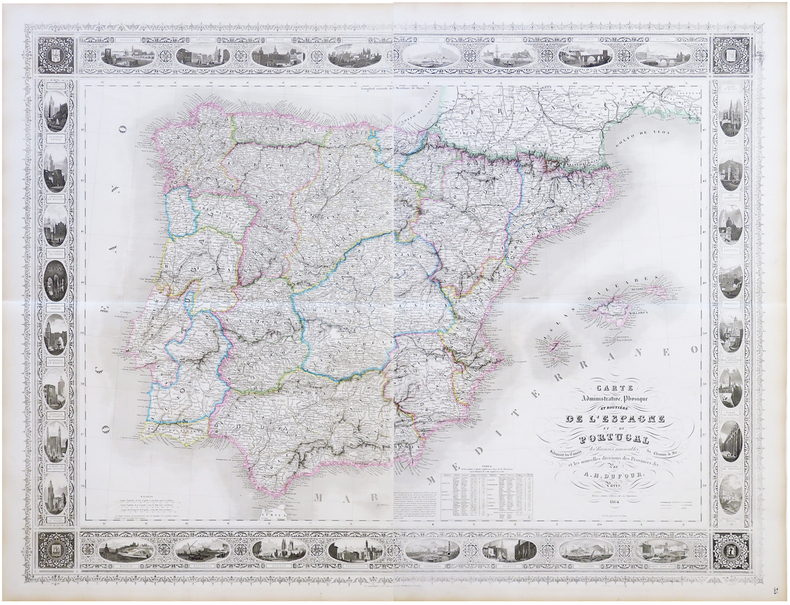
1864réf. LBW-6823Paris, Bulla Frères, 1864. En deux feuilles pouvant être jointes pour former une carte de 0,95 x 1,25 m.
1830réf. LBW-1172Paris, Basset, [circa 1830]. 380 x 463 mm.
réf. 13982076Bruxelles: de Tollenaere, c. 1885 Edition originale des 8 planches lithographiées en couleurs sans pliure (32 x 43,5 cm), dessinées par Emilio Pimentel. On joint les 4 fascicules de texte in-4 en fac-similé. Sous emboîtage de percaline verte moderne à rabats (45 x 33,5 x 4 cm), titre doré sur le 1er plat.Réf. OBERLE, Gérard, Les Fastes de Bacchus et de Comus, 983.: "Suite de la plus extrême rareté de 8 planches lithographiées en couleurs, représentant les cépages de la vallée du Douro, avec lesquels on fabrique les meilleurs vins de Porto". "Les quatre fascicules sont presque introuvables, mais les 8 planches qui devaient les orner sont encore plus rares et manquent toujours". Oberlé précise que "ces planches n'ont jamais figuré dans un catalogue de vente publique et manquent à toutes les célèbres collections sur le vin", sauf dans la collection Chwart (n°123), qui acquit son exemplaire à la vente Oberlé. Quelques lég. rousseurs sur les planches.
réf. LL 808Slavery/Brazil: "Alvará para que se naõ levem negros dos pórtos do mar para terras que naõ sejaõ dos dominios portuguezes. De 14 de Outubro de 1751." Lisboa: Foi reimpresso na Officinia de Miguel Rodrigues 30 de Outubro de 1751. Single sheet 11½ x 7¾ inches 29 x 19½ cm. Eight-line historiated initial. Folio. A very rare alvara by King José I of Portugal banning the export of enslaved Africans from Brazil to foreign ports and requiring detailed record-keeping of the enslaved population there. The importance of enslaved labor in Brazil was paramount and the loss of productivity from exported slaves was keenly felt by the Portuguese in the mid-18th century. A decade after the present alvara was issued José made a second decree forbidding the importation of slaves to Europe and Portuguese India again with the express purpose of directing as many of the enslaved as possible towards Brazil. The Atlantic slave trade was finally outlawed for good under pressure from the British in 1836 although slavery itself continued to be legal in Portuguese dominions until nearly the turn of the century. The present document reads in substantial part in translation: "I the King make known to those to whom this alvara having the form of a law shall come that it having been represented to me in a report from my Council beyond the sea how great an irregularity is occasioned by negroes being exported from Brazil and conveyed to dominions not belonging to me whereof results a notorious prejudice to the public welfare and to my royal revenue and that it is necessary to devise a proper remedy. I deem it right to ordain in general that no blacks shall be conveyed to sea-port towns of such territories as are not in my royal dominions; and if the contrary be ascertained that the triple value of each slave shall be forfeited half of it to go to the informer and the other half to the royal revenue; and that the persons guilty of contraband shall be banished for 10 years to Angola…and all the Justices of those places on the frontier shall be obliged to send every year to the Provedorias of the city of Bahia and of Rio de Janeiro a list of all the slaves that have arrived and of all those who abide there specifying such as died or were absent for some justifiable reason or from having proceeded to territories of my conquests." # WorldCat U.S. Libraries: 2 copies: The New York Public Library and JCB. LL 808
1513réf. 54087Strasbourg. 1513. Originalt tresnitt. Arkets størrelse : 60 cm X 425 cm. Norsk. “Martin Waldseemüller a highly accomplished scholar of geography merged the science of mapmaking and the art of printing in his 1513 atlas one of the most groundbraking documents in the history of cartography. He intended this atlas as a new edition of Ptolemy’s Geographia but included the addition of 20 modern maps which were not based upon the tradition of Ptolemy. Waldseemüller’s use of a quadratic plane projection was also a noteworthy advance.”Martin Waldseemüller 1470-1520.Liten rift ved nedre marg. Et lite ormehull i venstre marg. Et par slitasjer i øvre marg. unknown
1905réf. 5217in-folio de 2 ff. daté de Lisbonne, le 27 octobre 1905, signé du Grand Maître, du Président du Conseil et du Secrétaire Général du Grand Orient Lusitanien Uni, avec cachets secs. Il s’agit du texte d’accueil d’Emile Loubet, président de la République Française, devant le Suprême Conseil de la Maçonnerie Portugaise lors de son voyage au Portugal en octobre 1905.
1724réf. 21407Lissabon, Bernardo da Costa de Carvalho, 1724. 6 Bll., 212 SS., 1 (statt 2) Bl. Index. Flexibler Pergamenteinband der Zeit, handschr. Rückentitel. Einband leicht fleckig. Ohne die vier Bindebänder.
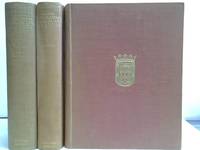
1929réf. 99999-1069London Walter Lewis at the Cambridge University Press for Maggs Bros. 1929-35. With 22 plates and more than 1000 illustrations often in red and black. LVI 633 pp.; XII 817 pp.; XLI 791 pp. Large 4to. Orig. cloth gilt Royal coat of arms on covers spines slightly faded. London Walter Lewis at the Cambridge University Press for Maggs Bros. 1929-35. One of 650 copies on antique paper of a total edition of 698. A catalogue raisonné of the Royal Portuguese collection. Volume I covers the period 1489-1539 volume II 1540-1569 volume III 1570-1600 and supplement 1500-1597. More than 400 books are described in detail both in English and Portuguese. With a text by Aubrey F. G. Bell "H.M. King Manuel II" and by Stanley Morison "The King and his books". This catalogue can indeed be called a "masterpiece both of composition and press-work" Barker Stanley Morison p. 335. BIBLIOGRAPHY ; London, (Walter Lewis at the Cambridge University Press, for) Maggs Bros. hardcover
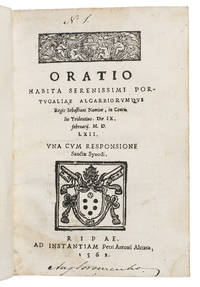
1562réf. ABC_47938Ripae = Riva del Garda Italy: Pietro Antonio Alciatis 1562. Mid 19th-century marbled paper wrappers. 4to 18.2 x 13.4 cm. With the woodcut coat-of-arms of the Medici popes and a woodcut head-piece on the title-page 2 large woodcut decorated initials in the text a woodcut head-piece at the start of the text and two ornaments at the start and end of the text. Rare copy of the speech written in name of King Sebastião of Portugal 1554-1578 for the Council of Trent 1545-1563. The speech was given on February 9 1562 in front of the bishops and other attendants of the council when King Sebastião was just 8 years old. The speeches provided by the Kings of the European nations were to be measured carefully as the position taken by the Church in many matters carried geo-political changes; not a century ago the Pope had granted a large portion of the South American territories to Portugal through the Treaty of Tordesillas a line that took centuries to properly determine. It is unknown who wrote this speech but it is often attributed to Giovanni Strozzi active 1547-1562 who wrote another similar work. The text makes clear that the kings of Portugal have always been good Christians and promises that Sebastião will be as well. The last page contains the response from the Synod. This work rarely appears on the market.The Council of Trent was an ecumenical council of the Catholic Church held in reponse to the Protestant Reformation. There were 25 sessions over the course of 18 years. The attendants discussed the Church's doctrine and teachings in order to clarify them and defined what it considered to be heresies. The council had a long-lasting impact on religion in Europe through the numerous apologetic and polemical documents and decrees that resulted from it.With a manuscript note on the recto of the first blank flyleaf: "Indice" and two manuscript notes on the title-page "No. 1" at the head of the title-page and "Aug. Soromenho" at the foot of the title-page. With slight water-staining in the top and bottom margins of the leaves very slightly browned throughout. Otherwise in very good condition.l Adams vol. II 1953; USTC 850992; cf. BM Italian p. 619 different ed. Pietro Antonio Alciatis, unknown
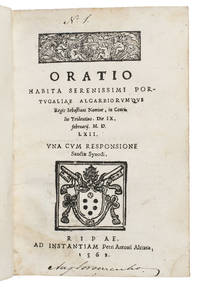
1562réf. ABC_47938Ripae = Riva del Garda Italy 1562. 4to 18.2 x 13.4 cm. Pietro Antonio Alciatis Mid 19th-century marbled paper wrappers. With the woodcut coat-of-arms of the Medici popes and a woodcut head-piece on the title-page 2 large woodcut decorated initials in the text a woodcut head-piece at the start of the text and two ornaments at the start and end of the text. 1 1 blank 6 pp. Rare copy of the speech written in name of King Sebastião of Portugal 1554-1578 for the Council of Trent 1545-1563. The speech was given on February 9 1562 in front of the bishops and other attendants of the council when King Sebastião was just 8 years old. The speeches provided by the Kings of the European nations were to be measured carefully as the position taken by the Church in many matters carried geo-political changes; not a century ago the Pope had granted a large portion of the South American territories to Portugal through the Treaty of Tordesillas a line that took centuries to properly determine. It is unknown who wrote this speech but it is often attributed to Giovanni Strozzi active 1547-1562 who wrote another similar work. The text makes clear that the kings of Portugal have always been good Christians and promises that Sebastião will be as well. The last page contains the response from the Synod. This work rarely appears on the market.The Council of Trent was an ecumenical council of the Catholic Church held in reponse to the Protestant Reformation. There were 25 sessions over the course of 18 years. The attendants discussed the Church's doctrine and teachings in order to clarify them and defined what it considered to be heresies. The council had a long-lasting impact on religion in Europe through the numerous apologetic and polemical documents and decrees that resulted from it.With a manuscript note on the recto of the first blank flyleaf: "Indice" and two manuscript notes on the title-page "No. 1" at the head of the title-page and "Aug. Soromenho" at the foot of the title-page. With slight water-staining in the top and bottom margins of the leaves very slightly browned throughout. Otherwise in very good condition.l Adams vol. II 1953; USTC 850992; cf. BM Italian p. 619 different ed. unknown
réf. 232882Lisbonne, Antonio Rodrigues Galhardo [numéros 1-12] ; Imprimerie royale [numéros 13-16], s.d. (1826) 34 livraisons en 2 vol. in-8, 387 pp. en numérotation continue, avec des ff. vierges après les pp. 170 et 244 ; pp. 389-818, avec des ff. vierges après les pp. 674 et 704, basane fauve racinée, dos lisses ornés de filets, guirlandes et dents-de-rat dorés, pièces de titre et de tomaison, tranches mouchetées de bleu (reliure de l'époque). Charnières supérieures et coiffes frottées.
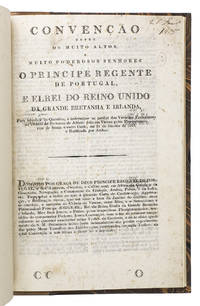
réf. ABC_48887Lisbon: Na Impressão Regia 1815. Modern half calf marbled paper sides with the title and year of publication lettered in gold on the spine. Small folio ca. 28.5 x 18 cm. With the text printed in two columns in Portuguese on the left and in English on the right. Very rare first Portuguese edition of this treaty between Portugal and the United Kingdom of Great Britain and Ireland concerning the indemnification of Portuguese subjects for certain detained slave trade vessels as a result of British actions undertaken in pursuit of the abolition of the slave trade. "Britain agreed to pay compensation for the several Portuguese slavers detained brought before and condemned by British courts on the ground of illegal slave-trading along the African coast prior to 1814" J.P. van Niekerk "British Portuguese and American judges in Adderley Street ." pp. 22-23. Another edition of this same treaty in 8 pages was printed in the same year in Rio de Janeiro with the complete imprint including the place of publication.The present bilateral treaty comprising three articles printed in two columns in Portuguese and English was drafted on 21 January 1815 during the Congress of Vienna a series of international diplomatic meetings held in Vienna from September 1814 to June 1815 concerning the new layout of the European political and constitutional order after the downfall of the French Emperor Napoleon Bonaparte. The signatories of the present treaty were plenipotentiary at the Congress of Vienna formally this treaty was concluded between the Prince Regent of Portugal - future King John VI 1767-1826 - and the King of Great Britain and Ireland George III 1738-1820 as mentioned in the title.A more detailed description is available upon request.With the book plate of "Biblioteca de Hariberto de Miranda Jordão Filho" mounted on the front pastedown. The text leaves with a vague horizontal and vertical fold in the centre a manuscript annotation "21 Janeiro 1815" in brown ink in the upper outer corner of the first page some foxing. Otherwise in good condition.l Gauz Portuguese and Brazilian books in the JCB 815/10; Porbase 3240734 1 copy; WorldCat 1042407673 12791342 38346960 4 copies; cf. Camargo & Moraes Bibl. da Impressão Régia do Rio de Janeiro I 428; Rodrigues 735 & 737 Rio de Janeiro ed.; for more context relating to the treaty: Lesaffer R. "Vienna and the Abolition of the Slave Trade" Oxford Public International Law online via: https://opil.ouplaw.com/page/498; Niekerk J.P. van "British Portuguese and American judges in Adderley Street: the international legal background to and some judicial aspects of the Cape Town Mixed Commissions for the suppression of the transatlantic slave trade in the nineteenth century Part 1" in: The Comparative and International Law Journal of Southern Africa Vol. 37 No. 1 March 2004 pp. 1-39. online via: https://journals.co.za/doi/pdf/10.10520/AJA00104051_114. Na Impressão Regia, unknown
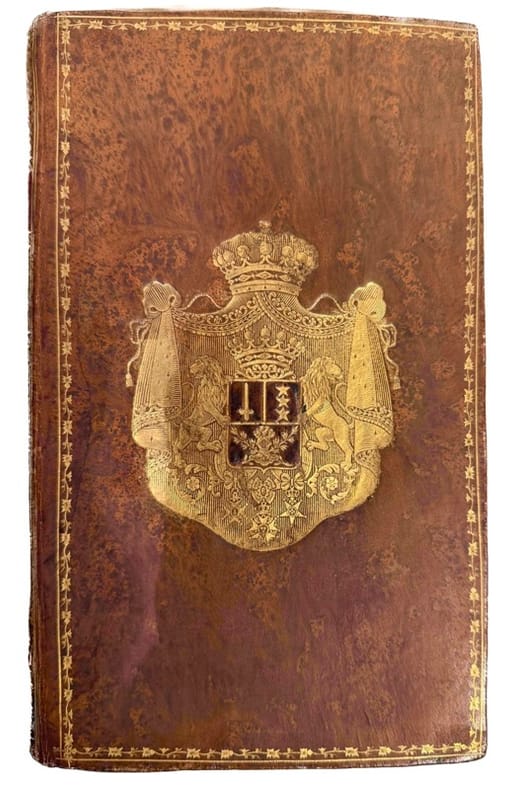
1707réf. 7337BBLeiden, Pieter vander Aa, 1707. 2°. (4) Bl., 80, 84, 128, 52, 56 S., (32) Bl. Register. Mit Kupfertitel, ganz Kupfer zur Widmung, 1 grossen gef. Karte, 1 gefl. Tafel, 164 Textkupfer. Marmor. Lederband der Zeit., Rücken reich vergoldet mit rotem Rückenschild, goldgepr. Supralibros. + Wichtig: Für unsere Kunden in der EU erfolgt der Versand alle 14 Tage verzollt ab Deutschland / Postbank-Konto in Deutschland vorhanden +, 7337B
1570In -4°, 4 ff. non rilegati. Trascrizione della lettera del serenissimo re di Portogallo da poco spedita a Pio V. La lettera è scritta a Pio V dal “giovane re” D. Sebastiao (è l’ultimo re di portogallo, che sarebbe morto nel 1578, e al quale sono dedicate fra l’altro ‘Os lusiades’, il poema di Camoes). In questa lettera si affrontano vari argomenti: dalla pestilenza che aveva colpito Lisbona proprio in quell’anno, alle questioni riguardanti le province portoghesi in India (si nomina la provincia del Malauar, nel Sud della penisola indiana), nonché le istanze bellicose del re Sebastiano, che intendeva organizzare una spedizione in Nord Africa: non ebbe il sostegno del Vaticano e la spedizione si risolse con una disfatta, in Marocco, nella quale perse la vita lo stesso Sebastiano. Morto senza eredi, il corpo non fu più ritrovato e divenne una figura mitica, il cui ritorno avrebbe dovuto liberare il portogallo dal successivo dominio spagnolo. A transcription of the letter sent to Pope Pius V by the king of Portugal. The king was the young Sebastiao, the last king of Portugal, dead without children in 1578 (to him Camoes dedicated his poem, “Os Lusiades”). The king was organizing an expedition to Northern Africa, in which he was doomed to die, opening doors to the next Spanish domination.
réf. 5i5587Maggs Bros. London 1929-1935. LVII/633/XII/817/XLI/791 Seiten roter orig. Leinen-Einband quart Einbände etwas ausgeblichen/ hinterer Einbanddeckel und hintere Vorsatzseiten von Band 1 wasserfleckig und berieben. - zweisprachig: englisch/portugiesisch// Der König 1889-1932 hatte 1910 auf den Thron verzichtet unter der Bedingung dass er mit den Büchern seiner Bibliothek das Land verlassen dürfe. Danach lebte er in London und arbeitete am vorliegenden Inventar über einen Zeitraum von 22 Jahren ohne es zu Lebzeiten definitiv abzuschließen: 414 teils extrem seltene oder unikate Werke. Die Beschreibungen sind fulminant betreffen bei weitem nicht nur die Bücher sondern liefern die Entwicklungsgeschichte des portugiesischen Frühdrucks vor dem Hintergrund der Kulturgeschichte des Landes. Alle Dokumente und biographischen Details der Autoren Drucker und Mäzene werden kritisch untersucht. Zitiert die maßgeblichen des öfteren auch ausgefallene Bibliographien die ebenfalls zur Bibliothek gehörten. Bände 12 vom König verfaßt Band 3 erschien postumum nach seiner Vorarbeit. Eines von 650 Exemplaren. Stillwell 313. Besterman Early Printed Books 1742 - unknown
1707réf. 7337BBLeiden, Pieter vander Aa, 1707. 2°. (4) Bl., 80, 84, 128, 52, 56 S., (32) Bl. Register. Mit Kupfertitel, ganz Kupfer zur Widmung, 1 grossen gef. Karte, 1 gefl. Tafel, 164 Textkupfer. Marmor. Lederband der Zeit., Rücken reich vergoldet mit rotem Rückenschild, goldgepr. Supralibros.
réf. 111421aafBruxelles, Chez J.B. Petit Libr.-Éditeur pour l’Art Militaire, 1840, gr. in-4°, oblong, Feuille de titre lithogr. avec vignette + 36 p. à double col. + 1 ff. ‘désignation des cartes’ + 37 cartes, num. de I à XXXVI (avec une carte II BIS, VI & VII sur 1 f. et la carte générale de l’Allemagne sans n° ), dont 19 doubles et 17 simples, traces d’eau au milieu des qqs cartes, reliure en d.-cuir originale plats en papier marbré, pièce de titre en cuir brun au milieu du premier plat. Mouillures.
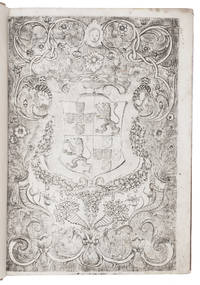
1711réf. I17ERD520PLVLisbon 1711. Small folio 29 x 21 cm. Monastery of São Vicente de Fóra Modern sheepskin gold-tooled spine red morocco title-label. With engraved arms as fronstipiece and a title-page printed in red and black. 28 494 29 1 blank pp. Rare second edition of the first Portuguese pharmacopoeia first published in 1704 by the friar D. Caetano de Santo António d. 1730 an apothecary of the Monastery of Santa Cruz of the city of Coimbra who upon publication of the second volume was working at Lisbon in the Monastery of São Vicente de Fora. "The Pharmacopeia Lusitana shows how important the convent pharmacy was at that time in Portugal. The Portuguese religious apothecaries were very knowledgeable on pharmaceutical matters" Pita. With a few manuscript annotations in the margins. Ca. 50 leaves with a waterstain at the head of the gutter margin an occasional smudge and two leaves with a small hole and small tears otherwise in very good condition.l J.R. Pita Brief history of Portuguese pharmacopoeias pp. 1-5; Porbase 1 copy; Wellcome IV p. 369 incomplete; WorldCat 5 copies. unknown
1595Carta è tratta dal rarissimo atlante nautico del Barentsz edito postumo dal Janssonius con il titolo "Descriptio Maris Mediterranei per tabulas hidrographicas & geographicas", Amsterdam nel 1654. L'opera contiene dieci carte nautice del Barentsz, per la prima volta incluse nel suo "Caertboeck vande Middelandtsche Zee", 1595; le carte sono stampate con la lastra originale ma sono completamnete rilavorate, con numerose varianti e con meno elementi decorativi nel mare. L'atlante è completato da alcune carte dello stesso Janssonius e da altre del Mercator, sempre modificate dal Jannsonius. Il Koeman cita solo 4 esemplari di questo atlante!!! Incisione in rame, coloritura coeva dei contorni, in ottimo stato di conservazione. Rarissima edizione. Striking map from Barentsz's "Descriptio Maris Mediterranei, per tabula hydographics & geographicas, . . .", published by Janssonius in Amsterdam in 1654. This is a rare variant edition. The atlas includes re-issues of Barentsz's 10 maps (first included in "Caertboeck vande Middelandtsche Zee", 1595) of the Mediterranean, with Jansson having completely changed the title and reworked the decorative embellishments, removing many of the great images originally added by Barentsz. Copperplate, original outline colour, in very good conditions.
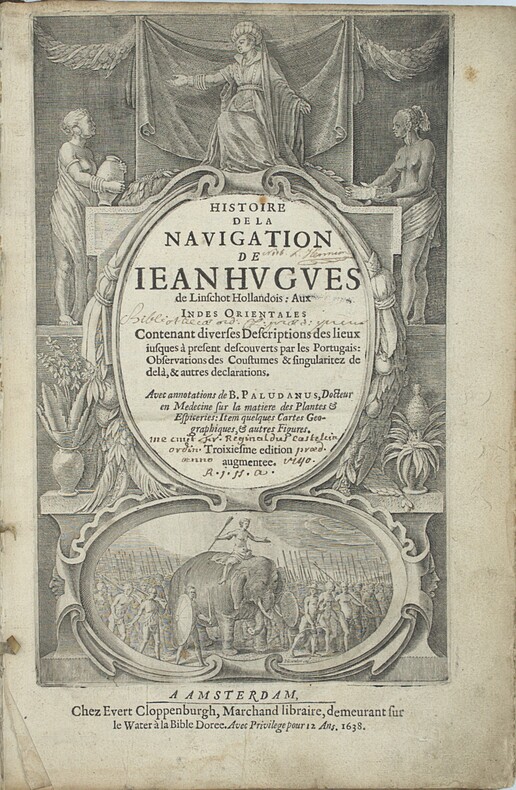
1638réf. PHO-2460Amsterdam : J.E. Cloppenburch, 1638, in-folio, 315 x 220mm, 4pp. (titre, préface, indice des chapitres) 206pp., titre avec des figures allégoriques (Asie, Afrique Europe) et une scène d’un roi sur éléphant, illustré du portrait de l’auteur, 29 (sur 36 ) planches gravées dépliantes à double page et vues de Johann et Baptiste ven Doetecom d'aprés Linschoten , les cartes sont absentes. Titre empoussiéré, quelques taches et mouillures, le dernier feuillet détaché. Reliure en partie détachée du corps de l’ouvrage. Provenance - « Fr. Reginaldus Castelin (?) ordin. 1740 » (ex-libris manuscrit ancien). – L. Hennion (ex-libris manuscrit ancien sur une garde). Bibliographie Sabin, n°20128. Leclerc, n°363. Cordier Japonica, 222. Gay, 260
réf. 244020Paris, J. G. Dentu, 1815 in-8, XXII-222 pp., errata, veau fauve granité, dos lisse orné, roulette et filet dorés en encadrement sur les plats, armes au centre, tranches marbrées (reliure de l'époque).
réf. 222956S.l., s.d. (vers 1812) 4 parties en 2 forts vol. in-folio, titre, 623 pp., [2] ff. n. ch. de table ; 147 pp., 345 pp., 405 pp., [5] ff. n. ch. de table, le tout couvert d'une écriture fine, élégante et très lisible (environ 30 lignes par page), avec de nombreuses collettes, quelques illustrations dans le texte, et 12 planches hors texte (dont 5 imprimées, 7 manuscrites), demi-basane fauve granitée à coins, dos lisses ornés de filets et dents-de-rat dorés, pièces de titre cerise, tranches mouchetées de rouge (rel. de l'époque). Charnières en parties fendues, nombreuses épidermures, manques de cuir au vol. II.
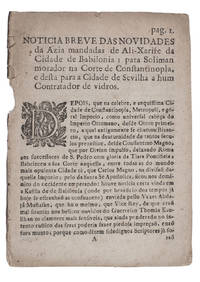
1742réf. I14GSHQ8NCJEColophon: Madrid 1742. 4to 20 x 14.5 cm. heirs of Juan Garcia Infanzon Disbound. With a woodcut initial. 7 1 blank pp. Rare pamphlet satirising several Portuguese notables. According to this pamphlet presented as a fictional letter from "Ali-Charif of the city of Babylon" to "Suliman the Moor at the court of Constantinople" these notables are part of a Turkish regiment that might be sent off to fight "Thomas Kaulikan" Tahmasp Qoli Khan better known as Nader Shah. A follow-up to the pamphlet was published a week later and once again describes the regiment now in a letter "from Mecca to Holland to the city of The Hague" and from there to Cambrai in France" cf. Rossi 2392.Nader Shah was one of the most powerful rulers in Persian history and waged several military campaigns in Afghanistan and India. Although not at war with Portugal his war against the Islamic Mughal Empire in India culminating in the capture of Delhi in 1739 led indirectly to Portugal's loss of its colonial territory in India in the war with the Hindu Marathas 1737-1741.Browned throughout with the spine damaged; a fair copy.l Braga da Cruz Catalogo da collecçaõ de miscelânes V 7066; Porbase 2 copies; Rossi "La Spagna nella 'Livreria do Convento de Nossa Senhora de Jesus' in Lisbona" in: Annali-Sezione Romanza XXIII 1 1981 2391; WorldCat 1 additional copy. unknown