28 264 résultats
réf. 46752775-nnew. unknown
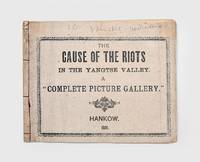
1891réf. 175500Hankow: no stated publisher 1891. Anything more horribly beastly and disgusting than these painted representations it would be impossible to imagine Sole edition of this collection of 32 images used by anti-Christian agitators in central China to whip up anti-foreign sentiment. They "appeal directly to the folk and elite traditions of China's classical past. In vivid colours they depict graphic violence. and show graphically the growing conflict between western missionary views of China and Chinese views of the Western presence" Perdue. The treaties signed at the end of the Opium War authorized western missionaries to proselytise in the Chinese hinterland. During the late 19th century when Chinese agriculture and rural life faced steep decline missionaries became popular scapegoats. "The original causes might be a dispute over land or water rights or an inappropriate marriage or an illicit love affair but the conflict could easily metastasize into large scale violence" Perdue. During the 1891 riots hundreds of Chinese Christians and two western missionaries were killed. The editor the missionary John Griffith based this publication on a pamphlet attributed to the Hunanese official Zhou Han 1842-1911 who used a publishing outfit in Changsha to disseminate a large quantity of anti-foreign literature. Zhou's images employ colour allegory and popular folk custom to "attack religious heterodoxy and sexual deviance with violent rhetoric. They portray the Christians as animals who know nothing of the moral codes that define humanity. The pictures portray the Western missionaries as goats and their Chinese followers as pigs. The play on words linking 'Jesus' as 'master' zhu with 'hog' zhu or 'Westerner' yang with 'goat' yang reduced the Christian believers to a bestial level. The use of the color green indicating 'cuckold' in the characters referring to Christians signified the undermining of the family by the alien believers. In a number of these images the animalistic Christians are brought before a god or magistrate who sits in judgement and offers them as sacrifices by having their throats slit" Purdue. Landscape quarto. With 32 full-page colour woodblocks colour Chinese title page. Original printed wrappers recent purple thread xianzhuang stitching front cover lettered in black rear cover with decoration and Chinese text in red black and green. Housed in custom burgundy quarter morocco box. Contemporary manuscript notation on front cover. Wrappers and edges of leaves creased and bumped rear cover rather worn recent adhesive tape repair to Chinese title page verso of final folded leaf sometime laid down onto rear wrapper illustrations bright stab-holes from original binding visible in gutter: a very good copy of a fragile work. Peter Perdue "The Cause of the Riots in the Yantgse Valley 1891 - Introduction" available online. unknown
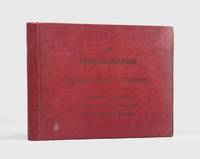
1900réf. 176895Shanghai: Brewer & Co. c. 1900. From the Chefoo Bluff to Lamtong Head Sole edition untraced institutionally the copy of Vice-Admiral Seymour's chief of staff in Tianjin during the Boxer Uprising. This photographic guide is designed for "the navigator of this changeable and frequently foggy locality" preface. We have traced only one other copy which appeared in commerce in 2017. Navigators in the late Qing period could rely on only a small network of lighthouses and fixed navigational aids when sailing the Chinese coast. "In thick weather even a person familiar with the coast is at a loss to identify a well-known Islands with its summit" preface. The thirty views include the Chefoo Bluff in the Pechili Gulf the waters near the Hieshans Light House Zhejiang and Hong Kong's Lamtong Head. A concerted period of lighthouse-building in the 1910s and 1920s obviated the need for further publications of this kind. Provenance: though unmarked as such this copy was owned by Captain Edward Henry Bayly C.B. 1849-1904 Commander of the International Forces at Tianjin in June 1900. Bayly had a lifelong career in the Royal Navy. He was promoted to the rank of lieutenant in September 1873 commander in June 1887 and captain in January 1894 having served overseas in numerous ships. Bayly captained HMS Pelorus during the fleet review for Queen Victoria's diamond jubilee in 1897 and in 1899 became captain of the armoured cruiser HMS Aurora on the China station. During the Boxer Uprising he replaced the wounded John Jellicoe as chief of staff to Seymour was mentioned by Seymour in dispatches and remained at Tianjin until the withdrawal of naval forces. He retired at his own request in February 1904. Landscape octavo. With 30 mounted collotypes within red frames. Original red cloth front cover lettered in gilt white coated endpapers leaves hinged with white linen as issued. A little shaken binding sunned and stained contents well preserved a little toning at fore edges: a very good copy. hardcover
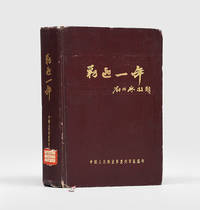
1955réf. 171714Beijing: Chinese Youth Publishing House 1955. First edition first printing presentation copy inscribed on the front free endpaper in Chinese by the Chinese delegation to the Fifth World Festival of Youth and Students "Presented to our dear young friend from America - China Youth League Delegation Warsaw August 1955". Convened by the World Federation of Democratic Youth the festival took anti-imperialism as its theme. More than 30000 people from 114 countries participated and the programme of events included parades speeches performances and sports meets. The proceedings gave everyday Poles an unprecedented opportunity to peek behind the Iron Curtain and ironically helped lay the foundations for the Pozna Protests. Sino-American relations remained strained amidst the fallout from the Korean War. One year earlier at the Geneva Conference John Foster Dulles had famously refused to shake hands with Premier Zhou Enlai. In Warsaw to protest American hard power China's representatives joined Russian and Japanese young people in a spirited rendition of the song "Never Let the Atom Bomb Explode Again". Building bridges with left-wing Americans sympathetic to Beijing was likewise an important part of the Chinese delegation's strategy. Below the presentation inscription is another reading in Chinese "Long live friendly relations between Chinese and American youth! Liu Meiqing". Quarto. Illustrated throughout in colour and black and white; floral vignette on title page. Text in Russian English and French. Original green boards tan cloth backstrip spine lettered and decorated in black front cover lettered in black blue and white decorative endpapers. Boards sunned one tip worn occasional staining and foxing in text: a very good copy. Martin Parr & WassinkLundgren The Chinese Photobook: From the 1900s to the Present second edition 2016 p. 160-1. hardcover
1984réf. x-0852007655Kluwer Academic Pub 1984. Hardcover. New. 567 pages. 9.30x6.50x1.50 inches. Kluwer Academic Pub hardcover
réf. PC42Oblong Folio album ca. 275x365 cm. 75 card stock leaves with tissue guards over 30 blank. With ca. 269 mounted gelatin silver photographs including two large photos ca. 21x27 cm 8 ¼ x 10 ½ in and ca. 20x25 cm 7 ¾ x 10 in and two panoramas ca. 12x29 cm 4 ¾ x 11 ¼ in; the rest of the photos are from ca. 7x11 cm 2 ¾ x 4 ½ in to ca. 6x85 cm 2 ¼ x 3 ¼ in. Ca. 70 photos with period white ink captions on the mounts one photo is captioned in negative. With twenty-seven loosely inserted gelatin silver photos including two large ones ca. 205x25 cm 8x10 in and 17x25 cm 6 ½ x 10 in; the rest of the photos are from ca 8x105 cm 3 ¼ x 4 in to ca. 55x8 cm 2 ¼ x 3 ¼ in. Period dark brown sheep boards fastened with metal bolts; the front board with an elaborate blind-stamped ornament with two Chinese dragons and a gilt-lettered title. The first leaf with a period printed introduction titled “My Oriental Album.” Boards rubbed on extremities several leaves with minor tears on the margins not affecting the photos four images previously removed from the album but possibly laid in as loose photos but overall a very good album of strong interesting photos. Interesting album with over original gelatin silver snapshot photos of China and the Philippines taken and collected by an American sailor during his service in the U.S. Naval Battle Force in the 1930s. The album opens with two large partly-coloured photos of the U.S. naval ships where the compiler apparently served a portrait of Admiral Harris Laning 1873-1941 commander of the U.S. Naval Battle Force in 1935-1936 and images of the ships of the Battle Force “torpedo bomber” plane “night battle practice” and “ground swells.” Two large loosely inserted photos show U.S.S. “Guadalupe” launched in 1940 a fleet replenishment oiler where the compiler apparently served in the 1940s. The photos of Tsingtao Qingdao include views of the entrance to the “Enlisted Men’s Club” and the interior of a dining room apparently in the same club city racecourse beach and waterfront harbour with Chinese boats and U.S. naval ships Zhanqiao pier with the octagonal Hunian pavilion Memorial Monument to the fallen in the “Japanese War” former German Governor’s House city streets and shops a shop with flags and sign “Sze Fang Road” on the side pagodas and temples portraits of a local policeman Japanese girls Chinese kids and families people “making blankets” beggars U.S. sailors posing with young local women “Nina & I” “Shera & Spindle” “Sally” “Korean girls” &c. A series of over thirty images illustrate the “Lao Shan Valley Trip” Mount Lao southern Shandong Peninsula showing the compiler and his fellow servicemen posing on the grounds of the local temples possibly the Temple of Supreme Purity next to a “Chinese farmhouse” playing with children being carried in sedan chairs drinking beer &c. The album also contains two large panoramas of Hong Kong city waterfront and Victoria Peak taken from the sea; Victoria Harbour. Smaller photos of Hong Kong show the city waterfront with the third building of the Hong Kong and Shanghai Bank under construction completed in 1935 harbour mansions on the slopes of Victoria Peak the Peak Tram Chinese houseboats Repulse Bay Hotel a review of American marines a ferry of the “Hongkong and Yaumati Ferry Ltd.” sign “HYF” on the top &c. There are also several views of Beijing White Stupa on the Jade Flower Island interior of the Forbidden City sailors posing on the bronze astronomical instruments of the Ancient Observatory the Great Wall of China photos of “Pao Hsing Restaurant All kinds of Liquors and Grocery Regular Meals and Money Exchange Chin Hang Tao North China” a new building of the “Chinese Telegraph Administration Tangyi Road Branch” Chinese pagodas colourful street procession numerous portraits of American sailors posing in rickshaw carts at Chinese arch gates riding donkeys drinking at several bars “Morgan’s Bar” “U.S. Bar” &c. The photos of the Philippines show the facilities and vessels at the Olongapo Naval Station modern-day U.S. Naval Base Subic Bay: a floating drydock the compiler’s ship missing the entrance to the dock U.S.S. Pigeon U.S.S. John D. Ford U.S.S. Augusta H.I. J.M.S. Koma naval exercise in the Manila Bay Corregidor Island &c. Among the identified images of Manila are the views of the Central Post Office Old Legislative Building Legaspi Landing scenes of public celebrations during the day and at night in the Luneta Rizal Park with the visible Rizal Monument &c. The other images show U.S. naval ships at sea and in port a submarine lighthouses group portraits of the compiler and other enlisted sailors &c. Twenty-one photos at the rear portray the compiler and his family in the United States. hardcover
2007réf. SKU0575397Penguin Publishing Group 2007-06-05. paperback. Good. 5x0x7. Textbook May Have Highlights Notes and/or Underlining BOOK ONLY-NO ACCESS CODE NO CD Ships with Tracking Penguin Publishing Group paperback
2007réf. SKU0622904Penguin Publishing Group 2007-06-05. paperback. New. 5x0x7. New Textbook Ships with Tracking Penguin Publishing Group paperback
1956réf. 173698Shanghai: no stated publisher 1956. The Winter 1956 iteration of this window onto 1950s Shanghai detailing bus trollybus and tram routes. Also listed are the names and addresses of parks sports facilities theatres cinemas bookstores skating rinks and working men's clubs. Small duodecimo pp. 16. Contents printed in blue; text in Chinese. Original grey wrappers wire-stitched as issued front cover lettered in red with photograph of Bund. A fine copy. unknown
1951réf. 173556Guizhou: Junqu zhengzhi bu 1951. Military might. and terror First edition first printing of this internally circulated report on operations undertaken in Guizhou province by the People's Liberation Army. After Chiang Kai-Shek evacuated to Taiwan in early 1949 remnants of his forces in the south-west splintered into different bandit units and mounted a credible threat to the survival of Mao's regime. Of the 1000 copies issued none are located in institutions. In January 1949 Chiang ordered Guizhou's nationalist governor Gu Zhenglun to make the province the final bastion of anti-communist resistance on the mainland. Although Mao proclaimed the founding of a united People's Republic of China in October "the continuing civil war in southwest China pitted ethnic groups local power holders farmers and Nationalist troops against the PLA People's Liberation Army. The occupying army's initial strategy of a rapid military advance leniency and massive grain collection efforts was a recipe for resistance" Brown p. 119. In early 1950 communist cadres and troops withdrew from the majority of the province the party's political control in tatters but a combination of carrot allowing local people to keep more of their agricultural surplus and stick terror eventually brought Guizhou into line. A series of maps demonstrates the oscillating fortunes of anti-communist forces during 1950 Mao's forces being pushed back during the summer months but gaining the decisive upper hand later in the year. Other plans show the grand troop manoeuvres that turned the tide in Beijing's favour. Tables at the end list major battles the names of guerilla organizations and their leaders those leaders killed or captured in the field and those who surrendered. While dated 1950 on the title page the volume was not printed until May 1951. Second and third printings followed in June and July. Octavo. Halftone portrait photographs of Chairman Mao and Commander-in-Chief Zhu De tipped onto decoratively embossed leaves with tissue guards 5 photographic halftones all with tissue guards showing Liu Bocheng He Long Deng Xiaoping Li Da and Zhang Jichun 15 facsimile calligraphic inscriptions 36 colour maps and battle plans 26 double-page 9 colour bar charts tables in text. Text in Chinese. Original brown cloth spine and front cover lettered in gilt illustrated endpapers green and pink silk bookmarker. Ex-military library with accession stamps on the front free endpaper and title page record card holder on the rear pastedown and "confidential" stamp on the title page; contemporary red pencil marginalia. Extremities rubbed and bumped couple of tips consolidated contents toned as consistent with paper from this period maps plans and graphs well preserved: a very good copy. Jeremy Brown "From Resisting Communists to Resisting America: Civil War and Korean War in Southwest China 1950-51" in Jeremy Brown & Paul G. Pickowicz eds Dilemmas of Victory: The Early Years of the People's Republic of China 2012. hardcover
1922réf. 174979Hong Kong Weihaiwei Canton and at sea: 1922-27. An album compiled by an officer likely involved with the maintenance and testing of battleships and submarines interspersing photographs taken while on duty with his tourist snapshots and shots of friends. Nine images show vessels from the China Station's fleet of L-Class submarines being put through their paces. The photographs are arranged roughly chronologically and although many are captioned and some show the officer he is unidentified. It commences in 1922 and seven photographs taken onboard the battlecruiser HMS Repulse in the Mediterranean show Repulse and HMS Hood the largest ship in the Royal Navy undergoing full power trials. Photographs taken in China a few years later continue the theme. During the 1920s L-Class submarines served on the station as the Fourth Submarine Flotilla and the album contains photographs of HMS L3 and L4 during trials at Hong Kong in 1926 as well as diving trials for HMS L5. Two photographs taken atop the main body of HMS L2 show it forging ahead at full power. He also records the process of changing the submarine's propellor. A range of images document life in Weihaiwei the base from which British naval power radiated in north China. He has the chance to visit HMS Titania a submarine depot ship and he relaxes at the United Services Club recording the appearance of the grounds and the view from the club out to sea. There is time to play some golf on nearby Liugong Island and visit the Temple of the Four Winds and the Beehive Tombs. He captures for posterity the naval boat race including the "veteran officers' skiff" pulled by Captain later Admiral Robert Henry Taunton Raikes 1885-1953 commander of the Fourth Submarine Flotilla. The sights and sounds of south China similarly beckon. In Canton he visits the waterfront and temples and photographs goods being taken to market and images show him holidaying with friends at Repulse Bay in Hong Kong. Interspersed are other glimpses onto life at sea: Hood's quarterdeck rigged for dancing; a group of pirates captured after they seized and torched the steamship SS Sunning near Hong Kong in late 1926; and cricket on the deck of a cruise ship. Landscape quarto album buff card covers tied with light brown cord through punch holes front cover with black embossed letters within blind-stamped panel 18 stiff card leaves full with 181 tipped-in gelatin silver photographs most c. 85 x 60 mm to 115 x 160 mm short pencil and ink captions. Covers worn couple of old adhesive tape repairs some photographs rather yellowed and aged but still with distinct tones: a very good album. unknown
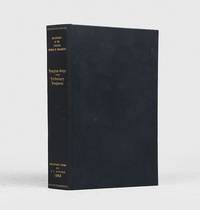
1944réf. 172481United States: Department of the Interior Bureau of Reclamation 1944. The genesis of the Three Gorges Dam Number 4 of a small number of copies of this report by the engineering mind behind the Hoover Dam on harnessing the mighty Yangtze River for hydroelectric power generation - a vision finally realized over half a century later. We have traced only four other surviving examples all found in institutions. The author John Lucian Savage 1879-1967 was an American civil engineer who became the Chief Designing Engineer at the Bureau of Reclamation in 1924. "In this capacity he designed dams canals and other irrigation-related structures throughout eleven western states the most impressive projects being Hoover - the supreme engineering feat of its day - Grand Coulee Parker and Shasta dams. Because the first three were respectively the highest widest and deepest dams in the world at the time of their construction Savage and his design team developed trial-load analysis for determining actual versus theoretical stresses in arched dams as well as models for determining concrete deterioration land subsidence and increased seismicity caused by the weight of a mammoth dam" ANB. Since the 1930s Savage had been fascinated with both the idea of damming the Yangtze and the prospect of co-operation between the Bureau of Reclamation and the Chinese government. Chiang Kai-Shek's administration was equally keen. Amidst Chinese efforts to repel a Japanese invasion in 1943 the National Resources Commission of Chiang's government invited Savage to China to devise concrete plans - an opportunity Savage described to the State Department as a "signal honor" and "an opportunity to be of service to the valiant people of China" quoted in Rowley & Gahan p. 584. Even as Chinese-Japanese armed engagements raged nearby Savage spent the period from May to November 1944 researching feasibility and necessary administrative and financial arrangements. This resulting report outlines several different plans for constructing a dam reservoir and power plant to generate up to 11 million kilowatts of power 74 million acre feet of water for irrigation and 22 million acre feet of flood storage. Savage projects a final cost of around 1 billion US dollars and annual revenues exceeding 50 million US dollars. The main 98-page technical report is accompanied by his 238-page discussion of four hydro-projects located on important tributaries discussing costings and technical details. The two reports are supported by dozens of technical maps plans and diagrams. Savage's time in China only reinforced his belief in the possibilities of a project unprecedented in its scope and ambition: "The Yangtze Gorge Project is a 'CLASSIC'. It will be of utmost importance to China. It will bring great industrial developments in Central and Western China. It will bring widespread employment. It will bring high standards of living. It will change China from a weak to a strong nation. The Yangtze Gorge Project should be constructed for the benefit of China and the World at large" p. 6. An accompanying typescript letter dated 2 April 1946 from Walker R. Young Chief Engineer in the Bureau of Reclamation confirms that as many as 50 Chinese engineers will soon be available to orchestrate the Yangtze project but also hints at the impact of the Chinese Civil War on the National Resources Commission - the war proved the ultimate undoing of efforts to act on Savage's vision. The letter states that numbered copies of the report are being distributed in preparation for a formal planning conference involving American and Chinese engineers. The number of recipients - nine western engineers - gives a good indication of the report's small circulation. Savage's copy is housed with some of his papers at the National Museum of American History. Copies are also found at the US National Archives the Colorado School of Mines and Purdue University where Savage served as a faculty member. The National Library of China has a version with a Chinese title page - the precise nature of this copy awaits further research. Folio. With 73 large folding maps plans and diagrams. Original black cloth spine lettered in gilt hinges reinforced with brown linen as issued buff endpapers text printed in photostat typescript. Cloth lightly soiled and rubbed internally clean. A fine copy. William D. Rowley & Andrew H. Gahan The Bureau of Reclamation: From Developing to Managing Water 1945-2000 2006. hardcover
réf. ria9781473779891_inpPaperback / softback. New. New Book; Fast Shipping from UK; Not signed; Not First Edition; N/A paperback
réf. DADAX0300269889New unknown
réf. DADAX0415734193New unknown
réf. DADAX0230284582New unknown
réf. DADAX0300184344New unknown
réf. DADAX0199919887New unknown
réf. DADAX0190235233New unknown
réf. SONG3447102454Used: Good unknown
réf. DADAX8478449256New unknown
réf. DADAX0333657497New unknown
réf. DADAX1144034256New unknown
réf. SONG8492921692Used: Good unknown
réf. DADAX022602489XNew unknown