28 264 résultats
réf. DADAX0199644594New unknown
réf. DADAX0231153309New unknown
réf. DADAX0415810175New unknown
réf. DADAX0415855268New unknown
réf. DADAX0415837855New unknown
réf. DADAX0415632331New unknown
réf. DADAX0415528658New unknown
réf. DADAX0415677262New unknown
réf. DADAX303031801XNew unknown
réf. DADAX041562911XNew unknown
réf. DADAX023036392XNew unknown
réf. DADAX1446011178New unknown
réf. DADAX1453564381New unknown
réf. DADAX1441189734New unknown
réf. DADAX0199895961New unknown
réf. DADAX0230380204New unknown
réf. PD39Twelve loose gelatin silver photos all ca. 10x15 cm 4 x 5 ¾ in. Several photos with minor creases in the corners one photo with minor chipping of the image. Overall a very good collection of interesting photos. Interesting collection of early 20th-century gelatin silver photographs of China mostly Shanghai. The views of Shanghai show Longhua Temple Pagoda Huxinting or Willow Patern Tea House and Nine Curve Bridge the Bund with the original building of the Shanghai Club built in 1864 demolished in 1909 and replaced with the current building; the Bandstand in the Bund Public Garden; Bund waterfront decorated with garlands and signs the clock tower of the Custom House is seen in the far left; river view with apparently the second Garden Bridge over the Suzhou Creek; riverfront with Chinese junks and a bridge in the foreground and Bund waterfront lawn with several telegraph poles. The other photos show a Chinese peasant ploughing a rice field traditional sculptures a reproduction of a painting depicting an audience by the Chinese Emperor and a group portrait of Indian sepoys. Overall an attractive collection of early 20th-century views of Shanghai. unknown
1934réf. 176034Shanghai: Printed and Published by the North-China Daily News and Herald Ltd 1934. First edition first printing of this guide to China's 24 provinces Japanese-controlled Manchuria and the city of Shanghai including a short essay by Arthur de Carle Sowerby on "the regional distribution of China's Fauna and Flora". Information on physical geography is accompanied by summaries of communications and industrial infrastructure. The maps were first published in the North-China Daily News but extensively revised for this publication. "The far away interior northern and southern provinces which life of all beaten tracks and through which no railways have penetrated remain shrouded in mystery except where the veil has been slightly lifted by exploration expeditions" introduction. Folio. Maps and illustrations in text. Original blue cloth front cover lettered in gilt within blind panel and frames. With dust jacket. Cloth clean spine ends bumped contents lightly and evenly toned; jacket unclipped losses at foot of panels and spine a few closed splits: a near-fine copy in very good jacket. hardcover
1937réf. 176095China: Hai Ho Conservancy Commission 1937. An imposing cartographic document A rare plan untraced institutionally produced on the cusp of the Japanese invasion of Tianjin showing the fruits of a multi-decade effort to turn the city into a major international port. "Connected with the sea by an artificial river Tianjin's status as a seaport was heavily dependent on the continuous conservancy efforts of the Haihe and its tributaries" "River Conservancy". Formed in 1897 the Hai Ho Conservancy Commission focused on opening the channel to shipping for example by straightening the channel and thereby cutting the route to the sea by 17 miles. This plan shows the river's winding course marked with hundreds of survey stones and the build-up of warehouses and wharves by the foreign concessions Tanggu and Xidagu. Also shown are the results of the most recent survey of the seabed at the river's mouth. Although Japan declared war on China in July 1937 it respected the integrity of Tianjin's foreign concessions and river management remained in the hands of the British French and American authorities until Pearl Harbor. At the same time Japan started development of Tanggu Xingang - the foundations of which blossomed into the present-day megaport at Tianjin. Diazoprint plan 67 x 274 cm printed in reddish brown text primarily in Chinese. Contemporary black ink and red crayon marking and annotations in Chinese and Japanese on both sides. Toned old folds a few small splits and losses neatly conserved with tissue: a very good example of a fragile document. "River conservancy and the undetermined future of the port of Tianjin" Open Rivers available online. unknown
1913réf. 168261London: War Office 1913. Modernity's steel rails The 1913 version of a map that was issued periodically throughout the 1910s. Drawn and printed at the Ordnance Survey Office in Southampton it highlights railways built in progress and proposed and two inset maps show links to Beijing and in Manchuria. A column of notes gives gauges mileages and notes on construction. The map shows that at the onset of Republican rule China had around a dozen lines in progress or planned - including a stretch linking Hankou to Canton - to complement the main lines connecting Beijing to Hankou Shanghai and Mukden. The side notes address the complexity of the railway network's governance and administration - lines were variously built managed and worked by combinations of foreign and Chinese organizations. Colour lithographed map 740 x 990 mm. Sometime folded occasional scuffing and edge toning two panels on verso browned: a very good example. unknown
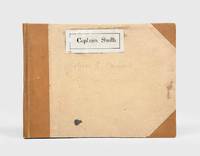
1928réf. 174745Likely Shanghai: 1928-34. Mariners are warned to exercise due caution when approaching and when in the waterways A collection of otherwise untraced notices to mariners compiled by a civilian captain who plied the lower Yangtse during the late 1920s and early 1930s. Yangtse shipping was regulated by the Maritime Customs Service which issued around 100 navigational advisories per year. During the late 1920s shipping traffic on the Yangtse rebounded after several years of decline during the Warlord Era. Low water however continued to pose problems for navigators and increased the need for effective river management. The 39 notices are technical directions concerning specific parts of the channel. They specify when vessels may and may not enter stretches of water warning of the persistent presence of Chinese craft not subject to the same notices offer guidance for navigating buoyed channels provide optimum bearings and relay a change to the position of the Bend and Gravener Island beacons due to the erosion of the channel. The majority date from 1929. The identify of the "Captain Smith" referenced on the front cover has proved elusive but he may be the individual pictured in photograph Sw13-045 G. Warren Swire collection SOAS. Landscape octavo. Contemporary brown half cloth binder with metal clasp spine lettered in gilt buff paper sides front board with manuscript label "Captain Smith" boards lined with pink paper typescript list of charts on inner front cover 39 sheets each typed one side only in black or blue most duplicate typescript a few top copy. Boards lightly soiled clasp rusted sheets generally well preserved a few creased or with holes near clasp legibility unaffected typescript list with a few losses to text: a very good example. hardcover
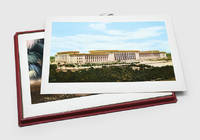
1959réf. 168629Beijing: Renmin meishu chubanshe c. 1959. Monumentality and the weight of state power First edition first printing of this grand portfolio. Occupying 170000 square metres on the western flank of Tiananmen Square the Great Hall of the People was one of ten architectural projects completed in 1959 to celebrate the tenth anniversary of the founding of the People's Republic of China. The design combines classical and neoclassical styles with Chinese aesthetics. For example the total number of columns in the main gate colonnade equals the number found inside the most important hall in the Forbidden City and these columns are spaced at receding widths away from the central point - a long-held Chinese architectural practice. The decision to build the hall was enacted by the Politburo in 1958 and a force of 30000 builders and technicians finished the project in just ten months. For the last six decades the Great Hall's main ceremonial space capable of holding 10000 people has served as the venue for Chinese Communist Party meetings and lavish state events. Its corridors and many smaller rooms have also played host to political intrigues contentious meetings and important diplomatic dialogues. In 2003 Riverdance became the first Western show to perform on the hall's main stage selling out 11 performances. Copies were also issued in a dark red vinyl box with no priority established. Landscape folio. Title leaf printed in red and black. 20 colour photographic plates c. 292 x 465 mm printed on glossy paper each tipped onto loose 372 x 525 stiff card sheet together with loose single title leaf printed both sides all housed in original red cloth box lid with calligraphic title in gilt and blind-stamped decoration. Plates bright a little soiling and foxing to card sheets; bright box lightly rubbed and soiled abrasions to base sides of tray a little tender: a fine set in well-preserved box. Parr & WassinkLundgren The Chinese Photobook: From the 1900s to the Present pp. 183-5. Chang-tai Hung Mao's New World: Political Culture in the Early People's Republic 2011. hardcover
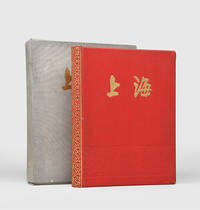
1959réf. 168621Shanghai: Shanghai renmin meishu chubanshe c. 1959. The preferred deluxe issue First edition first printing of this photobook issued by the Shanghai Municipal Government to celebrate ten years of Communist rule as well as Chinese culture history and art. Shanghai's status as the country's economic powerhouse is stressed through numerous pictures of heavy and light industries smiling workers and modern housing developments as well as of consumer goods such as fountain pens sewing machines and bicycles. Space is given to healthcare culture and the arts the historic architecture of the Bund parades and tourism. Unlike other propaganda from the period the message is uniformly forward-looking centring on developments achieved under socialism rather than recycling shop-worn condemnations of the Republican and imperial eras. Copies of this extravagant production were also issued housed in a paper box. Folio. With 21 tipped-in plates 16 colour 2 folding colour and black and white illustrations throughout. Title page printed in brown and grey. Binding designed by Ren Yi Chen Zhichu Zhang Suyu Cai Zhenhua and Qian Zhenzhi. Original red cloth spine elaborately decorated in gilt gilt calligraphic title on front cover foot of front board blocked in blind floral-patterned endpapers. Housed in publisher's folding grey cloth case title to front panel in gilt bone ties. Spine bright boards lightly soiled extremities worn spine ends and tips a little finger soiling internally else bright. A very good copy indeed in very good case with some soiling lining foxed. Parr & WassinkLundgren The Chinese Photobook: From the 1900s to the Present pp. 189-92. hardcover
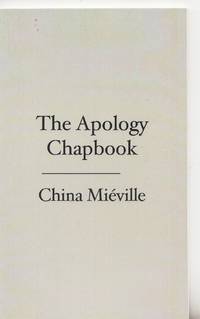
2013réf. 52665No publisher given 2013. First edition & 1st printing. Card wrappers. Fine as new copy. Small-size 16cm x 11cm chapbook contain eight stories ''The 9th Technique'' and ''7 Microstories'' - ''a gift for all attendees of World Fantasy Convention 2013''. The author though a Guest of Honour at the 2013 World Fantasy Convention was not able to attend as explained in his short introduction. No publisher given unknown
1935réf. 170702New York: Joseph Tuck c. 1935. A scarce complete set pleasingly retaining the original box of this charming introduction to Chinese cultural values aimed at American audiences. The maxims include "institute no litigation for it never ends well" "do not employ handsome servants" and "refrain from talking too much as it may bring mishap". 60 pictorial cards each 65 x 53 mm lettered in black on verso housed in printed cardboard sleeve as issued. Cards slightly bowed otherwise fresh; sleeve skilfully repaired the majority of one side no longer present: a very good example. unknown