28 264 résultats
réf. DADAX009949342XNew unknown
1938réf. 171717Wuchang: American Church Mission 1938. First and only edition first printing untraced institutionally reporting on a pivotal year for the hospital. The Japanese invasion of China the first major engagement of the Second World War created intense demand for in-patient care and statistical tables and reports by leading medical personnel chronicle the military and civilian costs of Tokyo's expansionism. Several institutions in the United States hold copies of the hospital's annual reports for other years but we have not located any copies of this pivotal instalment on WorldCat. Octavo. With 3 halftone photographic plates tables in text. Original paper wrappers front cover lettered in black. Lightly toned overall front cover sometime re-attached with adhesive wrappers chipped. A very good copy of this fragile work. unknown
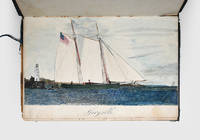
1842réf. 170558At sea & China: 1842-48. This ground is under English control though their authority is might makes right An American second mate's illustrated eyewitness account of China in the immediate aftermath of the First Opium War. Sailing east on a Jardine Matheson specie and opium runner he becomes an old China hand and a sharp observer of early colonial Hong Kong and Shanghai coastal trade and maritime life. The opening section consists of diary entries kept during the outward voyage from the United States describing a life of adventure entered almost by accident. "On the 1st of Sept. 1842 being in Boston and out of employ I shipped in the Schr Gazell" p. 1. The Gazelle - an Aberdeen-built schooner illustrated in watercolour at the front of the manuscript - sailed on 19 September 1842 with guns muskets and nine boxes of specie. Some 30 pages trace the passage with detailed daily entries including latitudes and longitudes weather hazards marine life shipboard routines and the rituals of crossing the Equator. After rounding the Cape the vessel encounters American traders off China and reaches Macao on 22 February 1843. The remainder of the manuscript comprises reflective recollections written later in the 1840s. Macao is judged healthy and pleasant but eclipsed after the war by Hong Kong now the hub of British trade. The Gazelle is reassigned to opium running along the coast bringing higher pay and extended travel. The author recalls Hong Kong in 1844: the nightly curfew gunshot the opium fleet at Whampoa and the crowded Pearl River illustrated with pencil sketches of local craft. His view of the Chinese population is unsympathetic though he offers a vivid portrait of "Boston Jack" a wealthy comprador and indispensable intermediary to American ships. Further chapters describe Canton the forts of the Bogue Amoy and its junks and Chusan praised for its industry and abundance. Shanghai emerges as a newly important centre of opium exchange its foreign settlement firmly under British control. The author sketches the harbour notes the thousands of junks and contrasts the city's "civil and obliging" inhabitants with those of Canton. The manuscript breaks off mid-sentence on page 50 leaving the writer's later life unknown but preserving a detailed first-hand record of a China on the threshold of colonial modernity. Octavo notebook 252 x 165 mm. Opening full-page watercolour 12 illustrations and plan in pencil. Original blue linen pink patterned endpapers edges sprinkled blue 49 pages neatly written in black ink 38 unused blanks. Notebook worn and shaken with sewing loose a few closed tears internally touching a few letters only. A very good example. unknown
1955réf. 172442Shanghai: Shanghai shi huaxue yuanliao gongye tongye gonghui c. 1955. An uncommon early Mao-period sampler issued by the Shanghai Chemical Materials Industrial Guild presenting the tone and chemical composition of the 19 core pigments used in industries such as publishing and printing. In 1954 as part of a programme of nationwide consolidation Beijing promulgated production guidelines for the 19 colours and placed the industry under the control of a national-level regulator. This sampler was likely distributed gratis at a trade event. Blank sections at the end provide space for the owner to list commercial contacts and write diary entries. Small octavo. With 19 plates. Text in Chinese. Original illustrated boards red cloth backstrip front cover lettered in red rounded board and page edges decorative endpapers. Binding worn contents clean plates bright. A very good copy. hardcover
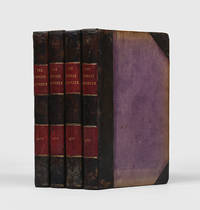
1875réf. 160133Shanghai: American Presbyterian Mission Press 1875-78. The most important interdenominational missionary journal of the time A collection of four scarce early volumes of this Shanghai-based periodical which served as the expatriate missionary community's premier forum for sinological exchange including contributions on philosophy social history linguistics literature and religion. Early volumes are now seldom encountered in commerce. The Chinese Recorder and Missionary Journal was first published in 1868 in Fuzhou under the editorship of Stephen Livingstone Baldwin and then Justus Doolittle. In 1874 editorial responsibilities were passed to Alexander Wylie 1815-1887 the agent of the British and Foreign Bible Society in Shanghai with the city's American Presbyterian Mission Press taking over printing and distribution. Issued every two months the journal featured articles by leading missionary-sinologists including Emil Bretschneider Henry Yule Timothy Richard and Samuel Wells Williams. 24 parts in 4 vols octavo 235 x 153. With 4 folding plans and maps 3 woodblock and printed on delicate rice paper illustrations in text. Vol. VIII bound without the index. Contemporary black half sheep A. H. Chen Shantou recently rebacked with original spines laid down red spine labels purple wavy-grain cloth sides. Bindings somewhat worn and faded small piece of leather reglued at head contents generally fresh folding plans with occasional creasing and stub tears. A very good set. Francesca Torocco The Cultural Practices of Modern Chinese Buddhism 2007. hardcover
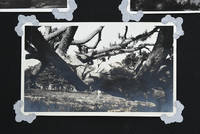
1920réf. 152667China: 1920. From palace to park lake to shining sea A collection of 230 vernacular photographs recording a couple's trip to Beijing Jinan and Qingdao a decade after the abdication of the last Qing emperor. Arranged chronologically the album combines landscape and architectural views with candid shots of the travellers and the people they met. The appearance of many easily identifiable landmarks more than compensates for a lack of captions. The travellers begin their holiday in Beijing recently the site of the May Fourth demonstrations. The first 35 images capture the serenity of the Summer Palace once an imperial retreat with images showing the East Palace Gate and the exterior Hall of Joyful Longevity. The visitors strike jaunty individual poses on a stone lion and ride regally on the back of a bronze deer statue. The lady is captured from a distance on a balcony overlooking the Kunming Lake the largest body of water in the palace complex with the famous 17-arch bridge visible in the background. Like many before them these travellers are drawn to such architectural wonders as the Glowing Clouds and Holy Land Archway as well as the full-size marble boat restored by the Empress Cixi in the 19th century using funds allocated for outfitting a real navy. Several vistas of the lake show its solitude and remoteness - qualities accentuated by the palace's transition in 1914 from a working royal residence into a publicly accessible monument to China's imperial past. Until 1924 the Forbidden City remained the private residence of the last emperor Pu Yi and this album thus contains only a few images taken in the accessible outer court. The travellers find more freedom however in nearby Beihai Park climbing up to the imposing White Pagoda and snapping several views of Beijing from on high. Also captured here are two soldiers on duty by one of the bridge archways as well as the classic view of the pagoda looming over the park's picturesque lake. China's rapidly growing network of railway lines afforded travellers conveniences unknown even a couple of decades before. The visitors record their journey on the Beijing-Zhangjiakou line the first stretch of railway built by the Chinese government rather than foreign investors alighting near Nankou. There the lady poses in a sedan chair and later with three young children fascinated by a camera held by one of the couple's acquaintances. Visiting the Ming tombs affords many opportunities to photograph and be photographed with the famous stone animal sculptures while in one image the lady lies comfortably in a tree. Back on the train they travel to the Great Wall near Badaling and Qinglongqiao. A dozen pictures taken on the wall show the brickwork in a state of disrepair as was common with sections of the wall by this time and the travellers take refreshments on a level section with some local children for company. A well-earned rest on the return train refreshes them for a visit to the Jade Peak Pagoda on Jade Spring Hill today the site of residences for top political leaders with the camera capturing several nice landscape views of the pagoda and a temple desecrated inside. Following further excursions to the unmissable Temple of Heaven and the Cishou Pagoda they follow the steel rails to Jinan admiring the Yangtze River and waterfront industries in the company of local perhaps warlord troops. The holiday ends in the Japan-controlled coastal resort of Qingdao its station platform teeming with adult and child passengers and its seafront peppered with colonial architecture including the Grand Hotel. The final photographs commemorate time spent at the beach and climbing a nearby mountain most likely Laoshan - the relaxing denouement to a holiday of considerable excitement. Landscape folio 260 x 335 mm. Original brown pebble-grain leatherette tied with brown cord through punch holes front cover lettered in gilt within blind frame covers lined with black moiré-patterned cloth 52 black card leaves with 230 gelatin silver photographs each c. 75 x 130 mm mounted with silver photo corners first blank with pencilled title "China 1920". With 3 gelatin silver photographs 63 x 40 mm loosely inserted. 2 photographs no longer present. Photographs clear most with silver mirroring and a few with corners lifting image loose from its mount and another partially split vertically a few leaves beginning to split at gutter couple of expertly repaired tears: a very good example. hardcover
réf. SONG1405048301Used: Good unknown
réf. DADAX184971388XNew unknown
réf. DADAX3961713057New unknown
2009réf. F-MI2009SDel Rey/Ballantine New York: May 2009. Advance Reader's Copy ARC published in the same month as the first UK edition. Very good in pictorial blue wraps with city skyline on front. No internal markings. Publisher's intro laid in. Slightly soiled top corner affecting first few pages; light shelf wear to top and bottom of spine. Del Rey paperback
réf. DADAX3642363814New unknown
réf. DADAX0190201266New unknown
réf. DADAX0367665492New unknown
réf. DADAX3030373517New unknown
réf. DADAX9811534241New unknown
réf. DADAX0415832241New unknown
réf. DADAX027108507XNew unknown
réf. DADAX1580933505New unknown
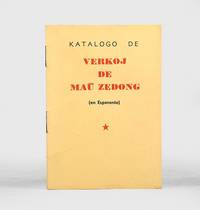
1972réf. 150655Beijing: Libroservo de ina Esperanto-Ligo 1972. A rare example of one of the sales catalogues issued by the China Esperanto League for overseas Esperantists wishing to order Mao's works. For catalogues issued in the 1960s and 1970s WorldCat records a total of only nine copies. Shortly after the founding of the People's Republic of China in 1949 the All-China Esperanto Association later renamed the "China Esperanto League" was formed in Shanghai and in the 1950s the League hosted speakers from around the world. While foreign contacts ceased during the Cultural Revolution the League used its network to promote Maoism to Esperanto movements abroad. The present catalogue offers for sale at very cheap prices volumes of Mao's Selected Works as well as pamphlets of his speeches and major essays. At the rear an order form is provided for customers to complete and return to Beijing by post. Though not marked as such the present copy is from the library of Paul Pickowicz b. 1945 a notable scholar of modern Chinese culture and society. In 1971 Pickowicz was one of 15 American scholars invited to visit the mainland the delegation being the first group of American academics to set foot in Mao's China. Duodecimo pp. 18. Stapled as issued original pale orange wrappers front cover lettered in black and red above red five-pointed star. A few marks to wrappers touch of foxing contents else clean and bright. A near-fine copy of this fragile publication. unknown
réf. DADAX0252040910New unknown
1926réf. 145415Shanghai: California Directory Association and the Shanghai Times 1926. A well-preserved example of this scarce guide for American visitors to China recorded in just four institutions on WorldCat. Produced during a golden age of East Asian travel this convenient compendium lists places of interest and suggested itineraries for major cities alongside dozens of advertisements for hotels curio shops and luxury goods. Foreign tourists in East Asia were not a new sight in the early 20th century but the construction of railway lines from the late 19th century caused a dramatic increase in the ease and possibilities of travel. In Hong Kong Shanghai and other large cities the number of businesses catering to the foreign tourist market ballooned with many listed in this guide. Inside travellers could find information on the Hong Kong Hotel and the famous Grand Hotel des Wagon-Lits in Peking's Legation Quarter as well advertisements for firms as varied as the Hong Kong and Kowloon Taxicab Company the outfitters Aux Chic Parisien U. B. Pilsener Beer of Shanghai Strehlneek's Chinese Art Studio and Clerici Bedoni & Co. importers of fine Italian wines. Two pages of pidgin English phrases are provided to help travellers ask for the "Sing-song house" the theatre or "Smelleum water" Eau de Cologne. The California Directory Association produced a number of tourist guides for travellers to the Far East all of which are now rare. Duodecimo. With 2 folding maps of central Hong Kong and Shanghai halftone illustrations in text advertisements throughout. Original red card wrappers title and Chinese dragon to front cover in black. Wrappers lightly creased with small chip to lower tip of front cover internally clean and bright larger folding map with small closed tear partially tape repaired to verso. A very good copy of this vulnerable publication. unknown
réf. SONG0531238385Used: Good unknown
réf. DADAX3662435136New unknown
réf. DADAX0367443953New unknown
réf. DADAX9888272225New unknown