2 865 résultats
1994réf. 91408Washington DC: National Academy Press 1994. Presumed First Edition First Printing. Hardcover. Very good. xviii 2 812 pages. Maps. Illustrations. Tabular data. Appendixes. Glossary. Acronyms and Abbreviations. Index. No dust jacket present. Signed inscriptionassociation unclear that reads: "To Scholar Brendan Jermer Garwin with much affection and respect from granddad who served for years as an Air Force Force "Launch Hound" Committee and The Veterans Administration Committee to study the legacy of exposure to herbicides in Vietnam signature unreadable Sept. 30 1997". In response to decades of concern surrounding the possible long-term health consequences of exposures to herbicides and the contaminant dioxin Congress directed the Secretary of Veterans Affairs to request the National Academy of Sciences NAS to conduct a comprehensive review and evaluation of the available scientific and medical information regarding the health effects of exposure to Agent Orange and other herbicides used during the Vietnam conflict. This report from the Institute of Medicine IOM Committee to Review the Health Effects in Vietnam Veterans of Exposure to Herbicides was submitted in compliance with P. L.102-4. This work reviews and evaluates the available scientific evidence regarding the association between exposure to specific chemical compounds in herbicides used in Vietnam and a range of health effects and provides the committee's assessment for the Department of Veterans Affairs to consider as it exercises its responsibilities to veterans. The report provides the committee's recommendations for areas in which future research is likely to be productive. Have U.S. military personnel experienced health problems from being exposed to Agent Orange its dioxin contaminants and other herbicides used in Vietnam This definitive volume summarizes the strength of the evidence associating exposure during Vietnam service with cancer and other health effects and presents conclusions from an expert panel. Veterans and Agent Orange provides a historical review of the issue examines studies of populations in addition to Vietnam veterans environmentally and occupationally exposed to herbicides and dioxin and discusses problems in study methodology. The core of the book presents: What is known about the toxicology of the herbicides used in greatest quantities in Vietnam; What is known about assessing exposure to herbicides and dioxin'; What can be determined from the wide range of epidemiological studies conducted by different authorities; What is known about the relationship between exposure to herbicides and dioxin and cancer reproductive effects neurobehavioral disorders and other health effects. The book describes research areas of continuing concern and offers recommendations for further research on the health effects of Agent Orange exposure among Vietnam veterans. This volume will be critically important to both policy makers and physicians in the federal government Vietnam veterans and their families veterans organizations researchers and health professionals. National Academy Press hardcover
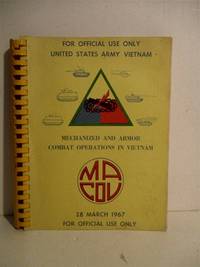
1967réf. 78-2172San Francisco: March 1967 1967. 1st ed. 207p. Photos. Maps. Covers the period January to March 1967. Comb biinding. Yellow card wraps. Near Fine Copy. 1st. Paperback. Near Fine. Book. March 1967 paperback
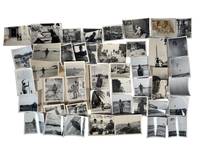
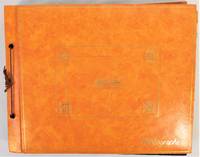
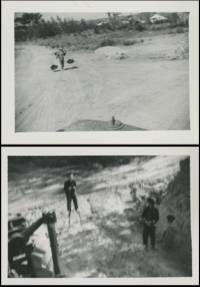
1965réf. 212871965. Archive of original photographs documenting African American soldiers serving in the Vietnam War during the early phase of large-scale United States military escalation in Southeast Asia. The material captures the daily experiences military operations and interpersonal relationships of Black servicemen stationed at Bien Hoa Air Base circa 1965 including members of the 173rd Airborne Brigade Combat Team. The photographs provide primary-source visual evidence of integrated military life during a period when African American troops served disproportionately in frontline combat roles while racial inequality and civil rights struggles intensified in the United States. Particularly significant is the candid nature of the images which were apparently taken by an African American serviceman identified by the surname Thomas offering an unusually personal perspective on Black military experience during the Vietnam conflict. Collection consists of 56 original black-and-white silver gelatin photographs measuring approximately 3.5 x 3.5 to 3.5 x 5.5 inches primarily loose with two mounted to an album page. The photographs depict African American soldiers at Bien Hoa Air Base near Saigon identifiable through a photographed base sign and visible 173rd Airborne Brigade insignia on soldiers' uniforms. Numerous images portray Black servicemen posing casually outside tents reading letters socializing in small groups smoking resting and interacting with fellow soldiers emphasizing camaraderie and the routines of military life between operations. Several photographs document airborne training exercises with parachutists descending beneath open canopies over the surrounding landscape. Other images depict military infrastructure and equipment including jeeps sandbag fortifications stacked munitions barracks areas and transport zones associated with the logistical operations of the base. The archive also includes photographs taken during off-duty excursions into Vietnamese civilian areas including a riverside marketplace crowded with vendors boats and local residents. Additional images show soldiers posed before local monuments and religious sites including one photograph of Thomas with a white serviceman in front of a Buddhist temple and another featuring a tall obelisk monument surrounded by military statuary. The archive documents the lived experience of African American servicemen within integrated combat units during one of the most consequential military conflicts of the twentieth century. Bien Hoa Air Base served as a major operational center for airborne and aerial missions during the early years of sustained U.S. intervention and the presence of Black paratroopers within these photographs provides important visual evidence of African American military participation during the Civil Rights era. Unlike official military photography the informal and personal nature of the images preserves moments of friendship boredom training and interaction with Vietnamese civilians that are often absent from institutional wartime records. Minor edge wear and light handling wear throughout; photographs remain sharp and well-preserved overall in very good condition. A substantial and historically valuable photographic record of African American military life in Vietnam during the mid-1960s. unknown
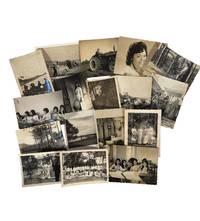
1960réf. 210781960. Vietnam War Photography Personal photograph album containing 17 silver gelatin photographs documenting civilian life education family and military service in South Vietnam during the 1960s. Original brown vinyl album measuring approximately 3.5" x 4.5"; photographs approximately 2.5" x 3.25". The album offers an intimate glimpse into the everyday experiences of South Vietnamese men and women during a period more often documented through the lens of war. Rather than combat scenes the photographs focus primarily on family friendship education courtship and community life creating a personal record of a society navigating rapid social change amid the conflict. Several photographs depict young Vietnamese women wearing traditional áo dài dresses both in formal portraits and informal outdoor settings. One particularly attractive image shows three smiling women walking along a path in patterned áo dài framed by a mixture of traditional and modern architecture. Another studio portrait captures a young woman posed alone and smiling toward the camera suggesting a family member friend or perhaps the album owner's sweetheart. Education and youth culture are prominently represented. Multiple photographs show school-aged girls gathered in classrooms and assembled outdoors in large group portraits. The students wear white áo dài and traditional conical hats illustrating the continued importance of educational institutions and cultural traditions during the war years. Several candid classroom scenes preserve moments of ordinary student life rarely encountered in wartime photographic archives. The album also documents changing fashions and modernization in South Vietnam. Young men and women appear in contemporary 1960s clothing posing in parks forests and rural landscapes. One photograph shows a young Vietnamese man seated proudly atop a large tractor reflecting the agricultural modernization efforts underway throughout much of South Vietnam during the period. Military service appears in several images. One photograph depicts a South Vietnamese serviceman standing beside an automobile with military vehicles visible in the background suggesting that the album may have belonged to a soldier or military family. Unlike official military photographs however the image emphasizes personal identity rather than military operations reinforcing the album's character as a private keepsake rather than a wartime record. Additional photographs show fishing boats riverside scenes rural landscapes and groups of family members and friends creating a portrait of everyday life that existed alongside the broader conflict. Together the photographs reveal the coexistence of tradition and modernity documenting a generation of South Vietnamese men and women whose lives were shaped by both enduring cultural customs and the upheavals of the Vietnam War era. Photographs appear to have been removed from a larger album at some point with remnants of mounting paper and adhesive visible on versos. Minor wear and handling marks; overall very good condition. A compelling personal archive documenting civilian life education culture and military service in South Vietnam during the 1960s. unknown
1931réf. 39066Hanoï Imprimerie d'Extrême-Orient 1931 in-4 broché, couverture imprimée
1951réf. 5789Service Presse Information 1951 67 photographies d'époque noir et blanc, du Service Presse Information, format 18 x 24 sauf 4 format 18 x 12, étiquettes avec légendes tapuscrites au verso, relatant la formation et le développement de l'Armée Nationale Vietnamienne (ANV) en 1951-1952, ainsi que l'après général de Lattre. Les photos sont les suivantes : Apprentissage de la lecture des cartes / Chargement des obus / La tyrolienne / Observation aux jumelles / Baptême de la 7e Promotion des Officiers Vietnamiens - Ecole de Dalat promotion Ngo Vuong Huyen, les hautes personnalités déposent des gerbes de fleurs au monument aux morts de l'Ecole / Visite de S.M. Bao Dai au Tonkin, prise d'armes à Hanoi le 20 décembre 1951 / Prise d'armes, salut sabre au clair / Prise d'armes, régiment des tirailleurs / Prise d'armes, bataillon d'infanterie, les élèves officiers / idem, présentation de l'unité de blindés / idem, régiment de parachutistes / idem, soldats équipés du fusil MAS 36 / idem, bataillons d'infanterie, les 2ème classes / Un Morane-Saulnier MS 341 roulant sur la piste d'atterrissage / Maquette d'aérodrome / Revue à Haiphong sur le golfe du Tonkin - Les LCM (Landing Craft Infantery) / ibid., la Brigade Marine d'Extrême-Orient (BMEO) / Nguyen Van Tam remet un sabre à un soldat de l'Ecole d'ECR à Saïgon en présence d'un officier parachutiste français / Nguyen Van Tam, 1er ministre, décore le drapeau de l'école d'ECR à Saigon, 1953/ Phan Huy Quat [ministre de la Défense) remettant une coupe à un soldat de l'ANV / Après les combats / Construction d'abris / Arrestation d'un groupe de combattants vietminh / Interrogatoire d'un chef de village / Un officier devant un véhicule blindé léger M8 / Bivouac au bord d'une rivière / Construction de défenses au bord d'une rivière / Mise à l'eau d'un radeau / Tirs d'obusier au bord d'une rivière / Positionnement au bord d'une rivière / Une patrouille dans la jungle / Des artilleurs en action sur un promontoire (plan rapproché) / idem, dans la jungle / Des artilleurs en action dans une cache / Transmission radio et observation des lignes ennemies / Voiture blindée de l'ANV à Ninh Binh / Char modèle M 8 / Unité mobile en action / Transport de troupes / Transmission dans la jungle / Campement dans la brousse et combats au loin / Un obusier, à l'arrière-plan le général Nguyen Van Hinh et des conseillers militaires français / Un commando de marine, mise en place d'un bazooka / Un commando de marine / Un obusier en action / Découverte d'une cache dans la maison d'un village / Arrivée à Mâu Giang / Rassemblement des habitants d'un village pour interrogatoire / Arrestation d'un combattant vietminh dans un village / Prisonniers vietminh / Découverte d'une cache à Ninh Binh / Bivouac, détente en musique / Bivouac, la préparation du riz / Concert au mess / Deux enfants vietnamiens mutilés / Stade Renault, les supplétifs prêtent serment, plan large / ibid., idem plan rapproché / Jean Letourneau, s'adressant à un écolier vietnamien dans une école à Saigon, 31-10-50 / Letourneau Ministre des Etats Associés rend visite aux blessés de l'hôpital Lanessan, Hanoi, le 27-1-52, Caporal Daer Hammerlan de Mostaganem (Oran) / Entretien de M. Letourneau avec sa majesté Sisavang Vong roi du Laos / Le général Raoul Salan et le général Mark Clark en compagnie d'officiers français assistent à la réparation d'un fusil mitrailleur / Le général Raoul Salan saluant le drapeau de l'armée vietnamienne / Visite de S.M. Bao Daï au Tonkin, prise d'armes à Hanoi le 20 décembre 1951 / Opération Brochet, la messe sur le front 10-17 octobre 1953, dans une paillotte du village de Kessate, aumônier vietnamien / Le général d'aviation Bodet et le général Bondis, avec le capitaine Deviras, réception en l'honneur du départ des pèlerins pour la Mecque le 16 juillet 1953, reportage Camus / Le général Bondis inaugure la route de Cao Lanh le 31 juillet 1953 et la stèle à la mémoire du général Chanson / Malcolm Mac Donald, Commissaire pour l'Asie du Sud-Est. Les accords de 1949 entre la France et les territoires de l'Indochine créent les Etats associés du Cambodge, du Laos et du Vietnam. L'Indépendance du Vietnam dans le cadre de l'Union française est reconnue le 8 mars 1949 (Accords de l'Elysée avec l'ex-empereur d'Annam Bao-Dai). La convention du 30 décembre 1949 prévoit notamment le développement d'une Armée nationale (ANV) et le transfert des Forces Terrestres d'Extrême Orient (FTEO), mais dont le commandement restera sous l'autorité du général commandant en chef en Indochine. Les années 1949-1950 sont un tournant marqué par la victoire de Mao en Chine, l'appui de cette dernière au Vietminh et la défaire française de Cao Bang en décembre 1950. C'est le général de Lattre, nommé en décembre 1950 haut-commissaire de France en Indochine et commandant en chef en Indochine, qui donnera l'impulsion décisive pour le développement de l'ANV. Une véritable conscription est lancée. Des centres d'instruction sont créés (Dalat, Thu Duc, Hanoï, une école de l'air à Nha-Trang...). L'aide américaine est négociée. L'organisation est calquée sur le modèle de l'armée française. Malgré de multiples problèmes, au départ de de Lattre (novembre 1951), l'ANV compte environ 130 000 hommes. Le général de Lattre meurt à Paris le 11 janvier 1952. Deux hommes succèdent au général de Lattre après sa mort à Paris en Janvier 1952: Jean Letourneau, qui cumule son portefeuille de ministre chargés des Etats Associés avec le poste de Haut-Commissaire en Indochine et le général Raoul Salan, adjoint militaire de de Lattre entre décembre 1950 et janvier 1952, puis Commandant en chef en Indochine jusqu'en mai 1953. La dimension politique n'est pas absente: le général Clark, à la suite de sa visite et des échanges avec Salan en mars 1953, appuiera les demandes pressantes de matériels à Washington. En mars 1952, le général Nguyen Van Hinh (1915-2004) est nommé chef d'Etat-Major de l'Armée Nationale Vietnamienne. Il est le fils de Nguyen Van Tam, chef de gouvernement de l'Etat du Vietnam sous Bao Daï de 1952 à 1954. Intéressante série de photos de l'ANV qui illustrent une des modalités du processus de "désengagement" de la France et le travail de communication du Service Presse Information, complètement réorganisé par de Lattre. Photographies
1951réf. 5789Service Presse Information 1951 67 photographies d'époque noir et blanc, du Service Presse Information, format 18 x 24 sauf 4 format 18 x 12, étiquettes avec légendes tapuscrites au verso, relatant la formation et le développement de l'Armée Nationale Vietnamienne (ANV) en 1951-1952, ainsi que l'après général de Lattre. Les photos sont les suivantes : Apprentissage de la lecture des cartes / Chargement des obus / La tyrolienne / Observation aux jumelles / Baptême de la 7e Promotion des Officiers Vietnamiens - Ecole de Dalat promotion Ngo Vuong Huyen, les hautes personnalités déposent des gerbes de fleurs au monument aux morts de l'Ecole / Visite de S.M. Bao Dai au Tonkin, prise d'armes à Hanoi le 20 décembre 1951 / Prise d'armes, salut sabre au clair / Prise d'armes, régiment des tirailleurs / Prise d'armes, bataillon d'infanterie, les élèves officiers / idem, présentation de l'unité de blindés / idem, régiment de parachutistes / idem, soldats équipés du fusil MAS 36 / idem, bataillons d'infanterie, les 2ème classes / Un Morane-Saulnier MS 341 roulant sur la piste d'atterrissage / Maquette d'aérodrome / Revue à Haiphong sur le golfe du Tonkin - Les LCM (Landing Craft Infantery) / ibid., la Brigade Marine d'Extrême-Orient (BMEO) / Nguyen Van Tam remet un sabre à un soldat de l'Ecole d'ECR à Saïgon en présence d'un officier parachutiste français / Nguyen Van Tam, 1er ministre, décore le drapeau de l'école d'ECR à Saigon, 1953/ Phan Huy Quat [ministre de la Défense) remettant une coupe à un soldat de l'ANV / Après les combats / Construction d'abris / Arrestation d'un groupe de combattants vietminh / Interrogatoire d'un chef de village / Un officier devant un véhicule blindé léger M8 / Bivouac au bord d'une rivière / Construction de défenses au bord d'une rivière / Mise à l'eau d'un radeau / Tirs d'obusier au bord d'une rivière / Positionnement au bord d'une rivière / Une patrouille dans la jungle / Des artilleurs en action sur un promontoire (plan rapproché) / idem, dans la jungle / Des artilleurs en action dans une cache / Transmission radio et observation des lignes ennemies / Voiture blindée de l'ANV à Ninh Binh / Char modèle M 8 / Unité mobile en action / Transport de troupes / Transmission dans la jungle / Campement dans la brousse et combats au loin / Un obusier, à l'arrière-plan le général Nguyen Van Hinh et des conseillers militaires français / Un commando de marine, mise en place d'un bazooka / Un commando de marine / Un obusier en action / Découverte d'une cache dans la maison d'un village / Arrivée à Mâu Giang / Rassemblement des habitants d'un village pour interrogatoire / Arrestation d'un combattant vietminh dans un village / Prisonniers vietminh / Découverte d'une cache à Ninh Binh / Bivouac, détente en musique / Bivouac, la préparation du riz / Concert au mess / Deux enfants vietnamiens mutilés / Stade Renault, les supplétifs prêtent serment, plan large / ibid., idem plan rapproché / Jean Letourneau, s'adressant à un écolier vietnamien dans une école à Saigon, 31-10-50 / Letourneau Ministre des Etats Associés rend visite aux blessés de l'hôpital Lanessan, Hanoi, le 27-1-52, Caporal Daer Hammerlan de Mostaganem (Oran) / Entretien de M. Letourneau avec sa majesté Sisavang Vong roi du Laos / Le général Raoul Salan et le général Mark Clark en compagnie d'officiers français assistent à la réparation d'un fusil mitrailleur / Le général Raoul Salan saluant le drapeau de l'armée vietnamienne / Visite de S.M. Bao Daï au Tonkin, prise d'armes à Hanoi le 20 décembre 1951 / Opération Brochet, la messe sur le front 10-17 octobre 1953, dans une paillotte du village de Kessate, aumônier vietnamien / Le général d'aviation Bodet et le général Bondis, avec le capitaine Deviras, réception en l'honneur du départ des pèlerins pour la Mecque le 16 juillet 1953, reportage Camus / Le général Bondis inaugure la route de Cao Lanh le 31 juillet 1953 et la stèle à la mémoire du général Chanson / Malcolm Mac Donald, Commissaire pour l'Asie du Sud-Est. Les accords de 1949 entre la France et les territoires de l'Indochine créent les Etats associés du Cambodge, du Laos et du Vietnam. L'Indépendance du Vietnam dans le cadre de l'Union française est reconnue le 8 mars 1949 (Accords de l'Elysée avec l'ex-empereur d'Annam Bao-Dai). La convention du 30 décembre 1949 prévoit notamment le développement d'une Armée nationale (ANV) et le transfert des Forces Terrestres d'Extrême Orient (FTEO), mais dont le commandement restera sous l'autorité du général commandant en chef en Indochine. Les années 1949-1950 sont un tournant marqué par la victoire de Mao en Chine, l'appui de cette dernière au Vietminh et la défaire française de Cao Bang en décembre 1950. C'est le général de Lattre, nommé en décembre 1950 haut-commissaire de France en Indochine et commandant en chef en Indochine, qui donnera l'impulsion décisive pour le développement de l'ANV. Une véritable conscription est lancée. Des centres d'instruction sont créés (Dalat, Thu Duc, Hanoï, une école de l'air à Nha-Trang...). L'aide américaine est négociée. L'organisation est calquée sur le modèle de l'armée française. Malgré de multiples problèmes, au départ de de Lattre (novembre 1951), l'ANV compte environ 130 000 hommes. Le général de Lattre meurt à Paris le 11 janvier 1952. Deux hommes succèdent au général de Lattre après sa mort à Paris en Janvier 1952: Jean Letourneau, qui cumule son portefeuille de ministre chargés des Etats Associés avec le poste de Haut-Commissaire en Indochine et le général Raoul Salan, adjoint militaire de de Lattre entre décembre 1950 et janvier 1952, puis Commandant en chef en Indochine jusqu'en mai 1953. La dimension politique n'est pas absente: le général Clark, à la suite de sa visite et des échanges avec Salan en mars 1953, appuiera les demandes pressantes de matériels à Washington. En mars 1952, le général Nguyen Van Hinh (1915-2004) est nommé chef d'Etat-Major de l'Armée Nationale Vietnamienne. Il est le fils de Nguyen Van Tam, chef de gouvernement de l'Etat du Vietnam sous Bao Daï de 1952 à 1954. Intéressante série de photos de l'ANV qui illustrent une des modalités du processus de "désengagement" de la France et le travail de communication du Service Presse Information, complètement réorganisé par de Lattre. Photographies
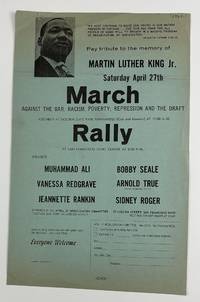
1968réf. 3397San Francisco 1968. Very good. Broadsheet on blue paper 13.5 x 8.5 inches. Slight discoloration along top and bottom edges minor edge wear a few soft creases old horizontal folds. An exceedingly rare broadsheet advertising a multi-faceted public march and rally against the Vietnam War and "racism poverty and repression" which took place in San Francisco California about three weeks after the assassination of Martin Luther King Jr. The organizers of the event the April 27 Mobilization Committee framed the day's activities around Dr. King's opposition to the Vietnam War; the broadside calls for the protesters to "pay tribute to the memory" of Dr. King his portrait is printed at the top of the front side of the broadsheet and the entirety of the verso prints excerpts of an April 4 1967 speech by Dr. King railing against the Vietnam War. Particularly interesting is the eclectic list of speakers who participated in the day's events on April 27 1968 which included Muhammad Ali Vanessa Redgrave Jeanette Rankin Bobby Seale Arnold True and Sidney Roger. Ali was in the midst of his appeal after his conviction for draft evasion the previous year and was a natural candidate to speak against the injustices of the Vietnam War. Bobby Seale co-founder of the Black Panthers was four months away from participating in protests at the 1968 Chicago Democratic Convention after which he was arrested and tried as part of the sham Chicago Eight fiasco. The diversity of the speakers echoes the quantity of different issues represented by the current broadsheet: Civil Rights the Vietnam War the recent assassination of Dr. King Muhammad Ali's legal fight against the war Bobby Seale's controversial role with the Bay Area Black Panthers women's rights and the role of the American military. We could locate no other copies of this broadsheet in auction history or OCLC. unknown
1970réf. 190661970. U.S. Army Engineer Company photo album early 1970s documents logistical operations base life and personnel composition at Oakland Army Base during the Vietnam War providing visual evidence of military transportation infrastructure and the integration of a diverse workforce within a key Pacific transit hub. The material records the functioning of an engineer unit responsible for vehicle maintenance cargo handling and operational readiness while also capturing the presence of African American servicemen and female personnel within the same working and ceremonial environments. It supports research into military logistics on the U.S. home front race and gender integration in the armed forces and the institutional processes that sustained overseas deployment during the Vietnam War. Album containing 369 photographs including 353 color and 16 black and white images most measuring approximately 5 x 3.5 inches compiled at Oakland Army Base and the adjacent Port of Oakland. The contents document heavy machinery and vehicle maintenance including bulldozers cranes transport trucks and military jeeps with numerous images showing mechanics engaged in repair work. Additional photographs depict combat training exercises including rifle instruction with M16 firearms alongside formal ceremonies in which soldiers of varied racial backgrounds and both genders receive promotions commendations and instruction from commanding officers. Several images show administrative office environments providing insight into the clerical and organizational functions supporting base operations. Group scenes include family-oriented gatherings and meals indicating the social dimension of service life within the base setting. Produced at a time when Oakland Army Base operated as a principal embarkation and return point for U.S. forces traveling to and from Vietnam and other locations in East Asia the album documents the domestic infrastructure underpinning overseas military engagement. The emphasis on machinery cargo movement and personnel readiness reflects the scale and complexity of logistical coordination required during the conflict. The visible diversity within the unit corresponds with broader transformations in the U.S. military following desegregation and evolving roles for women making the album relevant to studies of institutional change during the late stages of the Vietnam War. Light wear to album edges and corners photographs well-preserved with minor handling marks; overall very good. A substantial visual record of engineer operations and base life at a critical West Coast military installation during wartime. unknown
102 pages. Cover photo of Nazi officer imposed over large swastika. Contents: Vietnam widow - Shirley Isaaacs of Phenix City, Alabama; America's Ten Outstanding Young Men of 1965 - Donald Dickinson Williams, Bill D. Moyers, Jerry Herman, Edward H. White II, Frederick P. Whiddon, Aurther Edward Turner, Fred R. Harris, Charles Conrad Jr., Frederick Rogers Adams Jr.; Nice two-page color-photo ad for the 1966 Ford Galaxie XL in Paris; Oklahoma's Education War - the lesson it can teach a nation; How the Jews Changed Catholic Thinking - "B'nai B'rith wanted the Catholics to delete all language from the Church services that could even seem anti-Semitic" - extensively documents organized Jewry's intensive effort which resulted in the Catholic Church watering down its position that Jews killed Jesus Christ; The Defeat of Hitler's Order - General Dietrich von Cholitz did not obey Hitler's order to burn Paris; Nice colour ad for the American Motors Rambler station wagon; Great colour centerfold ad for the 1966 Plymouth 2-door hardtop VIP (blue); The New Mexico - yesterday's tradition takes on today's tempo - Luis Barragan; Acapulco's Young Fashionables - colour photos of lovely Latinas; *Fantastic* two-page colour ad for the 1966 Dodge Charger, featuring a grey model with red interior; Shooting is the least important part of Basketball - John Wooden is now in his 17th season at UCLA; Nice colour photo 7up ad; Luxurious 1-page colour photo ad for the wide-track 1966 Pontiac; Debbie Watson (of the ABC-TV show Tammy) says she'll be dangerous at 20; Albert the Dalmation dog defies nature and flips for the dolphin way of life - with great photos; Johnny Carson, the Prince of Chitchat, is a Loner - with photos; Nice full-page colour ad for Philco colour televisions; Two-page colour photo ad features the safety features of 1966 General Motors cars; Lovely colour photo ad for the 1966 Oldsmobile Jetstar 88. Nice two-page colour photo ad for 1966 Chevrolet trucks features a rocky desert scene. Back cover features nice colour painting of a railworker in a Camel cigarette ad. Moderate wear. Unmarked. Address label upon front cover. A sound copy of this informative issue. Book
479 pages. Glossary. Footnotes. Index. Black and white reproductions of photos. "Phoenix was the final solution to the problem posed by those Vietnamese civilians who supported the armed Vietcong insurgents. In the end, an estimated 40,000 Vietnamese were killed and countless atrocities were perpetrated in the name of 'neutralizing' the Vietcong 'infrastructure'. This work is nothing less than a meticulous historical narrative of Phoenix from its roots through its tragic conclusions, based upon four years of research and interviews with over one-hundred program participants." - dust jacket. "Outlines in careful detail how the CIA ran a computerized assassination and torture program in Vietnam, violating laws and especially human morality." - John Prados. In 2014 NYU media studies professor Mark Crispin Miller selected this as one of the top five books actively suppressed and hidden from Americans. - RT. Unmarked with light wear. Tight and square. Dust jacket now preserved in archival-grade Brodart. A quality copy. Book
1920réf. 84781920 S.D. (fin des années 1920) reliure artisanale Tome V - Fascicule I, Produits médicinaux. Classe XXIII : Narcotiques, poisons et stupéfiants. Classe XXIV : Produits médicinaux.
1960réf. Cat357Japan Taiwan Korea and the US 1960. 15 ¼ x 11 inch album with attractive painted cover containing approximately 235 photos mainly 3 ½ x 5 inches and smaller. Contents generally in excellent condition. Excellent. A photo album by an unknown US Marine containing photos from his time in Okinawa Taiwan and Korea in the 1950s and 1960s. At the time—the earliest dated photo in the album is from April 1956—the Vietnam War was in its early days with Eisenhower deploying MAAG to train the ARVN in late 1955. It is not clear what unit the photographer was with as only his training platoon 46 of the Second Recruit Battalion on Parris Island is identified; however this photo’s caption includes “Photo by MAAG”. The album appears to be divided between the three locations each of which was strategic in the Cold War broadly and for American efforts in Vietnam in particular. It is highlighted by a series of photographs apparently from Taiwan showing agricultural workers planting and posing with their crops and children. In the 1950s under the China Aid Act the Sino-American Joint Commission on Rural Reconstruction JCRR had launched a land reform financed by American aid and staffed by ROC scientists. In the 1960s this program expanded to crop diversification and the creation of the Asian Vegetable Research and Development Center. These efforts towards agricultural development in Taiwan were like other US efforts in the region intended to contain the spread of Communism.1 Other photos from Taiwan include shots of the ships; men outside their tents vehicles and straw huts smoking and playing cards; some are city streets but most are of the countryside. Several notable photos show the Marines playing at being POWs: in one a man poses with his hands on his head next to a sign reading “POW AND CAPTURED / EQUIPMENT COMPOUND” and in another one soldier pretends to march his fellow at gunpoint. Photos from Okinawa show military vehicles city streets and American and Japanese men—many Okinawans were employed by the US military during its occupation. Many scenes appear to show construction efforts with USMC-marked bulldozers and tractors driving around fields of dirt and rock in the countryside with a few of these showing Okinawa residents as well. South Korea also played an active role in the Vietnam War. Photos from Korea show tanks and other vehicles along the coast and being loaded into ships American soldiers driving and posing in the countryside and several of village streets and residents. Other subjects include target shooting transit on a ship captioned “WESTWARD HO / FAR EAST BOUND” and some that appear to be family and scenery shots in the US dated April 1961. Overall the album provides a look not just at the activities of the Marine Corps in the early US advisory era of the Vietnam War but also the people and places of the US’s strategic activities in East Asia. Of interest to historians of the Vietnam War Cold War and US empire. 1 Leo Chu “‘A bloodless social revolution’: Land reform and multiple cropping in Cold War Taiwan 1950–1979” The history of crop science and the future of food 6 no. 5 September 2024 1104–1110. unknown
Paris, Limoges, Henri Charles-Lavauzelle, 1895. 2 volumes In-4 reliés demi-basane verte, dos lisses à fleurons et filets dorés. Un volume de texte + un atlas de cartes et planches. VII + 555 pages pour le volume de texte comprenant 31 gravures et une table des noms cités + atlas de 20 cartes et 3 planches. Quelques rousseurs claires sans grande gravité. Exemplaire bien complet. Bon état.
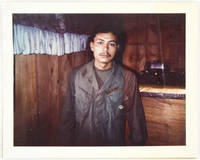
1970réf. 18470N.p. N.p. c. 1970. Prints in uniformly near fine to very good condition with some curling to the edges. Collection of twenty-five 3 3/8 X 4 1/4 inch Polaroid snapshots mostly in color taken during an American soldier's deployment in An Khê Vietnam. Features images of soldiers grilling drinking and sitting in their bunkers with a few double exposures and a couple of photographs of female civilians. Prints have been adhered to cards with in several instances notes penned on the versos. Fascinating vernacular document of soldier life in one of the most strategically significant military zones of the Vietnam conflict. N.p. N.p. unknown
1959réf. 223101959. United States Army Intelligence School. Intelligence training archive. 1959-1963. This archive documents the institutional training system used by the U.S. Army Intelligence School at Fort Holabird during the Cold War outlining how personnel were instructed in reconnaissance mapping foreign intelligence analysis and counterintelligence operations. The material establishes a formal curriculum designed to prepare officers for intelligence work in the context of U.S.-Soviet conflict combining doctrinal interpretation of adversary systems with technical instruction in observation terrain analysis and operational planning. It provides primary evidence of how intelligence training integrated ideological framing with practical field methods. Archive of 13 instructional documents totaling approximately 459 pages issued between 1959 and 1963 including manuals technical booklets and training schedules. Titles include 1 Soviet Intelligence Systems Nov 1962 2 Observation and Description Jan 1961 3-5 Military Map Reading booklets 1959-1961 6 Interpretation of Highways Bridges and Transportation Facilities Oct 1961 7 USAINTS Library Guide Jan 1962 8 Operational Data on South Korea I Sep 1962 9 Nuclear Warfare II Jun 1963 10 Benelux Jul 1961 11 Solution of Dispersion Problems undated and 12-13 weekly training schedules June and July 1963. The manuals include diagrams and exercises on map reading identifying "recognition distance and direction" as core elements with annotated examples of azimuth calculation and grid use. Instructional material in Observation and Description includes facial and morphological diagrams distinguishing features such as "Vertical Forehead" and "Bushy" eyebrows for identification purposes. Soviet Intelligence Systems presents ideological analysis stating that Soviet security organs are "extensions of the Party's designs" and describing intelligence as "a pervasive force which envelops every sector of society." Infrastructure manuals include photographic examples of roads and bridges for field identification while the Library Guide outlines access systems and spatial organization of intelligence resources. Weekly schedules list training components such as report writing practical exercises and seminars alongside technical instruction in photography. Produced during a period of sustained Cold War tension these materials show how the U.S. Army formalized intelligence education by combining political interpretation of adversaries with standardized technical training. The emphasis on mapping surveillance and infrastructure analysis reflects preparation for both conventional and nuclear-era operations while the inclusion of regional studies such as South Korea and Benelux indicates geographic scope within global strategic planning. Minor rust to staples light edge toning and scattered manuscript annotations; occasional corner creases and small marginal tears not affecting text; overall very good. A cohesive archive of Cold War intelligence training preserving the instructional methods and analytical frameworks used by the U.S. Army in the early 1960s. unknown
1931réf. 39050Hanoi Imprimerie d'Extrême-Orient 1931 in-4 demi-chagrin marron à coins, dos à nerfs, premier plat de couverture conservé [Rel. de l'époque], dos insolé, lég. fente au mors supérieur
1711réf. 22280Amsterdam, Veuve de Paul Marret, 1711. Frontispiz, 7 n.n. Bll., 351 SS., 4 mehrfach ausfaltbare Karten und 20 meist mehrf. ausf. Kupfertafeln. Beigebunden: - ders.: Traité des Vents alisez ou reglez, des Vent Frais de Mer & de Terre, des Tempêtes, des Saisons de l'Année, des Marées & des Courans de toute la Zone Torride. Amsterdam, Paul Marret, 1701. Frontispiz, 104 SS., 20 n.n. Bll. Register. 2 mehrfach ausfaltbare Weltkarten, ca. 30 x 16 cm (Mer du Nord / Mer du Sud) in Mercator-Projektion. 8°, Leder der Zeit über 5 Bünden, 2 goldgepr. Rsch., Rückenvergoldung in 4 Feldern. Einband stark berieben, an Ecken und Kanten bestoßen, Fehlstellen am Lederbezug des Rückens, Außenfalze gebrochen, Vergoldung ziemlich verblasst.
1884réf. 12818Paris Librairie Hurtau 1884 in-12 demi-basane fauve, dos à nerfs orné, pièce de titre bleue, plat sup. de la couv. cons. [Rel. de l'époque]
1970réf. 19694Dau Tieng ca. 1970. Very good. 12mo. Commercial album; turquoise faux-leather boards. 46 gelatin-silver B&W prints most 4.5" by 3.5"; 13 color prints; 3 pieces of various ephemera including an Army library card dated 1970; plus 4 photos apparently sent from home. Very good. Mild exterior wear; light soil to plastic sleeves throughout; but photos remain clean and bright. Striking collection of photographs showing many carefree recreational moments of wartime: soldiers sitting around at the barracks reading and smoking; many photos of smiling Vietnamese women including girls at the base library. Notably includes two photographs of a Vietnamese all-female rock band performing and three of an African-American soldier rock band likely USO. Plus several exterior shots of the military base one sign noting the headquarters of the 2/28 Infantry the Black Lions. A moving portait particularly of what appear to be at least momentarily jovial relationships between soldiers and local Vietnamese. hardcover books
1970réf. 18470N.p. N.p. c. 1970. Prints in uniformly near fine to very good condition with some curling to the edges. Collection of twenty-five 3 3/8 X 4 1/4 inch Polaroid snapshots mostly in color taken during an American soldier's deployment in An Khê Vietnam. Features images of soldiers grilling drinking and sitting in their bunkers with a few double exposures and a couple of photographs of female civilians. Prints have been adhered to cards with in several instances notes penned on the versos. Fascinating vernacular document of soldier life in one of the most strategically significant military zones of the Vietnam conflict. N.p. N.p. unknown books
1911réf. 61576S. l., s. n, [1911] 1911 Atlas grand in-4, cartonnage d'édition, dos de toile noire, premier plat imprimé. Très rare ouvrage, complet des 38 planches annoncées, entièrement sur onglet. Cartonnage usagé, coins émoussés, le mors du 1er plat fendu entête et en pied.
réf. 1986Ensemble de 8 affiches. Imp, SGP & IMP PPI, 22, rue Clavel. Paris. Parti Communiste Francais. 5 bandeaux de 29 x 85 cm, 1 affcihe de 59,5 x 39,5 cm et une de 42,5 x 60 cm. Parfait état.
réf. 1986Ensemble de 8 affiches. Imp, SGP & IMP PPI, 22, rue Clavel. Paris. Parti Communiste Francais. 5 bandeaux de 29 x 85 cm, 1 affcihe de 59,5 x 39,5 cm et une de 42,5 x 60 cm. Parfait état.
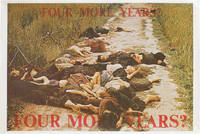
1972réf. 47693N.p.: Artists' and Writers' Protest / Colorcraft Inc 1972. First Edition. Original photographic poster offset printed in colors on white stock measuring 96.5cm x 63.5cm ca.38" x 25". Some minor handling trivial wear to extremities else very Near Fine / A unbacked. One of the most gruesome and effective pieces of propaganda to emerge during the Vietnam War reproducing a photograph taken during the My Lai Massacre by U.S. Army photographer Sgt. Ronald L. Haeberle. This and other iconic photos were taken by Haeberle on March 16 1968 using his personal camera while assigned to follow Charlie Company into My Lai. Unlike the monochrome images which he returned to the Army shot with a standard-issue Army camera the color images he shot with his personal camera were brought back to the States and sold to Life magazine after Haeberle was honorably discharged. The photos were printed in the December 5 1969 issue of Life offering Americans a harrowing glimpse into some of the attrocities being committed overseas; his caption beneath this image read: "Most were women and babies. It looked as if they tried to get away." The poster was designed by members of the Art Workers Coalition and initially released in 1969 using the identical image with the overlaid text reading: "Q: And babies A: And babies." This version published four years later intentionally subverts Richard Nixon's campaign slogan "Four More Years" forcing Americans to ask whether or not they wanted Nixon for another term and by extention another four years embroiled in foreign conflict. OCLC notes a single holding MoMA. Artists' and Writers' Protest / Colorcraft, Inc unknown books