(Vietnam)Biblio.com
2 865 résultats
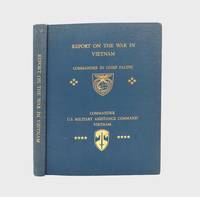
1968réf. 20360Washington: Government Printing Office 1968. First edition. Maps some folding charts and diagrams photographs Index laid in at the back. 1 vols. 4to. Original blue cloth gilt. Some light soiling of cloth warping of volume and light marginal browning of text else a very good copy of this work. First edition. Maps some folding charts and diagrams photographs Index laid in at the back. 1 vols. 4to. INSCRIBED BY WILLIAM WESTMORELAND TO HEDLEY DONOVAN former editor-in-chief of Time Inc. "To Hedley Donovan-With reminiscence of our pleasant association. W. C. Westmoreland. March 1969." In his position as Editor in Chief of Time Inc. Donovan had made four trips to Vietnam to see firsthand the people and places being covered by his correspondents and to get a feel for the situation. He met with Westmoreland in Vietnam in late 1965-early 1966 and probably on his subsequent trips. Westmoreland was the Time Magazine Man of the Year for 1965. Partly reading "As commander of all U.S. forces in South Viet Nam General William Childs Westmoreland 51 directed the historic buildup drew up the battle plans and infused the 190000 men under him with his own idealistic view of U.S. aims and responsibilities. He was the sinewy personification of the American fighting man in 1965 who through the monsoon mud of nameless hamlets amidst the swirling sand of seagirt enclaves atop the jungled mountains of the Annamese Cordillera served as the instrument of U.S. policy quietly enduring the terror and discomfort of a conflict that was not yet a war on a battlefield that was all no man's land. Government Printing Office unknown
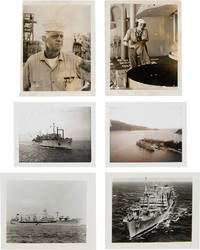
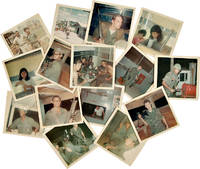
1960réf. 55578Hong Kong Saigon Da Nang Pago Pago and other places. 1960–1963. Early Vietnam Photo Album from an American Sailor An interesting collection of color and black-and-white vernacular photographs taken by an unidentified Navy Midshipman or Marine serving in southeast Asia in the early years of American involvement in Vietnam. Twenty-four images are captioned on the verso often identifying the time and place of the photographs some of which were taken on ship and others on the ground. The majority of the photographs emanate from 1963 either from the caption or a date stamp in the margin of the photographs. They feature street scenes and various buildings in Hong Kong and Vietnam views from the serviceman's ship shots of servicemen gathered in the mess hall views of fishing and various buildings in Pago Pago and more. The captions provide a good cross-section of the nature of the photographs a sampling of which read: "President Diems & Madame Nhus Palace being constructed - They were working on it when I came Feb 1963 August"; "Boulevard going towards Saigon August 63"; "Boats at river front Saigon August 63"; "Company Area V.T.T. Heli. Co. August 1963"; "Da Nang - S. Viet Nam"; "Chinese painting the ship - this is in Hong Kong"; "Bura boat alongside the ship selling goods in Hong Kong"; "One of the boats people live on in Hong Kong. Notice the laundry drying on the top"; "Governor's Home Pago Pago"; "Ships boat fishing party Pago Pago"; and others. The loose photographs feature naval subjects such as the hospital ship U.S.S. Sanctuary an officer named "Hamilton" and two shots of a young man onboard the ship who might be the compiler of the present album. A nice collection of early Vietnam War vernacular photography with useful annotations. Eighty-seven photographs most in color most about 3½ × 3½ inches including twelve slightly larger photographs laid in. Narrow quarto. Photograph album of black textured cloth gilt label on front board. Photographs in generally nice condition. Very good. hardcover
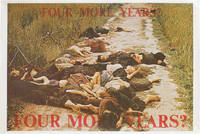
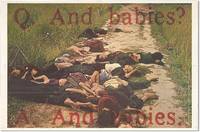
1972réf. 47693N.p.: Artists' and Writers' Protest / Colorcraft Inc 1972. First Edition. Original photographic poster offset printed in colors on white stock measuring 96.5cm x 63.5cm ca.38" x 25". Some minor handling trivial wear to extremities else very Near Fine / A unbacked. One of the most gruesome and effective pieces of propaganda to emerge during the Vietnam War reproducing a photograph taken during the My Lai Massacre by U.S. Army photographer Sgt. Ronald L. Haeberle. This and other iconic photos were taken by Haeberle on March 16 1968 using his personal camera while assigned to follow Charlie Company into My Lai. Unlike the monochrome images which he returned to the Army shot with a standard-issue Army camera the color images he shot with his personal camera were brought back to the States and sold to Life magazine after Haeberle was honorably discharged. The photos were printed in the December 5 1969 issue of Life offering Americans a harrowing glimpse into some of the attrocities being committed overseas; his caption beneath this image read: "Most were women and babies. It looked as if they tried to get away." The poster was designed by members of the Art Workers Coalition and initially released in 1969 using the identical image with the overlaid text reading: "Q: And babies A: And babies." This version published four years later intentionally subverts Richard Nixon's campaign slogan "Four More Years" forcing Americans to ask whether or not they wanted Nixon for another term and by extention another four years embroiled in foreign conflict. OCLC notes a single holding MoMA. Artists' and Writers' Protest / Colorcraft, Inc unknown
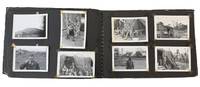
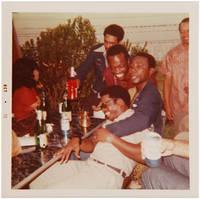
1960réf. 232781960. Black U.S. Army soldier's photo album documenting home and military life between Virginia and Vietnam in the late 1960s and early 1970s. Black servicemen moved through the formally desegregated Army during the first major U.S. war fought after official military integration. Centered a young black enlisted man the album tracks the life of service through photos at camp soldiers in formation military equipment helicopters and with portraits alongside other soldiers. Though the Korean War was the first U.S. war that was formally desegregated the units still saw unequal integration and opportunity while the Vietnam War marks an era in which a desegregated military was already well established. Photo archive of 92 color and black and white photographs ranging from 3.5" x 3.5" to 3.5" x 5" Virginia and Vietnam late 1960s to early 1970s. Mounted in a 10" x 14" spiral bound album. Many images show the compiler in uniform and civilian dress some of the earlier home scenes have handwritten inscriptions en verso. Other images show helicopter scenes in flight and at camp; tent lines wooden barracks; soldiers standing in formation gathering in small groups and posing beside military vehicles and equipment. A Virginia license plate anchors the soldier's home state and the use of quippy captions gives this soldier a voice identifying some individuals by their first name and one particular youthful photo of himself captioned "Dunn will be leaving on January the 1st army But you know he is trying to get out of it said he was going to school. Ha! Ha! Uncle Sam's school" giving a glimpse into the prior aspirations of young Black man right before being drafted. Black soldiers entered the Vietnam era military in large numbers at the same time that civil rights struggles Black Power politics and mounting criticism of the war reshaped the meaning of service for African American men. This album gives weight to that history with repeated presence of black men within camps and comradeship with white soldiers. Adhesive residue to corners and backs of some images edgewear to album and leaves and expected handling wear; photographs generally clear and legible. Overall very good condition. This album shows the ground level of Black military experience in the early post segregation Army. unknown
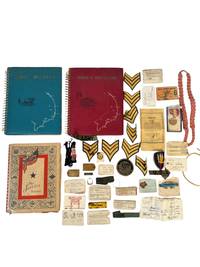
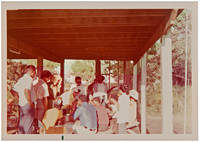
1942réf. 193041942. Coon Clarence; Coon Michael. Coons family Air Force service archive 1942-1944 and 1968-1969 documents two generations of American military experience across World War II and the Vietnam War offering direct evidence of shifting military culture wartime attitudes and generational identity within a single family. Clarence Coon's New York World War II service as an engineer gunner in the Fifteenth Air Force in Italy situates the archive within the Allied air campaign over Europe while his son Michael Coon's deployment to South Vietnam places the later material within the context of a deeply contested and culturally transformative conflict. Clarence's letters and scrapbook entries foreground a disciplined and duty-oriented perspective shaped by mid-century wartime expectations while Michael's photographic record presents a markedly different tone capturing leisure irreverence and camaraderie among soldiers during the Vietnam era. The archive preserves Clarence's written voice including lines such as "Another card to let you know that I don't do all my writing to women" and his commentary on the 1942 New York gubernatorial election "The radio just announced Bennet's Defeat. To bad. Well we will see what Dewey can do. I wish him luck" as well as his observations during stateside training "Well as far as I'm concerned they can give Tenn. back to the Indians. We are walking around in a sea of mud. Its all day rains every 5 min. I wouldn't live in the South for anything." Together these materials establish a continuous family narrative linking wartime service political awareness and personal expression across two major twentieth-century conflicts. Coons family Air Force archive. United States and Vietnam 1942-1944 and 1968-1969. Group consists of two photograph albums from Vietnam War service and one World War II scrapbook accompanied by a quantity of associated ephemera including patches medals registration cards business cards a ring and a dog tag. Archive contains approximately 123 photographs across the albums and scrapbook along with numerous postcards including 26 with manuscript correspondence on the verso and three pages of a letter incorporated into the scrapbook. Scrapbook also includes newspaper clippings documenting Clarence Coon's training and service progression including flight training in Westover Massachusetts; Nashville and Smyrna Tennessee; technical training in Gulfport Mississippi; and gunnery and pistol range distinction at Tyndall Field Florida. Vietnam-era albums depict Michael Coon and fellow servicemen in informal and candid settings including scenes of drinking recreational outings helicopter transport weapons handling and interactions with entertainment venues. The juxtaposition of World War II and Vietnam War materials within this archive provides a concentrated record of evolving American military life particularly the transition from the structured collective ethos associated with the Second World War to the more individualized and culturally expressive environment of Vietnam-era service. Clarence Coon's combat role aboard B-24 Liberator bombers during missions over Italy aligns the archive with the strategic bombing campaigns of the European theater while his writings document both military routine and domestic political awareness. In contrast Michael Coon's photographs capture the lived experience of American soldiers in Vietnam beyond formal operations including leisure dissenting humor and the visual language of 1960s youth culture within the military. Light wear from handling throughout with typical album and scrapbook aging and ephemera showing minor creasing; overall very good condition. unknown
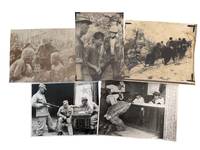
1963réf. 235511963. Vietnam War captivity and Code of Conduct press photograph archive 1963 to 1967 documenting how American military joined two sides of the same problem: the questioning of suspected Viet Cong prisoners in South Vietnam and the training of U.S. soldiers to resist Communist interrogation if captured. The Korean training images trace to the post Korean War Code of Conduct regime created after American POWs had faced coercion indoctrination and propaganda use in North Korean and Chinese captivity. The Vietnam images date from June August and September 1967 during the year after the major U.S. troop buildup made prisoner handling tactical intelligence and battlefield screening daily features of American and South Vietnamese operations. Photo archive of five silver gelatin press photographs each 8 x 10 inches 1963 to 1967. The photographs show three Vietnam War prisoner scenes and two U.S. Army Code of Conduct training scenes. One Associated Press wirephoto dated June 23 1967 captioned "Interrogation" shows South Vietnamese Marines and a U.S. Marine questioning a Vietnamese villager suspected of being a Viet Cong terrorist after two Marines were killed in a firefight northeast of Saigon. Another dated August 5 1967 captioned "Questioning a villager" shows South Vietnamese paramilitary soldiers questioning a man suspected of being a Viet Cong soldier after villagers were rounded up following a firefight southwest of Saigon. A September 24 1967 wirephoto captioned "Asks a captive" shows soldiers of the U.S. 25th Infantry Division interrogating a captured Viet Cong soldier before continuing a village sweep northwest of Saigon. The two Korea images show staged Communist prisoner camp scenarios: one image by Malcolm Barr shows American soldiers three dressed in North Korean army uniforms conducting an "interrogation" at a U.S. Army simulated Communist prisoner of war camp; the other captioned "Pointed question" shows Sp/4 Ralph Kreis receiving rough treatment from Korean "guards" attached to the 2nd Infantry Division during a five hour Code of Conduct course. The group belongs to the period when the U.S. military carried Korean War captivity lessons into the Vietnam era while fighting a counterinsurgency in which prisoners detainees suspected guerrillas and civilian villagers became sources of tactical information. The Vietnam photographs show prisoner questioning at the edge of combat operations with captions placing each scene near Saigon and linking interrogation to sweeps firefights suspected Viet Cong activity and U.S. or South Vietnamese field units. The U.S. Code of Conduct photographs show the counterpart of American soldiers rehearsing captivity under staged Communist authority using Korean War imagery to prepare men for the coercive questioning and ideological pressure they might face in later Cold War conflicts. Press stamps caption slips crop marks editorial notations toning surface wear adhesive residue and handling creases; images remain clean and clear. Overall very good condition. A press record of how captivity interrogation and resistance training handled counterintelligence heralding from the red scare. unknown
1977réf. WRCAM55443Various places in Thailand perhaps centering on Korat Royal Thai Air Force Base 1977. Seventy-seven Kodak color photographs almost all approximately 3 1/2 x 5 inches a handful slightly smaller and one postcard. Slim quarto. Contemporary glossy purple floral-patterned cloth photograph album gilt- stamped label on front cover. Some images slightly faded. Overall very good. A highly entertaining collection of vernacular photographs capturing the lives of young African-American G.I.s and their romantic interests in a village in Thailand during the latter years of the Vietnam War. The photographs show African-American men in both uniforms and street clothes often posed alone or with Thai locals almost exclusively women. The men are seen at work and play including an image of the gun shop with a sign labeled "Phase Section" on the front and a large military van with a similar sign reading "2 Orange." There is also a great deal of coverage of the locals living in the village including women and children. One photograph of particular interest shows part of a commercial building emblazoned with both a Coca-Cola and a Pepsi sign. The date range of 1972 to 1977 stems from the fact that some of the photographs are date-stamped in the margin "Oct 72" and one later image is stamped July 1977; most images seem to emanate from the earlier date. The single postcard is an image of Wang Not Ten Waterfall in Phitsanulok in north-central Thailand. The album could possibly have been retained by a local Thai person documenting their interactions with the visiting Americans. There were a half dozen active American Air Force bases in Thailand during the 1970s from which over 80% of the air strikes of North Vietnam originated. The American servicemen seen in the present photographs were either airmen performing these strikes or ground crew in support of the pilots. Also given that Korat Royal Thai Air Force Base and Phitsanulok are both in north-central Thailand it is likely the images depict this area. A rare look at African-American servicemen in a strategically important region of Thailand during the Vietnam War. hardcover books
1972réf. 55443Various places in Thailand perhaps centering on Korat Royal Thai Air Force Base. ca. 1972-1977. African-American Soldiers in Southeast Asia A highly entertaining collection of vernacular photographs capturing the lives of young African-American G.I.s and their romantic interests in a village in Thailand during the latter years of the Vietnam War. The photographs show African-American men in both uniforms and street clothes often posed alone or with Thai locals almost exclusively women. The men are seen at work and play including an image of the gun shop with a sign labeled "Phase Section" on the front and a large military van with a similar sign reading "2 Orange." There is also a great deal of coverage of the locals living in the village including women and children. One photograph of particular interest shows part of a commercial building emblazoned with both a Coca-Cola and a Pepsi sign. The date range of 1972 to 1977 stems from the fact that some of the photographs are date-stamped in the margin "Oct 72" and one later image is stamped July 1977; most images seem to emanate from the earlier date. The single postcard is an image of Wang Not Ten Waterfall in Phitsanulok in north-central Thailand. The album could possibly have been retained by a local Thai person documenting their interactions with the visiting Americans. There were a half dozen active American Air Force bases in Thailand during the 1970s from which over eighty percent of the air strikes of North Vietnam originated. The American servicemen seen in the present photographs were either airmen performing these strikes or ground crew in support of the pilots. Also given that Korat Royal Thai Air Force Base and Phitsanulok are both in north-central Thailand it is likely the images depict this area. A rare look at African-American servicemen in a strategically important region of Thailand during the Vietnam War. Seventy-seven Kodak color photographs almost all approximately 3½ x 5 inches a handful slightly smaller and one postcard. Slim quarto. Contemporary glossy purple floral-patterned cloth photograph album gilt-stamped label on front cover. Some images slightly faded. Overall very good. hardcover
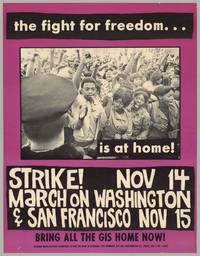
réf. 9608Washington D.C. ca. 1969. Illustrated single sheet poster black on purple background 22" x 17". CONDITION: Very good old folds moderate wear a few minor chips and tears. A scarce and vivid poster announcing marches on Washington D.C. and San Francisco produced by the Student Mobilization Committee To End The War In Vietnam. The rousing phrase "the fight for freedom.is at home!" accompanies a photo-illustration showing a large group of African American men and women participating in a protest. The head of a single police officer seen from behind appears in the lower left corner and effectively represents the oppression against which the students protest. Many of the protesters raise their clenched fists in the style of the Black Panther salute and appear to be chanting. The poster effectively appeals to African Americans to engage in protesting the War as a means of simultaneously combating racial inequality in America. The U.S. saw extensive protests surrounding its involvement in the Vietnam War many of which were organized by the Student Mobilization Committee SMC est. 1966 a nationwide organization of students who sought to end the war. For their events SMC created brochures posters buttons and stickers. SMC worked with other anti-war mobilization committees in the late '60s such as the Washington D.C.-based Vietnam Moratorium Committee VMC which sponsored anti-war moratoriums around the world in the fall of 1969. The VMC's first organized moratorium took place on October 15th 1969 and the second on November 15th in which over half a million activists marched on D.C. and demonstrated throughout the U.S. and the world. The November 15th event followed on the heels of the "March Against Death" demonstration held on November 14th when people marched down Pennsylvania Ave in Washington D.C. hoisting signs with the names of dead U.S. soldiers and destroyed Vietnamese towns. The protest on the 15th featured a rally at the White House in which chanting demonstrators called for a peaceful end to the war. One of the most influential student-led nonviolent protest groups in U.S. history the SMC began to disband in the early '70s as American combat troops stationed in Vietnam started to withdraw and return home. OCLC records only one copy held at Harvard. Google searches reveal a copy held by the National Museum of African American History & Culture. A striking poster reflecting the opposition of Black students to the Vietnam War and dovetailing with the ascendance of Black Power. REFERENCES: Aufderheide Ingrid. "Student Mobilization Committee to End the War in Vietnam: A Pivotal Moment in Student Protest" 2023 at The Nonviolence Project online; "Nov. 15 1969: Second Anti-War Moratorium" at Zinn Education Project online. Washington, D.C., [ca. 1969] unknown
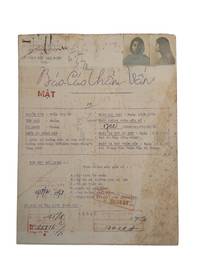
1970réf. 235521970. South Vietnamese Special Police interrogation report from Saigon 1970 documenting the arrest and questioning of Trần Thị Tư a seventeen year old ice cream seller accused of guiding and sheltering her husband after his infiltration into the Capital District for Communist activity. Created by the Cảnh Sát Äặc Biệt or Special Police of the Republic of Vietnam's National Police in Äô Thành Sài Gòn the file places one young woman's domestic movements kinship obligations and street vending work within the Phượng Hoàng security apparatus that targeted Viet Cong infrastructure in and around Saigon. The report anchors the charge in specific movements through Gò Vấp Gia Äịnh Tây Ninh and Saigon naming Trần Văn Bốn alias Trung Bà Tám Nhiá»u Tám Chợ Thị Hai and Phiếm as figures in the alleged route of contact shelter and attempted legal cover. Phúc Trình Thẩm Vấn Số 1702 / CSÄB / S3 / P33 / B3 / M. Saigon: Cảnh Sát Äặc Biệt 1970. Four page typed interrogation report with distribution sheet 8 x 10 inches in Vietnamese with two mounted silver gelatin mugshot portraits of Trần Thị Tư. The first page is headed "Báo Cáo Thẩm Vấn" roughly translating to "Interrogation Report" with Trần Thị Tư identified as the informant no alias no nom de guerre and her communist position having "contacted guided and sheltered her husband as he infiltrated the Capital District to carry out Communist activity." The report gives her address as 44C B Ä‘Æ°á»ng Phan Thanh Giản Gò Vấp lists her birth in 1953 at Xuyên Thanh Duy Xuyên Quảng Nam identifies her husband as Trần Văn Bốn alias Trung a professional weaver and records her occupation as an ice cream seller. The narrative states that after the family house burned in 1966 she moved to Gò Vấp married Bốn in 1967 visited him at a Communist base area after being guided through Tây Ninh received instructions from cadres named Nhiá»u and Tám Chợ and in April 1970 helped bring Bốn back to Saigon to live under legal cover. The final page states that she was arrested on 15 May 1970 while selling ice cream in Gò Vấp and then led security personnel to arrest her husband at Phiếm's workshop where he was apprenticing; the report is dated Saigon 19 August 1970 and signed for Major Lâm Văn Nghĩa Chief of the Special Police Office. The distribution sheet routes copies to the National Police Directorate Saigon City Hall's Internal Affairs Office the Capital Phượng Hoàng Committee the Saigon Gia Äịnh Mixed Security Committee the O.S.A. adviser's office District 11 National Police Quảng Nam National Police Gia Äịnh National Police S3/P31/B2 S3/P31/B3 and retained files. The report belongs to the period after the Tet Offensive when South Vietnamese and American security programs intensified the identification of urban Viet Cong infrastructure rather than battlefield combatants alone. Its language treats Tư as a source and detainee whose value lies in routes addresses family links employment and names. The file records a mother in law's address a rented kitchen near a workshop an apprenticeship motorcycle movements ferry and market truck transfers and the use of ordinary residence as a condition of clandestine work. The evaluation section concludes that Tư had no clear Communist ideological training but that she was used through "marital loyalty" to guide and shelter her husband so he could operate legally in the Capital District. Moderate foxing and toning throughout with minor edge wear corner wear ink stamps and manuscript docketing; text remains legible and paper has maintained integrity. Overall very good condition. A Saigon Special Police interrogation record tracing Viet Cong urban security through one woman's marriage movements and coerced knowledge of clandestine routes. unknown
1968Volume numero 22 appartenente alla collana Mezzo secolo. Prefazione di Sergio Pignedoli. Sovraccoperta stanca agli angoli, usurata al dorso, sia alle estremità che sulla lunghezza; piatti lievemente macchiati e bruniti, così come il dorso. Copertina nelle stesse condizioni della sovraccoperta. Presente dedica a penna all'occhiello con firma dell'autore. Pagine salde alla cerniera, con ampio margine, brunite, così come i tagli. Presente nota a matita alla controguardia posteriore. Numero pagine 397. USATO
1862réf. 39191S.l. s.d. [ca. 1862] in-8 (20,8 x 13 cm) en feuilles
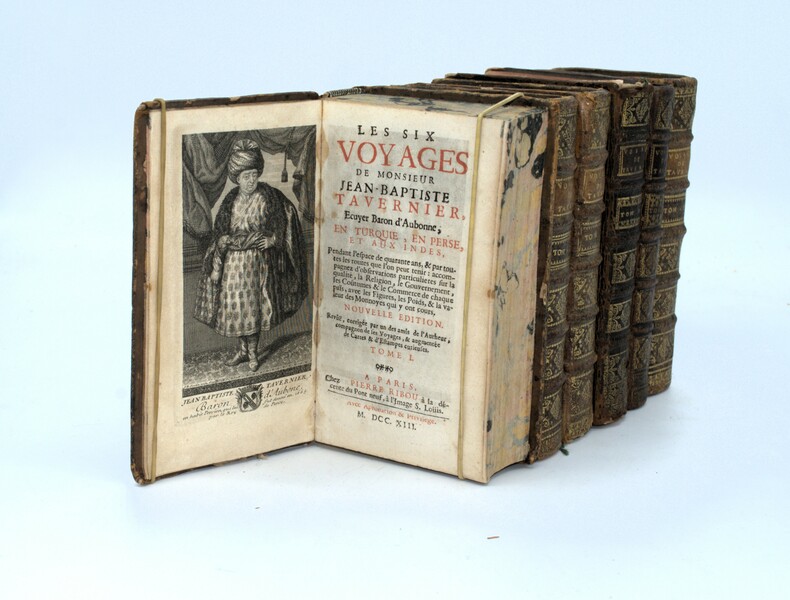
1713réf. PHO-1341A Paris, Chez Pierre Ribou et Rouen chez Jean Baptiste Machuel (tome 5), 1713. 6 volumes in-12, relié plein veau époque, dos à nerfs orné avec pièce de titre et tomaison, tranches marbrées, Tome 5, reliure légèrement différent avec tranches rouges, coins et coiffes usés .T1,27p-501p-1f(table); T2, 1f-465-1f (table);T3 ,1f-402-3f(table);T4,1f-367-2f(table);T5 ,3f(titre, épître)-467-2f(table),T6 3f(titre, épitre)244 -2f (table) .Illustré de 63 planches la plupart repliées, dont un portrait et 3 grandes cartes (manque la carte du Japon) ; quelques vignettes dans le texte , quelques planches au tome 5 volantes, 1 planche doublée.
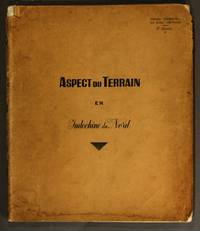
1954réf. 35722Saigon: Édition du Service cartographique des F.T.E.O. 1954. First edition large square 4to pp. 117; photographic illustrations throughout; some wear a few short splits in the wrapper extremities else very good in original brown wrappers printed in black on the upper cover. At head of title: Forces terrestres du Nord Vietnam. 2. Bureau. Issued during the final battle for France in Vietnam at Dien Bien Phu. Cornell and Arizona only in OCLC. Édition du Service cartographique des F.T.E.O. unknown
1890réf. 6246SLND [Vietman, circa 1890] 1890 18 Photographie originales tirées sur papier albuminé, 225 x 155 mm. Contrecollées sur carton ( 295 x 230 mm.)
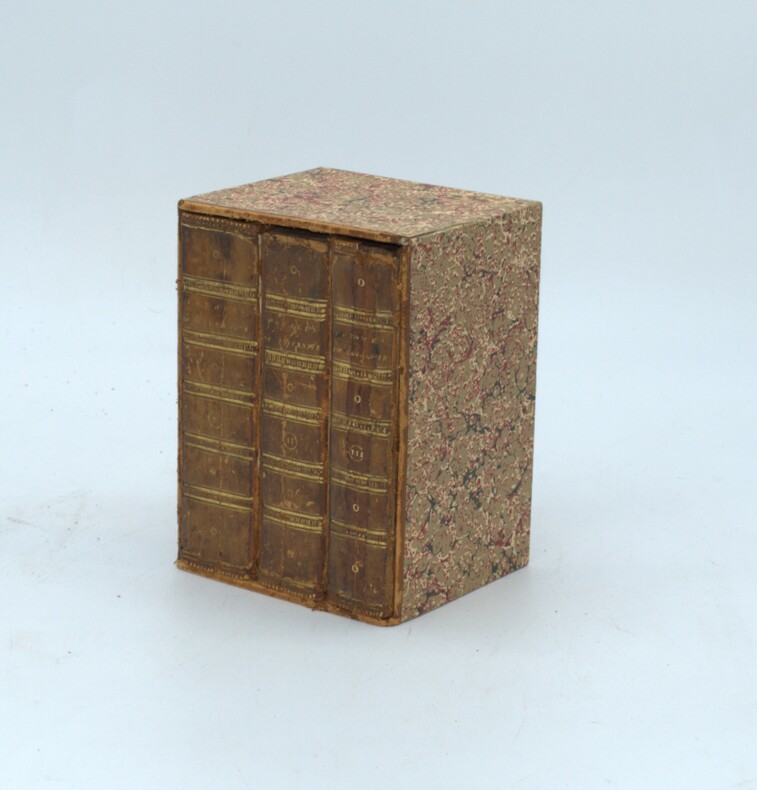
1679réf. PHO-1446Paris , 1679 , 3 vol. in-12, plein veau sous emboîtage, dos orné , filet sur les plats , 19ffn.-780pp.-4ff. , 6ff.-616pp. , 5ff.-564pp.4ff. , charnières faibles , 1 plat détaché , coupes , coins usés, coiffes sup. tome 2 et 3 abimées, réparation au titre tome 2 , manque de papier à l’épître tome 3 , une carte avec manque , déchirure au pli à la carte du Tunquin , trace de réparation avec adhésif sur une planche coupée court .
1912réf. 46593Hanoi-Haiphong Vietnam: Imprimerie d’Extreme-Orient 1912. Four vols. Folio. xiii 1 370 pp. 20 plates some maps photos each with facing explanatory leaf numerous tables several large folding; Atlas unpaginated w/ 178 diagrams maps geological sections relief maps 2 very large folding colour maps some geological formation plates in colour; 4 146 2 pp. plus 25 plates each with facing explanatory leaf numerous text illustrations diagrams; 8 76 4 pp. plus 9 plates each with facing explanatory leaf numerous text illustrations diagrams. Uniformly bound in original printed wrappers some scuffing soiling edgewear occasional light foxing still a VG- uncut & unopened presentation set inscribed and presented by Honore Lantenois & Henri Mansuy to Prof. Marcellin Boule 1861-1942 French geologist palaeontologist and physical anthropologist who reconstructed the first complete Neanderthal skeleton in France. First edition presentation set of this massive first installment in the Geological Survey of Southeast Asia begun in 1908 documenting the biostratigraphy of the Yunnan Region which was awarded the Tchihatchef Prize of the French Academy of Sciences. Much of this survey work was done during the building of the Hanoi to Yunnan-fou Kunming railroad which was built by the French to exploit the tremendous mineral wealth of Yunnan. The Director of the Department of Natural Resources for France in Vietnam was Honore Lantenois 1863-1940 who worked for years with Henri Mansuy 1857-1937 and sent him back to France several times to study palaeontology at the School of Natural Resources Ecole des Mines. Lantenois recruited Jacques Deprat 1880-1935 in 1908 -- at the time a brilliant palaeontologist -- to conduct an ambitious program mapping the geology of Indochina and neighboring areas. All three men became involved in the notorious Deprat Affair which resulted in Mansuy accusing Deprat to Lantenois in 1917 that Deprat had used a few European-sources trilobites among his fossil specimens from Indochina and Yunnan. This accusation rested on the distinction that the suspect trilobites were not just similar in nature to others found in Europe but the matrix they were embedded may have originated from Europe. Although nearly 90 years later it would be determined that the trilobite fauna discovered by Deprat indicated that the Yunnan had occupied a location adjacent to Bohemia originally in the early Palaeozoic period; the French scientific community condemned Deprat at the time stripped him of his degrees and posts and forced him to leave the field. A complete set including the Atlas is quite scarce. See: Genovese Madeleine Colani and the Deprat Scandal at the Geological Survey of Indochina Journal of the Siam Society Vol. 99 pp. 269-290 2011; Osborne The Deprat Affair: Ambition revenge and deceit in French Indo-China 1999; Stokes Deprat’s trilobites and the position of the Indochina Terrane in the Early Palaeozoic Proceedings of the International Symposia on Geoscience Resources and Environments of Asian Terranes 2008 pp. 201-207. Imprimerie d’Extreme-Orient, unknown
réf. PE29Oblong Quarto album ca. 268x364 cm. 30 card stock leaves. With ca. 215 mounted original gelatin silver photographs from ca. 87x144 cm 3 ½ x 5 ¾ in to ca. 69x67 cm 2 ¾ x 2 ½ in five real photo postcards ca. 108x139 cm 4 ¼ x 5 ½ in and six printed postcards ca. 137x87 cm 5 ½ x 3 ½ in. Most photos with period white pencil captions in French on the mounts at least seven photos including one real photo postcard with captions in negatives. Full ornamented cloth album fastened with a string. Several photos with mild silvering but otherwise a very good album with strong interesting photographs. Historically interesting album of lively vernacular photographs apparently taken by a French resident of Canada during his trans-Pacific voyage from Vancouver to the Orient in the late 1934 and early 1935. The compiler and his travel companions left Vancouver aboard the “RMS Empress of Canada” and sailed to Hong Kong with a stopover in Saigon Vietnam. From there they traveled overland to Beijing and Seoul and then continued to Japan visiting Kyoto and Nikko. On the return journey they stopped in Honolulu and New York. The album contains 215 well executed photographs from the voyage and opens with over sixty images of Saigon showing rare views of the first tea factory in the East-South Asia the Bank of Vietnam and candid street scenes of native huts boutiques and restaurants. Especially interesting is a striking image of half-naked ethnic locals sitting on the ground beside a bicycle and posing for the camera. The other photos from the region capture topographical views riverside fishing gear on the Huong River and snapshots of the compiler and his companions throughout their journey by cars in canoes along the Mekong River etc. Among twenty-five photographs of Hong Kong a standout image illustrates a bustling street scene filled with residents in traditional attire shopfronts with Chinese signs and flags of the Wang Jingwei regime flying alongside the British Union Jack. The rest of the images show the city’s port waterfront glowing night views and moments of the travel group golfing. In Beijing the focus shifts to historical landmarks documenting the Summer Palace Nine Dragon Screen Ming Tombs Temple and Altar of Heaven and the iconic Chinese guardian lions. A dozen photographs of the Great Wall offer a rare glimpse of life along its slopes with locals carrying goods in baskets and leading donkeys through the rugged terrain. The Japanese portion of the journey includes evocative views of Kyoto’s Chion-in Temple the historic Yaami Hotel and a Buddhist temple with a monk standing solemnly at the gate. The group also visited Nikko capturing sites such as the Toshogu Shrine the ornate Yomeimon Gate a stone basin and tranquil views of Lake Chuzenji. The album closes with about forty photos of Seoul Temple of Heaven Honolulu views of the waterfront photos on deck and Arizona Grand Canyon. Overall historically interesting album of lively vernacular photographs apparently taken by a French resident of Canada during his trans-Pacific voyage from Vancouver to the Orient in the late 1934 and early 1935. hardcover
1972réf. WRCAM55575Various places in Vietnam 1972. 145 photographs all but thirteen in color most approximately 3 1/2 x 3 1/2 inches. Majority of photographs mounted on black paper stock with non-archival adhesive tape some photos retain remnants of tape at corners. Some images a bit faded but generally in very good condition. A tremendous collection of photographs depicting the personal life and military service of an unidentified African-American soldier with the last name "Williams" serving in Vietnam during the war and with numerous family photographs at home. The majority of the photographs are undated but those that are dated place the collection roughly between 1968 and 1972. Other identifying characteristics in the photographs indicate that the soldier was likely part of the United States Air Force 93rd Security Police Squadron which provided security and air base defense during the Vietnam War. There is a photograph of Williams leaning against the sign for the 93rd SPS dormitory. Notable in the sixty or more photographs from the soldier's time in Vietnam are images from an unidentified American Air Force base depicting soldiers in the barracks a mess hall and fraternization among soldiers; additional photographs show a heavily-armed Williams manning a bunker holding an EBONY magazine posing with a South Vietnamese soldier in an urban setting and staring strikingly at the camera wearing machine gun ammunition and a hand grenade. A series of thirteen images were taken at "Le Van Loc" a popular Vietnamese night club located on the Tan Son Nhut Air Base near Saigon indicating Williams may have been stationed at or near that base. Personal photographs show individuals of varying ages presumably family members who appear alone or in groups and at times are photographed with Williams. Several of these photographs feature children presumably Williams' at home and at an Elmhurst School function. Williams seems to have been especially proud of his motorcycle as it features in a few shots. A collection of both service and family photographs capturing a young African- American serviceman during the Vietnam War. unknown books
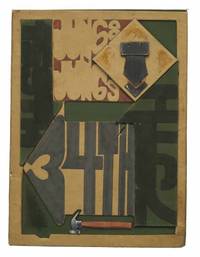
1969réf. 42627Vietnam: Published by 20th EB Information Office 1969. 1st printing. Presumed one of one i.e. a unique item. Green cloth binding with front board having custom multi-layer onlays depicting the units of the 20th Brigade; rear board with diamond-shaped cut-out for a b/w photograph of a unit bulldozer. Eps original artwork of divers construction scenes; rear paste-down an original bust pencil drawing of Col. Wilson. A VG to Nr Fine item. ~ 85 leaves multi-colored paper. Illustrated with over 60 original b/w photographs most captioned ~ 45 action scenes of divers brigade projects the remainder of staff and Vietnamese citizens. 7 leaves with newspaper clipping affixed also documenting divers brigade projects. Original artwork by PFC Al Schumer. 11-3/8" x 8-1/2" The 20th Engineer Brigade is a combat engineer brigade currently assigned to the XVIII Airborne Corps of the United States Army stationed at Fort Bragg North Carolina. Though its predecessor units have lineage that dates back before the American Civil War the formation was not formally designated as the 20th Engineer Brigade until its activation on 16 August 1950 at Fort Leonard Wood Missouri. Deploying overseas in November 1952 it supported construction projects in southwestern France until its return to the US on 10 September 1954. Reactivated on 1 May 1967 at Fort Bragg the brigade deployed to Vietnam where it supported American forces for several years and a dozen campaigns. The brigade was deactivated on 20 September 1971 as American forces withdrew from the country. This souvenir book comprehensively documents the brigade's activities & asssigned personnel during the period of June 1968 to June 1969. A unique item the first such we've been able to offer chronicling this period of US history. Published by 20th EB Information Office hardcover books
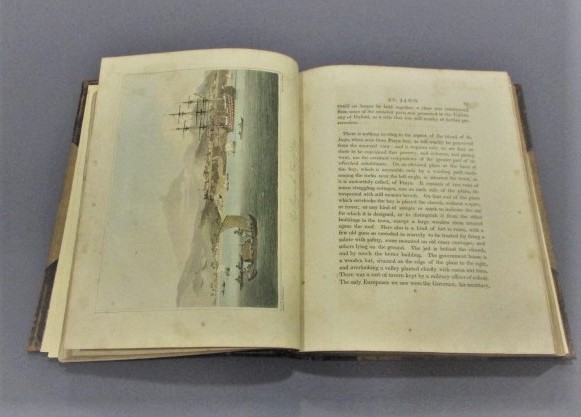
1806réf. 21219London, Cadell and Davies in the Strand, 1806. XVII(I S., 1 Bl., 447 S. 2 gefalt. kolorierte Kupferstichkarten und 19 (1 mehrfach gefalt.) kolorierten Aquatinta-Tafeln. Kl.-4°. HLdr. des 19. Jahrhunderts mit Rückenschildern und Rückenvergoldung (etw. berieben und bestoßen). [5 Warenabbildungen]
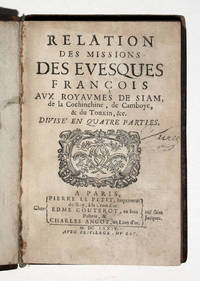
1674réf. 244Rare first edition of this account of the state of Christianity in Thailand Cambodia and Vietnam by rivals of the Jesuits the newly founded Société des Missions Etrangères. Le Petit, Couterot, & Angot hardcover books
1954réf. 35722Saigon: Édition du Service cartographique des F.T.E.O. 1954. First edition large square 4to pp. 117; photographic illustrations throughout; some wear a few short splits in the wrapper extremities else very good in original brown wrappers printed in black on the upper cover. At head of title: Forces terrestres du Nord Vietnam. 2. Bureau. Issued during the final battle for France in Vietnam at Dien Bien Phu. Cornell Arizona and Michigan only in OCLC. Édition du Service cartographique des F.T.E.O. unknown books
1970réf. 83515New York: Art Workers Coalition 1970. Offset lithograph in colors; 64cm x 97cm 25" x 38". Mild creasing to extremities else a fine clean copy; unbacked. This one of a presumably small number of copies bearing a rubber-stamped message which reads: "This poster was originally co-sponsored by the Museum of Modern Art. On Dec. 19 trustee William S. Paley forbid the Museum to associate its name with this poster. Do the Trustees approve of the massacre" stamped twice in the image lower right. One of the true icons of Twentieth Century American protest art this poster created by the Art Workers Coalition under the guidance of Fraze Dougherty Jon Hendricks and Irving Petlin was issued to bring attention to the horrendous My Lai massacre of March 1968. The photograph by Ron Haeberle originally appeared in Life Magazine. The Museum of Modern Art had originally promised to underwrite the poster's creation and to donate paper and printing costs - but later abandoned the project under the objections of board President William S. Paley. The AWC still managed to print fifty thousand copies which they distributed for free. As a response to MoMA's backing out of the project an unknown number of the posters were rubber-stamped with the message quoted above and a demonstration was held inside the museum in front of Picasso's Guernica where copies of the poster were unfurled and given away. These events are recorded in a 2015 interview with co-creator John Hendricks: ".We had a big meeting of Art Workers' Coalition about how we should address their MoMA's reneging of the agreement with us. It was decided to make a rubber stamp.saying "This is the poster that the Museum of Modern Art agreed to do jointly with Art Workers' Coalition and Bill Paley and Arthur Drexler refused to do" or something like that. So we stamped as many posters as we could with that stamp. Then we had a number of demonstrations in front of the museum and inside in front of Guernica." interview with William Twersky WT_History Blog April 2015. We have traced no copies in commerce or institutional collections that make note of the rubber-stamped notice. In 1972 the design was repurposed to protest President Richard Nixon's campaign for a second term; for that version the motto was changed to "Four More Years Four More Years" 83515. Art Workers Coalition unknown
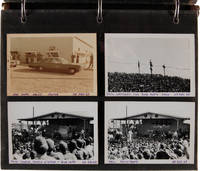
1970réf. WRCAM55101Biên Hòa Nha Trang Long Binh and other locations in Vietnam plus Luzon Philippines and Osan South Korea 1970. 469 black-and-white or color photographs measuring between 3 1/2 x 3 1/2 inches and 8 x 10 inches either mounted or laid-in to acetate sleeves almost all annotated in ink on the bottom margin or on the verso. Contemporary three-ring thick quarto-size binder black cloth over boards. Joints partially split some abrading and dust- soiling to covers. Slight fading to some of the color photos. Overall very good. An exceptional vernacular photograph album by a talented but unknown amateur photographer recording a wide variety of experiences on American Air Force bases in South Vietnam and Asia during peak years of the Vietnam War. The photographer was likely a member of the motor pool or a mechanic as the shots seem to center around truck airplane and helicopter maintenance. Most of the photographs capture scenes on or around the various bases with shots both inside and outside of barracks airplanes including several shots of a U2 spy plane bombed-out equipment and numerous photos of the people and structures in the "Vietnamese Area." A few images capture distant shots of the aftermath of a "rocket attack" on December 12 1969; shortly thereafter the photographer and his friends celebrate Christmas. Some of the more interesting photographs during the photographer's time in Vietnam include "VC Prisoners" "Group of Zips" "Papa-San Working His Rice Paddie" "Vietnamese Guard Tower" "Church on the West Side of Biên Hòa" "Refueling at Phan Rang Run" "Bring the Wounded Out" and several pictures labeled "Buddha Hill" likely the Long Son Pagoda in Nha Trang. Notably and for no obvious reason in two separate images the photographer snaps a picture in a magazine of the famous photograph of Thích Quang Duc the monk who burned himself alive at a busy intersection in Saigon in 1963. Several times the photographer takes a picture of another picture an interesting practice in the context of so many original photographs. A handful of images of the photographer himself can be seen in the album. In a couple of shots he is posed with his pet lizard. Later he and his fellow soldiers adopt a pet monkey who features in several photographs. There are also a healthy amount of aerial images featuring the South Vietnamese landscape notably rice fields villages rivers "bomb craters" and cities among other locations. Also the photographer identifies dozens of fellow soldiers by name throughout the album in both single portraits and in group photos. The album contains numerous shots both black-and-white and in color taken from the crowd and later on the runway during a December 28 1969 U.S.O. show at Long Binh with several images each of Bob Hope Neil Armstrong Connie Stevens Suzanne Charny Teresa Graves Les Brown the Golddiggers and others. One photograph of Neil Armstrong is captioned "Biggest Hit of the Show." This is understandable given the fact that Armstrong landed on the moon just five months before this U.S.O. show. There is also an 8 x 10 photograph of Connie Stevens inscribed to "Ron" either the photographer's first name or an autographed picture he received from a friend. After the U.S.O. show the photographer snaps several closer shots of Bob Hope Connie Stevens and others climbing into cars to leave. In April or May 1970 the photographer was shipped out to Osan Air Base in South Korea. Along the way he spends a couple of days at Clark Air Base in Luzon in the Philippines where he snaps a few shots of the base. By early May he has arrived at the Osan Air Base near Songtan Station in the city of Pyeongtaek South Korea just south of Seoul. He seems to be happy with his appointment at Osan; he captions one photograph "Home Sweet Home" and a few shots of the countryside as "Paradise." Here he also photographs Korean farmers their families villages a marketplace a church a school and other landmarks. The final two images dated in August 1970 show the photographer on an airboat on an unidentified Korean river. Personal photographic records by soldiers in Vietnam are growing ever more scarce in the market. This collection is one of the best we've encountered and most certainly informs the overall record of the war during perhaps its lowest point of public support. hardcover books