Vietnam Military Photo AlbumBiblio.com
3 335 résultats
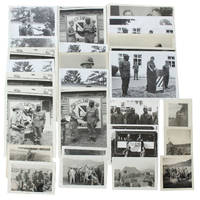
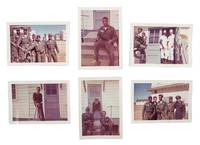
1970réf. 190661970. U.S. Army Engineer Company photo album early 1970s documents logistical operations base life and personnel composition at Oakland Army Base during the Vietnam War providing visual evidence of military transportation infrastructure and the integration of a diverse workforce within a key Pacific transit hub. The material records the functioning of an engineer unit responsible for vehicle maintenance cargo handling and operational readiness while also capturing the presence of African American servicemen and female personnel within the same working and ceremonial environments. It supports research into military logistics on the U.S. home front race and gender integration in the armed forces and the institutional processes that sustained overseas deployment during the Vietnam War. Album containing 369 photographs including 353 color and 16 black and white images most measuring approximately 5 x 3.5 inches compiled at Oakland Army Base and the adjacent Port of Oakland. The contents document heavy machinery and vehicle maintenance including bulldozers cranes transport trucks and military jeeps with numerous images showing mechanics engaged in repair work. Additional photographs depict combat training exercises including rifle instruction with M16 firearms alongside formal ceremonies in which soldiers of varied racial backgrounds and both genders receive promotions commendations and instruction from commanding officers. Several images show administrative office environments providing insight into the clerical and organizational functions supporting base operations. Group scenes include family-oriented gatherings and meals indicating the social dimension of service life within the base setting. Produced at a time when Oakland Army Base operated as a principal embarkation and return point for U.S. forces traveling to and from Vietnam and other locations in East Asia the album documents the domestic infrastructure underpinning overseas military engagement. The emphasis on machinery cargo movement and personnel readiness reflects the scale and complexity of logistical coordination required during the conflict. The visible diversity within the unit corresponds with broader transformations in the U.S. military following desegregation and evolving roles for women making the album relevant to studies of institutional change during the late stages of the Vietnam War. Light wear to album edges and corners photographs well-preserved with minor handling marks; overall very good. A substantial visual record of engineer operations and base life at a critical West Coast military installation during wartime. unknown
1970réf. 190661970. U.S. Army Engineer Company photo album early 1970s documents logistical operations base life and personnel composition at Oakland Army Base during the Vietnam War providing visual evidence of military transportation infrastructure and the integration of a diverse workforce within a key Pacific transit hub. The material records the functioning of an engineer unit responsible for vehicle maintenance cargo handling and operational readiness while also capturing the presence of African American servicemen and female personnel within the same working and ceremonial environments. It supports research into military logistics on the U.S. home front race and gender integration in the armed forces and the institutional processes that sustained overseas deployment during the Vietnam War. Album containing 369 photographs including 353 color and 16 black and white images most measuring approximately 5 x 3.5 inches compiled at Oakland Army Base and the adjacent Port of Oakland. The contents document heavy machinery and vehicle maintenance including bulldozers cranes transport trucks and military jeeps with numerous images showing mechanics engaged in repair work. Additional photographs depict combat training exercises including rifle instruction with M16 firearms alongside formal ceremonies in which soldiers of varied racial backgrounds and both genders receive promotions commendations and instruction from commanding officers. Several images show administrative office environments providing insight into the clerical and organizational functions supporting base operations. Group scenes include family-oriented gatherings and meals indicating the social dimension of service life within the base setting. Produced at a time when Oakland Army Base operated as a principal embarkation and return point for U.S. forces traveling to and from Vietnam and other locations in East Asia the album documents the domestic infrastructure underpinning overseas military engagement. The emphasis on machinery cargo movement and personnel readiness reflects the scale and complexity of logistical coordination required during the conflict. The visible diversity within the unit corresponds with broader transformations in the U.S. military following desegregation and evolving roles for women making the album relevant to studies of institutional change during the late stages of the Vietnam War. Light wear to album edges and corners photographs well-preserved with minor handling marks; overall very good. A substantial visual record of engineer operations and base life at a critical West Coast military installation during wartime. unknown books
1966102 pages. Cover photo of Nazi officer imposed over large swastika. Contents: Vietnam widow - Shirley Isaaacs of Phenix City, Alabama; America's Ten Outstanding Young Men of 1965 - Donald Dickinson Williams, Bill D. Moyers, Jerry Herman, Edward H. White II, Frederick P. Whiddon, Aurther Edward Turner, Fred R. Harris, Charles Conrad Jr., Frederick Rogers Adams Jr.; Nice two-page color-photo ad for the 1966 Ford Galaxie XL in Paris; Oklahoma's Education War - the lesson it can teach a nation; How the Jews Changed Catholic Thinking - "B'nai B'rith wanted the Catholics to delete all language from the Church services that could even seem anti-Semitic" - extensively documents organized Jewry's intensive effort which resulted in the Catholic Church watering down its position that Jews killed Jesus Christ; The Defeat of Hitler's Order - General Dietrich von Cholitz did not obey Hitler's order to burn Paris; Nice colour ad for the American Motors Rambler station wagon; Great colour centerfold ad for the 1966 Plymouth 2-door hardtop VIP (blue); The New Mexico - yesterday's tradition takes on today's tempo - Luis Barragan; Acapulco's Young Fashionables - colour photos of lovely Latinas; *Fantastic* two-page colour ad for the 1966 Dodge Charger, featuring a grey model with red interior; Shooting is the least important part of Basketball - John Wooden is now in his 17th season at UCLA; Nice colour photo 7up ad; Luxurious 1-page colour photo ad for the wide-track 1966 Pontiac; Debbie Watson (of the ABC-TV show Tammy) says she'll be dangerous at 20; Albert the Dalmation dog defies nature and flips for the dolphin way of life - with great photos; Johnny Carson, the Prince of Chitchat, is a Loner - with photos; Nice full-page colour ad for Philco colour televisions; Two-page colour photo ad features the safety features of 1966 General Motors cars; Lovely colour photo ad for the 1966 Oldsmobile Jetstar 88. Nice two-page colour photo ad for 1966 Chevrolet trucks features a rocky desert scene. Back cover features nice colour painting of a railworker in a Camel cigarette ad. Moderate wear. Unmarked. Address label upon front cover. A sound copy of this informative issue. Book
1990479 pages. Glossary. Footnotes. Index. Black and white reproductions of photos. "Phoenix was the final solution to the problem posed by those Vietnamese civilians who supported the armed Vietcong insurgents. In the end, an estimated 40,000 Vietnamese were killed and countless atrocities were perpetrated in the name of 'neutralizing' the Vietcong 'infrastructure'. This work is nothing less than a meticulous historical narrative of Phoenix from its roots through its tragic conclusions, based upon four years of research and interviews with over one-hundred program participants." - dust jacket. "Outlines in careful detail how the CIA ran a computerized assassination and torture program in Vietnam, violating laws and especially human morality." - John Prados. In 2014 NYU media studies professor Mark Crispin Miller selected this as one of the top five books actively suppressed and hidden from Americans. - RT. Unmarked with light wear. Tight and square. Dust jacket now preserved in archival-grade Brodart. A quality copy. Book
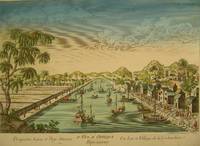
réf. #[34149]Paris Daumont ca.1760. Contemporary handcoloured perspective view vue d'optique or Guckkastenbild depicting a view of the village of Yang-ka in Cochin with legend in Latin and French. Ca.285 x 39 cm. Handsome optical harbour view of a village with figures and canal with sailing-ships in Vietnam. unknown
réf. DADAX0877191689New unknown
réf. DADAX0423005804New unknown
1920réf. 84781920 S.D. (fin des années 1920) reliure artisanale Tome V - Fascicule I, Produits médicinaux. Classe XXIII : Narcotiques, poisons et stupéfiants. Classe XXIV : Produits médicinaux.
1960réf. Cat357Japan Taiwan Korea and the US 1960. 15 ¼ x 11 inch album with attractive painted cover containing approximately 235 photos mainly 3 ½ x 5 inches and smaller. Contents generally in excellent condition. Excellent. A photo album by an unknown US Marine containing photos from his time in Okinawa Taiwan and Korea in the 1950s and 1960s. At the time—the earliest dated photo in the album is from April 1956—the Vietnam War was in its early days with Eisenhower deploying MAAG to train the ARVN in late 1955. It is not clear what unit the photographer was with as only his training platoon 46 of the Second Recruit Battalion on Parris Island is identified; however this photo’s caption includes “Photo by MAAG”. The album appears to be divided between the three locations each of which was strategic in the Cold War broadly and for American efforts in Vietnam in particular. It is highlighted by a series of photographs apparently from Taiwan showing agricultural workers planting and posing with their crops and children. In the 1950s under the China Aid Act the Sino-American Joint Commission on Rural Reconstruction JCRR had launched a land reform financed by American aid and staffed by ROC scientists. In the 1960s this program expanded to crop diversification and the creation of the Asian Vegetable Research and Development Center. These efforts towards agricultural development in Taiwan were like other US efforts in the region intended to contain the spread of Communism.1 Other photos from Taiwan include shots of the ships; men outside their tents vehicles and straw huts smoking and playing cards; some are city streets but most are of the countryside. Several notable photos show the Marines playing at being POWs: in one a man poses with his hands on his head next to a sign reading “POW AND CAPTURED / EQUIPMENT COMPOUND” and in another one soldier pretends to march his fellow at gunpoint. Photos from Okinawa show military vehicles city streets and American and Japanese men—many Okinawans were employed by the US military during its occupation. Many scenes appear to show construction efforts with USMC-marked bulldozers and tractors driving around fields of dirt and rock in the countryside with a few of these showing Okinawa residents as well. South Korea also played an active role in the Vietnam War. Photos from Korea show tanks and other vehicles along the coast and being loaded into ships American soldiers driving and posing in the countryside and several of village streets and residents. Other subjects include target shooting transit on a ship captioned “WESTWARD HO / FAR EAST BOUND” and some that appear to be family and scenery shots in the US dated April 1961. Overall the album provides a look not just at the activities of the Marine Corps in the early US advisory era of the Vietnam War but also the people and places of the US’s strategic activities in East Asia. Of interest to historians of the Vietnam War Cold War and US empire. 1 Leo Chu “‘A bloodless social revolution’: Land reform and multiple cropping in Cold War Taiwan 1950–1979” The history of crop science and the future of food 6 no. 5 September 2024 1104–1110. unknown
1960réf. Cat357Japan Taiwan Korea and the US 1960. 15 ¼ x 11 inch album with attractive painted cover containing approximately 235 photos mainly 3 ½ x 5 inches and smaller. Contents generally in excellent condition. Excellent. A photo album by an unknown US Marine containing photos from his time in Okinawa Taiwan and Korea in the 1950s and 1960s. At the time—the earliest dated photo in the album is from April 1956—the Vietnam War was in its early days with Eisenhower deploying MAAG to train the ARVN in late 1955. It is not clear what unit the photographer was with as only his training platoon 46 of the Second Recruit Battalion on Parris Island is identified; however this photo’s caption includes “Photo by MAAG”. The album appears to be divided between the three locations each of which was strategic in the Cold War broadly and for American efforts in Vietnam in particular. It is highlighted by a series of photographs apparently from Taiwan showing agricultural workers planting and posing with their crops and children. In the 1950s under the China Aid Act the Sino-American Joint Commission on Rural Reconstruction JCRR had launched a land reform financed by American aid and staffed by ROC scientists. In the 1960s this program expanded to crop diversification and the creation of the Asian Vegetable Research and Development Center. These efforts towards agricultural development in Taiwan were like other US efforts in the region intended to contain the spread of Communism.1 Other photos from Taiwan include shots of the ships; men outside their tents vehicles and straw huts smoking and playing cards; some are city streets but most are of the countryside. Several notable photos show the Marines playing at being POWs: in one a man poses with his hands on his head next to a sign reading “POW AND CAPTURED / EQUIPMENT COMPOUND” and in another one soldier pretends to march his fellow at gunpoint. Photos from Okinawa show military vehicles city streets and American and Japanese men—many Okinawans were employed by the US military during its occupation. Many scenes appear to show construction efforts with USMC-marked bulldozers and tractors driving around fields of dirt and rock in the countryside with a few of these showing Okinawa residents as well. South Korea also played an active role in the Vietnam War. Photos from Korea show tanks and other vehicles along the coast and being loaded into ships American soldiers driving and posing in the countryside and several of village streets and residents. Other subjects include target shooting transit on a ship captioned “WESTWARD HO / FAR EAST BOUND” and some that appear to be family and scenery shots in the US dated April 1961. Overall the album provides a look not just at the activities of the Marine Corps in the early US advisory era of the Vietnam War but also the people and places of the US’s strategic activities in East Asia. Of interest to historians of the Vietnam War Cold War and US empire. 1 Leo Chu “‘A bloodless social revolution’: Land reform and multiple cropping in Cold War Taiwan 1950–1979” The history of crop science and the future of food 6 no. 5 September 2024 1104–1110. unknown books
1895Paris, Limoges, Henri Charles-Lavauzelle, 1895. 2 volumes In-4 reliés demi-basane verte, dos lisses à fleurons et filets dorés. Un volume de texte + un atlas de cartes et planches. VII + 555 pages pour le volume de texte comprenant 31 gravures et une table des noms cités + atlas de 20 cartes et 3 planches. Quelques rousseurs claires sans grande gravité. Exemplaire bien complet. Bon état.
1931réf. 39050Hanoi Imprimerie d'Extrême-Orient 1931 in-4 demi-chagrin marron à coins, dos à nerfs, premier plat de couverture conservé [Rel. de l'époque], dos insolé, lég. fente au mors supérieur
1711réf. 22280Amsterdam, Veuve de Paul Marret, 1711. Frontispiz, 7 n.n. Bll., 351 SS., 4 mehrfach ausfaltbare Karten und 20 meist mehrf. ausf. Kupfertafeln. Beigebunden: - ders.: Traité des Vents alisez ou reglez, des Vent Frais de Mer & de Terre, des Tempêtes, des Saisons de l'Année, des Marées & des Courans de toute la Zone Torride. Amsterdam, Paul Marret, 1701. Frontispiz, 104 SS., 20 n.n. Bll. Register. 2 mehrfach ausfaltbare Weltkarten, ca. 30 x 16 cm (Mer du Nord / Mer du Sud) in Mercator-Projektion. 8°, Leder der Zeit über 5 Bünden, 2 goldgepr. Rsch., Rückenvergoldung in 4 Feldern. Einband stark berieben, an Ecken und Kanten bestoßen, Fehlstellen am Lederbezug des Rückens, Außenfalze gebrochen, Vergoldung ziemlich verblasst.
1884réf. 12818Paris Librairie Hurtau 1884 in-12 demi-basane fauve, dos à nerfs orné, pièce de titre bleue, plat sup. de la couv. cons. [Rel. de l'époque]
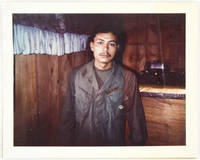
1970réf. 18470N.p. N.p. c. 1970. Prints in uniformly near fine to very good condition with some curling to the edges. Collection of twenty-five 3 3/8 X 4 1/4 inch Polaroid snapshots mostly in color taken during an American soldier's deployment in An Khê Vietnam. Features images of soldiers grilling drinking and sitting in their bunkers with a few double exposures and a couple of photographs of female civilians. Prints have been adhered to cards with in several instances notes penned on the versos. Fascinating vernacular document of soldier life in one of the most strategically significant military zones of the Vietnam conflict. N.p. N.p. unknown
1959réf. 223101959. United States Army Intelligence School. Intelligence training archive. 1959-1963. This archive documents the institutional training system used by the U.S. Army Intelligence School at Fort Holabird during the Cold War outlining how personnel were instructed in reconnaissance mapping foreign intelligence analysis and counterintelligence operations. The material establishes a formal curriculum designed to prepare officers for intelligence work in the context of U.S.-Soviet conflict combining doctrinal interpretation of adversary systems with technical instruction in observation terrain analysis and operational planning. It provides primary evidence of how intelligence training integrated ideological framing with practical field methods. Archive of 13 instructional documents totaling approximately 459 pages issued between 1959 and 1963 including manuals technical booklets and training schedules. Titles include 1 Soviet Intelligence Systems Nov 1962 2 Observation and Description Jan 1961 3-5 Military Map Reading booklets 1959-1961 6 Interpretation of Highways Bridges and Transportation Facilities Oct 1961 7 USAINTS Library Guide Jan 1962 8 Operational Data on South Korea I Sep 1962 9 Nuclear Warfare II Jun 1963 10 Benelux Jul 1961 11 Solution of Dispersion Problems undated and 12-13 weekly training schedules June and July 1963. The manuals include diagrams and exercises on map reading identifying "recognition distance and direction" as core elements with annotated examples of azimuth calculation and grid use. Instructional material in Observation and Description includes facial and morphological diagrams distinguishing features such as "Vertical Forehead" and "Bushy" eyebrows for identification purposes. Soviet Intelligence Systems presents ideological analysis stating that Soviet security organs are "extensions of the Party's designs" and describing intelligence as "a pervasive force which envelops every sector of society." Infrastructure manuals include photographic examples of roads and bridges for field identification while the Library Guide outlines access systems and spatial organization of intelligence resources. Weekly schedules list training components such as report writing practical exercises and seminars alongside technical instruction in photography. Produced during a period of sustained Cold War tension these materials show how the U.S. Army formalized intelligence education by combining political interpretation of adversaries with standardized technical training. The emphasis on mapping surveillance and infrastructure analysis reflects preparation for both conventional and nuclear-era operations while the inclusion of regional studies such as South Korea and Benelux indicates geographic scope within global strategic planning. Minor rust to staples light edge toning and scattered manuscript annotations; occasional corner creases and small marginal tears not affecting text; overall very good. A cohesive archive of Cold War intelligence training preserving the instructional methods and analytical frameworks used by the U.S. Army in the early 1960s. unknown
1959réf. 223101959. United States Army Intelligence School. Intelligence training archive. 1959-1963. This archive documents the institutional training system used by the U.S. Army Intelligence School at Fort Holabird during the Cold War outlining how personnel were instructed in reconnaissance mapping foreign intelligence analysis and counterintelligence operations. The material establishes a formal curriculum designed to prepare officers for intelligence work in the context of U.S.-Soviet conflict combining doctrinal interpretation of adversary systems with technical instruction in observation terrain analysis and operational planning. It provides primary evidence of how intelligence training integrated ideological framing with practical field methods. Archive of 13 instructional documents totaling approximately 459 pages issued between 1959 and 1963 including manuals technical booklets and training schedules. Titles include 1 Soviet Intelligence Systems Nov 1962 2 Observation and Description Jan 1961 3-5 Military Map Reading booklets 1959-1961 6 Interpretation of Highways Bridges and Transportation Facilities Oct 1961 7 USAINTS Library Guide Jan 1962 8 Operational Data on South Korea I Sep 1962 9 Nuclear Warfare II Jun 1963 10 Benelux Jul 1961 11 Solution of Dispersion Problems undated and 12-13 weekly training schedules June and July 1963. The manuals include diagrams and exercises on map reading identifying "recognition distance and direction" as core elements with annotated examples of azimuth calculation and grid use. Instructional material in Observation and Description includes facial and morphological diagrams distinguishing features such as "Vertical Forehead" and "Bushy" eyebrows for identification purposes. Soviet Intelligence Systems presents ideological analysis stating that Soviet security organs are "extensions of the Party's designs" and describing intelligence as "a pervasive force which envelops every sector of society." Infrastructure manuals include photographic examples of roads and bridges for field identification while the Library Guide outlines access systems and spatial organization of intelligence resources. Weekly schedules list training components such as report writing practical exercises and seminars alongside technical instruction in photography. Produced during a period of sustained Cold War tension these materials show how the U.S. Army formalized intelligence education by combining political interpretation of adversaries with standardized technical training. The emphasis on mapping surveillance and infrastructure analysis reflects preparation for both conventional and nuclear-era operations while the inclusion of regional studies such as South Korea and Benelux indicates geographic scope within global strategic planning. Minor rust to staples light edge toning and scattered manuscript annotations; occasional corner creases and small marginal tears not affecting text; overall very good. A cohesive archive of Cold War intelligence training preserving the instructional methods and analytical frameworks used by the U.S. Army in the early 1960s. unknown books
réf. DADAX0883491125New unknown
1974réf. 2111902158501299Kawade Shobo Shinsha 1974. Soft Cover. Fine. Number of pages: 3 books Size: 21 cm Number of books: 3 books Kawade Shobo Shinsha paperback
1911réf. 61576S. l., s. n, [1911] 1911 Atlas grand in-4, cartonnage d'édition, dos de toile noire, premier plat imprimé. Très rare ouvrage, complet des 38 planches annoncées, entièrement sur onglet. Cartonnage usagé, coins émoussés, le mors du 1er plat fendu entête et en pied.
réf. DADAX031201807XNew unknown
1950réf. 186871950. Barber Command Sergeant Major. U.S. Army 17th Field Artillery Battalion photographs circa 1960s to 1970s document integrated military training and the advancement of an African American senior noncommissioned officer within the post-desegregation Army. The images center on activities at a Noncommissioned Officer Academy and within field environments placing the archive within the period following the formal integration of the U.S. military and during the era of the Vietnam War. The repeated presence of Barber in both instructional and ceremonial contexts situates him within the upper ranks of enlisted leadership documenting the visibility and authority of Black noncommissioned officers at a time when opportunities for advancement had only recently expanded following mid-twentieth-century reforms. Archive of 30 black and white silver gelatin photographs. United States circa 1960s to 1970s. Photographs range in size from approximately 7 x 5 inches to 4 x 3 inches. Images depict integrated groups of soldiers within the 17th Field Artillery Battalion known as "The Persuaders" engaged in training and daily activities. Scenes include artillery instruction trench digging weapons handling camp life chapel gatherings and a graduation ceremony in which soldiers take an oath and pass a unit flag. Several photographs show Barber prominently including moments that appear to document formal oath-taking or advancement within the noncommissioned officer structure. The photographs appear to have been taken across multiple locations including a more rugged field setting and a separate academy environment. Following the desegregation of the U.S. armed forces in 1948 African American soldiers increasingly assumed leadership roles within enlisted ranks particularly during the Cold War and Vietnam War periods. The position of Command Sergeant Major represents one of the highest enlisted leadership roles in the Army responsible for discipline training and the welfare of soldiers. This archive provides visual evidence of integrated unit cohesion professional training systems and the presence of Black leadership within those structures. The combination of field exercises and formal ceremonies offers material for examining race hierarchy and institutional culture within the modern U.S. Army. Light wear consistent with handling; overall very good condition. unknown
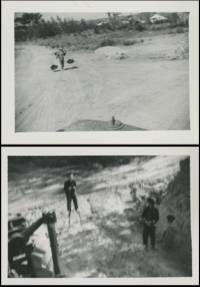
1973réf. 185751973. Cooper Howard L. Vietnam War photographs and promotion letter circa 1970s document African American noncommissioned officer service within an integrated U.S. Army and the formal evaluation structures governing advancement during and immediately after the conflict. The material centers on Sergeant Cooper's presence within a deployed unit in Vietnam alongside fellow soldiers and local civilians and extends into the postwar administrative process through a typed recommendation for promotion dated 1973. Together the photographs and letter situate the archive within the broader context of African American military participation during a period marked by both expanded combat roles and documented racial disparities in discipline assignment and promotion within the armed forces. Archive of 20 vernacular photographs and one typed letter. Vietnam and United States circa 1970s. Photographs include 15 color Kodak snapshots measuring approximately 5 x 3.5 inches or smaller depicting Sergeant Cooper and fellow soldiers primarily in uniform in Vietnam. Four black and white Agfa snapshots measuring approximately 5.5 x 3.5 inches show Cooper other servicemen and Vietnamese children. One Polaroid photograph includes two African American men standing beside Cooper with handwritten captions. Additional images depict base life and group interactions within the unit. Accompanying the photographs is a typed letter recommending Sergeant Howard L. Cooper for promotion signed by Transportation Supervisor Alice J. Griffin Fort Ord California dated 14 November 1973 one page measuring approximately 8 x 10 3/8 inches. African American soldiers served in large numbers during the Vietnam War with many attaining noncommissioned officer roles that required both leadership within units and navigation of institutional structures that did not always provide equitable advancement. The inclusion of a formal recommendation letter alongside the photographs connects personal service to bureaucratic recognition documenting how military authority evaluated performance in the postwar period. The combined visual and documentary record offers material for examining race leadership and military administration in the Vietnam era. Photographs show light wear; letter with pinholes discoloration and minor ink smear at upper edge; overall very good condition. unknown
1950réf. 186871950. Barber Command Sergeant Major. U.S. Army 17th Field Artillery Battalion photographs circa 1960s to 1970s document integrated military training and the advancement of an African American senior noncommissioned officer within the post-desegregation Army. The images center on activities at a Noncommissioned Officer Academy and within field environments placing the archive within the period following the formal integration of the U.S. military and during the era of the Vietnam War. The repeated presence of Barber in both instructional and ceremonial contexts situates him within the upper ranks of enlisted leadership documenting the visibility and authority of Black noncommissioned officers at a time when opportunities for advancement had only recently expanded following mid-twentieth-century reforms. Archive of 30 black and white silver gelatin photographs. United States circa 1960s to 1970s. Photographs range in size from approximately 7 x 5 inches to 4 x 3 inches. Images depict integrated groups of soldiers within the 17th Field Artillery Battalion known as "The Persuaders" engaged in training and daily activities. Scenes include artillery instruction trench digging weapons handling camp life chapel gatherings and a graduation ceremony in which soldiers take an oath and pass a unit flag. Several photographs show Barber prominently including moments that appear to document formal oath-taking or advancement within the noncommissioned officer structure. The photographs appear to have been taken across multiple locations including a more rugged field setting and a separate academy environment. Following the desegregation of the U.S. armed forces in 1948 African American soldiers increasingly assumed leadership roles within enlisted ranks particularly during the Cold War and Vietnam War periods. The position of Command Sergeant Major represents one of the highest enlisted leadership roles in the Army responsible for discipline training and the welfare of soldiers. This archive provides visual evidence of integrated unit cohesion professional training systems and the presence of Black leadership within those structures. The combination of field exercises and formal ceremonies offers material for examining race hierarchy and institutional culture within the modern U.S. Army. Light wear consistent with handling; overall very good condition. unknown books
1973réf. 185751973. Cooper Howard L. Vietnam War photographs and promotion letter circa 1970s document African American noncommissioned officer service within an integrated U.S. Army and the formal evaluation structures governing advancement during and immediately after the conflict. The material centers on Sergeant Cooper's presence within a deployed unit in Vietnam alongside fellow soldiers and local civilians and extends into the postwar administrative process through a typed recommendation for promotion dated 1973. Together the photographs and letter situate the archive within the broader context of African American military participation during a period marked by both expanded combat roles and documented racial disparities in discipline assignment and promotion within the armed forces. Archive of 20 vernacular photographs and one typed letter. Vietnam and United States circa 1970s. Photographs include 15 color Kodak snapshots measuring approximately 5 x 3.5 inches or smaller depicting Sergeant Cooper and fellow soldiers primarily in uniform in Vietnam. Four black and white Agfa snapshots measuring approximately 5.5 x 3.5 inches show Cooper other servicemen and Vietnamese children. One Polaroid photograph includes two African American men standing beside Cooper with handwritten captions. Additional images depict base life and group interactions within the unit. Accompanying the photographs is a typed letter recommending Sergeant Howard L. Cooper for promotion signed by Transportation Supervisor Alice J. Griffin Fort Ord California dated 14 November 1973 one page measuring approximately 8 x 10 3/8 inches. African American soldiers served in large numbers during the Vietnam War with many attaining noncommissioned officer roles that required both leadership within units and navigation of institutional structures that did not always provide equitable advancement. The inclusion of a formal recommendation letter alongside the photographs connects personal service to bureaucratic recognition documenting how military authority evaluated performance in the postwar period. The combined visual and documentary record offers material for examining race leadership and military administration in the Vietnam era. Photographs show light wear; letter with pinholes discoloration and minor ink smear at upper edge; overall very good condition. unknown books