1 492 résultats
réf. DADAX0367317850New unknown
réf. DADAX0367605260New unknown
réf. DADAX0415728819New unknown
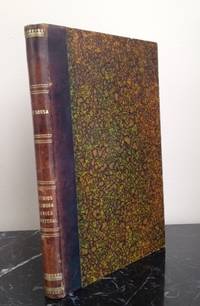
1789réf. 145041789. Sousa João de. Vestigios da lingoa arabica em Portugal ou lexicon etymologico das palavras e nomes portuguezes que tem origem Arabica 1789 a foundational linguistic study documenting the influence of Arabic language and culture on Portuguese vocabulary. João de Sousa an eighteenth century scholar of Arabic born in Damascus and later active in Portugal served as the first professor of Arabic at the University of Lisbon and was an associated member of the Academia Real das Sciencias. His work emerged from the scholarly environment of late Enlightenment Portugal when the study of language history and cultural transmission became central concerns of learned academies. The book records the long historical impact of Arabic speaking societies in the Iberian Peninsula where centuries of Islamic presence from the early Middle Ages through the late fifteenth century left lasting linguistic and cultural traces in Portuguese. Sousa João de. Vestigios da lingoa arabica em Portugal ou lexicon etymologico das palavras e nomes portuguezes que tem origem Arabica. Lisbon: Na Officina da Academia Real das Sciencias 1789. First edition. The work was produced under the authority of the Academia Real das Sciencias of Lisbon and represents the first etymological dictionary devoted specifically to Portuguese words of Arabic origin. Entries are arranged alphabetically in Portuguese and followed by the corresponding Arabic word or source a transliteration and an explanatory discussion. The lexicon also identifies Portuguese terms that entered the language through Arabic but ultimately derived from other linguistic traditions including Hebrew Greek Persian and Turkish. Among the loanwords catalogued are terms relating to plants spices agricultural products architecture and place names illustrating the wide range of everyday vocabulary shaped by centuries of cultural exchange between Islamic and Iberian societies. The book appeared during a period when European scholars increasingly examined the linguistic consequences of medieval cultural contact between Islamic and Christian societies in the Mediterranean world. The Iberian Peninsula in particular preserved a large body of Arabic derived vocabulary that entered both Portuguese and Spanish through trade agriculture science and administrative life during the centuries of Muslim rule and cultural interaction. Sousa's lexicon became an important early contribution to the study of these linguistic exchanges and preceded later nineteenth century scholarship on the subject. A second edition was published in 1830 and further studies such as the work of Francisco de S. Luiz did not appear until several decades later. Quarto volume with twenty preliminary pages and 160 pages of text woodcut device of the Academia Real das Sciencias on the title page bound in mid nineteenth century quarter sheep over marbled boards with pictorial lithograph bookplate of José Bernardo Pereira Martins. Small binder's ticket of Santos & Alves of Lisbon on the front pastedown occasional marginal annotations in ink and pencil minor repair to the upper margin of the title page and two other leaves without loss and slight wear to spine ends and corners. Overall very good condition. unknown
1926réf. 144751926. Cheesman Robert Ernest. In Unknown Arabia 1926. First edition of the British military officer explorer and ornithologist's account of his 1923-1924 expedition through eastern Arabia including Bahrain Hufuf the Al-Hasa oasis Jabrin and Uqair. Undertaken during the territorial consolidation of Abdulaziz Ibn Saud's rule Cheesman's expedition combined geographical surveying with zoological collecting in regions of the Arabian interior that had received limited European scientific investigation. He mapped the Arabian coast between the Gulf of Salwa and Uqair established geographical positions in the Hufuf region and investigated the location of ancient Gerrha a trading center associated with the classical history of eastern Arabia. His observations and survey results were presented to Ibn Saud at his court in Hufuf. Cheesman also collected more than 300 natural history specimens in the Al-Hasa region including mammals and birds contributing to the scientific documentation of Arabian fauna. His discoveries included the gerbil species subsequently named Gerbillus cheesmani in his honor. Cheesman Robert Ernest. In Unknown Arabia. London: Macmillan & Co. 1926. First edition. One volume 447 pp. illustrated with 67 photographic illustrations and three maps including a large folding colored map of Arabia depicting Qatar and Trucial Oman. Library binding with a small sticker on the front endpaper. With a foreword by Major-General Sir Percy Cox the narrative follows Cheesman's travels from Bahrain through Uqair and Hufuf into the desert regions surrounding Jabrin. The photographic illustrations depict settlements archaeological remains desert terrain local inhabitants and natural history subjects encountered during the expedition. The geographical observations are accompanied by scientific appendices addressing mammals birds reptiles amphibians fish insects botany geology and meteorology. The large folding map records the geographical setting of the expedition including the eastern Arabian coast and neighboring territories of the Persian Gulf. Cheesman's expedition took place during Ibn Saud's expansion of political control over the Arabian Peninsula following his conquest of Al-Hasa from the Ottoman Empire in 1913 and before the establishment of the Kingdom of Saudi Arabia in 1932. His surveys contributed to the Royal Geographical Society's mapping of eastern Arabia particularly the routes between Uqair and Jabrin while his zoological collections expanded contemporary knowledge of the peninsula's wildlife. The account also records settlements desert transportation water sources and relations with local authorities during the early years of Saudi territorial consolidation. This copy contains pencil annotations on page 71 light foxing rubbing to the binding edges and small tears along the lower edges of pages 40 and 42. The large folding map has a 2" separation along the centerfold near the edge and margins. Otherwise complete retaining all photographic illustrations and the folding colored map; overall in good condition. unknown
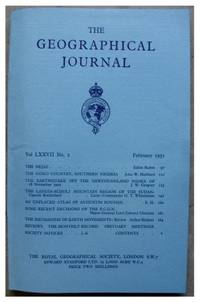
1931réf. 145811931. Arabia RUTTER Eldon. The Hejaz. The Geographical Journal. Vol. LXXVII. No. 2. London: Royal Geographical Society 1931. 13 pages including 2 sketch-maps plus photographic plates. In original blue wrappers as issued. This is a captivating account of the Rutter's expedition in Arabia namely the Hejaz at the time a forbidden country to unbelievers concerning all aspects of the Hejaz including its geographical features the territorial disputes and tribal factions as well as the population that inhabits this spectacular region. Mr. Rutter outlines his pilgrimage disguised as a Muhammadan pilgrim through the Hejaz frontier at Halli. An engaging travel account illustrated with a full-page sketch map of the Hejaz showing Mr. Rutter's route to Mecca and Medina an in-text sketch diagram depicting his route from Mecca to At Taif and several amazing photographic plates showing the Kaaba the House of Allah the Great Mosque of Mecca the Prophet's tomb at Medina and Bab es Salaam in the Mosque of Medina. This is a complete issue containing all the ads seldom found in such good and original condition. In very good condition. unknown
1928réf. 144851928. Varthema Ludovico di. The Itinerary of Ludovico di Varthema of Bologna from 1502 to 1508 1928. Limited first Argonaut Press edition of one of the earliest European firsthand accounts of Mecca and Medina originally published in Italian in 1510. Varthema an Italian traveler from Bologna entered the Islamic holy cities in 1503 after joining a pilgrim caravan from Damascus under the assumed Muslim name Yunus serving among its Mamluk military escort. His account is among the earliest recorded descriptions of the Hajj and Mecca by a European visitor who was not originally Muslim detailing pilgrimage ceremonies religious customs urban life and encounters with merchants and local authorities. His subsequent travels extended through Yemen the Persian Gulf Persia India and parts of Southeast Asia recording commercial networks religious practices military organization and maritime trade during the opening decades of Portuguese expansion into the Indian Ocean. The 1928 edition reproduces John Winter Jones's 1863 English translation prepared for the Hakluyt Society together with Sir Richard Carnac Temple's historical examination of Varthema's travels in southern Asia. Varthema Ludovico di. The Itinerary of Ludovico di Varthema of Bologna from 1502 to 1508. As Translated from the Original Italian Edition of 1510 by John Winter Jones F.S.A. in 1863 for the Hakluyt Society with A Discourse on Varthema and His Travels in Southern Asia by Sir Richard Carnac Temple. London: The Argonaut Press 1928. First Argonaut Press edition limited to 975 numbered copies printed on Japon vellum. One volume quarto 4to pp. lxxxvi 122 last blank 2 colophon blank. Illustrated with one plate five full-page maps within the pagination a facsimile of the original 1510 title page and a title-page vignette printed in blue and black; includes an index. Edited by N. M. Penzer. Original quarter vellum over blue-grey buckram boards spine lettered and ruled in gilt with rectangular gilt devices on both covers. Retains the original ribbon marker and an ownership bookplate centered on the front pastedown. Varthema's narrative follows his passage through Egypt and Syria to Medina and Mecca then southward through Yemen and Aden onward to Hormuz and Persia and across the Indian Ocean to India and Southeast Asia. His descriptions address the religious observances of the Muslim pilgrims Bedouin encounters regional customs and laws commercial products trading practices and methods of warfare. Varthema's travels took place during a period of increasing Portuguese intervention in Indian Ocean commerce shortly after Vasco da Gama's voyage around the Cape of Good Hope established a new maritime route between Europe and India. His account records the established Muslim trading networks connecting the Arabian Peninsula Persian Gulf Indian ports and Southeast Asian markets before Portuguese naval power substantially altered regional commerce. First printed in Rome in 1510 the narrative circulated in successive European editions and translations becoming an early source for European geographical knowledge of Arabia and the Indian Ocean. Sir Richard Carnac Temple's accompanying discourse examines the historical and geographical evidence for Varthema's itinerary distinguishing his observations from earlier travel accounts and evaluating his descriptions of southern Asia. The original vellum and buckram binding retains its gilt decoration ribbon marker and ownership bookplate. Overall in very good condition. unknown
réf. 14676Late 19th or early 20th century Koummya Arabic dagger with cast brass scabbard. The scabbard has silver engraved motifs and metal accents. The dagger measures 18" along the curve and has a hand carved wood handle with brass encasement rounding the hilt. The blade is curved sharp and slides securely into the sheath. It shows use but no damage. In good condition. unknown
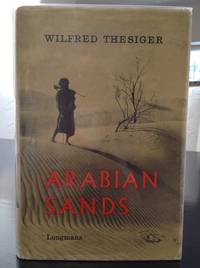
1960réf. 144741960. Thesiger Wilfred. Arabian Sands 1960. First edition second impression of the British explorer's account of his journeys through southern Arabia between 1945 and 1950 including two crossings of the Rub' al Khali or Empty Quarter in 1946-1947 and 1947-1948. Thesiger 1910-2003 known among his Arab companions as Mubarak bin London traveled with Bedouin guides across Oman the deserts of southern Arabia Abu Dhabi and the Trucial Coast recording tribal customs camel journeys desert navigation territorial disputes and the practical demands of survival in an arid environment. His account includes detailed descriptions of the Bedouin communities with whom he traveled particularly their hospitality tribal loyalties conflicts and knowledge of desert routes and water sources. Written before extensive oil development transformed much of southeastern Arabia the narrative records social and geographical conditions during the final years preceding the region's rapid economic and infrastructural changes. Thesiger Wilfred. Arabian Sands. London: Longmans 1960. First edition second impression first published 1959. One volume 326 pp. measuring approximately 9" x 6". Original cloth hardcover in illustrated dust wrapper. Illustrated with 68 photographic illustrations seven maps and a large folding map housed in the rear pocket. The narrative includes chapters devoted to Abu Dhabi the Trucial Coast and the Empty Quarter describing Thesiger's journeys through the territories of present-day Oman Saudi Arabia the United Arab Emirates and Yemen. His photographs record Bedouin companions desert encampments camel caravans regional landscapes and settlements encountered during his travels. The maps trace the principal routes and geographical features of the Arabian interior. Before undertaking his Arabian journeys Thesiger served in the Sudan Political Service and participated in military campaigns in Abyssinia and the Western Desert during the Second World War. His subsequent travels in Arabia were conducted largely on foot and by camel accompanied by Bedouin guides whose knowledge of tribal territories wells and desert conditions made the crossings possible. His descriptions of Abu Dhabi and the Trucial Coast predate the formation of the United Arab Emirates in 1971 and the extensive urban development financed by petroleum revenues. Arabian Sands preserves both Thesiger's observations and the experiences of his Arab traveling companions including Salim bin Kabina and Salim bin Ghabaisha who accompanied him on major portions of his journeys. The dust wrapper shows edge wear and a small 1 cm tear along the upper edge of the verso. Otherwise the book is in very good condition retaining its original dust wrapper photographic illustrations maps and folding map in the rear pocket. unknown
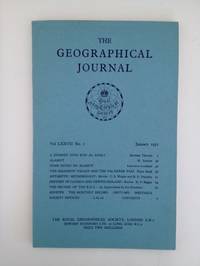
1931réf. 145651931. Thomas Bertram. A Journey Into Rub' Al Khali. London: Royal Geographical Society 1931. 37 pages. plus photographic plates and a large fold-out colour map. Original condition with blue wrappers titles to front and containing all the ads. This is Thomas' riveting preliminary report on his explorations in Arabia pre-dating his all-important book titled 'Arabia Felix; Across the Empty Quarter of Arabia' published later in 1931. The author's narrative of a historic camel journey across the Great Southern Desert Rub al Khali is a detailed and pioneering exploration with considerable detail on the tribes their customs life geography and with appendices on anthropology zoology list of flora list of camel brands list of Arab chants. Thomas was the Financial Advisor and Wazir to His Highness the Sultan of Muscat and Oman. He performed two remarkable journeys over territory hitherto completely unknown. The first was along the Southeastern Borderlands of the Rub 'al Khali from near Ras al Had to Dhufar the second from Dhufar for a distance of some two hundred miles inland. A complete issue in very good condition. unknown
réf. DADAX0190901748New unknown
réf. DADAX0415888700New unknown
réf. DADAX0415630185New unknown
réf. DADAX038553292XNew unknown
réf. DADAX1432569457New unknown
réf. DADAX0199734801New unknown
réf. DADAX0231063571New unknown
réf. DADAX0275988112New unknown
réf. DADAX0306463148New unknown
réf. DADAX0313305617New unknown
réf. DADAX0313296170New unknown
réf. DADAX0393060403New unknown
réf. DADAX0415412412New unknown
réf. DADAX0415274192New unknown
réf. DADAX0415453720New unknown