Livre Rare Book

1 400 résultats
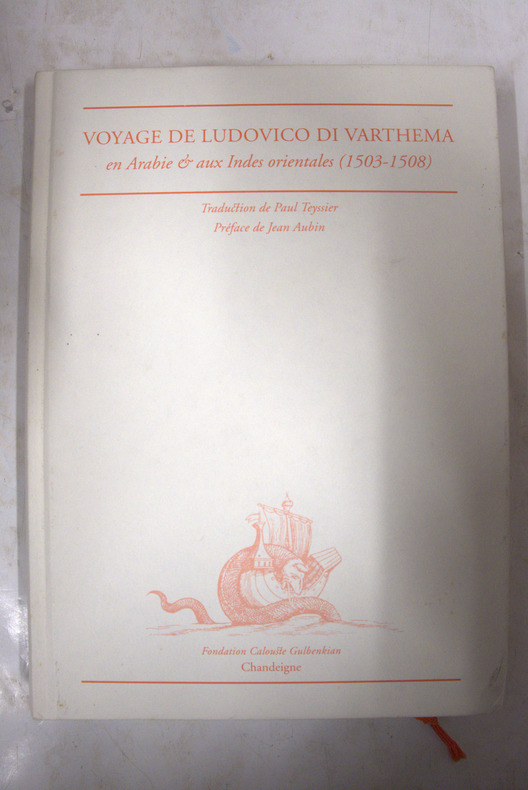
réf. 73251Paris, Chandeigne 2004, 22x1560mm, 365pages, reliure d'éditeur sous jaquette. Exemplaire à l'état de neuf.
réf. 29690aafParis, Gallimard, 1995, in-8°, LVIII + 1409 p., rel. de l'éd. (sans rhodoid), etui ill., bel exemplaire.
2004réf. VOY4421MRelié, 368 pages, paru en 2004 chez Chandeigne, livre en très bon état général. Nous avons d'autres exemplaires des éditions Chandeigne, retrouvez les dans notre catalogue grâce au mot-clé "Chandeigne".
réf. 10835Paris, Hachette, 1882, 1 br., dos cassé, exemplaire à relier. in-8, f.t., frontispice, titre, LXVIII-447 pp., 1 carte dépliante, 60 gravures sur bois dessinées par G. Vuillier d'aprés les aquarelles de Lady Anne Blunt et un tableau généalogique des émirs du Nedjed ;
1991réf. PHO-689Paris, 1991, in-8, demi-rel. à coins bas. fauve, dos à nerfs.
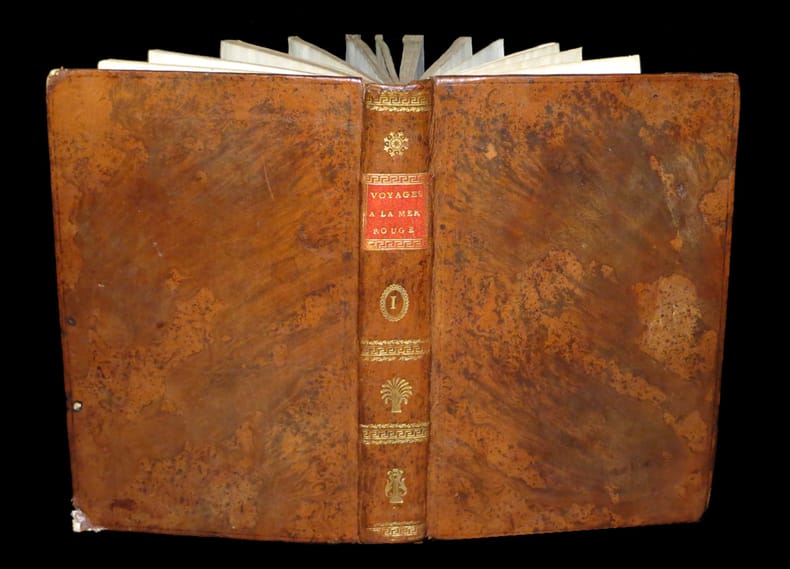
1792réf. GF319831792 Paris, Briand, 1792. Complet en deux volumes in-8 de 1ff blanc - une page de faux-titre (avec catalogue du libraire au revers de la page de faux-titre du tome 2) +440 et 483 pp pour chacun des volumes + deux cartes dépliantes (un dans chaque volume) - Reliures de l'époque, demi-percaline rouge brique, dos lisses ornés à l'or de faux-nerfs, titre et tomaison. Plats recouverts de papier à la cuve.
1716réf. 21801A Amsterdam, chez Steenhouwer et Uytwerp, 1716. In-12 de [16]-343-[13] pages (dernier feuillet blanc) :*8;A-N12; P4;Q6. Pleine basane brune, dos à nerfs orné de filets et fleurons dorés, pièce de titre beige, tranches rouges.
1776réf. 94389Amsterdam, Baalde, Utrecht, Van Schoonhoven 1776 In-4 25,5 x 20,5 cm. Reliure plein veau porphyre, dos à nerfs, caissons ornés, triple filet sur les plats, titre gravé, 10-407 pp., 72 planches, 23 repliés dont 6 cartes. Reliure usée, premier plat partiellement délié fragile, coiffes arrachées, manque en tête, mors fendillés et coins émoussés. Quelques rousseurs marginales éparses, sinon int. assez frais. En l’état.
réf. ORD-14610Nouvelle édition soigneusement corrigée & augmentée de quelques notes. Neuchâtel. Société Typographique. 1772. 1773. 6 volumes in-12 (102 x 168mm) pleine basane racinée, dos à 5 nerfs ornés de caissons, pièces de titre maroquin rouge, de tomaisons maroquin brun, gardes marbrées, tranches rouges, 556, 444, 502, 468, 431 et 448 pages. Etiquette de P. Gauvry libraire à Bordeaux. Coiffes lgt arasées, petits défauts d'usage aux reliures sinon beaux exemplaires. Manque le tome VII comme souvent. Rare.
1743réf. PHO-1218La HAYE ,Jean Neaulme, 1743, deux volumes in 4° (260x210mm) reliés plein veau marbré, dos orné à 5 nerfs, pièce de titre, tranches rouges ,(2 plats détachés),coiffes arasées, coins usés, papier bruni ,Épître à Frédéric roi de Prusse imprimé en rouge et noir, XLIV-414pp./IV-192 pp., à la suite extraits de plusieurs auteurs anciens et autres pièces ,178 pp. ,orné de 12 cartes dont 9 dépliantes et 21 planches dont 5 dépliantes, une planche de musique et un fragment de la célèbre carte de Peutinger , ex-libris de Charles Kettaneh Première édition en français,
réf. 55859Deuxième édition complète, 2 vol. in-8 reliure demi-chagrin brun, dos à 5 nerfs dorés, Tomes 2 et 3 des "Oeuvres complètes de Volney", Parmantier, Libraire, Froment, Libraire, Paris, 1825, 2 ff., 447 pp. avec 2 planches dépliantes et 2 cartes dépliantes ; 2 ff., 436 pp. avec 2 planches dépliantes et 1 carte dépliante
1787réf. 585531 vol. in-8 reliure début XIXe demi-basane verte, Chez Volland, Desenne, Paris, 1787, Tome I : 14 pp., 1 f. (errata et avis au relieur), 383 pp. avec 2 cartes dépliantes ; Tome II : 6 pp., 1 f. (errata), 458 pp. et 2 ff. n. ch. (approbation) avec 3 planches hors texte (dont deux dépliantes)
1792réf. PHO-1241Chez Briand, à Paris 1792, 2 tomes en 2 Vol. in-8 (13,5x21,8cm), (2) vj, 440pp. et (2) 483pp., relié plein basane tacheté , dos lisse orné avec pièces de titre et tomaison vertes , ex-libris manuscrit , coiffes et coins usés , charnières fendues , vieilles mouillures avec quelques traces .
1792réf. 21421A Paris, chez Briand, 1792. Un fort vol. au format in-8 (201 x 132 mm) de 2 ff. n.fol., vi - 440 pp. Reliure de l'époque de pleine basane racinée brune, filet à froid encadrant les plats, dos lisse orné de filets dorés, roulettes dorés, larges fleurons stylisés dorés, pièce de titre de maroquin cerise, titre doré, tranches mouchetées.
1854Mm 120x180 Volume nella sua brossura originale con titolo su cornice al piatto che mantiene una piccola etichetta di biblioteca privata dismessa, 312 pagine. Copia in ottime condizioni; spedizione in 24 ore dalla conferma dell'ordine.
1822gr. vol. in-8, pp. (4), 536, (2), leg. carta color. coeva con tass. xilogr. al d. Documentata vita del profeta arricchita da interessanti note (da pag. 323 a pag. 536). Melzi III, 243. Ottimo stato di conservazione, in barbe. [245]
1979réf. 1080031979 Editions du Chêne / Hachette - 1979 - In-8, format à l'italienne, cartonnage toilé gris sous jaquette illustrée en couleurs de l'éditeur - Sans pagination - Nombreuses reproductions photographiques hors-texte et pleine page en couleurs et quelques illustrations in et hors-texte en N&B
1979réf. 782381979 Paris, Chêne, Hachette, 1979, in 4° oblong, cartonnage gris de l'éditeur, jaquette illustrée en couleurs, 20 pages de texte et 81 planches photographiques en couleurs.
1820In-16-p (mm. 164x95), 2 voll. in 1, mz. pelle coeva con ang. , con 1 carta geografica della “Turchia d’Asia e dei paesi adiacenti (più volte ripieg.) e 3 (su 6) tavv. inc. in rame e colorate d’epoca. Manca anche indice tavole del 1° vol. Fa parte della “Raccolta de’ viaggi nelle varie parti del mondo, dopo quelli di Cook, e non pubblicati fin ora in lingua italiana” (voll. XXXVIII-XXXIX). Con qualche arross. ma certamente un buon esemplare.
18203 volumi, cm. 18, brossura editoriale, pag. XII, 292 (2) più 3 tavole a colori f.t.; 317 più 3 tavole ed 1 carta geografica ripiegata f.t.. Da pag. 109 inizia l'opera "Viaggio al Lago Manasarovar situato nell'Undes provincia del Piccolo Tibet fatto nel 1812 dai Signori Moorcroft e Hearsay dal tomo XII delle Asiatic Researches". Interessante descrizione del viaggio iniziato in India e ricordato per la descrizione del assaggio attraverso le montagne del Kurdistan. Molto interessante anche la relazione del viaggio al lago Manasarovar in Tibet. Manca metà dell'ultima carta con elenco delle tavole al primo volume. Collana "Raccolta de' viaggi più interessanti eseguiti nelle varie parti del mondo, tanto per terra quanto per mare, dopo quelli del celebre Cook...".
1936Cm. 19, cart. edit. con sovracop., pag. 308 (4) più 6 tav. fot. fronte/retro f.t.. Ottimo esemplare. Bel viaggio attraverso l'Arabia.
1925In-8 p., tela editoriale, pp. 324, con tavv. in b.n. e a colori f.t. “Petra - Kerak - Madeba - Jerash - The temple of Artemis, etc., etc.”. Ben conservato.
réf. 9450aafAmsterdam, Meridian, 1966, gr. in-8°, XVI + 365 S. + 2 S., Original-Leinenband.
1968réf. 225491968. Arabian American Oil Company. Aramco Handbook: Oil and the Middle East revised in 1968 documents the information system through which Aramco explained Saudi Arabia Middle Eastern petroleum and its own industrial operations to an English-language readership. Published while the company remained owned by four American oil corporations the handbook combines petroleum geology corporate history political geography and cultural instruction into a unified account of Saudi modernization under oil development. Its organization reveals how Aramco presented itself as both an industrial enterprise and an interpreter of Saudi society using maps photographs diagrams historical narratives and rules of social conduct to prepare foreign personnel for work in the Kingdom. The volume provides primary-source evidence for research into United States-Saudi relations corporate communication petroleum infrastructure expatriate labor and the production of cultural knowledge within a multinational oil concession. Saudi acquisition of Aramco began during the following decade and reached full government ownership in 1980 placing this edition before the company's transition to Saudi control. Arabian American Oil Company. Aramco Handbook: Oil and the Middle East. Dhahran Saudi Arabia: Arabian American Oil Company July 1 1968. Revised edition. Printed in Haarlem Netherlands by Joh. Enschedé en Zonen. 276 pages. Profusely illustrated with color maps black-and-white photographs and diagrams. Original red cloth stamped in gilt and black; no dust jacket noted. 4to. The handbook is divided into five principal sections addressing the historical background of Saudi Arabia and the Middle East the development of the regional petroleum industry the Aramco venture Saudi government and society and Arab culture and customs. A tribal map identifies numerous communities across the Arabian Peninsula including al-Mutair and al-Murrah while a diagrammatic map of the "Conquest of Najd" traces Ibn Saud's military expansion through arrows and battle annotations. Petroleum sections explain drilling refining transportation and export infrastructure including the Trans-Arabian Pipeline illustrated by parallel lengths of pipe extending across open terrain and accompanied by discussion of the decision to construct substantial portions above ground. Photographic essays show communal dining urban and industrial environments and other aspects of public life. The "Social Etiquette" section introduces such greetings as as-salÄmu ʿalaykum and kayf ḥÄlak presenting cultural instruction as part of the company's management of encounters between expatriate employees and Saudi residents. Bibliographic records confirm the 1968 Dhahran edition as an extensively illustrated corporate reference work on petroleum and the Middle East. The handbook's research value lies partly in the tension between the breadth of its documentation and the institutional perspective governing its interpretation. Its maps and photographs preserve substantial information about infrastructure geography labor social practice and the physical expansion of the Saudi petroleum industry while its text consistently casts Aramco as the principal agent joining Saudi Arabia to global markets. Cultural sections reduce complex regional and social differences to practical guidance for foreign employees and historical narratives place political consolidation and oil development within a corporate account of orderly progress. The volume should therefore be read both as a reference source and as evidence of how an American-owned concession represented its authority during a consequential phase of Saudi economic transformation. Light rubbing affects the boards with slight fraying at the spine ends and minor handling wear to the text-block edges; interior clean and binding sound. Very good. A detailed corporate record of the maps infrastructure historical narratives and cultural instruction through which Aramco explained-and justified-its place in Saudi Arabia's petroleum economy. unknown books
1968réf. 225491968. Arabian American Oil Company. Aramco Handbook: Oil and the Middle East revised in 1968 documents the information system through which Aramco explained Saudi Arabia Middle Eastern petroleum and its own industrial operations to an English-language readership. Published while the company remained owned by four American oil corporations the handbook combines petroleum geology corporate history political geography and cultural instruction into a unified account of Saudi modernization under oil development. Its organization reveals how Aramco presented itself as both an industrial enterprise and an interpreter of Saudi society using maps photographs diagrams historical narratives and rules of social conduct to prepare foreign personnel for work in the Kingdom. The volume provides primary-source evidence for research into United States-Saudi relations corporate communication petroleum infrastructure expatriate labor and the production of cultural knowledge within a multinational oil concession. Saudi acquisition of Aramco began during the following decade and reached full government ownership in 1980 placing this edition before the company's transition to Saudi control. Arabian American Oil Company. Aramco Handbook: Oil and the Middle East. Dhahran Saudi Arabia: Arabian American Oil Company July 1 1968. Revised edition. Printed in Haarlem Netherlands by Joh. Enschedé en Zonen. 276 pages. Profusely illustrated with color maps black-and-white photographs and diagrams. Original red cloth stamped in gilt and black; no dust jacket noted. 4to. The handbook is divided into five principal sections addressing the historical background of Saudi Arabia and the Middle East the development of the regional petroleum industry the Aramco venture Saudi government and society and Arab culture and customs. A tribal map identifies numerous communities across the Arabian Peninsula including al-Mutair and al-Murrah while a diagrammatic map of the "Conquest of Najd" traces Ibn Saud's military expansion through arrows and battle annotations. Petroleum sections explain drilling refining transportation and export infrastructure including the Trans-Arabian Pipeline illustrated by parallel lengths of pipe extending across open terrain and accompanied by discussion of the decision to construct substantial portions above ground. Photographic essays show communal dining urban and industrial environments and other aspects of public life. The "Social Etiquette" section introduces such greetings as as-salÄmu ʿalaykum and kayf ḥÄlak presenting cultural instruction as part of the company's management of encounters between expatriate employees and Saudi residents. Bibliographic records confirm the 1968 Dhahran edition as an extensively illustrated corporate reference work on petroleum and the Middle East. The handbook's research value lies partly in the tension between the breadth of its documentation and the institutional perspective governing its interpretation. Its maps and photographs preserve substantial information about infrastructure geography labor social practice and the physical expansion of the Saudi petroleum industry while its text consistently casts Aramco as the principal agent joining Saudi Arabia to global markets. Cultural sections reduce complex regional and social differences to practical guidance for foreign employees and historical narratives place political consolidation and oil development within a corporate account of orderly progress. The volume should therefore be read both as a reference source and as evidence of how an American-owned concession represented its authority during a consequential phase of Saudi economic transformation. Light rubbing affects the boards with slight fraying at the spine ends and minor handling wear to the text-block edges; interior clean and binding sound. Very good. A detailed corporate record of the maps infrastructure historical narratives and cultural instruction through which Aramco explained-and justified-its place in Saudi Arabia's petroleum economy. unknown