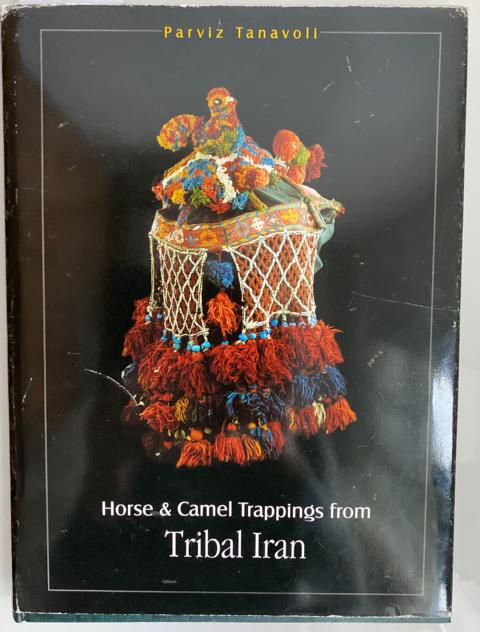
réf. 603191Iran Carpet Company. Hardcover. Very Good/Good. Hardcover. Used books are in very good condition; dust jackets are in good condition with chips tears and wear along the edges. 1974 but this version was published after 1980 2 volumes. Vol l: 235 p. 98 color pl. Vol 2: 236 p. 98 color pl. 30 x 21.5 cm. A glossy catalogue from this carpet manufacturer published over the course of the years under a variety of titles: Masterpieces of Persian Carpet Persian Carpet Appreciation and in fact this version has no English title page. Most of the rugs are floral design; the text describes the design and provides technical data; there are also illustrations of the back of the rug enlarged. In Farsi & English. Iran Carpet Company hardcover
réf. 35389Paris, PUF (coll. "Annales du Musée Guimet"), 1963. Gr. in-8°, XXXI-597p. Broché, couverture illustrée.
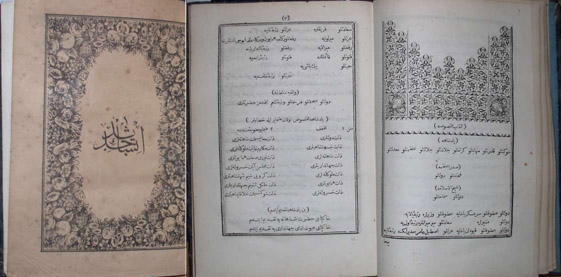
Very Good Turkish, Ottoman (1500-1928) In 1/5 decorative leather bound with moon-star and tughra embossing. Roy. 8vo. (23 x 16 cm)., 288 p. Ozege:-. No bibliographic detail inside the book, and it seems study was not completed. Text is cut in last page, and informed us that study will have been as 4 volumes set in preface (moukaddimah), but the other volumes or/and any bibliographic details not found in any source and bibliographic study. Fîrûznâme.
1780réf. GRA237Paris, Dezauche, 1780 Carte gravee sur cuivre, frontieres coloriees avec cartouche, 47 x 63 l'image. Elle montre aussi les Balkans, l'Afrique du Nord, l'Italie ..
1900réf. 145631900. Collection of two photographic lantern slides of Iran circa 1900 documenting village commerce vernacular architecture and camel transportation at the turn of the twentieth century. The images record daily activity within mud-brick settlements including villagers gathered in a public square and camels resting inside a walled enclosure. Particularly notable is the presence of a traditional wind tower or badgir an architectural feature associated with Yazd and other arid regions of central and southern Iran. The photographs preserve details of settlement design commercial activity and animal transportation during the late Qajar period when camel caravans continued to carry goods and travelers between Iranian towns and regional markets. Two photographic glass lantern slides circa 1900 each measuring approximately 3 1/4 x 4 inches. The first depicts an open square surrounded by mud-brick buildings with men women and children gathered in small groups near large sacks or bundles possibly containing merchandise or provisions. A prominent badgir rises above the surrounding structures identifying a traditional method of passive ventilation employed in Iran's hot dry climate. The second slide shows several saddled camels resting within a walled village courtyard or caravan enclosure. One camel lies prominently in the foreground while additional animals and villagers occupy the space beside the surrounding mud-brick buildings. The saddles and enclosed setting suggest a stopping place associated with caravan travel although the precise location is unidentified. The photographs date to a period when established caravan routes connected Iranian settlements and commercial centers with camels providing transportation across regions where wheeled vehicles faced difficult terrain and limited road infrastructure. The wind tower and mud-brick buildings also record architectural adaptations to local climatic conditions while the populated square preserves details of everyday activity in a provincial settlement. Both slides in very good condition. Two early photographic views preserving distinct aspects of Iranian village life regional transportation and traditional architecture during the Qajar era. unknown
1900réf. 145631900. Collection of two photographic lantern slides of Iran circa 1900 documenting village commerce vernacular architecture and camel transportation at the turn of the twentieth century. The images record daily activity within mud-brick settlements including villagers gathered in a public square and camels resting inside a walled enclosure. Particularly notable is the presence of a traditional wind tower or badgir an architectural feature associated with Yazd and other arid regions of central and southern Iran. The photographs preserve details of settlement design commercial activity and animal transportation during the late Qajar period when camel caravans continued to carry goods and travelers between Iranian towns and regional markets. Two photographic glass lantern slides circa 1900 each measuring approximately 3 1/4 x 4 inches. The first depicts an open square surrounded by mud-brick buildings with men women and children gathered in small groups near large sacks or bundles possibly containing merchandise or provisions. A prominent badgir rises above the surrounding structures identifying a traditional method of passive ventilation employed in Iran's hot dry climate. The second slide shows several saddled camels resting within a walled village courtyard or caravan enclosure. One camel lies prominently in the foreground while additional animals and villagers occupy the space beside the surrounding mud-brick buildings. The saddles and enclosed setting suggest a stopping place associated with caravan travel although the precise location is unidentified. The photographs date to a period when established caravan routes connected Iranian settlements and commercial centers with camels providing transportation across regions where wheeled vehicles faced difficult terrain and limited road infrastructure. The wind tower and mud-brick buildings also record architectural adaptations to local climatic conditions while the populated square preserves details of everyday activity in a provincial settlement. Both slides in very good condition. Two early photographic views preserving distinct aspects of Iranian village life regional transportation and traditional architecture during the Qajar era. unknown books
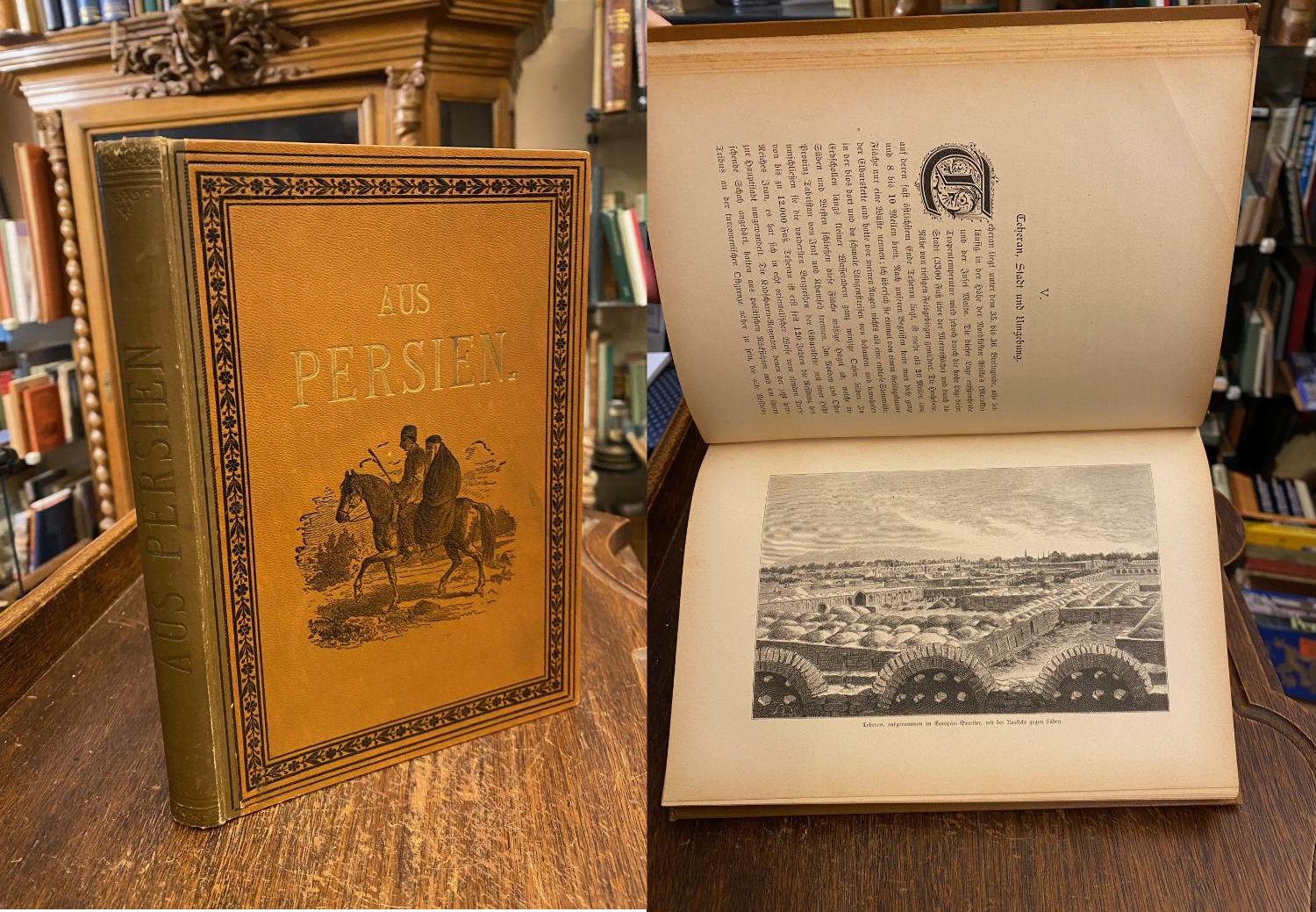
1882réf. 58177ABWien, Verlag von R. v. Waldheim, 1882. gr8° (24x17), 2 Bl., 260 S., mit 17 teils ganzseitigen Holzschnitten, brauner OHln mit Decklbild in Schmuckbordüre und goldTitel, Papier gebräunt und teils gering braunfleckig, fest und sauber, schönes Exemplar,
réf. PHO-1123Paris, 1770, Hérissant, 2 volumes in-12, relié plein veau époque, dos à nerfs orné avec tomaison, tranches marbrées ; 5ff-314pp-5ff , 293pp-3ff , bel exemplaire
1823réf. 59966Pesth-Leipzig, Hartlebens Verlag, 1823. Kl.-8°. Mit 14 tlw. gefalt. Kupfertafeln. 3 Bll., 178 S.; 1 Bl., 194 S., 1 Bl., Ppbd. d. Zt. m. 2 goldgepr. Rückenschildchen u. dreiseitgem Farbschnitt.
réf. 205959Paris, Dentu, an X - 1802 in-8, viij-457 pp., avec une carte dépliante, basane fauve racinée, dos lisse orné de guirlandes et fleurons dorés, pièce de titre brique, pointillé doré sur les coupes, tranches jaunes, gardes de papier bleu (reliure de l'époque). Petit manque à la coiffe inférieure, épidermures sur le plat supérieur.
1934réf. PHO-1749Paris : Librairie orientaliste Paul Geuthner, 1934-1938, 3 volumes in-8, brochage éditeur, XXXIV-486 pp.; 493 pp.;571 pp., petits défauts au brochage.
1630réf. 48609Jean Blaeu | Amsterdam 1630 | 9 x 16 cm | relié
1890réf. 9443AB[Wien ?, um 1890]. 16 + 138 S. Priv. Hld. der Zeit, mit eingebundener illustr. OBrosch., Titelblatt
1998réf. 13105Tehran, Farhangsara Yassavoli, 1998. 4°. 198 Seiten, 108 Abb. auf Tafeln. Original Pappband im illustr. OU (Kanten leicht berieben).
1957réf. 124581Paris Gallimard 1957 1 vol. relié in-4, cartonnage éditeur d'après la maquette de Paul Bonet, rhodoïd, 187 pp., notices bibliographiques. Édition originale. Un des 550 exemplaires numérotés sur vélin Prioux (Huret, 477). Infimes déchirures au rhodoïd, mais très bon état, avec le prière d'insérer joint.
1924réf. 119962Paris Daniel Jacomet pour Ronald Davis 1924 1 vol. Relié in-4, plein veau marbré, dos à nerfs soulignés de filets dorés, 10 feuillets. Edition originale constituée par le fac-similé "autographique" du poème et tirée seulement à 100 exemplaires, celui-ci justifié HC VI, mais non signé par l'auteur. L'étiquette de titre qui ornait le cartonnage d'origine a été conservée par le relieur (qui a indiqué comme nom d'auteur "Saint-John Prince"...). L'exemplaire provient de la bibliothèque du diplomate Christian Belle (alias Basile Sainte-Croix) avec son sceau à l'encre rouge.
réf. 1590Marseille, Les Cahiers du Sud, 1942. Cahier in-8° de 16pp. agrafé en son centre sous couv. crème semi-rigide, non coupé.
1965réf. 56440Paris Gallimard 1965 1 vol. broché fort in-8, broché, non coupé, 817 pp., 20 planches hors-texte, bibliographie. Edition originale de cet important recueil d'hommage. Un des 27 exemplaires de tête numérotés sur Hollande van Gelder.
1961réf. 007445New York: Bollingen Series 1961. First Edition. wraps. Fine. Bloomfield & Mendelson B77. Published in an edition of 2500 copies none of which were for sale in white card covers with a grayish green printed wrapper. This is St.-John Perse's Nobel Acceptance Speech translated by Auden and printed here in both the original French and Auden's English translation. SIGNED by Auden on the title page. Quite uncommon especially signed. Bollingen Series paperback books
1963réf. 421121New York: Pantheon Books 1963. Hardcover. Very Good. Second edition revised with bibliography. Translated by Robert Fitzgerald. Quarto. 61pp. Black cloth. Light spray of paint flecks at the bottom of the top board else very good or better lacking the dustwrapper. Martha Graham's copy with her large ownership Signature. Bollingen Series LXIX. Pantheon Books hardcover
1963réf. 421121New York: Pantheon Books 1963. Hardcover. Very Good. Second edition revised with bibliography. Translated by Robert Fitzgerald. Quarto. 61pp. Black cloth. Light spray of paint flecks at the bottom of the top board else very good or better lacking the dustwrapper. Martha Graham's copy with her large ownership Signature. Bollingen Series LXIX. Pantheon Books hardcover books
1905réf. 144251905. Radiguet Arthur and T.H. McAllister collection of five lantern slides of Iran circa 1905 documents Qajar-era urban religious royal and archaeological sites as they were circulated through early twentieth-century photographic projection. The group records Tehran palace and garden settings Isfahan's Khaju Bridge Muslim worship inside a Persian mosque and the ruins of Persepolis giving the slides research value for the study of Iran's visual presentation to Western lecture audiences the commercial lantern-slide trade and the intersection of Qajar modernity with older Safavid and Achaemenid monuments. Qajar rule extended into the early twentieth century ending in 1925 making these images especially relevant to the final decades of the dynasty and to foreign visual consumption of Iranian architecture devotion and royal space. Five gelatin silver bromide positive glass lantern slides circa 1905 showing locations in Tehran Isfahan and Persepolis; each slide measures approximately 3 1/4 by 4 inches. The first image shows a Persian man in traditional dress walking within the Qajar Royal Palace and gardens; the second is an elevated view labeled "the Shah's gardens and the new neighborhoods" showing Tehran's royal garden landscape and adjacent urban development without enough evidence to confirm the method of photography. The third image shows the Khaju Bridge in Isfahan built under Shah Abbas II on the foundations of an earlier bridge and functioning as both bridge and weir across the Zayandeh River; the fourth shows a group of Muslims kneeling in prayer beneath a mosque archway; the fifth shows the ruins of Persepolis the Achaemenid capital founded by Darius I in 518 B.C. and later designated a UNESCO World Heritage Site. Three slides are attributed to Arthur Radiguet of Maison Molteni a French maker associated with lantern projection and slide production while the Khaju Bridge slide was produced by T.H. McAllister a New York firm known for selling magic lantern equipment and images. The set brings together dynastic Tehran Safavid civic architecture Islamic devotional practice and ancient imperial ruins offering a compact visual itinerary of Iran as framed for projected instruction or entertainment around 1905. The Khaju Bridge image is particularly useful for architectural history because the bridge linked the Khaju quarter with the Zoroastrian quarter and combined circulation water management and public gathering functions; the Persepolis image extends the group's chronology from modern Qajar Iran back to Achaemenid antiquity. Minor edge wear and light surface wear to glass mounts with images remaining legible; overall very good. A focused group of early photographic projection images of Iran useful for documenting how Qajar-era Tehran Isfahan mosque interiors and ancient Persian ruins were presented through the international lantern-slide market. unknown