19042 separate volumes offered together: I: xxxiv + 82 + 103pp., 25cm., 1st ed., bound in cloth (marbled endpapers), VG, [first edition of this important reference work by Frederic Rosenberg, offering the only existing edition of the Persian text of "The book of Zoroaster" written by the Kurdish Zoroastrian poet Zartusht Bahram ben Pajdû (13th century), with French translation] // II: 106pp., 24cm., in the series "Iranian culture and literature" vol.24, 2nd revised edition, softcover, G, [containing a revised version of the edition by Frederic Rosenberg of the Persian text of the same "Book of Zoroaster"] // very rare, X71337
1900réf. 152801900. Mozaffar ad-Din Shah Qajar albumen photograph in royal carriage circa 1900-1902 documents the Iranian monarch during one of the European journeys that placed Qajar sovereignty within the diplomatic and ceremonial world of the great imperial powers. Mozaffar ad-Din Shah ruled Iran from 1896 until 1907 during a period when Britain and Russia competed aggressively for political and economic influence in Persia while the Qajar state faced mounting debt foreign concessions and domestic demands for reform. His European tours therefore carried significance beyond royal spectacle presenting the Shah as an independent sovereign even as Iran increasingly operated within the pressures of European imperial rivalry. The approximately 9 by 11.5 inch photograph shows the Shah seated in uniform in a horse-drawn carriage with another passenger accompanied by a mounted military escort and watched by spectators in a European urban setting. The carriage uniforms horses and formal procession employ the visual language of European monarchy and imperial ceremony illustrating how Qajar rulers adopted international forms of royal display while attempting to assert Iran's status among more powerful states. The image likely dates from the Shah's 1900 or 1902 European tours; the precise location remains unidentified. These journeys occurred against the backdrop of the so-called Great Game in which Russia and Britain sought strategic and commercial advantages in Iran and Central Asia. Foreign loans and concessions helped finance the Qajar court and royal travel but also intensified Iranian resentment toward foreign intervention and monarchical dependence. Within only a few years these pressures contributed to the Persian Constitutional Revolution of 1905-1907. Mozaffar ad-Din Shah ultimately approved the electoral law and constitution of 1906 establishing the Majlis and beginning Iran's transition away from unchecked royal authority. A substantial period photograph linking Qajar kingship European imperialism Anglo-Russian influence in Persia diplomatic spectacle and the political conditions preceding the Iranian Constitutional Revolution. unknown
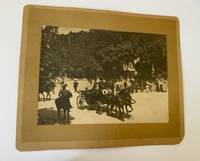
1900réf. 152801900. Mozaffar ad-Din Shah Qajar albumen photograph in royal carriage circa 1900-1902 documents the Iranian monarch during one of the European journeys that placed Qajar sovereignty within the diplomatic and ceremonial world of the great imperial powers. Mozaffar ad-Din Shah ruled Iran from 1896 until 1907 during a period when Britain and Russia competed aggressively for political and economic influence in Persia while the Qajar state faced mounting debt foreign concessions and domestic demands for reform. His European tours therefore carried significance beyond royal spectacle presenting the Shah as an independent sovereign even as Iran increasingly operated within the pressures of European imperial rivalry. The approximately 9 by 11.5 inch photograph shows the Shah seated in uniform in a horse-drawn carriage with another passenger accompanied by a mounted military escort and watched by spectators in a European urban setting. The carriage uniforms horses and formal procession employ the visual language of European monarchy and imperial ceremony illustrating how Qajar rulers adopted international forms of royal display while attempting to assert Iran's status among more powerful states. The image likely dates from the Shah's 1900 or 1902 European tours; the precise location remains unidentified. These journeys occurred against the backdrop of the so-called Great Game in which Russia and Britain sought strategic and commercial advantages in Iran and Central Asia. Foreign loans and concessions helped finance the Qajar court and royal travel but also intensified Iranian resentment toward foreign intervention and monarchical dependence. Within only a few years these pressures contributed to the Persian Constitutional Revolution of 1905-1907. Mozaffar ad-Din Shah ultimately approved the electoral law and constitution of 1906 establishing the Majlis and beginning Iran's transition away from unchecked royal authority. A substantial period photograph linking Qajar kingship European imperialism Anglo-Russian influence in Persia diplomatic spectacle and the political conditions preceding the Iranian Constitutional Revolution. unknown books
1630réf. 48609Amsterdam: Jean Blaeu 1630. Fine. Jean Blaeu Amsterdam 1630 9 x 16 cm relié First Amsterdam impression of the Satires annotated by Thomas Farnabe first published in London in 1612. It is decorated with a handsome engraved title-frontispiece unsigned. Nineteenth-century binding in full straight-grained green morocco triple gilt fillet small cornerpieces connected by a fillet spine decorated with gilt fillets and fleurons with red mosaics gilt board-edges. Spine very lightly faded a few very minor rubbing marks and a small marginal tear without loss on page 77 otherwise a fine uncut copy. Bookplate 19th century pasted on front pastedown. Jean Blaeu unknown
réf. DADAX0691641323Princeton University Press 2016-04-19. hardcover. New. 5.00x1.50x8.00. Buy with confidence. Excellent Customer Service & Return policy. Princeton University Press hardcover
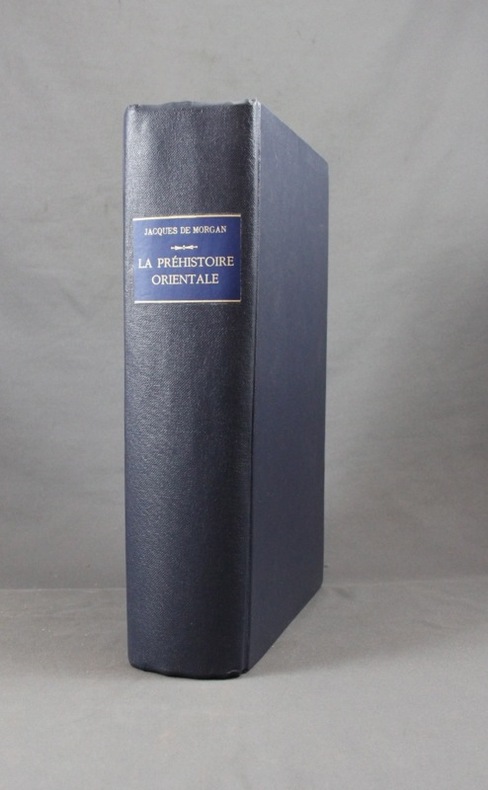
1925réf. 1591Paris, Lib. orientaliste Paul Geuthner, 1925. 3 tomes en 1 vol. in-8 de XXXV-332-[2]-VI-438-VI-458 pages, reliure moderne pleine percaline bleue nuit, couverture conservée.
2003New English Original bdg. HC. Large roy. 8vo. (25 x 18 cm). Text in Persian; bilingual title in English and Persian on cover. 2 volumes set: ([12], 660p.; [12], 911 p.), b/w ills., portraits and documents. History of medicine in Iran (Qajars era towards the end of Pahlavi dynasty's). Vol. 1: Including medical rues & regulations, hygenic reports establishing modern medical schools, clinics and hospitals. Vol. 2: Autobiographies of known and unknown Iranian physicians.= Târîkh-i tibb va tibâbat dar Îrân (Az 'ahd-i Qâjâr tâ pâyân-i 'asr-i Riza Shâh) bih rivâyat-i asnâd. Jild-i avval: Shâmil-i qavânîn va niz?âmnâmah'hâ-yi tabbî, guzârishât-i sihî va bihdâshtî. Jild-i duvvum, Sharh-i hâl-i tabîbân-i nâmdâr va nâshinâkhtah-i Îrân.
2013New New English Original bdg. Dust wrapper. In publisher's special slip-case. Folio. (32 x 24 cm). In English and Persian. 2 volumes set: (419 p.; 132, 123 p., many numerous color plates with full pages). Masterpieces of Persian Art from Polish Collections. Vol. 1: lllustrations. Vol. 2: Essays and descriptive catalogue.= Sâhkârîhâ-ye honar-e Îrân dar majmû'eh'hâ-ye Lahestân. Jild-i 1: Tasâwir. Jild-i 2: Maqâlât wa sarh-e tafsili-je tasâwir. 2 volumes set. This book is an enlarged version of the catalogue titled 'Masterpieces of Persian art from Polish collections' of the exhibition held at the National Museum in Warsaw and at the National Museum in Cracow in 2002.
2016New New English Original bdg. Dust wrapper. In publisher's special slip-case. Folio. (34 x 23 cm). Bilingual in English and Persian. 410 p., color ills. Persian carpets: Woven from the soul, spun from tthe heart.= Qâlî-i Îrânî: Zi dil tanîdah zi jân bâftah'and. A very attractive and richly illustrated folio size book in its special slip-case including detailed information on rugs and carpets of Iran, Azerbaijan with history of rug weaving in Iran from the ancient times to the present, with fine illustrated examples. An oversize and very heavy volume.
1924réf. 9561Un des 550 exemplaires sur vergé baroque à barbes. Broché Très bon Paris Nouvelle Revue Française 1924 1 volume in-4°
One volume bound in two. Paginated consecutively. Thick royal octavo. Pp. lxxv, 624; xix, 625-1488. Plus additional suites of plates bound in each volume. Text figures, maps, plans, tables. Hardcover, uniformly bound in the original publisher's green cloth, gilt spines, crimson lettering-piece, with dust-jackets. In fine condition. Excellent set. ~ First edition. Original edition, NOT a reprint!
1743réf. LB11Très beau in-8, plein veau marron, triple filet d'encadrement, roulette sur les remplis, trois tranches dorées, ex-libris contemporain MK sur contre-plat recto. Coiffe supérieure usée mais non endommagée, tranchefiles intactes. Dos lisse à fleurons, pièce de titre maroquin rouge. Petite fente en partie supérieur du mors recto (3 cm). En fin de volume, manuscrit sur deux pages reprenant l'article sur Kouli-Kan du Nouveau Dict. Historique en 9 vol. in-8° [sic] paru à Paris en 1789, encre et graphie du XVIIIe siècle. Tampon ex-libris sur la page de titre : Bibliothèque du Petit Séminaire de Chalons. Frontispice représentant Kouli-Kan devant un camp militaire , Titre , Une carte dépliante [Turquie, Perse, Inde] , p.1 à 451 : Histoire de Thamas Kouli-Kan en quatre livres [env. 1710 - 1739] p.452 à 476 , Table des matières , deux feuilles non foliotées, Approbation et Privilège du roi [signé Sainson, pour 9 ans], Une feuille avec manuscrit d'époque (page de garde volante blanche). Gardes couleurs feuilles de chêne.
réf. 17100Vintage Optical Lantern images of school students in Iran circa late 19 cent glass size is about 4" x 3.25" . One image hand-labeled "Persian School" in ink and "Teheran" in pencil show around 40 students and their teachers in traditional Persian Qajar era outfit and hat. Many are seated on a carpet and some standing in behind them all are in front of their schoolhouse. In the front we see the typical water basin "hose" that would be found at the center of most courtyards of that period. The studentsrange in age from children to young men the older ones are probably the teachers. in very good condition. Original images of the Qajar period are scarce. unknown
réf. 17100Vintage Optical Lantern images of school students in Iran circa late 19 cent glass size is about 4" x 3.25" . One image hand-labeled "Persian School" in ink and "Teheran" in pencil show around 40 students and their teachers in traditional Persian Qajar era outfit and hat. Many are seated on a carpet and some standing in behind them all are in front of their schoolhouse. In the front we see the typical water basin "hose" that would be found at the center of most courtyards of that period. The studentsrange in age from children to young men the older ones are probably the teachers. in very good condition. Original images of the Qajar period are scarce. unknown books
réf. DADAX0691642648Princeton University Press 2016-04-19. hardcover. New. 7.00x1.56x10.00. Buy with confidence. Excellent Customer Service & Return policy. Princeton University Press hardcover
2013New New English Original bdg. Dust wrapper. In publisher's special box. 4to. (30 x 22 cm). In Persian and a short abstract (synopsis and descriptive texts of illustrations) in English. 20, 843 p., many color ills. Encyclopaedia of seals and engravings in Iran.= Dânishnâmah-i muhr va hakkâkî dar Irân. A very heavy volume.
1961réf. 007445New York: Bollingen Series 1961. First Edition. wraps. Fine. Bloomfield & Mendelson B77. Published in an edition of 2500 copies none of which were for sale in white card covers with a grayish green printed wrapper. This is St.-John Perse's Nobel Acceptance Speech translated by Auden and printed here in both the original French and Auden's English translation. SIGNED by Auden on the title page. Quite uncommon especially signed. Bollingen Series paperback
1930réf. 74655E-298: Faber & Faber. Very Good in Very Good- dust jacket. First Edition; First Printing. Hardcover. Hardcover. 8vo. Published by Faber and Faber Ltd London UK. 1930. 75 pgs. Text in both French and English language. First Edition/First Printing. DJ has shelf-wear present to the DJ extremities DJ is faded and sunned along the edges of the DJ. Bound in cloth boards with titles present to the spine. Boards have shelf-wear present to the extremities boards are lightly faded along the edges of the boards. Previous owner's name present to the FFEP. Text is clean and free of marks. Binding tight and solid. This internationally famous poem by the 1960 Nobel laureate was introduced to English-language readers in this translation by T. S. Eliot. EB; 8vo 8" - 9" tall; 75 pages . 1930. Faber & Faber hardcover
20204to hardcover, full leather, Broughton Publishing, AP Manuscripts, 2020 , 1113 pp. Good copy, facsimile of this beautiful manuscript written during the 15th century. With its "Certificate of Authenticity", numbered "14 of 100" : "this books is guaranteed to be a genuine original. It is facsimile base on the Quran from AD 1400-1500. This one-of-a-kind reproduction is the only numbered size format Quran, in genuine calf skin leather". Fac similé d'un très beau manuscrit timouride produit dans le nord de l'Inde durant le XVe siècle. Good copy (very small tears on first cover, otherwise a fine copy) Français
réf. ec32Dessin Le Prince avec la danseuse (illustration 13,5 x 23 cm sur support 17 x 26 cm), sans lieu ni date. Fin XVIII° début XIX°. La qualité de dessin et de mise en couleur n'a rien de comparable avec les multiples copies et variantes récente. Miniature persane finement réalisée et détaillée, aux COULEURS VIVES et TRES FRAICHES ; illustration en très bel état. Livraison a domicile (La Poste) ou en Mondial Relay sur simple demande.
réf. 016438Artiste anonyme, Iran, portrait d'une femme qâjâr. Aquarelle et crayon, ca.1850, sur papier (20.5*14cm). L'aquarelle mesure 12*8cm. Portrait d'une femme, probablement dans une tenue de ville. Cette aquarelle est assez classique de la production Qâjâr qui s'exportait déjà au XIXe siècle. De nombreux albums d'aquarelles comme la nôtre furent achetés par les européens. Rappelons aussi qu'en 1848, une expédition scientifique française est reçue à Téhéran par Mohammad Shah, père de Nassereddine. Beau document. [370]
réf. 016440Artiste anonyme, Iran, portrait d'une femme qâjâr. Aquarelle et crayon, ca.1850, sur papier (24.5*17cm). L'aquarelle mesure 12*8cm. Portrait d'une femme, probablement dans une tenue de ville. Cette aquarelle est assez classique de la production Qâjâr qui s'exportait déjà au XIXe siècle. De nombreux albums d'aquarelles comme la nôtre furent achetés par les européens. Rappelons aussi qu'en 1848, une expédition scientifique française est reçue à Téhéran par Mohammad Shah, père de Nassereddine. Beau document. [370]
1851Two parts in one volume. Small octavo. Pp. vi, 47; 28. Hardcover, bound in contemporary quarter pebble-grain cloth and marbled boards, leather lettering-piece, gilt, cloth French corners, some spotting, else in a very good condition. Overall an excellent copy. ~ First edition. See Wilhelm Heinsius: Allgemeines Bücher-Lexikon, 1847-51 (Graz, 1963); Augustin Bonnetty: Annales de philosophie chrétienne (Paris 1854). Rare.
1826réf. 62065Accompagnée d'un Essai historique et statistique sur ce royaume, d'un aperçu géographique, sur les divisions politiques actuelles des pays compris entre l'Inde anglaise, l'Empire chinois et les limites orientales de l'Europe et de l'Afrique, et suivi d'un Tableau Statistique du Royaume de Perse, comparé aux principaux Etats du sud-ouest de l'Asie, 1 carte entoilée dépliante sous chemise et étui cartonné, décembre 1826, Planche 27 de l'Atlas Universel, Chez Brué, rue des Francs-Maçons, Paris, décembre 1826, 71,3 x 53 cm
1826Accompagnée d'un Essai historique et statistique sur ce royaume, d'un aperçu géographique, sur les divisions politiques actuelles des pays compris entre l'Inde anglaise, l'Empire chinois et les limites orientales de l'Europe et de l'Afrique, et suivi d'un Tableau Statistique du Royaume de Perse, comparé aux principaux Etats du sud-ouest de l'Asie, 1 carte entoilée dépliante sous chemise et étui cartonné, décembre 1826, Planche 27 de l'Atlas Universel, Chez Brué, rue des Francs-Maçons, Paris, décembre 1826, 71,3 x 53 cm Jolie carte couvrant de l'Egypte et de l'Anatolie à l'Indoustan et aux contreforts de l'Himalaya, avec une belle vue de la Péninsule arabique de la Perse (Iran), du Beloutchistan et de l'Hindoustan (partie du Pakistan moderne), de l'Afghanistan, etc... Etat très satisfaisant (petite tache, double petit accroc marginal affectant lég. le texte en haut de feuille, fort accroc à l'étui, bon état par ailleurs) pour cette carte de très grand intérêt. Français