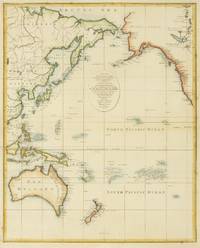
[Pacific Ocean]. LODGE, John JrBiblio.com
6911 risultati
1797rif. 146755London: John Lodge 1797. Very Good. London John Lodge circa 1797. A hand-coloured engraved map printed surface 424 × 342 mm sheet size 450 × 385 mm. 'Engrav'd by J.Lodge Junr. Islington'. Several light horizontal creases two with short marginal splits outside the plate mark expertly sealed; minimal foxing; in excellent condition. An attractive chart of the Pacific Ocean including Australia from Bankes' 'New Royal and Authentic System of Universal Geography'. McCorkle #11-1a 'The geographical works of Thomas Bankes are a bibliographical nightmare'; Beddie 505; Tooley 870. John Lodge unknown
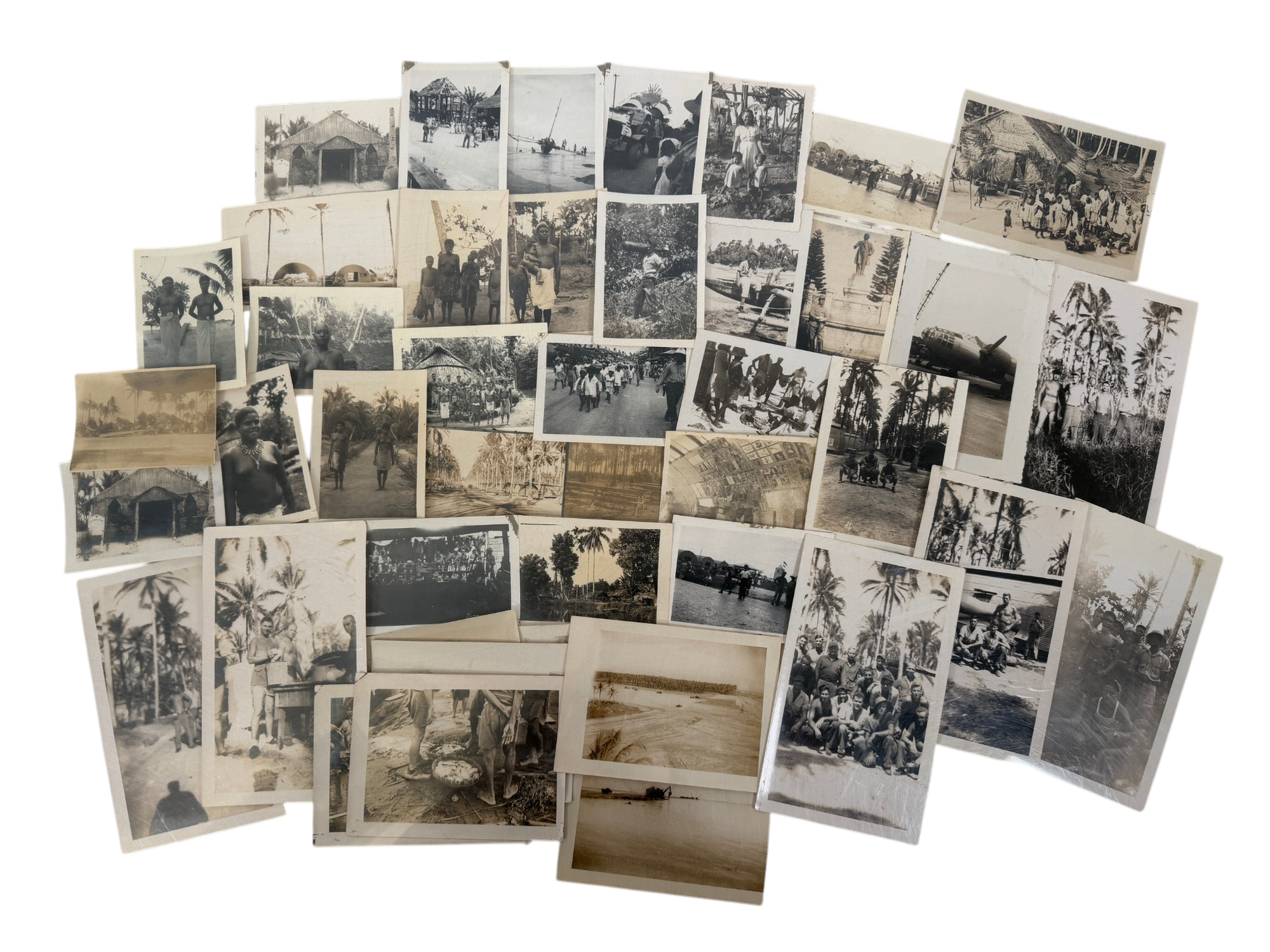
1944rif. 231791944. WWII Indigenous Peoples U.S. soldier photographs recording military occupation transport and daily movement across the Admiralty Islands Samar and the Philippines during World War II and its immediate aftermath establishing how American forces operated through island bases coastal landings aircraft facilities and encounters with local indigenous communities. Made and retained by an unidentified American serviceman the group follows the circulation of personnel through several linked wartime zones rather than a single camp with local captions on the versos anchoring parts of the sequence to "Admiralty Islands" "Samar Island" and the "Philippines." This archive showcases soldiers posed at encampments and beside aircraft landing craft and small boats military vehicles moved through settlements and photographs of Indigenous and Filipino civilians showing the human landscape through which U.S. forces advanced occupied and remained into the surrender period. Photo archive of 45 likely silver gelatin photographs ranging from 2.5 x 3 to 3.5 x 5.75 inches Admiralty Islands Samar and the Philippines circa 1944 to 1945. Numerous versos carry manuscript identifications including "on Admiralty Islands" "Natives on admiralty Islands" "Samar Island" "Samar Philippines" "Philippine" and "chapel in philippines" while several prints bear circular "Passed by Naval Censor" stamps and one caption reads "Jap bomber Betty Sept. 1945 Samar" fixing at least one portion of the group to the post surrender occupation moment. The images include shirtless American servicemen posed in palm lined camps group portraits outside Quonset huts or temporary structures a parked twin engine military aircraft a beached or near shore vessel soldiers gathered around tables and equipment and an Asian soldier who looks to possibly be in Japanese uniform standing in front a monument. Many photos show the local community with views of thatched buildings colonial era religious structures village crowds market or street scenes women and children gathered before huts and several close portraits of Indigenous islanders. The photographs belong to the final phase of the Pacific war when the Admiralty Islands served as a major Allied base complex after the 1944 campaign and Samar remained part of the wider Philippine theater retaken from Japanese control and held through the end of the war. This on the ground perspective shows how soldiers' photos moved through censorship channels recorded the built infrastructure of island warfare and fixed the asymmetrical encounter between U.S. servicemen and local populations. Minor surface and edgewear album glue residue en verso images remain clear and writing legible; overall very good condition. The combination of location notes naval censor stamps aircraft and coastal transport scenes and sustained views of local communities offer a raw visual representation of American military presence across the Southwest Pacific. unknown
1944rif. 231791944. WWII Indigenous Peoples U.S. soldier photographs recording military occupation transport and daily movement across the Admiralty Islands Samar and the Philippines during World War II and its immediate aftermath establishing how American forces operated through island bases coastal landings aircraft facilities and encounters with local indigenous communities. Made and retained by an unidentified American serviceman the group follows the circulation of personnel through several linked wartime zones rather than a single camp with local captions on the versos anchoring parts of the sequence to "Admiralty Islands" "Samar Island" and the "Philippines." This archive showcases soldiers posed at encampments and beside aircraft landing craft and small boats military vehicles moved through settlements and photographs of Indigenous and Filipino civilians showing the human landscape through which U.S. forces advanced occupied and remained into the surrender period. Photo archive of 45 likely silver gelatin photographs ranging from 2.5 x 3 to 3.5 x 5.75 inches Admiralty Islands Samar and the Philippines circa 1944 to 1945. Numerous versos carry manuscript identifications including "on Admiralty Islands" "Natives on admiralty Islands" "Samar Island" "Samar Philippines" "Philippine" and "chapel in philippines" while several prints bear circular "Passed by Naval Censor" stamps and one caption reads "Jap bomber Betty Sept. 1945 Samar" fixing at least one portion of the group to the post surrender occupation moment. The images include shirtless American servicemen posed in palm lined camps group portraits outside Quonset huts or temporary structures a parked twin engine military aircraft a beached or near shore vessel soldiers gathered around tables and equipment and an Asian soldier who looks to possibly be in Japanese uniform standing in front a monument. Many photos show the local community with views of thatched buildings colonial era religious structures village crowds market or street scenes women and children gathered before huts and several close portraits of Indigenous islanders. The photographs belong to the final phase of the Pacific war when the Admiralty Islands served as a major Allied base complex after the 1944 campaign and Samar remained part of the wider Philippine theater retaken from Japanese control and held through the end of the war. This on the ground perspective shows how soldiers' photos moved through censorship channels recorded the built infrastructure of island warfare and fixed the asymmetrical encounter between U.S. servicemen and local populations. Minor surface and edgewear album glue residue en verso images remain clear and writing legible; overall very good condition. The combination of location notes naval censor stamps aircraft and coastal transport scenes and sustained views of local communities offer a raw visual representation of American military presence across the Southwest Pacific. unknown books
1912rif. 118402Grand Trunk Pacific Railway / Allan Royal Mail 1912. Poster. very good. Original un-mounted Royal Mail Service Sailings Poster. 22" X 36". Slight trimming to top border. Some buckling with very light staining at edges but overall in good condition. Poster shows sailing dates of various steamers from St. John - Halifax - Liverpool and Boston - Portland - Glasgow as well as ticket rates. The Allan Shipping Line was started in 1819 and in 1917 sold to the Canadian Pacific Ocean Services LTD CPOS now CP Ships 1912 Grand Trunk Pacific Railway / Allan Royal Mail unknown
rif. MA05F-00383U. S. Government Printing Office. Collectible - Good. Washington D.C.: U. S. Government Printing Office 1946. Sm 4to. viii158pp. Folded illustrations maps. Good book. strategic bombing Japan electric utilities Inquire if you need further information. U. S. Government Printing Office unknown
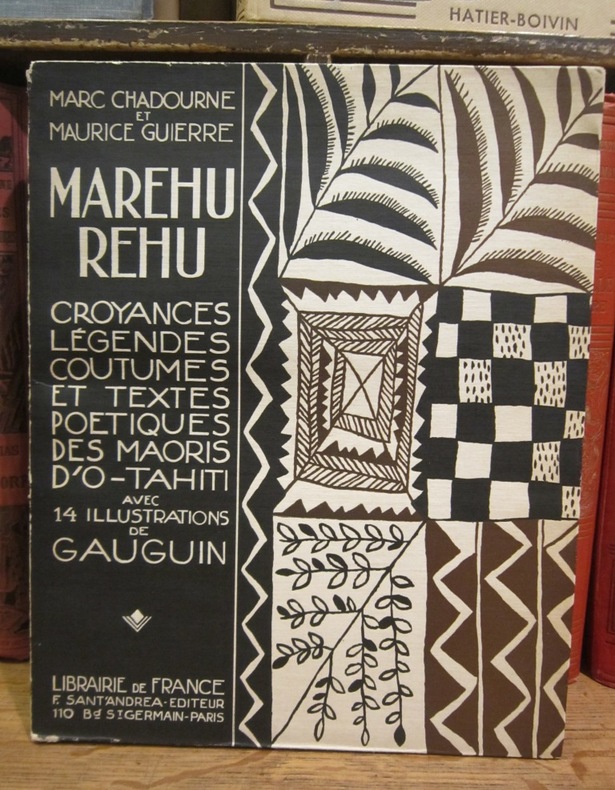
1925rif. 003212Librairie de France, F. Sant'Andrea éditeur, 1925
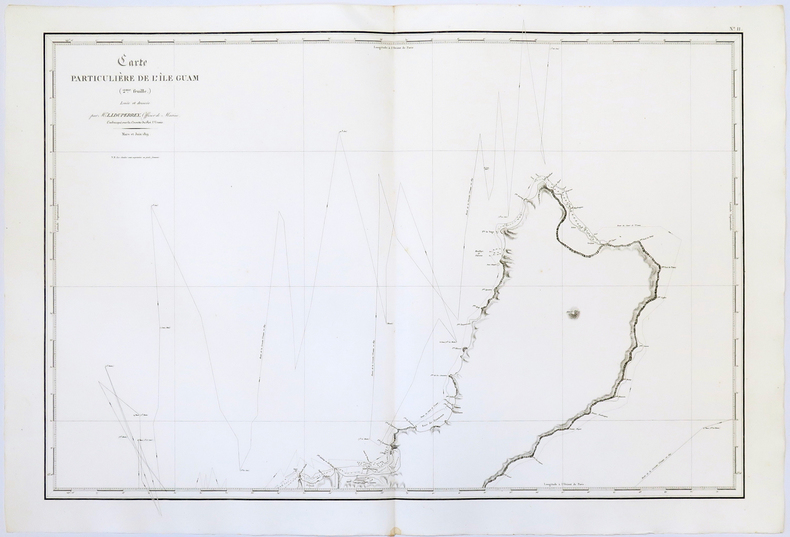
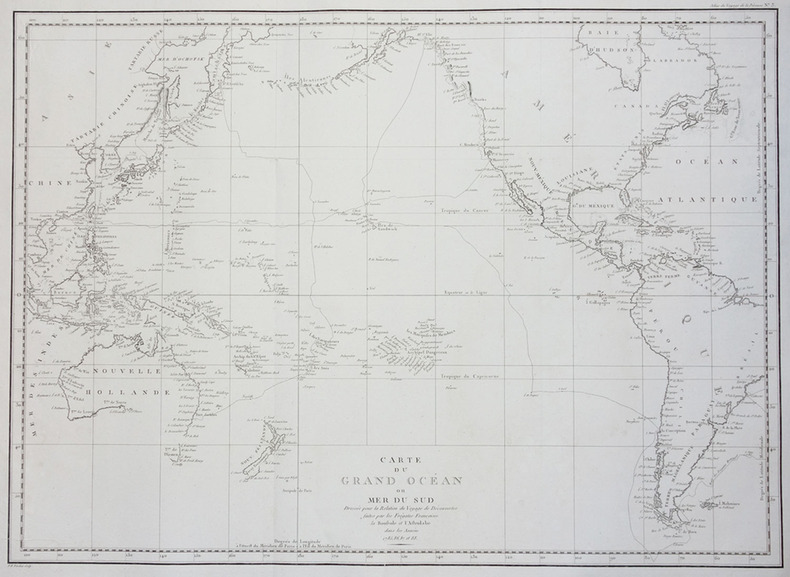
1826rif. LBW-5047[Paris, 1826]. En deux feuilles de 509 x 768 mm chacune.
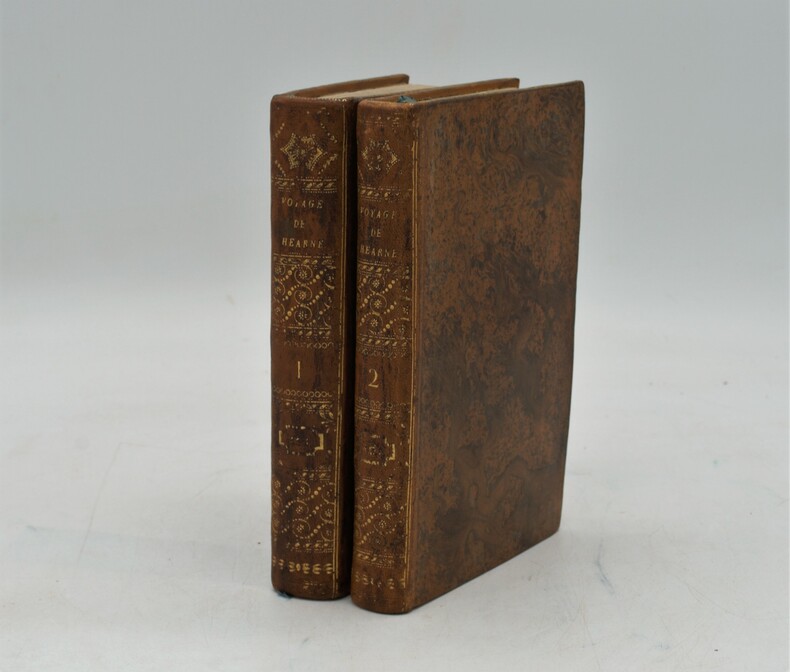
rif. PHO-1184Paris, chez Patris , an VII (1799), 2 volumes in-8, lviii-373 pp ,332 pp.-xix , relié plein basane raciné , dos lisse orné avec titre et tomaison , tranches jaunes mouchetées ,T1, titre , extrait du 3eme voyage du capitaine Cook , A la Pérouse , préface , grande carte de la route de Samuel Hearne (60x80cm)déchirure sans manque , introduction, 2 planches et 2 cartes ,T2 , 3 cartes et 2 planches , table des chapitres , errata et placements des planches , intérieur très frais. Complet des 9 planches et cartes , 1 carte volante , manque page 17 à 32 .
1797rif. LBW-2785[Paris, 1797]. 510 x 699 mm.
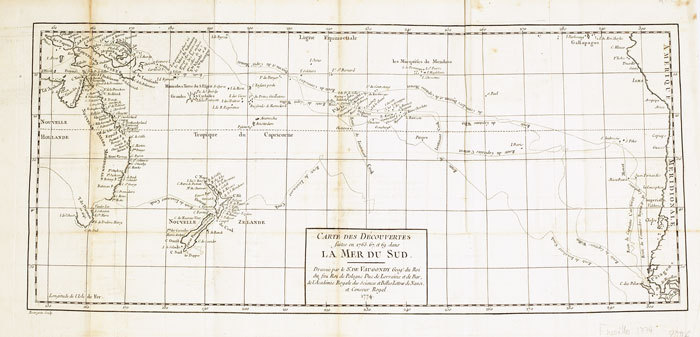
1774rif. LBW-6111774 235 x 535 mm.
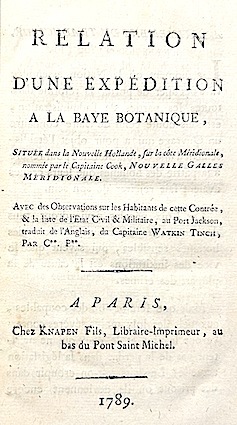
1789rif. 15722Knapen fils Paris 1789 1 vol. In-8 de 8 ff.n.ch. 136 pp., pleine basane racinée de l'époque, dos lisse orné (frotté), pièce de titre, tranches jaspées (coiffe supérieure arasée, une charnière fragile).
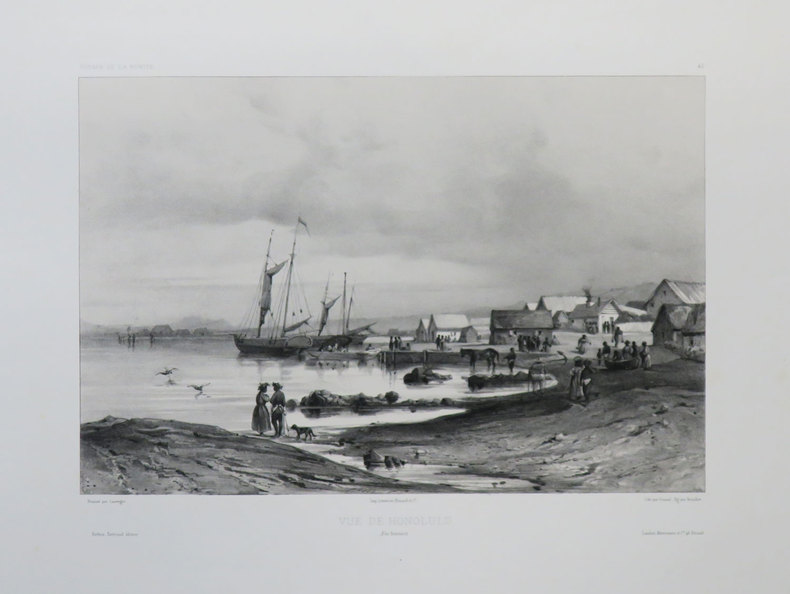
1840rif. LBW-3642[1840]. 220 x 291 mm.
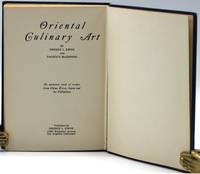
1933rif. 11145Los Angeles: George I Kwon 1933. Second-hand hardcover. Kwon George I & Magpiong Pacficio: Oriental Culinart Artan authentic book of recipes from China Korea Japan & the Philippines. FIRST EDITION George I Kwon: Los Angeles 1933. 8vo 185x130mm blue cloth gilt dec bds 1151pp. KWON George I George Iel-Choong & MAGPIONG Pacifico Victor Pacifico 1906-1967 Oriental Culinary art: an authentic book of recipes from China Korea Japan & the Philippines. Los Angeles : George I Kwon 1933. First Edition. Printed by Wetzel Publishing Co Los Angeles. Foreword by Essie L Elliott. Octavo 185x130mm reverse binding and pagination publisher's original dark blue linen grain cloth gilt decorated and titled upper board and spine 1151pp : 1-68 710. Spine head and foot very faintly rubbed; gift inscription to the rear free end-paper "June 21 1933 Paul R Jones to his sweet sulsi-yalsi wife Estrellita" ¹; very faint offset toning to endpapers. ¶ An intriguing collection of 110 Chinese Korean Japanese and Filipino recipes. The recipes are grouped by course rather than cuisine and are written in a mixture of longhand and ingredients/method formats. Although over half the recipes are Chinese or Chinese-American e.g. 21 recipes for chop-suey Oriental Culinary Art is notable as one of the first American cookbooks to include Korean and Filipino recipes. In contrast to the the Chinese recipes which were compiled by the authors the Korean and Filipino recipes are quite traditional and authentic and appear drawn from the authors' personal experience and families. The recipes include kim-chi Korean pickled cabbage Korean rice cake tteokbokki"kot-choo-jang jige" gochujang jjigae a spicy Korean paste made into a stew mando Mandu or Korean dumplings lechon Filipino roast pig adobo and Dinogo-An Filipino fried blood and organs of a pig. The authors graduated from UCLA in 1932 at the height of the Depression. Unable to find work as graduates in their fields of political science and education they worked in a cafe and grocery store before entrepreneurially self-publishing Oriental Culinary Art². Unusually printed with reverse pagination in the oriental fashion. Scarce. A near fine copy of one of the earliest American collections of Korean and Filipino recipes § OCLC records 23 holdings in the United States but no holdings anywhere else. § Bitting p.266; Cagle & Stafford 426; Brown 178; Axford p.309; Newman. ¹ Jones 1885 -1957 was an entomologist working for the California Department of Agriculture his wife Estrellita was an illustrator in the film industry. ² "Asian American Heroes and Pioneers Bruins" UCLA Alumni Connect May 2017. George I Kwon unknown
1846small 8vo [18 x 12.5 cm]; xvi, 285 pp, map frontis. bound in modern quarter tan morocco leather, gilt rules on spine, gilt title lettering on black leather label, marbled boards, signature on half-title and on verso map, near fine, attractive copy. A picture of this book is available upon request by email. BAL 13652, the first state. Day 51 (Pacific Islands Literature, 100 Basic Books) states that the first edition was issued first in London, and later issued in New York, entitled 'Typee: A Peep at Polynesian Life', with some passages omitted. This is the first of Melville's books, and with the exception of Moby Dick, is the most widely read. 'Melville was the first author of genius to use the South Seas as material and most of those who followed say the region through his eyes and adopted his patterns' (Day). Hill p. 196 cites the 1847 London edition. Taylor 176.
1970rif. 151354N.p.: N.p. 1970. Archive of 32 vintage photographs documenting the October 20 1970 collision of two trains along the Chicago Rock Island and Pacific Railroad line in Raytown Missouri. Also included in the archive is a single broadside reward poster offering $5000 for information pertaining to the accident. According to a contemporary newspaper article which appeared in nearby Jackson County's Independence Examiner the accident was believed to have been caused by juvenile vandalism to a nearby track switch. The collision and subsequent derailment resulted in the death of one engineer whose partial body is visible in several photographs. The photographs in the archive range from close-up shots of the mangled train cars and tracks to distance views of the surrounding woods. Frequently displayed in the images is a small handwritten police chalkboard noting the date location and case numbers. A vivid and interesting look at investigative photography and railway disasters in the late twentieth century. Photographs 10 x 8 inches housed in a manila envelope with the logo of Chicago Rock Island and Pacific Railroad Co. on the top left corner. Reward poster 9 x 12 inches. Poster and photographs Near Fine overall envelope Very Good plus. N.p. unknown
1970rif. 151354N.p.: N.p. 1970. Archive of 32 vintage photographs documenting the October 20 1970 collision of two trains along the Chicago Rock Island and Pacific Railroad line in Raytown Missouri. Also included in the archive is a single broadside reward poster offering $5000 for information pertaining to the accident. According to a contemporary newspaper article which appeared in nearby Jackson County's Independence Examiner the accident was believed to have been caused by juvenile vandalism to a nearby track switch. The collision and subsequent derailment resulted in the death of one engineer whose partial body is visible in several photographs. The photographs in the archive range from close-up shots of the mangled train cars and tracks to distance views of the surrounding woods. Frequently displayed in the images is a small handwritten police chalkboard noting the date location and case numbers. A vivid and interesting look at investigative photography and railway disasters in the late twentieth century. Photographs 10 x 8 inches housed in a manila envelope with the logo of Chicago Rock Island and Pacific Railroad Co. on the top left corner. Reward poster 9 x 12 inches. Poster and photographs Near Fine overall envelope Very Good plus. N.p. unknown books
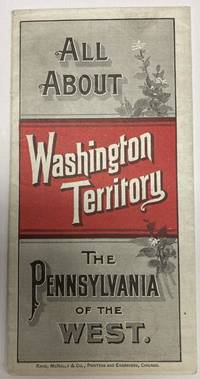
1888rif. 53587Chicago: Rand McNally & Co. 1888. 1888. 20 3/4" x 13 1/2" sheet folded to 24 panels. Map. One cover panel; one panel showing N.P.R.R. route from Minneapolis to Washington Territory; and 10 panels of information to include information on the area's location and physical features climate agriculture stock raising manufacturing mining public schools cities and towns etc. Opposite 12 panels offer a map of Washington Territory printed in red and black. A rare promotional piece to encourage sales of Northern Pacific Railroad lands in Washington Territory. Light soling a few small splits to creases and with minor wear to the extremities. Very good. Rand, McNally & Co., 1888. unknown
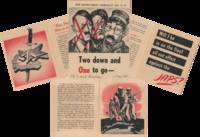
1945rif. List2747Paris France; and Washington D.C. 1945. Six 8 x 10 inch and smaller typed pages; one 4 x 5 inch card with two tickets; one twenty-six page 4 x 5.5 inch pamphlet; one six page 6 x 8.5 inch pamphlet; six 2.5 x 3.5 photographs and two 3 x 4.5 inch photographs. Of the printed matter most is affixed to paper some small tears and folds; overall excellent; photographs near fine. Mary J. Bremer 1917–2019 was a Technician fourth grade from Grant Township Nebraska. Her correspondents here include June Miller 1920–deceased an aviation cadet from Michigan and John Melotte 1919–deceased an artilleryman from Philadelphia. Bremer and Miller were members of the Women’s Army Corps WAC. Established in May of 1942 as the Women’s Army Auxiliary Corps the WAC converted to active duty in July of 1943. The women of WAC known as Wacs served in noncombatant roles across the various theaters of World War II. Offered here is a small archive of Bremer’s documents and photographs relating to WAC: a few letters including a description of Paris the day after the Nazi surrender; two pamphlets including the War Department pamphlet Two down and One to go –; and a collection of photographs of Eisenhower’s victory parade and Roosevelt’s funeral procession. On April 12 1945 President Roosevelt died of a stroke in Warm Springs Georgia. His body was returned to Washington two days later and a military procession escorted it from the train station to the White House. Two photographs of the funeral procession are included in the archive. One showing a woman at the start of a section of the parade is identified verso as “WACs led by Capt. Machen”. The following month the Nazis surrendered. Bremer’s friend June Miller was stationed in Paris at the time. She wrote to Bremer the next day describing the celebration: “It began the night before when we stood on the roof and watched the flares go off all over the city--just like the 4th of July; the Sacred Couer was blazing with lights and it looked like a miniature fairy-land. Last night all the famous old buildings including the Arc d’Triumph was all lit up the fountains in the parks at Concord in front of the Trocadero--they were all going and the kids were wading and splashing around having the time of their life. It was really something to see--something the French had been waiting a long time for. “Fini le guerre” they kept saying--the end of the war!” Miller also claims to have witnessed a bomber flying a celebratory loop through the Eiffel Tower: “When we came out of the Trocadéro the fountains were on and what a sight that is. Looking down over the water that looks like a miniature waterfall to the Eiffel Tower at the bottom of a small hill. And if I hadn’t seen it with my own eyes I would never have believed that I saw a small bomber come through the bottom but that’s just what it did--and just did clear it too. The planes seemed to be going as wild as the people on the ground--they were so thick up there that pretty soon we thought surely something would happen.” In June Dwight Eisenhower returned from Europe and a homecoming parade was held for him in Washington D.C. Six photographs of this parade are included in the archive including a shot of his plane arriving at the airport and one where he is visible standing in the back of a Jeep. Miller notes in her letter from Paris that “you wondered what was coming next; where we would go from here ‘cause in a sense there is still a war very definitely going on”. In fact John Melotte who seems to be Miller’s partner writes to Bremer that he “May be slated for that place they call the CBI but don’t tell June please. She does not want me to even mention the place in my letters so I let well enough alone” July 15 1945. Hostilities would continue in the CBI—the China-Burma-India theater—until September of that year. The process by which soldiers were selected to be sent to the Asia-Pacific theater is laid out in the War Department pamphlet Two down and One to go –. The pamphlet reminds them that there are still “a couple of big jobs ahead” the primary one being to “crush” or “smash” the “Japs” and the second one being to occupy and police “conquered lands . until the peril of future aggression is gone.” It is a visually striking piece with illustrations in a bold black and red color palette; its cover is a reproduction of a caricature of Hitler Mussolini and Hirohito by Polish-Jewish artist Arthur Szyk. Also included in the archive are a card from a friend with tickets to an American League baseball game; a humorous poem congratulating Wacs Ruth O.B. and Lenore I. Nier on new work assignments; and a Christmas 1945 WAC pamphlet with a dinner menu and list of WAC officers. The pamphlet assures the Wacs with a note from Colonel Kenton Cooley “Before another Christmas you all will have returned to civilian life and each of you will take with you my appreciation and my sincere admiration for a great job well done.” Of interest to scholars of women’s history especially in the military; and of the events leading up to the end of the Second World War. unknown
1945rif. List2747Paris France; and Washington D.C. 1945. Six 8 x 10 inch and smaller typed pages; one 4 x 5 inch card with two tickets; one twenty-six page 4 x 5.5 inch pamphlet; one six page 6 x 8.5 inch pamphlet; six 2.5 x 3.5 photographs and two 3 x 4.5 inch photographs. Of the printed matter most is affixed to paper some small tears and folds; overall excellent; photographs near fine. Mary J. Bremer 1917–2019 was a Technician fourth grade from Grant Township Nebraska. Her correspondents here include June Miller 1920–deceased an aviation cadet from Michigan and John Melotte 1919–deceased an artilleryman from Philadelphia. Bremer and Miller were members of the Women’s Army Corps WAC. Established in May of 1942 as the Women’s Army Auxiliary Corps the WAC converted to active duty in July of 1943. The women of WAC known as Wacs served in noncombatant roles across the various theaters of World War II. Offered here is a small archive of Bremer’s documents and photographs relating to WAC: a few letters including a description of Paris the day after the Nazi surrender; two pamphlets including the War Department pamphlet Two down and One to go –; and a collection of photographs of Eisenhower’s victory parade and Roosevelt’s funeral procession. On April 12 1945 President Roosevelt died of a stroke in Warm Springs Georgia. His body was returned to Washington two days later and a military procession escorted it from the train station to the White House. Two photographs of the funeral procession are included in the archive. One showing a woman at the start of a section of the parade is identified verso as “WACs led by Capt. Machen”. The following month the Nazis surrendered. Bremer’s friend June Miller was stationed in Paris at the time. She wrote to Bremer the next day describing the celebration: “It began the night before when we stood on the roof and watched the flares go off all over the city--just like the 4th of July; the Sacred Couer was blazing with lights and it looked like a miniature fairy-land. Last night all the famous old buildings including the Arc d’Triumph was all lit up the fountains in the parks at Concord in front of the Trocadero--they were all going and the kids were wading and splashing around having the time of their life. It was really something to see--something the French had been waiting a long time for. “Fini le guerre” they kept saying--the end of the war!” Miller also claims to have witnessed a bomber flying a celebratory loop through the Eiffel Tower: “When we came out of the Trocadéro the fountains were on and what a sight that is. Looking down over the water that looks like a miniature waterfall to the Eiffel Tower at the bottom of a small hill. And if I hadn’t seen it with my own eyes I would never have believed that I saw a small bomber come through the bottom but that’s just what it did--and just did clear it too. The planes seemed to be going as wild as the people on the ground--they were so thick up there that pretty soon we thought surely something would happen.” In June Dwight Eisenhower returned from Europe and a homecoming parade was held for him in Washington D.C. Six photographs of this parade are included in the archive including a shot of his plane arriving at the airport and one where he is visible standing in the back of a Jeep. Miller notes in her letter from Paris that “you wondered what was coming next; where we would go from here ‘cause in a sense there is still a war very definitely going on”. In fact John Melotte who seems to be Miller’s partner writes to Bremer that he “May be slated for that place they call the CBI but don’t tell June please. She does not want me to even mention the place in my letters so I let well enough alone” July 15 1945. Hostilities would continue in the CBI—the China-Burma-India theater—until September of that year. The process by which soldiers were selected to be sent to the Asia-Pacific theater is laid out in the War Department pamphlet Two down and One to go –. The pamphlet reminds them that there are still “a couple of big jobs ahead” the primary one being to “crush” or “smash” the “Japs” and the second one being to occupy and police “conquered lands . until the peril of future aggression is gone.” It is a visually striking piece with illustrations in a bold black and red color palette; its cover is a reproduction of a caricature of Hitler Mussolini and Hirohito by Polish-Jewish artist Arthur Szyk. Also included in the archive are a card from a friend with tickets to an American League baseball game; a humorous poem congratulating Wacs Ruth O.B. and Lenore I. Nier on new work assignments; and a Christmas 1945 WAC pamphlet with a dinner menu and list of WAC officers. The pamphlet assures the Wacs with a note from Colonel Kenton Cooley “Before another Christmas you all will have returned to civilian life and each of you will take with you my appreciation and my sincere admiration for a great job well done.” Of interest to scholars of women’s history especially in the military; and of the events leading up to the end of the Second World War. unknown books
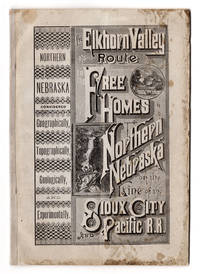
rif. 7236Battle Creek Mich.: Review & Herald Steam Printing house 1883. 8vo 8.5" x 5.75" printed wrappers. 46 pp. Folding map 12.75" x 18.25" plus margins. CONDITION: Good dampstaining at covers and the top of the second half of the pamphlet. Light vertical crease at middle throughout. Map good one minor tear at margin. A promotional pamphlet for land along the Sioux City and Pacific Railroad including former Indian reservation lands with an appealing map of the rail line and its spurs. The text begins with a message to the public advertising the Elkhorn Valley Route on the Sioux City and Pacific Railroad the railroad having recently extended to Fort Niobrara Nebraska and thereby placing within reach of home-seekers millions of acres of free government lands. This is followed by an exhaustive overview of Northern Nebraska and its attractions geographical outlines physical geography topography and neighboring areas including Indian camps and more. A good portion of the text is devoted to Northern Nebraska's geology covering the Old Forest Bed Epoch the origins of "modern Nebraska" "How Came that Grand Old Forest" and so forth. Also included are testimonials from dozens of farmers who settled in Northern Nebraska including "exceptional cases" and highlighted is a large buffalo flat "8 miles long by 3 miles wide". The prospective settler is advised on how to reach these lands how to make a profitable investment in Nebraska lands and Omaha Reserve lands formerly home to the Omaha tribe and how to acquire them. A letter from the U.S. Land Office in Nebraska to the General Passenger Agent of the Sioux City & Pacific R.R. is printed here as well. Ads are included for the Land Agency of I. N. Taylor of Oakdale and Neligh Nebraska and real estate dealers Richards & Keene of Nebraska. The text concludes with a price list of commodities in Northern Nebraska. The map entitled "Sioux City & Pacific R.R. and connections to the Free Homes for the Million" by Rand McNally & Co. of Chicago spans from Council Bluffs Omaha in the east to the Black Hills in the west and from Pierre South Dakota in the north to a portion of Colorado in the south. The Sioux City and Pacific Railroad and its connections are shown in bold connecting with other railroad routes across the midwest. Battle Creek, Mich.: Review & Herald Steam Printing house, 1883 unknown
rif. 7236Battle Creek Mich.: Review & Herald Steam Printing house 1883. 8vo 8.5" x 5.75" printed wrappers. 46 pp. Folding map 12.75" x 18.25" plus margins. CONDITION: Good dampstaining at covers and the top of the second half of the pamphlet. Light vertical crease at middle throughout. Map good one minor tear at margin. A promotional pamphlet for land along the Sioux City and Pacific Railroad including former Indian reservation lands with an appealing map of the rail line and its spurs. The text begins with a message to the public advertising the Elkhorn Valley Route on the Sioux City and Pacific Railroad the railroad having recently extended to Fort Niobrara Nebraska and thereby placing within reach of home-seekers millions of acres of free government lands. This is followed by an exhaustive overview of Northern Nebraska and its attractions geographical outlines physical geography topography and neighboring areas including Indian camps and more. A good portion of the text is devoted to Northern Nebraska's geology covering the Old Forest Bed Epoch the origins of "modern Nebraska" "How Came that Grand Old Forest" and so forth. Also included are testimonials from dozens of farmers who settled in Northern Nebraska including "exceptional cases" and highlighted is a large buffalo flat "8 miles long by 3 miles wide". The prospective settler is advised on how to reach these lands how to make a profitable investment in Nebraska lands and Omaha Reserve lands formerly home to the Omaha tribe and how to acquire them. A letter from the U.S. Land Office in Nebraska to the General Passenger Agent of the Sioux City & Pacific R.R. is printed here as well. Ads are included for the Land Agency of I. N. Taylor of Oakdale and Neligh Nebraska and real estate dealers Richards & Keene of Nebraska. The text concludes with a price list of commodities in Northern Nebraska. The map entitled "Sioux City & Pacific R.R. and connections to the Free Homes for the Million" by Rand McNally & Co. of Chicago spans from Council Bluffs Omaha in the east to the Black Hills in the west and from Pierre South Dakota in the north to a portion of Colorado in the south. The Sioux City and Pacific Railroad and its connections are shown in bold connecting with other railroad routes across the midwest. Battle Creek, Mich.: Review & Herald Steam Printing house, 1883 unknown books
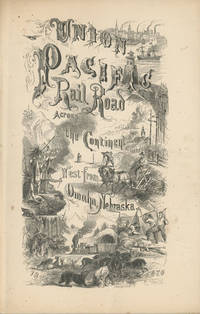
1868rif. 49559New York: Published by the Union Pacific Railroad Company 1868. 1868. RAILROAD. First edition. 8vo. Original pictorial printed wrappers 32 pp. frontispiece Map of the Union Pacific Rail Road and its Connections introduction. Details the formation of the company and the progress of the work including the topography character of the country and distances along the line. Much information is provided regarding agricultural resources timber minerals etc. Branches and connecting roads along with the needed resources for construction are discussed as is information on actual earnings anticipated earnings and the issuance of the company's first mortgage bonds. A wonderful advertisement on the rear cover panel offers First Mortgage Bonds at par principal and interest Payable In Gold. A faint vertical crease and very lightly toned at the cover edges else a near fine bright copy. Published by the Union Pacific Railroad Company, 1868. unknown
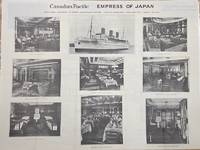
1930rif. P2627Montreal: Canadian Pacific c.1930. Very Good laid down on acid free canvas for long term preservation. Image Size : Platemark Size : Paper Size : 760x1015 mm 29.92x39.96 Inches Coloring: Black & White Medium: Offset Lithograph Categories: Posters;Transportation Ships; Canadian Pacific unknown
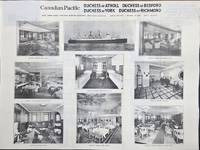
1930rif. P2626Montreal: Canadian Pacific c.1930. Very Good laid down on acid free canvas for long term preservation. Image Size : Platemark Size : Paper Size : 765x1015 mm 30.12x39.96 Inches Coloring: Black & White Medium: Offset Lithograph Categories: Posters;Transportation Ships; Canadian Pacific unknown
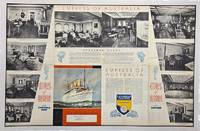
1936rif. P3290Canada: Canadian Pacific c. 1936. Very Good backed on tissue paper for long term preservation. Image Size : 582x898 mm 22.91x35.35 Inches Platemark Size : Paper Size : Coloring: Printed in Color Medium: Offset Lithograph Categories: Transportation Ships; Advertising; Posters; Canadian Pacific unknown