Covarrubias, MiguelBiblio.com

712 résultats
1954réf. 002948New York: Alfred A. Knopf 1954. First edition. Hardcover. Very Good /very good. 4to. xviii 314 xii 2 pp. Bound in quarter black cloth over natural cloth stamped in gilt and red on cover and spine in illustrated dust jacket. Illustrated with full-color plates black and white in-text illustrations and black and white photographs. Includes bibliography and index. First Edition stated on copyright page. This is the first volume in what was to be a three-volume work on the aboriginal arts of the Americas but Covarrubias passed away in 1957 and the third volume covering South America was never completed. Very Good minor age-toning to endpapers internally clean and bright hinges tight small patch of foxing to upper right corner and along top edge of front cover otherwise bright and clean in Very Good dust jacket previous owner has used black marker to mask wear at head of spine a few water stains and minor sunning to spine rubbing and wear to all extremities a few short tears to edges. Alfred A. Knopf hardcover
1957réf. 002949New York: Alfred A. Knopf 1957. First edition. Hardcover. Very Good /very good-. 4to. xvi 360 xviii 2 pp. Bound in quarter black cloth over natural cloth stamped in gilt and silver on cover and spine in illustrated dust jacket. Illustrated with full-color plates black and white in-text illustrations and black and white photographs. Includes bibliography and index. First Edition stated on copyright page. This is the second volume in what was to be a three-volume work on the aboriginal arts of the Americas but Covarrubias passed away in 1957 and the third volume covering South America was never completed. Very Good previous owner's name in ink to front free pastedown otherwise internally clean and sharp hinges tight and square binding has minor age-toning and wear to extremities but is otherwise bright and clean in Very Good- dust jacket with a 1-1/2" tear to upper edge of front cover near spine three long scuff marks to lower half of front cover sunning to spine and upper half of front cover overall age-toning and light soiling. Alfred A. Knopf hardcover
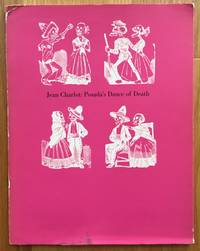
1964réf. 002757New York: Pratt Graphic Art Center 1964. Paperback. Very Good. Eichenberg Fritz. 8vo. 12 pp. 4 pages of plates. Bound in stapled dark pink wrappers with cover illustration in white and title in black. One wood engraving by Fritz Eichenberg on title page signed by him in pencil and four relief engravings by José Guadalupe Posada. Printed in an edition of 500 numbered copies signed by Charlot on colophon this is No. 67. Very Good internally clean and sound rubbing and wear to extremities - heaviest at spine 1/2" tear to head of spine 1" dark smudge to lower front cover. Pratt Graphic Art Center paperback
1984réf. 002493Mexico D. F.: Fondo Editorial De La Plastica Mexicana Banco Nacional De Comercio Exterior 1984. First edition. Hardcover. Very Good/very good. O'Higgins Pablo. Folio. 166 2 pp. Bound in full yellow cloth stamped in terra cotta on cover and spine blind stamp decoration on rear cover. Text in Spanish. Includes chronology and bibliography. Born Paul Higgins Stevenson in Salt Lake City Utah in 1904 O'Higgins immigrated to Mexico in 1924 where he studied under Diego Rivera for several years. In 1937 he and fellow artists Leopoldo Méndez and Luis Arenal founded the artist's print collective Taller de Gráfica Popular. Very Good internally clean rear hinge shaken and worn bumping to extremities in Very Good dust jacket with 1" tear to head of spine wear and chipping to spine and extremities some fading. Fondo Editorial De La Plastica Mexicana, Banco Nacional De Comercio Exterior hardcover
1978réf. 002305Fundacíon Cultural Televisa 1978. Hardcover. Very Good /good. 4to. Unpaged text followed by 154 pages of full color photographs. Bound in full brown cloth title blind stamped on spine brown cloth endpapers brown ribbon bookmark in silver dust jacket printed in brown. Text in Spanish. Very Good or better internally clean and bright photographs sharp spine and hinges are strong and square in Fair dust jacket with age-toning to spine and extremities 1" tear to tail of spine 5" jagged tear with creases across top of rear cover repaired with clear tape. Beautifully produced volume. Fundacíon Cultural Televisa hardcover
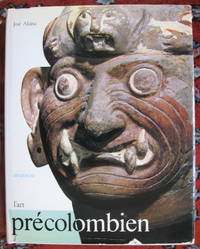
1978réf. 002152Paris: Editions D'art Lucien Mazenod 1978. Hardcover. Very Good /very good. 4to. 614 2 pp. Bound in full white cloth title stamped in blue on spine color illustration pasted to front cover. Full color and black and white illustrations most of the photographs are by Jean Mazenod. Includes bibliography and index. Text in French. Very Good internally clean and bright light soiling to extremities of text block and binding otherwise binding clean and bright in Very Good dust jacket with several short tears and wear to extremities overall minor age-toning and rubbing. Very attractive copy. Editions D'art Lucien Mazenod hardcover
2003réf. 002015Buenos Aires: MALBA 2003. Paperback. Very Good. Small 4to. 200 pp. Bound in stiff white wrappers printed in black and red. Illustrations throughout. Text in Spanish with English translation at back. Very Good minor age-toning to pages otherwise internally clean and sound wrappers have some rubbing and wear to extremities. MALBA paperback
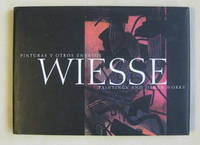
2005réf. 001253Peru: Ediciones Sociedad Agricola Chanca 2005. First edition. Hardcover. Very Good /very good . Oblong 8vo. 192 pp. Bound in illustrated boards in matching dust jacket. Full-color illustrations. Text in Spanish and English. Inscribed by Artist to Latin American colonial literature scholar Rolena Adorno: "Para Rolena Adorno/este recuento provisional de/voces y figuras de una geografía/e historias singulares/con todo aprecio Ricardo Wiesse/19 Jul 05." Very Good light bumping to corners in Very Good dust jacket with light wear to extremities. Ediciones Sociedad Agricola Chanca hardcover
2005réf. 000685New York: Cambridge University Press 2005. First edition. Hardcover. Very Good /near fine. 8vo. xvi 316 pp. Bound in full black cloth in illustrated dust jacket. Full-color and black and white illustrations. Near Fine minor bump to bottom edge of front cover otherwise bright and clean in Fine dust jacket. Very attractive copy. Cambridge University Press hardcover
réf. 43589575-nnew. unknown
1910réf. 238911910. Pineapple plantation photo archive circa 1910s documenting cultivation harvest and transport on an unidentified tropical plantation during the expansion of commercial pineapple production for export markets and black sharecropping labor. The photographs concentrate on the agricultural cycle rather than plantation buildings or domestic life moving from densely planted acreage and individual ripening fruit to large accumulations of harvested pineapples and a mule drawn wagon loaded for transport. Pineapple cultivation expanded substantially in the Caribbean and Hawaii during the early twentieth century making the crop increasingly visible within American commercial agriculture and food consumption. Photo archive of 10 silver gelatin photographs each approximately 3 x 4 inches Caribbean location circa 1910s. Several photographs survey extensive fields planted almost entirely in pineapple including broad views in which rows of spiked plants extend toward distant hills and close studies showing mature fruit rising from individual plants. Other images record the harvest after removal from the field: pineapples are arranged in substantial piles beside cultivated acreage while two white men pose before one accumulation holding individual fruit. Another photograph shows a mule drawn wooden wagon filled above its sideboards with harvested pineapples with one white man standing beside the wagon another seated atop the load and a black man positioned with the mule team further highlights post emancipation plantation labor. The men's differing positions within the harvest scenes preserve visible evidence of diverse groups participating in the plantation's agricultural economy alongside the animal powered transportation used to move a bulky commercial crop from the field. Commercial pineapple production was developing rapidly across several regions connected to the United States Hawaii and the Carbons during this period. The photographs belong to that broader transformation of pineapple from a geographically restricted tropical fruit into an increasingly standardized export commodity but neither crop morphology nor the visible terrain distinguishes securely among these producing regions. More specifically the images record the material stages behind that trade: dense monocrop planting maturation in the field manual harvesting accumulation of fruit and transportation by mule drawn wagon. Light handling wear occasional edge and corner losses minor curling and scattered toning; image surfaces remain generally clear with strong detail. Overall in good condition. A concentrated photographic record of early twentieth century pineapple agriculture showing the field harvest labor and transport required to move a tropical crop toward commercial distribution. unknown
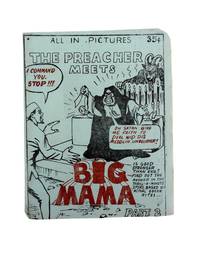
1967réf. 237191967. Black HistoryComics 1960s Guyanese comic book by an early influential Black cartoonist. Seymour Rudy. The Preacher Meets Big Mama: Part 2. Georgetown British Guyana: All in Pictures ca. 1967. First edition. Scarce. Illustrated throughout with black-and-white cartoon panels. Original pictorial wrappers printed in black and red on pale blue stock. A rare early work by Samuel Rudolph "Rudy" Seymour widely regarded as the father of Guyanese comics. This installment blends Christian moralism with Afro-Caribbean folklore in a visually arresting local comic format. Rudy Seymour was one of the earliest creators of locally produced comic books in Guyana whose illustrated narratives reflected and shaped mid-20th century Guyanese visual culture. In The Preacher Meets Big Mama Seymour depicts a confrontation between a Christian preacher and "Big Mama" a feared spiritualist figure with ties to Obeah a syncretic Afro-Caribbean spiritual system. The plot follows the preacher's attempt to rescue a boy from Big Mama's cult culminating in scenes of ritualistic sacrifice demonic invocation and divine intervention. The narrative unfolds in vernacular Guyanese Creole grounding the story in a distinctly local idiom. Seymour's stark expressive linework animates themes of good versus evil colonial Christianity versus ancestral spiritual knowledge and gendered power structures. While the portrayal of Big Mama leans into negative colonial stereotypes casting her as a devil-worshipper the comic simultaneously elevates Afro-Caribbean spiritual conflict to the central stage of popular print culture. Seymour's broader contributions to Caribbean arts extended beyond this title; his pioneering comics inspired future generations and played a foundational role in developing the graphic arts in Guyana. He continued illustrating through the 1970s and remained a cultural fixture until his passing in 2020. Minor wear to spine and covers; interior pages lightly toned but well-preserved and tightly bound. Overall very good condition. A mid-century Caribbean comic documenting a formative moment in Black diasporic graphic storytelling and the postcolonial negotiation of identity faith and resistance in Guyanese print media. unknown
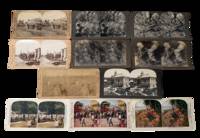
1890réf. 231711890. Stereoview archive of the post-emancipation Caribbean showing how the islands were marketed to western viewers through plantation labor export agriculture civic spectacle and catastrophe. As a group these photos function not only as an ethnographic travel archive but as evidence of the visual economy that followed slavery. The British West Indies moved through emancipation in 1834 to 1838 the French Caribbean in 1848 Puerto Rico in 1873 and Cuba in 1886 yet plantation production remained central to regional life well into the early twentieth century. These stereoviews preserve a colonial way of seeing in which Black and Afro-Caribbean labor rural discipline and extractive agriculture remained the background condition of "tropical" beauty and commercial modernity. Cuba's sugar economy in particular expanded through the nineteenth century and slavery was not abolished there until 1886 while Weyler's later reconcentration policy during the Cuban War of Independence violently reorganized rural life. Martinique after 1848 likewise shifted into new labor regimes including imported workers from India and China. Archive of 11 stereoview cards late 1890s to early 1900s depicting Cuba Jamaica Martinique Puerto Rico and the Dominican Republic. Most black and white with a few colorized. Each measure 3.5" x 7". All with captions on the margins. "Reconcentrado Farming Scene Province of Havana Cuba" links agricultural production to the brutal displacements of Spain's reconcentration campaign; "Cutting sugar cane Montego Bay Jamaica W.I." records cane labor in a colony where emancipation had not ended plantation dependency; and "Harvesting Coconuts Porto Rico" likewise frames Caribbean land through export work rather than local life. Other views extend that economic framing through cacao and coffee scenes while the paired Havana cards shift into urban leisure and public display including "Beautiful Central Park Havana Cuba" and "Holiday in Havana Cuba" the latter with both Cuban and American flags visible a telling image of the new imperial order after 1898. The disaster views from Martinique and the Lesser Antilles show how stereoview publishers also turned Caribbean destruction into consumable spectacle. the Morne Rouge card is accompanied on the reverse by the grim printed text "Dead bodies which were to be seen in Morne Rouge." while the wider context is the 1902 eruptions of Mount Pelée in Martinique and La Soufrière on Saint Vincent two catastrophes that killed roughly 30000 and 1600 people respectively and devastated local communities and agriculture. Some corner wear light toning scattered surface and edge wear. Overall very good condition. This collection gives direct visual representation of Caribbean history Atlantic slavery and emancipation plantation labor and U.S. imperial expansion in the circum-Caribbean preserving the transition from slavery to post-abolition labor. unknown
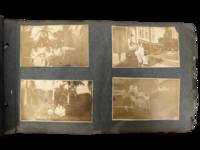
1914réf. 231551914. Caribbean photograph album likely compiled by a person connected to the Panama Canal Zone and the Caribbean documenting how steamship mobility port circulation and U.S. imperial presence linked Jamaica Venezuela Trinidad Barbados Cuba Puerto Rico the Bahamas Florida and Panama in the years after the canal opened. The felt cover lettered "PANAMA" and bearing the Seal of the Canal Zone places the album within the new travel geography created by U.S. control of the Canal Zone and the canal's 1914 opening when Panama became a central hinge between Atlantic and Pacific movement and a major point of contact between North American travelers and Caribbean port cities. Photos show passengers on steamers and docks markets and streets forts and government buildings and repeated encounters between white visitors and Afro Caribbean and mixed-heritage residents across multiple colonial and semi-colonial settings. Panama Canal Zone travel photograph album. Caribbean and circum-Caribbean locations including Kingston Jamaica; La Guaira and Caracas Venezuela; Trinidad; Key West and Palm Beach Florida; Havana Cuba; Barbados; Panama City Balboa and Colón Panama; Nassau Bahamas; and San Juan Puerto Rico. Likely circa mid 1910s to early 1920s. Oblong felt-covered album measuring 6.5" x 11" with "PANAMA" stitched in large letters on the front cover and photographs pasted to grey leaves. Contains more than 160 black-and-white photographs most approximately 2.5 x 4.5 inches many with handwritten captions identifying locations activities and occasional names. The sequence opens in Kingston with captions including "Kingston JA" and "on the steamer" then moves through island and mainland stops; "Port of Spain Trinidad" "Market at Barbados" "Rapid Transit Barbados" "Havana Cuba" "San Juan Porto Rico" "Morro Castle" "Balboa" and "Colon R.P." Repeated figures especially a young college-aged woman and an older woman appear throughout. Notable images include a group of locals in shallow water at Barbados sifting for tossed coins from rowboats; a large crowd scene in San Juan gathered for what appears to be a public speech or civic event; battlements cannon and stone defenses in Havana; vernacular dwellings and children in impoverished conditions in Balboa; posed visitor photographs in what is labeled a "bull ring"; and numerous street dockside market and architectural views that juxtapose local populations with hotels public buildings ruins and newer urban construction. The album's historical force comes from the way it captures the social landscape of Caribbean travel under early twentieth-century U.S. power. After 1914 the Canal Zone intensified Panama's role within a wider American maritime sphere while Caribbean travel increasingly moved through port infrastructures shaped by empire commerce military strategy and tourism; this album records that world at eye level with photographs of docks steamers fortifications government sites public squares and local street life rather than limiting themselves to family snapshots alone. At the same time the images preserve the unequal human encounters built into that system especially where visitors photograph Black children boatmen market crowds and working neighborhoods as part of the travel experience. Felt cover worn and soiled with losses at edges and stitching strain; leaves brittle with chipping and tears; photographs generally present and legible with silvering fading corner wear and occasional losses or lifting. Overall fair to good condition. A substantial early twentieth-century visual record of Canal Zone connected Caribbean travel with dense captioning and wide geographic reach from Jamaica and Barbados to Havana San Juan and Panama. unknown
1940réf. 222371940. Puerto Rico Education Industrial era Puerto Rico elementary school class photo archive. Three vintage silver gelatin black-and-white photographs each mounted on photo studio original boards with decorative borders. Two are early prints circa 1940s; the third is dated 1961. Each measure about 7" x 9". This evocative trio of Puerto Rican school photographs captures diverse elementary-age students posed in front of their local schools documenting a pivotal era of transformation in the island's social and educational landscape. One of the earlier cabinet cards features a group of students seated outdoors with a teacher or administrator standing behind them; the setting includes neoclassical columns and a colonial street with visible signage. Another card marked "Escuela No. 29" shows a racially integrated group of students with the school's flag held at the center of the image. The final print dated 1961-declared "Año de la Educación" Year of Education in the printed caption-presents a classroom posed beneath a prominently displayed Puerto Rican flag reflecting both a growing sense of national identity and post-war political shifts toward public investment in education. These photographs span a transformative period in Puerto Rico's 20th-century history as the island transitioned from an agricultural economy to a more industrialized state-supported system under Operation Bootstrap Operación Manos a la Obra. Begun in the late 1940s and accelerated through the 1950s and early 1960s the program prioritized urban development mass education and labor force modernization. The 1961 card framed by official state messaging reflects this emphasis-part of Governor Luis Muñoz Marín's vision of expanding universal literacy and integrating Puerto Rican youth into a skilled industrial economy. At the same time these images document the continued presence of racial and class diversity within public schools signaling the layered complexities of colonial modernity and U.S. influence on the island's educational and political systems. Mild surface soiling and edge wear to the mounts with light silvering to the gelatin surfaces of the two older prints. Overall very good condition. A rare and compelling visual record of Puerto Rican childhood education and racial integration during a formative mid-century era of political and economic redefinition. unknown
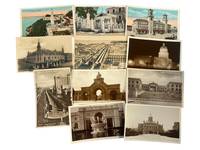
1920réf. 224751920. Cuba Havana landmarks and urban development real photo post card archive ca. 1920s-1940s. 11 color and sepia real photo postcards of iconic civic and cultural architecture in Havana Cuba. Each measure 4" x 6". Many with captions identifying the locations in the negative or en verso with some printed in English and others in Spanish signaling their intended audience of both locals and foreign tourists. A compelling photo archive documenting early 20th-century Havana's architectural and political aspirations this collection showcases prominent landmarks that symbolized Cuba's nationalist identity international cosmopolitanism and American-influenced modernization in the decades between independence from Spain and the Cuban Revolution. The archive includes silver gelatin and printed color views of the National Theatre Cuba's Capitol Building Central Railway Station Gran Casino Nacional National University and the grand gateway of Havana's Colón Cemetery. Other views depict Paseo de Martí one of Havana's most iconic boulevards lined with vintage American cars and flanked by ornate colonial facades and new Art Deco-style hotels evidence of the influx of U.S. capital and tourism during the Batista era. Havana in this period was rapidly transforming into a showcase city of the Caribbean its urban core reflecting both Spanish colonial heritage and American urban planning models. The presence of monumental buildings like El Capitolio constructed between 1926 and 1929 and modeled after the U.S. Capitol in Washington D.C. points to Cuba's alignment with American political aesthetics and aspirations toward modern statehood. Similarly the University and Gran Casino Nacional represent both the intellectual elite and leisure-class investment that typified pre-revolutionary Cuban society. The mixture of European and U.S. architectural influences ranging from Beaux-Arts to Art Deco speaks to the layered colonial legacy and new economic dependency forged during the Platt Amendment era. Some mild edge wear. One card with a small corner crease others clean. Overall very good condition. This archive captures Havana in the midst of dramatic urban renewal and internationalization before the massive ruptures brought on by the 1959 revolution. unknown
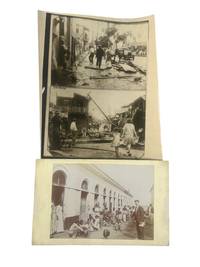
1928réf. 219181928. Puerto Rico photo archive circa 1910s and 1928 documents colonial-era social conditions and hurricane destruction in the decades after the United States took control of the island. The archive centers on two related subjects: a large group portrait of Puerto Rican adults and children gathered outside a long arched building and press images of San Juan after the September 13 1928 San Felipe Segundo hurricane. The photographs provide visual evidence of everyday poverty built environment disaster damage and public movement through wreckage during a period shaped by U.S. civil government under the Foraker Act of 1900 and U.S. citizenship without voting representation in Congress under the Jones-Shafroth Act of 1917. Puerto Rico photo archive. Puerto Rico circa late 1910s and 1928. Three silver gelatin photographs with two images printed on one press sheet. Sizes range from 5 x 9 inches to 8.5 x 11 inches. The 1928 press photograph contains two stacked photojournalistic views of San Juan after the hurricane showing torn corrugated roofing broken utility poles damaged structures debris-filled streets and residents including children and laborers moving through the wreckage. The larger earlier image shows a white man standing before a long arched tenement-style or institutional building surrounded by Puerto Rican women men and numerous children many barefoot and wearing worn or minimal clothing; the image appears posed or observational but the man's role is not identified. The San Felipe Segundo hurricane struck Puerto Rico on September 13 1928 as a Category 5 storm and caused 312 reported deaths widespread housing destruction and several hundred thousand people left homeless giving the press images strong value as disaster documentation within a colonial setting. The earlier group photograph broadens the archive beyond catastrophe recording visible poverty dress housing and racialized colonial social relations without requiring unsupported identification of the white figure. Some edge wear tape on margins of smaller image and original editor's markings en verso to press photograph; very good. A compact Puerto Rico photo archive linking colonial-era social conditions with one of the island's most destructive twentieth-century hurricanes. unknown
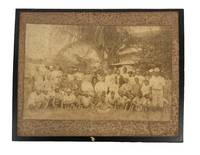
1890réf. 208021890. Unidentified photographers two albumen photographs of Black laborers circa 1890s to early 1900s document agricultural and skilled work performed by African Americans in the decades following emancipation when systems of sharecropping and tenant farming structured rural economies across the American South and parts of the Caribbean. These images provide visual evidence of labor organization racial hierarchy and economic dependency that persisted after the formal end of slavery with large groups of Black workers shown in relation to white overseers or employers. One photograph presents approximately forty five Black men gathered around three centrally seated white men emphasizing supervisory roles and social stratification within plantation labor systems. The clothing of the workers including cotton shirts loose trousers and wide brimmed hats reflects adaptation to agricultural work in hot climates while a smaller number of individuals in jackets and pocket watches suggests internal distinctions within Black labor communities. The second image depicts six Black carpenters engaged in coordinated manual work at an outdoor shop indicating the presence of skilled trades alongside agricultural labor. Group of two albumen photographs mounted on original cardstock measuring approximately 8 x 9.5 inches and 10 x 12 inches. The larger photograph shows an outdoor woodworking scene with six men using tools including a hammer and saw working under a thatched structure suggestive of southern or Caribbean environments. The second photograph shows a large assembled group of plantation workers with three white men seated at center. Faint pencil annotations appear in the margins of one mount. Both photographs retain strong compositional clarity with figures arranged to emphasize both collective labor and hierarchical relationships. These photographs contribute to the study of post emancipation Black life by documenting how agricultural dependency and limited access to capital shaped labor conditions into the late nineteenth and early twentieth centuries. The plantation scene illustrates the persistence of racially stratified labor organization while the carpentry image provides evidence of skilled Black tradesmen operating within local economies often without institutional support or pathways to independent enterprise. The visual contrast between collective field labor and artisanal work expands the interpretive scope of the archive situating these images within broader histories of labor race and economic transition following the end of slavery. Edge wear and minor chipping to mounts with noticeable foxing to one image primarily at the margins; images remain legible and structurally intact. Overall good condition. unknown
1955réf. 593625Bahia Brasil: Livraria Progresso 1955. Softcover. Very Good. First editions. Illustrated by Caribé. Nine volumes lacking the 10th Orixás. Slim octavos. Stapled wrappers. Text in Portuguese. Moderate tanning and wear wrappers with some foxing and soiling topedges with a small splash of white paint sound and near very good. Each volume prints illustrations by Caribé from the Bahia State Museum as well as text by Caribé Odorico Tavares Vasconcelos Main José Pedreira or Carlos Eduardo. Each also has a number stamp on the copyright page from an unknown limitation. The titles are: A pesca do xaréu; Pelourinho; O jogo da capoeira; Feira de água de meninos; Festa do bonfim; Conceicão da praia; Festa de yemanjá; Rampa do mercado; and Temas de candomblé. Livraria Progresso unknown
réf. A9789210033589Paperback / softback. New. paperback
réf. A9789211221350Paperback / softback. New. The 2023 report offers an in-depth look at economic trends in Latin America and the Caribbean providing updated GDP estimates and 2024 forecasts. It examines evolving social dynamics and policy challenges while highlighting risks and strategies that may shape the region’s path toward a transformative recovery. paperback
réf. A9789211221398Paperback / softback. New. In this edition the impact of population dynamics is illustrated through an analysis of selected indicators of labour force estimates and projections by sex age and area of residence for the 1980-2050 period in the 20 countries of Latin America using the 2023 Revision prepared by the CELADE-Population Division of the ECLAC. paperback
réf. A9789211220841Paperback / softback. New. Analyses the economic and social dynamics at play in2021 and explores the risks and policy challenges that the region will face in 2022 for driving a transformative recovery. More specifically the document presents new Gross Domestic Product GDP estimates for the region and all of its countries in 2021 along with projections for 2022. paperback
réf. A9789211221305Paperback / softback. New. Analyses the complex conditions facing the region's trade in 2023 marked by weak global demand falling commodity prices and the growing interconnections between trade and geopolitics. It also gives an overview of trade relations with China in recent decades which remains characterized by the exchange of raw materials for manufactures. paperback
réf. A9789211220698Paperback / softback. New. Examines the social impact of an unprecedented crisis. The effects of the COVID-19 pandemic have spread to all areas of human life altering the way we interact crippling economies and bringing about profound changes in societies. The pandemic has highlighted and exacerbated the major structural gaps in the region. paperback