712 résultats
réf. 13974406Paris: Editions Revue Noire, 1993 in-folio, 64 pages, illustrations. Broché, bon état.
réf. 13982065Paris: Revue Noire, 1992 in-folio (39 x 28 cm), 96 pages, illustrations. Broché, coins lég. usés, autrement bon état. Textes français, anglais, espagnol.
1992réf. 033551Montreal: Les Editions Du Cidihca 1992. 1st Edition 1st Printing. Soft cover. Near Fine. 254 Pp 2 Pp Index At End. Green Wrappers Printed In Black As Issued. Fine No Wear But Some Fading To Background Color On Spine. Inscribed By The Author To Andre Girard. Per Wikipedia Émile Ollivier 1940 - 2002 Was A Haitian -Born Educator And Writer Living In Quebec Canada. He Was Considered One Of The Most Important Haitian Writers Of His Time. He Was Born In Port-Au-Prince And After Studying At The Lycée In Port-Au-Prince Went On To Study Philosophy At The École Normale Supérieure D'haïti And Literature And Psychology In France. Following The Rise To Power Of The Pig-Dictator François Duvalier Ollivier Left Haiti For France In 1964. In 1965 He Came To Quebec First Settling In Amos In The Abitibi-Témiscamingue Region Where He Taught School And Later Moving To Montreal. Ollivier Worked As A Coordinator For The Quebec Ministry Of Education From 1973 To 1976. From 1977 To 1980 He Was An Administrator At The Université Du Québec À Montréal . He Was A Professor In The Education Sciences Department Of The Université De Montréal For 25 Years. Les Editions Du Cidihca paperback
First edition, [2], 78, [2]pp., slight foxing of first few leaves, folding table, disbound. In reply to "An Address to the Members of the New Parliament, on the proceedings of the Colonial Department.....", which held that if slaves were freed they would not work, and as a consequence the colonialist's properties would fall into decay through lack of labourers. This pamphlet denies that the proceedings of the Colonial Department on the matter of Caribbean slavery had been injudicious and unauthorised. Ragatz, p.451; Sabin, 69410.
réf. 33966London: John Murray Albemarle Street 1826. First edition 2 78 2pp. slight foxing of first few leaves folding table disbound. In reply to "An Address to the Members of the New Parliament on the proceedings of the Colonial Department." which held that if slaves were freed they would not work and as a consequence the colonialist's properties would fall into decay through lack of labourers. This pamphlet denies that the proceedings of the Colonial Department on the matter of Caribbean slavery had been injudicious and unauthorised. Ragatz p.451; Sabin 69410. London: John Murray, Albemarle Street, 1826 unknown
réf. 1408516349.Gbundle. Good. Access codes and supplements are not guaranteed with used items. May be an ex-library book. unknown
réf. 21995140like new. unknown
1655réf. 5394Paris: Chez S. Cramoisy & G. Cramoisy 1655. SOLE EDITION. Hardcover. Fine. A fine copy in its original binding of 17th c. mottled French calf spine gilt and with red morocco label minor wear to the spine. Fine and fresh with just the occasional small rust spot. Engraved arms of the dedicatee Nicolas Fouquet on the second leaf. First edition of this rare relation describing the Jesuit missions in the Caribbean and on the South American mainland providing one of the earliest systematic accounts of the Lesser Antilles and Guiana. Much of the book is based on the author's firsthand experiences. He describes the foundation of churches the conversion of enslaved Africans and Indigenous nations Indigenous culture the moral and physical trials of evangelization and the natural history of the islands and mainland. Of special importance is the third part of the work: the author's grammar and vocabulary of the Galibi language one of the earliest printed studies of a South American Indigenous language. Pelleprat explains the purpose of understanding Galibi: "I have composed a small grammar and vocabulary of the Galibi language so that our Fathers who shall come after me may speak to these peoples in their own words and more easily win their souls to God." In 1651 Pierre Pelleprat was sent from France to the Antilles joining Fathers Denys Mesland François Gueymeu and Guillaume Aubergeon. The Jesuits served the indigenous Amerindians enslaved Africans and Irish and French settlers. Two years later Pelleprat and Mesland sailed for the mainland where they established a mission on the Guarapiche River near the Gulf of Paria. After Mesland's departure was Pelleprat remained alone continuing his missionary work and studying the local language. Illness forced him to return to the islands in 1654. He petitioned to return to Europe but was denied and instead lived out the remainder of his life in Mexico dying at Puebla de los Angeles in 1667. The preface outlines the establishment of the Jesuit mission in the French Caribbean following the founding of Martinique and Guadeloupe in 1635. Pelleprat recounts the arrival of the Jesuits and their efforts to learn the native languages in order to communicate doctrine record confessions and translate prayers. His descriptions of the climate geography and local governance of the islands are accompanied by remarks on Indigenous customs domestic life and religious beliefs. Pelleprat portrays the Indigenous inhabitants with clarity and sympathy. They are "without guile or malice. and capable of every good doctrine. They are neither cruel nor treacherous as some have claimed; rather they are generous and easily moved to affection when treated with kindness." He notes the Galibis skill in painting and weaving: "They take great care in painting their bodies and in making their cotton cloths which they dye with beautiful colors." The author records local fishing and hunting practices the use of pirogues canoes along the coasts and the construction of dwellings raised above ground: "They live by fish and roots in houses built upon poles to guard against the waters and the reptiles." He marvels at the beauty and richness of South America: its landscape flora and fauna: "the trees of these islands bear fruit twice a year and the soil is so rich that it needs only to be turned over to yield harvests beyond expectation". The Galibi Language Pelleprat's introduction to the Galibi language is one of the earliest printed attempts to describe and translate a South American Indigenous language. He explains the purpose of understanding Galibi: "I have composed a small grammar and vocabulary of the Galibi language so that our Fathers who shall come after me may speak to these peoples in their own words and more easily win their souls to God." Pelleprat opens by justifying his study as a means to conversion writing that "the barbarous nations. are so docile and so well disposed to receive the Gospel that they await only its preaching." His goal is not philological in the modern sense but practical: to prepare future missionaries to communicate Christian doctrine. Even so his careful observations show an emerging recognition of linguistic structure. He notes that "this language has its own rules its order and its way of composing words" an acknowledgment that Amerindian languages were coherent systems rather than the "corrupted" or "primitive" speech often imagined by Europeans. The Introduction proceeds systematically identifying letters pronunciation and basic grammar before offering a brief bilingual vocabulary. Pelleprat outlines nouns pronouns and verb forms and includes everyday expressions drawn from conversation. The vocabulary reveals the priorities of the missionary encounter pairing religious and material terms: "God" and "Devil" "soul" "heaven" and "earth" alongside "river" "house" and "friend." Through such juxtapositions the work translates the Christian world into the idiom of local experience. Pelleprat also recognizes the limits of his own learning admitting that he "has gathered what he could learn from the natives themselves" and that the book is only a "first attempt." The Islands of America Pelleprat opens with the Jesuits' first arrival at Martinique and he describes the founding of chapels the teaching of catechism and the first baptisms. When the mission expanded to Guadeloupe and Saint Christopher St Kitts he wrote: "we carried with us neither gold nor silver but the Cross of Christ and a heart desirous only to win souls. With this we founded our first church on the edge of the sea the waves serving us for organ and bells." p. 17 Pelleprat relates the successful conversion of enslaved Africans: "for although they have been reared in brutishness many become so chaste and honest when they are Christians that they would rather die than commit the least indecency." p. 33 Irish Catholics who had been exiled by the English sought out the Jesuits for Mass and confession and Pelleprat recounts the secret ministry carried out among them and the extraordinary virtue of an Irish girl raised in disguise to preserve her chastity. "I cannot omit the victory that a young Irish girl won over the weakness of her sex. This girl had come very young to America and her father to protect her had disguised her and raised her in the dress of a boy." pp. 49-50 Pelleprat explains how conversion altered conduct during epidemics and famine and the devoutness of the newly converted: "In the time of pestilence when even the air seemed to breathe death our new Christians came in great numbers to confession and communion choosing rather to die reconciled to God than to live without His grace." p. 47 The Mainland of South America The second section records numerous observations on the geography and natural history of Guiana: "I saw serpents with wings like bats and fish that fly above the water; trees whose leaves close at night as if they slept and others that exude milk when cut." p. 88 "The rivers here are broader than many seas their waters dark as ink under the forest's shadow. The land breathes a perpetual spring; trees bear fruit without ceasing and the air is so temperate that one would think Nature had chosen this region for her rest." p. 60 Pelleprat records the manners dwellings and ceremonies of the Guianese nations: "They are of good stature well-formed their countenance open and agreeable. Their huts are made of palm leaves their hammocks of woven cotton their vessels of baked clay painted with strange figures . . . When we entered their villages they offered us cassava bread and the drink of their country pressing us to sit in their hammocks which they esteem as the greatest courtesy." p. 67-69 Chapter VI outlines the political and moral order of Indigenous societies. Government Pelleprat notes is communal and tempered by reason: "Their government is gentle; they obey the oldest or the bravest and all decisions are taken in council with much shouting but little injustice." p. 92 "When one dies they burn his hammock and his weapons believing that he will find them again beyond the river of souls." p. 93. Chez S. Cramoisy & G. Cramoisy hardcover books
1655réf. 5394Paris: Chez S. Cramoisy & G. Cramoisy 1655. SOLE EDITION. Hardcover. Fine. A fine copy in its original binding of 17th c. mottled French calf spine gilt and with red morocco label minor wear to the spine. Fine and fresh with just the occasional small rust spot. Engraved arms of the dedicatee Nicolas Fouquet on the second leaf. First edition of this rare relation describing the Jesuit missions in the Caribbean and on the South American mainland providing one of the earliest systematic accounts of the Lesser Antilles and Guiana. Much of the book is based on the author's firsthand experiences. He describes the foundation of churches the conversion of enslaved Africans and Indigenous nations Indigenous culture the moral and physical trials of evangelization and the natural history of the islands and mainland. Of special importance is the third part of the work: the author's grammar and vocabulary of the Galibi language one of the earliest printed studies of a South American Indigenous language. Pelleprat explains the purpose of understanding Galibi: "I have composed a small grammar and vocabulary of the Galibi language so that our Fathers who shall come after me may speak to these peoples in their own words and more easily win their souls to God." In 1651 Pierre Pelleprat was sent from France to the Antilles joining Fathers Denys Mesland François Gueymeu and Guillaume Aubergeon. The Jesuits served the indigenous Amerindians enslaved Africans and Irish and French settlers. Two years later Pelleprat and Mesland sailed for the mainland where they established a mission on the Guarapiche River near the Gulf of Paria. After Mesland's departure was Pelleprat remained alone continuing his missionary work and studying the local language. Illness forced him to return to the islands in 1654. He petitioned to return to Europe but was denied and instead lived out the remainder of his life in Mexico dying at Puebla de los Angeles in 1667. The preface outlines the establishment of the Jesuit mission in the French Caribbean following the founding of Martinique and Guadeloupe in 1635. Pelleprat recounts the arrival of the Jesuits and their efforts to learn the native languages in order to communicate doctrine record confessions and translate prayers. His descriptions of the climate geography and local governance of the islands are accompanied by remarks on Indigenous customs domestic life and religious beliefs. Pelleprat portrays the Indigenous inhabitants with clarity and sympathy. They are "without guile or malice. and capable of every good doctrine. They are neither cruel nor treacherous as some have claimed; rather they are generous and easily moved to affection when treated with kindness." He notes the Galibis skill in painting and weaving: "They take great care in painting their bodies and in making their cotton cloths which they dye with beautiful colors." The author records local fishing and hunting practices the use of pirogues canoes along the coasts and the construction of dwellings raised above ground: "They live by fish and roots in houses built upon poles to guard against the waters and the reptiles." He marvels at the beauty and richness of South America: its landscape flora and fauna: "the trees of these islands bear fruit twice a year and the soil is so rich that it needs only to be turned over to yield harvests beyond expectation". The Galibi Language Pelleprat's introduction to the Galibi language is one of the earliest printed attempts to describe and translate a South American Indigenous language. He explains the purpose of understanding Galibi: "I have composed a small grammar and vocabulary of the Galibi language so that our Fathers who shall come after me may speak to these peoples in their own words and more easily win their souls to God." Pelleprat opens by justifying his study as a means to conversion writing that "the barbarous nations. are so docile and so well disposed to receive the Gospel that they await only its preaching." His goal is not philological in the modern sense but practical: to prepare future missionaries to communicate Christian doctrine. Even so his careful observations show an emerging recognition of linguistic structure. He notes that "this language has its own rules its order and its way of composing words" an acknowledgment that Amerindian languages were coherent systems rather than the "corrupted" or "primitive" speech often imagined by Europeans. The Introduction proceeds systematically identifying letters pronunciation and basic grammar before offering a brief bilingual vocabulary. Pelleprat outlines nouns pronouns and verb forms and includes everyday expressions drawn from conversation. The vocabulary reveals the priorities of the missionary encounter pairing religious and material terms: "God" and "Devil" "soul" "heaven" and "earth" alongside "river" "house" and "friend." Through such juxtapositions the work translates the Christian world into the idiom of local experience. Pelleprat also recognizes the limits of his own learning admitting that he "has gathered what he could learn from the natives themselves" and that the book is only a "first attempt." The Islands of America Pelleprat opens with the Jesuits' first arrival at Martinique and he describes the founding of chapels the teaching of catechism and the first baptisms. When the mission expanded to Guadeloupe and Saint Christopher St Kitts he wrote: "we carried with us neither gold nor silver but the Cross of Christ and a heart desirous only to win souls. With this we founded our first church on the edge of the sea the waves serving us for organ and bells." p. 17 Pelleprat relates the successful conversion of enslaved Africans: "for although they have been reared in brutishness many become so chaste and honest when they are Christians that they would rather die than commit the least indecency." p. 33 Irish Catholics who had been exiled by the English sought out the Jesuits for Mass and confession and Pelleprat recounts the secret ministry carried out among them and the extraordinary virtue of an Irish girl raised in disguise to preserve her chastity. "I cannot omit the victory that a young Irish girl won over the weakness of her sex. This girl had come very young to America and her father to protect her had disguised her and raised her in the dress of a boy." pp. 49-50 Pelleprat explains how conversion altered conduct during epidemics and famine and the devoutness of the newly converted: "In the time of pestilence when even the air seemed to breathe death our new Christians came in great numbers to confession and communion choosing rather to die reconciled to God than to live without His grace." p. 47 The Mainland of South America The second section records numerous observations on the geography and natural history of Guiana: "I saw serpents with wings like bats and fish that fly above the water; trees whose leaves close at night as if they slept and others that exude milk when cut." p. 88 "The rivers here are broader than many seas their waters dark as ink under the forest's shadow. The land breathes a perpetual spring; trees bear fruit without ceasing and the air is so temperate that one would think Nature had chosen this region for her rest." p. 60 Pelleprat records the manners dwellings and ceremonies of the Guianese nations: "They are of good stature well-formed their countenance open and agreeable. Their huts are made of palm leaves their hammocks of woven cotton their vessels of baked clay painted with strange figures . . . When we entered their villages they offered us cassava bread and the drink of their country pressing us to sit in their hammocks which they esteem as the greatest courtesy." p. 67-69 Chapter VI outlines the political and moral order of Indigenous societies. Government Pelleprat notes is communal and tempered by reason: "Their government is gentle; they obey the oldest or the bravest and all decisions are taken in council with much shouting but little injustice." p. 92 "When one dies they burn his hammock and his weapons believing that he will find them again beyond the river of souls." p. 93. Chez S. Cramoisy & G. Cramoisy hardcover
réf. HIS4162MS.l.n.d. (1763, Conseil Supérieur de la Martinique). In-12, relié, plein veau moucheté, dos à nerfs orné, pièce de titre, filets sur chasses et coiffes, 190pp. Plusieurs ex-libris à la plume sur garde blanche et sur garde de fin. Frottements d'usage. Intérieur frais. Bon exemplaire
réf. 13981678Ansterdam: J. L. de Lorme, Libraire sur le Rockin à l'enseigne de la Liberté, 1698 1 volume in-12 (16,5 x 11 cm), frontispice sur cuivre gravé par B. Picart, page de titre, (8)-402 p. [la relation de voyage du sieur de Montauban occupe les p.360-402] , (2) p. (catalogue de livres nouveaux qui se trouvent chez J. L. De Lorme); page de titre (L'Art de Voyager Utilement), (2)-51 p. Reliure d'ép. dos à 4 nerfs orné, coiffe sup. et coins usés, rel. frottée, bon état. Sabin 11274.
réf. 71478Fernand Nathan 1969 livre récits 18*13 251 pages collection des contes et légendes de tous les pays
réf. 0710004788.Gpaperback. Good. Access codes and supplements are not guaranteed with used items. May be an ex-library book. paperback
1980réf. Q-0710004788Routledge Kegan & Paul 1980-06-01. Paperback. New. In shrink wrap. Looks like an interesting title! Routledge Kegan & Paul paperback
1963réf. 000862Paris G. P. Département Des Presses de La cité 1963 In 8 Bibliothèque Rouge et Or , collection " Souveraine " . Le récit se passe en Guadeloupe . Illustré de dessins en couleurs hors-texte à pleine page et de nombreux autres en noir et blanc dans le texte . Présentation claire et aérée qui convient aux jeunes à partir de 12 ans , état neuf . - 188 p. , 450 gr.
réf. 2414203943.Gpaperback. Good. Access codes and supplements are not guaranteed with used items. May be an ex-library book. paperback
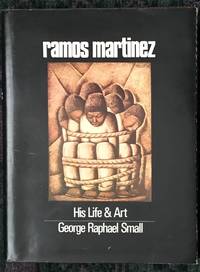
1975réf. 003693Westlake Village CA: F & J Publishing Corp. 1975. Hardcover. Near Fine/very good . 4to. 170 pp. Bound in full brown textured cloth stamped in gilt on cover and spine in black dust jacket cover illustration title printed in white on cover and spine. Full-color and black and white illustrations throughout. Includes bibliography. Inscribed by artist's wife María Sodí de Ramos Martínez on front free endpaper: "With affection to Dr. Cooperman/María S. de Ramos Martínez." An announcement for "Treasure Trove"- an exhibit of the artist's own works from his private collection- held at the Dalzell Hatfield Galleries in Los Angeles from October 14- November 8 1975 and an invitation to a preview showing on October 23 1975 attended by Sodí de Ramos Martínez and author George Small laid in. Biography of the Mexican painter muralist and educator who founded the first Escuela de Pintura al Aire Libre in México in 1913. After her husband's death María continued to foster his legacy by mastering serigraphy and making prints of his work. Fine bright copy in Very Good dust jacket with rubbing to spine and extremities 1/2" tear to top edge of rear cover. F & J Publishing Corp. hardcover
2014réf. 003831Tuscaloosa: University of Alabama Press 2014. Hardcover. Fine/near fine. 8vo. 14 198 pp. Bound in black boards in illustrated dust jacket. Includes bibliography and index. Fine bright clean copy in Near Fine dust jacket with light scuffing and wear. University of Alabama Press hardcover
1957français In-8 de 245 pp.; broché de l'éditeur. Collection L'air du temps. Prix Albert Londres.
réf. 50778P., Gallimard, NRF (Collection "L'air du temps"), 1957, in 8° broché, 245 pages.
Algorta, Editorial Zero, 1972. 8vo.; 38 pp., 1 h. Cubiertas originales.
1940réf. 222371940. Puerto Rico Education Industrial era Puerto Rico elementary school class photo archive. Three vintage silver gelatin black-and-white photographs each mounted on photo studio original boards with decorative borders. Two are early prints circa 1940s; the third is dated 1961. Each measure about 7" x 9". This evocative trio of Puerto Rican school photographs captures diverse elementary-age students posed in front of their local schools documenting a pivotal era of transformation in the island's social and educational landscape. One of the earlier cabinet cards features a group of students seated outdoors with a teacher or administrator standing behind them; the setting includes neoclassical columns and a colonial street with visible signage. Another card marked "Escuela No. 29" shows a racially integrated group of students with the school's flag held at the center of the image. The final print dated 1961-declared "Año de la Educación" Year of Education in the printed caption-presents a classroom posed beneath a prominently displayed Puerto Rican flag reflecting both a growing sense of national identity and post-war political shifts toward public investment in education. These photographs span a transformative period in Puerto Rico's 20th-century history as the island transitioned from an agricultural economy to a more industrialized state-supported system under Operation Bootstrap Operación Manos a la Obra. Begun in the late 1940s and accelerated through the 1950s and early 1960s the program prioritized urban development mass education and labor force modernization. The 1961 card framed by official state messaging reflects this emphasis-part of Governor Luis Muñoz Marín's vision of expanding universal literacy and integrating Puerto Rican youth into a skilled industrial economy. At the same time these images document the continued presence of racial and class diversity within public schools signaling the layered complexities of colonial modernity and U.S. influence on the island's educational and political systems. Mild surface soiling and edge wear to the mounts with light silvering to the gelatin surfaces of the two older prints. Overall very good condition. A rare and compelling visual record of Puerto Rican childhood education and racial integration during a formative mid-century era of political and economic redefinition. unknown books
réf. 8449953480.Gpaperback. Good. Access codes and supplements are not guaranteed with used items. May be an ex-library book. paperback
1940réf. 222371940. Puerto Rico Education Industrial era Puerto Rico elementary school class photo archive. Three vintage silver gelatin black-and-white photographs each mounted on photo studio original boards with decorative borders. Two are early prints circa 1940s; the third is dated 1961. Each measure about 7" x 9". This evocative trio of Puerto Rican school photographs captures diverse elementary-age students posed in front of their local schools documenting a pivotal era of transformation in the island's social and educational landscape. One of the earlier cabinet cards features a group of students seated outdoors with a teacher or administrator standing behind them; the setting includes neoclassical columns and a colonial street with visible signage. Another card marked "Escuela No. 29" shows a racially integrated group of students with the school's flag held at the center of the image. The final print dated 1961-declared "Año de la Educación" Year of Education in the printed caption-presents a classroom posed beneath a prominently displayed Puerto Rican flag reflecting both a growing sense of national identity and post-war political shifts toward public investment in education. These photographs span a transformative period in Puerto Rico's 20th-century history as the island transitioned from an agricultural economy to a more industrialized state-supported system under Operation Bootstrap Operación Manos a la Obra. Begun in the late 1940s and accelerated through the 1950s and early 1960s the program prioritized urban development mass education and labor force modernization. The 1961 card framed by official state messaging reflects this emphasis-part of Governor Luis Muñoz Marín's vision of expanding universal literacy and integrating Puerto Rican youth into a skilled industrial economy. At the same time these images document the continued presence of racial and class diversity within public schools signaling the layered complexities of colonial modernity and U.S. influence on the island's educational and political systems. Mild surface soiling and edge wear to the mounts with light silvering to the gelatin surfaces of the two older prints. Overall very good condition. A rare and compelling visual record of Puerto Rican childhood education and racial integration during a formative mid-century era of political and economic redefinition. unknown
1938réf. 033134New York: Frederick A. Stokes Company 1938. 1st Edition 1st Printing. Hardcover. Very Good /No Jacket. Map; 47 Reproductions Of Photographs. Xxiv 383 Pp. Yellow-Brown Cloth Printed In Green Map Endpapers. First Printing. Very Good Slight Wear At Corners No Fading Or Staining No Names Or Marks Hinges Tight 1/4" Neatly Closed Pull-Tear At Top Of Spine. Frederick A. Stokes Company hardcover