116 résultats
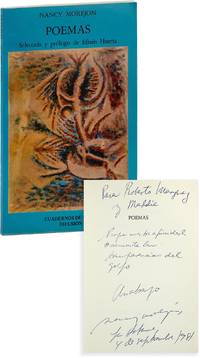
1980réf. 88457Mexico City: Difusion Cultural Departamiento de Humanidades / Universidad Nacional Autónoma de México 1980. First Edition. First Impression one of 2000 copies. Small octavo 18cm; original pictorial card wrappers; 89-62pp. With a full-page inscription from Morejon to Puerto Rican editor translator and literary critic Roberto Márquez and his wife signed and dated in Havana 4 September 1981." Mild surface wear else a fresh very Near Fine copy. A collection of verse by the noted Afro-Cuban poet selected and edited by Mexican poet and journalist Efraín Huerta Roma 1914-1982. A nice inscription connecting two prominent Caribbean literary figures. 88457. Difusion Cultural Departamiento de Humanidades / Universidad Nacional Autónoma de México unknown books
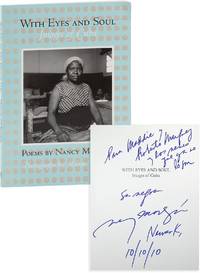
2004réf. 88456Buffalo NY: White Pine Press 2004. First Edition. First Printing. Small quarto 25.5cm; original glossy pictorial card wrappers; 910-1155pp; illus.; with parallel text in English and in Spanish. Inscribed by Morejon on the half-title page to Puerto Rican editor translator and literary critic Roberto Márquez and his wife: "Para Maddie y Roberto y los nenes que ya no lo son / Su negra / Nancy Morejon / 10/10/10." Hint of sunning to spine tiny crease to upper right corner of front wrapper; Near Fine. Collection of verse by the noted Afro-Cuban poet written between the summers of 1986-87 pairing her poems prose poems and vignettes with photos by Milton Rogovin. A nice inscription connecting two prominent Caribbean literary figures. 88456. White Pine Press unknown books
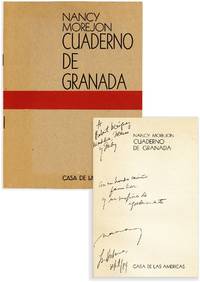
1984réf. 88455Havana: Casa de las Americas 1984. First Edition. Slim quarto 23.75cm; original printed card wrappers with French flaps stapled; 16pp; text is entirely in Spanish. Inscribed by Morejon on the title page to Puerto Rican editor translator and literary critic Roberto Márquez and his family: "A Robert Márquez Maddie Maceo y Gaby / Con un hondo cariño familiar y suspiro de agradecimiento y un suspiro de agradecimiento / Nancy / La Habana / Sept/84." Trivial external wear and a hint of sunning to spine-fold; touch of oxidation to staples; contents fresh; Near Fine. Short collection of verse by the noted Afro-Cuban poet critic and essayist gathrering nine poems. A nice inscription connecting two prominent Caribbean literary figures. 88455. Casa de las Americas unknown books
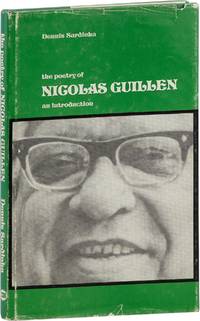
1976réf. 85000London & Port of Spain: New Beacon Books 1976. First Edition. First Impression cloth issue. Octavo 22.25cm; green paper-covered boards with titles stamped in gilt on spine; dustjacket; 45-80pp. This copy is from the library of to Puerto Rican editor translator and literary critic Roberto Marquez with his ink name at upper margin of title page and inscribed to him by the author on the front endpaper: "To Roberto / with love best wishes / Dennis / London 1976." About Fine in a Very Good dustjacket unclipped priced £2.50 gently spine-sunned and lightly shelfworn with a few tiny nicks small tears and attendant creases. Text of a lengthly lecture on Guillen by the Trinidadian author which he delivered to members of the Caribbean Artists Movement in London. It includes the text of an interview between Ciro Bianchi Ross and Guillen on the poet's 70th birthday. A nice association linking two Guillen scholars; Marquez has written extensively on Guillen and has translated several of his works faithfully from Spanish into English. 85000. New Beacon Books unknown books
réf. 90478hardcover. 211pp. 12mo modern 3/4 cloth. Montevideo: La Espana 1896. First Edition. Palau 82136. unknown books
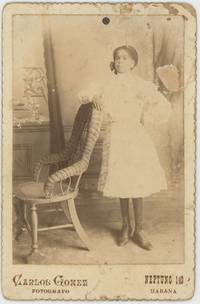
1905réf. BK0085Havana Cuba: Carlos Gómez 1905. Cabinet photograph measuring 4 x 5 ½ inches on photographer's mount measuring 4 ½ x 6 ½ inches with imprint "Carlos Gómez / Fotógrafo / Neptuno 149 / Habana. Image somewhat faded with scattered surface wear and an area of loss at upper right; mount worn at edges good overall. A studio portrait of a young woman posed beside a wicker rocking chair wearing a light-colored dress with high collar and puffed sleeves and looking directly toward the camera. The photograph is notable in the context of Afro-Cuban portraiture around the turn of the twentieth century a period when Havana supported a large commercial photographic trade serving an increasingly broad urban clientele. The sitter is unidentified and no inscription survives to provide further biographical information. Carlos Gómez Guardiola was operating a photographic studio at 149 Neptuno by 1902 when a contemporary Havana newspaper noted that he had already established a reputation despite having been in business only a short time. Gómez's work appears in Juaco López Ãlvarez's Fotografía de Asturianos en américa with an identical "Carlos Gómez / Fotógrafo / Neptuno 149 / Habana" imprint; Ãlvarez dates it to about 1905 and we date the present portrait accordingly. 1 Juaco López Ãlvarez Ed. Fotografía de Asturianos en américa 2000 222. . Carlos Gómez unknown books
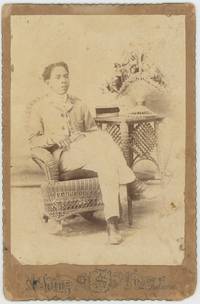
1905réf. BK0086Havana Cuba: A. Sainz 1905. Cabinet photograph measuring 4 x 5 ½ inches on photographer's mount measuring 4 ½ x 6 ½ inches with imprint "A. Sainz / Reina 67 / Habana. Some fading and spotting to image with wear and small losses to edges of mount; good overall. A formal studio portrait of a young Black man seated in a wicker chair beside an elaborate wicker table and floral arrangement. He wears a light-colored suit and holds his hat in his lap posed directly toward the camera. The mount identifies the photographer as A. Sainz of 67 Reina Street Havana. Contemporary Havana advertisements from July and August 1905 place Sainz's photographic studio at this address providing a useful basis for dating the portrait. An appealing example of Black portraiture in early twentieth-century Havana. A. Sainz unknown books
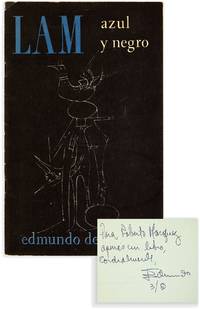
1963réf. 87864Havana: Cuadernos de la Casa de Las Americas 1963. First Edition. First Impression one of 4000 copies. Slim octavo 24.25cm; original pictorial card wrappers stapled; Inscribed by the author on the half-title page to Puerto Rican editor translator and literary critic Roberto Márquez: "Para Roberto Marquez / apenas un libro cordialmente / Eduardo / 3/80." Light wear to extremities some oxidation to staples toning to rear wrapper with a faint crease to upper left corner; Very Good. The Cuban author's extended essay on the life and work of Afro-Cuban painter Wilfredo Lam 1902-1982. Uncommon inscribed. 87864. Cuadernos de la Casa de Las Americas unknown books
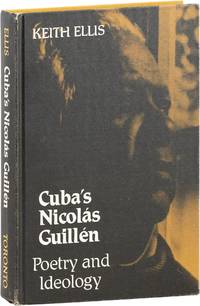
1983réf. 85035Toronto: University of Toronto Press 1983. First Edition. First Impression. Octavo 23.5cm; pictorial cloth-covered boards; x34-251252-254pp. This copy is from the library of to Puerto Rican editor translator and literary critic Roberto Marquez with his ink markings and notations throughout the text and inscribed to him by the author on the title page: "To Robert / as a token of my highest esteem and my admiration for your work / Keith." Base of spine gently nudged light wear to extremities with a few dog-eared pages; Very Good and sound without dustjacket as issued. Scholarly work on the writings of Nicolás Guillén 1902-1989 with a particularly generous inscription to Marquez who has written extensively on Guillén and has translated several of the poet's works faithfully from Spanish into English. A nice association linking two Guillén scholars. Uncommon inscribed. University of Toronto Press unknown books
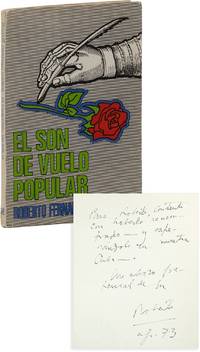
1972réf. 88465Havana: UNEAC 1972. First Edition. First Impression one of 10000 copies. Octavo 21cm; original pictorial wrappers with French flaps; 89-897pp; text is entirely in Spanish. Inscribed by Retamar on the front endpaper to Puerto Rican editor translator and literary critic Roberto Márquez: "Para Roberto / Contento con haberlo rencontrado - y esperandolo en nuestra Cuba - Un abrazo fraternal del Roberto / Ap. 73." The recipient's pervasive ink annotations and markings appear throughout the text. Edgeworn a few tiny tears and creases and a 2" split at upper front joint; Very Good. Collection of four extended essays on Nicolas Guillen by the noted Cuban poet essayist and literary critic. A warm inscription and a nice association to Marquez a Guillen scholar and translator of his work. 88465. UNEAC unknown books
1947réf. 55153Havana: Cuban Tourist Commission 1947. Paperback. Very good. Paperback. 22 by 28 inches unfolded. Foxed overall with some expected toning at the creases else very good and crisp. Cuban Tourist Commission paperback books
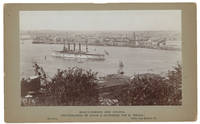
1890réf. LIST110Havana: R. Testar 1890. Albumen photograph on cardstock mount image measuring 7 1/4 x 4 1/2 inches on 8 3/4 x 5 1/2 inch mount. A view of an American warship in Havana harbor likely taken prior to the outbreak of hostilities between the United States and Spain in early 1898. The photographers Leach and Patterson of Calle San Rafael published several views of Cuba at this time mostly of bucolic scenes around Havana and its environs. The American cruiser is similar in design to the U.S.S. Maine with slight differences - two smokestacks instead of three. An excellent example with minor wear to mount and fine image. R. Testar unknown books
1913réf. 86818Havana: Rambla 1913. hardcover. very good. Illustrated. 134 pages. Slim 4to modern cloth original front wrapper bound-in. Habana: Rambla Rouza 1913. Very Good. Rambla unknown books
1901réf. 2221928First edition. Small octavo. Illustrated with b/w photos by V.K. Van De Venter Robin H. Ford John H. Rising L.E. Mayo and W.G. Spiker. Original grey pictorial cloth stamped in gilt black and green. No dust jacket. Very good small crack at rear joint. 220 pages 3 pages of ads. No signatures or bookplates. Scarce. The Rumford Press hardcover books
1908réf. 228161908. Ober Frederick A. A Guide to the West Indies and Bermudas. New York: Dodd Mead & Company 1908. First edition. First printing. 525 pages with five fold-out color maps and numerous black-and-white photographic illustrations. Original red cloth stamped in gilt as issued with no dust jacket. 8vo. An early 20th-century travel guide reflecting U.S. and European imperial tourism in the Caribbean at the height of American expansion following the Spanish-American War. Ober a prolific writer on the Caribbean and Latin America interweaves geography natural history and colonial ethnography offering a period perspective into the ways tourists imperial authorities and travel publishers framed the predominantly Black Afro-Caribbean and Creole cultures of the region during the Jim Crow era. This guide includes detailed chapters on Cuba Puerto Rico Jamaica Trinidad Barbados Guadeloupe Martinique and dozens of other island territories along with sections on "The Bermudas" "The Lesser Antilles" "The South Coast of Cuba" and "A Glimpse of South America." The contents pages visible here show Ober's systematic movement through the archipelago giving each island a discrete treatment with notes on climate agriculture transportation and colonial governance. As Ober writes in his introduction the West Indies form "a region of infinite variety" a phrase that reflects both genuine admiration and the period's exoticizing tone common to pre-WWI travel literature. The fold-out maps chart shipping routes railways ports and political boundaries at a moment when the United States had recently taken possession of Puerto Rico 1898 and solidified its influence in Cuba and the broader Caribbean basin. Light rubbing to cloth with slight sunning to spine; corners mildly worn. Five fold-out maps complete crisp and clean one with a minor tear near margins. Interior exceptionally bright with no writing or markings; binding tight. Overall very good condition. A well-preserved first printing of an important Caribbean travel guide valuable for scholars of U.S. imperial history Caribbean studies tourism studies and the racial-cultural representation of the West Indies during the early American century. unknown books
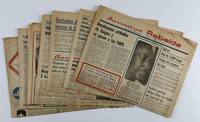
1969réf. 12628Havana: Union de Jovenas Comunistas 1969. Seven newspapers each between 6 and 8pp. on newsprint. Illustrated. Modest toning some edge wear and closed tears some bumped or dog-eared corners. Overall very good. A small but instant collection of an informative newspaper from Communist Cuba published daily by the youth wing of the Party. The issues are all dated in January 1969 specifically from January 11 15 22 28 29 30 and 31. The issues contain domestic and international reporting along with topics relevant to revolutionary young people. Interestingly one issue contains a translated interview with Hollywood legend Marlon Brando. The paper also prints a legion of photographs cultural event listings classifieds baseball statistics and updates cartoons and more. Union de Jovenas Comunistas unknown books
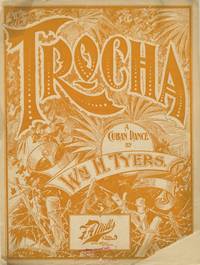
1890réf. List3666New York: Jos. W. Stern & Co 1890. Folio sheet music illustrated pictorial cover printed in orange. 5 pp. including cover. Approximately 13 ½ x 10 ½ inches. Covers detached loss to front cover contents complete fair to good. A decorative late nineteenth-century dance publication for “Trocha” described on the cover as “A Cuban Dance” composed by the African American composer and bandleader W. H. Tyers. The elaborate pictorial cover incorporates stylized tropical foliage and island scenery rendered in a bold single-color design typical for the period’s fascination with exoticized musical forms. William H. Tyers 1870–1924 was an African American composer arranger and bandleader active in New York during the ragtime era. Born in Petersburg Virginia to Henry Tyers and Jane “Jennie” Jones both formerly enslaved he spent part of his youth in Richmond before his family relocated to New York City where he began studying piano. His early teachers recognized an aptitude for composition as well as performance and by the mid-1880s he was writing dance pieces including polkas and waltzes. Around the age of twenty Tyers secured employment as a music librarian and arranger with a touring concert company a position that brought him to Europe where he studied orchestration and arranging with Professor Gaspari in Hamburg. Returning to New York Tyers became active in the city’s rapidly expanding popular music trade working as an arranger and composer for publishers including F. A. Mills and Jos. W. Stern & Co. In 1896 he published “Sambo” a syncopated march sometimes considered to be one of the first instrumental rags.1 “Trocha” also released in the 1980s brought Tyers prominence for his ability to write Latin-style rhythms. It was re-issued in 1913 as a tango and its success led Tyers to work as an arranger with Joseph W. Stern in 1897. Tyers’ compositions blended contemporary American dance music with Caribbean and Latin themes a style reflected in pieces such as Trocha and later in his well-known ragtime composition Panama 1911 which remained a staple of early jazz and dance orchestras. OCLC finds two copies with different entries at the Cleveland Public Library and the British Museum Reference Collections. 1 “William Tyers Music Arranger” African American Registry https://aaregistry.org/story/william-tyers-born/ accessed March 10 2026. Jos. W. Stern & Co unknown books
réf. 86083hardcover. 202pp. 8vo modern cloth; orig. wrs. bound in unopened. Madrid: Aurelio Alaria 1881. First Edn. unknown books
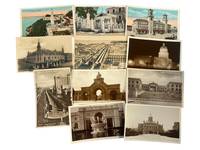
1920réf. 224751920. Cuba Havana landmarks and urban development real photo post card archive ca. 1920s-1940s. 11 color and sepia real photo postcards of iconic civic and cultural architecture in Havana Cuba. Each measure 4" x 6". Many with captions identifying the locations in the negative or en verso with some printed in English and others in Spanish signaling their intended audience of both locals and foreign tourists. A compelling photo archive documenting early 20th-century Havana's architectural and political aspirations this collection showcases prominent landmarks that symbolized Cuba's nationalist identity international cosmopolitanism and American-influenced modernization in the decades between independence from Spain and the Cuban Revolution. The archive includes silver gelatin and printed color views of the National Theatre Cuba's Capitol Building Central Railway Station Gran Casino Nacional National University and the grand gateway of Havana's Colón Cemetery. Other views depict Paseo de Martí one of Havana's most iconic boulevards lined with vintage American cars and flanked by ornate colonial facades and new Art Deco-style hotels evidence of the influx of U.S. capital and tourism during the Batista era. Havana in this period was rapidly transforming into a showcase city of the Caribbean its urban core reflecting both Spanish colonial heritage and American urban planning models. The presence of monumental buildings like El Capitolio constructed between 1926 and 1929 and modeled after the U.S. Capitol in Washington D.C. points to Cuba's alignment with American political aesthetics and aspirations toward modern statehood. Similarly the University and Gran Casino Nacional represent both the intellectual elite and leisure-class investment that typified pre-revolutionary Cuban society. The mixture of European and U.S. architectural influences ranging from Beaux-Arts to Art Deco speaks to the layered colonial legacy and new economic dependency forged during the Platt Amendment era. Some mild edge wear. One card with a small corner crease others clean. Overall very good condition. This archive captures Havana in the midst of dramatic urban renewal and internationalization before the massive ruptures brought on by the 1959 revolution. unknown books
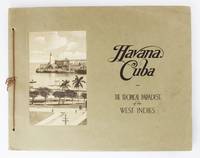
1925réf. 6379Havana: American Photo Studios 1925. Very good plus. 48pp. each with 6x8-inch photographic prints directly mounted. Original card wrappers photo-illustrated and string-tied. Minor wear and dust soiling. Images strong and clear. An attractive and uncommon 1920s travel brochure distributed by ocean liners sailing to and from Havana. This album of photographic prints opens with shots of Ward Line and P & O steamships entering and leaving the city harbor. The images by American Photo Studios images encompass views of Havana's Carnival Hotel Plaza Colon Park the old city walls the Santa Clara Convent and the monument to the USS Maine on Malecon Drive. Also included are views of freshly built suburbs stately homes on "Fifth Avenue" the Havana Country Club Jockey Club and even a view of the Hershey Company's sugar mill. An engaging album that shows Havana at the beginning of its run as a Caribbean destination for American high society in the first half of the 20th century. American Photo Studios unknown books
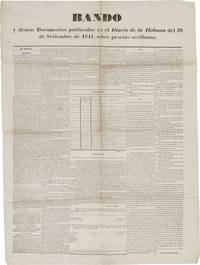
1841réf. 15527Havana. Sept. 29 1841. A proclamation by the Spanish military government in Cuba concerning legal tender and its circulation and providing a series of regulations for commerce and exchange. Broadside 23 x 16 1/2 inches. Splitting on middle fold else very good. unknown books
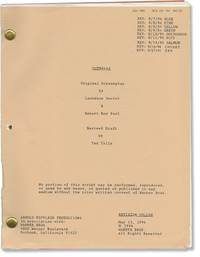
1994réf. 170268Burbank CA: Warner Brothers 1994. Revised Draft script for the 1995 film. Bound in at the rear of the script are nine pages relating to revisions to the script. US Army doctors race to find the cure to a deadly virus quickly spreading from Africa to North America by way of a smuggled capuchin monkey. Shot on location in California and Hawaii. Self wrappers. Title page present dated May 13 1994 noted as REVISION POLISH with credits for screenwriters Laurence Dworet and Robert Roy Pool and revision credits for uncredited screenwriter Ted Tally. 174 leaves with last page of text numbered 136. Xerographic duplication rectos only with rainbow revision pages throughout dated variously between August 7 and 17 1994. Pages Near Fine bound with two gold brads. Warner Brothers unknown books
1895réf. 87496Havana: Castro Fernandez 1895. First. hardcover. near fine. Folding table. 414pp. 1/2 modern lavender buckram marbled boards original wrappers bound in. Habana: Castro Fernandez 1895. First Edition. Near Fine. Laws regulating the telephone and telegraph industries. Castro, Fernandez unknown books
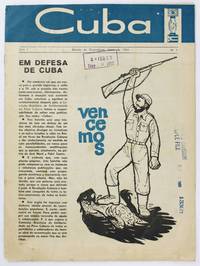
1961réf. 5832Guanabara 1961. About very good. 111pp. Small folio. Original pictorial self-wrappers stapled. Contemporary and slightly later ink stamps to front wrap. Light edge wear. Some tanning and dust soiling. First issue of this evidently unrecorded periodical published by the "Comissão Brasileira de Solidariedade ao Pavo Cubano" in May 1961. The publication contains numerous positive stories on the progress of the Cuban Revolution and support of the cause from the Brazilian people. Illustrated throughout with photographs and drawings including the beginning of a serial comic on the history of the revolution at the rear. The front wrap depicts Fidel Castro with his foot on the chest of a supine eagle and a rifle raised triumphantly over his head. Interesting support for the Communist cause in Cuba from South America. Not in OCLC. unknown books
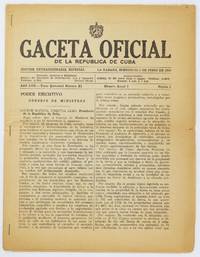
1959réf. 5470Habana: June 3 1959. Good plus. 11pp. Small folio. Previously folded; stapled along gutter margin. Some edge and corner wear; closed tear to initial leaf from fore-edge along old fold. Toned cheap newsprint. A special edition of the Gaceta Oficial of Communist Cuba devoted to the printing of the First Agrarian Reform Law passed and signed on May 17 1959. The law effected the first major land redistribution under Fidel Castro and the Communist Party. Under its authority all properties were over 420 hectares were confiscated and redistributed to the people and native businesses. Prior to the law over 80% of Cuban land was owned by foreign mostly American companies. The preamble and sixty-seven articles lay out the motivations for the law the parameters for confiscation by the Department of Agriculture the mechanisms for seizure and redistribution and the creation of a new government organization to facilitate the land transfers the Instituto Nacional de Reforma Agraria. Signed in print by Fidel as Prime Minister Manuel Urrutia Lleo as President and a slew of other officials. June 3 unknown books