2 545 résultats
1485réf. 707641485. Mainz Peter Schöffer 28 März 1485 1 einspaltiges original Inkunabelblatt 282 x 210 mm; etwas fleckig. Erstdruck! Cap. 48: Arsenicum sive auri pigmentunm - operment; Auripigment. Kapitelende. Cap. 49: Acetum - essig; Acetum. "Im Gegensatz zu den meisten Kräuterbuch-Inkunabeln lässt sich das Druckdatum des "Gart der Gesundheit genau auf den 28. März 1485 festlegen wie es am Ende des Werks vermerkt ist: "Disser Herbarius ist rzu mentz gedruckt und geendet uff dem XXVIII dage des mertz -Anno-M-CCCC-LXXXV". An gleicher Stelle wird Peter Schöffer als Drucker durch das Fust-Schöffersche Signet bestätigt. Der "Gart der Gesundheit gilt wie Muther 1884: 88: "als wichtigstes naturhistorisches Werk des Mittelalters" und Klebs/Becher 1925: 11: "The most important mediaeval work on natural history with illustrations Choulant the publication of which forms an important landmark in the history of botanical Illustration and marks perhaps the grea-test single Step ever made in that art" meinten als wichtigste bebilderte Arzneipflanzen-Inkunabel. Auch Keil 1982: 604 bestätigte später diese Aussage: "Zweifellos ist der "Gart das wichtigste naturhistorische Werk des Mittelalters". Auf 359 Seiten die in 435 Kapitel gegliedert sind wird der gesamte zur damaligen Zeit bekannte Arzneischatz abgehandelt und mit 382 Holzschnitten illustriert. Die wichtigsten 366 Heilpflanzen zwei Wiederholungen werden jeweils einzeln in den verschiedenen Kapiteln beschrieben und abgebildet. Der Text ist 42zeilig geordnet." B. Baumann & H. Baumann Die Mainzer Kräuterbuch-Inkunabeln 2010 p.111 Johann Wonnecke von Kaub um 1430 in Kaub am Rhein; gestorben 1503/04 in Frankfurt am Main auch Johannfes Dronnecke bzw. Johannes de Cuba er selbst nannte sich "Johan von Cube" war ein deutscher Arzt und Botaniker. Am Mainzer Hof wirkte er als Leibarzt. Kapitel nicht vollständig. unknown
1485réf. 707461485. Mainz Peter Schöffer 28 März 1485 1 einspaltiges original Inkunabelblatt 265 x 196 mm 1 alt color. Holzschnitt; mit handschriftlichen Anmerkungen. Erstdruck! Cap. 184: Falammula - brenkrut. Clematis spec./ C. cirrhosa L. Kapitelende. Cap. 185: Fagasinom - kleyn swerteln oder wilde swerteln; Gladiolus segetum Gawl.; Darstellung: schematisiert. "Im Gegensatz zu den meisten Kräuterbuch-Inkunabeln lässt sich das Druckdatum des "Gart der Gesundheit genau auf den 28. März 1485 festlegen wie es am Ende des Werks vermerkt ist: "Disser Herbarius ist rzu mentz gedruckt und geendet uff dem XXVIII dage des mertz -Anno-M-CCCC-LXXXV". An gleicher Stelle wird Peter Schöffer als Drucker durch das Fust-Schöffersche Signet bestätigt. Der "Gart der Gesundheit gilt wie Muther 1884: 88: "als wichtigstes naturhistorisches Werk des Mittelalters" und Klebs/Becher 1925: 11: "The most important mediaeval work on natural history with illustrations Choulant the publication of which forms an important landmark in the history of botanical Illustration and marks perhaps the grea-test single Step ever made in that art" meinten als wichtigste bebilderte Arzneipflanzen-Inkunabel. Auch Keil 1982: 604 bestätigte später diese Aussage: "Zweifellos ist der "Gart das wichtigste naturhistorische Werk des Mittelalters". Auf 359 Seiten die in 435 Kapitel gegliedert sind wird der gesamte zur damaligen Zeit bekannte Arzneischatz abgehandelt und mit 382 Holzschnitten illustriert. Die wichtigsten 366 Heilpflanzen zwei Wiederholungen werden jeweils einzeln in den verschiedenen Kapiteln beschrieben und abgebildet. Der Text ist 42zeilig geordnet." B. Baumann & H. Baumann Die Mainzer Kräuterbuch-Inkunabeln 2010 p.111 Johann Wonnecke von Kaub um 1430 in Kaub am Rhein; gestorben 1503/04 in Frankfurt am Main auch Johannfes Dronnecke bzw. Johannes de Cuba er selbst nannte sich "Johan von Cube" war ein deutscher Arzt und Botaniker. Am Mainzer Hof wirkte er als Leibarzt. unknown
1485réf. 707791485. Mainz Peter Schöffer 28 März 1485 1 einspaltiges original Inkunabelblatt 239 x 164 mm 1 alt color. Holzschnitt; etwas fleckig. Erstdruck! Cap. 14: Anetum - dille. Anethum graveolens L. Darstellung: klar erkennbar. "Im Gegensatz zu den meisten Kräuterbuch-Inkunabeln lässt sich das Druckdatum des "Gart der Gesundheit genau auf den 28. März 1485 festlegen wie es am Ende des Werks vermerkt ist: "Disser Herbarius ist rzu mentz gedruckt und geendet uff dem XXVIII dage des mertz -Anno-M-CCCC-LXXXV". An gleicher Stelle wird Peter Schöffer als Drucker durch das Fust-Schöffersche Signet bestätigt. Der "Gart der Gesundheit gilt wie Muther 1884: 88: "als wichtigstes naturhistorisches Werk des Mittelalters" und Klebs/Becher 1925: 11: "The most important mediaeval work on natural history with illustrations Choulant the publication of which forms an important landmark in the history of botanical Illustration and marks perhaps the grea-test single Step ever made in that art" meinten als wichtigste bebilderte Arzneipflanzen-Inkunabel. Auch Keil 1982: 604 bestätigte später diese Aussage: "Zweifellos ist der "Gart das wichtigste naturhistorische Werk des Mittelalters". Auf 359 Seiten die in 435 Kapitel gegliedert sind wird der gesamte zur damaligen Zeit bekannte Arzneischatz abgehandelt und mit 382 Holzschnitten illustriert. Die wichtigsten 366 Heilpflanzen zwei Wiederholungen werden jeweils einzeln in den verschiedenen Kapiteln beschrieben und abgebildet. Der Text ist 42zeilig geordnet." B. Baumann & H. Baumann Die Mainzer Kräuterbuch-Inkunabeln 2010 p.111 Johann Wonnecke von Kaub um 1430 in Kaub am Rhein; gestorben 1503/04 in Frankfurt am Main auch Johannfes Dronnecke bzw. Johannes de Cuba er selbst nannte sich "Johan von Cube" war ein deutscher Arzt und Botaniker. Am Mainzer Hof wirkte er als Leibarzt. unknown
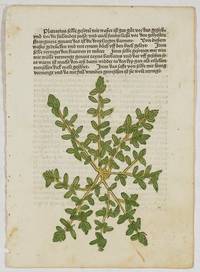
1485réf. 707321485. Mainz Peter Schöffer 28 März 1485 1 einspaltiges original Inkunabelblatt 238 x 171 mm 1 alt color. Holzschnitt. Erstdruck! Cap. 347: Salvia - heysset selbe. Savia triloba L. Kapitelende. Cap. 348: Serpillum - heysset quendel; Thymus sibthorpii L.; Darstellung: schematisiert. "Im Gegensatz zu den meisten Kräuterbuch-Inkunabeln lässt sich das Druckdatum des "Gart der Gesundheit genau auf den 28. März 1485 festlegen wie es am Ende des Werks vermerkt ist: "Disser Herbarius ist rzu mentz gedruckt und geendet uff dem XXVIII dage des mertz -Anno-M-CCCC-LXXXV". An gleicher Stelle wird Peter Schöffer als Drucker durch das Fust-Schöffersche Signet bestätigt. Der "Gart der Gesundheit gilt wie Muther 1884: 88: "als wichtigstes naturhistorisches Werk des Mittelalters" und Klebs/Becher 1925: 11: "The most important mediaeval work on natural history with illustrations Choulant the publication of which forms an important landmark in the history of botanical Illustration and marks perhaps the grea-test single Step ever made in that art" meinten als wichtigste bebilderte Arzneipflanzen-Inkunabel. Auch Keil 1982: 604 bestätigte später diese Aussage: "Zweifellos ist der "Gart das wichtigste naturhistorische Werk des Mittelalters". Auf 359 Seiten die in 435 Kapitel gegliedert sind wird der gesamte zur damaligen Zeit bekannte Arzneischatz abgehandelt und mit 382 Holzschnitten illustriert. Die wichtigsten 366 Heilpflanzen zwei Wiederholungen werden jeweils einzeln in den verschiedenen Kapiteln beschrieben und abgebildet. Der Text ist 42zeilig geordnet." B. Baumann & H. Baumann Die Mainzer Kräuterbuch-Inkunabeln 2010 p.111 Johann Wonnecke von Kaub um 1430 in Kaub am Rhein; gestorben 1503/04 in Frankfurt am Main auch Johannfes Dronnecke bzw. Johannes de Cuba er selbst nannte sich "Johan von Cube" war ein deutscher Arzt und Botaniker. Am Mainzer Hof wirkte er als Leibarzt. unknown
1485réf. 707701485. Mainz Peter Schöffer 28 März 1485 1 einspaltiges original Inkunabelblatt 266 x 196 mm; etwas fleckig. Erstdruck! Cap. 41: Asafetida - dufels dreck. Ferula assa-foetida L. Kapitelende. Cap. 42: Amidum vel amilum - krafft mele. Amylum. "Im Gegensatz zu den meisten Kräuterbuch-Inkunabeln lässt sich das Druckdatum des "Gart der Gesundheit genau auf den 28. März 1485 festlegen wie es am Ende des Werks vermerkt ist: "Disser Herbarius ist rzu mentz gedruckt und geendet uff dem XXVIII dage des mertz -Anno-M-CCCC-LXXXV". An gleicher Stelle wird Peter Schöffer als Drucker durch das Fust-Schöffersche Signet bestätigt. Der "Gart der Gesundheit gilt wie Muther 1884: 88: "als wichtigstes naturhistorisches Werk des Mittelalters" und Klebs/Becher 1925: 11: "The most important mediaeval work on natural history with illustrations Choulant the publication of which forms an important landmark in the history of botanical Illustration and marks perhaps the grea-test single Step ever made in that art" meinten als wichtigste bebilderte Arzneipflanzen-Inkunabel. Auch Keil 1982: 604 bestätigte später diese Aussage: "Zweifellos ist der "Gart das wichtigste naturhistorische Werk des Mittelalters". Auf 359 Seiten die in 435 Kapitel gegliedert sind wird der gesamte zur damaligen Zeit bekannte Arzneischatz abgehandelt und mit 382 Holzschnitten illustriert. Die wichtigsten 366 Heilpflanzen zwei Wiederholungen werden jeweils einzeln in den verschiedenen Kapiteln beschrieben und abgebildet. Der Text ist 42zeilig geordnet." B. Baumann & H. Baumann Die Mainzer Kräuterbuch-Inkunabeln 2010 p.111 Johann Wonnecke von Kaub um 1430 in Kaub am Rhein; gestorben 1503/04 in Frankfurt am Main auch Johannfes Dronnecke bzw. Johannes de Cuba er selbst nannte sich "Johan von Cube" war ein deutscher Arzt und Botaniker. Am Mainzer Hof wirkte er als Leibarzt. unknown
1485réf. 707741485. Mainz Peter Schöffer 28 März 1485 1 einspaltiges original Inkunabelblatt 239 x 150 mm; etwas fleckig. Erstdruck! Cap. 37: Aloes lignum - exn holtz. Aquilaria malaccensis La./ A. agallocha Rpxb. Kapitel Ende. Cap. 38: Aurum - golt. Aurum. "Im Gegensatz zu den meisten Kräuterbuch-Inkunabeln lässt sich das Druckdatum des "Gart der Gesundheit genau auf den 28. März 1485 festlegen wie es am Ende des Werks vermerkt ist: "Disser Herbarius ist rzu mentz gedruckt und geendet uff dem XXVIII dage des mertz -Anno-M-CCCC-LXXXV". An gleicher Stelle wird Peter Schöffer als Drucker durch das Fust-Schöffersche Signet bestätigt. Der "Gart der Gesundheit gilt wie Muther 1884: 88: "als wichtigstes naturhistorisches Werk des Mittelalters" und Klebs/Becher 1925: 11: "The most important mediaeval work on natural history with illustrations Choulant the publication of which forms an important landmark in the history of botanical Illustration and marks perhaps the grea-test single Step ever made in that art" meinten als wichtigste bebilderte Arzneipflanzen-Inkunabel. Auch Keil 1982: 604 bestätigte später diese Aussage: "Zweifellos ist der "Gart das wichtigste naturhistorische Werk des Mittelalters". Auf 359 Seiten die in 435 Kapitel gegliedert sind wird der gesamte zur damaligen Zeit bekannte Arzneischatz abgehandelt und mit 382 Holzschnitten illustriert. Die wichtigsten 366 Heilpflanzen zwei Wiederholungen werden jeweils einzeln in den verschiedenen Kapiteln beschrieben und abgebildet. Der Text ist 42zeilig geordnet." B. Baumann & H. Baumann Die Mainzer Kräuterbuch-Inkunabeln 2010 p.111 Johann Wonnecke von Kaub um 1430 in Kaub am Rhein; gestorben 1503/04 in Frankfurt am Main auch Johannfes Dronnecke bzw. Johannes de Cuba er selbst nannte sich "Johan von Cube" war ein deutscher Arzt und Botaniker. Am Mainzer Hof wirkte er als Leibarzt. Kapitel nicht vollständig. unknown
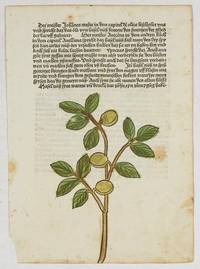
1485réf. 707391485. Mainz Peter Schöffer 28 März 1485 1 einspaltiges original Inkunabelblatt 238 x 171 mm 1 alt color. Holzschnitt. Erstdruck! CAp. 280: Nux avellana - haselnuß. Corylus avellana L. Kapitelende. Cap. 281: Nux Vsualis siue magna - welch nuß; Juglans regia L.; Darstellung: stelisiert. "Im Gegensatz zu den meisten Kräuterbuch-Inkunabeln lässt sich das Druckdatum des "Gart der Gesundheit genau auf den 28. März 1485 festlegen wie es am Ende des Werks vermerkt ist: "Disser Herbarius ist rzu mentz gedruckt und geendet uff dem XXVIII dage des mertz -Anno-M-CCCC-LXXXV". An gleicher Stelle wird Peter Schöffer als Drucker durch das Fust-Schöffersche Signet bestätigt. Der "Gart der Gesundheit gilt wie Muther 1884: 88: "als wichtigstes naturhistorisches Werk des Mittelalters" und Klebs/Becher 1925: 11: "The most important mediaeval work on natural history with illustrations Choulant the publication of which forms an important landmark in the history of botanical Illustration and marks perhaps the grea-test single Step ever made in that art" meinten als wichtigste bebilderte Arzneipflanzen-Inkunabel. Auch Keil 1982: 604 bestätigte später diese Aussage: "Zweifellos ist der "Gart das wichtigste naturhistorische Werk des Mittelalters". Auf 359 Seiten die in 435 Kapitel gegliedert sind wird der gesamte zur damaligen Zeit bekannte Arzneischatz abgehandelt und mit 382 Holzschnitten illustriert. Die wichtigsten 366 Heilpflanzen zwei Wiederholungen werden jeweils einzeln in den verschiedenen Kapiteln beschrieben und abgebildet. Der Text ist 42zeilig geordnet." B. Baumann & H. Baumann Die Mainzer Kräuterbuch-Inkunabeln 2010 p.111 Johann Wonnecke von Kaub um 1430 in Kaub am Rhein; gestorben 1503/04 in Frankfurt am Main auch Johannfes Dronnecke bzw. Johannes de Cuba er selbst nannte sich "Johan von Cube" war ein deutscher Arzt und Botaniker. Am Mainzer Hof wirkte er als Leibarzt. unknown
1485réf. 707831485. Mainz Peter Schöffer 28 März 1485 1 einspaltiges original Inkunabelblatt 239 x 169 mm; etwas fleckig. Erstdruck! Cap. 53: Betonica - betonien. Stachys officinalis L. Trev. Kapitelende. "Im Gegensatz zu den meisten Kräuterbuch-Inkunabeln lässt sich das Druckdatum des "Gart der Gesundheit genau auf den 28. März 1485 festlegen wie es am Ende des Werks vermerkt ist: "Disser Herbarius ist rzu mentz gedruckt und geendet uff dem XXVIII dage des mertz -Anno-M-CCCC-LXXXV". An gleicher Stelle wird Peter Schöffer als Drucker durch das Fust-Schöffersche Signet bestätigt. Der "Gart der Gesundheit gilt wie Muther 1884: 88: "als wichtigstes naturhistorisches Werk des Mittelalters" und Klebs/Becher 1925: 11: "The most important mediaeval work on natural history with illustrations Choulant the publication of which forms an important landmark in the history of botanical Illustration and marks perhaps the grea-test single Step ever made in that art" meinten als wichtigste bebilderte Arzneipflanzen-Inkunabel. Auch Keil 1982: 604 bestätigte später diese Aussage: "Zweifellos ist der "Gart das wichtigste naturhistorische Werk des Mittelalters". Auf 359 Seiten die in 435 Kapitel gegliedert sind wird der gesamte zur damaligen Zeit bekannte Arzneischatz abgehandelt und mit 382 Holzschnitten illustriert. Die wichtigsten 366 Heilpflanzen zwei Wiederholungen werden jeweils einzeln in den verschiedenen Kapiteln beschrieben und abgebildet. Der Text ist 42zeilig geordnet." B. Baumann & H. Baumann Die Mainzer Kräuterbuch-Inkunabeln 2010 p.111 Johann Wonnecke von Kaub um 1430 in Kaub am Rhein; gestorben 1503/04 in Frankfurt am Main auch Johannfes Dronnecke bzw. Johannes de Cuba er selbst nannte sich "Johan von Cube" war ein deutscher Arzt und Botaniker. Am Mainzer Hof wirkte er als Leibarzt. unknown
1485réf. 707871485. Mainz Peter Schöffer 28 März 1485 1 einspaltiges original Inkunabelblatt 238 x 171 mm. Erstdruck! Cap. 395: Titmallus - springwortz. Euphorbia lathyrism L. Kapitelende. "Im Gegensatz zu den meisten Kräuterbuch-Inkunabeln lässt sich das Druckdatum des "Gart der Gesundheit genau auf den 28. März 1485 festlegen wie es am Ende des Werks vermerkt ist: "Disser Herbarius ist rzu mentz gedruckt und geendet uff dem XXVIII dage des mertz -Anno-M-CCCC-LXXXV". An gleicher Stelle wird Peter Schöffer als Drucker durch das Fust-Schöffersche Signet bestätigt. Der "Gart der Gesundheit gilt wie Muther 1884: 88: "als wichtigstes naturhistorisches Werk des Mittelalters" und Klebs/Becher 1925: 11: "The most important mediaeval work on natural history with illustrations Choulant the publication of which forms an important landmark in the history of botanical Illustration and marks perhaps the grea-test single Step ever made in that art" meinten als wichtigste bebilderte Arzneipflanzen-Inkunabel. Auch Keil 1982: 604 bestätigte später diese Aussage: "Zweifellos ist der "Gart das wichtigste naturhistorische Werk des Mittelalters". Auf 359 Seiten die in 435 Kapitel gegliedert sind wird der gesamte zur damaligen Zeit bekannte Arzneischatz abgehandelt und mit 382 Holzschnitten illustriert. Die wichtigsten 366 Heilpflanzen zwei Wiederholungen werden jeweils einzeln in den verschiedenen Kapiteln beschrieben und abgebildet. Der Text ist 42zeilig geordnet." B. Baumann & H. Baumann Die Mainzer Kräuterbuch-Inkunabeln 2010 p.111 Johann Wonnecke von Kaub um 1430 in Kaub am Rhein; gestorben 1503/04 in Frankfurt am Main auch Johannfes Dronnecke bzw. Johannes de Cuba er selbst nannte sich "Johan von Cube" war ein deutscher Arzt und Botaniker. Am Mainzer Hof wirkte er als Leibarzt. unknown
1485réf. 707841485. Mainz Peter Schöffer 28 März 1485 1 einspaltiges original Inkunabelblatt 265 x 196 mm; etwas fleckig. Erstdruck! Cap. 53: Betonica - betonien. Stachys officinalis L. Trev. Kapitelende. "Im Gegensatz zu den meisten Kräuterbuch-Inkunabeln lässt sich das Druckdatum des "Gart der Gesundheit genau auf den 28. März 1485 festlegen wie es am Ende des Werks vermerkt ist: "Disser Herbarius ist rzu mentz gedruckt und geendet uff dem XXVIII dage des mertz -Anno-M-CCCC-LXXXV". An gleicher Stelle wird Peter Schöffer als Drucker durch das Fust-Schöffersche Signet bestätigt. Der "Gart der Gesundheit gilt wie Muther 1884: 88: "als wichtigstes naturhistorisches Werk des Mittelalters" und Klebs/Becher 1925: 11: "The most important mediaeval work on natural history with illustrations Choulant the publication of which forms an important landmark in the history of botanical Illustration and marks perhaps the grea-test single Step ever made in that art" meinten als wichtigste bebilderte Arzneipflanzen-Inkunabel. Auch Keil 1982: 604 bestätigte später diese Aussage: "Zweifellos ist der "Gart das wichtigste naturhistorische Werk des Mittelalters". Auf 359 Seiten die in 435 Kapitel gegliedert sind wird der gesamte zur damaligen Zeit bekannte Arzneischatz abgehandelt und mit 382 Holzschnitten illustriert. Die wichtigsten 366 Heilpflanzen zwei Wiederholungen werden jeweils einzeln in den verschiedenen Kapiteln beschrieben und abgebildet. Der Text ist 42zeilig geordnet." B. Baumann & H. Baumann Die Mainzer Kräuterbuch-Inkunabeln 2010 p.111 Johann Wonnecke von Kaub um 1430 in Kaub am Rhein; gestorben 1503/04 in Frankfurt am Main auch Johannfes Dronnecke bzw. Johannes de Cuba er selbst nannte sich "Johan von Cube" war ein deutscher Arzt und Botaniker. Am Mainzer Hof wirkte er als Leibarzt. unknown
1485réf. 707881485. Mainz Peter Schöffer 28 März 1485 1 einspaltiges original Inkunabelblatt 238 x 171 mm. Erstdruck! Cap. 370: Scammonea - scammonea also genat. Convolvulcus scammonia L. Kapitelende. "Im Gegensatz zu den meisten Kräuterbuch-Inkunabeln lässt sich das Druckdatum des "Gart der Gesundheit genau auf den 28. März 1485 festlegen wie es am Ende des Werks vermerkt ist: "Disser Herbarius ist rzu mentz gedruckt und geendet uff dem XXVIII dage des mertz -Anno-M-CCCC-LXXXV". An gleicher Stelle wird Peter Schöffer als Drucker durch das Fust-Schöffersche Signet bestätigt. Der "Gart der Gesundheit gilt wie Muther 1884: 88: "als wichtigstes naturhistorisches Werk des Mittelalters" und Klebs/Becher 1925: 11: "The most important mediaeval work on natural history with illustrations Choulant the publication of which forms an important landmark in the history of botanical Illustration and marks perhaps the grea-test single Step ever made in that art" meinten als wichtigste bebilderte Arzneipflanzen-Inkunabel. Auch Keil 1982: 604 bestätigte später diese Aussage: "Zweifellos ist der "Gart das wichtigste naturhistorische Werk des Mittelalters". Auf 359 Seiten die in 435 Kapitel gegliedert sind wird der gesamte zur damaligen Zeit bekannte Arzneischatz abgehandelt und mit 382 Holzschnitten illustriert. Die wichtigsten 366 Heilpflanzen zwei Wiederholungen werden jeweils einzeln in den verschiedenen Kapiteln beschrieben und abgebildet. Der Text ist 42zeilig geordnet." B. Baumann & H. Baumann Die Mainzer Kräuterbuch-Inkunabeln 2010 p.111 Johann Wonnecke von Kaub um 1430 in Kaub am Rhein; gestorben 1503/04 in Frankfurt am Main auch Johannfes Dronnecke bzw. Johannes de Cuba er selbst nannte sich "Johan von Cube" war ein deutscher Arzt und Botaniker. Am Mainzer Hof wirkte er als Leibarzt. unknown
réf. 7078571000. Mainz Peter Schöffer 28 März 1485 1 einspaltiges original Inkunabelblatt 265 x 198 mm. Erstdruck! Cap. 165: Elleborus albus - nyeswortz wyß. Veratrum album L. Kapitelende. "Im Gegensatz zu den meisten Kräuterbuch-Inkunabeln lässt sich das Druckdatum des "Gart der Gesundheit genau auf den 28. März 1485 festlegen wie es am Ende des Werks vermerkt ist: "Disser Herbarius ist rzu mentz gedruckt und geendet uff dem XXVIII dage des mertz -Anno-M-CCCC-LXXXV". An gleicher Stelle wird Peter Schöffer als Drucker durch das Fust-Schöffersche Signet bestätigt. Der "Gart der Gesundheit gilt wie Muther 1884: 88: "als wichtigstes naturhistorisches Werk des Mittelalters" und Klebs/Becher 1925: 11: "The most important mediaeval work on natural history with illustrations Choulant the publication of which forms an important landmark in the history of botanical Illustration and marks perhaps the grea-test single Step ever made in that art" meinten als wichtigste bebilderte Arzneipflanzen-Inkunabel. Auch Keil 1982: 604 bestätigte später diese Aussage: "Zweifellos ist der "Gart das wichtigste naturhistorische Werk des Mittelalters". Auf 359 Seiten die in 435 Kapitel gegliedert sind wird der gesamte zur damaligen Zeit bekannte Arzneischatz abgehandelt und mit 382 Holzschnitten illustriert. Die wichtigsten 366 Heilpflanzen zwei Wiederholungen werden jeweils einzeln in den verschiedenen Kapiteln beschrieben und abgebildet. Der Text ist 42zeilig geordnet." B. Baumann & H. Baumann Die Mainzer Kräuterbuch-Inkunabeln 2010 p.111 Johann Wonnecke von Kaub um 1430 in Kaub am Rhein; gestorben 1503/04 in Frankfurt am Main auch Johannfes Dronnecke bzw. Johannes de Cuba er selbst nannte sich "Johan von Cube" war ein deutscher Arzt und Botaniker. Am Mainzer Hof wirkte er als Leibarzt. unknown
réf. 7756Book about the famous cigars from Havana Cuba. In four languages: English French German and Spanish.Original paper binding with dustjacket 195 x 13 cm.NL Boek over de sigaren afkomstig uit Havana de hoofdstad van Cuba. Deze staan wereldwijd bekend als de beste sigaren wegens de unieke tabakssoorten uit Cuba het klimaat en de bodem Vuelta Abajo-regio handgerolde productie en de eeuwenlange traditie. Rijk geïllustreerd met veel wetenswaardigheden in vier talen: Engels Duits Frans en Spaans. Luxe exportproduct zeer geliefd bij de elite.Stofomslag van transparant papier. Enkele vlekjes op de stofomslag. Interieur goed. unknown
2000réf. 1-9875002186Manantial 2000. Paperback. New. Spanish language. 8.46x5.51x0.79 inches. Manantial paperback
réf. 44508189like new. unknown
réf. 44508189-nnew. unknown
2017réf. 1-3639733894Editorial Académica Española 2017. Paperback. New. 88 pages. Spanish language. 8.66x5.91x0.20 inches. Editorial Académica Española paperback
2012réf. 1-3659056022Editorial Académica Española 2012. Paperback. New. 96 pages. Spanish language. 8.66x5.91x0.22 inches. Editorial Académica Española paperback
1988réf. 003367Middletown CT: Wesleyan University Press 1988. First edition. Hardcover. Very Good/very good. 8vo. xvi 2 346 2 pp. Bound in full black cloth title in gilt on spine in illustrated dust jacket. Black and white illustrations. Very Good some soiling to edges of text block including a 2" blue stain to lower fore edge internally clean and tight in Very Good price-clipped dust jacket with wear to extremities and similar blue stain to lower fore edge of rear cover. Wesleyan University Press hardcover
2010réf. SONG1145385893Nabu Press 2010-02-23. paperback. Used: Good. 7.44x0.96x9.69. Buy with confidence. Excellent Customer Service & Return policy. Nabu Press paperback
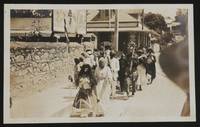
réf. PD19Oblong Folio album ca. 285x36 cm. 49 black paper album leaves. With ca. 260 mounted gelatin silver photographs of various size including ca. 20 large photos from ca. 245x32 cm 9 ½ x 12 ½ in to ca. 155x225 cm 6 x 8 ¾ in and 21 panoramas ca. 85x29 cm 3 ¼ x 11 1 /2 in or slightly smaller. The rest of the photos are from ca. 12x17 cm 4 ¾ x 6 ¾ in to ca. 4x6 cm 1 ½ x 2 ¼ in; most photos are ca. 8x14 cm 3 ¼ x 5 ½ in. No captions. About twenty photos with period ink notes “D.K.M. 10” in the corners. Period style black half morocco with cloth boards; decorative gilt-tooled borders on both boards and spine. Album leaves brittle several with tears and losses on extremities two large photos with tears and losses on extremities two small photos with losses of one corner each one photo has been apparently previously removed a few photos smildly faded or with mild silvering but overall a very good album of interesting photos. Historically significant album with lively amateur snapshots and original studio photos taken and collected by a family of American tourists during a Caribbean cruise in the early 1910s onboard the steamship “Moltke” of the Hamburg America Line Hamburg-Amerikanische Packetfahrt-Aktien-Gesellschaft or HAPAG. Launched in 1901 S.S. “Moltke” went on regular cruises around the Caribbean and the Mediterranean until it was seized by Italy in 1915 in the course of WW1. Her Caribbean or West Indies cruises departed from New York and included stops in Cuba Puerto Rico Jamaica Panama Canal Venezuela Trinidad Barbados Martinique St. Thomas Dutch West Indies Bermuda & Bahamas. The album opens with several large views and panoramas of Havana harbour and waterfront featuring Castillo del Morro the iconic building of Lonja del Comercio commodities and stock exchange and S.S. “Moltke.” The other photos show Havana streets and passers-by the interior of a Catholic church &c. Over twenty photos are the views of the city and harbour of Charlotte Amalie on St. Thomas Island – then the capital of the Danish West Indies since 1917 the U.S. Virgin Islands. The images show the city harbour from the distance and close-up a sign of “St. Thomas Bay & Rum Co.” is seen on one of the photos the statue of King Christian IX erected in the Emancipation Garden in 1909 removed in 2021 streets residential neighbourhoods on sloping hills a local market an official residence with the waving Danish flag garden of a Catholic convent with one of the monks posing alone and with a young tourist &c. Over thirty identified views of Puerto Rico a U.S. colony since 1898 a Commonwealth controlled by the U.S. since 1952 show San Juan: Plaza de Armas with the City Hall completed in 1842 Palacio de la Real Independencia now housing the Department of State of Puerto Rico Castillo San Felipe del Morro in the San Juan Bay Plaza Colon with Christopher Columbus monument San Juan harbour city streets and shops building of the “Hotel y Banos” a passenger train with the travellers walking at the front native cart drivers passers-by &c. A large group of photos ca. sixty depict the French Island of Martinique with a series of views of Fort-de-France: statues of Empress Josephine erected in 1859 destroyed in 2020 and Victor Schloelcher erected in 1904 removed in 2020 St. Louis Cathedral with the spire still under construction city streets and harbour “Hotel de l’Europe” distinctive cliffs on the coast near Fort-de-France &c. The views of Martinique include over twenty images of the ill-fated town of St. Pierre which perished during Mount Pelee’s eruption in May 1902. The photos include one view of St. Pierre before the destruction as well as general views of the ruins and desolation with posing tourists. Several images show the ruins of the Co-Cathedral of Our Lady of Assumption the downtown core with a grid of destroyed buildings and charred trees wrecked ships in the harbour a surviving bridge and the remains of the victims. A couple of images feature the top of Mount Pelee with a distinctive lava spine or the “Needle of Pelee” which was formed in October 1902 and collapsed in March 1903. Among the identified photos of Nassau Bahamas are the views of the famous silk cotton tree St. Matthews Anglican church completed in 1802 and the interior of Fort Charlotte. The other images show sugar cane plantations and native workers Caribbean residences streets and markets ports the American coastal steamer “Colonia” a series of scenes from a street carnival procession portraits of local market goers families diving children &c. Several images portray the tourists on board the S.S. Moltke including a group portrait with a lifebuoy of “Moltke Hamburg”. Overall a historically significant visual source on the history of American tourism to the Caribbean in the early 20th century with interesting views of the aftermath of the destruction of St. Pierre by the volcanic eruption. hardcover
réf. PB62Oblong Folio album ca. 26x33.5 cm. 50 card stock leaves. With ca. 218 mounted and 1 loosely inserted gelatin silver photographs including 2 large images ca. 175x25 cm 7 x 9 ¾ in and 2 panoramas from ca. 75x28 3 x 11 in to ca. 85x21 cm 3 ¼ x 8 ¼ in; the rest of the photos from ca. 12x175 cm 4 ¾ x 7 in to ca. 75x11 cm 2 ¾ x 4 ½ in. Most of the photos with period white ink manuscript captions. Period maroon patterned cloth album fastened with a string; front board with an embossed gilt pictorial image of a ship. A couple of photos removed ca. three images slightly loose A couple of photos with mild silvering but otherwise a very good album with strong interesting photos. Historically important extensive collection of vivid and lively vernacular photos taken by a U.S. Navy serviceman from Aerial Squadron 51 during the Neutrality Patrol in the Caribbean in 1939-1941. The Patrol initiated by President Franklin Roosevelt in September 1939 aimed to preserve American neutrality during the early years of WWII by monitoring and reporting on belligerent warship activities in the Atlantic and the West Indies. The album features over eighty interesting views of Panama Cativa Panama City San Blas Portobello captured during the compiler's stay at Coco Solo Naval Air Station. Most of the candid urban photos portray Colon showcasing local hotspots - the Silver Spray Casino “One of the ‘Elite’ Nite Clubs in Colon” Bilgray’s Tropical Bar 1924-1974 the Atlantic Night Club and the Chinese Bar adorned with delicate posters of Chinese ladies. There are also lively scenes of Panamanian Boy Scouts carrying American flags butchers selling meat in the native market locals buying lottery tickets “Everybody buys a lottery ticket” uniformed men examining theatre posters and people enjoying meals at a soda fountain. About ten photos capture the festive atmosphere of the 1941 Pre-Lent Celebration in local streets several signboards are clearly visible with participants in ceremonial attire joyfully waving from cars. Additionally a series of images document the aftermath of the 1940 Great Fire and the temporary quarters for the fire victims “furnished by the U.S. Army. " The rest of the interesting “Panamanian” photos capture scenes of the San Blas Indian Village including native children swimming in canoes sharing smiles with Squadron soldiers standing alongside native huts and an “Indian family” dressed in traditional clothing seated in a boat. Several photos show the Madden Dam near the city of Gamboa completed in 1935 Berlanga Cathedral in Panama City and likely the compiler posing beside the "Ruins of Old City of Panama. " Most photos from Puerto Rico the San Juan Camp and Cuba Guantanamo Bay Naval Base vividly document Squadron 51’s military life showcasing officers' quarters washrooms tents the exterior & the interior PBY plane lineups morning musters soldiers during exams rifle practices and abandon ship drills. One interesting image features Frank Knox 47th United States Secretary of the Navy on his early inspection trip to the Squadron camp in San Juan. There are also about forty lively group portraits mostly with captions of the squadron members playing baseball volleyball poker & billiard joining in a “tug-of-war” game drinking & laughing at a beer party singing playing violin & drums “quenching thirst in the Jungle” visiting the Caribbean National Park etc. Several photographs show the Capitol and the University of Puerto Rico as well as the aerial view of the Bacardi Rum Mill in Guantanamo. The album also includes two large photos Guantanamo Harbor and "Squadron Baseball Game " and two panoramas the city of New Panama and the U.S. Naval Station in Guantanamo Bay. Overall a historically important collection documenting the American Presence in the Caribbean during the Neutrality Patrol. hardcover
1992réf. SONG1875284486Brand: Ocean Press AU 1992-07-16. First Edition. paperback. Used: Good. 5.75x0.75x8.75. Buy with confidence. Excellent Customer Service & Return policy. Brand: Ocean Press (AU) paperback
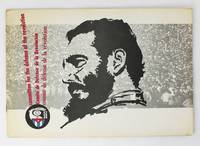
1965réf. 6257Habana 1965. Very good. 16pp. Oblong pamphlet in original pictorial wrappers stapled. Light wear and toning at wrapper edges with a few faint creases. Internally clean. A visually rich pro-Casto and pro-Communist pamphlet that highlights the history and core activities of Cuba's Committee for the Defense of the Revolution CDR neighborhood-based civil defense organizations created by Castro in 1960 to defend the revolution and maintain social and political control at the local level. This often included activities like surveillance distribution of propaganda and vigilante justice. The pamphlet is illustrated with photos throughout and also contains a two-page spread with maps of the island and charts data and statistics about the Cuban people. It contains a year-by-year account of the Committee's achievements and activities and ends with a section concerning its relations with other countries and their visits to Cuba. The rear wrapper states that editions were published in English French and Spanish as evidenced by the trilingual title on the front cover but we find no evidence of any edition in OCLC. Scarce and with much interesting and propagandized information about Castro's local enforcers during the early years of the Communist regime. unknown
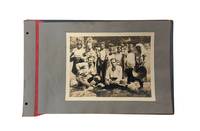
1910réf. 235641910. Cuba photograph album depicting encounters between Western visitors and Cuban communities during the early republican period circa 1910s to 1920s when the island occupied an unusual position between formal independence and continuing American political and economic influence. The photographs move between Havana's monumental architecture hotels and waterfront districts and the rural landscapes villages rivers and agricultural communities that remained largely outside the tourist image promoted to foreign visitors. Repeated appearances of the same Western man often accompanied by a woman who appears to be his wife suggest an extended journey through both urban and remote regions of the island during a period when American travelers businessmen and government personnel moved through Cuba in growing numbers following the Spanish American War and the establishment of the Cuban Republic. Photo album of 26 silver gelatin photographs mounted on unbound album boards with blue covers boards measuring approximately 9 x 15 inches Cuba circa 1910s to 1920s. The photographs range from 6 x 6.5 to 8 x 9.5 inches. Images show waterfront houses built directly along riverbanks; tropical waterfalls and dense forest landscapes; interior courtyards and hotel spaces with colonnades and tiled floors; Morro Castle and lighthouse overlooking Havana Harbor; panoramic views of Cuban towns set among surrounding mountains; market scenes crowded with vendors women and children; cattle standing in shallow waterways; village gatherings outside rural buildings; and groups of local residents posed alongside visiting Westerners. Several photographs depict women standing in rivers holding broad metal pans possibly associated with washing river labor or mineral collection activities. Other images show children families agricultural workers and river communities while a series of portraits records the principal traveler and his companion at various points throughout the journey. One image depicts a group of local residents and Western visitors posed together in a forested region; another shows villagers gathered near a rural homestead while several photographs focus on transportation livestock and daily work in the countryside. The album belongs to the decades following Cuba's transition from Spanish colony to nominally independent republic a period shaped by the Platt Amendment American investment expanding tourism and intensive foreign interest in the island's economic resources and landscapes. Rather than concentrating exclusively on Havana's civic monuments and colonial architecture the photographer devoted substantial attention to rural communities Afro Cuban and mixed-race populations river labor village life and frontier environments seldom emphasized in commercial tourist imagery of the period. The contrast between hotels government-era landmarks village settlements cattle crossings market scenes and encounters with local residents documents the unequal worlds that coexisted within early twentieth century Cuba as foreign visitors moved between urban centers and agricultural regions. Light surface wear occasional toning minor album mounting wear and scattered edge wear to several boards; overall very good condition. A concentrated visual record of how Westerners experienced and represented Cuba's rural communities laboring populations landscapes and colonial-era urban centers during the first decades of the Cuban Republic. unknown