12.067 resultados
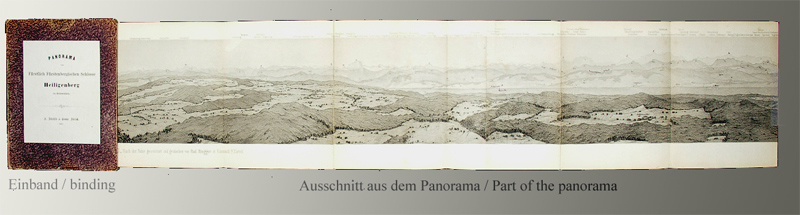
1813ref. 715CG(Zürich, Füssli Komm., 1813). 3 Umrissradierungen. I: 150 x 17 cm. - II: 62 x 17 cm. - III: 37 x 12,5 cm. + Wichtig: Für unsere Kunden in der EU erfolgt der Versand alle 14 Tage verzollt ab Deutschland / Postbank-Konto in Deutschland vorhanden +
1871Veduta a proiezione obliqua presa da un ideale punto al di sopra della Porta del Popolo.Non abbiamo trovato notizie bibliografiche su questo rarissimo documento, probabilmente la prima rappresentazione di Roma, subito dopo la proclamazione a capitale d'Italia (21 gennaio 1871) data che costituisce un termine post quem per il presente panorama.L'opera è dedicata a "tutti i Corpi Istituzionali del Regno ai Municipi ed alla Guardia Nazionale Pubblicato a memoria del voto compiuto 1870", ovvero a tutte le forse armate che contribuirono alla presa di Roma del 20 settembre 1870.Lo stemma sabaudo del Regno d'Italia, la dedica alla Guardia Nazionale ci inducono a pensare che l'opera sia stata stampata a Torino. Una rubrica di 150 rimandi - stampata tipograficamente - completa questo rarissimo panorama.Non possiamo escludere che si tratti di una veduta disegnata da un pallone areostatico.Acquaforte e acquatinta, leggere abrasioni nella parte superiore, piccoli restauri visibili al verso, nel complesso in buono stato di conservazione. Bird's eye view taken from an ideal point above the Porta del Popolo.We have not found bibliographic information on this very rare document, probably the first representation of Rome, immediately after the proclamation as the capital of Italy (January 21, 1871) date which is the terminus post quem for the present panorama.The work is dedicated to "tutti i Corpi Istituzionali del Regno ai Municipi ed alla Guardia Nazionale Pubblicato a memoria del voto compiuto 1870", that is to say to all the perhaps armed forces that contributed to the taking of Rome on September 20, 1870.The Savoy coat of arms of the Kingdom of Italy, the dedication to the National Guard lead us to think that the work was printed in Turin. A column of 150 references - typographically printed - completes this very rare panorama.We cannot exclude that it is a view drawn by an aerostatic balloon.Etching and aquatint, slight abrasions in the upper part, small restorations visible on the reverse side, overall in good condition.
1642Acquaforte, 1642, firmata in lastra in basso.Bellissima prova, impressa su carta vergata coeva, con ampi margini, in perfetto stato di conservazione.Inusuale veduta panoramica della città, presa dalle pendici di Monte Mario. La Basilica, in primo piano, è disegnata con grande dettaglio, come pure il panorama della città, dove sono riconoscibili numerose opere architettoniche. "L'incisione è la prima grande veduta di Roma realizzata da Israel Silvestre pochi anni dopo il suo arrivo in città. Questa è ripresa dalle pendici di Monte Mario e il panorama spazia dalla Porta del Popolo al complesso del Vaticano. Il formato oblungo e la scelta del punto di vista verrà largamente ripreso dagli artisti successivi. La veduta venne incisa da un disegno eseguito ad vivum da L. de Lincher, un disegnatore francese poco noto che fu attivo in quegli anni a Roma e fornì i sui disegni a diversi incisori fra i quali anche il conterraneo Francois Collignon" (cfr. Barbara Jatta in "Roma Veduta" p. 164),Il Silvestre, incisore e disegnatore, nasce a Nancy nel 1621. Tra il 1638 e il 1641 viaggiò in Italia; si hanno notizie della sua presenza nella Penisola ancora nel 1643 e nel 1653. Il suo stile fu, all’inizio, piuttosto sciolto, ma dal 1643 in poi divenne più raffinato e delicato, acquisendo accuratezza e precisione senza essere asciutto, risultando a volte simile a quello di Jacques Callot o di Stefano della Bella, con i quali ebbe rapporti di amicizia. Accanto alle testimonianze per la Roma antica mostrò ben presto un grandissimo interesse per la città "moderna", divenendo uno dei precursori del vedutismo - non solo nel campo incisorio - anticipando artisti come Lievin Cruyl e Gaspar van Wittel.Primo, in ordine cronologico, dei quattro panorami dedicati dall’artista francese alla città. Molto rara. Bibliografia Le Blanc III, p. 508, 224; Roma Veduta, pp. 164-165, n. 24; Faucheaux, Catalogue raisonné de l’oeuvre d’Israel Silvestre, 28 II/II. Etching, 1642, signed on lower plate.Beautiful work, printed on contemporary laid paper, wide margins, in very good condition. First, in chronological order, of the four panoramas dedicated by the French artist to the city. The engraving is the first large view of Rome made by Israel Silvestre a few years after his arrival in the city. This is taken from the slopes of Monte Mario and the panorama ranges from the Porta del Popolo to the Vatican complex. The oblong format and the choice of the viewpoint will be largely taken up by the artists who followed. The view was engraved from a drawing made ad vivum by L. de Lincher, a little-known French artist who was active in Rome in those years and supplied his drawings to various engravers, including his fellow countryman Francois Collignon (cf. Barbara Jatta in "Roma Veduta" p. 164) Silvestre, engraver and draftsman, was born in Nancy in 1621. Between 1638 and 1641 he travelled in Italy; we have news of his presence in the Peninsula still in 1643 and 1653. His style was, at the beginning, rather loose, but from 1643 onwards he became more refined and delicate, acquiring accuracy and precision without being dry, sometimes similar to that of Jacques Callot or Stefano della Bella, with whom he had friendly relations. Alongside the evidence for ancient Rome, he soon showed great interest in the 'modern' city, becoming one of the precursors of vedutism - not only in the field of engraving - anticipating artists such as Lievin Vruyl and Gaspar van Wittel. Literature Le Blanc III, p. 508, 224; Roma Veduta, pp. 164-165, n. 24; Faucheaux, Catalogue raisonné de l’oeuvre d’Israel Silvestre, 28 II/II.
1839Litografia, 1839, firmata e datata in basso a destra e sinistra. Bellissima prova, impressa su quattro fogli di carta coeva uniti, leggere ossidazioni, per il resto in ottimo stato di conservazione. Questo panorama è idealmente preso dalla torre del Campidoglio ruotando da sinistra verso destra di 360 gradi, con una raffigurazione che inizia dal Pincio e si chiude a Piazza del Popolo. L’opera è stampata dalla litografia Kier di Venezia e nel margine inferiore reca una leggenda di 69 numeri. L’impianto della veduta è ancora quello di un pittore di tradizione settecentesca, in sintonia con la definizione che lo stesso Caffi, allora trentenne, dava di se stesso: “pittore prospettico”. Emilio Re nella biografia sull’artista della mostra romana del 1959 definisce, già allora, “rara” la veduta. Bibliografia: Vedute Romane, pp. 13, 50, n. 74; Roma Veduta, p. 221, 67; Le piante di Roma nelle collezioni private, p. 344, 276. Lithograph, 1839, signed and dated on lower right and left. Beautiful work, printed on four sheets of contemporary paper - joined together - light oxidations otherwise in excellent condition. This panorama is ideally seen from the tower of the Campidoglio, rotating towards the right side of 360 degrees, starting from the Pincio and ending in Piazza del Popolo. The work has been printed by the Kier lithography in Venice; on lower margin it bears 69 numbers. The setting of the view recalls that of an XVIII century painter, according to the definition that Caffi himself, at the age of thirty, gave of his art: “perspective painter”. In his biography of the artist, written on the occasion of the 1959 exhibition, Emilio Re defined this subject “rare”. Bibliografia: Vedute Romane, pp. 13, 50, n. 74; Roma Veduta, p. 221, 67; Le piante di Roma nelle collezioni private, p. 344, 276. Dimensioni 1450x145. Vedute Romane, pp. 13, 50, n. 74; M. Gori Sassoli (a cura di), "Roma Veduta", p. 221, s. 67; C. Marigliani, "Le Piante di Roma delle collezioni private", tav. 276.
18168vo. Fan-folded, hand-coloured aquatint (with 9 folding double leaves, c. 195 x 1980 mm) in contemporary blindstamped blue boards with floral design and mounted border. In slipcase with mounted title. The finest and rarest of Keller's panoramas in contemporary colour, depicting the view from Mount Rigi from Risch on Lake Zug to Kuessnacht on Lake Lucerne. Not to be confused with Keller's much more common like-titled panoramas of merely half size, published from 1820 onwards (cf. Harteveld Cat. 206, no. 123: their copy described as "splendidly coloured copy, then sold for the fourfold price of copies in simple colour"). In 1823 Keller was to publish yet another large-format panorama as part of a book with the same title, again not identical with this present view. - The title label bears the publisher note as quoted above; the view itself is captioned: "Gezeichnet auf dem Rigi-Kulm, 1814, von H. Keller, Vermehrt u. Berichtigt 1816 / gestochen von J. J. Scheurmann 1815". Two flaps (measuring 70 x 160 mm) can be folded out at the bottom, through with the view includes Arth on Lake Zug. Similarly, Mount Rossberg is also inserted as a flap, behind which the viewer may uncover Lake Aegeri and Eccehomo. Mounted on the back pastedown is a coloured engraving: "Le Mont Righi, dessiné près de Zoug" (175 x 107 mm; B. Bullinger del., F. Hegi sc.). - Minute paper defect on the horizon at far left, otherwise in perfect condition. Binding with occasional insignificant staining; altogether very clean. Insignificant bumping to edges of slipcase. Ms. ownership note by the Austrian actor Joseph Koberwein (1774-1857). The son of the important travelling actor Simon Friedrich Koberwein made his debut in 1796 at the Vienna Court Theatre and remained as a member of the ensemble until 1846. His principal roles were Ferdinand, Leicester, and Wallenstein. - Very rare; library and collection catalogues (OCLC, British Library, etc.) list only the later editions. Cf. Lonchamp 1672 (note). Barth 193787ff. (book edition only).
1865ref. 37BGZürich, H. Füessly & Comp. zur Meise, 1865. Stahlstich. Nach der Natur gezeichnet und gestochen von Rud. Ringger in Küsnach b/Zürich. Druck von D. Herter in Zürich. Bildgrösse: 10,2 cm x 302 cm. + Wichtig: Für unsere Kunden in der EU erfolgt der Versand alle 14 Tage verzollt ab Deutschland / Postbank-Konto in Deutschland vorhanden +, 37BG Orig.-Pappdeckel (Gelenke u. Kanten leicht berieben, Ecken minim bestossen) in Orig.-Papp-Schuber (berieben, Gelenke angeplatzt, etwas verblasst).
1953ref. biblio664Overall size is about 31 1/2" X 21". Map has some creasing and the top left corner has some crinkling. Includes a full size Map of Havana A Map of Marianao Interesting Places in Marianao Map of the Gulf of Mexico City of Havana Streets. Ships First Class with Delivery Confirmation. Ucar Garcia, S. A. paperback
ref. 70011Paris, Braun & Cie. Imp. Edit. 1925, 95x160mm, 20pages, Bel exemplaire.
ref. 70012Paris, Braun & Cie. Imp. Edit. 1931, 95x160mm, 24pages, Bel exemplaire.
1973ref. 11988Paris Hachette 1973 Un fascicule in-8 broché, couverture illustrée, 112 pages, illustrations en n&b. Bon état.
1786ref. 32943(Paris, ca. 1786). 25,3x31 cm. Engraved map of Northern Russia, the european part. In original handcolouring. The map engraved by E. Dussy.
ref. 72247Partitions sur le Jeu
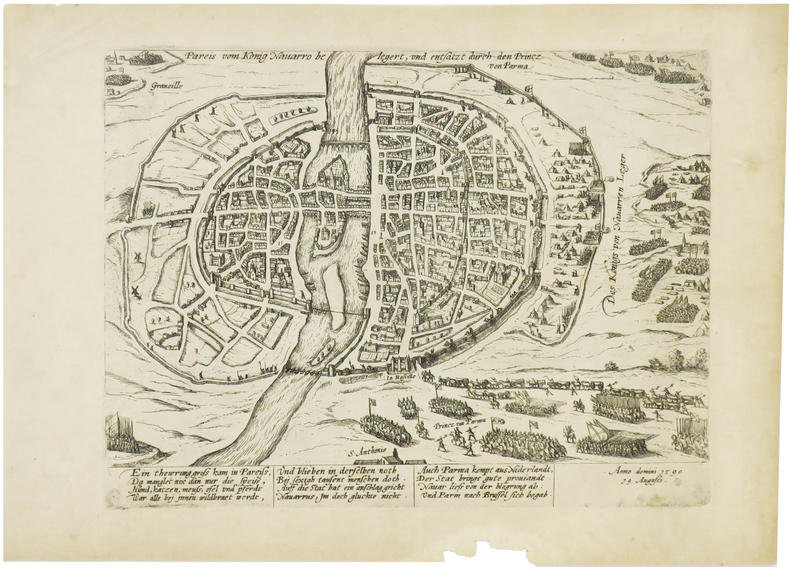
1590ref. LBW-65151590?. 210 x 276 mm.
ref. 232333(Fin du XIXème siècle), 60 x 87 cm (cuvette) - 68 x 100 cm (feuille), Pliures. Signature de Nicolas Bailleul effacée.
ref. ORD-10546Carte postale sans nom d'éditeur. Beau plan, très animé, 9 personnes dont l'opérateur et un personnage en uniforme qui semble prendre des notes. Avant 1914. Carte postale (137 x 90mm), écrite au verso, non timbrée. Bel exemplaire.
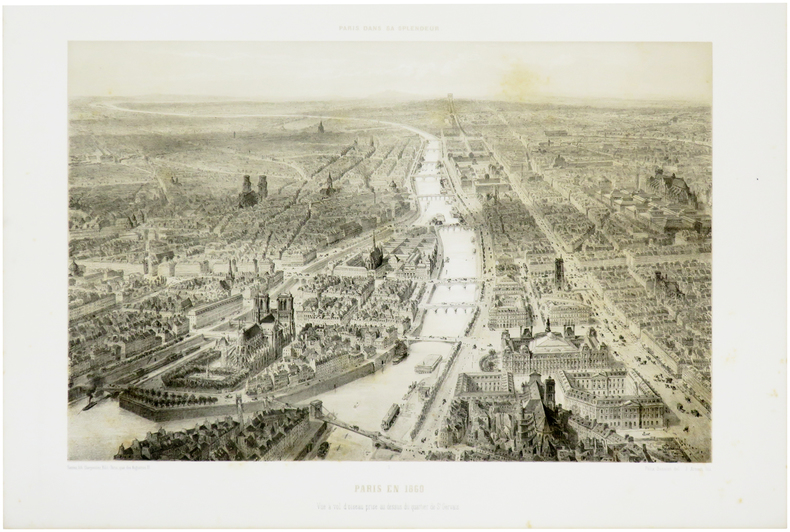
1889ref. LBW-5993Paris, [1889]. 606 x 768 mm.
1889ref. LBW-8831[Paris, 1889]. 610 x 769 mm.
1889ref. LBW-8865[Paris, 1889]. 607 x 771 mm.
1889ref. LBW-8866[Paris, 1889]. 607 x 770 mm.
1841ref. LBW-8994Paris, Dusillion, [1841]. En 32 sections montées sur toile et repliées, formant une carte de 0,78 x 1,15 m ; au dos, étiquette de l'Atelier de Collage de Cartes Géographiques, Tableaux etc d'Auguste Logerot à Paris.
ref. 86403Milan, Portraits Scènes et Petits Métiers, 1989, 131 p., cartonnage éditeur oblong, bon état.
1861ref. LBW-5508Paris, Henri Charpentier, [1861]. 303 x 399 mm.
1861ref. LBW-5509Paris, Henri Charpentier, [1861]. 293 x 400 mm.
1872ref. LBW-7280Nantes, Charpentier, [1872]. 287 x 365 mm.
1650ref. LBW-5727[circa 1650]. 406 x 516 mm.