8.570 resultados
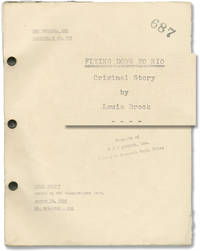
1933ref. 153095Culver City CA: RKO Studios Inc 1933. Final Draft script for the 1933 film. Carbon typescript on onionskin stock with production number "687" and "Property of RKO Studios Inc. Return to Scenario Dept. Files" stamps on front wrapper. Based on an unpublished play by Anne Caldwell and Louis Brock. One of the most famous dance debuts in film history featuring the iconic team of Fred Astaire and Ginger Rogers performing "The Carioca." The film's success set a dance and music craze across the country and made the pair bankable worldwide for a string of classic films. Nominated for an Academy Award. Set in and shot on location in Rio de Janeiro Brazil. Tan titled wrappers noted as FINAL SCRIPT on the front wrapper rubber-stamped production No. 687 dated August 25 1933 with credits for author Louis Brock. 161 leaves with last page of text numbered 159. Ribbon copy typescript rectos only. Pages Near Fine wrapper Near Fine bound with three gold brads. RKO Studios, Inc unknown
1933ref. 153095Culver City CA: RKO Studios Inc 1933. Final Draft script for the 1933 film. Carbon typescript on onionskin stock with production number "687" and "Property of RKO Studios Inc. Return to Scenario Dept. Files" stamps on front wrapper. Based on an unpublished play by Anne Caldwell and Louis Brock. One of the most famous dance debuts in film history featuring the iconic team of Fred Astaire and Ginger Rogers performing "The Carioca." The film's success set a dance and music craze across the country and made the pair bankable worldwide for a string of classic films. Nominated for an Academy Award. Set in and shot on location in Rio de Janeiro Brazil. Tan titled wrappers noted as FINAL SCRIPT on the front wrapper rubber-stamped production No. 687 dated August 25 1933 with credits for author Louis Brock. 161 leaves with last page of text numbered 159. Ribbon copy typescript rectos only. Pages Near Fine wrapper Near Fine bound with three gold brads. RKO Studios, Inc unknown books
1848ref. 29072New York: Van Norden 1848. The 1st annual report of the Hudson River Railroad not recorded on OCLC. Early reports authorizing the construction of the railroad from NY to Albany are dated 1848; the 2nd Annual Report of the Directors of the Hudson River Railroad is dated August 1849 The New York & Harlem Railroad NY&H was incorporated in 1831 to build a line in Manhattan from 23rd Street north to 129th Street between Third and Eighth Avenues the railroad chose to follow Fourth Avenue. At first the railroad was primarily a horsecar system but in 1840 the NY&H's charter was amended to allow it to build north toward Albany. In 1844 the rails reached White Plains and in January 1852 the NY&H made connection with the Western Railroad later Boston & Albany at Chatham New York creating a New York-Albany route. The Hudson was a busy river and the towns along it felt no need for a railroad - except during the winter when ice prevented navigation. Poughkeepsie interests organized the Hudson River Railroad in 1847. 8vo 24 page pamphlet. Printed paper wrappers one folding sheet of statistics tipped-in. Ex-lib with Hamilton College Library stamp and catalog numbers at front cover and slt foxing internally o/w very good. A fascinating first look at the Hudson River Rail line with the progress to date" now about 3000 men working between this city and Poughkeepsie the most of them between the city and Breakneck hill." p2. Van Norden unknown
1853ref. 78787Adelaide: W.C. Cox Printer 1853. First Edition. Hardcover. Very Good. Adelaide W.C. Cox Printer 1853. Octavo 46 pages. Antique-style quarter calf and marbled papered boards; title page slightly dusty and a trifle marked with two tiny closed tears to the top edge; a few pencilled emphases to the margins; light vertical crease down the centre of the last six leaves; an excellent copy. The author Clerk of the Executive Council of South Australia was on board the vessel; this is his account of the first successful navigation of the Murray as far as Swan Hill by Captain Francis Cadell. Fellow-passenger James Allen also published his version of events. Captain William Randell and his paddle-steamer 'Mary Ann' left Goolwa at the Murray mouth ahead of Cadell and travelled much farther up the Murray but Cadell overtook him en route and reached Swan Hill first. However both men deservedly earned the bonus of 2000 pounds offered by the South Australian Government 'for each of the first two steamers to travel up the Murray as far as the Darling junction' 'Australian Dictionary of Biography'. W.C. Cox, Printer hardcover
1935ref. 2110502150414142Heibonsha 1935. Soft Cover. Fine. Number of books: 11 Heibonsha paperback
1841ref. 117511langlois leclercq fortin masson renard martinet 1841 16 in-8 A Paris, Au Bureau Principal des Editeurs, et chez Langlois et Leclercq/ Fortin, Masson et Cie, Renard, Martinet et Cie, 1841-1849, 16 volumes in-8 de 245x155 mm environ, de 384 à 820 pages par volume, complet de 287 planches annoncées sur la table (dont de nombreuses rehaussées à l'aquarelle). Demi chagrin bleu nuit, dos à 4 nerfs plats portant titres et tomaisons dorés, gardes marbrées. Dos insolés, des frottements sur les coiffes, les coins et les coupes, des épidermures, des rousseurs, des pages brunies, état général satisfaisant.
1832ref. PHO-1689Paris, J. Tastu, 1832, In-folio, demi-chagrin noir, dos orné de filets dorés à froid Atlas de botanique seul comprenant 76/80 pl. sur chine collé, liste des planches in fine, peu de défauts.
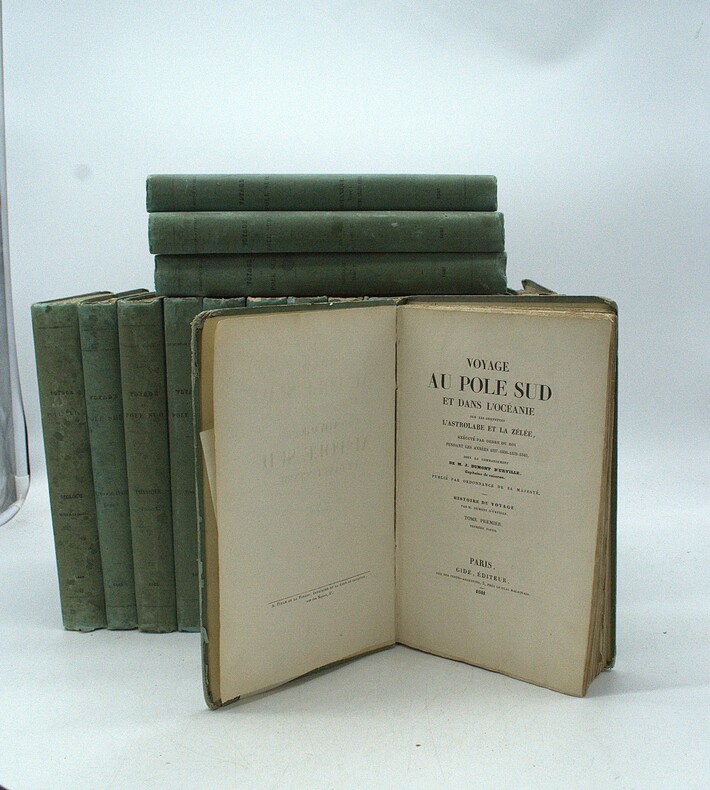
1841ref. PHO-1967Paris, Gide, 1841-1848, in-8, cartonnage éditeur, frottements, qlqs petits manques de matière, coins usés, qlqs coiffes usées, qlqs taches aux plats, T4 avec manque au dos et en haut du 1er plat 16 volumes de texte (sur 21) comprenant : Histoire du voyage, 1841-1846. 10 volumes en premier tirage, (1er tome, 1ère partie correspondant au 1er tome, 1er tome seconde partie correspondant au 2nd tome et 2nd tome, 1ère partie correspondant au tome 3), T2 mouillure en marge sur les derniers feuillets, T4 mouillure, T2 rousseurs, papier légèrement bruni aux tomes 3,4,5,6,7,8 et début tome 9. Zoologie, 1846, 2 volumes (sur 4, tome 1 et2) Botanique, 1845, 1 volume (sur 2), tome 1, plantes cellulaires, papier légèrement bruni Physique, 1842. 1 seul volume (en raison de la mort de Vincendon-Dumoulin) bien que d’autres annoncés, papier légèrement bruni Géologie, Minéralogie et Géographie physique du Voyage. 1848- 1 volume (sur 2, le second paru en 1854), 1 planche in-fine, papier légèrement bruni Hydrographie. 1843. 1 volume (sur 2), 1 planche in-fine, papier légèrement bruni.
ref. 46401979, Londres, Nourse ; Paris, Desaint, 1767 ; 2 vol. in-12, veau fauve marbré, dos ornés, tranches bleues marbr. (Reliures de l’ép.). 1 f. blanc, faux-titre, titre, puis paginé de VII à XVI, 353 pp.- 2 ff., 547 pp.EDITION ORIGINALE in-12 parue en même temps et chez les mêmes éditeurs qu’une édition in-4. Dupont de Nemours a qualifié ce livre « d’ouvrage sublime ». C’est Le Mercier de La Rivière qui réussit à enthousiasmer Diderot pendant quelques mois pour la Physiocratie : « Il est le premier qui m’ait éclairé, qui m’ait instruit…Il est le seul qui m’ait donné des idées claires, nettes et vraies du commerce tant intérieur qu’extérieur, et de la nature du commerce en général » (Lettre à Damilaville 1767). « Subjugué par la cohérence de la doctrine exposée par l’auteur, qui avait été intendant des Antilles de 1759 à 1764, Diderot le recommanda chaleureusement à Catherine II puis l’invita en Russie. L’entente ne fut guère parfaite et Le Mercier séjourna seulement à Saint-Pétersbourg d’octobre 1767 à mars 1768. Adepte du despotisme légal qui n’est autre que celui de l’ordre naturel, Le Mercier donna un fondement philosophique à la doctrine économique de Quesnay. Le monarque physiocrate dispose à la fois des pouvoirs législatifs et exécutifs ; il est absolu, mais ce despotisme n’est nullement en contradiction avec l’indispensable liberté économique car le souverain n’est pas là pour faire des lois, mais appliquer les lois naturelles ; faire respecter la propriété et la liberté, telles sont les missions de l’Etat. L’ouvrage se termine par une théorie de l’impôt : le souverain héréditaire est le co-propriétaire foncier du royaume et l’impôt constitue une co-jouissance indispensable des revenus du Domaine » Hasquin. Diderot et son temps n°178 - Lavergne p.183.- INED 2794.- Einaudi 3307.- Kress-Goldsmith 10269.- Janet II p.637.Bel exemplaire avec un ex-libris manuscrit du XVIII e S. « Préau ». Cet ex-libris est rayé et remplacé par celui d’un certain N. Boussé ( ?) qui en avril 1846 a rédigé une note critique sur la garde du tome I. Notes au crayon par le même, dans plusieurs marges de l’ouvrage.
1921ref. ABE-857353084Paris Floury 1921. Renoir et ses amis Riviere George. Paris: Floury 1921. First edition with one original drypoint by Renoir "Le chapeau epingle" Delteil 8 and one color lithograph Tete de jeune fille on front cover printed on fine wove paper in original binding in very good condition. 1st Edition. Soft cover. Very Good/No Jacket. Paris, Floury paperback
1921ref. ABE-857353084Paris Floury 1921. Renoir et ses amis Riviere George. Paris: Floury 1921. First edition with one original drypoint by Renoir "Le chapeau epingle" Delteil 8 and one color lithograph Tete de jeune fille on front cover printed on fine wove paper in original binding in very good condition. 1st Edition. Soft cover. Very Good/No Jacket. Paris, Floury paperback books
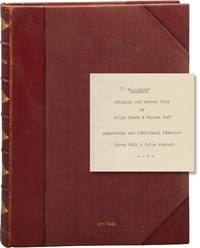
1934ref. 161384N.p.: N.p. 1934. Draft script for the 1935 film seen here under the working title "Caliente." Specially bound copy belonging to screenwriter Jerry Wald with his name in gilt on the front board and his annotations in manuscript pencil on the title page. Jerry Wald is best remembered for his long and successful association with Warner Brothers as both a screenwriter and producer of a number of notable films including "Mildred Pierce" 1945 "Humoresque" 1946 "Key Largo" 1948 and "Flamingo Road" 1949. In the 1950s he moved to Twentieth Century-Fox and was the producer there for "An Affair to Remember" 1957 "Peyton Place" 1957 and "Sons and Lovers" 1960. In order to sober up a hard-drinking magazine editor is sent to a Mexican resort where he falls in love with a dancer about whom he had once written a scathing review. Choreographed by Busby Berkeley. Shot on location in Tijuana. Bound in red cloth with red quarter leather binding with five raised bands and gilt titles on the spine. Title page present undated with credits for screenwriters Ralph Block Warren Duff Jerry Wald and Julius J. Epstein. 120 leaves with last page of text numbered 115. Mimeograph duplication rectos only with blue revision pages throughout dated variously between 12/21/34 and 1/19/35. Pages Near Fine binding lightly edgeworn and faded else about Near Fine. N.p. unknown
1934ref. 161384N.p.: N.p. 1934. Draft script for the 1935 film seen here under the working title "Caliente." Specially bound copy belonging to screenwriter Jerry Wald with his name in gilt on the front board and his annotations in manuscript pencil on the title page. Jerry Wald is best remembered for his long and successful association with Warner Brothers as both a screenwriter and producer of a number of notable films including "Mildred Pierce" 1945 "Humoresque" 1946 "Key Largo" 1948 and "Flamingo Road" 1949. In the 1950s he moved to Twentieth Century-Fox and was the producer there for "An Affair to Remember" 1957 "Peyton Place" 1957 and "Sons and Lovers" 1960. In order to sober up a hard-drinking magazine editor is sent to a Mexican resort where he falls in love with a dancer about whom he had once written a scathing review. Choreographed by Busby Berkeley. Shot on location in Tijuana. Bound in red cloth with red quarter leather binding with five raised bands and gilt titles on the spine. Title page present undated with credits for screenwriters Ralph Block Warren Duff Jerry Wald and Julius J. Epstein. 120 leaves with last page of text numbered 115. Mimeograph duplication rectos only with blue revision pages throughout dated variously between 12/21/34 and 1/19/35. Pages Near Fine binding lightly edgeworn and faded else about Near Fine. N.p. unknown books
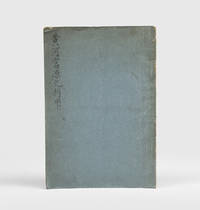
1935ref. 184174Qingdao: no stated publisher 1935. Water power First edition of this rare and extensively illustrated proposal for increasing freight traffic and other commercial transport along China's second-longest river and building new port facilities at the mouth in the Bohai Sea. The valuable maps and plans show infrastructure and key locations along the river as well as past and proposed improvements. Cui Shijie 1888-1970 was a government official in Shandong Province charged with regional economic development. Rivers were a core part of his vision for coastal and hinterland prosperity. He published his report four years after the devastating 1931 floods when China's major water systems burst their banks and claimed the lives of up to 4 million people the worst natural disaster ever recorded. The table of contents calls for two end plans that were seemingly not issued as they are present neither in this copy nor in the copy held by the National Library of China. Quarto 255 x 175 mm bound without author's portrait title page and 2-page preface. With all substantive illustrations including 32 maps and plans 12 folding 2 diagrams tables in text. Text in Chinese. Contemporary blue card covers traces of original spine front cover lettered in manuscript. Red pencil underlining in text; old Chinese bookseller's annotated ink stamp on rear cover. Rear cover reattached contents lightly and evenly toned maps plans and diagrams well preserved: very good. unknown
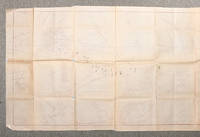
1937ref. 176095China: Hai Ho Conservancy Commission 1937. An imposing cartographic document A rare plan untraced institutionally produced on the cusp of the Japanese invasion of Tianjin showing the fruits of a multi-decade effort to turn the city into a major international port. "Connected with the sea by an artificial river Tianjin's status as a seaport was heavily dependent on the continuous conservancy efforts of the Haihe and its tributaries" "River Conservancy". Formed in 1897 the Hai Ho Conservancy Commission focused on opening the channel to shipping for example by straightening the channel and thereby cutting the route to the sea by 17 miles. This plan shows the river's winding course marked with hundreds of survey stones and the build-up of warehouses and wharves by the foreign concessions Tanggu and Xidagu. Also shown are the results of the most recent survey of the seabed at the river's mouth. Although Japan declared war on China in July 1937 it respected the integrity of Tianjin's foreign concessions and river management remained in the hands of the British French and American authorities until Pearl Harbor. At the same time Japan started development of Tanggu Xingang - the foundations of which blossomed into the present-day megaport at Tianjin. Diazoprint plan 67 x 274 cm printed in reddish brown text primarily in Chinese. Contemporary black ink and red crayon marking and annotations in Chinese and Japanese on both sides. Toned old folds a few small splits and losses neatly conserved with tissue: a very good example of a fragile document. "River conservancy and the undetermined future of the port of Tianjin" Open Rivers available online. unknown
1933ref. 165267Nanjing: Yangtse River Commission 1933. Richly illustrated with 130 elevations statistical graphs and plans First edition first printing of this report published in the wake of the devastating 1931 Yangtse floods. In 1930 the Yangtse River Commission focused on hydrological engineering and regulating the channel with surveys conducted at ten of the river's eleven bars. We have traced a single institutional copy of this detailed report held by the Chinese Academy of Sciences Natural Science Library. In keeping with the commission's Chinese and expatriate membership the same information is presented in both English and Chinese. This copy is bound without pages 39-44 of the Chinese-language portion with the corresponding data and text appearing on pages 26-31 of the English section. The bilingual plates employ both English and Chinese. While the English title page dates the report to 1931 this is more accurately a reference to when the text and data were compiled. Quarto 255 x 185 mm. With 130 plates tables in text. Text in English and Chinese. Near-contemporary brown card post-binder purple linen backstrip part of original front wrapper laid down on front cover rear wrapper bound in. Chinese-language section missing pages 39-44. Post-binder worn but still sturdy chipping to first leaf and rear wrapper text generally fresh. A very good copy. unknown
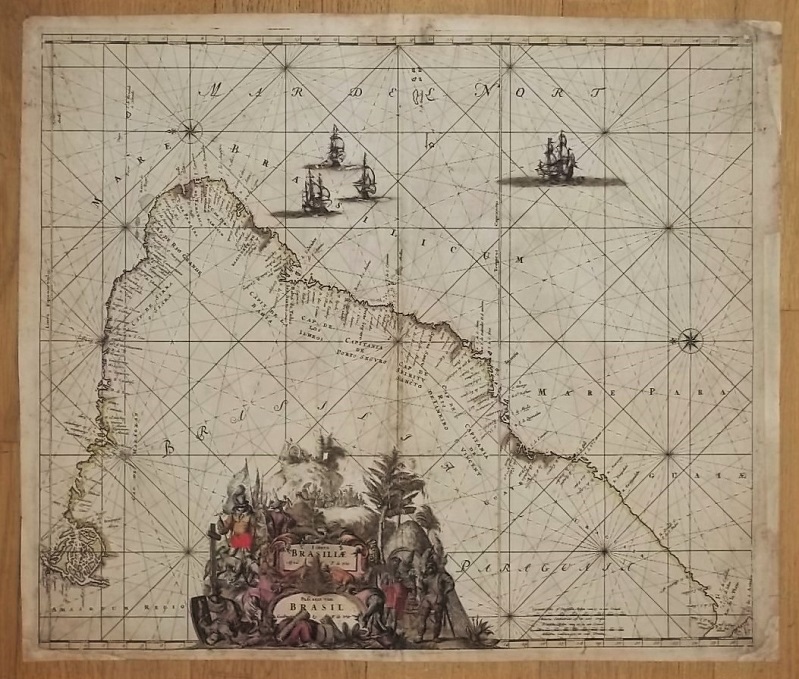
1700ref. 17363Amsterdam, de Wit, 1675 (recte um 1700). Ca. 49,5 cm x 57 cm. [4 Warenabbildungen]
ref. 013827Jean Ribit de la Rivière (ca.1546-1605), médecin genevois, protestant, premier médecin du roi Henri IV. P.S., 8 avril 1603, 1p in-4. Sur parchemin. Intéressant document certifiant la livraison de drogues et médicaments pour le roi et la chambre du roi par l'apothicaire du roi Raymond de La Livre pour le premier quartier de 1603. « Nous Jehan de La Rivière Con[seill]er & Premier Médecin du Roy Certiffions à tous qu'il ap[par]tiendra que Remond de La Livre appo[thicai]re & varlet de Chambre a fourny, baillé & livré tant po[u]r la personne du Roy que po[u]r le faict de sa Chambre et officiers domesticques, que plusieurs drogues médecines & aultres parties de sondict estatqu'il a faites & fournyes durant le quartier de janvier / febvrier/ & mars dern[ie]rs passés. Montant ensemble deulx mil soix[ant]e & dix livres [.] Le VIIIème d'apvril [.] en l'an mil six cens troys ». [328-2]
1867ref. 104124Paris, J. Rothschild, 1867-1868, in-8, 2 vol. in-4 : X-286 pp. 78 pl. + 242 pp. 81 pl, Demi-maroquin bleu canard, dos long orné de filets dorés, couverture conservée, Édition originale illustré de 159 pl. toutes en couleurs sauf pour 4 d'entre elles et très nombreuses vignettes dans le texte, d'après Riocreux, Faguet, Poteau et Yan'dargent. Il s'agit d'un ouvrage de référence sur les fougères qui paraît au plus fort de la "ptéridomanie" ou folie des fougères qui embrasa le Royaume-Uni dans la seconde moitié du XIXe siècle puis envahit le reste de l'Europe. L'ouvrage donne en premier lieu une histoire botanique puis des conseils pour la culture des fougères, répartis en trois groupes différents en fonction des températures idéales pour leur croissance. L'ouvrage se termine sur une Histoire botanique et horticole des sélaginelles de Roze. Infimes frottements, couvertures et la dernière garde du 1er vol. réparées au ruban adhésif, rousseurs, quelques pâles décharges. Couverture rigide
1937ix, [1], [1], 2-82, [1] pages. Glossary. Two-colour foldout map of The Yangtsze Kiang inside front board. Four-panel foldout map of the Yangtze River, Ichang to Chungking, inside back board. 8.75" x 6.75". Printed upon light tan glossy stock. Black and white sketches in text. Author served with Jardine, Matheson & Co., Ltd. "Intended to provide the would-be visitor to this part of China with the precise information necessary to make the journey up the 'Great River' or 'Ta Kiang', as the Chinese mostly call it, as comfortably as possible." - Foreword. Mentions how changes of the last decade have rendered similar publications outdated. One can scarcely imagine the extent of the changes which have taken place along the river after China's all-world infrastructure development of recent decades. Light wear to chocolate brown patterned string-bound boards lettered in gilt. Yellowed tape remnants inside each board. Small bit of peeling from first foldout map. A high-quality copy of this pleasing vintage guide to travel along China's mighty Yangtsze-Kiang. Book
1942ref. 233601942. Internment camp copy of Flowering Plants and Ferns of Arizona from the Gila River Project School Libraries preserving the school library apparatus of a War Relocation Authority camp for Japanese Americans incarcerated in Arizona during World War II. The stamp "Property of Gila River Project School Libraries / War Relocation Authority" the "High School Library" date slip and the retained circulation card checked out to "Mrs. Young" on February 21 place this volume inside the camp's formal school system. Gila River was one of the War Relocation Authority camps created to confine Japanese Americans removed from the West Coast and this is one of the materials which circulated within that controlled educational setting. Gila River confined more than 13000 Japanese Americans and maintained a formal elementary and secondary school system under War Relocation Authority administration with separate school structures in the Canal and Butte camps. The stamp in this volume identifies the bureaucratic machinery through which education was organized inside wartime incarceration. Kearney Thomas H. and Robert H. Peebles. Flowering Plants and Ferns of Arizona. Washington D.C.: United States Department of Agriculture 1942. USDA Miscellaneous Publication 423. This copy was held by the Gila River Project School Libraries the school library system operating within the Gila River War Relocation Center under War Relocation Authority administration. 9" x 5" x 2" 1069 pages. The ownership stamp rear pastedown date slip marked "High School Library" and retained book pocket and circulation card identify the book as part of that internal educational bureaucracy rather than a later outside institutional holding. Thick octavo in original green cloth stamped in gilt. The title page identifies Kearney as Principal Physiologist and Peebles as Associate Agronomist in the Division of Range Research Bureau of Plant Industry. Preliminary leaves include a detailed table of contents with sections on ecological factors geographical relationships of the flora vegetation and an annotated list of species while the introduction notes Arizona's exceptional botanical diversity and the absence of any earlier comprehensive manual for identifying its flowering plants and ferns. The camp provenance distinguishes this copy. Gila River divided into the Canal and Butte camps on the Gila River Indian Reservation maintained elementary and secondary schools for incarcerated Japanese Americans and this volume preserves the lending mechanics of that system in unusually direct form through its stamp date slip and borrower record. Because the book is a substantial Arizona reference work rather than casual reading matter its use in a camp high school library points to organized classroom or instructional use within confinement linking federal scientific publishing to wartime educational administration inside the camp. Light rubbing to cloth; text block clean and sound; library pocket date slip and circulation card intact; institutional stamp strong and legible. Overall good condition. An internment camp school library copy with circulation evidence still present preserving the internal educational life of Gila River through the use of a federal Arizona flora. unknown
1942ref. 233601942. Internment camp copy of Flowering Plants and Ferns of Arizona from the Gila River Project School Libraries preserving the school library apparatus of a War Relocation Authority camp for Japanese Americans incarcerated in Arizona during World War II. The stamp "Property of Gila River Project School Libraries / War Relocation Authority" the "High School Library" date slip and the retained circulation card checked out to "Mrs. Young" on February 21 place this volume inside the camp's formal school system. Gila River was one of the War Relocation Authority camps created to confine Japanese Americans removed from the West Coast and this is one of the materials which circulated within that controlled educational setting. Gila River confined more than 13000 Japanese Americans and maintained a formal elementary and secondary school system under War Relocation Authority administration with separate school structures in the Canal and Butte camps. The stamp in this volume identifies the bureaucratic machinery through which education was organized inside wartime incarceration. Kearney Thomas H. and Robert H. Peebles. Flowering Plants and Ferns of Arizona. Washington D.C.: United States Department of Agriculture 1942. USDA Miscellaneous Publication 423. This copy was held by the Gila River Project School Libraries the school library system operating within the Gila River War Relocation Center under War Relocation Authority administration. 9" x 5" x 2" 1069 pages. The ownership stamp rear pastedown date slip marked "High School Library" and retained book pocket and circulation card identify the book as part of that internal educational bureaucracy rather than a later outside institutional holding. Thick octavo in original green cloth stamped in gilt. The title page identifies Kearney as Principal Physiologist and Peebles as Associate Agronomist in the Division of Range Research Bureau of Plant Industry. Preliminary leaves include a detailed table of contents with sections on ecological factors geographical relationships of the flora vegetation and an annotated list of species while the introduction notes Arizona's exceptional botanical diversity and the absence of any earlier comprehensive manual for identifying its flowering plants and ferns. The camp provenance distinguishes this copy. Gila River divided into the Canal and Butte camps on the Gila River Indian Reservation maintained elementary and secondary schools for incarcerated Japanese Americans and this volume preserves the lending mechanics of that system in unusually direct form through its stamp date slip and borrower record. Because the book is a substantial Arizona reference work rather than casual reading matter its use in a camp high school library points to organized classroom or instructional use within confinement linking federal scientific publishing to wartime educational administration inside the camp. Light rubbing to cloth; text block clean and sound; library pocket date slip and circulation card intact; institutional stamp strong and legible. Overall good condition. An internment camp school library copy with circulation evidence still present preserving the internal educational life of Gila River through the use of a federal Arizona flora. unknown books
1919ref. 2091502135500753Not Available 1919. Soft Cover. Fine. The book is in fine condition. Not Available paperback
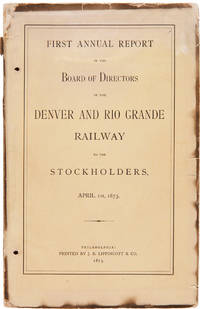
1873ref. 57738Philadelphia: J.B. Lippincott & Co. 1873. Rare Early Report of a Major Western Railroad A rare and detailed report from the infancy of what would become one of the West's largest railway companies. The Denver and Rio Grande Railway D&RG headed by former Union General William Jackson Palmer was founded in 1870 and the first tracks were laid the following year. The goal of the railroad was to find an efficient path through Colorado and across the Rockies and then southwest to a terminus at Los Angeles. The company expanded with considerable aggression and speed and before long was the largest narrow-gauge railway network on the continent. This report touts the results in the year since the railroad reached Colorado Springs the rapid growth in population in towns along the line progress of their work natural resources including coal stone lime and lumber various connecting lines and the goal of taking the railroad into Mexico which greatly wanted for railroads at the time the venture into Mexico would prove to be a disastrous waste of money and manpower. The appendix discusses the virtues of narrow gauge railroads and there are also tonnage reports a list of buildings owned by the railroad in various towns brief descriptions of spur lines and more. From 1877 to 1880 the Denver and Rio Grande was engaged in a railroad war with the Atchison Topeka and Santa Fe Railway led by William Strong in which both companies used political maneuvers physical force and sometimes violent sabotage to get the upper hand. The D&RG continued operations in a variety of shapes all the way until 1996 when it merged with the Union Pacific. The folding map titled "Map showing the Property of the Central Colorado Improvement Company" depicts the assets of that company one of three D&RG subsidiaries that later merged to form the Colorado Fuel & Iron Company. It shows the boundaries of part of the Nolan and St. Vrain grants; some township range and section boundaries; locations of major natural resources; railroads constructed and proposed; and other details. Other railroads shown include the Kansas Pacific future nemesis the Atchison Topeka & Santa Fe and the Arkansas Valley Extension R.R. The lengthy folding profile shows the route of the D&RG from Denver to Pueblo noting elevations as well as a profile of the Arkansas Valley Branch line. This copy is lacking the map titled "Denver and Rio Grande Railway and Connections" which was also published separately in larger format the same year. A rare and important early document from one of the west's largest and longest-running railroads. OCLC records only five copies at the Denver Public Library California Historical Society the Autry Museum Colorado College and the American Antiquarian Society. Original printed wrappers. Wrappers somewhat chipped and stained two small holes punched in gutter throughout. Ex-Denver Public Library with bookplate on inner front wrapper and deaccession stamps on titlepage verso. Soot-stains to edges and outer margins of many pages but on the whole quite clean internally. Good plus lacking one map. OCLC 71998109 1109396713. unknown
1873ref. 57738Philadelphia: J.B. Lippincott & Co. 1873. Rare Early Report of a Major Western Railroad A rare and detailed report from the infancy of what would become one of the West's largest railway companies. The Denver and Rio Grande Railway D&RG headed by former Union General William Jackson Palmer was founded in 1870 and the first tracks were laid the following year. The goal of the railroad was to find an efficient path through Colorado and across the Rockies and then southwest to a terminus at Los Angeles. The company expanded with considerable aggression and speed and before long was the largest narrow-gauge railway network on the continent. This report touts the results in the year since the railroad reached Colorado Springs the rapid growth in population in towns along the line progress of their work natural resources including coal stone lime and lumber various connecting lines and the goal of taking the railroad into Mexico which greatly wanted for railroads at the time the venture into Mexico would prove to be a disastrous waste of money and manpower. The appendix discusses the virtues of narrow gauge railroads and there are also tonnage reports a list of buildings owned by the railroad in various towns brief descriptions of spur lines and more. From 1877 to 1880 the Denver and Rio Grande was engaged in a railroad war with the Atchison Topeka and Santa Fe Railway led by William Strong in which both companies used political maneuvers physical force and sometimes violent sabotage to get the upper hand. The D&RG continued operations in a variety of shapes all the way until 1996 when it merged with the Union Pacific. The folding map titled "Map showing the Property of the Central Colorado Improvement Company" depicts the assets of that company one of three D&RG subsidiaries that later merged to form the Colorado Fuel & Iron Company. It shows the boundaries of part of the Nolan and St. Vrain grants; some township range and section boundaries; locations of major natural resources; railroads constructed and proposed; and other details. Other railroads shown include the Kansas Pacific future nemesis the Atchison Topeka & Santa Fe and the Arkansas Valley Extension R.R. The lengthy folding profile shows the route of the D&RG from Denver to Pueblo noting elevations as well as a profile of the Arkansas Valley Branch line. This copy is lacking the map titled "Denver and Rio Grande Railway and Connections" which was also published separately in larger format the same year. A rare and important early document from one of the west's largest and longest-running railroads. OCLC records only five copies at the Denver Public Library California Historical Society the Autry Museum Colorado College and the American Antiquarian Society. Original printed wrappers. Wrappers somewhat chipped and stained two small holes punched in gutter throughout. Ex-Denver Public Library with bookplate on inner front wrapper and deaccession stamps on titlepage verso. Soot-stains to edges and outer margins of many pages but on the whole quite clean internally. Good plus lacking one map. OCLC 71998109 1109396713. unknown books