985 risultati
rif. 64389aafLeiden, E. J. Brill, 1957, in-4to, 670 p., ill. + 1 folded map, orig. cloth.
1927rif. Arm329Tartu Laakmann 1927 In8 agrafé - 40 pages + 3 planches dépliantes - Nombreuses photographies - En Anglais - Brochure luxueuse imprimée sur papier couché .
1962rif. 51451962 plaquette (booklet) grand in-octavo, dos (spine) blanc - titre en rouge, première de couverture imprimée (front cover printed), illustrations hors-texte (full page engraving), 93 pages, 1962 à Paris Editions Mazarine,
1929rif. 235181929. Photo archive of 12 silver gelatin photographs depicting drilling crews derricks lease camps well stimulation pumpers machinery suppliers and industrial worksites associated with the Salt Flat Oil Field originally known as the Bruner Field near Luling Caldwell County Texas during the peak of the 1929 oil boom and the years immediately following. The photographs document petroleum labor and field operations at one of the most productive Texas oil discoveries of the late 1920s. Contemporary captions preserve the working language of the oil patch identifying a "full gang" a "pusher" a "pumper" a named lease a specific well and a well "shot" on October 4 1929. Together with the verso photo-processing stamps these annotations provide unusually precise evidence for identifying the location and activities depicted. Rather than representing an unidentified Texas oil field the photographs can be tied to the historic Salt Flat Oil Field near Luling in Caldwell County approximately forty-five miles northeast of San Antonio. The 12 Photographs range from approximately 2.5" x 3.5" to 3" x 5.5". Several photographs show derricks rising above sandy and scrub-covered ground with drilling rigs trucks timber supports tanks sheds and rough lease roads surrounding the wells. Workers pose in oil-stained coveralls beside machinery buildings sit outside wooden lease structures stand atop storage tanks and gather around drilling equipment preserving both crew portraiture and active worksite environments. Additional images depict industrial buildings machinery yards and processing facilities connected to the broader petroleum economy. The captions identify the famous Davis Lease one of the most productive properties in the Salt Flat Field located near the marshy lowlands of the San Marcos River outside Luling. Another image is captioned "Rumbaugh No. I Well 5 shot on 10/4-1929." The notation refers to a well drilled on the Rumbaugh family lease during the intensive drilling campaign that transformed the region between 1928 and 1929. To "shoot" a well meant lowering a nitroglycerin torpedo into the borehole and detonating it to fracture the Edwards Limestone formation and increase oil flow. The photograph records the exact day this operation occurred preserving a rarely documented example of a dangerous production technique widely employed before modern hydraulic fracturing. Other captions identify key participants in the field hierarchy. "W. B. Morrison pusher" refers to the toolpusher responsible for supervising drilling operations personnel supplies and equipment. "Full gang and at 1 clearance" appears to document an entire drilling or roustabout crew maneuvering equipment within extremely tight tolerances. "Naldo by pumper" likely identifies a field pumper the worker responsible for operating producing wells and monitoring storage tanks after completion. A photograph captioned "Panama Machinery Co." records one of the supply firms that emerged to furnish drilling components cables boilers and pumping equipment during the boom. Two versos bear "Cooper Photo Tone San Antonio Texas" stamps. While the oil field itself was located in Caldwell County San Antonio served as the principal commercial center for the region and photographs were commonly processed through city photographic studios and commercial darkrooms. The stamps provide a direct connection between the remote lease camps and the urban infrastructure that supported South Texas petroleum development. The date October 1929 gives the archive particular historical significance. The Salt Flat Field reached its peak production during that month producing approximately 97000 barrels of oil per day and standing among the most productive oil fields in Texas. These photographs therefore capture the field at its zenith only weeks before the Wall Street Crash of October 1929 and the onset of the Great Depression. By September 1930 the field had already produced nearly twenty million barrels of oil illustrating the extraordinary pace of development represented in these images. Light surface wear minor edgewear and occasional verso staining; overall very good condition. An unusually well-captioned photographic archive documenting named workers identified leases specific wells and field operations during the peak production years of the Salt Flat Oil Field one of the defining Texas petroleum booms of the late 1920s. unknown books
1929rif. 235181929. Photo archive of 12 silver gelatin photographs depicting drilling crews derricks lease camps well stimulation pumpers machinery suppliers and industrial worksites associated with the Salt Flat Oil Field originally known as the Bruner Field near Luling Caldwell County Texas during the peak of the 1929 oil boom and the years immediately following. The photographs document petroleum labor and field operations at one of the most productive Texas oil discoveries of the late 1920s. Contemporary captions preserve the working language of the oil patch identifying a "full gang" a "pusher" a "pumper" a named lease a specific well and a well "shot" on October 4 1929. Together with the verso photo-processing stamps these annotations provide unusually precise evidence for identifying the location and activities depicted. Rather than representing an unidentified Texas oil field the photographs can be tied to the historic Salt Flat Oil Field near Luling in Caldwell County approximately forty-five miles northeast of San Antonio. The 12 Photographs range from approximately 2.5" x 3.5" to 3" x 5.5". Several photographs show derricks rising above sandy and scrub-covered ground with drilling rigs trucks timber supports tanks sheds and rough lease roads surrounding the wells. Workers pose in oil-stained coveralls beside machinery buildings sit outside wooden lease structures stand atop storage tanks and gather around drilling equipment preserving both crew portraiture and active worksite environments. Additional images depict industrial buildings machinery yards and processing facilities connected to the broader petroleum economy. The captions identify the famous Davis Lease one of the most productive properties in the Salt Flat Field located near the marshy lowlands of the San Marcos River outside Luling. Another image is captioned "Rumbaugh No. I Well 5 shot on 10/4-1929." The notation refers to a well drilled on the Rumbaugh family lease during the intensive drilling campaign that transformed the region between 1928 and 1929. To "shoot" a well meant lowering a nitroglycerin torpedo into the borehole and detonating it to fracture the Edwards Limestone formation and increase oil flow. The photograph records the exact day this operation occurred preserving a rarely documented example of a dangerous production technique widely employed before modern hydraulic fracturing. Other captions identify key participants in the field hierarchy. "W. B. Morrison pusher" refers to the toolpusher responsible for supervising drilling operations personnel supplies and equipment. "Full gang and at 1 clearance" appears to document an entire drilling or roustabout crew maneuvering equipment within extremely tight tolerances. "Naldo by pumper" likely identifies a field pumper the worker responsible for operating producing wells and monitoring storage tanks after completion. A photograph captioned "Panama Machinery Co." records one of the supply firms that emerged to furnish drilling components cables boilers and pumping equipment during the boom. Two versos bear "Cooper Photo Tone San Antonio Texas" stamps. While the oil field itself was located in Caldwell County San Antonio served as the principal commercial center for the region and photographs were commonly processed through city photographic studios and commercial darkrooms. The stamps provide a direct connection between the remote lease camps and the urban infrastructure that supported South Texas petroleum development. The date October 1929 gives the archive particular historical significance. The Salt Flat Field reached its peak production during that month producing approximately 97000 barrels of oil per day and standing among the most productive oil fields in Texas. These photographs therefore capture the field at its zenith only weeks before the Wall Street Crash of October 1929 and the onset of the Great Depression. By September 1930 the field had already produced nearly twenty million barrels of oil illustrating the extraordinary pace of development represented in these images. Light surface wear minor edgewear and occasional verso staining; overall very good condition. An unusually well-captioned photographic archive documenting named workers identified leases specific wells and field operations during the peak production years of the Salt Flat Oil Field one of the defining Texas petroleum booms of the late 1920s. unknown
1939rif. 81851939 broché in-octavo, dos crème, couverture imprimée, non rogné, 338 pages, 1939 à Paris Librairie Arthème Fayard,
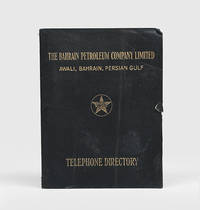
1964rif. 187922Awali Bahrain: 1964. Telephone directory unrecorded elsewhere used at the office of Bahrain Petroleum Company BAPCO in Awali a town founded in the 1930s for the oil workers at the Sitrah refinery. Hundreds of landline extensions illustrate the intricate network of BAPCO employees in the 1960s from refinery tanks supervisors to geologists shipping agents safety advisers chemists and payroll operators. A directory on yellow paper comprises the phone and house numbers of hundreds of employees and even the number to reach Rifa's Palace and Sheikh Isa bin Sultan Al Khalifa. A directory on pink paper lists the phone extensions of all BAPCO buildings according to their house numbers. The map of Awali at rear identifies all the buildings mentioned in the directory. Folio. Folding map at rear diagrams. Original black leatherette folder gilt lettered wire-stitched as issued. Pencilled annotations rubbed out from title page. Extremities a bit rubbed or creased small tear on outer edge of front wrapper contents lightly toned title page a little soiled small loss on folding map: a good copy. hardcover
1960rif. PHO-678Paris, Gallimard, 1960, in-12, plein bas. rouge, dos à nerfs. 275Pp , nombreuses illustrations bel exemplaire .
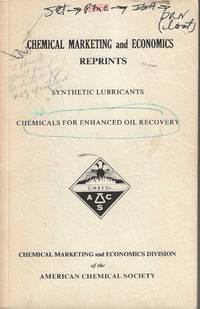
1980rif. 6799American Chemical Society. Very Good. 1980. Reprint. Softcover. Book is tight. Symposium sponsored by Division of Chemical Marketing and Economics held at Spring meeting of Am. Chemical Society in Houston on March 26 1980. Front cover has writing and marks. There are also pencil marks on pages 213 and 318. Cover is shelf worn. ; 16mo 6" - 7" tall . American Chemical Society paperback
1867rif. 18050301Boston: Lee and Shepard 1867. First Edition. Hardcover. Very good. Nast Thomas. Duodecimo size 299 pp. The popular work of ironic fiction written by journalist and political commentator David Ross Locke 1833-1888. Locke's greatest influence was through his satirical writings as "Petroleum Vesuvius Nasby". The Nasby letters harshly ridiculed the plight of peoples in the Confederate states and the complicity of Northern politicians. Both Abraham Lincoln and Ulysses S. Grant recognized Nasby as a significant source of support for their presidencies. Thomas Nast 1840-1902 eventually heightened the work with his illustrations and was also credited by Lincoln for inspiring people to support the war effort. His work marked an important shift in shift in political cartoons which had before relied mainly on text rather than imagery. "Swinging Round the Cirkle" is made up of some of the most weighted of Nasby's moral statements especially concerning the plight of African Americans. The letters were composed in response to a comment by Andrew Johnson on an "uninspired" tour of the country. ___DESCRIPTION: Original pebbled green cloth with blind-stamped panels to both boards and gilt decorations on backstrip frontis and seven additional plates with captions; duodecimo size 7 5/8" by 5 1/8" 1-4 5-299 pp. first edition. ___CONDITION: A very good copy; covers clean other than a few minor spots on the back board a strong text block with solid hinges complete with all plates the only prior owner marking being a very small plate to the front free endpaper; minor rubbing to edges and corners foxing throughout though plates are still bright; overall a very good copy. ___CITATION: BAL 11820. ___POSTAGE: International customers please note that additional postage may apply as the standard shipping charge does not always cover costs; please inquire for details. ___Swan's Fine Books is pleased to be a member of the ABAA ILAB and IOBA and we stand behind every book we sell. Please contact us with any questions you may have we are here to help. Lee and Shepard hardcover books
1867rif. MYTHOS000951ILee and Shepard 1867. 1st ed. Very Good. VG Lee and Shepard unknown
rif. 5447529like new. unknown
1867rif. 000014076Boston: Lee and Shepard 1867. First edition. Hardcover. Very Good or better. 8vo. 5 6-299 3 pp. Maroon cloth with borders in blind on the boards gold lettering and gold devices on the spine. Yellow endpapers and pastedowns. Illustrated with a frontispiece and with seven plates by Thomas Nast. Encyclopedia Britannica "Petroleum V. Nasby American humorist". Petroleum V. Nasby was a pseudonym for David Ross Locke an American journalist who lampooned Confederate southerners and their political positions. President Lincoln enjoyed these satirical letters and would sometimes share one with his cabinet. Light rubbing to the corners and spine's tips. Lee and Shepard hardcover
1867rif. 12047Boston: Lee and Shepard. Very Good with no dust jacket. 1867. Hardcover. Mild bumping and edgewear to green cloth. Solid binding and clean text. Patchy offsetting on pastedowns and a few early/late pages. No ownership marks ex-lib marks stamps or stickers. ; 8vo 8" - 9" tall; 299 pages . Lee and Shepard hardcover
rif. 1421969300.Gpaperback. Good. Access codes and supplements are not guaranteed with used items. May be an ex-library book. paperback
rif. 1163946591.Gpaperback. Good. Access codes and supplements are not guaranteed with used items. May be an ex-library book. paperback
rif. 0548634998.Gpaperback. Good. Access codes and supplements are not guaranteed with used items. May be an ex-library book. paperback
rif. 3337426972.Gpaperback. Good. Access codes and supplements are not guaranteed with used items. May be an ex-library book. paperback
1867rif. 18050301Boston: Lee and Shepard 1867. First Edition. Hardcover. Very good. Nast Thomas. Duodecimo size 299 pp. The popular work of ironic fiction written by journalist and political commentator David Ross Locke 1833-1888. Locke's greatest influence was through his satirical writings as "Petroleum Vesuvius Nasby". The Nasby letters harshly ridiculed the plight of peoples in the Confederate states and the complicity of Northern politicians. Both Abraham Lincoln and Ulysses S. Grant recognized Nasby as a significant source of support for their presidencies. Thomas Nast 1840-1902 eventually heightened the work with his illustrations and was also credited by Lincoln for inspiring people to support the war effort. His work marked an important shift in shift in political cartoons which had before relied mainly on text rather than imagery. "Swinging Round the Cirkle" is made up of some of the most weighted of Nasby's moral statements especially concerning the plight of African Americans. The letters were composed in response to a comment by Andrew Johnson on an "uninspired" tour of the country. ___DESCRIPTION: Original pebbled green cloth with blind-stamped panels to both boards and gilt decorations on backstrip frontis and seven additional plates with captions; duodecimo size 7 5/8" by 5 1/8" 1-4 5-299 pp. first edition. ___CONDITION: A very good copy; covers clean other than a few minor spots on the back board a strong text block with solid hinges complete with all plates the only prior owner marking being a very small plate to the front free endpaper; minor rubbing to edges and corners foxing throughout though plates are still bright; overall a very good copy. ___CITATION: BAL 11820. ___POSTAGE: International customers please note that additional postage may apply as the standard shipping charge does not always cover costs; please inquire for details. ___Swan's Fine Books is pleased to be a member of the ABAA ILAB and IOBA and we stand behind every book we sell. Please contact us with any questions you may have we are here to help. Lee and Shepard hardcover
rif. 0484173669.Ghardcover. Good. Access codes and supplements are not guaranteed with used items. May be an ex-library book. hardcover
rif. 1332446973.Gpaperback. Good. Access codes and supplements are not guaranteed with used items. May be an ex-library book. paperback
1989rif. PHO-682Paris, Séguier, 1989, in-8, plein chagrin rouge, dos lisse, couv. conserv. ill. ,169pp
rif. 1258542846.Gpaperback. Good. Access codes and supplements are not guaranteed with used items. May be an ex-library book. paperback
rif. 1258668122.Gpaperback. Good. Access codes and supplements are not guaranteed with used items. May be an ex-library book. paperback