DARWIN CharlesBiblio.com

5930 risultati
1899rif. 51349John Murray 1899. 8vo. Sixth Edition Fifty-Sixth Thousand with folding diagram front endpapers and half-title very lightly spotted; original green arches-style cloth boards framed in blind gilt back uncut a near fine copy. With publisher's advertisement leaf at end. The sixth edition first issued in 1872 is the last published in Darwin's lifetime and contains his final major corrections and revisions. It is the first edition with the title The Origin of Species and includes among many other revisions a new chapter inserted to confute the views of the Catholic biologist St. George Mivart. There is a glossary and the word 'evolution' is used in the text for the first time. VERY SCARCE INDEED IN THIS CONDITION. Freeman 144. John Murray, hardcover
1878rif. 52862London: John Murray 1878. Sixth edition twentieth thousand. 8vo. xxi i 458 pp. Publisher's green cloth gilt to the spine A folding plate. Neatly recased free endpapers slightly worn to the edges light spotting at the front and rear else very good. Freeman 403. The second issue of the definitive text. London: John Murray unknown
18838vo., Eighth Edition, WANTING FRONTISPIECE (original tissue guard present), with engraved title-vignette, 7 plates, very numerous illustrations and 8 maps (a number full-page) in the text, folding coloured map and folding map coloured in outline (maps vey lightly spotted, mainly on blank margins); original green cloth, upper board framed in black and blocked in gilt, gilt back, chocolate endpapers, expertly recased, a remarkably bright, crisp, clean copy. Sold from an institution with its bookplate on front paste-down, small stamp on title, and neat stamp in a few blank margins of text. With 2pp publisher's catalogue at end BUT TRAGICALLY WANTING THE FRONTISPIECE 'ORANG-UTAN ATTACKED BY DYAKS'. The most celebrated work, dedicated appropriately to Darwin, by the co-discoverer of the process of evolution through natural selection. The eighth edition is based on the revised third edition of 1872. His well-known appendix on the crania and the languages of man in the archipelago includes a glossary of one hundred and seventeen words in thirty-three languages of the region. A LOVELY COPY OF A KEY WORK IN THE LITERATURE OF EVOLUTION. SCARCE IN THIS CONDITION.
rif. Z1-C-020-01305Indypublish.Com. Used - Like New. Used - Like New. Book is new and unread but may have minor shelf wear. Ships from UK in 48 hours or less usually same day. Your purchase helps support Sri Lankan Children's Charity 'The Rainbow Centre'. 100% money back guarantee. We are a world class secondhand bookstore based in Hertfordshire United Kingdom and specialize in high quality textbooks across an enormous variety of subjects. We aim to provide a vast range of textbooks rare and collectible books at a great price. Our donations to The Rainbow Centre have helped provide an education and a safe haven to hundreds of children who live in appalling conditions. We provide a 100% money back guarantee and are dedicated to providing our customers with the highest standards of service in the bookselling industry. Indypublish.Com unknown
rif. Z1-G-030-01499Echo Library. Used - Like New. Used - Like New. Book is new and unread but may have minor shelf wear. Ships from UK in 48 hours or less usually same day. Your purchase helps support Sri Lankan Children's Charity 'The Rainbow Centre'. 100% money back guarantee. We are a world class secondhand bookstore based in Hertfordshire United Kingdom and specialize in high quality textbooks across an enormous variety of subjects. We aim to provide a vast range of textbooks rare and collectible books at a great price. Our donations to The Rainbow Centre have helped provide an education and a safe haven to hundreds of children who live in appalling conditions. We provide a 100% money back guarantee and are dedicated to providing our customers with the highest standards of service in the bookselling industry. Echo Library unknown
rif. Z1-C-087-01889Hardpress Publishing. Used - Like New. Used - Like New. This is a reproduction of an out of print title. This book may have occasional imperfections such as missing or blurred pages poor pictures errant marks etc. that were either part of the original artifact or were introduced by the scanning process. Ships from UK in 48 hours or less usually same day. Your purchase helps support Sri Lankan Children's Charity 'The Rainbow Centre'. 100% money back guarantee. We are a world class secondhand bookstore based in Hertfordshire United Kingdom and specialize in high quality textbooks across an enormous variety of subjects. We aim to provide a vast range of textbooks rare and collectible books at a great price. Our donations to The Rainbow Centre have helped provide an education and a safe haven to hundreds of children who live in appalling conditions. We provide a 100% money back guarantee and are dedicated to providing our customers with the highest standards of service in the bookselling industry. Hardpress Publishing unknown
rif. Z1-L-040-02506Frommer. Used - Good. Ships from UK in 48 hours or less usually same day. Your purchase helps support Sri Lankan Children's Charity 'The Rainbow Centre'. Ex-library so some stamps and wear but in good overall condition. 100% money back guarantee. We are a world class secondhand bookstore based in Hertfordshire United Kingdom and specialize in high quality textbooks across an enormous variety of subjects. We aim to provide a vast range of textbooks rare and collectible books at a great price. Our donations to The Rainbow Centre have helped provide an education and a safe haven to hundreds of children who live in appalling conditions. We provide a 100% money back guarantee and are dedicated to providing our customers with the highest standards of service in the bookselling industry. Frommer unknown
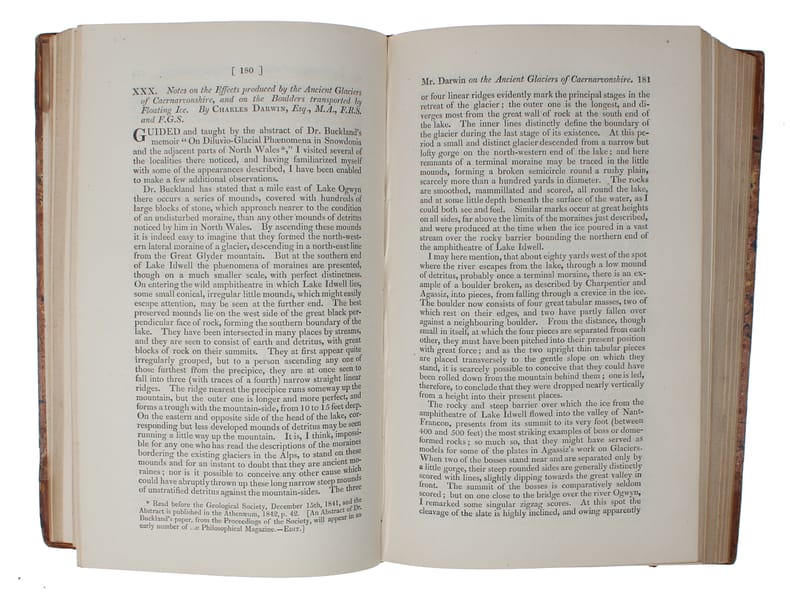
1842rif. 60134London, University of London, 1842. 8vo. In contemporary half calf. In ""The London, Edinburgh, and Dublin Philosophical Magazine and Journal of Science"", Vol. XXI. July - December, entire volume offered. Spine with wear and lacking bits of the leather especially affecting front hinge. Leather brittle. Front hindge loose. Exlibris pasted on to pasted down front end-paper. Internally nice and clean. [Darwin's paper:] Pp. 180-88. [Entire volume: viii, 568 pp.].
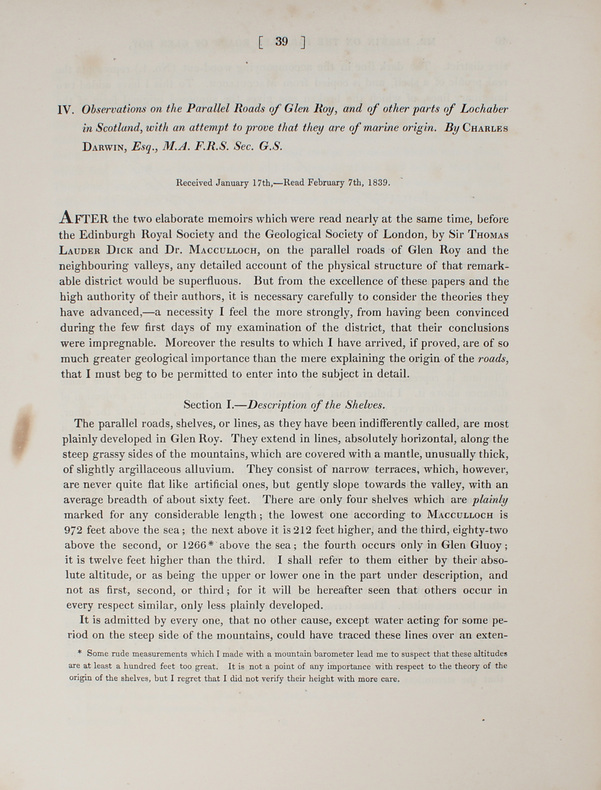
1839rif. 54344(London, Richard and John E. Taylor, 1839). 4to. Without wrappers. Extracted from ""Philosophical Transactions of the Royal Society of London."", 1839, Part I. Pp. 39-81 and 2 plates. (1 engraved map and 1 lithographed plate). Both plates with a few brownspots.
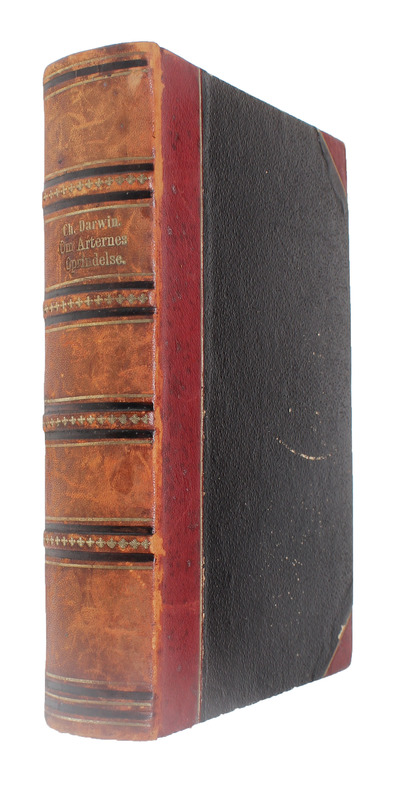
1872rif. 52105Kjøbenhavn, Gyldendalske Boghandel (F. Hegel), 1872. 8vo. Bound in contemporary half calf with 4 raised bands and gilt lettering to spine. Spine rubbed. A few light brownspots throughout. Otherwise a fine and clean copy. (10), XIII, 605, (1) + 1 plate.
1872rif. 47264Kjøbenhavn, Gyldendalske Boghandel (F. Hegel), 1872. Contemp. hcalf. Spine gilt and with gilt lettering. Spine slightly rubbed. Corners a bit bumped. (10),XIII,605,(1) pp. and 1 folded plate. A few faint brownspots to the first leaves.
1842rif. 60134London University of London 1842. 8vo. In contemporary half calf. In "The London Edinburgh and Dublin Philosophical Magazine and Journal of Science" Vol. XXI. July - December entire volume offered. Spine with wear and lacking bits of the leather especially affecting front hinge. Leather brittle. Front hindge loose. Exlibris pasted on to pasted down front end-paper. Internally nice and clean. Darwin's paper: Pp. 180-88. Entire volume: viii 568 pp. First appearance of Darwin’s paper on the effects produced by the glaciers of Caernarvonshire. In 1831 Charles Darwin came to Cwm Idwal and failed to perceive the evidence of glaciation there. In 1842 Darwin then went on to describe the glaciation of Cwm Idwal in some detail. He recorded both his first visit with the Cambridge geologist Adam Sedgwick and his second more aware visit in his autobiography: “Next morning we started for Llangollen Conway Bangor and Capel Curig. This tour was of decided use in teaching me a little how to make out the geology of a country. Sedgwick often sent me on a line parallel to his telling me to bring back specimens of the rocks and to mark the stratification on a map. On this tour I had a striking instance of how easy it is to overlook phenomena however conspicuous before they have been observed by any one. We spent many hours in Cwm Idwal examining all the rocks with extreme care as Sedgwick was anxious to find fossils in them; but neither of us saw a trace of the wonderful glacial phenomena all around us; we did not notice the plainly scored rocks the perched boulders the lateral and terminal moraines. Yet these phenomena are so conspicuous that as I declared in a paper published many years afterwards in the ‘Philosophical Magazine’ Darwin 1842 a house burnt down by fire did not tell its story more plainly than did this valley. If it had still been filled by a glacier the phenomena would have been less distinct than they now are. Darwin 1887” “By 1842 not only had Darwin travelled widely Herbert 1991 but Agassiz 1840 had published his theory of glaciation. Darwin was also then apprised of the arguments of the geologist William Buckland. Buckland was known for his penchant for eating every variety of animal a trait which his son inherited Burgess 1967: Chapter 1; Chorley et al. 1964: 100–118; see also Lewry 2008 but he also developed highly significant ideas on glaciation and the limitations of the diluvial theory Chorley et al. 1964: 207–210. A key realization is that water-lain flood deposits are normally laid down in stratified layers with the coarser material below the fine while the glacial deposits are unstratified and mixed in size. Thus in contrast to his earlier 1831 lack of glacial observation” Trudgill Do theories tell us what to see The 19th-century observations of Darwin Ramsay and Bonney on glacial features Darwin wrote: “Guided and taught by the abstract of Dr. Buckland’s memoir ‘On Diluvio-Glacial Phænomena in Snowdonia and the adjacent parts of North Wales’ I visited several of the localities there noticed and . I have been enabled to make a few additional observations. Dr. Buckland has stated that a mile east of Lake Ogwyn there occurs a series of mounds covered with hundreds of large blocks of stone which approach nearer to the condition of an undisturbed moraine than any other mounds of detritus noticed by him in North Wales. By ascending these mounds it is indeed easy to imagine that they formed the north-western lateral moraine of a Trudgill 559 Downloaded from ppg.sagepub.com at PENNSYLVANIA STATE UNIV on September 16 2016 glacier descending in a north-east line from the Great Glyder mountain. But at the southern end of Lake Idwell the phænomena of moraines are presented though on a much smaller scale with perfect distinctness. From the present paper p. 180” Darwin then gives a detailed description of the glacial features: “On entering the wild amphitheatre in which Lake Idwell lies some small conical irregular little mounds which might easily escape attention may be seen at the further end. The best preserved mounds lie on the west side of the great black perpendicular face of rock forming the southern boundary of the lake. They have been intersected in many places by streams and they are seen to consist of earth and detritus with great blocks of rock on their summits. They at first appear quite irregularly grouped but to a person ascending any one of those furthest from the precipice they are at once seen to fall into three with traces of a fourth narrow straight linear ridges. The ridge nearest the precipice runs someway up the mountain but the outer one is longer and more perfect and forms a trough with the mountain-side from 10 to 15 feet deep. On the eastern and opposite side of the head of the lake corresponding but less developed mounds of detritus may be seen running a little way up the mountain. It is I think impossible for any one who has read the descriptions of the moraines bordering the existing glaciers in the Alps to stand on these mounds and for an instant to doubt that they are ancient moraines; nor is it possible to conceive any other cause which could have abruptly thrown up these long narrow steep mounds of unstratified detritus against the mountain-sides. From the present paper p. 180” hardcover
1839rif. 54344London Richard and John E. Taylor 1839. 4to. Without wrappers. Extracted from "Philosophical Transactions of the Royal Society of London." 1839 Part I. Pp. 39-81 and 2 plates. 1 engraved map and 1 lithographed plate. Both plates with a few brownspots. First appearance of Darwin's investigations of the geological phenomenon of the so-called "Parallel Roads" in Scotland."The first published description of the Parallel Roads was by Thomas Pennant in 1771 in his book A Tour of Scotland. This work was far from scientific but during the 19th century Glen Roy played an important role in the development of geological and geomophological theories of landscape evolution.1 Initially the 'Roads' were believed to be lake or marine shorelines. How they were formed in an area that was now high above the sea and without signs of a closed lake bed was a mystery. Initially it was thought that the shorelines were of marine origin and formed during a period when the sea reached levels of the Parallel Roads. Among the proponent of this theory were both Charles Darwin and Charles Lyell.2 It was in particular Darwin who was impressed by the geology of Glen Roy. In 1838 he wrote to Lyell "I wandered the mountains in All directions and examined that most extraordinary district. I think without any exceptions not even the first volcanic island the first elevated beach or the passage of the Cordillera as so interesting to me as this week. It is far the most remarkable area I ever examined. . I can assure you Glen Roy has astonished me".3 Darwin and Lyell proved to be wrong in this matter." Jan Oosthoek. Freeman 1653. unknown
1872rif. 52105Kjøbenhavn Gyldendalske Boghandel F. Hegel 1872. 8vo. Bound in contemporary half calf with 4 raised bands and gilt lettering to spine. Spine rubbed. A few light brownspots throughout. Otherwise a fine and clean copy. 10 XIII 605 1 1 plate. The Scarce first Danish edition translated from the 5. edition of Darwin's monumental "On the Origin of Species". "In 1872 the book was translated into Danish by the young botanist J. P. Jacobsen. He was soon to become a celebrated novelist famous for Marie Grubbe - A Lady of the Seventeenth Century 1876 and Niels Lyhne 1880. In the early 1870's however he was still dedicated to science. In 1873 he received the University of Copenhagen's Gold Medal for his work on desmids single-celled green freshwater algae. The Descent of Man was also translated by Jacobsen and appeared in 1874-75. "In the early 1870s With the Danish translation the literary critic Georg Brandes started promoting Darwin's ideas as part of his liberal ideology and soon Darwinism became the mark of a new generation of intellectuals. Both the Steenstrup circle and the Brandes circle held Darwin in high esteem but made completely different attributions to his theory. Consequently they both decided to raise money separately for the same Darwin. Darwin had borrowed the collection of barnacles from the Zoology Museum in Copenhagen with the help of Steenstrup. As a compliment Darwin sent him a signed copy of the Origin. Steenstrup acknowledged Darwin as an important fellow naturalist but like many of his colleagues at the University of Copenhagen he never accepted evolutionary theory. The initial scientific reaction to Darwin's work on evolution by means of natural selection was respectful but made few converts. memorial in 1882. Independently Darwinism transformed as it became part of popular culture. "Kjærsgaard Darwinism comes to DenmarkFreeman: 643. PMM 344 - first edition hardcover
1872rif. 47264Kjøbenhavn Gyldendalske Boghandel F. Hegel 1872. Contemp. hcalf. Spine gilt and with gilt lettering. Spine slightly rubbed. Corners a bit bumped. 10XIII6051 pp. and 1 folded plate. A few faint brownspots to the first leaves. Scarce first Danish edition of "On the Origin of Species" 1859.Freeman: 643. unknown
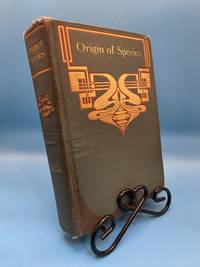
1872rif. darwin1872Chicago: Rand McNally and Company 1872. Sixth Edition. Hardcover. Clean pages tight binding stai. Origin of Species by Charles Darwin. Sixth Edition 1872 published by Rand McNally. The sixth edition included the first usage of the word "evolution" removal of the word "On" from the title and expanded notes. Nice art nouveau gold embossed decoration to cover. Two volumes in one.Clean pages tight binding staining to lower edges of boards gold embossed titling and decoration bright light wrinkle to middle of spine Rand, McNally and Company hardcover
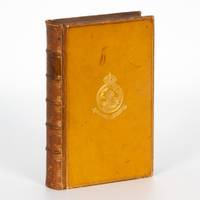
rif. 40455by means of natural selection or the preservation of favoured races in the struggle for life. London : John Murray 1880. Sixth edition with additions and corrections to 1872 twenty-second thousand. Octavo full calf prize binding by Bickers and Son for the Royal Agricultural College Cirencester with their emblem in gilt to the front board edges rubbed spine in compartments with title label and gilt ornaments darkened marbled edges and endpapers prize label to front pastedown pp xxi blank 458 folding lithographed plate light foxing to preliminaries. A very good clean copy. Printed from stereos of the eleventh thousand and the third issue of the final definitive text Darwin having made some very minor corrections to the eighteenth thousand as per Freeman. This is a notable printing of the Origin as it is the very last time that the Origin was issued by John Murray in Darwin's lifetime. This particular copy is notable in that it was presented to it’s recipient G. McCalman on ‘April 19th 1882’. It was on the afternoon of this day a Wednesday that Charles Darwin died. A fine copy of the sixth edition of one of the most important texts in the history of science. The first edition of 1859 a great rarity is described in Freeman as "". the most important biological work ever written.""; Dibner "". the most important single work in science.""; Printing & the Mind of Man "". revolutionized our methods of thinking and our outlook on the natural order of things. The recognition that constant change is the order of the universe had been finally established and a vast step forward in the uniformity of nature had been taken."" The sixth edition extensively rewritten by Darwin and published in 1872 removed the word 'On' from the title 'On the origin of species' and includes rebuttal of Roman Catholic biologist St. George Mivart's theological arguments in his 1871 text On the Genesis of Species. The sixth edition is significant for including the use of the word 'evolution' for the first time in furtherance of Darwin's argument for natural selection. It is the last edition published in Darwin's lifetime and includes extensive revisions and rewriting by the author. The sixth edition went through numerous printings and includes all Darwin's revisions since On the origin of species was first released in 1859. It is considered the definitive text for what many consider to be the most significant scientific book ever published. Freeman 405 unknown
2023rif. 1564EXCEPTIONALLY SCARCE! LIMITED EDITION HAND NUMBERED AND SOLD OUT! This is the very limited edition of the classic "On The Origin Of The Species" by evolutionary biologist Charles Darwin. Very large and heavy book which will require additional shipping. In the book that changed our view of life on earth Charles Darwin challenged the place of the human race at the centre of creation and started a scientific revolution. Evolution by natural selection had been discussed in academic works but Darwin's energetic prose was written to be read and understood by the general public and led to its author being described as 'the most dangerous man in England'. Half-bound in goatskin leather blocked in gold foil with lettering and ornaments by Jamie Clarke and with hand-marbled paper sides by Jemma Lewis this edition is worthy of the best collections. A. C. Grayling's insightful introduction and Darwin expert William Bynum's inspired selection of 40 pages of plates illuminate the text that of the first edition from 1859. Charles Darwin's book for ever altered the history of mankind and in highlighting the synergy between life forms and environment was a pioneer work of ecology – ever more important in our world today. Limited to 500 hand-numbered copies Half-bound in goatskin leather blocked in gold foil with lettering and ornaments by Jamie Clarke Marbled paper sides by Jemma Lewis Set in Garamond with Victoria Titling as display 448 pages of text printed on Munken Pure paper Frontispiece and 40 pages of plates printed on Symbol Tatami paper Gilded page tops and fore-edges Ribbon marker Cloth-covered slipcase blocked in gold foil with lettering and ornaments by Jamie Clarke 11Â½Ë x 8Ë Folio Society hardcover
1871rif. 310Descent of Man by Charles Darwin. Published by D. Appleton and Company New York 1871. FIRST AMERICAN EDITION containing his first published use of the term 'evolution' on page 2 of volume I. Complete in two volumes. Renowned zoological illustrator T. W. Wood contributed many of the illustrations to the books. The scarce first printing with 1871 on the title page errata from volume I to verso of contents leaf in vol. II 2-page ads to rear of vol. I 12-page ads to rear of vol. II and the 4-page prospectus for "The Origin of Species" from The Works of Charles Darwin tipped in at the front of volume I. CONDITION ~ 8vo. "8" x 5.5" x 1.5" Very good condition. Bound in the publisher's original reddish-brown cloth hardcover binding with black stamped double rule and decoration to the boards and gilt stamped titles to the spine with yellow coated endpapers. Volume I - 409 pages plus 2 pages of ads. Volume 2 - 436 pages including the index plus 12 pages of ads. Minimal discoloration to cloth boards corners bumped and rubbed some softening and fraying to cloth spine tips a couple of small chips to the spines and some wrinkling to the cloth on the upper front of volume II. Both volumes with clean and unmarked interiors. A 1 1/2" closed tear now repaired on the front flyleaf and on the errata page of volume 2. Overall a very good set of the first U.S. edition published the same year as the John Murray U.K. edition. D. Appleton & Company
1828rif. Stephens10of12Ten of 12 volumes: Haustellata volumes 1-4 Mandibulata 1-6 lacking volume 7 and supplement. First editions by Baldwin and Cradock London. 1828-1835. Overall good condition. Complete with all plates and pages. Bindings are mixed. Seven volumes light tan full leather goat with Yapp style bindings. Marbled endpapers and edges. Then two half leather marbled board bindings and one museum library rebind ~75 years old. The interiors are excellent except for vol. 6 Mandibulata which has water toning upper outer corner affecting last quarter of volume and final two plates. Haustellata volume 4 has museum library stamp on title page and plates are in a back pocket; has interesting old scientific marginalia. The value here is in the matching 7 volumes Haustellata 1-3; Mandibulata 1-4. First appearance of Darwin's work in print. See Freeman pages 19-20. A note on the Yapp bindings: These are clearly 19th century bindings. I find no clues to identify the binder. The leather is limp. When I got this set all edges were curled but over time I have been able to flatten all the bottom edges and some of the front edges; so I believe all edges could be flattened to their original intention with some determination. Feel free to inquire in fact you probably should. Please see scans of the volumes you will receive. Shipping will be calculated at time of purchase. Buyer will pay actual shipping cost only. Baldwin and Cradock hardcover
1978rif. mon0000051481Franklin Library 1978-01-01. Leather Bound. New. in x in x in. Franklin Library hardcover
1876rif. 12090London: Smith Elder & Co 1876. Second Edition. Hardcover. Good. Second Edition. Hardcover. Previously owned by Oliver Sacks. This second edition combines Geological Observations on the Volcanic Islands with Geological Observations on South America. Notes from Eric Korn Oliver's friend and bookseller. From the library of Dr. Oliver Sacks the renowned neurologist author and educator. He was in his life celebrated for his contributions to the understanding of the human brain and his ability to communicate complex scientific concepts to a broader audience. In doing so he highlighted the profound impact of neurological disorders on human identity and experience. His library is a reflection of this remarkable polymath's questing mind. Moderate shelf/edge wear discoloration/soiling to upper spine toning else tight and unmarred. Red cloth boards. 8vo. xiii 647pp. Illus. b/w color 3 maps 2 plates one coloured at the back 40 text illus. Notes from bookseller. Smith, Elder, & Co hardcover
rif. 16-5690London: John Murray 1872. 8vo 182 x 117 mm. xxi 1 458 pp. Includes half-title and one folding lithographed plate facing p.91. Original publisher's green cloth gilt spine lettering embossed border at covers inner hinges cracked slight fraying of spine ends very light rubbing of extremities.Sixth edition Twelfth thousand with additions and corrections half-title folding diagram at p. 91 worn at fore edge original green cloth rubbed at extremities some loss at head and tail of spine hinges cracked Freeman 392 John Murray 1872 . .OCLC Number / Unique Identifier: 1069385500: "First edition November 24th 1859. Sixth edition Jan 1872"--Page ii"Additions and corrections to the fifth edition."--Page xi-xiiIncludes index. "The sixth edition which is usually rconsidered the last and appeared in February 1872. Murray's accounts show that 3000 copies were printed but this total presumably included both those with eleventh thousand on the title page and those with twelfth the latter being notably less common. It is again extensively revised and contains a new chapter VII. This was inserted to confute the views of the Roman Catholic biologist St George Mivart. The edition was aimed at a wider public and printed in smaller type the volume shorter again and giving the general impression of a cheap edition which at 7s. 6d. it was. The title changes to The origin of species and a glossary compiled by W. S. Dallas appears. It is in this edition that the word 'evolution' occurs for the first time. It had been used in the first edition of The descent of man in the previous year but not before in this work. 'Evolved' had been the last word of the text in all previous editions but 'evolution' had been omitted perhaps to avoid confusion with the use of the word by Herbert Spencer or with its more particular embryological meaning. The word had however been used in its transformist sense by Lyell as early as 1832 Principles of geology Vol. II p. 11. In this edition it occurs twice on page 201 and three times on page 424." John van Wyhe ed. 2002-. The Complete Work of Charles Darwin Online London: John Murray, 1872. hardcover
1883rif. 1353921New York: D. Appleton and Company 1883. Second Edition Revised Fourth Thousand. Hardcover. Octavos Two Volumes. In Very Good condition. Bound in red cloth with black stamping to front boards blind stamping to rear boards and gilt titling to spines. Mild shelf wear and rubbing to binding. Volume 1 with one leaf of undated ads in rear; Volume 2 with four leaves of undated ads in rear. Gift inscription to front free endpapers. Stated "Second Edition Revised Fourth Thousand" but actually a reissue from the plates with only the date changed. Freeman Bibliographical Database: F884; also showing reissues of the 1876 printing in 1884 and 1887. Shelved in Case 10. 1353921. Shelved Dupont Bookstore. D. Appleton and Company hardcover
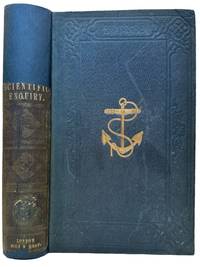
1849rif. SRW1705London:: John Murray . . . publisher to the admiralty 1849. 1849. 8vo. xi 1 488 pp. Large folding oceanographic map showing the Approximate Limits of the Great Currents and Drifts of the Ocean scattered figures 1 engraved plate Hydrographic delineation appendices; final leaf reinforced at gutter. Original full dark green embossed cloth with gilt anchor device on upper cover in blind on the back cover Freeman notes that “in some copies but not all the anchor on the top board is gilt” as is with this copy no pocket in rear bottom board as per this issue; spine replaced preserving a remnant of the original spine corners and joints reinforced. Bookplate of Charles F. Cox New York; embossed stamp of the Carnegie Institution Solar Observatory under George Ellery Hale being from his library donated to the Mount Wilson Observatory. Very good. Rare. FIRST EDITION second issue with pp.171-90 cancelled containing the corrected sheets including part of Darwin’s article. Freeman notes that most copies of the first issue including Darwin’s own were published with a separate 20-page cancellans inserted into a pocket inside the back cover. Freeman further states that some copies may have been issued without the cancellans as here. This collection of scientific articles on subjects relating to naval training was used as a textbook for cadets at the Royal Naval College. Darwin contributed the section on “Geology” which contained serious transpositions of the text which were cancelled and replaced with corrected sheets. / “Sir John Frederick William Herschel 1792-1871 – astronomer mathematician chemist - was one of the most important British scientists of the nineteenth century. Son of the famous astronomer William Herschel he was persuaded by his father to pursue the astronomical investigations William could no longer undertake; John’s subsequent career resulted in a knighthood and a lifetime of accolades. This 1849 publication was commissioned by the Admiralty to encourage and assist naval officers to undertake scientific research while abroad. The work provides instructions in making and recording observations in a wide range of disciplines - astronomy; magnetism; hydrography; tides; geography; geology; earthquakes; mineralogy; meteorology; atmospheric waves; zoology; botany; ethnology; medicine; statistics - written by experts in these fields including G.B. Airy Capt. Beechey Leut. Col. Sabine R. Mallet Sir H.T. de la Beche W. R. Birt Richard Owen W.J. Hamilton Rev. Dr. Whewell Charles Darwin Dr. Pritchard G.R. Porter Dr. Bryson Sir William Jackson Hooker and Herschel himself. It was hoped that the instructions could also be used by other travellers to advance scientific knowledge and the work remained in print for over fifty years.” PROVENANCE 3: 1 Charles Finney Cox 1846-1912 New York. He worked as an American railroad manager holding roles including Assistant Treasurer of the Canada Southern Railway Company Vice-President of the Richmond & Alleghany Railroad Company and President of the Carthage & Adirondack Railway Company. He became Treasurer and President of the New York Academy of Sciences. In 1896 Cox was appealing for financial assistance to fund a suitable building for the Scientific Alliance of New York including creating a 100000 volume library etc. Cox was an active member of scientific groups like the New York Microscopical Society and the Royal Microscopical Society. He assembled a notable collection of Darwiniana which was later acquired by the New York Botanical Garden in 1912 as a permanent memorial; 2 embossed stamp of the Carnegie Institution Solar Observatory under 3 George Ellery Hale 1868-1938 being from his library donated to the Mount Wilson Observatory. REFERENCES: Freeman 1977 326; Norman 1057. John Murray . . . publisher to the admiralty, 1849. hardcover