Darwin, CharlesBiblio.com
7.636 Ergebnisse
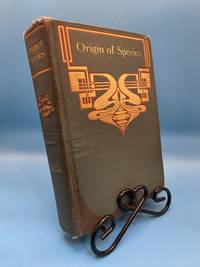
1872Best.-Nr. darwin1872Chicago: Rand McNally and Company 1872. Sixth Edition. Hardcover. Clean pages tight binding stai. Origin of Species by Charles Darwin. Sixth Edition 1872 published by Rand McNally. The sixth edition included the first usage of the word "evolution" removal of the word "On" from the title and expanded notes. Nice art nouveau gold embossed decoration to cover. Two volumes in one.Clean pages tight binding staining to lower edges of boards gold embossed titling and decoration bright light wrinkle to middle of spine Rand, McNally and Company hardcover
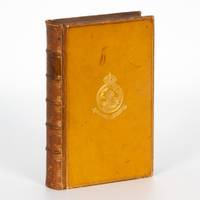
Best.-Nr. 40455by means of natural selection or the preservation of favoured races in the struggle for life. London : John Murray 1880. Sixth edition with additions and corrections to 1872 twenty-second thousand. Octavo full calf prize binding by Bickers and Son for the Royal Agricultural College Cirencester with their emblem in gilt to the front board edges rubbed spine in compartments with title label and gilt ornaments darkened marbled edges and endpapers prize label to front pastedown pp xxi blank 458 folding lithographed plate light foxing to preliminaries. A very good clean copy. Printed from stereos of the eleventh thousand and the third issue of the final definitive text Darwin having made some very minor corrections to the eighteenth thousand as per Freeman. This is a notable printing of the Origin as it is the very last time that the Origin was issued by John Murray in Darwin's lifetime. This particular copy is notable in that it was presented to it’s recipient G. McCalman on ‘April 19th 1882’. It was on the afternoon of this day a Wednesday that Charles Darwin died. A fine copy of the sixth edition of one of the most important texts in the history of science. The first edition of 1859 a great rarity is described in Freeman as "". the most important biological work ever written.""; Dibner "". the most important single work in science.""; Printing & the Mind of Man "". revolutionized our methods of thinking and our outlook on the natural order of things. The recognition that constant change is the order of the universe had been finally established and a vast step forward in the uniformity of nature had been taken."" The sixth edition extensively rewritten by Darwin and published in 1872 removed the word 'On' from the title 'On the origin of species' and includes rebuttal of Roman Catholic biologist St. George Mivart's theological arguments in his 1871 text On the Genesis of Species. The sixth edition is significant for including the use of the word 'evolution' for the first time in furtherance of Darwin's argument for natural selection. It is the last edition published in Darwin's lifetime and includes extensive revisions and rewriting by the author. The sixth edition went through numerous printings and includes all Darwin's revisions since On the origin of species was first released in 1859. It is considered the definitive text for what many consider to be the most significant scientific book ever published. Freeman 405 unknown
2023Best.-Nr. 1564EXCEPTIONALLY SCARCE! LIMITED EDITION HAND NUMBERED AND SOLD OUT! This is the very limited edition of the classic "On The Origin Of The Species" by evolutionary biologist Charles Darwin. Very large and heavy book which will require additional shipping. In the book that changed our view of life on earth Charles Darwin challenged the place of the human race at the centre of creation and started a scientific revolution. Evolution by natural selection had been discussed in academic works but Darwin's energetic prose was written to be read and understood by the general public and led to its author being described as 'the most dangerous man in England'. Half-bound in goatskin leather blocked in gold foil with lettering and ornaments by Jamie Clarke and with hand-marbled paper sides by Jemma Lewis this edition is worthy of the best collections. A. C. Grayling's insightful introduction and Darwin expert William Bynum's inspired selection of 40 pages of plates illuminate the text that of the first edition from 1859. Charles Darwin's book for ever altered the history of mankind and in highlighting the synergy between life forms and environment was a pioneer work of ecology – ever more important in our world today. Limited to 500 hand-numbered copies Half-bound in goatskin leather blocked in gold foil with lettering and ornaments by Jamie Clarke Marbled paper sides by Jemma Lewis Set in Garamond with Victoria Titling as display 448 pages of text printed on Munken Pure paper Frontispiece and 40 pages of plates printed on Symbol Tatami paper Gilded page tops and fore-edges Ribbon marker Cloth-covered slipcase blocked in gold foil with lettering and ornaments by Jamie Clarke 11Â½Ë x 8Ë Folio Society hardcover
1871Best.-Nr. 310Descent of Man by Charles Darwin. Published by D. Appleton and Company New York 1871. FIRST AMERICAN EDITION containing his first published use of the term 'evolution' on page 2 of volume I. Complete in two volumes. Renowned zoological illustrator T. W. Wood contributed many of the illustrations to the books. The scarce first printing with 1871 on the title page errata from volume I to verso of contents leaf in vol. II 2-page ads to rear of vol. I 12-page ads to rear of vol. II and the 4-page prospectus for "The Origin of Species" from The Works of Charles Darwin tipped in at the front of volume I. CONDITION ~ 8vo. "8" x 5.5" x 1.5" Very good condition. Bound in the publisher's original reddish-brown cloth hardcover binding with black stamped double rule and decoration to the boards and gilt stamped titles to the spine with yellow coated endpapers. Volume I - 409 pages plus 2 pages of ads. Volume 2 - 436 pages including the index plus 12 pages of ads. Minimal discoloration to cloth boards corners bumped and rubbed some softening and fraying to cloth spine tips a couple of small chips to the spines and some wrinkling to the cloth on the upper front of volume II. Both volumes with clean and unmarked interiors. A 1 1/2" closed tear now repaired on the front flyleaf and on the errata page of volume 2. Overall a very good set of the first U.S. edition published the same year as the John Murray U.K. edition. D. Appleton & Company
1828Best.-Nr. Stephens10of12Ten of 12 volumes: Haustellata volumes 1-4 Mandibulata 1-6 lacking volume 7 and supplement. First editions by Baldwin and Cradock London. 1828-1835. Overall good condition. Complete with all plates and pages. Bindings are mixed. Seven volumes light tan full leather goat with Yapp style bindings. Marbled endpapers and edges. Then two half leather marbled board bindings and one museum library rebind ~75 years old. The interiors are excellent except for vol. 6 Mandibulata which has water toning upper outer corner affecting last quarter of volume and final two plates. Haustellata volume 4 has museum library stamp on title page and plates are in a back pocket; has interesting old scientific marginalia. The value here is in the matching 7 volumes Haustellata 1-3; Mandibulata 1-4. First appearance of Darwin's work in print. See Freeman pages 19-20. A note on the Yapp bindings: These are clearly 19th century bindings. I find no clues to identify the binder. The leather is limp. When I got this set all edges were curled but over time I have been able to flatten all the bottom edges and some of the front edges; so I believe all edges could be flattened to their original intention with some determination. Feel free to inquire in fact you probably should. Please see scans of the volumes you will receive. Shipping will be calculated at time of purchase. Buyer will pay actual shipping cost only. Baldwin and Cradock hardcover
1978Best.-Nr. mon0000051481Franklin Library 1978-01-01. Leather Bound. New. in x in x in. Franklin Library hardcover
1876Best.-Nr. 12090London: Smith Elder & Co 1876. Second Edition. Hardcover. Good. Second Edition. Hardcover. Previously owned by Oliver Sacks. This second edition combines Geological Observations on the Volcanic Islands with Geological Observations on South America. Notes from Eric Korn Oliver's friend and bookseller. From the library of Dr. Oliver Sacks the renowned neurologist author and educator. He was in his life celebrated for his contributions to the understanding of the human brain and his ability to communicate complex scientific concepts to a broader audience. In doing so he highlighted the profound impact of neurological disorders on human identity and experience. His library is a reflection of this remarkable polymath's questing mind. Moderate shelf/edge wear discoloration/soiling to upper spine toning else tight and unmarred. Red cloth boards. 8vo. xiii 647pp. Illus. b/w color 3 maps 2 plates one coloured at the back 40 text illus. Notes from bookseller. Smith, Elder, & Co hardcover
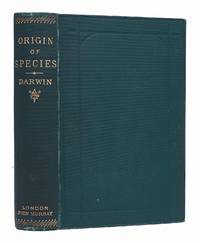
Best.-Nr. 16-5690London: John Murray 1872. 8vo 182 x 117 mm. xxi 1 458 pp. Includes half-title and one folding lithographed plate facing p.91. Original publisher's green cloth gilt spine lettering embossed border at covers inner hinges cracked slight fraying of spine ends very light rubbing of extremities.Sixth edition Twelfth thousand with additions and corrections half-title folding diagram at p. 91 worn at fore edge original green cloth rubbed at extremities some loss at head and tail of spine hinges cracked Freeman 392 John Murray 1872 . .OCLC Number / Unique Identifier: 1069385500: "First edition November 24th 1859. Sixth edition Jan 1872"--Page ii"Additions and corrections to the fifth edition."--Page xi-xiiIncludes index. "The sixth edition which is usually rconsidered the last and appeared in February 1872. Murray's accounts show that 3000 copies were printed but this total presumably included both those with eleventh thousand on the title page and those with twelfth the latter being notably less common. It is again extensively revised and contains a new chapter VII. This was inserted to confute the views of the Roman Catholic biologist St George Mivart. The edition was aimed at a wider public and printed in smaller type the volume shorter again and giving the general impression of a cheap edition which at 7s. 6d. it was. The title changes to The origin of species and a glossary compiled by W. S. Dallas appears. It is in this edition that the word 'evolution' occurs for the first time. It had been used in the first edition of The descent of man in the previous year but not before in this work. 'Evolved' had been the last word of the text in all previous editions but 'evolution' had been omitted perhaps to avoid confusion with the use of the word by Herbert Spencer or with its more particular embryological meaning. The word had however been used in its transformist sense by Lyell as early as 1832 Principles of geology Vol. II p. 11. In this edition it occurs twice on page 201 and three times on page 424." John van Wyhe ed. 2002-. The Complete Work of Charles Darwin Online London: John Murray, 1872. hardcover
1883Best.-Nr. 1353921New York: D. Appleton and Company 1883. Second Edition Revised Fourth Thousand. Hardcover. Octavos Two Volumes. In Very Good condition. Bound in red cloth with black stamping to front boards blind stamping to rear boards and gilt titling to spines. Mild shelf wear and rubbing to binding. Volume 1 with one leaf of undated ads in rear; Volume 2 with four leaves of undated ads in rear. Gift inscription to front free endpapers. Stated "Second Edition Revised Fourth Thousand" but actually a reissue from the plates with only the date changed. Freeman Bibliographical Database: F884; also showing reissues of the 1876 printing in 1884 and 1887. Shelved in Case 10. 1353921. Shelved Dupont Bookstore. D. Appleton and Company hardcover
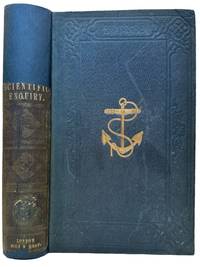
1849Best.-Nr. SRW1705London:: John Murray . . . publisher to the admiralty 1849. 1849. 8vo. xi 1 488 pp. Large folding oceanographic map showing the Approximate Limits of the Great Currents and Drifts of the Ocean scattered figures 1 engraved plate Hydrographic delineation appendices; final leaf reinforced at gutter. Original full dark green embossed cloth with gilt anchor device on upper cover in blind on the back cover Freeman notes that “in some copies but not all the anchor on the top board is gilt” as is with this copy no pocket in rear bottom board as per this issue; spine replaced preserving a remnant of the original spine corners and joints reinforced. Bookplate of Charles F. Cox New York; embossed stamp of the Carnegie Institution Solar Observatory under George Ellery Hale being from his library donated to the Mount Wilson Observatory. Very good. Rare. FIRST EDITION second issue with pp.171-90 cancelled containing the corrected sheets including part of Darwin’s article. Freeman notes that most copies of the first issue including Darwin’s own were published with a separate 20-page cancellans inserted into a pocket inside the back cover. Freeman further states that some copies may have been issued without the cancellans as here. This collection of scientific articles on subjects relating to naval training was used as a textbook for cadets at the Royal Naval College. Darwin contributed the section on “Geology” which contained serious transpositions of the text which were cancelled and replaced with corrected sheets. / “Sir John Frederick William Herschel 1792-1871 – astronomer mathematician chemist - was one of the most important British scientists of the nineteenth century. Son of the famous astronomer William Herschel he was persuaded by his father to pursue the astronomical investigations William could no longer undertake; John’s subsequent career resulted in a knighthood and a lifetime of accolades. This 1849 publication was commissioned by the Admiralty to encourage and assist naval officers to undertake scientific research while abroad. The work provides instructions in making and recording observations in a wide range of disciplines - astronomy; magnetism; hydrography; tides; geography; geology; earthquakes; mineralogy; meteorology; atmospheric waves; zoology; botany; ethnology; medicine; statistics - written by experts in these fields including G.B. Airy Capt. Beechey Leut. Col. Sabine R. Mallet Sir H.T. de la Beche W. R. Birt Richard Owen W.J. Hamilton Rev. Dr. Whewell Charles Darwin Dr. Pritchard G.R. Porter Dr. Bryson Sir William Jackson Hooker and Herschel himself. It was hoped that the instructions could also be used by other travellers to advance scientific knowledge and the work remained in print for over fifty years.” PROVENANCE 3: 1 Charles Finney Cox 1846-1912 New York. He worked as an American railroad manager holding roles including Assistant Treasurer of the Canada Southern Railway Company Vice-President of the Richmond & Alleghany Railroad Company and President of the Carthage & Adirondack Railway Company. He became Treasurer and President of the New York Academy of Sciences. In 1896 Cox was appealing for financial assistance to fund a suitable building for the Scientific Alliance of New York including creating a 100000 volume library etc. Cox was an active member of scientific groups like the New York Microscopical Society and the Royal Microscopical Society. He assembled a notable collection of Darwiniana which was later acquired by the New York Botanical Garden in 1912 as a permanent memorial; 2 embossed stamp of the Carnegie Institution Solar Observatory under 3 George Ellery Hale 1868-1938 being from his library donated to the Mount Wilson Observatory. REFERENCES: Freeman 1977 326; Norman 1057. John Murray . . . publisher to the admiralty, 1849. hardcover
1876Best.-Nr. 12090London: Smith Elder & Co 1876. Second Edition. Hardcover. Good. Second Edition. Hardcover. Previously owned by Oliver Sacks. This second edition combines Geological Observations on the Volcanic Islands with Geological Observations on South America. Notes from Eric Korn Oliver's friend and bookseller. From the library of Dr. Oliver Sacks the renowned neurologist author and educator. He was in his life celebrated for his contributions to the understanding of the human brain and his ability to communicate complex scientific concepts to a broader audience. In doing so he highlighted the profound impact of neurological disorders on human identity and experience. His library is a reflection of this remarkable polymath's questing mind. Moderate shelf/edge wear discoloration/soiling to upper spine toning else tight and unmarred. Red cloth boards. 8vo. xiii 647pp. Illus. b/w color 3 maps 2 plates one coloured at the back 40 text illus. Notes from bookseller. Smith, Elder, & Co hardcover books
1883Best.-Nr. 1353921New York: D. Appleton and Company 1883. Second Edition Revised Fourth Thousand. Hardcover. Octavos Two Volumes. In Very Good condition. Bound in red cloth with black stamping to front boards blind stamping to rear boards and gilt titling to spines. Mild shelf wear and rubbing to binding. Volume 1 with one leaf of undated ads in rear; Volume 2 with four leaves of undated ads in rear. Gift inscription to front free endpapers. Stated "Second Edition Revised Fourth Thousand" but actually a reissue from the plates with only the date changed. Freeman Bibliographical Database: F884; also showing reissues of the 1876 printing in 1884 and 1887. Shelved in Case 10. 1353921. Shelved Dupont Bookstore. D. Appleton and Company hardcover books
1849Best.-Nr. SRW1705London:: John Murray . . . publisher to the admiralty 1849. 1849. 8vo. xi 1 488 pp. Large folding oceanographic map showing the Approximate Limits of the Great Currents and Drifts of the Ocean scattered figures 1 engraved plate Hydrographic delineation appendices; final leaf reinforced at gutter. Original full dark green embossed cloth with gilt anchor device on upper cover in blind on the back cover Freeman notes that “in some copies but not all the anchor on the top board is gilt” as is with this copy no pocket in rear bottom board as per this issue; spine replaced preserving a remnant of the original spine corners and joints reinforced. Bookplate of Charles F. Cox New York; embossed stamp of the Carnegie Institution Solar Observatory under George Ellery Hale being from his library donated to the Mount Wilson Observatory. Very good. Rare. FIRST EDITION second issue with pp.171-90 cancelled containing the corrected sheets including part of Darwin’s article. Freeman notes that most copies of the first issue including Darwin’s own were published with a separate 20-page cancellans inserted into a pocket inside the back cover. Freeman further states that some copies may have been issued without the cancellans as here. This collection of scientific articles on subjects relating to naval training was used as a textbook for cadets at the Royal Naval College. Darwin contributed the section on “Geology” which contained serious transpositions of the text which were cancelled and replaced with corrected sheets. / “Sir John Frederick William Herschel 1792-1871 – astronomer mathematician chemist - was one of the most important British scientists of the nineteenth century. Son of the famous astronomer William Herschel he was persuaded by his father to pursue the astronomical investigations William could no longer undertake; John’s subsequent career resulted in a knighthood and a lifetime of accolades. This 1849 publication was commissioned by the Admiralty to encourage and assist naval officers to undertake scientific research while abroad. The work provides instructions in making and recording observations in a wide range of disciplines - astronomy; magnetism; hydrography; tides; geography; geology; earthquakes; mineralogy; meteorology; atmospheric waves; zoology; botany; ethnology; medicine; statistics - written by experts in these fields including G.B. Airy Capt. Beechey Leut. Col. Sabine R. Mallet Sir H.T. de la Beche W. R. Birt Richard Owen W.J. Hamilton Rev. Dr. Whewell Charles Darwin Dr. Pritchard G.R. Porter Dr. Bryson Sir William Jackson Hooker and Herschel himself. It was hoped that the instructions could also be used by other travellers to advance scientific knowledge and the work remained in print for over fifty years.” PROVENANCE 3: 1 Charles Finney Cox 1846-1912 New York. He worked as an American railroad manager holding roles including Assistant Treasurer of the Canada Southern Railway Company Vice-President of the Richmond & Alleghany Railroad Company and President of the Carthage & Adirondack Railway Company. He became Treasurer and President of the New York Academy of Sciences. In 1896 Cox was appealing for financial assistance to fund a suitable building for the Scientific Alliance of New York including creating a 100000 volume library etc. Cox was an active member of scientific groups like the New York Microscopical Society and the Royal Microscopical Society. He assembled a notable collection of Darwiniana which was later acquired by the New York Botanical Garden in 1912 as a permanent memorial; 2 embossed stamp of the Carnegie Institution Solar Observatory under 3 George Ellery Hale 1868-1938 being from his library donated to the Mount Wilson Observatory. REFERENCES: Freeman 1977 326; Norman 1057. John Murray . . . publisher to the admiralty, 1849. hardcover books
1904Best.-Nr. 5736Cambridge: Privately Printed at the University Press 1904. First Edition. Hardcover. Very good. First Edition. Very good in original green cloth xxvi 484 pp. Scarce. This privately printed edition was one of 250 copies printed for the Darwin family by Cambridge University Press. The later second trade edition omits numerous letters printed in this privately circulated edition. Privately Printed at the University Press hardcover
2003Best.-Nr. BRG-34_3_861Gramercy 2003-02-04. hardcover. Like New. 5x0x8. Like New Condition.Crisp pages. Clean cover and pages. Book shows no shelf wear. Not Satisfied Contact us to get a refund. Gramercy hardcover
1882Best.-Nr. 180981London: John Murray 1882. First edition sixth printing following the first of the previous year with a contemporary albumen portrait photograph of Darwin mounted to the front free endpaper verso. The photograph heavily faded was taken by Herbert Rose Barraud 1845-1896 and was the last portrait taken before Darwin's death in 1882. Provenance: Stephen C. Massey. Octavo. Original green cloth spine lettered in gilt brown endpapers. Contemporary inscription to front free endpaper; 20th-century bookplates of Esme Nicoll née Bowker in both her maiden and married names. Slight lean to spine a little toned. A very good copy. Freeman 1362. hardcover
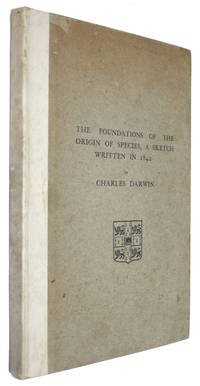
1909Best.-Nr. A61656Cambridge: Printed at the University Press 1909. xii 53 portrait frontis 1 b/w plate. . HB. 8vo orig. parchment-backed printed boards lightly rubbed edges uncut. Occasional light foxing. The presentation leaf has been neatly removed. Freeman states that this is the case in some copies which were perhaps available outside the presentation issue. Good. Very scarce. First unpublished edition printed for presentation only to delegates to the Cambridge celebration of the centenary of the birth of Charles Darwin and of the fiftieth anniversary of the publication of his Origin of Species. Later the same year this was reprinted and published together with the sketch of 1844. 'When Francis Darwin put together Life and Letters he did not know that the sketch of his father's evolutionary ideas which was written in 1842 had survived. The pencil manuscript was discovered in 1896 after the death of his mother in a cupboard under the stairs at Down House.' Freeman p. 182. Freeman 1555. Printed at the University Press hardcover
Best.-Nr. 66251London: John Murray 1892. Sixth edition. 8vo. 19 x 12.5 cm. pp.xxi432. Publisher's original spruce green cloth spine lettered and decorated in gilt. With the folding diagram as called for. Provenance: Old ownership inscription Daniel A. Dewar dated 1894 to half-title blindstamp to final leaf. Some light browning and spotting to endpapers light spotting to half-title some trivial light shelfwear a very good copy overall. An attractive copy of "the most influential scientific work of the 19th century" Horblit and "certainly the most important biological book ever written" Freeman in which Darwin explained his concept of evolutionary adaptation through natural selection which would become the foundation of modern evolutionary theory First published by Murray in 1859. London: John Murray, 1892. hardcover
Best.-Nr. 117651London Smith Elder & Co. 1874. . Second edition; 8vo; 3 folding maps of which 2 are hand-coloured contemporary ownership signature to the title two short closed tears to the frontispiece map light spotting to the edges of the text block maps part of the title and occasionally the contents; original green cloth titles to spine gilt binding rubbed bumped and a little marked with some loss of size and splits at the ends of the spine hinges cracked a very good copy; 278pp. Second edition of one of Darwin's earliest books originally published as the first part of The Geology of the Voyage of the Beagle in 1842 and here 'extensively revised and largely rewritten in the light of the findings of Dana and of Jukes' Freeman p. 57. Uncommon in the publisher's cloth. During the course of the voyage of the Beagle 'Darwin's geological achievements mounted up. Using Charles Lyell's radical new Principles of Geology 183033 as a guide he grew bold in interpreting the earth's crust by causes now in operation. The first volume was a gift from FitzRoy the other two reached him during the voyage. He was captivated by Lyell's grand theoretical scheme - "when seeing a thing never seen by Lyell one yet saw it partially through his eyes" Correspondence 3.55 - and confirmed many of Lyell's observations with careful fieldwork. On other points Darwin expanded innovatively especially in understanding the piecemeal formation of the Andes and the origin of coral reefs on sinking mountain rims. There was an immediacy to it all. As he trekked through the Portillo and Uspallata passes of the Andes the coloured rocks seemed almost like a geological diagram and in the Cocos Keeling Islands he waded over the reefs to confirm his theory of the formation of coral atolls. His geology was dynamic with continents slowly rising and sea basins sinking and it formed the basis of all his later views. He endorsed Lyell's belief in an earth gradually shaped over countless ages: time enough - as he later grasped - for evolution by natural selection to occur' Oxford Dictionary of National Biography. Freeman 275. London, Smith, Elder, & Co., 1874. hardcover
1887Best.-Nr. AQ28006London: John Murray 1887. In three volumes. ix 1 395 1; 4 393 1; iv 418pp. With a portrait frontispiece to each volume. Original publisher's green cloth ruled and lettered in gilt to spines. A trifle rubbed. Hinges exposed armorial bookplates of Bernard Lord Coleridge to FFEPs scattered spotting. With a 4pp A.L.S. tipped-in to FFEP of Vol. II: 'Dear Mr. Rockstro I have to thank you for two most kind letters. It is very good of to value the book so highly - I am glad to hear of the big book and the flute for which as my first love I still have much affection. I often wish I had been taught other things as well as I was taught by you - there are but few who teach well I find. I have not forgotten that your day is Saturday but I am so seldom in town - I hope I find you at home someday. Yours ever sincerely F. Darwin'. The first edition of Francis Darwin's 1848-1925 monumental memoir of his father naturalist geologist and originator of the theory of natural selection Charles Darwin 1809-1882; with a contemporary letter in Francis's hand addressed to his former music tutor flautist Richard Shepherd Rockstro. Provenance: Bernard John Seymour Coleridge second Baron Coleridge 1851-1927 lawyer and Liberal politician grandson of poet John Taylor Coleridge. . First edition. 8vo. John Murray hardcover
1850Best.-Nr. 6543London: Unpublished 1850. Hardcover. Very Good. Manuscript notebook by a committed poultry breeder reader and customer of Darwin's poulterer and dealer in live birds John Baily with a letter from Baily about 'confinement' of birds. In this fascinating work W Stone keeps copious notes of John Baily's published observations on poultry most dated to the early 1850s as well as inserting a letter from Baily and a fine printed broadside advertisement. At the other end of the manuscript is a lengthy fair copy of David Ramsay Hay's study of colour theory. Quarto-sized notebook half calf over brown marbled boards lacking backstrip binding perfectly sound 1834 fleur de lys watermarked paper. Writing from one end of the manuscript Stone begins with brief notes on 'Baileys Reg.d Poultry Fountain' and one of Baily's published works The Dorking Fowl. This is followed by 56 pages of legal 'Articles of Agreement' between 'R.B.' and 'E.B.' apparently pre-Victorian. The meat of the manuscript comes in the 'Miscellaneous' section dated to 1852 which begins with a brief entry on 'Food for silk worms' a series of inserted printed pages on poultry breeding some annotated followed by a fine illustrated broadside advertisement for a 'Poultry House' built by Robert Richardson of London 38x23cm folded across a double spread. In manuscript there follows 'The Poultry-yard by Boswell review of' and lengthy commonplace notes many initialled 'John Baily' and dated on aspects of poultry manure breeding hybrids 'Descriptive Points &c. Dorking' and other ducks 'Incubation Natural and Artificial' the hatching of 6 emus 'at Knowsley in 1851 by Cautelo's hydro incubator. bought by the Antwerp Zoological Soc.y' 'Sale and Produce of Eggs' and a note of the values achieved by ducks in Dorking. There is a manuscript article from 1839 on the 'Eccaliobion' with the comment 'Dr. P of M. told me that in his country Wales they put eggs under ducks in preference.' with around 15 pages of manuscript explanation of Natural Incubation with tipped in steel engravings of incubating chicks which cites various sources including 'Mr William Yarrell' whom Darwin credits in one of his letters for introducing him to Baily and a section on 'Disease prevention and cure'. The letter from Baily to 'W Stone' is written on headed paper 'Baily 113 Mount Street' and explains a misapprehension on the part of Stone about an article published by Baily on the 'confinement' of foul in London 'The atmosphere of London is counted not so good as that of the country.' and is signed 'John Baily' with further notes below. Starting from the other end of the manuscript there is a 46 page fair copy of the introduction and first four chapters of the 1838 edition of David Ramsay Hay's The Laws of Harmonious Colouring with hand drawn renderings of the printed diagrams that are interspersed through the text most showing colour combinations. John Baily is referred to by Darwin in several of his letters; Darwin's accounts reveal that he bought frequently from Baily though he complained about Baily's reluctance to sell Darwin 'dead birds'. Collates: pp66 poultry; pp46 colour theory; pp57 legal Very Good Please contact Christian White Rare Books Ltd for more information or images of this item 1850 Unpublished hardcover
Best.-Nr. 18795London: Printed for the Palaeontographical Society 1851 & 1854. . Two works bound in one volume 4to 27.8cm. I: pp. vi8810 several figures on 5 lithographed plates index. II: pp.vi442many figures on 2 lithographed plate index. Hardbound recent full burgundy cloth gilt-lettered title to backstrip. Excellent copy without flaws. - Rare early work by Darwin on fossil Crustacea here in their original edition issued in two parts in the Annual Volumes of the Palaeontographical Society as Volume 5 no. 13 resp. Volume 8 No. 30. Freeman 352. - phd.179 London: Printed for the Palaeontographical Society, 1851 & 1854. hardcover
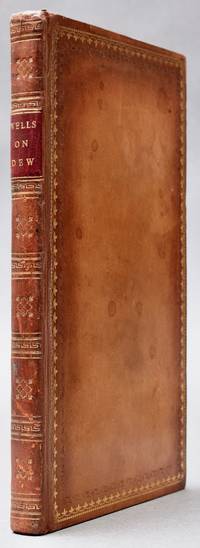
1815Best.-Nr. BB2499London: printed for Taylor and Hessey No. 93 Fleet Street 1815. Full Calf. Fine. Second Edition of this classic of meteorology first published in 1814 which revolutionized the understanding of ventilation in public places and for which Wells was awarded the Rumford Medal of the Royal Society. Demy 8vo 212 x 127mm: 4150pp. Beautifully bound in contemporary calf spine richly gilt in six compartments covers framed in blind and gilt red leather lettering piece gilt Prussian blue end papers. Manuscript presentation to title page: "To Dr. James Jackson from the Author" with Jackson's engraved armorial book plate to front paste-down. A gorgeous example tightly bound and generally clean throughout. Lowndes 2871 "A valuable little work". Garrison-Morton 1604. Norman 2199 and Christies 848. Blocker p. 416. Waller 12191. Knight p. 191 "Perhaps more important than any writings on induction by philosophers was the splendid example of inductive reasoning by William Charles Wells. . . . his Essay on Dew was rapidly recognized as a classic.". Wells was born in Charleston South Carolina but left America at the start of the Revolution for London where he became physician to St. Thomas's Hospital. In the autumn of 1811 he began a series of researches in the Surrey garden of his friend James Dunsmore comparing the formation of dew under varying conditions of temperature humidity weather cloud cover season and time of day. He concluded that dew results from the condensation of air in contact with objects cooled by radiating their heat into the cloudless night sky. "His researches . . . were of major importance in the development of the science of ventilation particularly in its relation to relative humidity and the influence of the latter on the comfort of the occupants of factories ships theatres etc." Garrison-Morton Wells's inquiry into the nature of dew was widely cited in the 1830s as an outstanding example of inductive scientific inquiry. Sir John Herschel used it as the primary illustration in his Discourse on the study of Natural Philosophy calling the theory "one of the most beautiful specimens we can call to mind of inductive experimental enquiry lying within a moderate compass." In 1836 the Encyclopedia Metropolitana reported "We know of no work in our day which has been more universally admired than the Treatise of Dr. Wells certainly none that practically exemplifies in a purer and better form the admirable inductive system which it was the object of Bacon to teach." John Tyndall and William Whewell also praised it. N. B. With few exceptions always identified we only stock books in exceptional condition carefully preserved in archival removable mylar sleeves. All orders are packaged with care and posted promptly. Satisfaction guaranteed. Fine Editions Ltd is a member of the Independent Online Booksellers Association and we subscribe to its codes of ethics. printed for Taylor and Hessey, No. 93, Fleet Street unknown
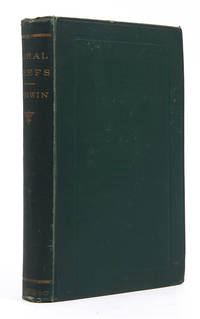
1891Best.-Nr. 33824London: Smith Elder & Co. 1891. Third edition 8vo xiv 648 pp. 2 folding maps and 5 folding plates including a hand coloured geological section light staining to the top edge of the plates at the end as folded hinges slightly cracked but sound. Original gilt titled green cloth mild rubbing to spine ends. Originally published 1842-6 in 3 volumes - Coral Reefs Volcanic Islands and South America this volume combining the latter two parts. Freeman 282. London: Smith, Elder & Co. unknown
1922Best.-Nr. 1759Zagreb: Tisak Kr. Zemaljske Tiskare 1922. First Croat edition. In original printed wrappers. In very good condition. With a photographic portrait of Darwin and a double page folding map. Illustrated throughout. With a photographic portrait of Darwin and a double page folding map. Illustrated throughout. First Croat edition. In original printed wrappers. 7 4–165 1 p. with a photographic plate and a folding map. Rare first Croat edition of the The Voyage of the Beagle Darwin’s only work translated into this language until recent times. The present translation was never completed. The full and different translation was published in 1949 Putovanje jednog prirodoslovca oko svijeta; Zagreb: Beograd Novo Pokoljenje. Not in Freeman. . Tisak Kr. Zemaljske Tiskare unknown