7338 risultati
1876rif. 99937876revue des deux mondes Paris Au Bureau de la Revue des Deux Mondes 1876, In-8 broché. Bon état.
1867rif. 26037Couverture souple. Broché. 611 pages. Mouillures en marge aux premières et dernières pages. Couverture défraîchie. Rousseurs.
rif. DADAX0195383362New unknown
rif. DADAX0195383354New unknown
rif. B9781258819569Paperback / softback. New. paperback
2012rif. NorthernGardenerCLHarbour 2012-05-09. Paperback. Like New. 9x8x0. BRAND NEW! Ships within 24 hours! Harbour paperback
2012rif. NorthernGardenerHarbour 2012-05-09. Paperback. New. 9x8x0. BRAND NEW! Ships within 24 hours! Harbour paperback
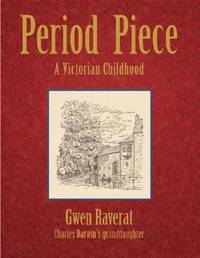
1952Charming and engrossing biography of a young girl growing up in late Victorian Cambridge, with entertaining vignettes, in both descriptions and drawings, of the various eccentric members of the remarkable Darwin and Wedgwood dynastiesfamilies.282p. Ill Book
1989A clean, unmarked copy with a tight binding. 160 pages. Small chip on top edge of black cloth boards; barely noticeable. Clean and tight with sharp corners. Slight edge wear and fading to dust jacket. A photographic reproduction of the first edition, printed by offset lithography. Selected with an introduction by Reynolds Stone; postscript and additional selection by Simon Brett. . "Gwen Raverat (1855-1957) was one of the most distinguished printmakers of the century, an artist in whose hands the medium of wood engraving became uniquely transparent to personal vision. Her world, richly populated with the symbols of her own experience set in one of the most classic traditions of Western art, is universally accessible and capable of inspiring passionate affection in those who are drawn to it, responding to her own intense reaction to the subjects she chose." [Publisher's blurb]
rif. 1904555128.Ghardcover. Good. Access codes and supplements are not guaranteed with used items. May be an ex-library book. hardcover
1910rif. 10278ABBerlin, Leipzig, Hermann Hillger Verlag, ca. 1910. kl. 8°, 94 Seiten, mit 23 Illustrationen, hellgraues Leinen, geprägte Rücken- und Deckeltitel. Einband etwas unfrisch, Seiten gebräunt, Schnitt stockfleckig, recht gut erhalten. Hillgers Illustrierte Volksbücher Nr. 125. [Bücher des Wissens Bd. 125].
2001Saggi Einaudi 885 ISBN 9788806184 773
rif. 6204135694.Gpaperback. Good. Access codes and supplements are not guaranteed with used items. May be an ex-library book. paperback
rif. 6204135708.Gpaperback. Good. Access codes and supplements are not guaranteed with used items. May be an ex-library book. paperback
rif. 6204135686.Gpaperback. Good. Access codes and supplements are not guaranteed with used items. May be an ex-library book. paperback
rif. 6204135678.Gpaperback. Good. Access codes and supplements are not guaranteed with used items. May be an ex-library book. paperback
rif. 620413566X.Gpaperback. Good. Access codes and supplements are not guaranteed with used items. May be an ex-library book. paperback
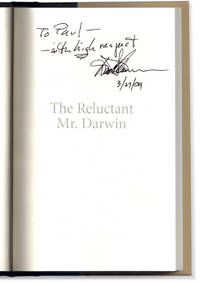
2006rif. 18847New York: Atlas Books / W. W. Norton & Company 2006. Signed and dated 3/27/09 on the half-title page by David Quammen additionally inscribed: To Paul - with high respect. Additionally Signed and warmly inscribed to Paul Johnsgard on the back of a Charles Darwin photo postcard dated 2/22/11. First edition / First printing. Black paper-covered spine beige paper-covered boards. Very fine in a very fine dust jacket. Paul Johnsgard was an Ornithologist at the University of Nebraska in Lincoln from 1961 to his retirement in 2001. He continued as an emeritus researcher. Johnsgard was regarded as a prominent expert of Sandhill Cranes. Quammen worked with him and regarded him as a friend. Atlas Books / W. W. Norton & Company, hardcover
2008rif. 015558Sterling Publishing Co. Inc. 2008. 1st Edition . Hardcover. Fine/Near Fine. 4to - over 9¾ - 12" tall. Fine In A Near Fine Jacket Pp 544 Index Illustrated Throughout Sterling Publishing Co., Inc. hardcover
rif. 14883Paris, Reinwald, 1881. In-8, XXVII-721 pp. et 20 pp. de catalogue, reliure éditeur en percaline sapin, titre doré au dos, non rogné (coiffes et mors un peu frottés, quelques rousseurs).
20038vo., First Edition, with 13 coloured plates on 8, and numerous monochrome photographs, illustrations and facsimiles (a number full page) in the text; green cloth, gilt back, green endpapers, a near fine copy in unclipped dustwrapper.
20038vo., Signed Limited Edition, with 13 coloured plates on 8, and numerous monochrome photographs, illustrations and facsimiles (a number full page) in the text; marbled boards, cloth back gilt, green endpapers, a fine copy in publisher's board slip-case. EDITION LIMITED TO 500 NUMBERED COPIES SIGNED BY PRYOR (THIS COPY NO.280) AND CONTAINING IN A SEPARATE FOLIO A LIMITED NUMBERED WOOD-ENGRAVING BY GWEN RAVERAT 'VENCE, LA PLACE EN ETE'. The wood-engraving was made in 1923 at the height of the correspondence described in the book, and hand printed by Simon Lawrence of the Fleece Press from the original boxwood block.
2020ill., br. Secondo la visione comunemente accettata della selezione naturale, perché un carattere si evolva è necessario che sia adattativo, che aumenti cioè la probabilità di sopravvivenza dell'individuo. Con uno scarto audace rispetto all'ortodossia dominante, Richard Prum ipotizza invece in questo libro che alcuni tratti, soprattutto quelli coinvolti nel corteggiamento, siano frutto di scelte arbitrarie: una specie manifesterebbe una preferenza per un certo carattere giudicato bello, e in base a quella preferenza uno dei due sessi (in genere quello femminile) effettuerebbe la scelta del partner. La prole della coppia erediterebbe così non solo il carattere ritenuto attraente, ma anche la preferenza. In effetti nell'Origine dell'uomo Darwin aveva delineato una visione puramente estetica della selezione sessuale: ma i tempi non erano maturi, e per i suoi colleghi dell'epoca vittoriana l'idea che le preferenze femminili - l'«immorale capriccio femminile», come veniva allora chiamato - potessero rappresentare una pressione selettiva determinante era inconcepibile. Centocinquanta anni dopo, con indiscutibile autorevolezza, Prum conferisce nuova vita alla teoria rivoluzionaria di Darwin, ma si spinge oltre: spaziando tra biologia evolutiva, filosofia e sociologia, riscrive la teoria dell'evoluzione (che si tratti dell'evoluzione delle penne del pavone o di quella dell'orgasmo femminile), riscatta il ruolo della bellezza e del desiderio, e ci offre una nuova, affascinante storia naturale incentrata sull'arbitrio femminile e il senso del bello contrapposti alla legge della lotta e al dominio del più forte.
rif. A9781166492632New. unknown