7.652 Ergebnisse
1894Best.-Nr. PW1191Edinburgh:: T. & T. Clark 1894. 1894. 8vo. xvi 358 10 pp. Crimson blind- and gilt-stamped cloth. Ownership signature of Robert Maxwell Young. Very good a nice copy. PROVENANCE: Robert M. Young is a historian of science specializing in Darwinism. T. & T. Clark, 1894. hardcover
1980Best.-Nr. 100236AB1980. 1. Auflage. Wien u.a. Econ Verl. 1980. 500 Seiten. Illustriert. Original Hardcover with original dustjacket in protective collector's mylar. Minimal stockfleckig / Excellent condition with only minor signs of external wear. Enthaelt u.a.: Die Pampa und Feuerland / Die Abstammung von Charles Darwin / Erste Entdeckungen / Galapagos und die lange Heimreise / Kreuzungsversuche - Darwins 'Heros' etc. etc. hardcover
2000Best.-Nr. 78242AB2000. London Weidenfeld & Nicolson 2000. 16 cm x 24 cm. XVI 268 pages with illustrations. Original Hardcover with dustjacket in protective mylar. Excellent condition with only minor signs of external wear. Includes for example the following contents:- The Twin Peaks / The Rise and Fall of the Mobile P Gene / When is an Adaptation Not an Adaptation / The Ignorant Gene / Is Dawkins aware of the Error of His Ways / Genetic Turnover; Of Course Of Course / Molecular Drive for Advanced Players etc. "Dear Mr Darwin - You might find it presumptious of me if not a little macabre that I should take up my pen and write to you more than a hundred years after your death. But I'm encouraged to do so because it is on record that you yourself wrote almost fourteen thousand letters on scientific issues many of which I expect were answers to unsolicited correspondence. Despite the gulf that separates us in time and means I know that this letter will arouse your scientific interests for it touches on some of the central issues with which you wrestled all your life.' Thus begins an imagined correspondence between the geneticist Gabriel Dover and Charles Darwin on the surprising findings of modern genetics and their influence on the evolution of biological novelties from genes to organisms. Stimulated by Darwin's relatively uninformed but obviously intelligent questions Dover takes the father of natural selection on an exhilerating roller-coaster ride through the 'new genetics'. In recounting stories from the treasure-trove of modern biology Dover exposes the naively deterministic view of selfish genes and their supposed lonely pursuits of self-replication and self-immortalization. He reveals a world of evolution far more intricate and subtle than can be expected from the notion of natural selection acting alone - a world in which genes are born to cooperate. Set against a backdrop of cultural references ranging from the late poet Ted Hughes through the music of Captain Beefheart to the current ethnic crisis in the Balkans this trenchant humorous and literate correspondence presents a startlingly original view of development and evolution that puts the individual organisms centre-stage".Amazon. hardcover
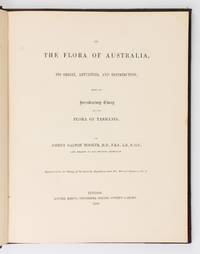
1859Best.-Nr. 105735London: Lovell Reeve 1859. First Edition. Hardcover. London Lovell Reeve November 1859 first separate edition. Large quarto viii 128 pages complete with the half-title. Later half roan and stippled cloth lightly rubbed at the extremities; a very crisp and bright copy. 'The first important botanical work by a supporter of the doctrine of evolution by natural selection' Norman often quoted but not going nearly far enough in our opinion!. A singular rarity of the utmost importance. In the concluding paragraph of the postscript unique to this edition Hooker writes: 'I would further observe here to avoid ambiguity that my friend Mr. Darwin's just completed work "On the Origin of Species by Natural Selection" sic from the perusal of much of which in MS. I have profited so largely had not appeared during the printing of the Essay or I should have largely quoted it. Kew November 4 1859'. Lovell Reeve hardcover
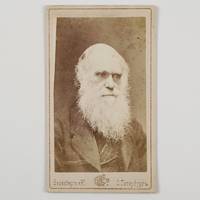
Best.-Nr. 78226Saint Peterburg Wesenberg Down and London Elliott & Fry 1874. Albumen print mounted on cardboard with a red ink border 10.3 x 6.1 cm. With the printed name Darwin in Cyrillic and printed Cyrillic text on recto and verso. Name of Darwin stamped in cyrillic on verso. Preserved in transparent sleeve. = Carte de visite. With a fine crisp portrait of Charles Darwin at the age of 65 years. This photo was made in the studio of Elliott & Fry in 1874. ".while Darwin wrote and published two of his most important evolutionary tracts - Descent of Man and Expression of the Emotions in Man and Animals - he took a hiatus from sitting for his photographic image. Once these books were out however he needed an updated carte-de-visite that he could send out to his friends and supporters. He turned again to the photographers who had made his most recent cartes Elliot and Fry. They produced at least four different poses which Darwin would have sent to friends and admirers." Darwin Project - photographic portraits. Van Wyhe identifying the four poses with the letters a to d described the recto of this version as variety 1874 c.7 but give no information about the card verso. However it appears to be the same as in their 1874 c.5. and therefore possibly it is another edition NOT recorded by Van Wyhe. If and when it was licenced to the Wesenberg firm located at Fontanka 55 in old Saint Petersburg is not exactly known. Slightly over-exposed as always. This copy in very good condition. Very rare. J. Van Wyhe in: Helvert P. van and J. Van Wyhe Darwin: a Companion 1874 c.7. p. 175. Not recorded by Freeman. unknown
Best.-Nr. 76065Down and London Elliott and Fry 1874. Albumen print mounted on cardboard with rounded edges and a red ink border 10.0 x 6.2 cm. With the name Darwin printed in black below the photo and red crowned logo on verso. Preserved in transparent sleeve. = Carte de visite. With a fine crisp portrait of Charles Darwin at an age of ca. 68 years. This photo was probably made in the studio of Elliott & Fry in 1874. ".while Darwin wrote and published two of his most important evolutionary tracts - Descent of Man and Expression of the Emotions in Man and Animals - he took a hiatus from sitting for his photographic image. Once these books were out however he needed an updated carte-de-visite that he could send out to his friends and supporters. He turned again to the photographers who had made his most recent cartes Elliot and Fry". They produced at least four different poses which Darwin would have sent to friends and admirers." Darwin Project - photographic portraits. Van Wyhe gave the four known poses the letters a to d. This card is of his type b.4. The card bears the printed number 1391 and on its verso a red monogram "P". Very rare in such excellent condition. J. Van Wyhe in: Helvert P. van & J. Van Wyhe Darwin: a Companion 1874 b.4 p. 175. Not recorded by Freeman.
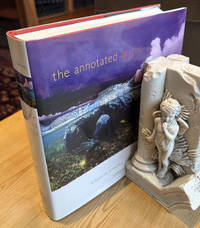
2009Best.-Nr. BCNH2003First Edition First Printing Full number line on copyright page. Scarce Hardcover Issue. A beautiful highly sought-after copy of the scarce 2009 hardcover first printing. Widely considered a cornerstone for modern Darwin enthusiasts and historians of science James T. Costa provides a masterful line-by-line annotation alongside a clean facsimile of the iconic 1859 first edition of On the Origin of Species. Includes an invaluable biographical directory of Darwin's contemporaries historical context notes and supplementary natural history cross-references. While later paperback reprints are common the original cloth-bound first printing has become remarkably difficult to source in fine condition. Condition Report • Book: Fine / Near Mint. Original red cloth with silver spine lettering is sharp clean and entirely unfaded. Corners are perfectly square and the binding is tight and unread. Pages are crisp and white completely free of highlighting underlining or marginal notations. • Dust Jacket: Fine. Vibrant colours crisp edges and no clips tears or sun-fading to the spine. An immaculate investment-grade copy of a modern Darwinian essential. The Belknap Press of Harvard University Press hardcover
Best.-Nr. 57847Printed for R. Baldwin. London. 1786. The Tenth Edition. . pp. 384 xiv Index ii Advertisement. Engraved portrait frontispiece dated 1782 the year after she died one folding plate of stove-fires. Original sheep now worn along spine at corners and lower board edge the first half of gathering 'E' misbound one leaf with a couple of edge tears without loss LACKING the two plates at the end of the text showing Plans of a Grand Table of Two Covers with the facsimile printed signature of Mrs. Raffald on page 1 and the real signature of ANN DARWIN Oct 4th 1796 at the head of the title. Possibly ANN DARWIN 1727-1813 the fourth child of Robert Darwin and Charles Darwin's great-aunt. The signature does not really match that given by FREEMAN in Darwin Pedigrees 1984 but given the differences in age when each of them was written perhaps there is a link. It otherwise remains tantalisingly enigmatic. Printed for R. Baldwin. London. 1786. The Tenth Edition. unknown
Best.-Nr. 57860T. Fisher Unwin. London. 1900. vi 362. Original cloth faded and rubbed one leaf with corner torn off but still present with the signature of FRANCIS DARWIN 1900 at the head of the front free end-paper PLUS the inscription in another hand presumably that of the recipient - 'The Rev. A. W. Darwin M.A. from his father Francis Darwin. January 28.1909.' The Francis Darwin in this instance is not the botanist son of Charles Darwin but FRANCIS RHODES later DARWIN 1825-1920. He had married Charles's distant cousin CHARLOTTE MARIA COOPER DARWIN 1827-1885 and had changed his name to Darwin after marriage. ARTHUR WILLIAM DARWIN b.1864 was his 5th. son. T. Fisher Unwin. London. 1900. hardcover
1855Best.-Nr. 53775Boston: Gould and Lincoln 1855. 8vo. x 11-273 1 pp. plus 12 pp. publisher’s ads. Engraved frontisp. Blue-green embossed ribbed publisher’s cloth gilt lettering on spine edgewear rubbing slightly cocked very minor foxing to endpapers still VG copy ownership markings on endpapers. First edition of this scarce anti-evolution polemic written against Robert Chambers Vestiges of the Natural History of Creation which had caused a shift in popular opinion followings its’ anonymous 1844 publication. The ideas in the work were notably derided by clergyman in England and America most significantly by Louis Agassiz who was a lifelong opponent of Darwin’s theory of evolution and evolutionary biology. Walker 1805-1887 was acting pastor of a church in Sandusky OH lectured on the harmony between science and revealed religion at Oberlin College and Chicago Theological Seminary. Gould and Lincoln, hardcover
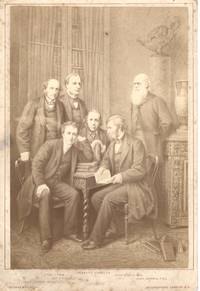
Best.-Nr. 39536showing this group of eminent Victorians gathered around a table in deep discussion 10" x 7" no place no date but unknown
Best.-Nr. 54343showing him head and shoulders three quarter face with his full beard oval 4½" x 3½" on mount 10¾" x 8" no place no date circa The term Woodburytype refers to both a photomechanical process and the print produced by this process. The process produces continuous tone images in slight relief. A chromated gelatin film is exposed under a photographic negative which hardens in proportion to the amount of light. Then it is developed in hot water to remove all the unexposed gelatin and dried. This relief is pressed into a sheet of lead in a press with 5000 psi. This is an intaglio plate. It is used as a mold and is filled with pigmented gelatin. The gelatin layer is then pressed onto a paper support. It is thought to produce the finest photographic images. The Woodburytype was developed by Walter B. Woodbury in 1864 first used in a publication in 1866 and widely used for fine book illustration from about 1870 to 1900. unknown
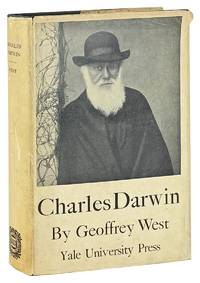
1938Best.-Nr. 47253New Haven CT: Yale University Press 1938. Very Good/Very Good. New Haven CT: Yale University Press 1938. First Edition. Octavo 24cm; publisher's cloth in white pictorial price-clipped dust jacket; xiv2359pp.; portrait frontispiece seven leaves of plates. Moderate wear and rather heavy dust-soil to jacket two longish closed tears at top edge of upper panel not quite touching image spotting to cloth else Very Good and sound in the rare jacket. Ownership ex libris of the late chemist and bibliophile Sydney Ross to front pastedown. Yale University Press unknown books
1938Best.-Nr. 47253New Haven CT: Yale University Press 1938. Very Good/Very Good. New Haven CT: Yale University Press 1938. First Edition. Octavo 24cm; publisher's cloth in white pictorial price-clipped dust jacket; xiv2359pp.; portrait frontispiece seven leaves of plates. Moderate wear and rather heavy dust-soil to jacket two longish closed tears at top edge of upper panel not quite touching image spotting to cloth else Very Good and sound in the rare jacket. Ownership ex libris of the late chemist and bibliophile Sydney Ross to front pastedown. Yale University Press unknown
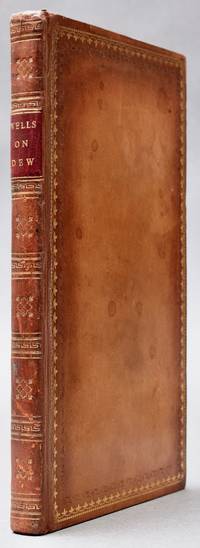
1815Best.-Nr. BB2499London: printed for Taylor and Hessey No. 93 Fleet Street 1815. Full Calf. Fine. Second Edition of this classic of meteorology first published in 1814 which revolutionized the understanding of ventilation in public places and for which Wells was awarded the Rumford Medal of the Royal Society. Demy 8vo 212 x 127mm: 4150pp. Beautifully bound in contemporary calf spine richly gilt in six compartments covers framed in blind and gilt red leather lettering piece gilt Prussian blue end papers. Manuscript presentation to title page: "To Dr. James Jackson from the Author" with Jackson's engraved armorial book plate to front paste-down. A gorgeous example tightly bound and generally clean throughout. Lowndes 2871 "A valuable little work". Garrison-Morton 1604. Norman 2199 and Christies 848. Blocker p. 416. Waller 12191. Knight p. 191 "Perhaps more important than any writings on induction by philosophers was the splendid example of inductive reasoning by William Charles Wells. . . . his Essay on Dew was rapidly recognized as a classic.". Wells was born in Charleston South Carolina but left America at the start of the Revolution for London where he became physician to St. Thomas's Hospital. In the autumn of 1811 he began a series of researches in the Surrey garden of his friend James Dunsmore comparing the formation of dew under varying conditions of temperature humidity weather cloud cover season and time of day. He concluded that dew results from the condensation of air in contact with objects cooled by radiating their heat into the cloudless night sky. "His researches . . . were of major importance in the development of the science of ventilation particularly in its relation to relative humidity and the influence of the latter on the comfort of the occupants of factories ships theatres etc." Garrison-Morton Wells's inquiry into the nature of dew was widely cited in the 1830s as an outstanding example of inductive scientific inquiry. Sir John Herschel used it as the primary illustration in his Discourse on the study of Natural Philosophy calling the theory "one of the most beautiful specimens we can call to mind of inductive experimental enquiry lying within a moderate compass." In 1836 the Encyclopedia Metropolitana reported "We know of no work in our day which has been more universally admired than the Treatise of Dr. Wells certainly none that practically exemplifies in a purer and better form the admirable inductive system which it was the object of Bacon to teach." John Tyndall and William Whewell also praised it. N. B. With few exceptions always identified we only stock books in exceptional condition carefully preserved in archival removable mylar sleeves. All orders are packaged with care and posted promptly. Satisfaction guaranteed. Fine Editions Ltd is a member of the Independent Online Booksellers Association and we subscribe to its codes of ethics. printed for Taylor and Hessey, No. 93, Fleet Street unknown
Best.-Nr. 18098London: John Churchill. 1844 and 1845. First edition first printing. First edition first printing. Two volumes. 8vo. Publisher's original red cloth with gilt titles to the spines. A very good set the bindings square and firm with minor nicks to the head of the spine of 'Vestiges' minor cracking to the inner hinges and chipping with loss to the spine ends of 'Explanations' the corners of both volumes a little bumped. The contents of 'Vestiges' with minor toning to page edges and the occasional minor mark to a couple of page margins are otherwise in excellent order clean throughout and without previous owners' inscriptions or stamps. The contents of 'Explanations' with a small contemporary bookseller's ticket to the front pastedown minor toning to the page edges the odd marginal mark a few faint pencil underlings a very minor water mark to the rear pastedown and free endpaper and a paper flaw to p.59 are otherwise in very good condition. All in all an attractive and appealing set in entirely original unsophisticated condition. Housed in a bespoke quarter morocco solander case. The first edition of the first full-length exposition of an evolutionary theory in English and the most important precursor to Darwin's 'On the Origin of Species'. "This outspoken statement of a belief in evolution published anonymously to protect Chambers' reputation as a publisher anticipated Darwin's Origin by 16 years Garrison and Morton p.218. Bringing "together a large variety of data from both geology and the life sciences to support the idea of the origin of species through a process of transmutation. It played a significant role in the history of mid-nineteenth century biology by making evolutionism a commonplace topic of discussion" becoming a sensational best-seller read widely by the intellectual and cultural elite thus easing the way for Darwin's own writings Norman. Notably the work also contains what is probably the first discussion of computing within the context of biology with Chambers demonstrating "that evolutionary change occurring over long periods of time could be seen as similar to the workings of Babbage's Difference Engine programmed from the beginning of its operation to produce in sequence several different series of numbers according to a succession of mathematical rules". Vestiges in fact served to significantly aid public understanding of Babbage's work with his ideas receiving "a much wider circulation through Chamber's text than through the two editions of the "Ninth Bridgewater Treatise" Hook et al. Origins of Cyberspace p.147. The October 1844 first edition of Vestiges consisted of 750 copies with a second edition of 1000 copies quickly following in December. The book was constantly revised with Chambers refining arguments addressing criticism and reacting to new scientific publications. Late in 1845 largely in response to Adam Sedgwick's review of the work in the Edinburgh Review Chamber's wrote "Explanations: A Sequel to Vestiges of the Natural History of Creation" consisting of 1500 copies and which was subsequently appended to later editions DSB III:192. The 11th edition of 1860 included a three page discussion of Darwin's recently published Origin a book which according to historian James A. Secord Vestiges outsold up until the early twentieth century. It was not until the 12th edition of 1884 in the preface written by his friend Alexander Ireland that Robert Chambers was revealed to have written Vestiges ending several decades of public speculation that had named everyone from Prince Albert to Darwin himself as the potential author. Secord James: Victorian Sensation The Extraordinary Publication Reception and Secret Authorship of Vestiges of the Natural History of Creation 2001. Further details and images for any of the items listed are available on request. All items are catalogued by humans. Lucius Books welcomes direct contact with our customers. London: John Churchill. 1844 and 1845 hardcover
2009Best.-Nr. 854292009 Paris, City, 2009, in 8° broché, 233 pages ; figures dans le texte ; couverture illustrée.
1748Best.-Nr. 17931748 Chez L'Honoré et Fils, Amsterdam, 1748. 2 volumes in-8, plein veau, dos orné, filets dorés sur les plats, doré sur les trois tranches. (6 ff), (cxix), (4 ff), 208 pages; 231 pages, 1ff d'errata.
Best.-Nr. 0343074052.Ghardcover. Good. Access codes and supplements are not guaranteed with used items. May be an ex-library book. hardcover
Best.-Nr. 1355612543.Ghardcover. Good. Access codes and supplements are not guaranteed with used items. May be an ex-library book. hardcover
Best.-Nr. 1313479918.Gpaperback. Good. Access codes and supplements are not guaranteed with used items. May be an ex-library book. paperback
1983Venezia, Tipografia commerciale, 1983, 8vo punto metallico, pp. 15
1964Milano, Mondadori, 1964, 4to (cm. 28 x 21,5) cartonato con copertina illustrata a colori, pp. 192 completamente illustrato in nero e a colori (I Regni della Vita) .
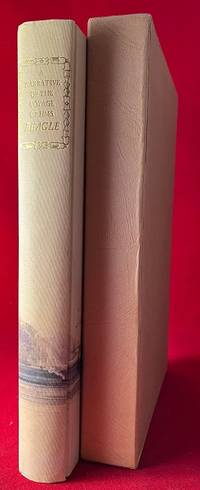
1979Best.-Nr. 5430London: The Folio Society 1979. Limited Edition. Hardcover. Near Fine. 6 1/4 X 10 Inches. 359 PP. Illustrated deluxe edition of the exploratory journey of Charles Darwin along the South American coastline. Deluxe edition housed in original issue slipcase. Early Folio Society edition. A sharp copy. The Folio Society hardcover
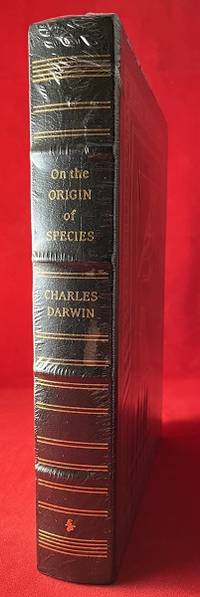
1991Best.-Nr. 5962Norwalk CT: The Easton Press 1991. Limited Edition. Leather bound. Near Fine. 7 1/2 X 10 1/2 Inches. Original black leather with 22 KT gold trim and decoration to covers and spine. Four raised hubs to spine. AEG. Sealed in original publisher wrap never opened. The Easton Press unknown