1896rif. 031164New York: D. Appleton and Company 1896. Third . Half Leather - Hardbound. Very Good/No Jacket. 344 pages plus folding plates with contents being un-opened. Leather over spine and corners with marbled paper over boards. Top edge is gilded. Covers are a little rubbed. Book plates on front paste down. Very light general wear though overall a tight and clean copy. D. Appleton and Company hardcover
1874rif. RWeDARWI83London: Smith Elder & Co. 1874. 1874. 8vo. pp. xx 278. 6ads. with half-title. 3 folding maps 2 partly coloured. original cloth light foxing to outer leaves outer edge of map darkened & tatty & 1 short split along fold no loss. Hardcover. London: Smith, Elder, & Co., 1874. Hardcover
rif. 1161478388.Ghardcover. Good. Access codes and supplements are not guaranteed with used items. May be an ex-library book. hardcover
rif. 116928759X.Ghardcover. Good. Access codes and supplements are not guaranteed with used items. May be an ex-library book. hardcover
rif. 116270974X.Gpaperback. Good. Access codes and supplements are not guaranteed with used items. May be an ex-library book. paperback
rif. 1419184350.Gpaperback. Good. Access codes and supplements are not guaranteed with used items. May be an ex-library book. paperback
rif. 1849027056.Ghardcover. Good. Access codes and supplements are not guaranteed with used items. May be an ex-library book. hardcover
rif. 1290164258.Gpaperback. Good. Access codes and supplements are not guaranteed with used items. May be an ex-library book. paperback
2001rif. DADAX0898752663University Press of the Pacific 2001-03-01. paperback. New. 5.00x0.91x8.00. Buy with confidence. Excellent Customer Service & Return policy. University Press of the Pacific paperback
rif. A9780898752663Paperback / softback. New. paperback
rif. A9781169287594New. unknown
rif. B9781169287594New. unknown
rif. B9780898752663Paperback / softback. New. paperback
1914rif. 41545London 1914. No wrappers but stiched. All three papers contained in: "Philosophical Magazine" Sixth Series Vol. 27. No. 159. March 1914. The whole issue issue offered =no. 159: pp. 397-540 and 2 plates.Rutherford's paper.pp. 488-498. - Darwin's paper: pp. 499-506. - Bohr's paper: pp. 506-523. All clean and fine. First edition and first printing of all three papers. Rutherford in this paper for the first time identifies the hydrogen nucleus and called it the 'positive electron'. He later called it 'the proton' . In his definitive paper of 1911 he estimated the radius of the nucleus a hundred thousand times smaller than that of an atom. Darwin in his paper offered here gave a more precise measure.In the first lines of the paper Rutherford outlines the content "The present paper and and the accompanying paper by Mr. C. Darwin the second paper offered here deal with certain points in connection with the "nucleus" theory of the atom which were purposely omitted in my first communication on that subject Phil. Mag. May 1911. A brief account is given of the later investigations which have been made to test the theory and of the deductions which can be drawn from them. At the same time a brief statement is given of recent observations on the passage of alpha particles through hydrogen which throw importent light on the dimensions of the nucleus." - Rutherford had studies alpha-particles intensely in the years before 1914 and proved quite conclusively that the individual particle was a helium atom with its electrons removed. The alpha particles were like the positive rays that had been discovered by Goldstein 1886 and now in 1914 the paper offered Rutherford suggested that the simplest positive rays must be those obtained from the hydrogen and that these must be the fundamentall positively-charged particle. He names it a 'positive electron'.Darwin in the paper offered "concluded from the known data:"No force proportional to some power of the distance other than the inverse square can give the dependence the Rutherford scattering cross section on the initial velocity" and he then calculated the distance of closest alpha-particle-nucleus approach.The paper by Niels Bohr relates to "The Stark effect". In 1913 appeared "an importent new discovery: when atomic hydrogen is exposed to a static electrical field its spectral lines split the amount of splitting being proportional to thefield strenght the linear Stark effect. After Rutherford read this news in "Nature" he at once wrote to Bohr:'I think it is rather up to you at the present time to write something on.electric effects.'" A. Pais. Bohrs paper on The Stark effect appeared in 1914 the paper offered here. - Rosenfeld. Niels Bohr' publications No. 10. unknown
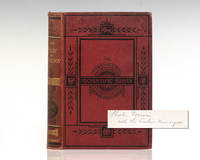
1873rif. 141586London: Henry S. King & Co 1873. First edition association copy of famed English philosopher Herbert Spencer's classic work on the evolution of society; presented and inscribed by him to Charles Darwin. Octavo original publisher's cloth with gilt titles to the spine dark green endpapers. Association copy inscribed by the author on the title page "Charles Darwin with the Author's kind regards." English philosopher biologist sociologist and anthropologist Herbert Spencer invented the expression "survival of the fittest" which he coined in his Principles of Biology 1864 after reading Charles Darwin's On the Origin of Species 1859. A description of the mechanism of natural selection in Principles of Biology Spencer drew parallels between his own economic theories and Darwin's biological ones: "This survival of the fittest which I have here sought to express in mechanical terms is that which Mr. Darwin has called 'natural selection' or the preservation of favoured races in the struggle for life." Darwin responded positively to Alfred Russel Wallace's suggestion of using Spencer's new phrase "survival of the fittest" as an alternative to "natural selection" and adopted the phrase in The Variation of Animals and Plants Under Domestication published in 1868. In On the Origin of Species he introduced the phrase in the fifth edition published in 1869 intending it to mean "better designed for an immediate local environment" Gould. Darwin wrote on page 6 of The Variation of Animals and Plants Under Domestication published in 1868 "This preservation during the battle for life of varieties which possess any advantage in structure constitution or instinct I have called Natural Selection; and Mr. Herbert Spencer has well expressed the same idea by the Survival of the Fittest. The term 'natural selection' is in some respects a bad one as it seems to imply conscious choice; but this will be disregarded after a little familiarity." He defended his analogy as similar to language used in chemistry and to astronomers depicting the "attraction of gravity as ruling the movements of the planets" or the way in which "agriculturists speak of man making domestic races by his power of selection." Spencer and Darwin were occasional correspondents and would regularly send each other copies of their latest works. Accompanied by an autograph letter signed by Charles Darwin's great grandson Edward Darwin gifting the book to a relative dated November 27th 1969. In very good condition. Housed in a custom half morocco clamshell box by the Harcourt Bindery. Books from Darwin's library are very rare to the market. Spencer developed an all-embracing conception of evolution as the progressive development of the physical world biological organisms the human mind and human culture and societies. “It is a function that no one has performed since” DSB. During his lifetime he was considered "the single most famous European intellectual" Eriksen 37. "The only other English philosopher to have achieved anything like such widespread popularity was Bertrand Russell and that was in the 20th century" Richards. Spencer's philosophies were heavily influenced by Darwin he cites Darwin several times in this book and references On the Origin of Species as "one of the most influential scientific publications of recent times." Given the primacy which Spencer placed on evolution his sociology might be described as social Darwinism mixed with Lamarckism. However despite its popularity this view of Spencer's sociology is mistaken. While his political and ethical writings had themes consistent with social Darwinism such themes are absent in Spencer's sociological works which focus on how processes of societal growth and differentiation lead to changing degrees of complexity in social organization. The evolutionary progression from simple undifferentiated homogeneity to complex differentiated heterogeneity was exemplified Spencer argued by the development of society. He developed a theory of two types of society the militant and the industrial which corresponded to this evolutionary progression. Militant society structured around relationships of hierarchy and obedience was simple and undifferentiated; industrial society based on voluntary contractually assumed social obligations was complex and differentiated. Society which Spencer conceptualised as a 'social organism' evolved from the simpler state to the more complex according to the universal law of evolution. Moreover industrial society was the direct descendant of the ideal society developed in Social Statics although Spencer now equivocated over whether the evolution of society would result in anarchism as he had first believed or whether it pointed to a continued role for the state albeit one reduced to the minimal functions of the enforcement of contracts and external defense. Henry S. King & Co hardcover
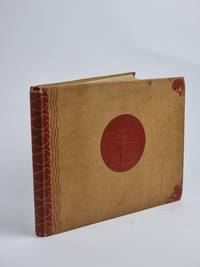
rif. 107962London The Nonesuch Press 1925. . First edition first impression; oblong 4to; 22 full-page colour plates by Elinor Darwin light toning to leaves very occasional creasing; original brown pictorial boards printed in red red blindstamped roundel to front cover light wear to spine ends corners slightly rubbed some marks to boards otherwise a very good copy. First edition of the first Mr. Tootleoo book. Bernard Darwin 1876-1961 was the grandson of the naturalist Charles Darwin. He collaborated with his wife on their children's books with Bernard providing the text and Elinor the illustrations. Dreyfus 27. London, The Nonesuch Press, [1925]. hardcover
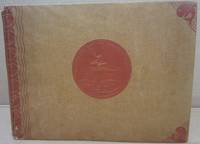
rif. 92705London: The Nonesuch Press no date. Hardcover. very good. Elinor Darwin. oblong. Tan covers with a circular brown seal and design to corners of covers. Full page color illustrations by Elinor Darwin. The Nonesuch Press hardcover
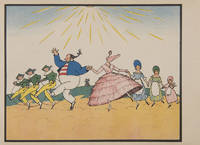
1925rif. 5889London United Kingdom: The Nonesuch Press 1925. First Edition. hardcover. Very Good. Elinor Darwin. Publication: London The Nonesuch Press 1925 Formatting: Oblong 4to. Condition Report: Very Good. The original light brown paper-covered boards remain structurally sound exhibiting mild handling wear typical of this fragile production including gentle bumping to the corners and minor rubbing at the spine ends. The red embossed medallion to the upper board and the aquatic tooling to the spine and corners retain their bright unoxidised colour avoiding the fading often seen in this title. Internally the binding is secure with intact hinges. The leaves are crisp clean and bright notably free from the foxing tears or crayon marks commonly found in children's literature of this era. Catalogue Note: First edition of the first Mr. Tootleoo book an engaging piece of nonsense verse. The text was penned by Bernard Darwin 1876–1961 grandson of the naturalist Charles Darwin and a noted golf writer. The narrative is accompanied by twenty-two full-page colour lithographs by his wife the artist and engraver Elinor Monsell. As a delicate children's book bound in paper-covered boards this production frequently suffers from enthusiastic child-handling. Copies surviving in this well-preserved state are uncommon on the open market making this a desirable acquisition for collectors of interwar children's literature. A lively piece of rhyming nonsense following the adventures of a jovial sailor Mr. Tootleoo. Shipwrecked and found adrift sitting in his own hat he is rescued by a family of Cockyollybirds. After encountering a whale and a helpful seagull the lead Cockyollybird magically transforms into a beautiful lady. Mr. Tootleoo promptly proposes leading to a charmingly happy conclusion. The Nonesuch Press hardcover
1925rif. 21640London: The Nonesuch Press 1925 The tale of a shipwrecked sailor told in verse with a happy ending. Undated circa 1925. Twenty two full page illustrations in colour with facing text. Pages unpaginated. Brown paper wrapped over boards with relief stamped medallion to front cover. A fine copy. The Nonesuch Press paperback
rif. 52771London: The Nonesuch Press nd.c.1925. First in the "Mr Tootleoo" books written by the grandson of Charles Darwin and his painter and illustrator wife Elinor. Bernard Darwin was more famous for his golfing books. Landscape format. 19.5cms x 26cms. Unpaginated. Elinor's colour illustrations accompany her husband's humorous story written in verse some old minor water-staining to paste-downs not affecting pages. Brown paper-covered boards with embossed tan medallion to front board decorated spine and corners minor water-staining to boards next to spine. Scarce. G. London: The Nonesuch Press, nd.(c.1925). hardcover
1925rif. 182178London: The Nonesuch Press 1925. Pp. 90 black & white title page vignette plus 22 full page coloured lithographic illustrations; oblong 4to; light brown papered boards decorated in red including an embossed medallion Mr. Tootleoo dancing a hornpipe at centre of upper board the boards faintly and a trifle creased edges lightly worn with small 2 chips at head of spine; book label of David Levine Sydney on upper pastedown earlier owner's name in ink on upper free endpaper a little light foxing and soiling; The Nonesuch Press London n.d.1925. First edition. McKitterick 27. The first book about Mr. Tootleoo in which the jovial sailor meets and marries the Cockyollybird. Bernard Darwin grandson of Charles Darwin is best known for his golf books. He and his wife the engraver Elinor Monsell collaborated on three books for children featuring Mr. Tootleoo. The Nonesuch Press unknown
1925rif. 63756London: The Nonesuch Press N.d. 1925. Oblong 8vo.Illustrated. Unpaginated 45 leaves including 22 full-page colour illustrations. Original light brown paper-covered boards with red decoration to the spine and corners and a large embossed red medallion of 'Mr Tootleoo and the Cockyolly Birds' to the front board. Boards clean. Internally clean. No ownership names. With twenty-two full-page colour illustrations. A nice copy of an uncommon title. Bernard Darwin was a grandson of Charles Darwin; he was a golf writer and good amateur golfer. . Near Fine. Paper Covered Boards. First Edition. 1925. The Nonesuch Press N.d. [1925] hardcover
1925rif. 130309London: The Nonesuch Press 1925. First edition first printing. The first Mr. Tootleoo book. Bernard Darwin 1876-1961 was the grandson of the naturalist Charles Darwin. He and his wife collaborated on their children's books with Bernard providing the text and Elinor the illustrations. With a handwritten note on the publisher's stationery loosely inserted apparently unconnected to this copy. Oblong quarto. With 22 full-page coloured illustrations by Elinor Darwin. Original brown boards with red decoration red blindstamped roundel to front cover. With dust jacket. Covers a little cockled else a very good copy in the dust jacket a little chipped and toned around extremities. hardcover
rif. 012699London: Nonesuch Press Book. Illus. by Uncredited. Good. Hardcover. 7 1/2 x 10 Oblong. Mr. Tootleoo is a sailor who suffers shipwreck but doesn't drown. "Close at hand upon my word he found a Cockyollybird." It goes on to tell of the cockyolly chicks a whale a seagull who takes an egg to our hero and finally the Cockyollybird turns into a lovely lady her chicks become girls and boys and Mr. Tootleoo proposes. Now meet Mr. and Mrs. Tootleoo ! The recto pages are full colour while the verso pages contain the poem. A delightful bit of nonsense. Previous owners' names and date supplied by Aunt Ellen 1928. Approx. 64 pp. Nonesuch Press hardcover
1925rif. DARWINBE029537The Nonesuch Press London. 1925. First edition. Oblong quarto. Unpaginated. A children's story in rhyming couplets by Bernard Darwin illustrated in colour and in Edward Lear style by his wife Elinor. Decorated boards with relief coin panel on front.Near fine in very good slightly nicked dustwrapper torn and chipped at head of spine and faded at the edges. The Nonesuch Press, London. hardcover