Atlantic City High School ScrapbookBiblio.com
36.848 risultati
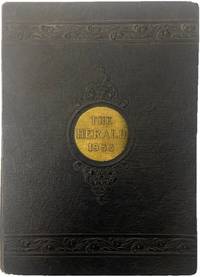
1933rif. 175261933. Archive of Walter Johnson's 1933 Atlantic City High School yearbook and related reunion materials documents African American student life within a formally integrated but socially segregated New Jersey public school during the Great Depression. Johnson a graduating senior in 1933 appears in a yearbook extensively inscribed by classmates whose messages span both commencement year and later reunions preserving contemporaneous peer networks across four decades. Created in a city where redlining confined most Black residents to Atlantic City's Northside neighborhood the volume and accompanying ephemera situate one student's educational experience within broader histories of African American urban life public schooling in the Jim Crow North Depression-era youth culture and Black alumni civic organization. Archive dates primarily from 1933 with later additions from 1978 and subsequent reunion years; ten items total. Central volume is Atlantic City High School yearbook published by Westbrook Publishing Company Philadelphia 1933 183 pages hardcover 10.5 x 7.75 inches extensively inscribed throughout by classmates in 1933 and again at the 45th reunion in 1978. The school's divisions are organized by Technical Classical and Commercial tracks with individual portrait sections and personal profile prompts listing favorite activities characteristic phrases and anticipated futures including one sardonic entry predicting a destination "In the ranks of the unemployed." Accompanying materials include a June 16 1933 telegram in original envelope from the Negro Alumni Associates of Atlantic City High School congratulating Johnson on his graduation; two reunion pamphlets from the 45th and 50th reunions; several envelopes including one bearing a lengthy handwritten note from reunion organizer Ben Ginsburg; and two printed advertisements for Atlantic Coast Amusement Enterprises promoting comedians and song-and-dance acts associated with Atlantic City's boardwalk entertainment industry. Produced in the depths of the Great Depression the yearbook captures a graduating class confronting economic uncertainty while articulating ambition humor and collective identity. Its Art Deco stylistic elements and commercial advertising reflect Atlantic City's resort economy during its interwar peak while the presence of a formal Negro Alumni organization in 1933 demonstrates structured African American institutional engagement within a multiracial public school setting. Later reunion annotations underscore continuity of alumni networks across five decades. Light general wear consistent with age; inscriptions legible and internally clean; associated ephemera well preserved with minor handling wear. Overall very good condition. Cohesive documentation of African American secondary education alumni organization and urban community formation in Depression-era New Jersey extending into the late twentieth century. unknown
1933rif. 175261933. Archive of Walter Johnson's 1933 Atlantic City High School yearbook and related reunion materials documents African American student life within a formally integrated but socially segregated New Jersey public school during the Great Depression. Johnson a graduating senior in 1933 appears in a yearbook extensively inscribed by classmates whose messages span both commencement year and later reunions preserving contemporaneous peer networks across four decades. Created in a city where redlining confined most Black residents to Atlantic City's Northside neighborhood the volume and accompanying ephemera situate one student's educational experience within broader histories of African American urban life public schooling in the Jim Crow North Depression-era youth culture and Black alumni civic organization. Archive dates primarily from 1933 with later additions from 1978 and subsequent reunion years; ten items total. Central volume is Atlantic City High School yearbook published by Westbrook Publishing Company Philadelphia 1933 183 pages hardcover 10.5 x 7.75 inches extensively inscribed throughout by classmates in 1933 and again at the 45th reunion in 1978. The school's divisions are organized by Technical Classical and Commercial tracks with individual portrait sections and personal profile prompts listing favorite activities characteristic phrases and anticipated futures including one sardonic entry predicting a destination "In the ranks of the unemployed." Accompanying materials include a June 16 1933 telegram in original envelope from the Negro Alumni Associates of Atlantic City High School congratulating Johnson on his graduation; two reunion pamphlets from the 45th and 50th reunions; several envelopes including one bearing a lengthy handwritten note from reunion organizer Ben Ginsburg; and two printed advertisements for Atlantic Coast Amusement Enterprises promoting comedians and song-and-dance acts associated with Atlantic City's boardwalk entertainment industry. Produced in the depths of the Great Depression the yearbook captures a graduating class confronting economic uncertainty while articulating ambition humor and collective identity. Its Art Deco stylistic elements and commercial advertising reflect Atlantic City's resort economy during its interwar peak while the presence of a formal Negro Alumni organization in 1933 demonstrates structured African American institutional engagement within a multiracial public school setting. Later reunion annotations underscore continuity of alumni networks across five decades. Light general wear consistent with age; inscriptions legible and internally clean; associated ephemera well preserved with minor handling wear. Overall very good condition. Cohesive documentation of African American secondary education alumni organization and urban community formation in Depression-era New Jersey extending into the late twentieth century. unknown books
2001rif. DADAX158947788XSchool Zone 2001-08-07. paperback. New. 8.50x0.08x10.95. Buy with confidence. Excellent Customer Service & Return policy. School Zone paperback
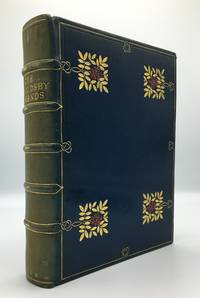
1929rif. 1302London: William Heinemann. 1929. Reprint. Quarto 20 x 26cm. Handsomely bound in contemporary full blue morocco with sinuous gilt borders and gilt foliate decoration incorporating red morocco onlays representing berries to the boards the spine with five raised bands ruled in gilt and with titles in gilt. Gilt dentelles incorporating red morocco onlays. Binder's signature in gilt to the bottom turn-in of the lower board: "ML 1930". All edges gilt. Attractive colour woodblock-printed floral endpapers. Binder's inscription in pencil to the front endpaper: "Bournville School of Art 1930 M. Laud Oct / '30". Illustrated with 24 tipped-in colour plates with captioned tissue-guards 12 full-page tinted illustrations and numerous black and white in-text illustrations by Arthur Rackham. 549pp. A very good copy the binding square and tight with fading to the spine and some minor scuffs to the raised bands. The contents remain clean and crisp throughout. An appealing copy of Arthur Rackham's edition of 'The Ingoldsby Legends' splendidly bound in the Arts and Crafts Movement style by a student or teacher at the Bournville School of Art Birmingham. The grand hall which housed the Bournville School of Art was the first public building in Bournville the model village founded by the Cadbury family. In line with typical Arts and Crafts Movement ideals and with a specific aim to further the ideas and principles of John Ruskin the school was originally conceived as a social centre for the village offering a practical and artistic education for the community. It became more formalised as a 'School of Arts and Crafts' in 1911 later becoming an art college in the 1920s. As a city Birmingham served as an important centre of the Arts and Crafts movement with the 'Birmingham Group' of artist-craftsmen cultivating their own distinct style. Predominantly based around the Birmingham School of Art and the Birmingham Guild of Handicraft the leading figures of the group included Joseph Southall Arthur and Georgie Gaskin Bernard Sleigh Maxwell Armfield and Charles Gere. An uncommon example of a bookbinding emanating from the dynamic atmosphere of Birmingham's Arts and Crafts Movement. London: William Heinemann. hardcover
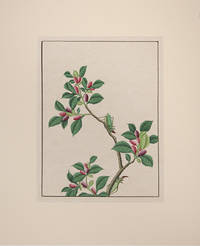
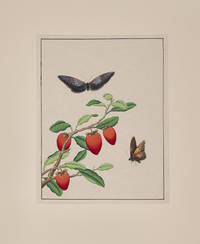
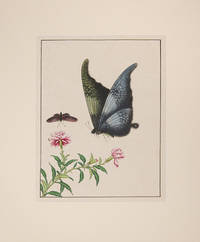
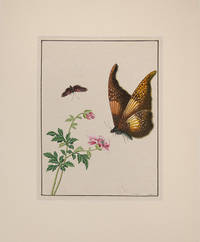
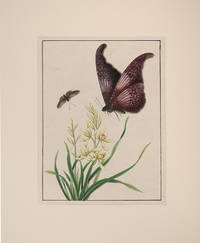
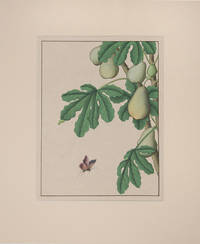
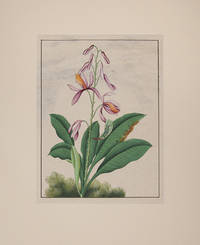
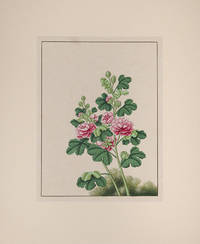
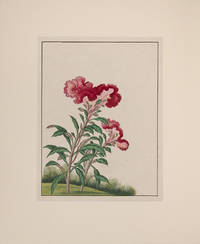
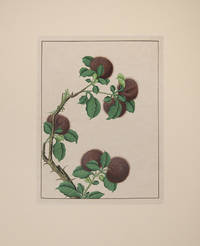
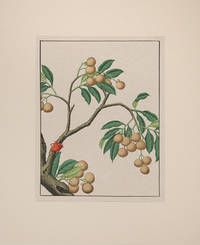
rif. 109666China mid nineteenth century. . Ink and gouache on paper mounted. Image size: 356 mm x 300 mm; mounted: 465 mm x 380 mm. Fine well executed decorative Chinese export watercolour. Light and easily transportable these watercolours mostly produced in the Canton region found a ready market in the West. Natural history studies were and continue to be amongst the most sought-after subjects. China, mid nineteenth century. unknown
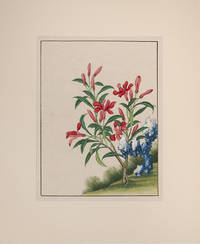
rif. 109665China mid nineteenth century. . Ink and gouache on paper mounted. Image size: 356 mm x 300 mm; mounted: 465 mm x 380 mm. Fine well executed decorative Chinese export watercolour. Light and easily transportable these watercolours mostly produced in the Canton region found a ready market in the West. Natural history studies were and continue to be amongst the most sought-after subjects. China, mid nineteenth century. unknown
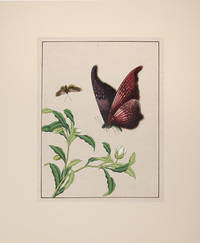
rif. 109627China mid nineteenth century. . Ink and gouache on paper mounted. Image size: 356 mm x 300 mm; mounted: 465 mm x 380 mm. Fine well executed decorative Chinese export watercolour. Light and easily transportable these watercolours mostly produced in the Canton region found a ready market in the West. Natural history studies were and continue to be amongst the most sought-after subjects. China, mid nineteenth century. unknown
rif. 109623China mid nineteenth century. . Ink and gouache on paper mounted. Image size: 356 mm x 300 mm; mounted: 465 mm x 380 mm. Fine well executed decorative Chinese export watercolour. Light and easily transportable these watercolours mostly produced in the Canton region found a ready market in the West. Natural history studies were and continue to be amongst the most sought-after subjects. China, mid nineteenth century. unknown
rif. 109624China mid nineteenth century. . Ink and gouache on paper mounted. Image size: 356 mm x 300 mm; mounted: 465 mm x 380 mm. Fine well executed decorative Chinese export watercolour. Light and easily transportable these watercolours mostly produced in the Canton region found a ready market in the West. Natural history studies were and continue to be amongst the most sought-after subjects. China, mid nineteenth century. unknown
rif. 109626China mid nineteenth century. . Ink and gouache on paper mounted. Image size: 356 mm x 300 mm; mounted: 465 mm x 380 mm. Fine well executed decorative Chinese export watercolour. Light and easily transportable these watercolours mostly produced in the Canton region found a ready market in the West. Natural history studies were and continue to be amongst the most sought-after subjects. China, mid nineteenth century. unknown
rif. 109628China mid nineteenth century. . Ink and gouache on paper mounted. Image size: 356 mm x 300 mm; mounted: 465 mm x 380 mm. Fine well executed decorative Chinese export watercolour. Light and easily transportable these watercolours mostly produced in the Canton region found a ready market in the West. Natural history studies were and continue to be amongst the most sought-after subjects. China, mid nineteenth century. unknown
rif. 109621China mid nineteenth century. . Ink and gouache on paper mounted. Image size: 356 mm x 300 mm; mounted: 465 mm x 380 mm. Fine well executed decorative Chinese export watercolour. Light and easily transportable these watercolours mostly produced in the Canton region found a ready market in the West. Natural history studies were and continue to be amongst the most sought-after subjects. China, mid nineteenth century. unknown
rif. 109625China mid nineteenth century. . Ink and gouache on paper mounted. Image size: 356 mm x 300 mm; mounted: 465 mm x 380 mm. Fine well executed decorative Chinese export watercolour. Light and easily transportable these watercolours mostly produced in the Canton region found a ready market in the West. Natural history studies were and continue to be amongst the most sought-after subjects. China, mid nineteenth century. unknown
rif. 109631China mid nineteenth century. . Ink and gouache on paper mounted. Image size: 356 mm x 300 mm; mounted: 465 mm x 380 mm. Fine well executed decorative Chinese export watercolour. Light and easily transportable these watercolours mostly produced in the Canton region found a ready market in the West. Natural history studies were and continue to be amongst the most sought-after subjects. China, mid nineteenth century. unknown
rif. 109660China mid nineteenth century. . Ink and gouache on paper mounted. Image size: 356 mm x 300 mm; mounted: 465 mm x 380 mm. Fine well executed decorative Chinese export watercolour. Light and easily transportable these watercolours mostly produced in the Canton region found a ready market in the West. Natural history studies were and continue to be amongst the most sought-after subjects. China, mid nineteenth century. unknown
rif. 109658China mid 19th century. . Ink and gouache on paper mounted. Image size: 356 mm x 300 mm; mounted: 465 mm x 380 mm. Fine well executed decorative Chinese export watercolour. Light and easily transportable these watercolours mostly produced in the Canton region found a ready market in the West. Natural history studies were and continue to be amongst the most sought-after subjects. China, mid 19th century. unknown
rif. 109659China mid nineteenth century. . Ink and gouache on paper mounted. Image size: 356 mm x 300 mm; mounted: 465 mm x 380 mm. Fine well executed decorative Chinese export watercolour. Light and easily transportable these watercolours mostly produced in the Canton region found a ready market in the West. Natural history studies were and continue to be amongst the most sought-after subjects. China, mid nineteenth century. unknown
rif. 109663China mid nineteenth century. . Ink and gouache on paper mounted. Image size: 356 mm x 300 mm; mounted: 465 mm x 380 mm. Fine well executed decorative Chinese export watercolour. Light and easily transportable these watercolours mostly produced in the Canton region found a ready market in the West. Natural history studies were and continue to be amongst the most sought-after subjects. China, mid nineteenth century. unknown
rif. 109662China mid nineteenth century. . Ink and gouache on paper mounted. Image size: 356 mm x 300 mm; mounted: 465 mm x 380 mm. Fine well executed decorative Chinese export watercolour. Light and easily transportable these watercolours mostly produced in the Canton region found a ready market in the West. Natural history studies were and continue to be amongst the most sought-after subjects. China, mid nineteenth century. unknown
rif. 109661China mid nineteenth century. . Ink and gouache on paper mounted. Image size: 356 mm x 300 mm; mounted: 465 mm x 380 mm. Fine well executed decorative Chinese export watercolour. Light and easily transportable these watercolours mostly produced in the Canton region found a ready market in the West. Natural history studies were and continue to be amongst the most sought-after subjects. China, mid nineteenth century. unknown
rif. 2022125 Mount Vernon Street Boston Massachusetts. 29 September 1884. 4pp. 12mo. Bifolium. In good condition lightly aged. The letter would appear to relate to the formation of the American Society for Psychical Research. Six days before the writing of the present letter on 23 September 1884 Minot had been a member of a committee of nine scientists who met at Boston to consider the advisability of the formation of a society for psychical research in America William James being another member. Minot begins the letter by informing Ramsay that 'in regard to the International Congress' 'The matter has progressed thus far favourably and the extent of the interest in the project surpasses our expectations'. He continues with reference to 'The American Committee' which has been given 'full powers to act' by 'the Amer. Asstn. We have already received a gift of £1000 with promise of more as a fund the income to be expended by the Congress for the prosecution of research.' He continues: 'No definite public announcements can be made until the Council B.A.A.S. i.e. the British Association for the Advancement of Science has taken action in regard to the enterprise. As soon as it is in my power I shall take the liberty of communicating with you again concerning our plans.' Ramsay 'will readily understand that so vast an undertaking necessarily matures slowly; at present we are still in the stage of tentative suggestion and no services can be more valuable than those which contribute to spreading interest in the movement.' He hopes that Ramsay 'will assist in this way. There can be no question as to the readiness of the Americans to join in the proposed Congress – The next step must be to ensure the participation of the British scientists.' 25 Mount Vernon Street, Boston, Massachusetts. 29 September 1884. unknown
1650Acquaforte e bulino, 1650 circa, numerata 11 nell’angolo superiore sinistro. Questa tavola appartiene alla suite di Baccanalia descritte da Robert- Dusmenil (IV, 12-17) il cui frontespizio, inciso da Nicolas Cochin il Vecchio recita “Recueil de diverses Baccanales de Poussin, Chapperon, D’origny et autres”. Tutte le stampe della serie contengono gli indirizzi dei rispettivi editori ma non i nomi dei disegnatori e degli incisori, il che rende difficile attribuire definitivamente le opere ad artisti specifici. Le stampe furono probabilmente pubblicate per la prima volta dagli editori François Langlois, noto come 'il Ciartres' (1589 Chartres - 1647 Parigi), e Philippe Huart (attivo intorno al 1639-1648) e furono seguite da una seconda edizione pubblicata da Pierre Mariette. I disegni per le incisioni potrebbero provenire da Nicolas Chaperon o dallo stesso Dorigny. Sei tavole della suite, benchè prive della firma dell’autore, per ragioni stilistiche, sono riconducibili a Dorigny, autore di un’altra suite di Baccanalia, composta anch’essa da sei lastre, tutte recanti la sua firma (Robert-Dusmenil, IV, 6-11). Incentrate sulle attività di Bacco, Sileno e la loro allegra compagnia, queste due serie di affascinanti composizioni all'acquaforte dimostrano la ricchezza e la destrezza dei poteri di invenzione di Dorigny. In contrasto con la maggior parte delle sue prime interpretazioni delle opere di Vouet e altri, dove spesso usava il bulino per aumentare leggermente la sua vigorosa acquaforte (vedi cat. 102), alcune delle stampe successive di Dorigny, in particolare queste due suite di baccanali, si affidano ancora di più al bulino. Questa tendenza è parallela a un graduale cambiamento nel suo disegno, che rivela una crescente tendenza verso contorni pronunciati e figure più scultoree. Dopo essersi formato per cinque anni sotto Georges Lallemand a Parigi, Michel Dorigny si unisce presto alla cerchia del pittore Simon Vouet, con il quale stringe un'amicizia stretta e duratura. Dorigny divenne in seguito uno dei principali interpreti in campo tipografico dell'opera pittorica di Vouet e fu anche coinvolto come pittore in diversi progetti artistici del maestro. Le sue stampe comprendono opere su temi religiosi e mitologici così come stampe singole e serie su temi dionisiaci. Le suite probabilmente risalgono agli anni ’50 del XVII secolo quando, dopo la morte di Vouet. Bellissima prova, ricca di toni, impressa su carta vergata coeva, con margini, in ottimo stato di conservazione. Bibliografia Robert-Dusmenil, IV, p. 254, 14: Reed, French Prints from the Age of the Musketeers, p. 233. Etching and engraving, 1650 circa, numbered 11 at lower left. After training for five years under Georges Lallemand in Paris, Michel Dorigny soon joined the circle around the painter, Simon Vouet, with whom he struck up a close and lasting friendship. Dorigny subsequently became one of the main printmaking interpreters of Vouet’s painted oeuvre and was also involved as a painter in several of the master’s artistic projects. His prints include works on religious and mythological themes as well as individual prints and series on Dionysian topics. It is to this latter category that six etchings belong which Dorigny produced together with Nicolas Chaperon and other artists for the series entitled Recueil de diverses Bacchanales (Robert-Dumesnil, vol. IV, p. 254, nos. 12–17). All the prints in the series contain the addresses of the respective publishers but not the names of the designers and engravers, which makes it difficult to definitively ascribe the works to specific artists. The prints were probably first issued by the publishers François Langlois, known as ‘il Ciartres’ (1589 Chartres – 1647 Paris), and Philippe Huart (active around 1639–1648) and were followed by a second edition published by Pierre Mariette. The designs for the etchings may well stem from Nicolas Chaperon or from Dorigny himself. Another suite of six bacchanals (Robert – Dusmenil 6-11) bears on each plate the name of D’Origny as engraver. Both suites probably date to the 1650 when, after Vouet’s death, Dorigny became one of the most important decorative painters in Paris. Focused on the activities of Bacchus, Silenus, and their merry band of associates, these two etched sets of charming compositions demonstrate the wealth and dexterity of Dorigny's powers of invention. In contrast to most of his earlier interpretations of the works of Vouet and others, where he often used engraving to lightly augment his vigorous etching (see cat. 102), some of Dorigny's later prints, espe- cially these two suites of bacchanals, rely even more on engraving. This trend parallels a gradual shift in his draftsmanship, which reveals an increasing tendency towards pronounced contours and more sculptural figures. A fine impression, printed with tone on contemporary laid paper, with margins, very good condition. Bibliografia Robert-Dusmenil, IV, p. 254, 14: Reed, French Prints from the Age of the Musketeers, p. 233.
rif. 63502Wittenberg - Witteberg , Johannes CRATO, 1572 Reliure de l' poque, infolio, (30) 746 pages, index (56). Portrait (1pp) + planche depliantes. Latin Text.
1948rif. 29372Hanoi: Vien Dong-Phuong Bac-co Xuat Ban 1948. 3 volumes 4to text alternately in Vietnamese and French; table of alphabets 3 maps 2 folding 2 plates with 15 photographic illustrations on rectos and versos 7 folding plans including one of the Imperial Palace large folding table tables and illustrations in the text text occasionally in double column; original printed wrappers; some toning of the text as well as some browning and wear but generally a good sound set. An early Vietnamese scientific periodical emphasizing archaeology ethnography philology and history. It began publication with no. 1 in May 1948 and ceased with no. 3 in Aug. 1949. Issued under the auspices of École francais d'Extreme-Orient. Vien Dong-Phuong Bac-co Xuat Ban unknown
1948rif. 29372Hanoi: Vien Dong-Phuong Bac-co Xuat Ban 1948. 3 volumes 4to text alternately in Vietnamese and French; table of alphabets 3 maps 2 folding 2 plates with 15 photographic illustrations on rectos and versos 7 folding plans including one of the Imperial Palace large folding table tables and illustrations in the text text occasionally in double column; original printed wrappers; some toning of the text as well as some browning and wear but generally a good sound set. An early Vietnamese scientific periodical emphasizing archaeology ethnography philology and history. It began publication with no. 1 in May 1948 and ceased with no. 3 in Aug. 1949. Issued under the auspices of École francais d'Extreme-Orient. Vien Dong-Phuong Bac-co Xuat Ban unknown books