35.158 risultati
1830rif. 2092902141205848Suharaya Mohei and others 1830. Soft Cover. Fine. Number of books: 4 Suharaya Mohei and others paperback
1651rif. 2090502130301947Not Available 1651. Soft Cover. Fine. Number of books: 1 Not Available paperback
1999rif. G0153188081I3N00Harcourt School Publishers 1999. Paperback. Good. Disclaimer:A copy that has been read but remains in clean condition. All pages are intact and the cover is intact. The spine may show signs of wear. Pages can include limited notes and highlighting and the copy can include previous owner inscriptions. At ThriftBooks our motto is: Read More Spend Less.Dust jacket quality is not guaranteed. Harcourt School Publishers paperback
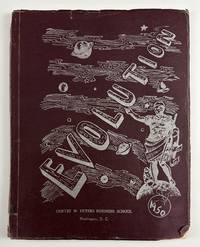
1950rif. 5036Washington DC: Cortez W. Peters Business School 1950. About very good. 60pp. Original purple wrappers printed in silver. Some soiling and staining to covers minor chipping and rubbing. Small unobtrusive stain to fore-edge of text overall even toning. A seemingly-unrecorded yearbook from the Washington D.C. branch of the Cortez W. Peters Business School the first African-American-owned business school in the United States. The co-educational school was founded in 1834 in the Nation's Capital followed in the next few years by branches in Chicago and Baltimore. The founder Cortez W. Peters taught himself to type as a child and went on to become the first African-American champion of the World's Amateur Typing Contest. Peters' school was one of the first to teach typing to Black students while also offering instruction in shorthand and other clerical skills. The present yearbook begins with a message from Peters which strikes a conciliatory tone in the wake of racial tensions that followed the conclusion of the Second World War: "We naturally resent discrimination lack of opportunities oppression.But on the other hand there are many other values to be considered which should make us tolerant and willing to work out these traditional handicaps generally." This is followed by messages from the dean and class president Eva Itene Brown then portraits of students and faculty a class history a class prophecy class will class poem and twelve pages of group photographs including shots of the men's and women's basketball teams the coronation ball and images featuring students in the classroom. Many of the students both men and women have included words of advice or stated their personal goals which are printed beside their portraits "To be a good typist" "To be a stenographer" and so forth. OCLC lists a single copy of three similar yearbooks all under different titles from other years and branches of the school Washington D.C. and Chicago in 1948 and an undated yearbook from Baltimore but not this particular year at the school's home base. Cortez W. Peters Business School unknown
1950rif. 5036Washington DC: Cortez W. Peters Business School 1950. About very good. 60pp. Original purple wrappers printed in silver. Some soiling and staining to covers minor chipping and rubbing. Small unobtrusive stain to fore-edge of text overall even toning. A seemingly-unrecorded yearbook from the Washington D.C. branch of the Cortez W. Peters Business School the first African-American-owned business school in the United States. The co-educational school was founded in 1834 in the Nation's Capital followed in the next few years by branches in Chicago and Baltimore. The founder Cortez W. Peters taught himself to type as a child and went on to become the first African-American champion of the World's Amateur Typing Contest. Peters' school was one of the first to teach typing to Black students while also offering instruction in shorthand and other clerical skills. The present yearbook begins with a message from Peters which strikes a conciliatory tone in the wake of racial tensions that followed the conclusion of the Second World War: "We naturally resent discrimination lack of opportunities oppression.But on the other hand there are many other values to be considered which should make us tolerant and willing to work out these traditional handicaps generally." This is followed by messages from the dean and class president Eva Itene Brown then portraits of students and faculty a class history a class prophecy class will class poem and twelve pages of group photographs including shots of the men's and women's basketball teams the coronation ball and images featuring students in the classroom. Many of the students both men and women have included words of advice or stated their personal goals which are printed beside their portraits "To be a good typist" "To be a stenographer" and so forth. OCLC lists a single copy of three similar yearbooks all under different titles from other years and branches of the school Washington D.C. and Chicago in 1948 and an undated yearbook from Baltimore but not this particular year at the school's home base. Cortez W. Peters Business School unknown books
rif. 21824NP: NP ND. Fine. 21 x 16 inches gouache on paper of Art Deco jewelry shop designed by R. Tailliard. NP unknown
rif. 21824NP: NP ND. Fine. 21 x 16 inches gouache on paper of Art Deco jewelry shop designed by R. Tailliard. NP unknown books
rif. 51-049319th Century. Oil on linen backed on canvas in contemporary frame. 23 x 18 inches. Skillfully repaired tears. 19th Century. unknown
1890rif. 210011890s. Commercial album. Good but essentially disbound; mounts are pulp paper on deteriorating linen tabs. A good portion of the photos improperly chemically fixed but still "present". Small folio commercial album of appx. 75 identified albumen prints of various sizes Although haphazardly mounted and identified the photographs offer a group of early views of the Cape Colony South Africa and its surroundings. The front endpaper is signed: Winifred C Karfe Milburn House Claremount C. C. S. Africa Dec. 1897. Milburn House was a school for "young ladies" located in Claremount six miles outside of Cape Town. There are a number pictures of the building staff children who for the most part are quite young. These are accompanied by a variety of interesting photographs - some apparently commercial - of Madeira Dakar and towns and villages apart from Cape Town. unknown books
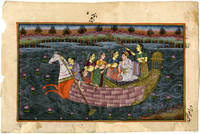
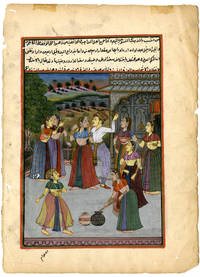
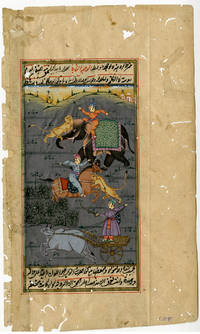
rif. 9251750. Good. Gouache and ink with gold heightening on lightweight cream laid paper 6 x 86 inches 137 x 274 mm the full sheet. Some scattered light surface soiling along with age related toning and some handling creases minor edge tears and losses repairs verso and scattered inscriptions in ink and graphite. Extensive inscriptions in red and black ink on the verso and in the margins on the recto. The color is exceptionally fresh rich and saturated. Mirza Nur-ud-Din Muhammad Salim 30 August 1569 - 28 October 1627 known by his imperial name Jahangir "Conqueror of the World' was the fourth Mughal Emperor who ruled from 1605 until his death in 1627. He was the third and only surviving son of Akbar and his chief empress Mariam-uz-Zamani born to them in the year 1569. He was named after the Indian Sufi saint Salim Chishti. -Singh Pashaura; Fenech Louis E. eds. 2014. The Oxford handbook of Sikh studies. Oxford University Press. p. 647. ISBN 978-0-19-969930-8. unknown
rif. 9231750. Good. Gouache and ink with gold heightening on lightweight cream laid paper 8 1/4 x 6 inches 210x 153 mm the full sheet. Some scattered light surface soiling along with age related toning and some handling creases minor edge tears and losses and scattered inscriptions. Extensive inscriptions in red and black ink on the verso and in the margins on the recto. The color is exceptionally fresh rich and saturated. Mirza Nur-ud-Din Muhammad Salim 30 August 1569 - 28 October 1627 known by his imperial name Jahangir "Conqueror of the World' was the fourth Mughal Emperor who ruled from 1605 until his death in 1627. He was the third and only surviving son of Akbar and his chief empress Mariam-uz-Zamani born to them in the year 1569. He was named after the Indian Sufi saint Salim Chishti. -Singh Pashaura; Fenech Louis E. eds. 2014. The Oxford handbook of Sikh studies. Oxford University Press. p. 647. ISBN 978-0-19-969930-8. unknown
rif. 9131690. Good. Gouache and ink with heightening in gold on lightweight brown laid paper 10 1/4 x 6 1/8 inches 260 x 156 mm the full sheet. Extensive insect damage in the unpainted areas primarily in the margins. Extensive hand inscriptions in black and red ink on the verso. Colors are exceptionally bright and fresh with good saturation. Mirza Nur-ud-Din Muhammad Salim 30 August 1569 - 28 October 1627 known by his imperial name Jahangir "Conqueror of the World' was the fourth Mughal Emperor who ruled from 1605 until his death in 1627. He was the third and only surviving son of Akbar and his chief empress Mariam-uz-Zamani born to them in the year 1569. He was named after the Indian Sufi saint Salim Chishti. -Singh Pashaura; Fenech Louis E. eds. 2014. The Oxford handbook of Sikh studies. Oxford University Press. p. 647. ISBN 978-0-19-969930-8. unknown
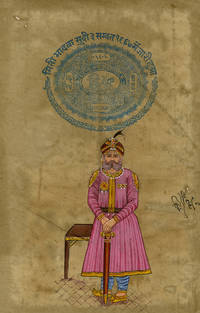
1890rif. 13381890. Good. Ink and gouache with yellow heightening on fibrous brown laid paper with a Jaipur Court Fee tax stamp in blue ink 13 1/2 x 8 3/4 inches 343 x 222 mm. Toning handling creases and minor scattered surface soiling throughout. There are scattered coeval Hindi inscriptions in ink on the recto. Raja Mahan Singh Mirpuri 1810 - 1844 was a famous general in the Sikh Khalsa Army. He was conferred by Maharaja Ranjit Singh the title of Raja for his conquests of Haripur Nowshera and Peshawar. The town of Mansehra derives its name from him. Singh was murdered by his own soldiers in 1844 when mutiny broke out in the Sikh Khalsa Army. His death was avenged by his son Chhattar Singh who was himself killed soon after. The first revenue stamps in India were issued in the mid-nineteenth century during the Raj and they are still being issued to this day. Apart from issues for the whole of India many princely states provinces and other states also had or still have their own revenue stamp issues. Before independence Indian revenue stamps were closely modeled on similar designs from Great Britain as is the case with this carriage motif stamp from Jaipur. The stamps were issued to denote various denominations including rupees and annas. An anna or Änna was a currency unit formerly used in British India equal to 1â„16 of a rupee. It was subdivided into four old Paisa or twelve pies thus there were 192 pies in a rupee. When the rupee was decimalized and subdivided into 100 new paise one anna was therefore equivalent to 6.25 paise. This particular stamp was used as evidence of court taxes remitted for property dealings. unknown
rif. MC69Watercolour and pencil ca. 51x34 cm 20x13 ¼ in. The painting is on the artist’s original wash-line mount on the thicker Whatman paper and in a recent matting. Unsigned. There are some areas of browning on the upper part of the painting otherwise a very good watercolour. The watercolour shows a mountainous landscape with gorgeous snowy peaks occupying the upper part of the view and with a serpentine road and men wearing Indian native dress in the foreground. Most likely an area near Simla Shimla a favourite summer refuge for the British in India in the 19th century and the official summer capital of British Raj from 1864. Located in the north-west Himalayas at an average altitude of 2250 m 7234 ft Simla was the star of the hill stations - mountainous resorts providing relief to British society from the heat and disease of the plains. "The Himalayan resorts were at an average altitude of six thousand feet and offered magnificent views of range after range of jagged snowy peaks. This region became a venue for leisure activities and the towns in the hills rapidly acquired the character of English villages " British library. Drawings of hill stations’ mountainous landscapes quickly became a popular pastime for professional and amateur artists: "These places appeared as a Garden of Eden to the British. Here they found relief from the poverty disease dirt and heat of the Plains. For both men and women holidays in the Hills gave them unbroken leisure to sit and sketch with worries set aside among scenes anglicised to look like home. Simla in particular was apprehended as a place of a grander less-tamed nature with dark woods and conifers set against a staggering backcloth of stupendous peaks " Archer M. R. Lightbown. India Observed: India as viewed by British Artists 1760-1860. London 1982. hardcover
rif. 13282[Nancy], 1877 - 1879. 1 vol. in-folio. Demi-veau vert, titre et date en palladium sur les premier plat, planches montées sur onglets.
1952Acquaforte,1952. Lastra mm. 148x82. Firma a matita in basso a destra Luigi Bartolini. Dedica a matita in basso “Auguri per il 1954”. Tiratura a 20 esemplari, inserita nelle copie di testa del libro Ombre fra le metope, Schwarz Editore 1953, stampato da Luigi Maestri, Milano. Luigi Bartolini è considerato uno dei maggiori incisori italiani del Novecento, insieme a Giorgio Morandi e Giuseppe Viviani. Oltre ad essere un prolifico incisore (al suo attivo oltre mille acqueforti), fu anche pittore e scrittore. Partecipò sia come pittore che come incisore a diverse edizioni della Biennale di Venezia dal 1928 al 1962. Presente a varie manifestazioni artistiche, sviluppò diverse maniere definite: ‘maniera bionda’, ‘lineare’ e ‘nera’. Ricordiamo soprattutto le acqueforti della serie Marche e della serie Sicilia. Iniziò la sua produzione grafica nel 1914 e il suo stile si rifà alla tradizione naturalistica dell’Ottocento. Molte sue incisioni si possono ricollegare ad alcune opere del Goya, di Telemaco Signorini e di Giovanni Fattori. Eccellente nella rappresentazione della natura morta e del paesaggio, spesso il Bartolini rappresentò dolcemente le cose e gli oggetti più umili, i soggetti di natura più dimessi. In essi ritroviamo il sentimento che diviene immagine e la forma che si sviluppa in espressione. Con Bartolini l’incisione torna ad essere un mezzo di espressione poetica libera dal simbolismo e dal vedutismo allora in voga presso le accademie. Nelle sue acqueforti prevale ora un tratteggio leggero (genere biondo), ora una ricerca del chiaroscuro alla Rembrandt (genere nero). Bibliografia https://www.luigibartolini.com/gli_amanti_crucciati_74.html Etching,1952. Plate mm. 148x82. Signature in pencil at lower right Luigi Bartolini. Dedication in pencil at the bottom "Auguri per il 1954". Limited edition of 20 copies, inserted in the leading copies of the book Ombre fra le metope, Schwarz Editore 1953, printed by Luigi Maestri, Milan. Born in Cupramontana near Ancona, Luigi Bartolini was the twentieth century Italian etcher, who came closest to the stature of his great rival, Morandi. As a teenager, he saw the collection of etchings, including work by Callot, owned by the Corradi family in Iesi. From 1907 to 1910 Bartolini studied at the Istituto di Belle Arti in Siena, and started to etch c. 1909. He moved to Rome in 1910, where until 1912 he frequented the Accademia di Belle Arti, while also attending lectures on literature and the history of art, and courses on anatomy at the University in Rome. Bartolini studied the etchings of Goya and took lessons on drawing at the Accademia di Spagna. From there, he went to Florence in 1913, where he attended the Scuola del nudo. Bartolini continued his anatomical research, as well as studying architecture, making himself the most assiduous student of all Italian twentieth century printmakers. He also visited the Uffizi and Florentine print dealers to look at the etchings of Rembrandt and Fattori. Bartolini painted his first oils just before the outbreak of the First World War. Although he painted pictures throughout the rest of his career, and was awarded the Premio Marzotto for them in 1956, they have been far eclipsed in fame by his etchings and writings. During the First World War, Bartolini published his first collection of poetry. A very prolific and accomplished writer, in this field he is best known today as the author of the novel, 'Ladri di biciclette' (Bicycle thieves), of 1946, which was quickly turned into a celebrated film by Vittorio de Sica and Cesar Zavattini. After the First World War, Bartolini held a series of minor teaching posts in Macerata, Sassari, Avezzano, Pola, and Caltagirone, while he continued to etch, and started a long career as a polemical journalist and critic of art and architecture. From 1923 to 1929, he wrote for the Naples periodical, 'Cimento', but he also contributed to 'Il Selvaggio', 'Quadrivio', 'Italia letteraria', and 'L'Ambrosiana'. Bartolini's 1924 exhibition of etchings at the Casa d'Arte Bragaglia in Rome was a great success, and later that year he showed 70 etched landscapes of the Marches at the Casa Palazzo di Roma. The following year he visited Paris, where he paid particular attention to the paintings of Van Gogh. Bartolini's political convictions led him to being assaulted by Fascists and hospitalised in 1928. Two years later, he won a prize at the Venice Biennale, where he had exhibited a portfolio of etchings. In 1930, the Turin publisher, Buratti, began to issue a series of portfolios of etchings by contemporary Italian artists under the editorship of Cipriano Oppi, selecting Bartolini for the first album. The following year, Buratti published 'Le carte parlanti', a portfolio of 10 of Bartolini's etchings, which was published in an edition of 20. In 1932, Bartolini shared the first prize at the Prima mostra dell'incisione moderna at the Uffizi with Morandi and Boccioni. His close friend, the leading anti-Fascist art historian, Lionello Venturi, acted as his agent selling his etchings in Paris. Bartolini's correspondence with his compatriots in exile led to his imprisonment, from which he was released on Mussolini's personal intervention. He was then placed under political surveillance. From 1933 to 1938, Bartolini taught in Merano, where he painted and etched in the open air, finding subjects on the banks of the fast flowing Adige. Despite being under political suspicion, he was given a one - man show of 50 etchings at the second Rome Quadriennale in 1935, when he was awarded the first prize for printmaking. Bartolini still encountered political difficulties, and his ...
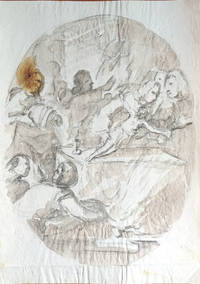
rif. 12337282x201mm. 11x8". Siglo XVIII. 282 x 201mm. Carboncillo y aguada sepia-ocre sobre papel agarbanzado verjurado. Con filigrana Escudo de Pavia. Papel italiano del siglo XVIII. Inscrito: "Maella" en el anverso. unknown
1799Opera tratta dai "Los Caprichos", per la prima volta pubblicati nel 1799. Prova della quarta edizione di dodici, stampata dalla calcografia di Madrid (circa 1870).Acquaforte, acquatinta brunita e puntasecca, in perfetto stato di conservazione. La serie chiamata Los Caprichos è composta da ottanta incisioni, la cui prima edizione [l’unica a non essere pubblicata postuma] venne alla luce nel 1799. Curata in fase d’edizione dallo stesso artista, la serie fu commercializzata e dopo poco tempo ritirata dal mercato. Infatti, a causa dei numerosi soggetti che ironizzavano sulla società spagnola di fine secolo, il Goya subì una censura. L’interpretazione dei soggetti rappresentati su queste lastre, sempre enigmatiche, è spesso controversa. Plate 55: old woman prettifying herself at mirror, maid and two male servants watching; from an album of the fourth edition. 1799 Etching, burnished aquatint and drypoint.From the fourth edition of twelve of the so-called "Los Caprichos" series, edited by the Madrid Calcografia.A very good impression, with good contrast, printed on contemporary paper, customary margins, in very good conditions. The series called Los Caprichos, consists of eighty etchings. This first edition of 1799, the only one not to be published posthumously, is imprinted on soft laid pape. Cured in phase edition by the same artist, the series was marketed and before long withdrawn from the market. In fact, because of the many subjects that mocked the Spanish society of the century, Goya suffered censorship. The interpretation of the subjects represented on these plates, always enigmatic, is often controversial. Harris 90; Delteil 92.
1799Opera tratta dai "Los Caprichos", per la prima volta pubblicati nel 1799. Prova della seconda edizione di dodici, stampata dalla calcografia di Madrid. Acquaforte, acquatinta brunita e puntasecca, in perfetto stato di conservazione. La serie chiamata Los Caprichos è composta da ottanta incisioni, la cui prima edizione [l’unica a non essere pubblicata postuma] venne alla luce nel 1799. Curata in fase d’edizione dallo stesso artista, la serie fu commercializzata e dopo poco tempo ritirata dal mercato. Infatti, a causa dei numerosi soggetti che ironizzavano sulla società spagnola di fine secolo, il Goya subì una censura. L’interpretazione dei soggetti rappresentati su queste lastre, sempre enigmatiche, è spesso controversa. Plate 56: figures falling through air, including satyr; from a bound album of the second edition impressions. 1799 Etching and burnished aquatint.From the second edition of twelve of the so-called "Los Caprichos" series, edited by the Madrid Calcografia.A very good impression, with good contrast, printed on contemporary paper, customary margins, in very good conditions. The series called Los Caprichos, consists of eighty etchings. This first edition of 1799, the only one not to be published posthumously, is imprinted on soft laid pape. Cured in phase edition by the same artist, the series was marketed and before long withdrawn from the market. In fact, because of the many subjects that mocked the Spanish society of the century, Goya suffered censorship. The interpretation of the subjects represented on these plates, always enigmatic, is often controversial. Harris 91; Delteil 93.
1913187 pages. Index. Attractive gilt advertisement upon black front board. Few black and white illustrations. Contents secured to boards by original black cord. "Covers a three-years course in Household Science." - from Preface. Above-average but not excessive overall wear. Errata page at front and memo page at back very heavily worn. Many contemporary hand-written recipes upon nine memo pages at back. Minimal markings to contents, excepting pages 114-115 upon which are handwritten contemporary prices of dozens of grocery items. A worthy copy of this wonderful and very uncommon antiquarian British Columbia household science text. Book
1875Acquaforte, 1875 circa, priva di firma. Stampata su carta cina applicata su supporto coevo. Opera non descritta dai repertori consultati. Telemaco Signorini nasce a Firenze il 18 Agosto del 1835 e, nonostante prediliga gli studi letterari, suo padre, un modesto pittore della corte del Granduca, lo avvia allo studio della pittura e fu lui il suo insegnante. Dopo aver frequentato i corsi di disegno dal nudo all'Accademia di Belle Arti fiorentina, e dopo aver dipinto dal vero con Odorado Borrani e Vincenzo Cabianca, inizia a frequentare il Caffè Michelangelo, accostandosi ai pittori che in quegli anni stavano teorizzando la pittura di macchia, ossia i Macchiaioli. Durante un viaggio a Parigi conosce personalmente l'anziano Camille Corot, interessandosi alla sua pittura di paesaggi e Constant Troyon; tornato a Firenze, con l'amico Diego Martelli, consolida l'amicizia con Silvestro Lega e Odoardo Borrani, insieme ai quali dipinge nei dintorni di Pergentina, divenendo il maggior rappresentante dei Macchiaioli. Bellissima prova, in ottimo stato di conservazione. Dimensioni 114x172 mm, il foglio 239x325 mm. Al verso timbro della collezione di Raffaele Alianello (Lugt 5K). Etching, circa 1875, unsigned. Printed on Chinese paper applied to carboard. Work not described by the repertories consulted. Telemaco Signorini was born in Florence on August 18, 1835 and, although he preferred literary studies, his father, a modest painter of the court of the Grand Duke, initiated him to the study of painting and he was his teacher. After having frequented the courses of drawing from the nude to the academy of Belle Arti fiorentina, and after having painted from the true one with Odorado Borrani and Vincenzo Cabianca, it begins to frequent the Cafe Michelangelo, approaching the painters that in those years were theorizing the painting of stain, that is the Macchiaioli. During a trip to Paris he knows personally the old Camille Corot, being interested in his painting of landscapes and Constant Troyon; returned to Florence, with the friend Diego Martelli, consolidates the friendship with Silvestro Lega and Odoardo Borrani, together with which it paints in the surroundings of Pergentina, becoming the greater representative of the Macchiaioli. Beautiful example, in excellent condition. Size: platemark, 114x172 mm; sheet 239x325 mm. On the verso collection mark of Raffaele Alianello (Lugt 5K).
2012rif. 2110502151001998Jodo Shinshu Hongwanji sect office 2012. Soft Cover. Fine. Number of books: 4 Jodo Shinshu Hongwanji sect office paperback
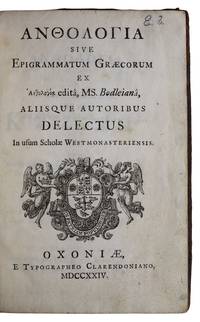
1724rif. AQ24901Oxoniæ i.e. Oxford: E Typographeo Clarendoniano 1724. 2 99p 3. The first and sixth words of the title are transliterated from the Greek. Contemporary panelled sheep. Rubbed joints starting paper label with title in manuscript to head of spine. Contemporary inked ownership inscriptions of James Stuart to front endpapers scattered spotting. The sole recorded Oxford edition of an anthology of classical Greek satirical verse extracted from manuscripts held by the Bodleian for the use of students of Westminster School; including excerpts from the works of inter alia Anacreon Menander and Theocritus. The first London edition appeared in 1734. ESTC records copies at six locations in the British Isles BL NLS Nottingham Oxford Representative Church Body and St. Canice's Cathedral and six further worldwide California Chicago Illinois Kinder NYPL and Yale. ESTC T131082. First edition. 8vo. E Typographeo Clarendoniano unknown
rif. Z1-E-022-02541CCW Graduate School. Used - Good. Ships from UK in 48 hours or less usually same day. Your purchase helps support Sri Lankan Children's Charity 'The Rainbow Centre'. Ex-library so some stamps and wear but in good overall condition. 100% money back guarantee. We are a world class secondhand bookstore based in Hertfordshire United Kingdom and specialize in high quality textbooks across an enormous variety of subjects. We aim to provide a vast range of textbooks rare and collectible books at a great price. Our donations to The Rainbow Centre have helped provide an education and a safe haven to hundreds of children who live in appalling conditions. We provide a 100% money back guarantee and are dedicated to providing our customers with the highest standards of service in the bookselling industry. CCW Graduate School unknown
rif. DADAX0826315186Brand: Univ of New Mexico Pr 0000-00-00. 1. paperback. New. 5.75x1.25x9.25. Buy with confidence. Excellent Customer Service & Return policy. Brand: Univ of New Mexico Pr paperback