35 711 résultats
1832réf. 35697Philadelphia: American Sunday-School Union 1832. Hardcover. Very Good. Hardcover. A highly romanticized history of the Native Americans. Blue cloth spine over marbled paper covered boards. Rubbing to boards wear to spine ends and edges of boards. Illustrated. Minor soiling throughout. Rear hinge is split but board remains attached. 153 pages. CHILD/062322. American Sunday-School Union hardcover books
1926réf. 33955Baltimore: Students of the Eastern High School 1926. Paperback. Very Good. Paperback. 4to. High school yearbook from this all girl's school in nice condition. Bound in tan paper wrappers with silver emblem to front wrapper and white / orange string stab binding. Minor wear and tears to edges of wrappers. Large tear to front wrapper. Chipping to spine panel with a few tears. Interior is clean and bright overall with lovely illustrations throughout. Lacks one tipped-in illustration or photograph. Foxing / soiling to a few pages. Includes literary and art selections. No autographs. 96 pages. BALT/040820. Students of the Eastern High School paperback books
1923réf. 33957Baltimore: Students of the Eastern High School 1923. Paperback. Very Good. Paperback. 4to. Includes seven small laid in original black and white photographs dated 1921 - 1926. High school yearbook from this all girl's school in nice condition. Bound in side-stapled brown paper wrappers with title and emblem to front wrapper. Wrappers are present but detached and inserted into the book. They are heavily chipped. Interior is clean and bright overall with lovely illustrations throughout. Includes literary and art selections. Lacks title page preliminary pages and autograph page. No autographs. 55 pages plus ads. BALT/040820. Students of the Eastern High School paperback books
1946réf. 28595Baltimore: Bryn Mawr School 1946. Paperback. Very Good. Paperback. In beige side-stapled wraps with orange title to front cover and orange illustration. Includes treasurers report president's report senior class list officers list report of parents' association engagements weddings births in memoriam and other various articles. 14 pages. MD/090215. Bryn Mawr School paperback books
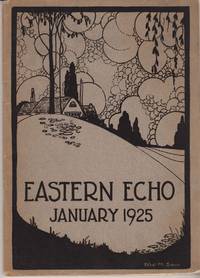
1925réf. 28338Baltimore: Students of the Eastern High School 1925. Paperback. Very Good. Paperback. 4to. High school yearbook in quite nice condition. Green side stapled paper wrappers with black title to front wrapper. Light edgewear and minor browning to front wrapper. Interior is clean and bright with lovely illustrations throughout. 60 pages including ads. BALT/060515. Students of the Eastern High School paperback books
1925réf. 28337Baltimore: Students of the Eastern High School 1925. Paperback. Very Good. Paperback. 4to. High school yearbook in quite nice condition. Grey and black illustrated side stapled paper wrappers with black title to front wrapper. Light edgewear and minor soiling to rear wrapper. Interior is clean and bright with lovely illustrations throughout. 54 pages ads. BALT/060515. Students of the Eastern High School paperback books
1930réf. 28350Baltimore: Western High School 1930. Soft Cover. Very Good. Soft Cover. 8vo. High school periodical. Pink side stapled paper wrappers with black title to front wrapper. Fading to edges. Interior is quite clean with illustrations throughout. 55 pages. BALT/060915. Western High School unknown books
1930réf. 28351Baltimore: Western High School 1930. Soft Cover. Very Good. Soft Cover. 8vo. High school periodical. Pink side stapled paper wrappers with black title to front wrapper. Fading to edges. Interior is quite clean with illustrations throughout. 55 pages. BALT/060915. Western High School unknown books
1930réf. 28349Baltimore: Western High School 1930. Soft Cover. Very Good. Soft Cover. 8vo. High school periodical. Pink side stapled paper wrappers with black title to front wrapper. Fading to edges. Interior is quite clean with illustrations throughout. 55 pages. BALT/060915. Western High School unknown books
2001réf. 28062Bel Air MD: John Carroll School 2001. Hardcover. Very Good. Hardcover. Folio. Very good in black cloth boards with brown leatherette spine and gilt title to spine and front cover. Light soiling and smudging to covers but clean overall. Clean bright interior. Tears to edges of a few pages. Unpaginated. Each issue is 12 to 16 pages in length. MD/031115. John Carroll School hardcover books
1946réf. 27850Baltimore: The Park School 1946. Hardcover. Very Good. Hardcover. 8vo. Blue cloth covered boards with gilt title to spine. Minor rubbing and fading to boards and spine. Interior is clean and bright. Includes frontispiece of Putman. 206 pages. Baltimore. BALT/112414. The Park School hardcover books
1945réf. 19315Baltimore: Western Highschool 1945. Paper Wrappers. Near Fine. Paper Wrappers. 4to. Red paper wrappers with black taped spine. Black title and illustration to the front wrapper. Small chip the bottom edge of back wrapper. A few pen and pencil marks inside. Name and address of previous owner written in pen on inside of back wrapper. Red spot on back of last page. 79 pages. Baltimore. BALT/072307. Western Highschool unknown books
1933réf. 3261Baltimore: The Gilman Country School 1933. Hardcover. Very Good. Hardcover. Very good red leatherette boards blindstamped with sailing ship gilt title and date on front board. Spine cracking at hinge binding slightly loose. Chipping to spine ends and buming to edges. Crease to front board. Minor foxing to end pages and first few pages. Minor yellowing to margins. Else is clean and bright with photographic illustrations throughout. High school yearbook. Baltimore. BALT/1243. The Gilman Country School hardcover books
réf. B233939-2Champaign-Urbana University of Illinois 1983. 46pp. Prof. illus. 4to. Wraps. Champaign-Urbana (University of Illinois), 1983. paperback books
réf. B233939-3Champaign-Urbana University of Illinois 1983. 46pp. Prof. illus. 4to. Wraps. Champaign-Urbana (University of Illinois), 1983. paperback books
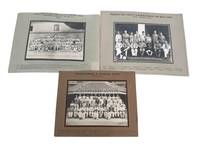
1930réf. 236621930. British Indian railway and military administrative staff photo archive circa 1930s to 1943 documenting the trained Indian clerical instructional stores and supervisory personnel who operated institutions central to colonial transportation and wartime logistics. The principal photograph depicts the instructional and clerical staff of the Railway Training School at Bina the first Area School established by the Great Indian Peninsula Railway which operated there from 1926 until its transfer to Bhusawal in 1962. The two dated portraits extend this administrative record to the Rawalpindi Arsenal in 1942-43 and the Cantonment Board at Ambala in 1941 placing railway education beside military supply and cantonment government during the Second World War. Photo archive of 3 Large silver gelatin photographs mounted on cardstock Each Photographer boards measure 12 x 16 inches and Photograph 8½ x 11 inches Bina Rawalpindi and Ambala India circa early 1940s. The Bina portrait identifies approximately sixty members of the "Instructional & clerical staff R.T.S. Bina" posed in six rows before a tiled railway building bearing the sign "The Railway Training School." A second photograph captioned "Clerical staff including Stores Branch of Rawalpindi Arsenal" records employees photographed at the departure of S. Avtar Singh in 1942-43; a printed roster identifies staff by row and includes many locals. The third photograph records a farewell to Lieutenant Colonel G. Leslie-Mold president of the Cantonment Board at Ambala on April 25 1941 with British military officers and Indian civilian officials identified beneath the image. Leslie-Mold later served as Assistant Adjutant General and Director of Personnel Services at Army Headquarters in India. Railway schools developed as the expanding colonial network required standardized instruction in traffic control station procedure accounting freight handling signaling and the clerical routines through which trains goods and personnel were coordinated across long distances. Railways allowed the British administration to move troops rapidly supply cantonments and arsenals connect agricultural and mineral districts with ports and impose common schedules and bureaucratic procedures across the colony; they also created a large Indian technical and clerical workforce whose knowledge kept the system operating. The portraits record this institutional hierarchy with European officers occupying senior positions while Indian instructors accountants clerks store employees and subordinate officials form the numerical body of each organization. Surface wear toning rubbed edges corner losses and occasional marks to the mounts; photographs remain generally clear and well defined. Overall in good condition. A concentrated visual record of the Indian personnel who sustained railway instruction military provisioning and cantonment administration within the transport and defense infrastructure of late British rule. unknown books
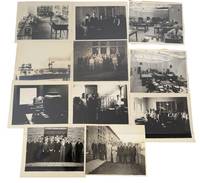
1930réf. 232561930. Stanford University Military Engineering Archive Documenting the First Army Ordnance Reserve Gauging Program ca. 1930. Stanford University photo archive documenting the emergence of interwar military-industrial technical education ordnance gauging instruction and precision engineering research on campus during the early development of Stanford's engineering and applied science programs. Rather than depicting science classrooms in a general sense these photographs specifically document the technical culture surrounding Army ordnance training instrumentation systems machine calibration and laboratory-based engineering instruction that linked universities to the expanding infrastructure of American military preparedness between World War I and World War II. Taken together the archive captures Stanford at the moment when higher education increasingly merged scientific research industrial precision manufacturing and military technical training into a unified research model that later shaped the wartime and Cold War defense university system. Photo archive of 11 large silver gelatin photographs each approximately 8" x 10" Stanford University California dating from 1930 into the 1950s; two later views mounted to decorative yellow board. Several photographs depict laboratory interiors filled with precision instrumentation gauging apparatus optical and mechanical measuring devices machine-tool equipment calibration benches microscopes drafting stations and technical worktables arranged for instruction and inspection work. One especially important close-up photograph shows a large precision gauging or rotational calibration apparatus associated with ordnance measurement and machine tolerance testing. Surrounding the device are machined cylindrical components threaded fittings gauge rings and polished metal parts likely used in dimensional inspection bore alignment concentricity testing or interchangeable manufacturing instruction. Another darkened workshop view depicts what appears to be a heavy precision lathe or gauging bench fitted with a mounted cylindrical test component equipment consistent with ordnance inspection and military engineering instruction during the interwar period. Additional photographs show groups of students and instructors posed around technical apparatus inside instrumentation laboratories while later mounted photographs document more formalized postwar engineering office and drafting environments associated with large-scale technical administration and research organization. Most important is a detailed handwritten verso inscription reading: "Equipment used Feb 1930 Ordnance School at Stanford University. This was first time a course in gauging was given in any Army Ordnance Reserve Unit permanent facilities excepted. Instructor; Lieut Merrill S. Hingo. Photo; Lieut Howard Story Taylor." The inscription firmly identifies the archive as documentation of early Army ordnance reserve technical instruction conducted at Stanford and specifically ties the machinery to military gauging education. In the 1920s-30s "gauging" referred not merely to ordinary measurement but to the specialized science of precision dimensional inspection used in artillery manufacture weapons-part standardization shell tolerances bore measurement interchangeable machining systems and industrial calibration. Such instruction formed a critical component of modern military-industrial production where even minor deviations in machining tolerances could affect artillery accuracy chamber pressure shell seating or mechanical reliability. Several outdoor group portraits further reinforce the military context. One large group stands beneath a doorway marked "Military Science and Tactics" while another includes Colonel Donald C. Cubbison a career U.S. Army officer and West Point graduate who served as professor of military science and tactics at Stanford from 1930 to 1935 before later attaining the rank of major general during World War II. His appearance situates the archive directly within Stanford's interwar military training system and links the photographs to broader national efforts to train technically educated reserve officers in engineering ordnance artillery science and industrial preparedness. The archive also reflects Stanford's broader transformation into a modern research university centered on applied science and engineering. During the interwar years Stanford's scientific departments expanded laboratory instruction instrumentation programs and research-based technical education under faculty including Robert E. Swain John P. Mitchell William H. Sloan and George S. Parks. Parks in particular became associated with analytical chemistry and geochemical laboratory science disciplines heavily dependent upon precision instrumentation and calibrated measurement systems. The engineering and laboratory culture documented here overlaps with contemporary developments in industrial metrology applied physics materials testing optical measurement and machine-tool inspection that increasingly tied university research to industrial production and military logistics. What makes the archive especially significant is the way it documents the transitional infrastructure between traditional university instruction and the emerging defense-oriented research university model. These photographs preserve not simply classrooms but the physical systems of technical education itself: calibration benches inspection machinery gauging apparatus optical instruments drafting rooms and laboratory spaces where students and reserve officers were trained in the precision engineering practices underlying twentieth-century industrial warfare and mass manufacturing. In doing so the archive visually traces the early foundations of the university-based defense engineering culture that would later expand dramatically during World War II and the Cold War throughout California research institutions and the broader military-industrial complex. Photographs are sharp and highly detailed with clear views of equipment and interiors; handwritten identifications remain legible. The two mounted 1950s photographs have several large tears without image loss with lighter handling wear elsewhere. Overall good condition. unknown books
1940réf. 222371940. Puerto Rico Education Industrial era Puerto Rico elementary school class photo archive. Three vintage silver gelatin black-and-white photographs each mounted on photo studio original boards with decorative borders. Two are early prints circa 1940s; the third is dated 1961. Each measure about 7" x 9". This evocative trio of Puerto Rican school photographs captures diverse elementary-age students posed in front of their local schools documenting a pivotal era of transformation in the island's social and educational landscape. One of the earlier cabinet cards features a group of students seated outdoors with a teacher or administrator standing behind them; the setting includes neoclassical columns and a colonial street with visible signage. Another card marked "Escuela No. 29" shows a racially integrated group of students with the school's flag held at the center of the image. The final print dated 1961-declared "Año de la Educación" Year of Education in the printed caption-presents a classroom posed beneath a prominently displayed Puerto Rican flag reflecting both a growing sense of national identity and post-war political shifts toward public investment in education. These photographs span a transformative period in Puerto Rico's 20th-century history as the island transitioned from an agricultural economy to a more industrialized state-supported system under Operation Bootstrap Operación Manos a la Obra. Begun in the late 1940s and accelerated through the 1950s and early 1960s the program prioritized urban development mass education and labor force modernization. The 1961 card framed by official state messaging reflects this emphasis-part of Governor Luis Muñoz Marín's vision of expanding universal literacy and integrating Puerto Rican youth into a skilled industrial economy. At the same time these images document the continued presence of racial and class diversity within public schools signaling the layered complexities of colonial modernity and U.S. influence on the island's educational and political systems. Mild surface soiling and edge wear to the mounts with light silvering to the gelatin surfaces of the two older prints. Overall very good condition. A rare and compelling visual record of Puerto Rican childhood education and racial integration during a formative mid-century era of political and economic redefinition. unknown books
1923réf. 225531923. Women's HistoryWomen's EducationWomen in Science and Medicine Tufts Medical School 1923 graduating class portrait featuring two female graduates. Panoramic silver gelatin photograph. 1923. Approx. 19 x 7.5 in. framed to 22 x 10.5 in. Dark wood frame hanging wire attached. Panoramic class portrait capturing the 1923 graduating class of Tufts Medical School notably featuring two female graduates at a time when women still constituted a small minority in the field of medicine. The image shows 44 students and faculty in full academic regalia with the two women clearly visible among their peers positioned in the front row and at the far left both wearing the same cap and gown ensemble as their male counterparts. Their inclusion offers a rare and tangible visual record of the slow but growing inclusion of women in American medical education in the early 20th century a development that remained the subject of considerable social resistance. While coeducation in medical schools became more common after World War I women remained significantly underrepresented. According to the Association of American Medical Colleges women made up just 4.4% of all U.S. medical school students in 1920. Tufts Medical School which has remained coeducational since its founding in 1893 was among the progressive institutions that accepted female students early on. The presence of women in this image is particularly significant against the backdrop of evolving gender roles following the passage of the 19th Amendment just three years earlier in 1920. Their appearance in a class photo from a prestigious medical institution not affirms the inroads women made in education during this era. Lower right corner includes the imprint of "Rowe Photo 35 Court St. Boston". Photo retains strong contrast and detail. Wood Frame shows scattered scuffing. Overall very good condition. An exceptional image of early women physicians breaking barriers in a male-dominated profession. unknown books
1939réf. 599257Atlantic Highlands New Jersey: Atlantic Highlands High School 1939. Softcover. Fair. First edition. Slim small quarto. Heavily illustrated from photographs; title page illustration by "R. Lukshis". Maroon patterned stapled wrappers heavily worn with a cover stain first and last pages tanned staples pulling but still a sound but fair only copy of this charming New Jersey yearbook. The pages have a short slight crease but are otherwise bright. Atlantic Highlands High School unknown books
1988réf. 600284Atlantic Highlands New Jersey: Atlantic Highlands Elementary School 1988. Unbound. Fine. Stated "First Edition." Small quarto. Eight corner-stapled leaves printed rectos only. A fine copy of this sweet elementary school newspaper that prints goings-on at the school student poems and a one-page activity sheet titled "GET PUZZLED Atlantic Highlands Elementary School) unknown books
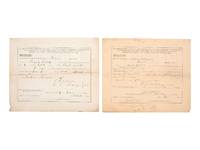
1888réf. 215331888. Rowan County Board of Education teacher pay vouchers 1888 and 1892 documenting African American education within the segregated public school system of post-Reconstruction North Carolina. The vouchers record segregated public education and its funding mechanisms through payments to Black teachers approved at the county level. These documents show how African American educators were paid through formally structured systems requiring countersignature by the county superintendent and approval by district committee members. Two manuscript teacher salary vouchers each approximately 8.5 x 7 inches and written on both sides. The first dated March 26 1888 authorizes payment of $30.00 to Maggie Locke for teaching in "School District No. 4 Rowan County for Colored Race" covering the period from January 3 to March 2 1888 in Atwell Township. The printed form specifies that payment is contingent upon countersignature by the county superintendent and approval by at least two district committee members establishing formal oversight procedures. The verso bears Locke's signed receipt dated March 27 1888 acknowledging payment from county treasurer J. M. McCubbins. The second voucher dated January 16 1892 records payment of $25.00 to Isaac Kerns for teaching in "School District No. 2 Salisbury & No. 2 Prov. Rowan County for Colored Race" with similar requirements for administrative approval prior to disbursement. The verso includes Kerns's signed acknowledgment of payment. Both documents explicitly designate the schools as serving the "Colored Race" indicating the formalized racial segregation embedded within the educational system. These vouchers document the operation of segregated schooling in the decades following the Civil War when African American education expanded under conditions of systemic underfunding and institutional control. The requirement for multiple authorizations before payment records the bureaucratic regulation of Black teachers' labor while the recorded wages provide quantitative evidence for comparative study of compensation disparities. Produced during a period when access to education for African Americans remained contested these documents contribute to research on Reconstruction-era legacies Jim Crow governance and the role of Black educators in sustaining community institutions. Light wear minor creasing and typical manuscript handling marks; overall very good condition. Documentary record of the administrative structure and lived realities of segregated education in the late nineteenth-century South. unknown books
1965réf. 221061965. EducationIntegration Los Angeles public school panoramic photographs 1965-1968 showcasing racial integration and diversity in East Los Angeles during the Civil Rights era. Created at a time of expanding desegregation efforts and increased visibility of Chicano and Sansei Japanese identity in urban California the images provide direct visual evidence of multiracial student populations in a major West Coast school system. Three panoramic silver gelatin photographs showing Hollenbeck Junior High School Classes of 1965 and 1967 and Roosevelt High School Class of 1968. Los Angeles California 1965-1968. The large-format images measuring between 25 x 8 inches and 28 x 8 inches present hundreds of students arranged in traditional panoramic format on school grounds. The Roosevelt High School Class of 1968 photograph includes a visibly diverse cohort of Latino Black Asian American and white students in graduation attire distributed throughout the composition without apparent segregation by race. The Hollenbeck Junior High photographs similarly depict multiethnic student groups with period dress including uniform-style dresses collared shirts ties and sweaters. The versos of the 1965 and 1967 Hollenbeck prints contain numerous handwritten inscriptions from classmates including signatures and messages such as "Good luck in the B-10" and other personal notes. The presence of Spanish surnames including Roberta Noriega situates the photographs within the predominantly Mexican American community of East Los Angeles and documents peer networks within that setting. These photographs correspond to a period preceding the 1968 East Los Angeles student walkouts when Mexican American students protested educational inequality making them materially relevant to the study of pre-activist conditions within these schools. The integrated compositions and inscriptions together document both institutional structure and interpersonal relationships offering layered evidence of how students experienced race identity and belonging within public education. Light surface creasing and minor soiling to versos; images remain sharp with strong contrast and minor edge wear no losses. Overall very good condition. A visual record of multiracial student life in East Los Angeles. unknown books
réf. 1887819th Century Archive of 23 School Merit Awards. These illustrated cards were each given to students as tokens of congratulations and scholastic achievement or good behavior. Sizes range from 3.5" x 2.5" to larger at 9" x 6.5." These small tokens of congratulation given to students for good behavior and scholastic accomplishments have been utilized by teachers for generations in America. The practice was most popular during the nineteenth century when printing techniques evolved to make this form of reward easily available. Rewards of merit in addition to being examples of a nineteenth century classroom tool reveal the progress of printing in America as well as the priorities of educators of the time. Illustrations include snowy scenes nature landscapes children churches flowers and birds. Many of them are signed with the student' names. Beautiful archive in very good condition. unknown books
réf. 18870Large archive of 61 School Merit Awards and other late 19th Century cards. Each card sizes range from 2.5" x 1.5" to 5" x 2.5." These small illustrated cards were given to students as tokens of congratulations and scholastic achievement. Illustrations include snowy scenes nature landscapes children dogs flowers and birds. Rewards of merit in addition to being examples of a nineteenth century classroom tool reveal the progress of printing in America as well as the priorities of educators of the time. Illustrations include snowy scenes nature landscapes children churches flowers and birds. Many of them are signed with the student' names. Beautiful archive in very good condition. A few of these cards were given in condolence to grieving relatives of a deceased loved one but the vast majority were for School Merit Awards. Beautiful and in very good condition. unknown books