2 034 résultats
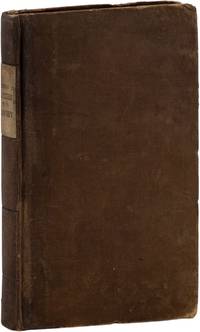
1855réf. 62372Boston: Bela Marsh 1855. Second printing. Frontispiece portrait. 122 pp. 1 vols. Small 8vo. Brown cloth stamped in blind and gilt. Upper half of spine shaky else a nice tight copy. Second printing. Frontispiece portrait. 122 pp. 1 vols. Small 8vo. The author was convicted of aiding slaves to escape from Washinton D.C.--Blockson. Sabin 20912 Blockson 9838 for first ed. Bela Marsh unknown books
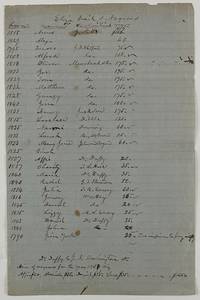
1857réf. 13322N.p. but near New Bern NC 1857. 1p. on a folio sheet docketed on verso. Old folds minor spotting toning and edge wear. Overall very good condition. An extraordinary manuscript document listing the names birth dates hire information and annual cost of hire for twenty-seven enslaved men women and children in antebellum North Carolina all owned by the same woman. The slaves were the property of Eliza Vail 1783-1853 who died in New Bern North Carolina about four years before the document was produced. Apparently her surviving family hired out her slaves to themselves and a number of neighbors. Among the names on the document are some of Eliza's family members mentioned in her will in ancestry records online including her grandsons John Nicholson Washington who later served as the mayor of New Bern and Thomas Reed Emery and her granddaughter-in-law Mary L. Emery. The document also includes some of the slaves mentioned in her will including Juoco Affie and Amos. The preponderance of the document is a four-column list beginning with the birth date then name then "To whom hired" and finally the cost of hire for each slave in 1857. For instance Amos born in 1818 was hired to "J.N.W." John Nicholson Washington for $150 in 1857. The birth dates of the slaves range from 1790 to 1848 making them between 67 and 9 at the time the document was written. The annual hiring costs range between zero for the nine-year-old and $175 for some of the younger men with the oldest man Jim York costing only $20 as he is "Too infirm to pay much." The names of various family members are listed as the parties currently hiring the slaves along with other citizens of the New Bern area such as "Dr. Duffy" "Rev. Mr. Greene" and J.D. Whitford President of the Atlantic & North Carolina Railroad among others. Additionally a note at the bottom records the hiring costs of four slaves being sent from Dr. Duffy to J.N. Washington. An extraordinary record of female ownership of enslaved peoples and the economics involved in mid-19th-century North Carolina. unknown books
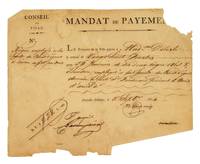
1914réf. 1272741914. New Orleans: September 1 1814. Single sheet 242 x 197 mm printed and manuscript document age-toned with considerable edgewear and the loss of two corners affecting only two characters of the title and with no loss of sense. Good. § Municipal payment order issued by the New Orleans City Council to its treasurer to pay for the hire of two enslaved men Abel and Theodore to work on the drainage canal at Fort St. Ferdinand. The document is dated a few months before the Battle of New Orleans and likely concerns improvement to the city's defensive works. Nicholas Girod was mayor of New Orleans from 1812 to 1815. He was the first regularly elected mayor after Louisiana's admission to the Union and did much to prepare the city against the British invasion force. The text of the document reads: Conseil de Ville. Mandat de Payement Le Trésorier de la Ville payera à Madame Delisle la somme de Vingt huit Piastres pour 56 journées de ses deux nègres Abel & Théodore employés à la fouille du Canal d'égout derrière le Fort Saint Ferdinand pendant le mois d'août dernier. Nouvelle-Orléans le 1er Septembre 1814. signature N. Girod Maire Par le Maire struck through A marginal note adds "Nègres employés à la fouille du Canal d'égout à raison de $15 par mois. unknown books
1833réf. 84791Lexington KY: Abraham Skillman 1833. First Edition. First printing. 12mo 18.5cm; original brown cloth-covered boards; viii207pp. Respined to style with facsimile printed spine label; Bookplate of the Young Men's Christian Institute New Haven to front pastedown; bookseller's ticket Williams' Bookstore Under the Old South Meeting House Boston at base of front flyleaf; pencil signature faded and illegible to front endpaper. Complete sound and Good. One of a tiny number of pre-Civil War abolitionist texts to have been written by a Virginia author. Paxton 1784-1868 was a Presbyterian minister born in Rockbridge County Virginia and educated at Princeton Theological Seminary; it is likely his mentorship there under Charles Hodge helped develop Paxton's antislavery sentiments. In 1826 after publishing an essay asserting the institution of slavery to be incompatible with the teachings of the Bible Paxton was expelled from his pastorship of Cumberland Presbyterian Church near Farmville in south-central Virginia. The present text addressed to his former congregation recounts the events of his expulsion reprints the essay in question and adds a series of epistolary essays supporting his theological position in oppostion to slavery. The existence of any abolitionist sentiment during this period in Virginia's history is remarkable in itself. For a native-born minister to willfully preach the gospel of antislavery even the relatively conservative version of abolitionism professed by Paxton before a congregation whose sentiments on the subject would have been diametrically opposed - and which doubtless included a number of slaveholding families - must have amounted to apostasy in some congregants' eyes. By publishing the present work Paxton essentially doubled down on his unpopular beliefs making him in this cataloguer's eyes a rather remarkable figure. We find it surprising that so little biographical information exists regarding Paxton. His name barely appears in the scholarly literature on the period; perhaps because no mention of abolition is made in either the title nor the sub-title of his book the work is rarely discussed in articles on the antebellum southern antislavery movement. Though reasonably available institutionally Letters on Slavery is perenially scarce in commerce having appeared at auction only three times in the current century. This a quite decent copy in a discreetly restored binding. SABIN 59264. DUMOND Antislavery Bibliography p.89. LCP AFRO-AMERICANA 7501. Abraham Skillman unknown books
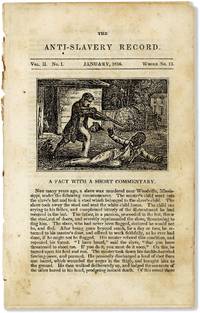
1836réf. 82919New York: American Anti-Slavery Society 1836. 12mo 19cm. Stitched self-wrappers; pp.1-12. Removed; first and final leaves detached but present; light soil scattered faint foxing; tear to bottom inch of bound edge away from text; complete and Good. Woodcut decoration at head of text a strikingly violent image depicting the murder of a Black man by his enslaver in Woolville Mississippi. Single issue of this monthly abolitionist periodical that ran from 1835 to 1837 published by the American Anti-Slavery Society under the direction of Elizur Wright. It was "a small magazine with excellent woodcuts containing principally extracts from other publications" that was "distributed freely without charge" and "found its way into the schools and colleges everywhere" Dumond p.267. Wright stated that in September 1835 the Society published 25000 copies of the Record p.267. BLOCKSON 9174. LCP AFRO-AMERICANA 622. American Anti-Slavery Society unknown books
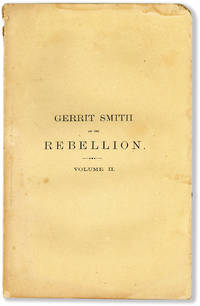
1865réf. 81012New York: American News Company 1865. First Edition. First printing. Octavo. Sewn printed wrappers; 76pp. Brief closed tear to title page margin; bit of wear at upper fore-corner of text block well away from text else a clean fresh copy in the original printed wraps; Very Good or better. Includes text of letters written to various colleagues in the antislavery ranks including Elizabeth Cady Stanton Charles Sumner and others. The first volume taking in the year 1863 was printed a year earlier. SABIN 82664. American News Company unknown books
1860réf. 63532New York: Published and for sale at 5 Beekman Street 1860. First Edition. 12mo. 20th-c. binding of tan calf over paper-covered boards; marbled page edges; 951pp. About fine and complete; the pamphlet appears to have been offered without cover wrappers in any case not noted by Blanck. Uncommon first edition of this late tract by the important abolitionist and feminist Lydia Maria Child 1802-1880. Child's intention with this work was to make a direct case to southern slaveholders based not on any moral grounds but purely on business hoping that the Caribbean example would convince southerners that abolition could be achieved without wrecking their economy. "Child suggested to Samuel B. May the publisher .that the title page omit any mention of the American Anti-slavery Society giving only an address but no publisher. She even considered issuing the tract anyonymously but decided that her notoriety would probably help rather than hinder its circulation" see Karcher The First Woman in the Republic: a Cultural Biography of Lydia Maria Child. Durham 1994; p.428ff. Blanck notes two editions in 1860 as well as a reissue in 1862; this with verso of the final leaf unprinted is the first. Rarely encountered in commerce. BAL 3189. Published and for sale at 5 Beekman Street unknown books
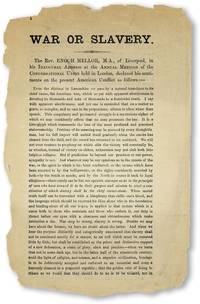
1863réf. 46597Manchester: Union and Emancipation Society n.d. ca. 1863. First Edition. Original broadsheet handbill 22x13.5cm.; extremities chipped with shallow losses not approaching text the whole rather dust-soiled and unevenly toned else Good or better overall. Text reproduces an address delivered by the Rev. Enoch Mellor of Liverpool "in his INAUGURAL ADDRESS at the ANNUAL MEETING of the CONGREGATIONAL UNION held in London" in which he "declared his sentiments on the present American Conflict." Mellor 1823-1881 was the life-long minister of the non-conformist Square Congregational Church in Halifax West Yorkshire with the exception of a five-year period coinciding with this address when he succeeded the abolitionist Congregational minister Thomas Raffles 1788-1863. Mellor's argument begins with reference to the Lancashire Cotton Panic an economic depression caused by a dearth of baled cotton imports following the start of the American Civil War. Mellr goes on to say that "War /may/ be wrong slavery /is/ wrong" comparing its presence on the American continent with that of the propagation of polygamy "carefully and resolutely laid as a foundation-stone in the territory of Utah. Union and Emancipation Society unknown books
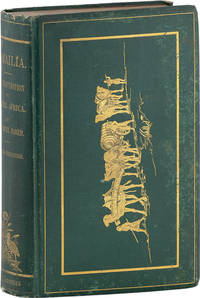
1875réf. 61084New York: Harper and Brothers 1875. First American Edition. Octavo 24cm. Green cloth stamped in gilt; brown coated endpapers; 542pp; steel-engraved frontispiece 2 wood-enraved frontispieces 2 color maps 1 folding and 48 wood-engraved plates all with tissue guards. Inscribed "Charles V. Payne from his friend M. R. E. Christmas 1874" on front free endpaper; the same inscription is repeated with the date 1875 on a front flyleaf. A sound copy externally rubbed with superficial silverfishing to both boards internally clean with two central gatherings pulled but not fully detached short tear to folding map at gutter: just Very Good. Samuel Baker 1821-1893 was a noted British explorer of Africa. In 1860 he was appointed "governor-general of the equatorial Nile basin" by the Khedive Ismail of Egypt with duties including "annexing the equatorial Nile basin establishing Egyptian authority over the region south of Gondokoro suppressing the slave trade" and more ODNB. His success was mixed: he successfully annexed Gondokoro and did suppress the slave trade but failed to establish secure control of the region ODNB. This account published after his return to England details how he "raised and trained a fighting force.to crush" the slave trade Czech. CZECH p.11. Harper and Brothers unknown books
1862réf. 61272New York: D. Appleton & Co 1862. Second Edition. Octavo 20.5cm. Green cloth titled in gilt on spine; yellow coated endpapers; 39018pp; 8 tinted lithographs. A firm copy rubbed at spine ends and bumped at corners mildly foxed: Very Good. Commander Andrew Hull Foote 1806-1963 served on the USS Perry from 1849 to 1851 suppressing the slave trade off the coast of Africa. In 1854 he published an abolitionist history of Africa describing African cultures American colonies and the slave trade. He was a noted commander for the Union Navy until his unexpected death of kidney disease in 1863. D. Appleton & Co unknown books
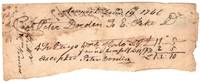
1766réf. 13353Newport RI: December 19 1766. Manuscript document 2.25 x 6 inches. Unevenly trimmed moderate toning and staining. About very good. Rare surviving evidence of a slaveowner hiring out a slave for manual labor in colonial Rhode Island. Here Captain Peter Darden bills E. Teke for "4 Days work of Cato" for eleven shillings five pence. The verso indicates the bill was paid on January 6 1767; the payment may have involved another slave as Teke seems to note that payment was made by an "agt" agent named Cicero. A rare surviving document pertaining to slavery in pre-revolutionary Rhode Island. December 19 unknown books
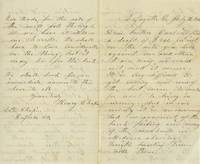
1861réf. Cat338Lafayette Ohio 1861. Autograph letter signed 2 pp. Addressed to D. T. Chapin of Enfield Connecticut. Good condition with normal folds and light wear. A concise but revealing early Civil War letter combining financial anxiety agricultural reporting and clear-eyed political commentary on slavery and the future course of the conflict. Writing amid the first months of the American Civil War Chapin opens with the immediate purpose of the letter—forwarding “a draft of $240 for int. on the note”—before situating the payment within a deteriorating economic landscape: “It is very difficult to get money now even of the best men.” He describes a local economy under strain noting “no market for wool to bring in money” compounded by regional instability “on account of the bank failing and many of the merchants in Medina closing” concluding bluntly: “Terrible bursting times with them.” Even the act of sending funds carries uncertainty as he cautions that “in these times I consider there is a risk in the best of banks.” Alongside these concerns Chapin provides a snapshot of agricultural conditions: “Corn is very backward and short wheat nearly middling grass rather below middling” summing up the situation as “rather tight times as well as troubled times.” The most significant portion of the letter however turns to the war itself and the unresolved question of slavery. He writes: “We hope the end will be well but our nation will have to be humbled. It is well to put down rebellion but it is rather queer that the cause of the trouble must be let entirely alone. The nation will get their eyes open after a while. The President possesses the war power to abolish slavery and Congress possess the power also in my humble opinion and the time will come when they will have to do it unless the south run their heads so hard against the rock as to do it themselves.” The letter closes with a brief note on a failed business transaction—“our trade for the sale of the mill fell through”—underscoring the economic uncertainty of the moment before returning to family matters. Overall an evocative early Civil War letter by a merchant expressing fears and anxiety for the pending conflict. unknown books
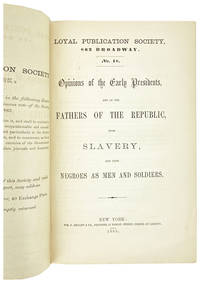
1863réf. 30221New York: Wm. Bryant & Co. Printers 41 Nassau Street Corner of Liberty 1863. Very Good. New York: Wm. Bryant & Co. Printers 41 Nassau Street Corner of Liberty 1863. First Edition. Octavo. 19 pp. Printed wraps. Housed in more recent marbled paper wraps with brown backstrip staples noticeable beneath. Abrasions and glue remnants to front wraps with loss to text; light creasing to edges; a few smudges. Binding sound and interior unmarked; Very Good. Includes excerpts from Presidents Washington to Jackson as well as quotations from Benjamin Franklin John Jay and Alexander Hamilton. Sabin 57406. Wm. Bryant & Co., Printers, 41 Nassau Street, Corner of Liberty unknown books
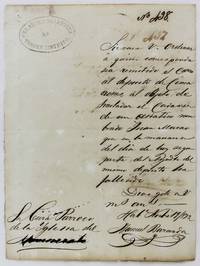
1872réf. 3066Havana 1872. Very good. Manuscript form approximately 8.5 x 6.25 inches. Minor wear at edges; a few small worm holes. Contemporary ink stamp. Light tanning and offsetting. This 1872 manuscript form from a Havana jail the Celaduria de la Punta notes the death there of an "Asiatico" a Chinese indentured servant with the given name of Juan Macao and orders the transfer of the body to the mortuary for cremation. Indentured servants found themselves jailed for several reasons including suspicion of theft and other crimes recapture following runaway or mere suspicion of abandoning a contract. unknown books
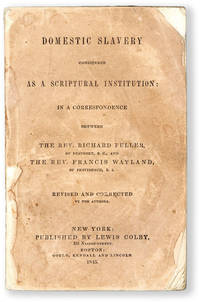
1845réf. 54623New York: Lewis Colby 1845. First Edition. Wrappered Issue. 18mo. 15cm; original peach wrappers with titles printed in black on front cover; viii2541pp. Modest wear front wrapper split along lower half of front joint with shallow loss to right corners of same; old faint tide-mark along lower edge of textblock with creasing to upper and lower corners of first and last few pages; terminal blank present though lacking rear wrapper; Good. Uncommon wrappered issue of this significant debate between two 19th century Baptist leaders over the Bible's teachings on slavery which went through at least four subsequent editions between 1847-1860. "The chapters were originally letters published in a Baptist newspaper in Boston Massachusetts. Southern pastor Richard Fuller and Northern educator Francis Wayland were each able defenders of their respective positions. These men were also good friends who believed that a difference of opinion about slavery should not necessiatate a breaking of Christian fellowship. Unfortunately these two Baptist leaders proved naive in this regard. Just weeks after the publication of the correspondence in book form Fuller's Southern Baptist Convention broke away from the larger Baptist denomination and formed a new ecclesiastical body. A number of issues factored into the division though the slavery debate was what ultimately led to the creation of a separate Baptist denomination in the South" from the Mercer University Press edition 2008. SABIN 26170; LCP AFRO-AMERICANA 3944. Lewis Colby unknown books
1862réf. 23579"It is a fact that the enslavement of human beings has so far infused its insidious poison into the very hearts of the Southern people that they have come to believe and declare the evil of slavery to be a good and to require the power of Government to be exerted to maintain extend and perpetuate an institution that enables thousands to sell their own children to be enslaved with all their posterity into hopeless bondage." The founder of New York City's Cooper Union for the Advancement of Science and Art echoes the language and logic of the Emancipation Proclamation as well as citing some Southern pro-slavery arguments to demonstrate their ridiculousness in this open letter to President Lincoln. Cooper and the Cooper Union had long been advocates of abolition and both Lincoln and Frederick Douglass had famously lectured at the institution. PETER COOPER. SLAVERY.Pamphlet. Letter of Peter Cooper on Slave Emancipation Loyal Publication Society New York 1862 8pp. disbound. Excerpts: "It is a fact that the enslavement of human beings has so far infused its insidious poison into the very hearts of the Southern people that they have come to believe and declare the evil of slavery to be a good and to require the power of Government to be exerted to maintain extend and perpetuate an institution that enables thousands to sell their own children to be enslaved with all their posterity into hopeless bondage." "In the original formation of that Constitution it became absolutely necessary to make a compromise with that great and all pervading interest which had then already entered into the very life-blood of the nation rendering the formation of an union of States hopeless without such a compromise." "The constitutional requirement to return fugitive slaves on their being demanded by Southern men having been acknowledged and performed by the States has been reaffirmed by an almost unanimous vote in Congress.These honest efforts on the part of the North to maintain peace and friendship were met by a relentless war waged for the destruction of the Constitution and the dissolution of the Union." "The time has now come when Southern men must know that the Union must be preserved and it is for them to determine whether they will persevere in their rebellion until the North shall be compelled in the most reluctant self defence to render contraband of war the slaves and property of all persons found in arms against the laws and Government of the country." Condition Fine. Disbound and lacking front wrap. books
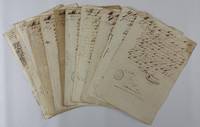
1873réf. 12720Cuba 1873. Twelve manuscript documents on folio sheets approximately 8.5 x 12.5 inches all with official rubber-stamped seal. Small pinholes along left margin light wear occasional chipping to edges some ink bleed and light damp staining. Overall very good. A collection of documents recording the liberation or attempted liberation of numerous men women teenagers and a child from enslavement. The child is but seven years old while the remaining slaves range from fifteen to fifty-seven years old. The slave trade ended in Cuba around 1867 but the practice of owning slaves remained legal until 1880 and then was abolished completely by Spanish decree in 1886. Cuba was the penultimate country to outlaw slavery in the western hemisphere beating Brazil to formal abolishment by two years. Even before the official abolition of slavery in Cuba African or criollo slaves were manumitted by a variety of owners and at various costs as evidenced here especially after the practice of importing Chinese indentured servants began. Each of the present documents names the slaveholder and the slave granted "libertad" along with the cost in escudos or pesetas of that liberty. The slaves liberated here are as follows: 1 Luis criollo 7 years old for the sum of 28 pesos 2 Maria Antonia part criolla 20 years old for the sum of 2500 pesetas 3 Catalina morena de Africa 41 years old for c.200 pesetas 4 Lorenzo moreno criollo 21 years old for 2500 pesetas 5 Lucia morena criolla 15 years old for 320 pesos or 1600 pesetas 6 Frigidae "negro.de Africae" 56 years old 7 Augusto criollo 19 years old for 1750 pesetas 8 Marta criolla 16 years old for 1621 pesetas 9 Gil moreno de Africa 57 years old for 1500 pesos 10 Carmita morena criolla 20 years old for 1750 pesetas 11 Augustina Prieto morena criolla 30 years old for 1750 pesetas 12 Edwigio 39 criolla; Lazara 36 criolla; and Maria Leoncia 15 criolla for 2000 pesetas. These Cuban slave manumissions are offered with one 1844 manumission document liberating a slave in Spain totaling two pages and measuring about 8.5 x 13.5 inches. The document also has three rubber-stamped official seals at the head noting Isabella II. This document appears to free slave Nicolas 25 years old for the sum of 400 pesos and is signed November 5 1844. unknown books
1862réf. 13270Moulton AL: June 7 1862. 4pp. on a single folded sheet. Old folds moderate staining rubbing and toning edges worn and a bit chipped a few small holes in the body of the text. A well-worn newspaper in good condition. A notable issue of a very rare newspaper from Confederate Alabama with many interesting historical aspects. Most noteworthy is the runaway slave advertisement printed on the last page relating the story of "a black boy who calls himself John" currently held at the jail in Lawrence County Alabama. John claims that his owner Jack Mason of Limestone County "was killed at Corinth on the day of the battle there and that he was endeavoring to return home when arrested." A physical description of John follows and concludes with a notice that "The owner will please come forward pay charges and take him away or he will be disposed of according to law." Other advertisements document various sheriff sales and the dissolution of a local law partnership. The paper also includes informative content on the Civil War including a substantial proclamation by Alabama Governor John Gill Shorter encouraging Alabama men to take the war seriously gather arms to the front and participate as part of the "State Guard." The paper also prints part of a notice from the Charleston Courier arguing that if Confederate currency is not worth real value "then the whole cotton crop of the South will be seized by the invader then Lincoln's recommendation to his Congress will be adopted and enforced and all the lands of the Southern people will be parcelled out among Northern soldiers." There is also a dispatch from Corinth encouraging southerners to identify and send back soldiers absent from duty and other wartime content. The only physical issue we could locate dated April 17 1863 is held at Samford; the remainder of the OCLC records we consulted reported microfilm or digital forms. June 7 unknown books
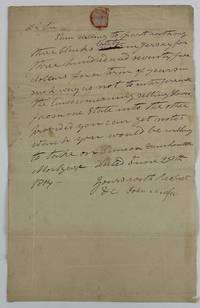
1814réf. 13354N.p.: June 28 1814. 1p. addressed on verso. Old mailing folds remnants of wax seal minor staining and toning. Very good. An interesting letter involving the sale of slaves in early-19th-century New Jersey. The letter comes from a slaveowner named John Neagie writing to Garrabrandt Van Houten Esquire in Patterson New Jersey in 1814. The text of the letter reads in full: "Dear Sir I am willing to part with my three blacks lately in Jersey for three hundred and seventy five dollars for a term of years in such way as not to interfere with the laws concerning selling slaves from one state into the other provided you can get notes which you would be willing to take on. Same on Van Houten's mortgage. Dated June 20th 1814. Yours with respect John Neagie." Neagie's concerns about "selling slaves from one state into the other" seems to indicate that he is based somewhere outside New Jersey where his slaves have been "lately." In fact he has crossed out the word "now" and replaced it with "lately. June 28 unknown books
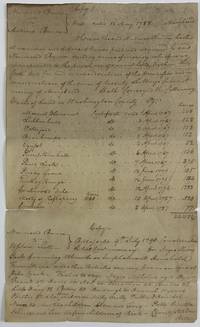
1790réf. 13400Washington County MD 1790. 2pp. on a single folio sheet. Moderate toning and dust-soiling old folds one fold separation repaired on verso with archival tape. Overall good plus condition. A striking document from early national Maryland detailing the sale of numerous types of property by Norman Bruce a Maryland militia man and land speculator. Norman Bruce was a Scottish immigrant who came to the American colonies as a young man served in the Maryland militia and acquired large tracts of land mostly in modern-day Carroll County. He also served as the Sheriff of Frederick County and as a judge and was known to own numerous slaves. Interestingly his wife Susanna Gardiner Key Bruce was great aunt to Francis Scott Key. The present documents first memorializes Bruce's sale of a dozen parcels of land to his son Andrew Bruce. The document notes the location date of sale and the number of acres for each parcel. Most impactfully though the document records Bruce's sale of his slaves. In a bill of sale in the present document Bruce sells two dozen named enslaved persons to his great-nephew Upton Scott along with various other property such as "Stock Farming Utensils or Implements Household Furniture and other articles." The transaction for the enslaved men women and children lists them by name and mostly age and reads in part: "Bill of sale 9th July 1790.For Negro Slaves.That is to say Negro Nicholas Aged 48 years. Frank 47. Harvey 46. Ned 44. Jonathan 44. Brutus 37. Little Harry 32. Betsey 50. Her daughter Hannah 11 years. Phillis 37 & her four children Milly Molly Phillis & Hannibal. Nance 24. Her two children Clem and Terry - Patty Pricilla Jeanie and Sam the four children of Beck. Charity and Stephen & Cassey the children of Nell." These enslaved persons apparently worked Bruce's "Farm on Great Pipe Creek." An unusual 18th-century Maryland slave document providing critical named connections within multiple slave families known to be living and working at a specific Maryland farm in 1790. unknown books
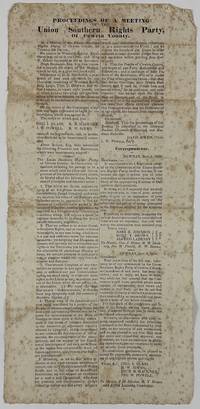
1850réf. 13416Newnan GA 1850. Broadside 15.5 x 7.25 inches. Minor edge wear old folds substantial foxing. Overall good plus. A very rare broadside memorializing a meeting of the Union Southern Rights Party in late-1850. The text records the proceedings of a November 5 1850 meeting in Newnan the seat of Coweta County Georgia to nominate Congressional candidates and propagate the organization's Preamble and Resolutions. The Preamble asserts that the Union Southern Rights Party of Coweta County has assembled to meet a "crisis which calls for a free and full expression of the opinions of every citizen" and therefore issues their "Declaration of principles and intended action." The six resolutions can be summed up as follows: they oppose the recent admission of California; "Disunion at present" is not the answer.yet; they reserve the right to secede if Congress continues to "war upon our property" and they are "left no other alternative;" they "express the determination of the state of Georgia" at an upcoming convention and wish to "promote true Southern Independence" if necessary; any candidate should "oppose any and every measure which may lead either directly or indirectly to a dissolution of the Union;" and that the people of Georgia should "forget all past Party distinctions and differences" and work together to ensure that the government is "rescued from impending dangers." Here the Union Southern Rights Party stands opposed to secession but reserves the right to exercise it in the future a fairly common viewpoint in the mid-19th century South. They answer some critics further along the path to secession in one passage here stating that "We repel the idea that we are 'Submissionists' or that we have any sympathy with the enemies of Southern Rights." In this way they are emblematic of a large portion of Southern politicians at the time who believed that slavery was an inherent right baked into the Constitution and was further a states rights issue. That viewpoint continued up to during and clear through the other side of the Civil War. Only one holding noted in OCLC and Hummel at Duke University. Hummel 402. unknown books
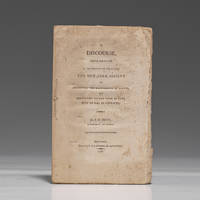
1798réf. 1244831798. First Edition. SMITH Elihu.Hubbard. A Discourse Delivered April 11 1798 At the Request of and Before the New-York Society for Promoting the Manumission of Slaves and Protecting Such of Them as Have Been or May Be Liberated. New-York: T. & J. Swords 1798. Slim octavo original tan self-wrappers string tied uncut; pp. 1-5 6-30 2. $3500.First edition of Smith's scathing attack on American slavery declaring it a betrayal as ""thousands of your fellow-beings children of the same father and inheritors of the same destinyÉ writhe under the lash of cruelty"" an exceptional 18th-century abolitionist work published barely ten years after ratification of the Constitution exceedingly rare uncut in original wrappers.Trained as a physician under Benjamin Rush ""Smith was an early abolitionist a member and Recording Secretary of the New York Manumission Society and trustee of the city's African Free School"" Stevenson Litchfield Native. ""Passionately committed to the improvement of the fledgling nation through the acquisition and circulation of information"" Smith's analysis of slavery in this very rare work published the same year as his early death at 27 expresses his and the Society's commitment ""to ideals of human perfectibility which they combined with the practical labor of achieving change"" Kelly on Kaplan Men of Letters. Here he takes aim at leaders and nations where the ""spirit of despotismÉ multiplied and extended the evil"" of slavery and ""wrought it into a system."" Noting the influence of renowned abolitionists John Woolman and Anthony Benezet he asserts that it is those in slave trade who particularly ""opened a new field forÉ every baneful enterprise"" when they became ""the first to violate the noble principles by which they had been guided."" Smith especially speaks to American leaders and slaveholders who concede ""slavery is unjust"" but claim ""it is entailed upon us by our fathers; it is interwoven with every part of our social organization."" In reply he declares that it is ""strange reasoning"" to endorse slavery simply because it exists. Arguing ""the laws of our country authorized the possession in human flesh"" he asks: ""Shall the legislators of a great nation be denied the powerÉ of acknowledging their errors and laboring to correct themÉ Encumbered as we are with this mighty evil"" Smith proclaims: ""You yes you the Legislators of America you are the real upholders of slaveryÉ you foster and protect itÉ you immortalize injusticeÉ while thousands of your fellow-beings children of the same father and inheritors of the same destinyÉ writhe under the lash of cruelty."" Evans 34554. Sabin 82502. Dumond 103. ESTC W37980. Not in Blockson. Text quite fresh with only faintest foxing to original wrappers. An excellent about-fine uncut copy in original wrappers. unknown books
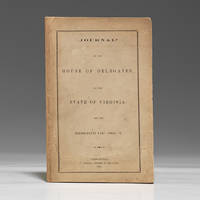
1865réf. 1260191865. First Edition. CONSTITUTION. Journal of the House of Delegates of the State of Virginia. for the Session of 1864Ñ5. Alexandria: D. Turner 1865. Octavo original front printed wrapper respined renewed rear wrapper original string stitching; pp. 1-3 4-83 1. Housed in a custom chemise and clamshell box. $4500.First edition one of 500 copies of the momentous Journal featuring its February 9 1865 entry on the Alexandria Virginia government's passage of the 13th Amendment mere days after the U.S. Congress the first of the four Unionist southern states to pass the Amendment also featuring the governor's Message noting: ""though we have in inherited from our fathers of the revolution the blessings of a great nation yet they also left to us an inheritance of African slavery which has proved a bitter dreg in our cup of freedom"" a vital record of forces for constitutional change near the end of the Civil War.Soon after the 1860 election amidst southern secession ""the great questions of union or disunion war or peace hung in the balance. Probably the crucial weight on the scale was VirginiaÉ as long as the federal government did not seek to coerce the states Virginia secessionists were unable to achieve a majority. When Lincoln responded with force to the attack on Fort Sumter however the vote in Virginia went in favor of secession."" Subsequently a Virginia convention ""met in Wheeling on May 13 1861É it elected as Governor Francis Pierpont a western Virginian and ardent Unionist and arranged for the creation of a legislature to replace the body sitting in RichmondÉ in July 1861 the new legislature met at the 'Restored Virginia' capital of Wheeling in a special session called by Pierpont."" Against its ""claim to represent a majority of Virginians"" a new state of West Virginia was created in 1863 and Pierpont's government moved to Alexandria to govern areas of Virginia under Union occupation Harrison Lawfulness of the Reconstruction Amendments 380-83.Scholars observe that the 13th Amendment its fellow amendments and Reconstruction as ""both a political process made possible by military successes and constitutional thought grew from wartime as well as post-Appomattox developments"" Hyman and Wiecek Equal Justice 247. This rare first edition of Journal of the House of Delegates substantiates that in documenting passage of the 13th Amendment by Pierpont's Virginia government mere days after the U.S. Congress passed the Amendment on January 31 1865. With that Virginia became the first of the four Unionist southern states that ratified the 13th Amendment. Of those Louisiana followed on February 17 with Arkansas and Tennessee that April. The 13th Amendment is the focus of the Journal's entry for February 9 1865 which states: ""Mr. Brownley called up Senate bill No. 12 entitled 'An Act to ratify the joint resolution of Congress passed January 31 1865 proposing an amendment to the Constitution of the United States.' The bill was read the first and second timeÉ and the rules were suspended and the bill read the third timeÉ and the bill passed."" Also notable herein is the complete printing of Governor Pierpont's opening Message where he notes: ""though we inherited from our fathers of the revolution the blessings of a great nation yet they also left to us an inheritance of African slavery which has proved a bitter dreg in our cup of freedom."" He speaks at length of the rights due people of color and the abolition of laws such as those that prohibit ""negro testimony"" or proscribe a ""different punishmentÉ for persons of African dissent"" from that of ""white persons.""""The legislature met for its second session on December 5 1864É The governor's message was a long and important document and indicated the changes of opinion that the war was bringing about. Pierpont gave his views upon the all-important negro question. He congratulated the constitutional convention which had met in the spring on the abolition of slavery in Virginia and advocated sweeping changes in the laws concerning negroes. The act prescribing different punishments for blacks should he said be altered in accordance with the amended constitution as well as the law for apprenticing them. The law prohibiting the education of negroes should be abolishedÉ His language was on the whole very moderate. He advised the legalizing of the marital relations of negroes and most important the establishment of public schoolsÉ Notwithstanding the governor's advice no acts of great importance passed the legislatureÉ On February 9 1865 the assembly ratified the 13th Amendment to the Constitution of the United States. It adjourned on March 7"" Eckenrode Political History of Virginia During the Reconstruction. Faint ""U.N.C. Duplicate"" stamp to front wrapper.Text fine; just a bit of faint soiling and a tide line to fragile front wrapper. An excellent copy of this elusive item. unknown books
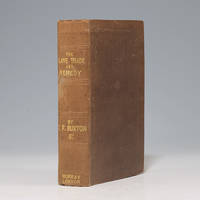
1840réf. 1132391840. First Edition. SLAVERY BUXTON Thomas Fowell. The African Slave Trade and its Remedy. London: John Murray 1840. Octavooriginal brown clothuncut and partially unopened; pp.14 viii 3 6-273 274-276 i ii-vi 277 278-582. $2800.First expanded and revised edition of British abolitionist Buxton's powerful call for an end to the slave trade the first to include his extensive and influential Remedy two major works that followed the lead of Wilberforce in calling for treaties and commerce to end the slave trade and outlined a way to ""secure the regeneration of Africa through agricultural development"" with large folding map a handsome copy in original cloth.Quaker Thomas Buxton was in Parliament when in 1824 Wilberforce asked him to become his successor. ""In 1789 Wilberforce had begged Parliament to 'make reparation to AfricaÉ by establishing a trade upon true commercial principlesÉ Fifty years later Buxton redeveloped this appeal in The African Slave TradeÉ To support his vision Buxton formed the African Civilization Society July 1839."" In this first expanded edition of African Slave Trade 1839Ñthe first to include his RemedyÑBuxton argues for the ""agricultural colonization of West Africa and the development of a broad-based commerce that could undercut the economic dominance of the illicit slave trade"" Hopkins Peter Thonning 615. He documents the horrors of the Middle Passage to show that despite all efforts to end the slave trade ""twice as many human beings are now its victims as when Wilberforce and Clarkson entered upon their noble task."" And in Remedy he further develops his argument: showing how ""legitimate commerce would put down the Slave Trade by demonstrating the superior value of man as a laborer on the soil to man as an object of merchandise.""With African Slave Trade and its Remedy Buxton powerfully ""synthesized contemporary currents of thought developed the arguments about the relationship between abolition and African improvement more systematically than before and then catapulted them to national prominenceÉ His views prevailed. The belief that the only way to suppress the African slave trade was to promote 'legitimate commerce' and that this new trade would launch Africa on the road to moral and material progress became the conventional wisdom in mid-19th-century Britain."" Among those he convinced was David Livingstone who as ""an unknown medical student attended the 1840 meeting of the African Civilization Society where Buxton first announced his remedy for the slave trade. What Livingstone heard on that occasion helped inspire a lifetime of work and travel on the continent"" Mann Slavery and the Birth of an African City 88-90. First expanded and revised edition: first to include Buxton's Remedy which was issued separately in 1839. Precedes the first American edition. With folding map of ""Central Africa."" Paginated as issued without loss of text. With 14-page ""Prospectus of the Society for the Extinction of the Slave Trade and for the Civilization of Africa"" preceding title page. Sabin 9685. Goldsmith's 31743. Kress C5121 See Goldsmith's 31181; Kress C4818; Blockson 9121. Interior fresh with light foxing to folding map as often front inner paper hinge starting but very sound mild rubbing and toning to bright original cloth. A desirable near-fine copy. hardcover books
1884réf. 52888Boston: Printed by the Order of the City Council 1884. First Edition. Small quarto 26.5cm; marbled paper over navy blue calf spine in seven compartments with six raised bands leather labels titling and decorative elements stamped in gilt on spine; marbled endpapers; engraved portrait frontispiece1011-70 with an additional 31 leaves bound in. Armorial bookplate of Walter Merriam Pratt on front pastedown. Re-backed with the original spine laid down; light wear to upper and lower board edges with some touch-up to leather at crown and heel; Very Good. A grangerized copy containing 22 ANS and ALS ca.1-4pp one autograph sentiment a 4.25" x 6.5" cabinet card signed by Phillips and several clipped portraits of various sizes depicting Phillips his wife and his son in uniform. Most prominent among the letters are those written to G.W. Putnam 6 H.G. Denny 2 R.L. Winthrop 2 John Boyle O'Reilly 1 and an October 8 1853 ALS to abolitionist and social reformer Gerrit Smith in which he claims to have mislaid his letter but is available to come to Brooklyn either on 15 December or 5 January 1854 and that his fee would be fifty dollars. Handsome volume memorializing American abolitionist and orator Wendell Phillips 1811-1884 commissioned by the City of Boston in an edition of 5000 copies. Nearly half the text is comprised of the eulogy by George William Curtis and includes extensive remarks by city council members and aldermen a prayer by Rev. Minot J. Savage an address by the Mayor and a poem by Mrs. Mary E. Blake. A proud son of Boston Phillips abandoned a career in law after being converted to the cause of abolitionism by William Lloyd Garrison in 1836. He was a frequent speaker at meetings of the American Anti-Slavery Society active in the free-produce movement a member of the Boston Vigilance Committee and an early advocate of women's rights. Later in life he turned considerable effort towards gaining equal rights for Native Americans and together with Helen Hunt Jackson and Massachusetts Governor William Claflin helped found the Massachusetts Indian Commission. cf.BAL 4347. Printed by the Order of the City Council unknown books